
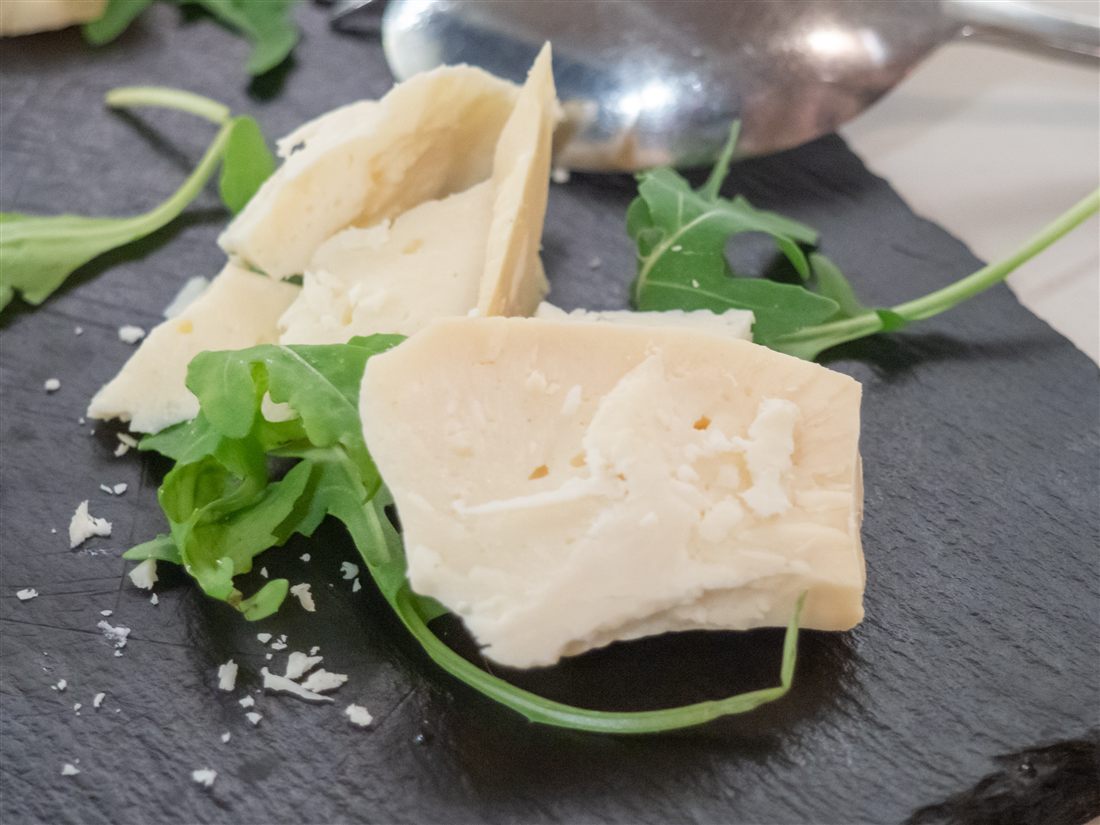
A Naxos cheese tasting is a guided session where visitors taste the cheeses of Naxos, such as graviera and arseniko, at a farm, a winery, a cooperative or a village table on the largest island of the Cyclades. Tours across the rest of the country are listed on Greece Tours.
The sections below cover the cheeses, the tasting and cheese-making tours, wine, olive oil and honey pairings, where the cheese is made, farm and shepherd visits, tours with ancient sites, tastings in Naxos Town, buying cheese, diets, the season and booking, with links into the Naxos pages. The tours shown are checked on GetYourGuide and Viator.
What is a Naxos cheese tasting?
A Naxos cheese tasting is a guided session on the island where you sample cheeses made from Naxian milk, at a farm, dairy, winery or town shop, and learn how each one is made and aged. Sessions run from one hour to six hours.
Naxos is the largest island in the Cyclades, and it feeds itself better than its neighbours. Farming provides about 60 percent of the island’s income. Around seven thousand cows and close to 150,000 free-roaming goats and sheep graze the slopes. That milk supply is why a Naxos cheese tasting sits beside the Naxos food tour on the island’s calendar.
A Naxos cheese tasting on this island runs in one of three settings. One group takes place inside a dairy or a farm kitchen, where the cheesemaker talks through the day’s make. A second sits in a winery, with platters matched to bottles. A third stays in Naxos Town, in a shop or a castle kitchen.
The format is steady. A host sets out between four and ten cheeses, cut small, with bread, rusks, olive oil, tomatoes or honey. Tasting moves from mild to strong. Between pieces the host explains milk, rennet, salt and ageing time. A one-hour session covers a short platter, while a six-hour private tour adds a farm and a vineyard.
- A guided table of four to ten Naxian cheeses, cut for tasting
- Bread, rusks, olive oil, tomatoes, olives or honey as pairings
- A talk on milk, rennet, salt and ageing, given on the farm
- Time with the cheesemaker, the shepherd or the dairy owner
- Transport, hotel pickup and a meal on the longer private tours
Which cheeses does a Naxos cheese tasting cover?
A Naxos cheese tasting covers the island’s hard and soft cheeses, above all Graviera Naxou and Arseniko Naxou, both protected, plus xinotyro, myzithra, thylikotyri, kefalotyri, gidino and fresh kopanisti. Each one comes from cow, sheep or goat milk and carries its own ageing time.
Graviera Naxou is the island’s flagship cheese, made by the Union of Agricultural Cooperatives of Naxos. It holds Protected Designation of Origin status and is made from at least 80 percent cow milk, with up to 20 percent sheep and goat milk. The wheels ripen on wooden shelves for at least 72 days, then rest in cold chambers for another 90.
Arseniko Naxou is the older recipe and the sharper taste. It is made from raw, unpasteurised sheep and goat milk, so it ages for at least three months. Makers brush the wheels with olive oil, which darkens the rind and deepens the flavour. The name means masculine, a nod to its strength. A Naxos cheese tasting that reaches this wheel places it last.
The softer family fills out the platter on a Naxos cheese tasting. Myzithra is a whey cheese, made from cow milk and whey, and eaten fresh with bread. Xinomyzithra is the sour version, made with goat, sheep and cow milk, and it stands in for feta in a salad. Xinotyro is aged xinomyzithra, hard and flaky, grated over pasta. Thylikotyri comes from the whey of arseniko.
Kefalotyri is the frying cheese, firm enough for saganaki. Gidino is made from goat milk alone, and kopanisti is a spreadable cheese with a peppery bite. On a Naxos cheese tasting the soft, milky styles come first and the hard, salted wheels close the table, the same order used on the island’s Naxos food and wine boards.
Which Naxos cheese tasting tours can you book?
Bookable Naxos cheese tasting tours fall into five shapes: private cheese and wine drives, cheese-making classes, farm visits with hands-on work, walking tours in Naxos Town, and vineyard or monastery sessions with a cheese platter. Durations run from one hour to six hours.
The longest option is the Private Cheese and Wine Six-Hour Experience, a private tour with pickup that opens with a hands-on cheesemaking session. The route crosses olive groves, vineyards and herb gardens, stops at a ninth-century church, and finishes at a Cycladic winery with five wines and regional cheeses. That is the fullest version of a Naxos cheese tasting on the island.
Cheese-making classes run for four hours and follow the shape of a Naxos cooking class: the farm first, then the vat, then a shared table. The Traditional Cooking and Cheesemaking Class runs at a family dairy above the farmland, where hosts teach the dish gemista and then an arseniko recipe. The Cheese-Making and Wine Tasting Tour with Brunch lasts five hours, keeps the group to twelve, and adds a vineyard visit with three wines and grape marc spirits.
Farm visits are the hands-on end of the range for a Naxos cheese tasting. The Naxos Farm Experience and Cheese Making runs three and a half hours, includes milking and a kefalotiri lesson, and ends with cheese, bread, eggs, fruit and wine from the farm vineyard. The Naxian Farm Experience with Hands-On Cheese Making works at a traditional mitato and closes at a pottery workshop in Damalas.
- Private cheese and wine drives of five to six hours, with pickup
- Cheese-making classes of four hours at a family dairy
- Farm visits of three and a half hours, with milking and cheese work
- Walking tours of one to three hours through Naxos Town
- Winery, monastery and olive press sessions with a cheese platter
What does a cheese-making Naxos cheese tasting involve?
A cheese-making Naxos cheese tasting puts you at the vat. You warm the milk, add rennet, cut the curd, press it into moulds and salt it, then taste the finished wheels of the same recipe. Sessions last three to five hours.
The steps follow the farmhouse method. Fresh milk goes into a cauldron and is heated. Rennet is stirred in with a wooden stick until the milk thickens into curd. The curd is cut into pieces, packed by hand into moulds, pressed to push out moisture, and rubbed with salt the next day. Guests take part in the cutting, the packing and the salting, which separates this Naxos cheese tasting from a simple platter.
After the make comes the table on a Naxos cheese tasting. You taste the cheese you helped to shape, young and mild, next to aged wheels of the same recipe. Bread, olive oil, tomatoes, honey or wine sit alongside. The host explains how salt, pressing and time turn the same milk into a soft white cheese or a hard, peppery wheel.
Ageing closes the lesson. Graviera rests for at least 72 days on wooden shelves. Arseniko needs three months or more because it is made from raw milk. A number of makers brush the wheels with their own olive oil while they rest, the same oil poured at Naxos olive oil tasting tables across the island.
Can a Naxos cheese tasting be paired with wine?
Yes. A Naxos cheese tasting pairs well with the island’s dry whites, rosés and sun-dried sweet wines, and the pairings happen at family wineries, in the Venetian castle and at a ninth-century church. Three to five wines are usual.
The wine side of Naxos has a long history. The sanctuary of Dionysus at Yria has been a sacred site since prehistoric times, and vines grow around it. Family wineries near Halki and in the countryside pour their own bottles beside cheese. A Naxos cheese tasting follows one order: a crisp white first, then a rosé, then a red, with a sweet sun-dried wine at the end.
The Private Cheese and Wine Six-Hour Experience builds the day around a Cycladic winery. Guests tour the production rooms, see the tools and machinery that turn grapes into wine, and then sit down to five wines with regional cheeses. The same Naxos cheese tasting visits a ninth-century church and walks through olive groves and herb gardens.
Two shorter bookings keep the wine close to the cheese. The Guided Tour of the Winery with Wine Tasting and Local Cheeses lasts an hour and a half at a family estate, where sheep graze beside the vines and the tasting takes place under a pergola overlooking the fields, the same rhythm as a Naxos wine tasting elsewhere on the island.
The castle session is the shortest. It runs for one hour in the Kastro, the Venetian quarter above Naxos Town, and it skips the ticket line. Guests walk through the old monastery of the Ursuline nuns, hear the history of the girls’ abbey school, then taste Greek wines, local cheeses, cold cuts, virgin olive oil and rusks in the old kitchen.
- A crisp white with fresh myzithra and bread
- A dry rosé with xinomyzithra over tomatoes
- A red with aged Graviera Naxou
- A sweet sun-dried wine with hard, salty Arseniko
- A grape marc spirit with a plate of mixed Naxian cheeses


Which Naxos cheese tasting tours add olive oil, honey or kitron?
A Naxos cheese tasting gains olive oil, honey or kitron on the longer farm and food tours. Olive oil arrives at the presses, honey at the apiaries, and kitron at the distillery in Halki. Three tours fold them in.
The Cheese, Olive Oil and Honey Tasting Tour with Pickup runs for five hours as a private tour with hotel pickup and drop-off. The first stop is a family creamery, where a shepherd who carries on the family trade teaches guests to make cheese and then serves a table of cheeses and Naxian appetisers. A Naxos cheese tasting of this shape spends half the day at the vat.
The olive press stop is where the oil is explained. Guests walk the museum rooms and learn how the fruit was milled and pressed, then taste the oil itself. The tour closes at an organic honey farm, where the beekeeper opens the hives and explains how the colony works. Honey, wax and a honey-based sweet finish the day.
Kitron is the island’s own spirit, distilled from citron leaves at a distillery in Halki that has worked since the late nineteenth century. The Naxos Morning Walk with Greek Coffee and Local Cheese Tasting pours a sip of it in the old town, a Naxos cheese tasting that stays on foot.
Where is the cheese for a Naxos cheese tasting made?
The cheese for a Naxos cheese tasting comes from dairy farms across the island, with the heaviest concentration in the Tragea valley and the mountain villages of Filoti, Apeiranthos, Danakos and Koronos. Naxos Town holds the cooperative plant, the shops and the port.
The Tragea valley, also called Drymalia, is the greenest stretch of the Cyclades and the engine room of any Naxos cheese tasting. Thousands of olive trees cover the slopes between Halki, Kaloxylos and Filoti. Kaloxylos sits 16 to 17 kilometres southeast of Naxos Town, a drive of 20 to 30 minutes, at 300 metres above sea level.
The mountain villages hold the herds that supply a Naxos cheese tasting. Apeiranthos stands 25 kilometres from Naxos Town on the slopes of Mount Fanari, at about 600 metres. Koronos, Filoti and Danakos sit along the same ridges. The dry heathland around them, full of aromatic shrubs, feeds free-roaming goats and sheep through the winter, and the Naxos villages that grew up beside the flocks still depend on that grazing.
The cooperative in Naxos Town is the largest single maker. The Union of Agricultural Cooperatives of Naxos has worked for close to a century and produces more than a thousand tonnes of Graviera Naxou a year. Its milk processing plant sits at Agia Eirini in Glinado and takes deliveries from local coolers, with a chemist checking each load before the milk enters the building.
- The Tragea valley, with olive groves between Halki, Kaloxylos and Filoti
- The mountain villages of Filoti, Apeiranthos, Danakos and Koronos
- Shepherd farms on the slopes of Mount Zas and Mount Fanari
- The cooperative milk plant at Agia Eirini in Glinado
- Family dairies and shops in Naxos Town
Which Naxos cheese tasting tours visit farms and shepherds?
The Naxos cheese tasting tours that visit farms and shepherds include the Historic Olive Press and Shepherd Cheese Tour, the Naxos Farm Experience and Cheese Making, and the Naxian Farm Experience with Hands-On Cheese Making. Each one spends three to six hours in the countryside.
The Historic Olive Press and Shepherd Cheese Tour is the longest of the group at six hours, and it runs as a private tour with pickup. It starts at the olive press in Kaloxylos, a hand-operated mill from the late nineteenth century that was later fitted with a diesel engine. Guests taste a selection of olive oils, then drive to a working shepherd for a table of artisan cheeses.
The shepherds on these Naxos cheese tasting routes are working producers. One keeps about seven hundred goats near the summit of Mount Zas and milks them by hand each morning with his son and grandson. Another, near Filoti, makes arseniko in a century-old cauldron. Guests see the animals, the milking and the vats, and hear how the herds move with the seasons.
The mountain road that links these farms runs through Apeiranthos, 25 kilometres from Naxos Town at about 600 metres, where marble lanes and five museums fill an afternoon. The Naxos Farm Experience and Cheese Making lasts three and a half hours and ends with the cheese, bread, eggs, fruit and wine from the farm’s own vineyard.
The Naxian Farm Experience with Hands-On Cheese Making also runs three and a half hours, and it works at a traditional mitato rather than a commercial farm. Guests join the daily chores, take part in the cheesemaking, and eat a farm-to-table brunch. Sessions run from mid-April to the end of October, the busiest stretch for any Naxos cheese tasting.
Can a Naxos cheese tasting be combined with ancient sites and myths?
Yes. Two four-hour Naxos cheese tasting tours pair temple visits with a cheese and wine stop: the Myths and Ancient Sites with Cheese and Wine Tasting and the Naxos Mythology and Ancient Sites Tour with Cheese and Wine. Both visit the Temple of Demeter.
The route starts with a drive inland to the Temple of Demeter above the plains of Sangri, where a guide explains the myth of Persephone and the rebirth of the fields. The visit takes about an hour and a quarter, and entrance is included. The group then moves a short distance for a Naxos cheese tasting stop of around forty minutes, with myths told over the food.
The second half of the day goes to Yria, the sanctuary of Dionysus, set among vines, olives and fig trees. The site has been sacred since prehistoric times, and the guide ties it to the god of wine and the harvest festivals held there. A Naxos cheese tasting of this kind trades the farm kitchen for an open-air table between ruins.
The Historic Olive Press and Shepherd Cheese Tour covers the same ground without the ruins: the olive press in Kaloxylos, a shepherd and a family winery, over six hours. One of the two myth tours starts at nine in the morning, carries up to twelve travellers, and includes brunch, all entrance fees and private transport; the other lists olive oil tasting and local products instead of brunch.
Can you do a Naxos cheese tasting in Naxos Town?
Yes, a Naxos cheese tasting in Naxos Town needs no car. The old town holds dairy shops, a cooperative grocery on the seafront, castle kitchens and workshop tastings, and three walking tours cover them on foot in one to three hours.
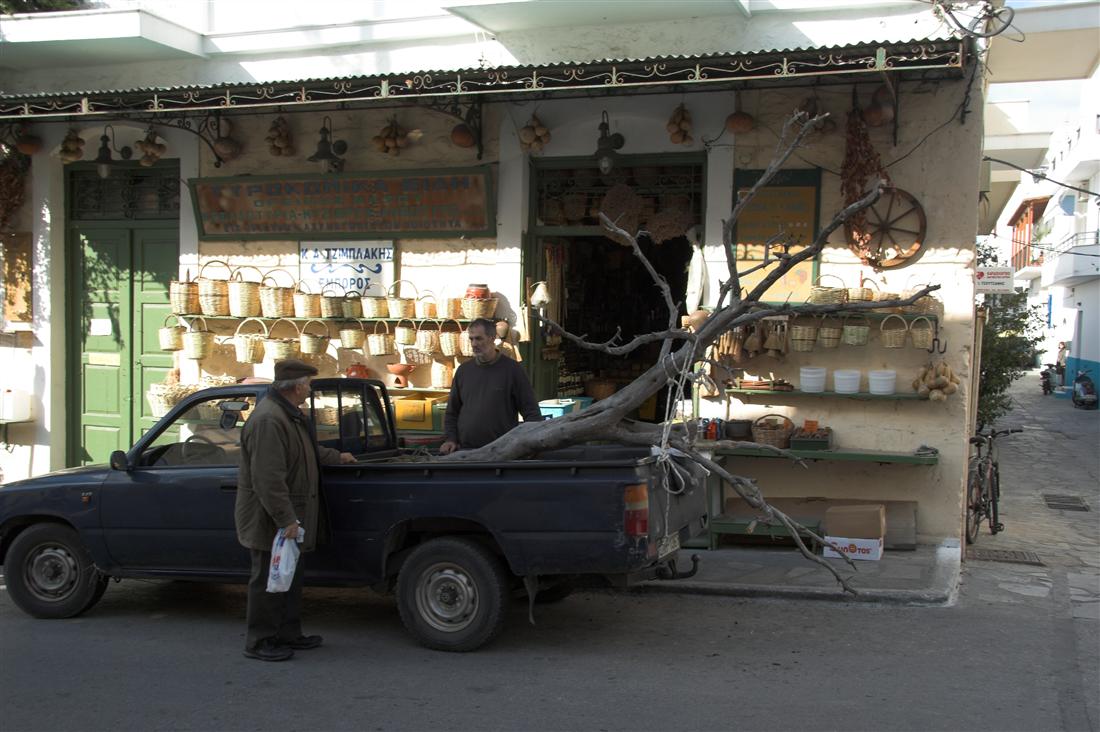
The Union of Agricultural Cooperatives of Naxos keeps a grocery and butcher shop on the Naxos Town seafront. It opens from eight in the morning until nine at night from Monday to Saturday, and from eight until half past two on Sunday. Shelves carry the cooperative’s own cheeses, local meat and Naxos potatoes.
Family dairies in town do their own tastings. One dairy, run by the fourth generation of the same family, makes 25 varieties and lays out a table of them with local wine and small bites. The shop sits in the centre of Naxos Town and stays open through the summer season, so a Naxos cheese tasting here fits around a ferry.
Walking tours work the lanes for a Naxos cheese tasting. The Old Town Walking Tour with Wine and Cheese Tasting lasts three hours and begins on the seafront street of the port before turning into the old town, where a dairy tasting opens the route. The Naxos Morning Walk with Greek Coffee and Local Cheese Tasting starts at ten and visits a dairy shop for cheese and yogurt.
- A dairy shop tasting in the centre of Naxos Town
- The cooperative grocery and butcher shop on the seafront
- A castle kitchen session inside the Venetian Kastro
- A three-hour walking tour from the port into the old town
- A morning walk with Greek coffee, cheese and yogurt

How do you buy Naxos cheese and carry it home after a Naxos cheese tasting?
After a Naxos cheese tasting you buy from the dairy, the cooperative shop or a town deli, then choose a hard, salted cheese for the journey home. Vacuum packs travel well. Graviera and arseniko survive a flight; fresh myzithra does not.
Hard cheeses are the practical choice for a Naxos cheese tasting souvenir. Graviera Naxou is sold in one-kilo, three-kilo and nine-kilo wheels, and also in 250-gram pieces, which suits a suitcase. Arseniko keeps well because it is aged and salted, and its dark rind protects the paste. A vacuum-sealed piece of either holds for weeks in a cool cupboard.
Fresh cheeses need eating, not packing, after a Naxos cheese tasting. Myzithra, xinomyzithra and thylikotyri are soft and moist, and they spoil within days without refrigeration. Buy them at the start of a stay rather than the end, and keep them in the hotel fridge. Bread, tomato and a little salt finish a piece of myzithra without waste.
Village shops stock local wheels. Halki and Filoti have small grocers and producers who sell direct. The port and airport shops carry a smaller range. Ask for a vacuum pack whenever a piece is cut to order, and keep the receipt, because a full wheel bought after a Naxos cheese tasting is a serious item.
- Choose hard, salted wheels such as Graviera Naxou or Arseniko Naxou
- Ask the shop to vacuum-pack pieces cut to order
- Keep fresh myzithra and xinomyzithra cold and eat them early
- Carry cheese in hand or hold luggage on European flights
- Check import rules for unpasteurised dairy before flying

Is a Naxos cheese tasting suitable for children and special diets?
A Naxos cheese tasting suits children on the farm-based tours, where they feed animals, help with the curd and eat at a family table. Vegetarians are well served by the cheese, bread and vegetable plates. Vegans and the lactose intolerant face limits.
The family-friendly Naxos cheese tasting tours are the farm ones. The Naxos Kids First route takes children to a cheese farm to feed the animals and help make the cheeses, then to a pottery workshop and a beekeeper’s farm, where the hives sit behind protective glass. The Naxian Farm Experience with Hands-On Cheese Making welcomes families.
One caution comes with raw milk. The farm tour listing warns that pregnant women can join but are advised not to taste the fresh cheese. Arseniko is made from unpasteurised milk, so anyone in a risk group for listeria avoids it. Hard, aged cheeses are the safer choice. Ask the host which pieces are pasteurised before a Naxos cheese tasting begins.
Vegetarians eat well. Greek Orthodox fasting rules have shaped Naxian cooking for centuries, so oil, bread, vegetables, pulses and cheese fill the table. A Naxos cheese tasting of graviera, myzithra and thylikotyri with tomatoes, olives and rusks is a full meal. Vegan guests find less, because cheese is the point of the session.
When do Naxos cheese tasting tours run?
Naxos cheese tasting tours run through the tourist season from April to October, with the farm and cheesemaking sessions tied to the farm calendar. Morning departures dominate. Cheesemaking in the farmhouses happens in the cooler months, so winter sessions are fewer.
The season follows the ferries and the weather, so the Naxos cheese tasting calendar moves with them. Farm experiences run from mid-April to the end of October, with start times between eleven in the morning and half past four in the afternoon. The Naxian Farm Experience with Hands-On Cheese Making lists that window directly.
Start times vary by format for a Naxos cheese tasting. The Naxos Morning Walk with Greek Coffee and Local Cheese Tasting begins at ten in the morning. The mythology and ancient sites tour leaves at nine. The Private Cheese and Wine Six-Hour Experience fills a whole day, so it starts early. Shorter castle and winery sessions run through the afternoon.
The cheesemaking calendar matters. Arseniko is normally made between November and April, when the animals give richer milk. Xinomyzithra is a warm-weather cheese, made when the heat raises the acidity and keeps the curd soft. A summer visitor sees cheese shaped from stored milk, while a winter visitor sees a Naxos cheese tasting in its busiest season.
- Farm and cheesemaking sessions from mid-April to the end of October
- Morning departures at nine or ten for walking and mythology tours
- Afternoon slots for castle, winery and town workshop tastings
- Winter cheesemaking between November and April, when milk is richer
- Book three months ahead for July, August and September dates
How do you book and cancel a Naxos cheese tasting?
You book a Naxos cheese tasting online before you travel, choosing a date and a start time, and you cancel free of charge up to 24 hours before the session starts. Private tours confirm at booking, while group tours confirm within 48 hours.
Booking a Naxos cheese tasting works the same way on the large platforms. You pick a date, a group size and a language, and you see the start times that remain. The listings offer reserve-now-pay-later, so you hold a place without paying at once. Confirmation arrives immediately for private tours and within two days for group tours.
Cancellation is generous. The standard term across these tours is free cancellation up to 24 hours before the start, with a full refund. After that window, the booking is charged. Private tours carry the same term as group tours on the island, which makes late changes easy. Check the exact wording before you pay for a Naxos cheese tasting.
Meeting points matter for a Naxos cheese tasting. Walking tours gather in Naxos Town, at the bus ticket office by the port or at a workshop in the centre. Tours with pickup collect from hotels and apartments across the island, and you choose the pickup point when you book. Farm tours away from the bus routes rely on that pickup.
Frequently Asked Questions
How long does a Naxos cheese tasting last?
A Naxos cheese tasting runs from one hour to six hours. The shortest session is the monastery tour in the Kastro, which lasts an hour. Winery tastings take an hour and a half. Walking tours take three hours, cheesemaking classes take four, and private farm and cheese drives take five to six hours.
What is the difference between Graviera Naxou and Arseniko Naxou?
Graviera Naxou is the milder cheese, made from at least 80 percent cow milk and aged for a minimum of 72 days. Arseniko Naxou is sharper and older in style, made from raw sheep and goat milk and aged for at least three months. Both carry protected status, and a Naxos cheese tasting serves them side by side.
Do Naxos cheese tasting tours include hotel pickup?
Longer private tours include pickup, among them the six-hour cheese and wine drive, the five-hour cheese, olive oil and honey tour, and the six-hour olive press and shepherd tour. The farm experiences collect from hotels and apartments. Town walking tours and castle tastings start at a meeting point, because the old lanes are closed to cars.
Can vegetarians join a Naxos cheese tasting?
Yes. Cheese, bread, olive oil, tomatoes, olives and vegetable dishes form the base of a Naxian table, and vegetarians eat well on every tour. Vegan guests have a harder time, because cheese is the centre of the session. Tell the host about your diet when you book so the platter can be adjusted.
Is a Naxos cheese tasting worth doing in winter?
Winter is when the cheesemaking happens, so a winter Naxos cheese tasting reaches the working season. Arseniko is made between November and April. Farm sessions run on fewer dates, while the town tours, the winery and the castle tastings stay open. Book a private tour for the widest choice of dates.