
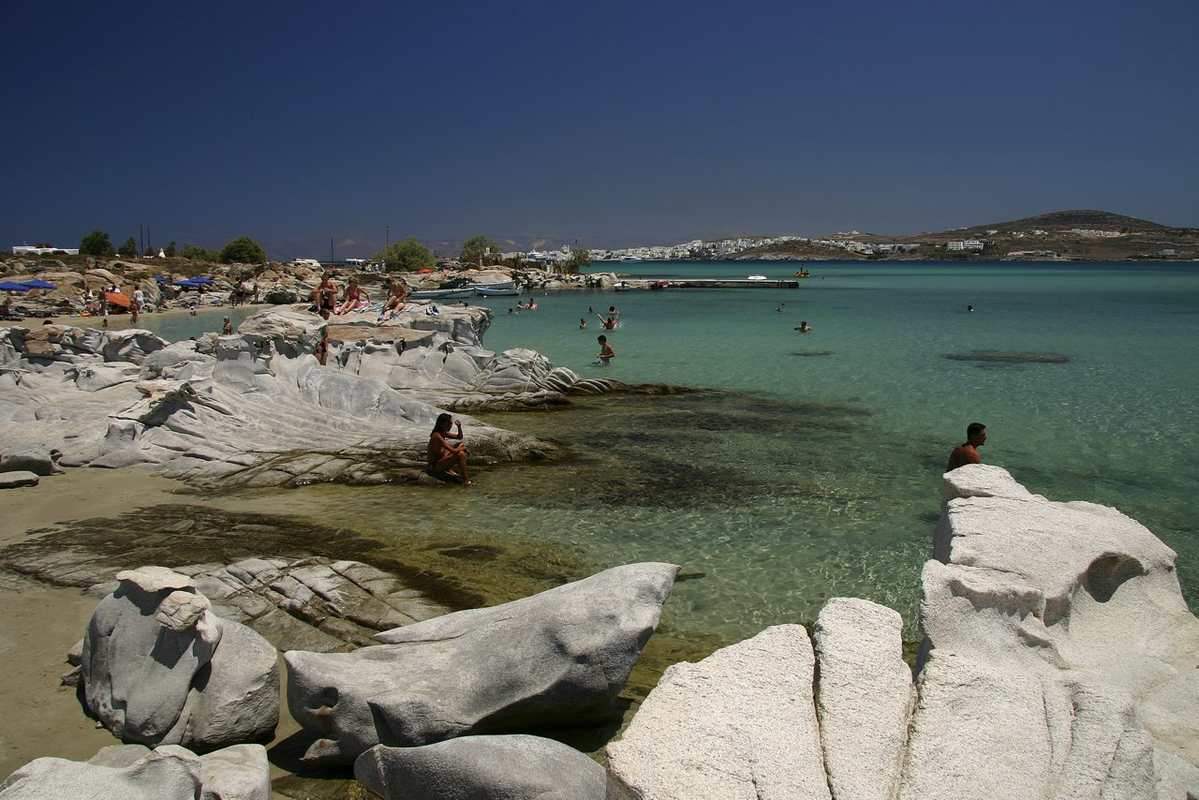
Kolymbithres beach in Paros is the island’s most famous shore, a series of small sandy coves set among smooth granite rocks sculpted into natural pools in Naoussa Bay. Its sheltered, shallow water and photogenic formations make it a favourite for families and photographers. This guide covers what the beach is like, why it is special, how to get there and the best time to visit. Plan the whole trip with Greece Tours.
The beach is the star of the island’s coast, a highlight in the guide to Paros beaches. It lies across the bay from Naoussa. The sections below cover the visit.
What is the beach like?
The beach is a cluster of small sandy coves separated by huge granite boulders worn smooth into pool-like shapes. The name means “baptismal fonts”, a nod to the natural basins, and the shallow turquoise water between the rocks makes it the island’s signature swim.
The beach is unlike any other on the island. Instead of one long strip, it is a string of small sandy coves divided by giant granite rocks that the sea and wind have sculpted into smooth, rounded forms over centuries. Some basins hold just two or three swimmers, others a few dozen, all in clear, shallow turquoise water. The setting in Naoussa Bay, with views across to the town and the islands beyond, makes it strikingly photogenic. Its sheltered pools and beauty draw visitors all summer. Reaching it is straightforward.
How do you get there?
You get there from Naoussa, about 5 kilometres away, by car, bus, a 5-to-7-minute water taxi across the bay, or a scenic 3-kilometre coastal walk. From Parikia it is roughly 11 kilometres, reached by bus via Naoussa or by car.
The beach is easy to reach in several ways. From Naoussa, a short drive or a frequent water taxi crosses the bay in five to seven minutes, the quickest and most scenic option, while a three-kilometre coastal path offers a beautiful walk with views over the bay. By road it lies about 5 kilometres from Naoussa and 11 from Parikia, with buses linking the capital to Naoussa and on toward the beach, and parking above the coves. The choice of base affects the journey, as the guide to where to stay in Paros sets out. Facilities make a comfortable day.
What facilities are there?
The beach has sunbeds, umbrellas and beach bars on its main coves, with tavernas nearby, while smaller basins stay quiet and natural. Some stretches are organised and some free, so visitors can choose a serviced cove or a secluded pool.
The beach mixes comfort with quiet corners. Its main coves offer sunbeds, umbrellas and beach bars serving drinks and snacks, with tavernas a short walk away, while the smaller, more hidden basins among the rocks stay natural and uncrowded. This range lets visitors pick a serviced spot or a private pool for the day. The shallow, sheltered water suits children and relaxed swimmers, and the rocks give shade and shelter from the wind. It is among the most family-friendly beaches on the island. Timing the visit improves it further.
When is the best time to visit?
The best time to visit is early morning or late afternoon, when the light is soft, the crowds are thinner and the rocks glow golden. June and September avoid the July and August peak, when the coves fill and the meltemi can ruffle the bay.
Timing shapes the experience. Arriving early or staying into the late afternoon means softer light, fewer people and the granite warmed to a golden hue, ideal for a swim and photographs before heading into Naoussa for dinner. June and September bring warm water and thinner crowds, while July and August are busiest and can see the meltemi wind disturb the exposed parts of the bay. Visiting outside the midday rush rewards the effort, as the guide to the best time to visit Paros notes. The questions below cover the points travellers ask most.
Is it good for families?
It is excellent for families, thanks to its shallow, sheltered pools, soft sand and rocks that break the wind and waves. Children can paddle safely in the natural basins, and the calm water suits young swimmers and snorkellers.
The beach is among the best on the island for children. The granite formations enclose shallow, calm pools where young swimmers can paddle safely, sheltered from the open sea and much of the wind. The soft sand of the small coves and the clear, warm water make for easy days, and the rocks offer natural shade and gentle snorkelling. Parents value the safe, enclosed setting, and the nearby bars and tavernas keep a family day comfortable, complementing the wider guide to Paros with kids. The questions below cover the points travellers ask most.
Is there good snorkelling?
There is gentle snorkelling around the granite rocks, where the clear, shallow water and crevices shelter small fish. It suits beginners and children rather than serious divers, with the calm coves offering safe, easy exploring close to shore.
The beach is a pleasant, low-key snorkelling spot. The smooth granite formations create clear, shallow pools and channels where small fish gather among the rocks, easy and safe to explore close to shore. The calm, sheltered water suits beginners and children trying snorkelling for the first time, rather than experienced divers seeking depth. Bringing a mask and reef-safe sunscreen makes the most of it, and the rocks give shade between swims. It adds gentle adventure to a beach day, set within the wider guide to Paros beaches. Tavernas sit close by for a break.
Where can you eat near the beach?
You can eat at the beach bars on the main coves and at tavernas a short walk or drive away, with Naoussa’s harbour restaurants just across the bay. Most serve drinks, snacks and light meals, while Naoussa offers the island’s best seafood.
Eating is easy around the beach. The organised coves have beach bars serving cold drinks, coffee, snacks and light meals through the day, while a short walk or drive reaches tavernas near the bay. Across the water, Naoussa’s harbour holds the island’s finest seafood restaurants and cocktail bars, a natural place to round off a beach day, reached by a quick water taxi. Combining an afternoon at the beach with dinner in town is a classic plan, set out in the guides to Naoussa Paros and best restaurants in Paros. The beach can get busy in peak season.
Is the beach busy?
The beach is among the busiest on the island in July and August, when its fame draws crowds to the main coves. Arriving early or late, or seeking out the smaller hidden basins, finds quieter spots even in peak season.
The beach’s fame is a double-edged sword. As the island’s signature shore, its main coves fill with sunbeds and visitors through July and August, busiest in the middle of the day. The string of small basins among the rocks helps, though, since the lesser-known coves stay quieter, and arriving early in the morning or late in the afternoon finds space and softer light. Visiting in the shoulder months of June or September means warm water and far fewer people, as the guide to the best time to visit Paros notes. The beach’s name has an old meaning.
What does the name mean?
The name Kolymbithres means “basins” or “baptismal fonts” in Greek, a nod to the pool-like hollows the sea and wind have carved into the granite rocks. The natural basins that give the beach its character also give it its name.
The beach’s name captures its unique form. Kolymbithres translates roughly as basins or baptismal fonts, describing the rounded, pool-like hollows that centuries of wind and waves have sculpted into the soft granite. These natural basins, scattered between the small sandy coves, are the beach’s defining feature and the reason for its fame. Knowing the meaning adds to the experience of wandering between the sculpted rocks, set within the wider things to do in Paros. The questions below cover the points travellers ask most.
Frequently Asked Questions
What is Kolymbithres beach known for?
Kolymbithres beach is known for its smooth granite rocks sculpted into natural pools, set among small sandy coves in Naoussa Bay. The name means “baptismal fonts”, and the shallow turquoise water makes it the most famous and photogenic beach in Paros.
How do you get to Kolymbithres beach?
You reach Kolymbithres from Naoussa, about 5 kilometres away, by car, bus, a 5-to-7-minute water taxi across the bay, or a 3-kilometre coastal walk. From Parikia it is roughly 11 kilometres by bus via Naoussa or by car.
Is Kolymbithres beach good for families?
Kolymbithres is excellent for families, with shallow, sheltered pools, soft sand and rocks that break the wind and waves. Children can paddle safely in the natural basins, and the calm, clear water suits young swimmers and snorkellers.