
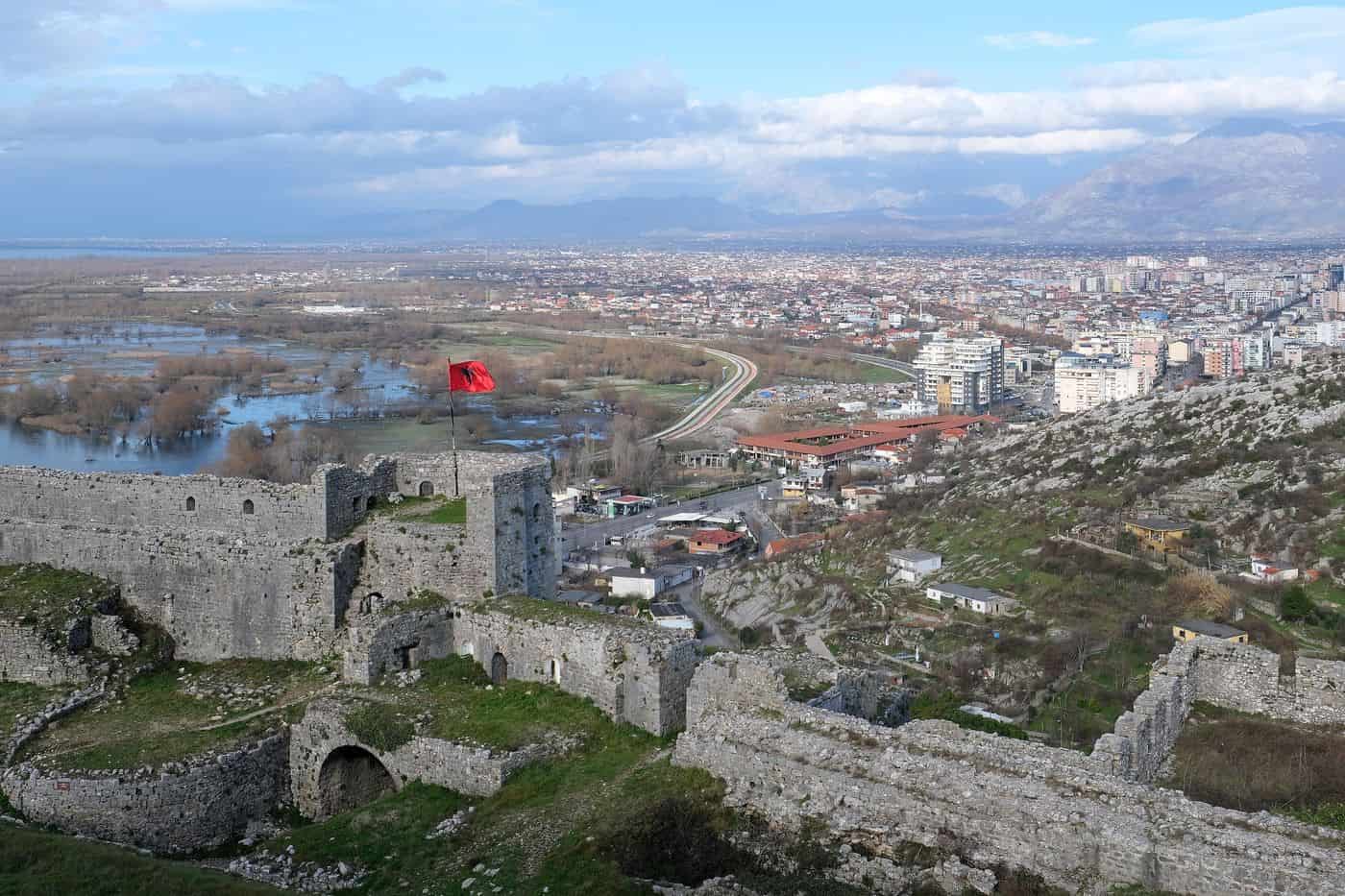
Shkoder tours start in Shkodër, the city of north-western Albania on the shore of Lake Shkodër, below Rozafa Castle. The routes cover the castle, the old town and the Marubi museum of photography, the lake, the Mesi Bridge and the mountain village of Theth. Greece Tours lists the trips that cross into Albania from Corfu and northern Greece.
This page covers what Shkoder tours see in the city and on the lake, which tours head into the Accursed Mountains, what food the tours taste, and how visitors reach Shkodër from Tirana, Montenegro and Greece. The tours below are checked on GetYourGuide and Viator and leave from Shkodër, Tirana and Podgorica.
What do Shkoder tours cover?
Shkoder tours cover Shkodër, Albania’s fourth city by population, beside the southern part of Lake Shkodër. The core stops are Rozafa Castle, the pedestrian Kolë Idromeno street, the Marubi National Museum of Photography and the lake villages of Shiroka and Zogaj.
In Albanian the city also takes the definite form Shkodra, and historical records call it Scodra or Scutari. The Illyrian tribe of the Labeatae founded Skodra here in the 4th century BCE, so Shkoder tours cover about 2,200 years of recorded history.
Three rivers frame the city: the Kir in the east, the Drin in the south and the Buna in the west. The ground is flat, and Shkodër is known as the bicycle capital of Albania, so Shkoder tours by bike reach Rozafa Castle and the lake on cycle lanes.
Buses from Tirana, the capital to the south, leave hourly and cover 116 km in about two hours, so Shkodër pairs well with Tirana tours on one trip. North of the city, the SH1 road runs on to the Han i Hotit crossing into Montenegro.
- Population: The municipal unit of Shkodër counted 77,075 residents in the 2011 census.
- Faith: Shkodër is the centre of Roman Catholicism in Albania, and its skyline mixes mosques and churches.
- Climate: Yearly rain reaches about 1,500 mm, which makes the area one of the wettest in Europe.
What do Shkoder tours see at Rozafa Castle?
Shkoder tours see Rozafa Castle on a rocky hill 130 metres above sea level, surrounded by the Buna and Drin rivers. The hill holds Illyrian walls from the 4th-3rd century BCE, mostly Venetian ramparts, a ruined church-mosque and a museum.
The hill was settled from the Early Bronze Age, and its first walls formed the citadel of Skodra under King Gentius. Shkoder tours retell how the Roman commander Anicius Gallus trapped Gentius here, and the king surrendered on the third day of a truce in 168 BC.
Venice took the city in 1396, and the Venetians and the Ottomans rebuilt the fortress. Sultan Mehmed II besieged it in 1478 with cannon balls of up to 380 kg, and the city fell to the Ottomans in 1479. Shkoder tours find those balls on display in the castle museum.
Inside the walls stand the ruins of a 13th-century Venetian church that the Ottomans turned into the Fatih Sultan Mehmet Mosque. It is the only mosque in Shkodër that partially survived the communist dictatorship.
Shkoder tours also tell the legend of Rozafa. Three brothers saw their walls fall every night, until a wise old man told them to bury alive the wife who brought their food the next day. Rozafa, wife of the youngest brother, asked for a hole for her right eye, hand, foot and breast to care for her small son.
- Location: The castle stands 2 km south-west of Shkodër, near the southern end of Lake Shkodër.
- Name: Scholars link the name Rozafa with Resafa, the place where Saint Sergius died.
- Gateway: Local people believe Rozafa’s milk still flows from limestone stalactites in the Illyrian gateway.
What do Shkoder tours see in the old town and at the Marubi museum?
Shkoder tours walk the pedestrian Kolë Idromeno street to the Marubi National Museum of Photography at number 32, Albania’s only photo museum. The same route reaches the Ebu Bekr Mosque, St. Stephen’s Cathedral and the Museum of Witness and Memory.
Shkoder tours start on Kolë Idromeno street, the main pedestrian street of the city, full of cafes and locals promenading in the evening. It carries the name of the painter and architect Kolë Idromeno, born in Shkodër in 1860 to a family from Parga that later settled in Corfu.
The Marubi museum keeps the legacy of the Photo-Studio Marubbi, founded in 1856 by the Italian painter and photographer Pietro Marubbi. Three generations ran the studio until the early 1950s, and the archive holds around 500,000 negatives. Shkoder tours see Albanian life from 1850 onward in its galleries.
Shkoder tours pass the Ebu Bekr Mosque, built between 1994 and 1995 on the site of the old Fushë Çela Mosque, with two minarets 41.11 metres high. St. Stephen’s Cathedral, begun in 1858, served as a Palace of Sports from 1967 until it reopened in 1990.
The Museum of Witness and Memory on Bulevardi Skenderbeu covers the crimes of the communist regime with photographs, videos and first-hand accounts of political prisoners from Shkodër. The regime repressed religious people, Catholics above all, and intellectuals who opposed its ideology.
- Historical Museum: The 19th-century house of Oso Kuka holds artefacts from the whole Shkodër region.
- Lead Mosque: Pasha Mehmed Bushati built it in 1773 in the Classical Ottoman style of Istanbul.
- Cathedral vault: Kolë Idromeno painted the Lady of Shkodër there in 1909.
Which Shkoder tours visit Lake Shkodër?
Shkoder tours visit Lake Shkodër, the largest lake in the Balkan Peninsula, shared with Montenegro, at the fishing villages of Shiroka and Zogaj on its Albanian shore. Routes run by bicycle, bus or car along the SH24, and canoe trips use the Buna river.
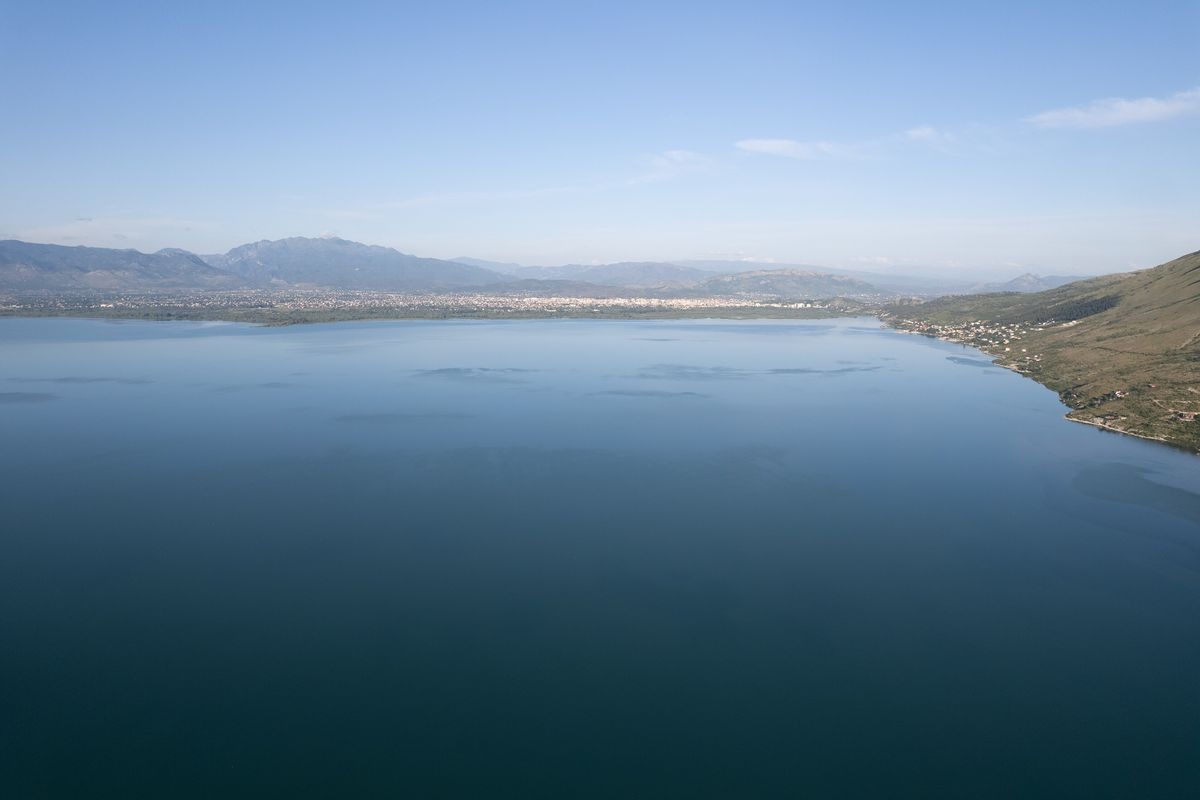
Shkoder tours reach a lake that covers 370 to 530 square kilometres with the seasons and stretches about 44 km along the frontier. Montenegro holds around 65% of its surface and Albania around 35%, and the 41 km Buna drains it into the Adriatic Sea.
Shiroka lies about 5 km west of Shkodër on the slopes of Tarabosh Mountain, across the Buna, and is known for fishing and the carpets its women make. Zogaj sits almost five kilometres further west, close to the border. Shkoder tours by bike cross the old Buna bridge and follow a floodlit riverside path.
Birdwatching Shkoder tours come for one of the largest bird reserves in Europe, with 270 bird species, pelicans among them. The Albanian part is a Managed Nature Reserve and, since 1996, a Ramsar wetland of international importance.
On the water, Shkoder tours use the Buna, which is highly navigable and carries vessels from motorboats up to large tour boats. Shiroka once served as a port for steamships from Virpazar in Montenegro.
- Fish: The lake holds 34 native fish species, 7 of them endemic, with carp, bleak and eel in abundance.
- Royal villa: Zogu’s Villa, a 1920s residence of King Ahmet Zog, stands above the old centre of Shiroka.
- Bus: A public bus from the Rozafa Hotel runs three times a day on weekdays to Zogaj, the last stop.
Which Shkoder tours visit the Mesi Bridge and Theth?
Shkoder tours heading north-east stop at the Mesi Bridge, an Ottoman stone bridge over the Kir river, then climb the SH21 road into the Accursed Mountains to Theth, a Catholic village with a church, a lock-in tower and the Grunas waterfall.
Shkoder tours reach Ura e Mesit, “the bridge in the middle”, in the village of Mes, 5 km north-east of Shkodër. Kara Mahmud Bushati, the local Ottoman pasha, began it in 1768 and extended it in 1770 to 108 m, with 13 arches and a 14° bend, on the road up the Kir Valley towards Pristina.
The road to Theth starts at Koplik and runs 58 km on the SH21 over the 1,630 m Terthorja pass. The last 16 km down to the village are asphalt, but the road is winding and narrow, runs along a deep ravine and closes from November to April.
Theth is a Protected Historic Center of Shkodër County, and local tradition says its families arrived 300 to 350 years ago to keep their Catholic faith. Shkoder tours see the church, first built in 1892, and the lock-in tower, once a refuge for families “in blood” and now home to a small museum.
A bridge over the Nanrreth river links the village with the 30 m Grunas waterfall and the karst Grunas Canyon. On Shkoder tours, the Blue Eye (Syri i kaltër), a clear blue lake with a small waterfall in a side valley near Nderlysaj, is an hour’s walk on an easy trail.
- Summit: Maja Jezercë, at 2,694 m, is the highest point of the Accursed Mountains and of all the Dinaric Alps.
- Park: Theth National Park, created in 1966 over 2,630 ha, now forms part of the Alps of Albania National Park, the largest in Albania.
- Village sights: Theth also keeps a working watermill that grinds the villagers’ corn and a modest ethnographic museum.


Which local food do Shkoder tours taste?
Shkoder tours taste carp from Lake Shkodër, above all tavë krapi, a carp specialty served in the lakeside fishing village of Zogaj, plus lakra turshi (pickled cabbage), the dessert sheqerpare and fruit rakija, while trips to Theth add guesthouse dairy and mountain produce.
Lake Shkodër is rich in carp, bleak and eel. In Zogaj, on the lake by the Montenegro border, fishermen bring their catch to Te Naili, a restaurant beside the dock. Shkoder tours order tavë krapi a day ahead, because the dish takes 4 to 6 hours to prepare.
Meat, fish and vegetables sit at the centre of northern Albanian cooking. Albanians bake carp, eel, whiting or mullet with olive oil and garlic, and Shkoder tours with a market stop find fresh fish and meat at Tregu i Ri, the New Market.
Shkodër is famous for its patisseries. Raki, made from grape, plum or blackberry, leads the spirits of Albania, and local drinks include Korça and Tirana beers and wine from the Zadrima Winery.
- Cheese: Theth families make fresh goat or cow cheese, yogurt and butter.
- Tea: Herbal teas use wild sage, thyme and mountain tea.
- Packed lunch: Theth guesthouses prepare lunch packages for hikers.
How do visitors reach Shkodër on Shkoder tours?
Shkoder tours begin with a 116 km road trip north from Tirana, about two hours by bus, a crossing from Montenegro at Hani i Hotit or Muriqan, or a drive from Greece through the Kakavijë border along the north–south road corridor of Albania.
The SH1 national road, part of the European routes E762 and E851, runs north from the Kamza Bypass in Tirana through Milot and Lezhë to Shkodër. Shkoder tours by bus arrive at Sheshi Demokracia, the central square, and travellers from Tirana International Airport take a direct Hermes Aeroport coach.
Shkodër is the main road link between Tirana and Podgorica, the capital of Montenegro. The SH1 ends at the Han i Hotit crossing, 32.5 km from the city, opposite Božaj, and minibuses run from the border into town. Shkoder tours from Ulcinj cross at Muriqan, a jointly managed post facing Sukobin.
From Greece, the main crossing is Kakavijë–Ktismata, linked to Ioannina by the EO22, EO20 and EO5 roads, and the SH4 and SH1 corridor connects it with Montenegro. A ferry service between Sarandë and Corfu began in 1988, so Shkoder tours from the Greek island start on the Albanian coast.
- Podgorica: Buses run 6 times a day from Podgorica to Shkodër.
- Kosovo: Buses from Gjakova reach Shkodër on the highway from Prizren.
- Rail: The Podgorica–Shkodër railway carries freight only.
Frequently Asked Questions
When is the best season for Shkoder tours?
Summer is the best season to camp in Theth, where January averages -0.2 °C. Shkodër has a Mediterranean climate with continental influences: means run from 1.8 to 10.3 °C in January and from 20.2 to 33.6 °C in August, and about 1,500 mm of rain falls yearly, among the wettest in Europe.
Do Shkoder tours need a permit for Theth National Park?
No permit and no fee apply to enter the park; only hunting needs a permit, issued by the Regional Directorate of Forests in central Shkodër. The Thethi National Park Information Center stands on Rruga Fushe beside the Thethi bridge, run by the Shkodër County Protected Areas Administration for the Albanian Protected Areas Agency (AKZM).
Which wildlife do Shkoder tours spot around Theth?
The park around Theth holds the largest lynx population in Albania, plus wild goats, roebuck and boars, while brown bears and grey wolves live there but are rarely seen. Golden eagles, falcons and partridges favour the area. Its forests run from oak at 600 to 800 m through beech to alpine shrubs at 2,300 m.
Which hikes do Shkoder tours start in Theth?
Eight hikes start in Theth, and 3 carry red-and-white waymarks. Project Albanian Challenge marked 80 km of new trails in the valleys and published a free open-source map, and the Balkans Peace Park Project has funded footpath marking. Theth also sits on the Peaks of the Balkans long-distance trail, and footpaths link it with Boga and Kelmend.
Which day trips do Shkoder tours add besides Theth?
Velipojë, a seaside town on the Adriatic coast 30 km from Shkodër, is under 1 hour away by minibus. Lezhë, home to the Mausoleum of Skanderbeg, lies 1 hour south by bus. Shurdhah Island in the Vau i Dejës Reservoir holds the ruins of Sarda, a medieval town with an 11th-century castle, reached by tourist boat in summer.