
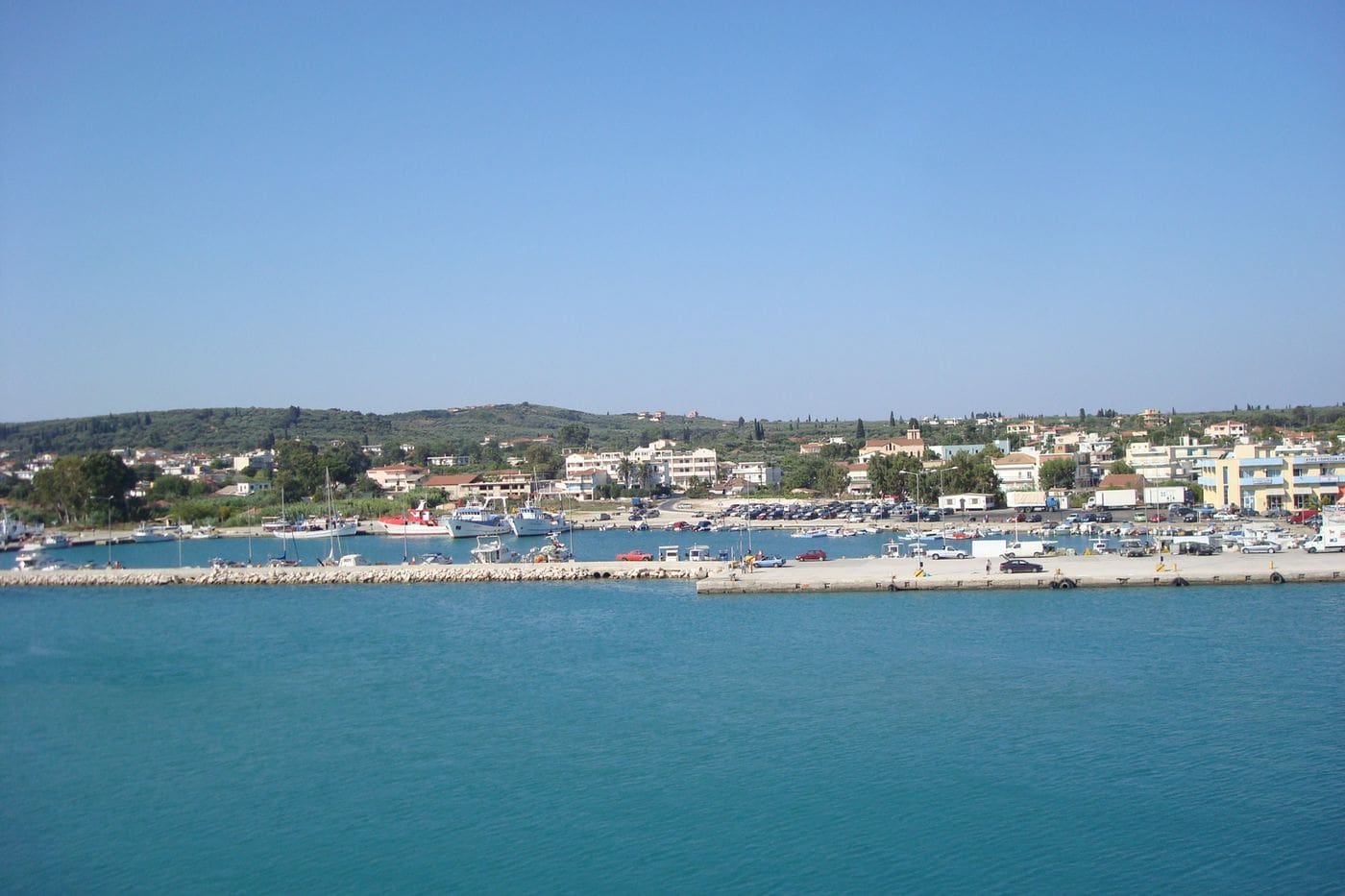
Kyllini tours start in the port town on the Ionian coast of Elis, in the northwest Peloponnese, where the ferries leave for Zakynthos and Kefalonia. The routes cover the Frankish castle of Chlemoutsi, the ruins of Glarentza, the springs of Loutra Kyllinis and the beaches of the Elis coast. Greece Tours lists the boat trips, day trips and transfers that start in Kyllini.
This page covers the ferries, the castle, the medieval port and the history of Kyllini, the beaches and springs, the day trips to Olympia, how visitors reach Kyllini and which season suits each route. The tours below are checked on GetYourGuide and leave from Kyllini, Athens and Kalamata.
What do Kyllini tours cover?
Kyllini tours cover the port town of Kyllini on the Ionian coast of Elis in the northwest Peloponnese, its ferry port for Zakynthos and Kefalonia, the Frankish castle of Chlemoutsi and the ruins of Glarentza, all inside the municipality of Andravida-Kyllini.
Kyllini is a port town and a community in the municipal unit of Kastro-Kyllini, in Elis, West Greece. The town sits on the northwest coast of the Peloponnese, east of Cape Kyllini, at an elevation of 10 metres. It lies 11 km west of Andravida and 39 km northwest of Pyrgos.
The 2021 census counted 534 residents in the Kyllini community and 3,272 in the municipal unit of Kastro-Kyllini. The municipality of Andravida-Kyllini, formed in 2011 from four former municipalities, had 22,552 residents at the same census, with its seat at Lechaina.
Kyllini tours use the town as a base for the northern part of the Kyllini peninsula, a hilly block of land that juts into the Ionian Sea.
- Port: the starting point of Kyllini tours, with car ferries to Zakynthos and to Poros on Kefalonia.
- Chlemoutsi: the Frankish castle above the village of Kastro, 5 km south of the town.
- Glarentza: the medieval ruins between the town and Cape Kyllini.
- Vlacherna Monastery: a Byzantine monastery at Kato Panagia, 2.5 km from the port.
- Kafkalida: an uninhabited islet near Cape Kyllini that carries a lighthouse.
Which ferries do Kyllini tours use?
Kyllini tours use the car ferries of Levante Ferries from the port of Kyllini, the busiest port in Elis. One line crosses to the main port of Zakynthos town, and a second line crosses to Poros in the southeast of Kefalonia, all year round.
Kyllini tours join the Zakynthos line, the usual sea route from the mainland to the island. The October timetable lists four weekday sailings each way, and the late July to early September timetable lists six a day.
Kyllini tours that add Kefalonia take the year-round line to Poros. Its timetable lists three sailings a day each way from November to April and four from late April to the end of September. The operator notes that the timetable can change with passenger traffic.
Mare di Levante has worked the Zakynthos route since 2003. Fior Di Levante, the ship on the Poros line, is the first ship in Greece to take electricity at night from a shore installation, the one at the port of Kyllini. The page on getting to Zakynthos covers the island side of the crossing.
- Zakynthos line: Kyllini to the main port of Zakynthos town, 28 km away, served by Mare di Levante.
- Kefalonia line: Kyllini to Poros in the southeast of Kefalonia, served by Fior Di Levante.
- Operator: Levante Ferries, a Greek company founded in 2014, with four ferries for Zakynthos, Kefalonia and Ithaca.
What do Kyllini tours see at Chlemoutsi castle?
Kyllini tours at Chlemoutsi see a Frankish castle built between 1220 and 1223 on a plateau 226 metres above sea level, above the village of Kastro. A hexagonal keep of two-storey halls rings an inner courtyard, and the view reaches Zakynthos and Kefalonia.
Chlemoutsi, also known as Clermont, dominates the hill village of Kastro, 5 km south of Kyllini, and the village name means castle. The Crusader rulers of the Principality of Achaea built it as their main stronghold. The castle is largely preserved in its 13th-century state, with only minor Ottoman changes for artillery.
The keep measures about 90 metres from east to west and 60 metres from south to north, and its six walls enclose a courtyard of 61 by 31 metres. In 1825 the forces of Ibrahim Pasha took the castle and pulled down part of its walls. Today the castle is a preserved monument open to the public, and Kyllini tours reach it by car from the town.
- Keep: a ring of two-storey halls around the inner courtyard.
- Outer ward: a second walled yard on the western side, entered through the northwest gate.
- Names: Clermont in French, and Castel Tornese in Italian sources from the 15th century.
- Role: a prison for distinguished captives, never besieged under the Principality.
The page on Chlemoutsi Castle covers the history and architecture of the fortress in depth.
What do Kyllini tours see at Glarentza?
Kyllini tours at Glarentza see the ruins of the main port and mint of the Frankish Principality of Achaea, founded in the mid-13th century on a headland just west of the modern town. Three gates, traces of the walls and a church, and the silted harbour survive.
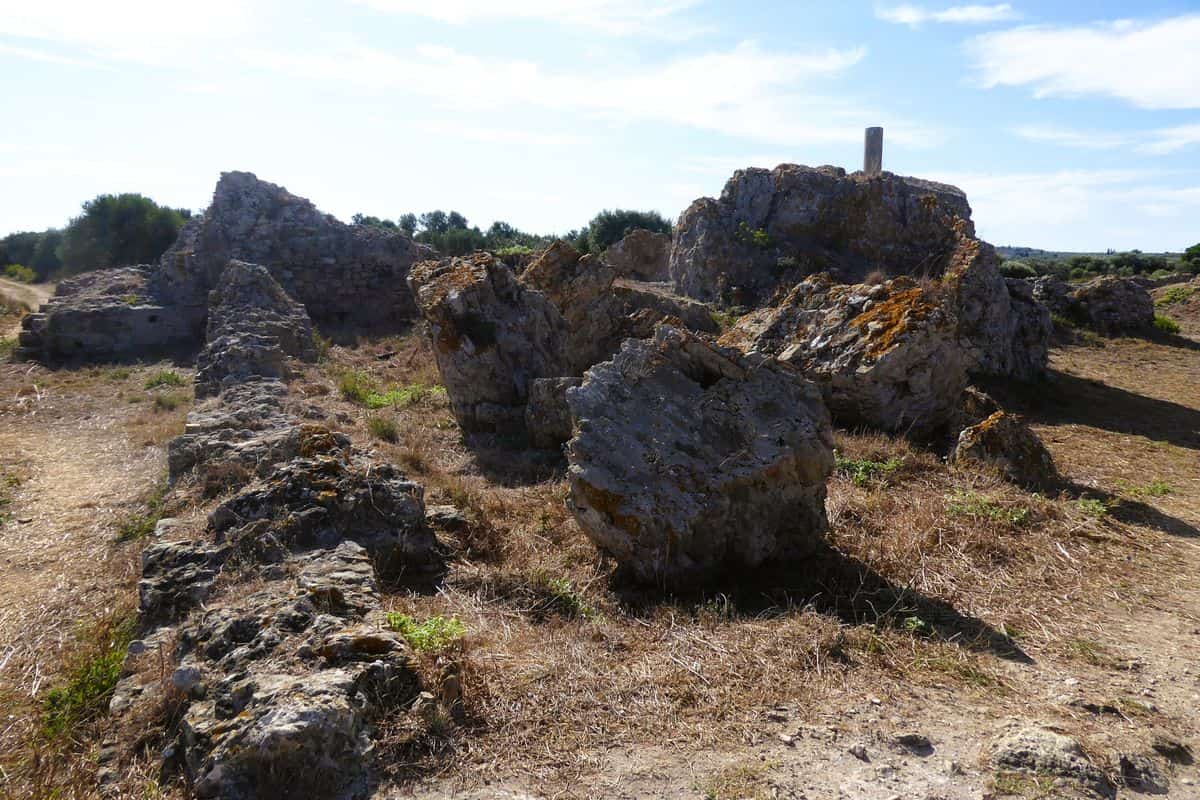
Kyllini tours start the Glarentza story with William II of Villehardouin, who founded the town as the haven for Andravida, the capital of the Principality, 13 km inland. The town became the main port for traffic between the Morea and Italy. It had a hospital, banks, lodgings for mariners and a Franciscan monastery, and a list of fiefs from 1391 counted about 300 hearths.
The princely mint struck tornese coins here until 1353, marked CLARENTIA and later CLARENCIA. Assemblies of the nobles of Achaea met in the town in 1276 and 1289. The German Army demolished standing remains during the occupation of Greece in World War II. The 6th Ephorate of Byzantine Antiquities manages the site, which is open to visitors and accessible by car.
- Gates: the three town gates, with larger remains than the wall.
- Church: traces of a church of 43 by 15 metres in the northeast, linked to the Franciscans.
- Harbour: an excavated basin on the north side, now a swamp.
Kyllini tours at Glarentza also tell of a claim that the English title Duke of Clarence came from the town. William Martin Leake rejected it in 1846 and traced the title to Clare in Suffolk.
What history do Kyllini tours tell?
Kyllini tours tell a history that runs from ancient Cyllene, the seaport of Elis named by Homer, through the Frankish port of Glarentza and the Byzantine and Ottoman periods, to the modern ferry port that links the Peloponnese with Zakynthos and Kefalonia.
Ancient Cyllene served as the port of the city of Elis, 120 stadia, or about 23 km, away. Homer lists it among the towns of the Epeians. Pausanias records that settlers from Arcadia founded it, and he lists temples of Asclepius, Aphrodite and Hermes. The Corcyraeans burned Cyllene in 435 BCE because it had supplied ships to the Corinthians.
Kyllini tours then move to the Frankish era, when Glarentza, Chlemoutsi and the capital Andravida formed the administrative heart of the Principality of Achaea. In 1428 Glarentza passed to the Byzantine Despotate of the Morea, and in 1460 it fell to the Ottomans. By the 16th century it stood abandoned.
Kyllini tours end the story at the modern port, which a railway from Kavasila served from August 1891 until the line closed in 1996.
- Ancient era: the Iliad records the death of Otos of Cyllene in the Trojan War.
- Frankish era: Ferdinand of Majorca captured Glarentza in June 1315 and died in the Battle of Manolada in July 1316.
- Byzantine era: Constantine Palaiologos destroyed the fortifications of Glarentza after a Catalan fleet seized the town in 1429.
- Modern era: settlers from the Ionian Islands, shepherds and later refugees from Asia Minor moved in after independence.
Which beaches and thermal springs do Kyllini tours reach?
Kyllini tours reach the thermal springs of Loutra Kyllinis, 13 km to the south, the sandy beaches of Glyfa and Paralia on the Kyllini peninsula, and the long sandy shore of the Kyllinios gulf, which runs from Kounoupeli to the Blue Flag beach of Kalogria.
Loutra Kyllinis faces Zakynthos. Pine forest covers the larger part of the area and ends at a long beach. The springs have been known since Roman times, an organised hydrotherapy centre works there today, and the ruins of a Roman bath complex form a declared archaeological site.
On Kyllini tours, the springs rank as the largest beach facility in the western Peloponnese, and the baths offer inhalation therapy. The SPAP railway company, which opened a branch from Vartholomio on 1 June 1892, built spa facilities, hotels and parks there. Along the coast:
- Glyfa and Paralia: both beaches are sandy, with clear water, small hotels and campsites, beside the artificial forest that the villagers of Glyfa planted in the 1950s.
- Arkoudi: this small seaside resort stands on Cape Trypiti, 4 km southwest of Lygia, on the coast near Loutra Kyllinis.
- Kounoupeli: the beach in front of the abandoned baths of Loutra Yrminis takes the name of the cape, with a medieval tower and traces of ancient Hyrmine nearby.
- Kalogria: this Blue Flag beach near Araxos runs for about 9 km, at a width of 80 m, and the largest sand dune in the Peloponnese rises at its north edge.
Kyllini tours also stop at Kyllini beach and Brinia. Loggerhead turtles nest on the shores of the gulf.
Which day trips combine with Kyllini tours?
Kyllini tours combine with Ancient Olympia, 20 km beyond Pyrgos, the Gothic church of Agia Sofia in Andravida, 11 km to the east, the Kotychi lagoon and the Strofylia forest to the northeast, and boat trips to Zakynthos town and to Poros on Kefalonia.
Ancient Olympia lies 20 km from Pyrgos, which stands 39 km southeast of Kyllini. Its sanctuary of Zeus hosted the ancient Olympic Games every four years from the 8th century BC to the 4th century AD. The site museum holds finds such as the Hermes of Praxiteles and the Nike of Paeonius.
Andravida was the capital of the Frankish Principality of Achaea. Its Dominican church of Agia Sofia, built around 1230, hosted the assemblies of the nobility, and its Gothic part and two chapels survive. Other stops on Kyllini tours:
- Kotychi lagoon: this Ramsar wetland of 3.7 km², 45 km southwest of Patras, holds sea bass, mullet, bream and eels, and herons and glossy ibises rest there on migration.
- Strofylia forest: Aleppo pine, stone pine and oak cover about 22 km², home to 60 bird species and to the largest gecko in Greece.
- Zakynthos: the ferry from Kyllini lands at Zakynthos town, 28 km to the southwest, and island boats reach Navagio cove and the blue caves of Cape Skinari.
- Poros, Kefalonia: a year-round ferry links Kyllini with Poros on Kefalonia, with an 80 m deep gorge, the Blue Flag beach of Aragia and the Mycenaean tomb of Tzanata.
Kyllini belongs to the region of West Greece, and Kyllini tours fit into wider Western Greece tours along the Ionian coast.
How do visitors reach Kyllini for Kyllini tours?
Kyllini tours start from a port town 11 km west of Andravida. Drivers from Athens take the A8 Olympia Odos toll motorway for 210 km to Patras, then its 75 km section towards Pyrgos, while summer flights land at Araxos airport, 45 km west of Patras.
The A8 links Athens with Patras and Pyrgos via Corinth over 290 km, with toll stations at Eleusis, the Isthmus, Zevgolateio, Elaionas and Rio. Past Patras, the motorway runs close to the old National Road 9, which passes Andravida and runs east of Kyllini.
Araxos, the airport of Patras, serves both civil and military traffic and receives flights from European destinations in the summer months. Buses run from Patras to Araxos, and no train serves the airport. For Kyllini tours by public transport:
- Athens: KTEL Kifissos, the busiest intercity bus station in Athens, serves routes to the Peloponnese and the Ionian Islands; bus X93 links it with the airport.
- Kefalonia bus: the service from Poros runs to Athens via Kyllini, Patras and the Corinth Canal bridge.
- Patras: buses to Zakynthos and Kefalonia leave from stations on Othonos Amalias Avenue, apart from the KTEL Achaias terminal.
- Rail: no train reaches Kyllini, since the 17 km branch from Kavasila closed down in 1996.
When do Kyllini tours run best?
Kyllini tours run best from June to September, when Pyrgos, 39 km away, records average highs of 29 to 32 °C and less than 40 mm of rain a month, and in July and August, when the municipal festival stages concerts at Chlemoutsi castle.
Pyrgos has a hot-summer Mediterranean climate (Köppen Csa), with dry summers and mild, rainy winters. July there averages 0.5 rain days and 360 hours of sunshine. Rain reaches nearly 900 mm a year and peaks in late autumn, with 177.6 mm in November. Temperatures over 40 °C have been recorded in Elis.
The ferry between Kyllini and Poros runs all year, and the European flights to Araxos land mainly in the summer months. Dates for Kyllini tours:
- June: the municipal events calendar lists the Strawberry Festival of Nea Manolada.
- Late spring to August: loggerhead females lay their eggs at night on the beaches of Laganas Bay on Zakynthos, home of the first national park for sea turtles in the Mediterranean.
- July and August: the International Festival of Andravida-Kyllini opens in early July in Neochori Myrtountion and runs to late August, with concerts at Chlemoutsi castle, among them a recital under the full moon.
- Mid-September: Andravida holds the panigyri, the feast, of Agia Sofia.
Frequently Asked Questions
Which wildlife do Kyllini tours meet in the Kotychi–Strofylia park?
Kyllini tours into the Kotychi–Strofylia national park meet ducks, herons, glossy ibises, flamingos, coots, Dalmatian pelicans, little terns, black-winged stilts and marsh harriers. The park covers 143 km² of lagoons, lakes, marshes, canals, rivers, dunes and forest, under the Ramsar and Natura 2000 networks.
Which Kefalonia sights do Kyllini tours add from Poros?
Kyllini tours that cross to Poros reach the Drakaina cave in the Poros gorge, where finds confirm human presence since 5,700 BC, and the Atros monastery, the oldest on Kefalonia. The coast beyond Poros, facing Ithaca, is one of the last refuges of the Mediterranean monk seal.
What protects the sea turtles seen on Kyllini tours to Zakynthos?
The National Marine Park of Zakynthos, founded in 1999, protects the loggerheads that Kyllini tours meet in Laganas Bay. The park covers 135 km² and hosts 900 to 2,000 nests a year, about 80% of the Mediterranean total, on six beaches that include Gerakas, Sekania and the islet of Marathonisi.
How large are the dunes on Kyllini tours to Kalogria?
The dunes behind Kalogria, a stop on Kyllini tours, cover 200 hectares, rise up to 10 m and spread from 20 to 500 m in width. Westerly winds and the waves of the Ionian Sea move the sea sand that forms them. Araxos airport lies 7 km from the beach.