
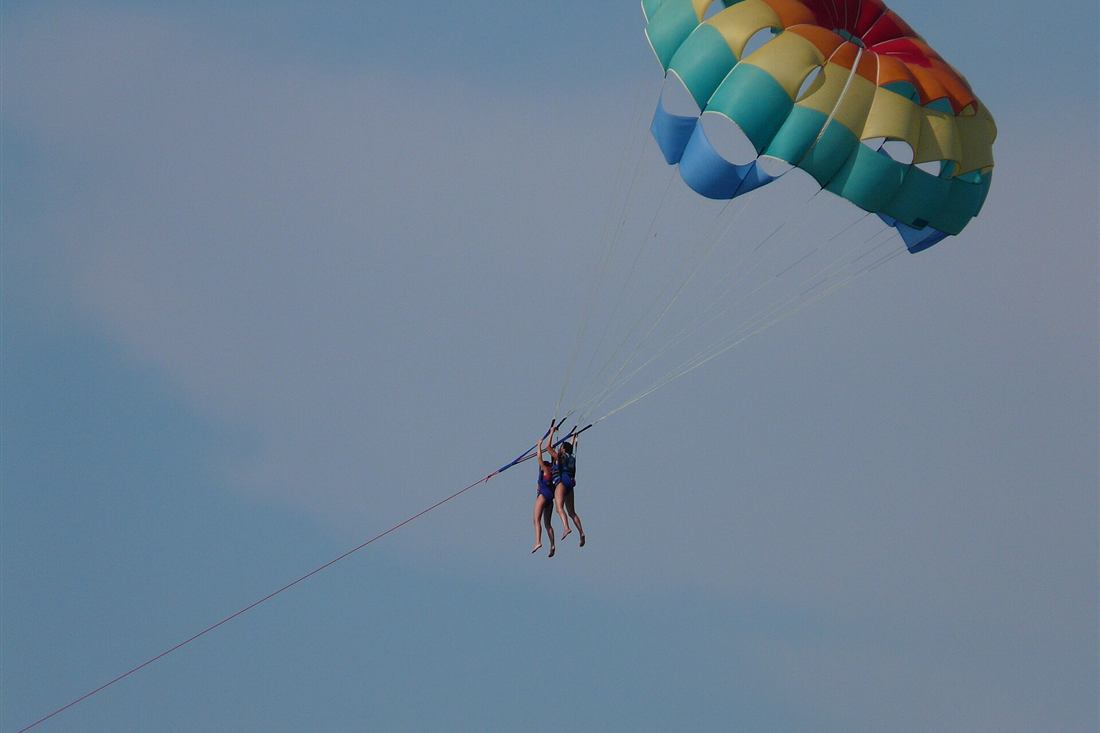
Corfu Parasailing
Corfu parasailing is a towed flight under a parasail canopy, pulled by a speedboat over the Ionian Sea, with bookable flights from Dassia on the east coast and Sidari on the north coast. Both trips are listed on Greece Tours, and both use winch boats that launch and land you on the back deck.
Corfu parasailing needs no experience, since the crew handles the canopy, the harness and the winch. Flights run from roughly May to October in calm to moderate wind, and the listing gives heights, flight times and cancellation terms. A Corfu parasailing trip suits couples, friends and families.
What is Corfu parasailing?
Corfu parasailing is a towed flight in which you sit in a harness under a parasail canopy while a speedboat pulls you along the coast on a long tow line, lifting you high above the Ionian Sea and landing you back on the boat.
The activity needs no experience, because the crew handles the canopy, the harness and the winch from start to finish. Your job is to sit back, follow a few hand signals and take in the view. Corfu parasailing runs from beaches on the east and north coasts, where speedboats leave from small jetties or straight from the sand. The two flights on sale depart from Dassia and Sidari, two resorts with busy summer beaches.
Parasailing sits beside boat trips, snorkelling and diving as one of the classic sea activities on the island, and it pairs well with a beach day. The Corfu travel hub covers the island’s towns, beaches and tours in one place. A Corfu parasailing flight fills a short part of the day, so most travellers book it around lunch, a swim or a boat ride on the same stretch of coast.
Which Corfu parasailing flights can you book?
Two Corfu parasailing flights are on sale: the Dassia boat ride and parasailing adventure on the east coast, and the parasailing experience for two in Sidari on the north coast. Both launch from a speedboat in summer.
The Dassia listing, titled Dassia: Boat Ride and Parasailing Adventure in Corfu, pairs a speedboat ride along the sheltered east coast with the flight itself. The calm water off Dassia suits first-timers, and the view runs across the channel to the mountains of the Albanian coast. This Corfu parasailing option fits travellers staying in Dassia, Gouvia, Ipsos or Corfu Town, since the east coast road links all four places.
The Sidari listing, titled Corfu: Parasailing Experience for 2 in Sidari, is built around a shared flight for two people. Sidari sits on the north coast, so the flight looks down on the sandstone cliffs of the Canal d’Amour and out to the open sea. Corfu parasailing from Sidari suits couples and friends based in the north. Flight heights, times and group formats differ, so check the listing before booking.
How does a first Corfu parasailing flight work step by step?
A first Corfu parasailing flight follows a set routine: you check in at the beach, board the speedboat, get strapped into the harness on the back deck, rise on the winch line, fly, and get winched back down to the same deck.
On the day of the flight, check-in starts at the beach kiosk or jetty, where the crew confirms names, asks about health conditions and hands out life jackets. The speedboat then heads offshore to open water. On the flat back deck, a crew member clips you into the harness, checks every buckle and explains the hand signals. Nobody needs to run, jump or swim, because the winch launch starts from a seated position.
As the boat speeds up, the canopy fills with air and the winch lets out the tow line, so you lift off the deck smoothly. The first seconds feel like a quiet lift, and then the engine noise fades below. Up high, the air feels cool and calm, and the ride is steady rather than fast. Landing reverses the process: the winch pulls you in until your feet touch the deck again.
- Check in – confirm names and health details at the kiosk.
- Clip in – sit on the deck while the crew fastens the harness.
- Fly – rise on the winch line above the coast.
- Land – return to the deck as the winch reels you in.
What equipment does the crew use on a Corfu parasailing flight?
Every Corfu parasailing flight uses a parasail canopy, a padded harness, a life jacket for each passenger, a strong tow rope and a hydraulic winch fixed to the speedboat, and the crew checks all of it before take-off.
The canopy is a large parachute-style wing built to catch air while the boat moves, and its bright colours let other boats spot it from afar. The harness holds you in a seated position, with straps around the legs and the waist. The life jacket stays on for the whole Corfu parasailing trip, from boarding to landing, and keeps you afloat if the crew offers a dip in the sea.
The hydraulic winch is the heart of a winch boat. It lets the tow line out slowly for the climb and reels it back in for the landing, which keeps the launch and the return on the dry back deck. The captain drives the boat while a second crew member watches the canopy and the passengers closely. Crew roles and boat types differ between operators, so check the listing for details.
- Canopy – lifts the passengers as the boat gains speed.
- Harness – holds each passenger in a seated position.
- Life jacket – stays on from boarding to landing.
- Winch – lets the tow line out and reels it back in.
How safe is Corfu parasailing?
Corfu parasailing is a controlled activity when the crew follows weather rules, checks the gear before every flight and briefs passengers on hand signals. Your part is simple: listen, keep the harness fastened and follow each instruction.
Safety starts with the weather. Crews watch the wind and the sea state through the day and stop flights when gusts build or waves rise. A careful crew also checks the tow line, the harness buckles and the canopy seams before each launch of the day. On board, passengers stay seated until the crew calls them to the launch area, and nobody unclips or stands up while the boat moves at speed.
Loose items cause the most trouble on board. Sunglasses without a strap and phones without a sealed pouch fall into the sea during the climb, so secure them before you clip in. Follow the hand signals from the deck, and keep both hands on the harness straps during the launch and the landing. Tell the crew about any health condition at check-in, so they plan the flight around it.
- Listen – follow the briefing and the hand signals.
- Stay seated – wait for the crew before moving on deck.
- Secure items – strap sunglasses and seal phones.
- Speak up – report health conditions at check-in.
Can you fly single or tandem on a Corfu parasailing trip?
Corfu parasailing comes in two main formats: single flights with one passenger under the canopy and tandem flights with two people side by side in the harness. The Sidari listing is sold as a shared experience for two.
A single flight gives you the whole view to yourself and suits travellers who want a quiet, personal ride over the sea. A tandem flight puts two people side by side under the same canopy, so couples, friends and parents with children share the moment and talk during the climb. The formats on offer differ between boats and dates, so check the listing for the exact options on each Corfu parasailing trip.
Tandem flying also helps nervous first-timers, since a partner at your side makes the climb feel less strange and the view easier to talk about. Weight rules apply to tandem pairs, and the listing states them, so share honest details at booking. Children fly tandem with an adult on some boats, and the listing sets the age rules. The Sidari experience for two keeps a pair together from launch to landing.
What do you see from a Corfu parasailing flight above Dassia?
A Corfu parasailing flight above Dassia shows a long pebble-and-sand beach, calm sheltered water, the channel toward the mountains of the Albanian coast and, to the north, Mount Pantokrator, the island’s highest peak at 906 metres.
Dassia is a resort on the east coast north of Corfu Town, with hotels, beach bars and water-sports jetties along a long curve of shore. From the air, the beach shows as a thin line between green hills and clear water. The sheltered bay keeps the surface flat on most mornings, which makes Dassia a calm place for a first Corfu parasailing flight. Beach umbrellas and sunbeds line the sand.
Look east and the mountains of the Albanian coast rise across the channel, with the narrow strait between Corfu and the mainland in full view. Look north and the bulk of Mount Pantokrator fills the skyline behind the coastal villages. The Dassia listing adds a boat ride to the flight, so the trip includes time on the water along this stretch of the east coast as well as time in the air.
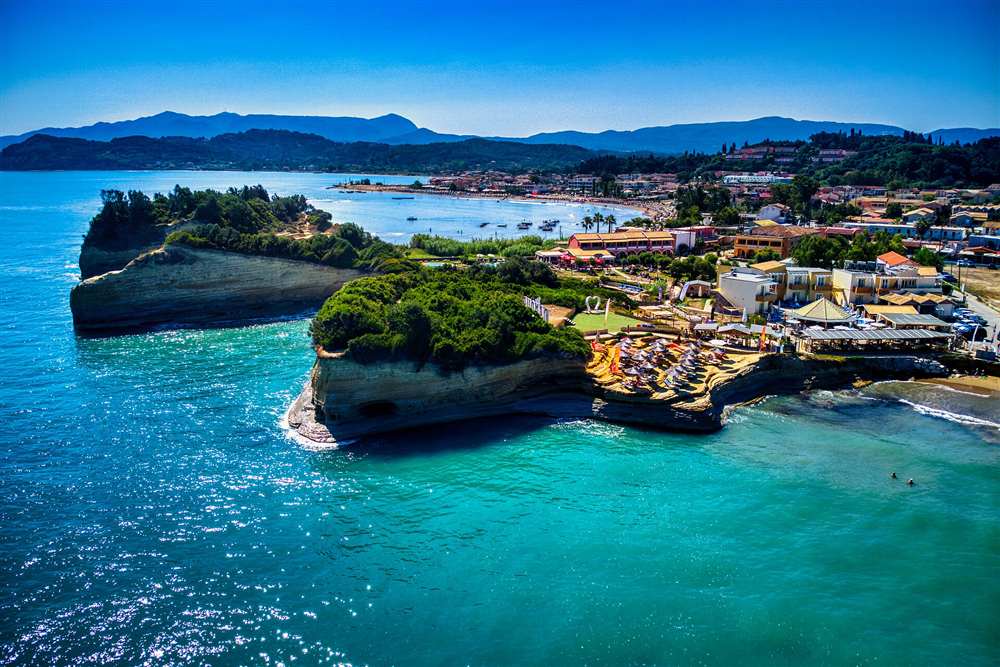
Where does the Canal d’Amour appear on a Corfu parasailing flight from Sidari?
On a Corfu parasailing flight from Sidari, the Canal d’Amour appears as a maze of eroded sandstone cliffs, narrow sea channels and small coves on the north coast, with the open sea stretching toward the Diapontian islands.
Sidari is a resort on the north coast known for the Canal d’Amour, where wind and waves have slowly carved the soft rock into channels, arches and ledges. Local legend says that couples who swim through the main channel stay together. From above, the pale cliffs stand out against the turquoise water, and the shape of the channels becomes clear in a way that the beach level never shows.
North of Sidari, the open sea runs toward the Diapontian islands of Othonoi, Ereikoussa and Mathraki, which appear as low shapes on the horizon on a clear day. The north coast faces open water, so the sea here carries more swell than the sheltered east coast, and crews watch the wind there closely. A Corfu parasailing trip from Sidari trades the calm of Dassia for cliff scenery and wider sea views.
When do wind and weather allow Corfu parasailing?
Corfu parasailing runs from roughly May to October in calm to moderate wind. Strong winds or rough waves cancel flights, and mornings bring the calmest water on the east coast on most days of the season.
The parasail needs steady air to fly, but gusts and high waves make launches and landings unsafe, so crews check conditions before each run. The east coast faces the sheltered channel toward the mainland, which keeps the water flat on most mornings. The north coast faces open sea, and the water there picks up swell when the wind rises. A morning slot gives the best odds of a smooth Corfu parasailing flight on either coast.
The season follows the summer, from roughly May to October, with the warmest sea from July to September. Early and late in the season, the water stays cooler and the weather turns faster, so keep a spare day in the plan. Midday flights bring the strongest sun. When the crew cancels for wind, operators reschedule or refund the booking, and the exact rules sit in the cancellation terms on the listing.
Who can take part in Corfu parasailing?
Most healthy adults and older children can take part in Corfu parasailing, since the flight needs no special skill and no fitness training. Age and weight rules differ between flights, so check the listing before you book a slot.
The winch launch starts from a seated position on the deck, so people who dislike jumping or running join in with ease. The harness carries your weight during the flight, and the ride stays steady at height. Travellers with a mild fear of heights find a tandem partner helpful on a first Corfu parasailing trip, because a familiar voice at your side keeps the climb calm and the view shared.
Children fly tandem with an adult on some boats, and the listing sets the minimum age. For family planning, the Corfu with kids page covers beaches and activities for young travellers. Parasailing is not advised for pregnant travellers or for people with heart, neck or back conditions, because the launch and the landing put light strain on the body. Travellers with recent injuries need to speak with the crew first.
What do you wear and bring on a Corfu parasailing trip?
Wear swimwear under light clothes and bring sunscreen, sunglasses with a strap and a waterproof phone pouch. A Corfu parasailing trip involves sea spray and strong sun, so pack light and leave valuables at the hotel.
Swimwear works best, because the boat deck gets wet and the crew sometimes offers a dip at the end of the flight. Winch boats launch and land you on the back deck, so you stay dry unless you accept that dip. Apply sunscreen before boarding, since light reflected off the sea burns skin fast. Leave hats on land, because the wind at height pulls them off during a Corfu parasailing flight.
Photos and video add a record of the flight, and some operators offer pictures or clips taken from the boat. The listing states whether photos are included, so check the listing for details. Phones in a sealed pouch with a lanyard stay safe in the air, but a dropped phone sinks for good. Action cameras on a wrist strap give steady footage of the coast below and of the boat trailing its white wake.
- Swimwear – wear it under light clothes.
- Sunscreen – apply it before boarding the boat.
- Sunglasses – fix them with a strap.
- Phone pouch – seal the phone and wear the lanyard.
Which other Corfu beaches have water sports?
Beyond Dassia and Sidari, water sports run at Ipsos, Gouvia, Kavos, Acharavi and Agios Georgios, where beach kiosks rent out equipment and offer towed rides in summer. The Corfu parasailing listings on sale depart from Dassia and Sidari.
Ipsos lies just north of Dassia on the same east coast, with a long roadside beach and a lively seafront of cafes and tavernas. Gouvia sits south of Dassia, next to a large marina full of yachts and charter boats. Both resorts share the calm channel water of the east coast, which makes them easy bases for the Dassia flight on a morning slot. Water sports kiosks line both beaches in summer.
In the far south, Kavos has a long shallow beach and a busy nightlife strip, with water-sports kiosks along the sand. Acharavi lies on the north coast east of Sidari, with a long beach and a quieter village feel. Agios Georgios is the name of two bays on the west side of Corfu, one in the north-west and one in the south-west, both with water sports in summer.
- Ipsos – east coast beach next to Dassia.
- Kavos – southern resort with a long shallow beach.
- Acharavi – north coast resort east of Sidari.
- Agios Georgios – west coast bays in the north and south.
How do you book Corfu parasailing and cancel if plans change?
Book Corfu parasailing online through the listing for Dassia or Sidari, pick a date and a time slot, and read the cancellation terms before you confirm. Weather cancellations lead to a new slot or a refund.
Summer slots fill up fast in July and August, so book a few days ahead for those months. A morning slot early in your stay leaves spare days for a rebooking if the wind rises. Bookings for tandem flights need the names and details of both passengers. The listing shows the meeting point, the check-in time and what each Corfu parasailing trip includes, so read it in full before the day.
Operators reschedule or refund flights cancelled for wind or waves, and the listing sets out the exact terms for traveller cancellations. Read those terms before you confirm, since the cut-off for a free change differs between trips. Arrive at the meeting point on time, because boats run to a fixed schedule. Pair the flight with a Corfu boat tour on another day for a fuller week on the water.
Is Corfu parasailing worth it?
Corfu parasailing is worth it for travellers who want a calm, high view of the coast without any training. The Dassia flight suits first-timers on the sheltered east coast, and the Sidari flight suits pairs who want cliff scenery.
The flight shows Corfu from an angle that no road, beach or boat gives: the shape of the bays, the colour of shallow water over sand and rock, and the mountains on both sides of the channel. It takes no skill, and the crew handles every piece of gear. For travellers who like sea activities, a Corfu parasailing trip adds a new view to days spent on beaches and boats.
Pair it with snorkelling in Corfu for an underwater view of the same stretch of coast, or compare the experience with parasailing in Crete on a second island trip. Choose Dassia for calm water and mountain views across the channel, and choose Sidari for the Canal d’Amour cliffs and the open north sea. Either way, check the listing for heights, flight times and cancellation terms before booking your slot.
Frequently Asked Questions
Do you get wet on a Corfu parasailing flight?
No, not on a winch boat. A Corfu parasailing flight launches and lands on the back deck, so you stay dry unless the crew offers a dip in the sea before landing. Wear swimwear anyway, because spray reaches the deck.
Can two people fly together on Corfu parasailing trips?
Yes. Tandem flights put two people side by side under one canopy, and the Sidari listing is sold as an experience for two. Weight rules apply to pairs, so check the listing and share accurate details for both passengers when you book.
What happens if the wind is too strong for Corfu parasailing?
The crew cancels the flight, because strong winds and rough waves make launches and landings unsafe. Operators then reschedule the booking or refund it. Check the cancellation terms on the listing, and book early in your stay to leave spare days.
Do you need experience for Corfu parasailing?
No experience is needed, because the crew handles the canopy, the harness and the winch. Every passenger wears a life jacket from boarding to landing. Tell the crew if you cannot swim, and follow the briefing and the hand signals during the flight.
Which Corfu parasailing flight suits first-timers?
The Dassia flight suits first-timers, because the sheltered east coast keeps the water calm on most mornings and the listing adds a boat ride. The Sidari flight for two suits pairs who want views of the Canal d’Amour cliffs.