
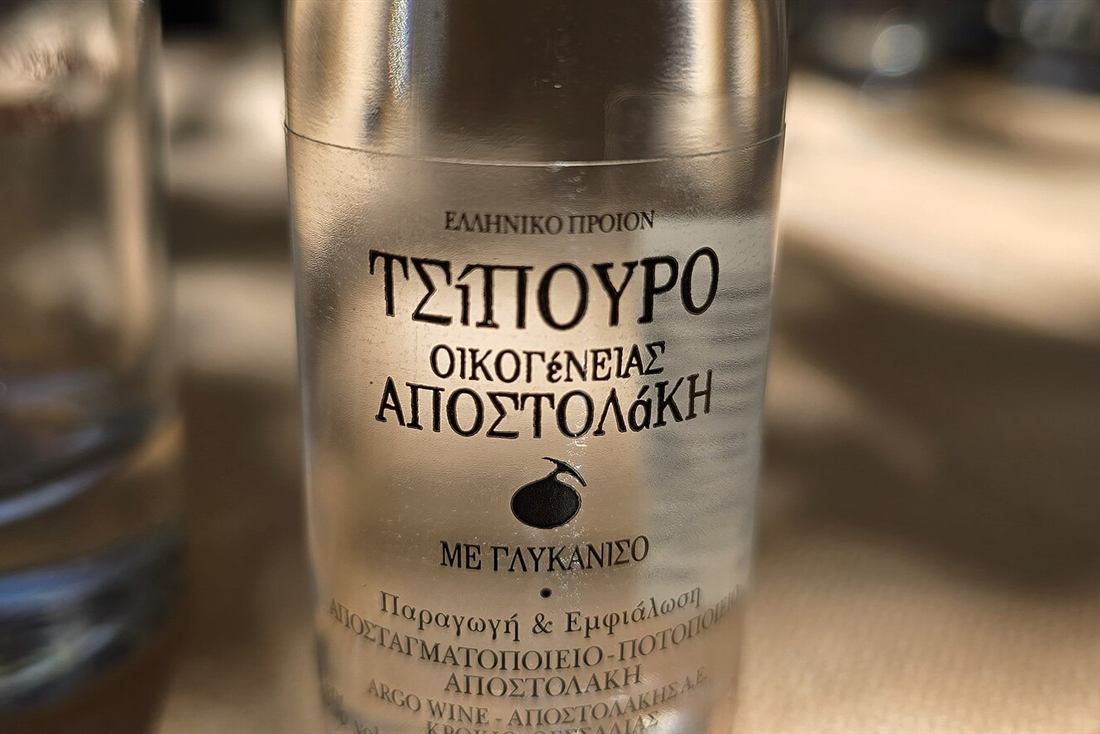
A Volos food tour walks the tsipouradika of the port city between the Pagasetic Gulf and Mount Pelion, where tsipouro arrives in small bottles and each round brings a new plate of seafood meze, from the waterfront on Argonafton street to the tables of Nea Ionia. Plan the rest of the trip with Greece Tours.
This page covers the food: tsipouro and how the rounds work, the tsipouradika and where they cluster, the guided walk with tsipouro tasting, the ancient cities under Volos, and how a tasting fits a day in the Pelion villages.
What does a Volos food tour taste?
A Volos food tour tastes of a Greek port city set between the Pagasetic Gulf and Mount Pelion. The air carries salt and fish. In the glass and on the small plates, the tour tastes the sea and the mountain.
Volos sits in Thessaly on the Pagasetic Gulf at the foot of Mount Pelion. The water stays close to every street in the centre.
Mount Pelion keeps the old myth of the centaurs and rises behind the port. Its slopes turn blue at dusk above the rooftops.
Goritsa hill marks the south-east edge of the city, a low green stop above the water. The gulf stretches out toward the open arm of the coast.
What is a tsipouradiko on a Volos food tour?
A tsipouradiko is a Volos small-plates room, also called an ouzeri. It serves tsipouro with meze, mostly seafood. The tables sit close, and each bottle pulls a plate behind it.
Volos is known for these rooms. A tsipouradiko feels like a bar and a tavern shoulder to shoulder.
The meze plates lean on seafood from the gulf. Each plate lands small and disappears fast.
A visitor watches the server move between the pass and the pavement tables. The bottles stay cold in the hand.
What is tsipouro made from on a Volos food tour?
Tsipouro is an un-aged grape brandy from Thessaly, Epirus and Macedonia. It is distilled from grape pomace, the residue of the wine press, and reaches 40 to 45 percent alcohol. It arrives clear.
The raw material is the grape mass left after the wine press runs off. That press residue gives the spirit its dry edge.
The distillation pulls a strong clear spirit from that mass. No barrel ageing softens the result.
On the table the pour smells dry and raw, not sweet or oak-aged. The alcohol heat rises from the glass before the first sip.
What is the difference between pure and aniseed tsipouro on a Volos food tour?
Pure tsipouro stays clear and dry, with the grape close to the rim. Aniseed tsipouro carries a liquorice scent and turns cloudy when water hits it. The choice changes the whole table.
Pure tsipouro lets the raw grape speak first in the glass. The pour stays bright and still.
Aniseed tsipouro clouds the pour and leaves a cool liquorice smell in the air. A drop of water makes the cloud spread fast.
The server asks which bottle to open before the first meze plate lands. The answer sets the scent for the round.
How does tsipouro compare with Cretan tsikoudia on a Volos food tour?
Tsipouro is close to the tsikoudia of Crete. A visitor who knows the Cretan shot will recognise the Volos pour by its clear dry heat and grape smell. The two drinks share the same sharp edge.
The name changes from Crete to Thessaly, but the drink stays a clear, strong grape spirit. The small bottle and the narrow glass look the same.
On the Volos food tour, a taster from Crete recognises the smell before the glass reaches the table. The nose brings the same raw grape and heat.
The comparison ends at the meze, because Volos wraps the same sharp pour in seafood plates. Crete has its own table, but Volos turns the spirit into a long seafood round.
How do rounds and meze work on a Volos food tour?
Tsipouro comes to the table in small bottles. Each round brings a new meze plate. Ordering by the round is the local way, so the meal builds plate by plate and no one orders everything at once.
The bottle and the first plate land together. The table starts with a drink and a bite in one motion.
When the bottle empties, the next round brings a new plate to the centre. The pace stays easy and unforced.
The server waits for the table’s word before opening the next bottle. Everyone eats from the shared plate and drinks from the same round.
Why does a group eat better on a Volos food tour?
A larger group sees a wider spread of meze. More bottles ordered by the table bring more dishes, so the tablecloth fills with small plates and every guest eats beyond one order. Sharing is the built-in rule.
A small table keeps the spread tight and the choices few. The plates arrive in a single row.
A big table orders more bottles, and the kitchen answers with more plates. The centre fills until the tablecloth disappears.
The latest plate moves around the edge, so each hand reaches it before it cools. No one misses the new dish.
How do meze differ from place to place on a Volos food tour?
Meze differ from one tsipouradiko to the next. One kitchen sends a hot seafood plate, the next sends a cold one, and another changes the sauce. The same order never tastes the same twice.
Each cook has a different hand with salt, oil and heat. One plate looks pale, another glossy from the pan.
A visitor learns to watch the pass instead of asking for a menu. What lands on the next table says more than words.
The plates all come from the same gulf, but the cutting and cooking change each time. The seafood keeps the walk familiar without being the same.
Where do the tsipouradika cluster on a Volos food tour?
Tsipouradika line the waterfront near the port, with more in Nea Ionia and around Plateia Eleftherias. They stay open all day, so the trail can start at the sea or turn inland and keep moving.
The port row faces the water and fills with drinkers from early in the day. Tables face the moored boats and the gulf beyond the sea wall.
Nea Ionia adds rooms away from the central waterfront. The streets there feel more local and less polished.
Plateia Eleftherias gives the walk another cluster, so the route bends into the square. Daylight or dark, the rooms stay open.
What other kinds of eating places does a Volos food tour pass?
Besides tsipouradika, Volos has tavernas for meat dishes, psistaries for grilled meat, souvlaki shops for pitta gyros, and restaurants serving dishes cooked earlier in the day. The same walk passes all of them.
Tavernas hold the meat table and keep the slower plates. The dining room sits heavier, with wine and cloth.
Psistaries work open heat and send smoke into the street. The grill man turns the meat with short fast moves.
Souvlaki shops wrap pitta gyros for a fast stop, while restaurants serve ready dishes from the morning. Each type fills a different hunger on the same walk.
When do the eating streets fill on a Volos food tour?
Greeks eat dinner late in the evening, and Volos follows that rhythm. Many tavernas close during the day. The eating streets fill after dark, when the shutters lift and the tables move outside.
In daylight, some taverna doors stay closed and the street feels quiet. Only the daytime cafes keep the pavement alive.
After sunset, the same doors open and the smell of cooked food moves out onto the pavement. The late hour belongs to long tables and small glasses.
A Volos food tour set late sees the city at its fullest eating hour. The dark street fills with voices, steam and the click of plates.
What does the walk along Argonafton and Ermou add to a Volos food tour?
Ermou street runs parallel to Argonafton street, the waterfront promenade. Shops, bars and cafes sit around Saint Nikolaos square and the city cathedral of the patron saint of sailors. The walk ties the port to the city.
Argonafton street keeps the sea on one side and the shopfronts on the other. Walkers move in two directions under the low balconies.
Ermou street gives the route a second line behind the promenade. It picks up the shoppers, the smell of coffee and the slower window browsers.
Cafes and bars pull the walk toward the square between food stops. The route always returns to the port or to a plate.
What does Saint Nikolaos square add to a Volos food tour?
Saint Nikolaos square gives the Volos food tour a short open pause. The group steps out of the shopfront line and stands among cafe chairs, crossing pedestrians and cold glass on metal tables. The space resets the walk.
The square opens after the narrow shopfront line and lets the group spread out. Stone paving runs underfoot and echoes with crossings.
Waiters move between tables while people cross the stone in small waves. A bell rings, a braked wheel stops, and the square resets itself.
The crowd noise drops enough to hear the next stop before the group moves on. The pause is short, but it pulls the walk together.
What does the Volos food tour with tsipouro tasting cover?
The GetYourGuide tour is a Volos food and walking tour with tsipouro tasting. It covers the tsipouradika trail, the seafood meze, and the walk from the port to the neighbourhood tables. The guide sets the rhythm.
The tour is bookable on GetYourGuide. A guide meets the group in the centre and starts at a clear point.
A guide handles the round-by-round ordering and keeps the route clear. The group moves without delay between tsipouradika and streets.
After the city table, a Pelion villages tour pairs with the food walk for a fuller day. The same pace carries into the next journey.
What ancient cities lie under Volos?
Modern Volos stands on or near the ancient cities of Iolcos, Pagasae and Demetrias. Demetrias was founded by Demetrius Poliorcetes, king of Macedon. The city layers sit close under the current streets.
The flat ground near the waterfront hides parts of Iolcos and Pagasae. You can stand by the modern port and look across the water these old settlements used for trade.
A short ride west of the centre reaches the open archaeological site. Low stone lines mark parts of the ancient settlement.
The view from the site is open towards the gulf. Visitors walk beside exposed foundations without leaving the modern city far behind.
Why is Iolcos remembered for Jason and the Argo?
Iolcos is the homeland of the hero Jason. He sailed on the Argo with the Argonauts to find the Golden Fleece. The old harbour area carries that founding myth.
Jason was born in Iolcos into a royal house. The city was his departure point for a long sea journey.
The Argo carried the Argonauts, a crew of Greek heroes. They travelled across open water to bring back the Golden Fleece.
Around Volos, the low harbour and hills keep the story present. You can look across the gulf and imagine the ship moving away from shore.
Why are Portaria’s mansions part of a Volos food tour route?
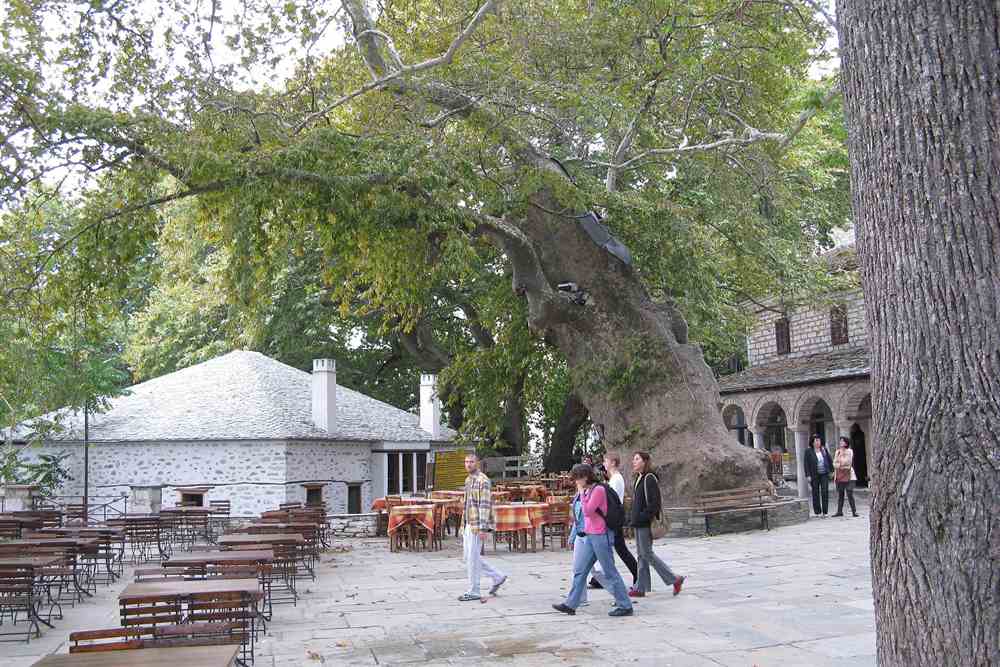
Portaria is a mountain village on Pelion above Volos and is known for its traditional Pelion mansions. Stone houses with slate roofs climb the slope. The village sits a short drive from the city kitchens.
The mansions have thick stone walls and upper floors that project over the lane. You pass courtyard gates and large plane trees on the main road.
Cool air moves between the houses even in summer. Visitors stop for a short walk after tastings in the city.
The stone architecture looks down towards the plain and the gulf. The change from port to mountain happens within one bus ride.
What does the view from Makrinitsa add to a Volos food tour?
Makrinitsa sits high on Pelion above the city. Its view of Volos is wide over the gulf. You see the urban grid, the port and the water in one line of sight.
From the lower viewing point, the gulf opens below the rooftops. The city appears small against the flat water.
Visitors stand at a low wall and watch ferries cross the sea. Terraces drop away on the mountain side.
The air feels cooler than the air by the port. A light layer helps after a warm meal in the centre.
How does the Pelion railway to Milies work with a Volos food tour?
The Pelion railway runs to the mountain village of Milies. The line climbs from the lower city edge through forest and over stone arches. It works as a half-day add-on to eating plans.
The train leaves the lower station and begins to climb. Trees close around the roof and the city drops out of view.
At Milies the train stops beside a small platform. You step down and walk through the village past stone fountains.
The return journey follows the same line with long views at bends. The slow pace fits a relaxed day between tables.
What do Pinakates and Vizitsa show on a Volos food tour day?
Pinakates, Vizitsa and Milies are Pelion villages visited on a small-group tour from Volos that is bookable on GetYourGuide. Stone houses, slate roofs and shaded squares define the stops. The mountain setting contrasts with port tastings.
Pinakates sits on a slope with narrow lanes that angle between houses. You walk slowly and hear birds instead of traffic.
Vizitsa opens over a tree-covered hillside. A public water tap fills bottles with cold mountain water.
The tour moves between the villages with short stops. You can explore a lane or sit in the shade without a long climb.
Where are the beaches of the Pagasetic Gulf near a Volos food tour?
The Pagasetic Gulf and the Aegean coast of Pelion hold beaches around the region. Calm water sits on the gulf side, while open-sea beaches lie east of the peninsula.
From Volos, the gulf shore runs south past small coves. A bus or car reaches a beach after a short ride.
A beach stop works after a food tour in the city. Flat water and light pebbles make it easy to wade.
The Aegean side has stronger waves and a wider horizon. A Volos yacht charter is another way to see the gulf from the water.
How does a Volos food tour fit with a Pelion day?
A Volos food tour fits with a Pelion day because city tastings and mountain air balance each other. A tasting stop in the city leaves time for an afternoon village stop above the gulf.
You can start with a first tasting stop in Volos, then drive up into the trees. The road climbs through the last villas and enters forest.
A short stop in Portaria or Makrinitsa adds a cool walk. You return to the city for an evening meal with a sharper appetite.
The two experiences use the same day without feeling rushed. The mountain visit is a pause between eating, not a separate trip.
What does the Pelion villages tour with swim and lunch add to a Volos food tour?
The tour is bookable on GetYourGuide as a Volos and Pelion villages trip with a swim and lunch. It combines mountain villages, beach time and a seated meal in one organised route.
The day leaves Volos and climbs into the Pelion villages. You pass stone walls and shaded stops before the route descends towards the sea.
The swim stop uses a gulf beach with quiet water. You get time to float and dry off before the seated meal.
Lunch is served outside the city. The setting moves from port to hillside or coast.
How does a Volos food tour pair with a private trip to Meteora?
A private tour from Volos to Meteora is bookable on GetYourGuide. The route leaves the gulf and travels inland to rock pillars and monasteries. It is a long day away from food stops.
The drive crosses the plain west of Volos. You leave the port and follow the road towards tall rock formations.
At Meteora the monasteries sit on vertical stone. Visitors walk from viewing areas to a monastery entrance and look down over the plain.
A private guide holds the day to your pace. You can return to Volos late and keep the next day for local eating.
How do you reach Volos by air for a Volos food tour?
Volos airport is at Nea Anchialos, about 30 kilometres south-west of the city. The terminal is small and quick to clear. A taxi or bus covers the last section to the port.
Planes land on a flat coastal site outside Nea Anchialos. You walk across the tarmac and enter a single baggage hall.
The road into Volos passes fields and low hills on one side. The gulf appears as you near the built-up centre.
A transfer from the airport is the easiest start for a food trip. You can be in the city with time to settle before exploring.
What bus routes serve a Volos food tour?
Local buses run from the centre to Anavros, Nea Ionia, Ano Volos and the Pelion villages of Katichori and Stagiates. Bus stops are simple signs beside the road.
A city bus to Anavros reaches the shore after a short ride. You can walk to the beach and return before the afternoon heat.
Ano Volos and Stagiates sit higher than the centre. The buses climb through built-up hillsides and stop near small squares.
Katichori is a starting point for walks in the green hills. You can ride up and step off beside a trail.
What does the slow-living tsipouro walk add to a Volos food tour?
A Volos food tour gains a slower rhythm when the tsipouro walking tour in Volos also runs as a slow-living walk that follows the local tsipouro ritual through the day, keeping the same pace for the whole route.
The tsipouro walking tour in Volos doubles as a slow-living walk. It keeps a calm pace from the first step to the last stop, moving through the day without rush.
Through the day, the walk keeps the local tsipouro ritual close. Each stop rests within that same slow rhythm, turning the route into one continuous pace for the whole day.
The same path gives a Volos food tour a slow, daylong shape. The ritual walk and the food walk share that route without hurry, holding the same restful pace from start to finish.
Which Pelion tastings pair with a Volos food tour?
A Volos food tour pairs well with a private Pelion villages tour from Volos that includes tastings of local products, and with a south Pelion private tour from Volos that includes a wine tasting after the village route.
The private Pelion villages tour starts in Volos with tastings of local products. Those tastings come from stops along the village route, bringing the local food into the tour.
The south Pelion private tour leaves from Volos and includes a wine tasting. That wine tasting sits inside the private tour, giving a clear rural note to the day and the route.
These two Pelion trips bring local product tastings and a wine tasting to a Volos food tour. Each tasting adds a rural flavor to the city walk, and each one sits close to Volos.
How does a Volos food tour fit with a day on the gulf?
A Volos food tour fits beside a full-day sailboat trip on the Pagasetic Gulf that leaves from Volos, so food on land and time on the open water sit together in one slow plan for the same day.
The full-day sailboat trip sits on the Pagasetic Gulf. The boat leaves from Volos and stays on the gulf for the whole day, leaving no rush on the water.
The gulf day starts in Volos. The water part fills the full day, from boarding to return, with time set only by the boat and the water.
A Volos food tour takes the land side of that same day. The sailboat trip covers the gulf water and leaves from Volos, joining the food walk at the shore.
Frequently Asked Questions
What is tsipouro?
An un-aged grape brandy distilled from grape pomace, the residue of the wine press, served clear in small bottles.
Where are the tsipouradika in Volos?
Along the waterfront near the port, in Nea Ionia and around Plateia Eleftherias.
Does each round of tsipouro come with food?
Yes. Each small bottle brings a new plate of meze to the table.