
A Chania food tour is a three-hour guided walk through the covered market and the lanes of the old town, tasting bougatsa, pies, cheese, olive oil, honey, raki and Cretan wine at six to eight stops, priced from 45 euros a head. Plan the rest of the trip with Greece Tours.
This page covers the tour: what it costs, the formats, the stops, every dish and drink on the route, dietary needs, timings and how to book.
What does a Chania food tour cost?
From 55 to 95 euros a head for a three-hour walking food tour of the old town with six to eight tastings, 45 to 70 for the morning market tour, 110 to 170 for the wine, food and sunset tour with a three-course dinner, and 150 to 300 for a private tour.
The price covers the guide and every tasting on the route. A Chania food tour is booked around it.
Wine and raki are included at the stops that pour them. The Chania food tour price reflects it.
Private tours quote by the party and set the stops to the party’s tastes. The Chania food tour listing states it plainly.
Children go half price and receive soft drinks instead of alcohol. The Chania food tour calendar is shaped by it.
Producer tours outside town include transport from Chania.
Nothing on the route costs extra once the ticket is bought.
What does a Chania food tour taste?
Bougatsa with mizithra, kalitsounia and Sfakian pies, dakos on barley rusk, graviera and staka, Cretan olive oil and thyme honey, local sausage and apaki, loukoumades, raki and a glass of Cretan wine, across six to eight stops.
Tastings are portioned to add up to a full meal by the end. Every Chania food tour is routed around this.
Each stop is a bakery, a grocer, a market stall, a meze bar or a family taverna. A Chania food tour fills first on that count.
The guide explains how each food is made and where it comes from. This is what a Chania food tour delivers.
Menus change with the season and the producers the guide works with. Guests meet it within the first Chania food tour hour.
Guests who want more of anything buy it at the stall.
Nobody leaves hungry and lunch is not needed afterwards.
How long does a Chania food tour take?
Three hours for the standard walking food tour, two and a half for the morning market tour, four to five for the wine, food and sunset tour, and a half day for the producers tour outside the city.
The walking totals two to three kilometres inside the old town. The Chania food tour listing states it plainly.
Each tasting stop takes 15 to 25 minutes. The Chania food tour calendar is shaped by it.
Morning tours start at 09:00 or 10:00 when the market is busiest. Chania food tour guides prepare for it.
Evening tours start around 17:30 to reach the sunset. That is the Chania food tour advantage over a map.
Private tours run to whatever length the party books.
The pace is slow and the stops are seated.
Where does a Chania food tour start?
At the covered market on the edge of the old town for the morning and walking food tours, at the Venetian harbour for the evening tours, and at a hotel pickup for the producers and winery tours.
The market sits at the top of Halidon Street. This is what a Chania food tour delivers.
The harbour meeting point is by the Mosque of the Janissaries. Guests meet it within the first Chania food tour hour.
Meeting points are named on the ticket with a map pin. A Chania food tour settles this at the market.
The bus station is a ten-minute walk from the market. A Chania food tour covers the lanes around it.
Parking is outside the old town walls.
Arriving ten minutes early is what the operators ask for.
What is the morning market Chania food tour?
A two and a half hour tour starting with breakfast bougatsa, then working through the market stalls tasting cheese, olives, honey, herbs and cured meat, ending with coffee and a sweet in a traditional kafeneio.
Morning is when the market is at its busiest and freshest. Chania food tour guides prepare for it.
Stallholders explain their products directly with the guide translating. That is the Chania food tour advantage over a map.
The tour suits early risers and anyone with a free afternoon. The Chania food tour route is set by it.
Groups cap at eight to twelve. The Chania food tour season turns on this.
Purchases made on the tour are packed for travel on request.
It is the lightest of the food tours on the stomach.
What is the wine, food and sunset tour?
A four to five hour evening tour that tastes Cretan wines and meze in the old town, walks to a viewpoint for the sunset over the harbour, and ends with a three-course dinner of Cretan dishes at a family taverna.
The wines come from Chania and Heraklion producers. A Chania food tour settles this at the market.
The dinner covers a starter, a main of slow-cooked meat or fish and a dessert. A Chania food tour covers the lanes around it.
The sunset stop faces west across the Venetian harbour. Guides raise it early on a Chania food tour.
Groups cap at ten to fourteen. A Chania food tour is booked around it.
Vegetarian dinners are prepared when the booking says so.
It is the evening out and replaces dinner entirely.
What is the vegetarian food walk?
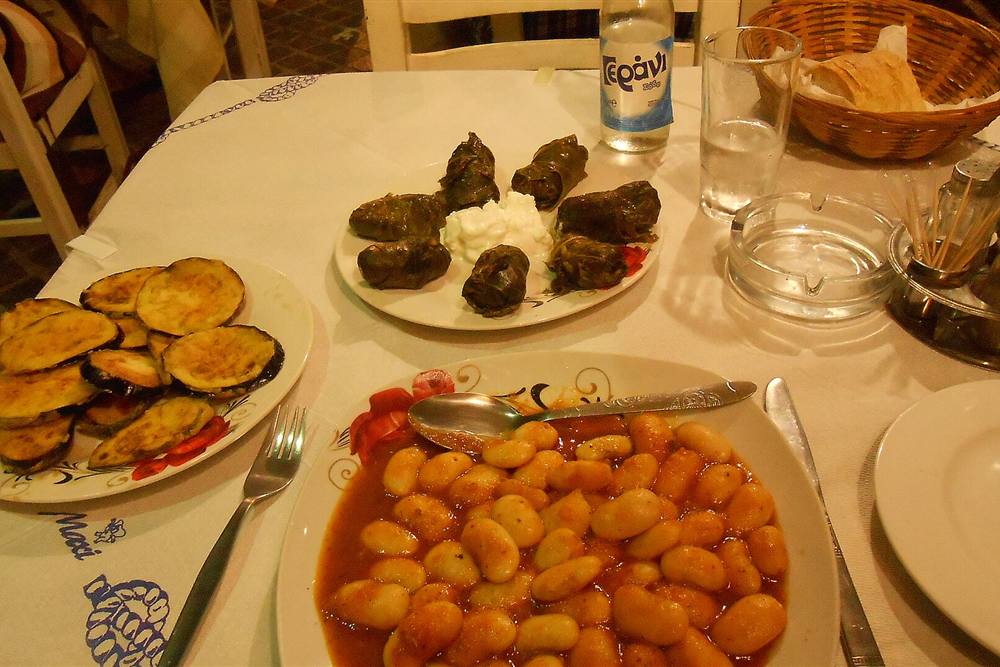
A walking food tour built around Crete’s plant-based dishes: horta wild greens, dakos, cheese pies, stuffed vegetables, fava, legumes, olive oil, honey and fruit, with no meat or fish at any stop.
Traditional Cretan cooking is largely vegetable-based. The Chania food tour route is set by it.
Church fasting days produced a deep repertoire of meatless dishes. The Chania food tour season turns on this.
Vegan versions remove the cheese and honey on request. It decides which Chania food tour suits the party.
The route includes the same market and bakeries as the standard tour. Every Chania food tour is routed around this.
Groups stay small at six to ten.
It suits vegetarians who want Crete without asking at every taverna.
What is the producers tour outside Chania?
A half-day tour by minibus into the villages of the Chania prefecture to visit an olive mill, a cheese maker, a honey producer or a winery, with tastings at each and a lunch of Cretan dishes in a village taverna.
The villages of Apokoronas and Kissamos are the usual destinations. Guides raise it early on a Chania food tour.
Producers show the process as well as the product. A Chania food tour is booked around it.
Pickup from Chania hotels is included. The Chania food tour price reflects it.
Groups cap at eight to sixteen. The Chania food tour listing states it plainly.
The olive oil side of that day sits at Chania olive oil tour.
It suits visitors who want to see where the food comes from.
What do you eat at the Chania Agora?
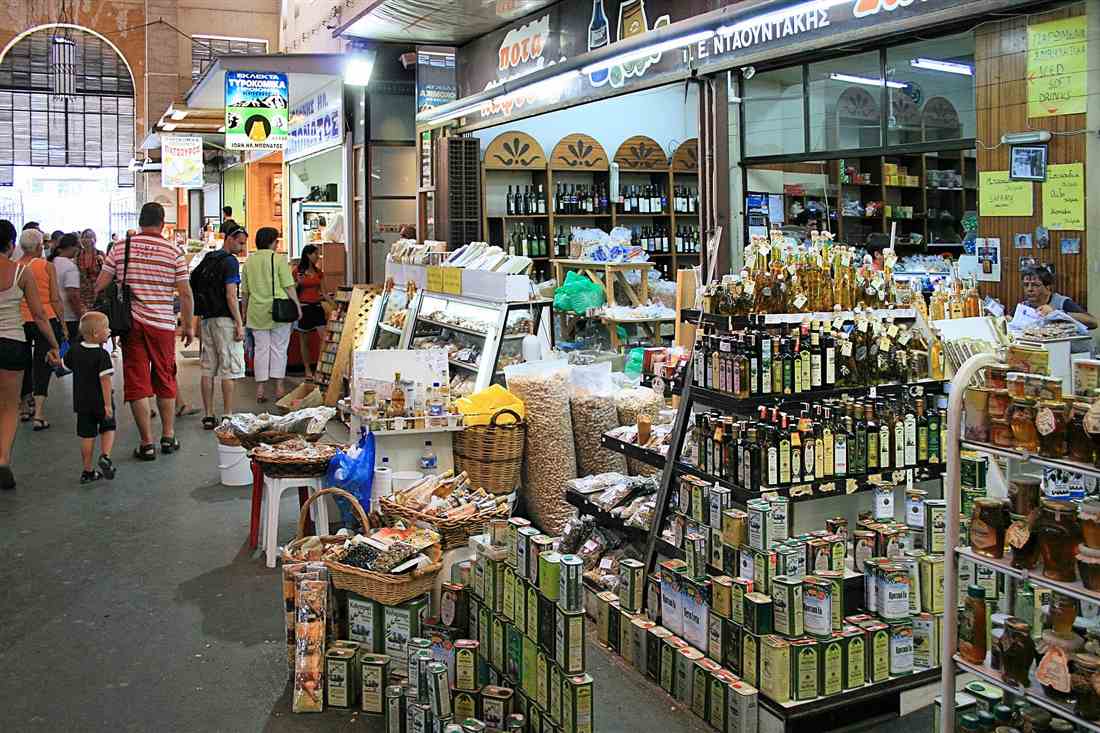
At the cross-shaped covered market the tour tastes graviera and mizithra from the cheese stalls, olives and olive oil, thyme honey, dried herbs and teas, cured sausage and apaki from the butchers, and loukoumi and pasteli from the sweet sellers.
The market was built in 1913 on the plan of the Marseille market. It decides which Chania food tour suits the party.
Its four wings meet under a central dome. Every Chania food tour is routed around this.
Butchers, fishmongers, grocers and souvenir shops share the hall. A Chania food tour fills first on that count.
Guides route around any stalls closed for restoration work. This is what a Chania food tour delivers.
Stallholders cut samples for the group at the counter.
It is the first or second stop on almost every food tour.
What is the Splantzia food scene?
The square and lanes around the church of Agios Nikolaos in the east of the old town, where locals eat at small meze bars, raki bars and family tavernas under a plane tree, at lower prices than the harbour front.
Splantzia was the Ottoman quarter and kept a neighbourhood feel. The Chania food tour price reflects it.
The tavernas here serve Chania home cooking rather than tourist menus. The Chania food tour listing states it plainly.
Evening tours end with raki at a table on the square. The Chania food tour calendar is shaped by it.
Prices run a third below the harbour tavernas. Chania food tour guides prepare for it.
The lanes around the square hold bakeries and a cheese shop.
It is the stop where the tour feels most local.
What are the bakeries of Chania?
Traditional bakeries and pie shops in the old town and around the market that bake bougatsa, kalitsounia, Sfakian pies, barley rusks, koulourakia biscuits and seasonal sweets, some run by the same families for generations.
Bakeries open early and sell out of the hot pies by late morning. A Chania food tour fills first on that count.
Rusks are twice-baked and keep for months, which made them the shepherd’s bread. This is what a Chania food tour delivers.
Koulourakia are braided butter biscuits eaten with coffee. Guests meet it within the first Chania food tour hour.
Easter brings kalitsounia and tsoureki into every window. A Chania food tour settles this at the market.
The food tour stops at one bakery for a warm pie.
Guests buy rusks and biscuits to take home.
What is a rakadiko?
A raki bar where every order of raki comes with a small plate of meze, and each new carafe brings a different plate, so a table eats a meal simply by drinking slowly over an evening.
The custom makes the rakadiko the cheapest way to eat well in Chania. The Chania food tour calendar is shaped by it.
Meze runs to olives, cheese, pickled vegetables, snails, sausage and fried potatoes. Chania food tour guides prepare for it.
A carafe of raki costs 5 to 10 euros with its plate. That is the Chania food tour advantage over a map.
The bars fill with locals from early evening. The Chania food tour route is set by it.
Evening food tours include one rakadiko stop.
Guests learn to pace the raki rather than finish it.
What is a mezedopoleio?
A meze restaurant that serves small plates to share rather than individual main courses, the format behind most evening stops on the food tour, pairing plates with raki, ouzo or wine.
A table orders five to eight plates for four people. Guests meet it within the first Chania food tour hour.
Plates run 4 to 12 euros each. A Chania food tour settles this at the market.
Cretan meze includes dakos, snails, staka, boureki, grilled cheese and sausage. A Chania food tour covers the lanes around it.
Sharing is the point and nobody orders a plate for themselves. Guides raise it early on a Chania food tour.
The food tour uses one to show how Cretans eat together.
Guides order for the table so the group tastes the range.
Where does the food tour end?
Back near the Venetian harbour or on Splantzia square, at a taverna or kafeneio with a final raki and a sweet, leaving guests two minutes from the harbour front and the evening promenade.
Tavernas in the lanes behind the harbour give better value than the waterfront. That is the Chania food tour advantage over a map.
Guides hand over a list of recommended places at the end. The Chania food tour route is set by it.
The last stop is where most guests ask for dinner recommendations. The Chania food tour season turns on this.
The morning tour ends near the market in time for the afternoon. It decides which Chania food tour suits the party.
The sunset tour ends after dinner with the harbour lit.
No tour ends more than ten minutes’ walk from the harbour.
What is Chania bougatsa?
A flaky phyllo pie filled with soft sheep’s mizithra cheese, baked in large trays, cut into squares and dusted with sugar and cinnamon, the Chania breakfast that differs from the custard bougatsa of northern Greece.
The Chania version is savoury-sweet, with salty cheese under the sugar. A Chania food tour covers the lanes around it.
It is eaten warm straight from the tray in the morning. Guides raise it early on a Chania food tour.
One old bougatsa shop near the market has served nothing else for decades. A Chania food tour is booked around it.
A portion costs 3 to 5 euros. The Chania food tour price reflects it.
The morning food tour starts with it.
Locals eat it with a Greek coffee standing at the counter.
What are kalitsounia?
Small Cretan cheese pies of pastry filled with mizithra or anthotyro and wild herbs, baked or fried, open or closed, made in every village with its own shape and eaten through the year and above all at Easter.
Sweet kalitsounia add honey and cinnamon to the cheese. The Chania food tour season turns on this.
Savoury versions add fennel, mint or wild greens. It decides which Chania food tour suits the party.
Shapes range from open stars to closed half-moons. Every Chania food tour is routed around this.
Bakeries sell them by the piece or the kilo. A Chania food tour fills first on that count.
The food tour tastes them warm at a bakery stop.
They travel well and are the easiest food to take home.
What are Sfakian pies?
Thin pan-fried pies from the Sfakia region on the south coast, rolled around soft mizithra cheese, cooked in a dry pan and served hot with thyme honey drizzled over the top.
Sfakia is the mountainous south-west of Chania prefecture. A Chania food tour is booked around it.
The pie is rolled thin enough to see the cheese through the dough. The Chania food tour price reflects it.
Honey on salty cheese is the combination that defines it. The Chania food tour listing states it plainly.
A pie costs 5 to 8 euros in a taverna. The Chania food tour calendar is shaped by it.
The tour serves it as a shared plate at a meze stop.
It is the dish most guests ask to eat again.
What is dakos?
A barley rusk softened with water and olive oil and topped with grated tomato, crumbled mizithra or feta, oregano and olives, the simplest and most famous Cretan meze.
The rusk was the long-keeping bread of shepherds and farmers. Every Chania food tour is routed around this.
Olive oil and tomato juice soften it at the table. A Chania food tour fills first on that count.
Capers and a drizzle of oil finish it. This is what a Chania food tour delivers.
Every taverna serves its own version. Guests meet it within the first Chania food tour hour.
The tour tastes it at a meze or taverna stop.
It is the dish that shows how Cretan food uses simple ingredients.
What is Chaniotiko boureki?
A Chania baked dish of sliced zucchini and potatoes layered with mizithra cheese and mint, sometimes inside pastry and sometimes without, cooked slowly in the oven and served in summer when the zucchini are in season.
Boureki is the signature summer dish of Chania. The Chania food tour listing states it plainly.
The mint is what makes it distinctly Cretan. The Chania food tour calendar is shaped by it.
Tavernas bake it in large trays and serve it by the square. Chania food tour guides prepare for it.
It is vegetarian and suits the vegetarian walks. That is the Chania food tour advantage over a map.
Tavernas list it from June to September.
The food tour serves it at a taverna stop in summer.
What is gamopilafo?
Wedding pilaf, rice cooked slowly in a rich stock of goat or lamb and chicken, finished with staka butter and lemon, served at Cretan weddings and baptisms and now on taverna menus.
The name means wedding rice. This is what a Chania food tour delivers.
Traditionally it was cooked in huge pots for hundreds of guests. Guests meet it within the first Chania food tour hour.
The stock comes from boiling the meat for hours. A Chania food tour settles this at the market.
Staka butter gives it the rich finish. A Chania food tour covers the lanes around it.
Tavernas in Chania serve it as a main course.
The sunset dinner tour includes it on some menus.
What is antikristo?
Lamb or goat cooked on long skewers set upright around an open fire, facing it, for four to six hours, so the meat roasts slowly in the heat and smoke, a shepherds’ method from the Cretan mountains.
Antikristo means facing, after the position of the meat to the fire. Chania food tour guides prepare for it.
Salt is the only seasoning. That is the Chania food tour advantage over a map.
A few tavernas around Chania specialise in it. The Chania food tour route is set by it.
It is ordered by weight and shared at the table. The Chania food tour season turns on this.
The producers tour includes it at a village taverna on some days.
It is the dish for meat eaters on a Crete trip.
What are chochlioi?
Cretan snails, most famously served as chochlioi boubouristi, fried face down in a pan of salt and olive oil then doused with vinegar and rosemary, a meze that Cretans eat with raki and visitors try once on the tour.
Boubouristi means face down, after the way the snails are placed in the pan. A Chania food tour settles this at the market.
Snails are gathered after rain in the countryside. A Chania food tour covers the lanes around it.
They were a staple of fasting days when meat was forbidden. Guides raise it early on a Chania food tour.
A plate costs 6 to 10 euros in a meze bar. A Chania food tour is booked around it.
The tour offers them at a rakadiko stop.
Guests who dislike the idea taste the sauce with bread instead.
What is staka?
A rich cream made by slowly cooking the fat skimmed from sheep’s or goat’s milk with a little flour, served hot with bread or with fried eggs, and the source of staka butter used in wedding pilaf.
Staka is a speciality of western Crete and Chania. The Chania food tour route is set by it.
The butter separates out as the cream cooks. The Chania food tour season turns on this.
Staka with eggs is a heavy village breakfast. It decides which Chania food tour suits the party.
A little goes a long way and tavernas serve small portions. Every Chania food tour is routed around this.
The food tour tastes it with bread at a meze stop.
It is one of the least-known Cretan foods outside the island.
What is apaki?
Cretan smoked pork, marinated in vinegar, then smoked over aromatic herbs and wood such as sage and thyme, sliced thin and served as meze or fried with eggs.
The vinegar marinade preserves the meat and gives it a sharp edge. Guides raise it early on a Chania food tour.
The herbs give the smoke its flavour. A Chania food tour is booked around it.
Butchers in the market sell it by weight. The Chania food tour price reflects it.
Tavernas serve it pan-fried as a warm meze. The Chania food tour listing states it plainly.
It pairs with raki at the table.
The tour tastes it at the market or a meze stop.
What are xerotigana?
Thin ribbons of dough rolled into spirals, deep-fried until crisp and drenched in honey and sesame, the traditional Cretan wedding sweet, now sold in bakeries through the year.
The spiral shape takes skill to roll without breaking. It decides which Chania food tour suits the party.
Honey soaks into the layers while they are hot. Every Chania food tour is routed around this.
They are offered to guests at weddings and baptisms. A Chania food tour fills first on that count.
Bakeries sell them by the piece or the box. This is what a Chania food tour delivers.
The food tour ends with them at a sweet stop.
They keep for days and travel well.
What are loukoumades in Chania?
Small fried dough balls, crisp outside and soft inside, served hot with honey, cinnamon and sesame or with modern toppings, from specialist shops in the old town.
Loukoumades are one of the oldest recorded Greek sweets. The Chania food tour price reflects it.
They are fried to order and eaten immediately. The Chania food tour listing states it plainly.
A portion costs 5 to 8 euros. The Chania food tour calendar is shaped by it.
Cretan thyme honey is the traditional topping. Chania food tour guides prepare for it.
Evening walks stop for them after dinner.
They are the sweet that children on the tour remember.
What is graviera?
A hard sheep’s milk cheese aged for at least five months, with a sweet nutty flavour, holding protected designation of origin as Graviera Kritis, and the table cheese of Crete.
It is made in large wheels in mountain dairies. A Chania food tour fills first on that count.
Older graviera turns sharper and crystalline. This is what a Chania food tour delivers.
It is eaten plain, grilled or fried as saganaki. Guests meet it within the first Chania food tour hour.
The market cheese stalls sell young and aged wheels side by side. A Chania food tour settles this at the market.
The tour tastes young and aged graviera together.
It is the cheese most guests buy to take home.
What are mizithra and anthotyro?
Soft fresh whey cheeses made from sheep’s and goat’s milk: mizithra is moist and slightly sour, anthotyro is milder and sweeter, and both fill the Cretan pies and top dakos.
Both are made from the whey left after making hard cheese. The Chania food tour calendar is shaped by it.
Fresh versions last only days and are eaten in the region. Chania food tour guides prepare for it.
Dried and salted versions are grated over pasta. That is the Chania food tour advantage over a map.
They are the filling of bougatsa and kalitsounia. The Chania food tour route is set by it.
The tour tastes them fresh with honey.
They are hard to find fresh outside Crete.
What is pichtogalo Chanion?
A soft, spreadable fresh cheese of goat’s and sheep’s milk from the Chania prefecture, with a creamy texture and a sharp clean taste, protected by designation of origin as the cheese of Chania.
The name means thickened milk. Guests meet it within the first Chania food tour hour.
It is made only in the Chania prefecture under its protected status. A Chania food tour settles this at the market.
It is eaten fresh on bread or rusks. A Chania food tour covers the lanes around it.
The market cheese stalls sell it in small tubs. Guides raise it early on a Chania food tour.
The food tour tastes it with olive oil and oregano.
It is the cheese most closely tied to the city itself.
What olive oil does the tour pour?
Extra virgin oil from the Koroneiki olive grown across the Chania prefecture, including oil from the protected Kolymvari designation, poured for tasting on bread and on every dish the tour serves.
Crete produces some of the highest-quality olive oil in Greece. That is the Chania food tour advantage over a map.
Koroneiki is a small olive that gives a green, peppery oil. The Chania food tour route is set by it.
Guides show how to taste oil from a small cup. The Chania food tour season turns on this.
The market sells oil in tins for travel. It decides which Chania food tour suits the party.
Harvest runs from November to January.
A dedicated olive oil day runs as its own product from Chania.
What is Cretan thyme honey?
A dark, aromatic honey made by bees feeding on the wild thyme of the Cretan mountains, thick and intensely flavoured, poured over cheese pies, yogurt and loukoumades on the tour.
Wild thyme flowers in early summer across the hillsides. A Chania food tour covers the lanes around it.
Beekeepers move their hives to follow the flowering. Guides raise it early on a Chania food tour.
Pine and heather honeys are the other Cretan types. A Chania food tour is booked around it.
Honey sold at the market comes direct from beekeepers. The Chania food tour price reflects it.
The tour tastes two or three honeys side by side.
Jars travel well in hold luggage.
What herbs does the tour taste?
Dittany of Crete, the endemic herb once used as medicine, malotira mountain tea, wild sage, oregano and thyme, sold dried at the market and brewed as teas at the tour’s kafeneio stop.
Dittany grows wild on cliffs and gorges and is now cultivated. The Chania food tour season turns on this.
Malotira is a sideritis mountain tea drunk for colds. It decides which Chania food tour suits the party.
Oregano from the mountains is stronger than the lowland plant. Every Chania food tour is routed around this.
Herb stalls in the market sell bundles and packets. A Chania food tour fills first on that count.
The tour brews a tea to taste.
Herbs are the lightest souvenir to carry home.
What is a Cretan rusk?
Paximadi, bread made from barley, wheat or chickpea flour, sliced and baked a second time until hard and dry, so it keeps for months and is softened with water, oil or tomato before eating.
Shepherds and sailors carried rusks because fresh bread went stale. A Chania food tour is booked around it.
Barley rusks are the base of dakos. The Chania food tour price reflects it.
Bakeries sell a dozen varieties with herbs, olives or carob. The Chania food tour listing states it plainly.
Rusks are dunked in coffee for breakfast. The Chania food tour calendar is shaped by it.
The tour tastes plain and flavoured rusks at a bakery.
They are the most practical food souvenir from Crete.
What is tsikoudia?
Cretan raki, a clear spirit distilled from the grape pomace left after winemaking, around 40 per cent alcohol, with no anise added, poured free as a welcome and after meals in every taverna in Chania.
Tsikoudia and raki are two names for the same drink on Crete. Every Chania food tour is routed around this.
Distilling takes place in village stills in October and November. A Chania food tour fills first on that count.
The distilling season is a celebration with food and music. This is what a Chania food tour delivers.
Raki arrives with the bill as a gift from the taverna. Guests meet it within the first Chania food tour hour.
It is drunk in small glasses and sipped, not shot.
The tour pours it at two or three stops.
What is rakomelo?
Raki warmed with honey and spices such as cinnamon and clove, served hot in small glasses in winter and poured on the evening tours when the weather turns cool.
The honey softens the strength of the raki. The Chania food tour listing states it plainly.
It is a winter drink in the mountain villages. The Chania food tour calendar is shaped by it.
Bars in Chania serve it year round. Chania food tour guides prepare for it.
Bottled rakomelo is sold in the shops. That is the Chania food tour advantage over a map.
It is the drink guests find easiest on the tour.
Evening tours in spring and autumn include it.
What wines does the tour pour?
Cretan wines from local grapes: Vidiano and Vilana whites, Romeiko from the Chania area, Liatiko and Kotsifali reds, and Malvasia sweet wine, poured by the glass at the meze stops and with the sunset dinner.
Crete has made wine for at least 4,000 years. This is what a Chania food tour delivers.
Indigenous grapes have been revived by a new generation of wineries. Guests meet it within the first Chania food tour hour.
Wineries around Chania open for tastings on the producers tour. A Chania food tour settles this at the market.
House wine in tavernas comes by the carafe and is cheap. A Chania food tour covers the lanes around it.
The guide explains each grape as it is poured.
Bottles from the tour are sold at wine shops in the old town.
What is Romeiko?
A red grape native to the Chania area of western Crete, used for light reds, roses and a traditional oxidised wine called marouvas, which ages in barrels and tastes close to a dry sherry.
Romeiko is the main grape of the Chania wine region. Chania food tour guides prepare for it.
Marouvas is made in village cellars and rarely sold commercially. That is the Chania food tour advantage over a map.
Modern producers make fresh roses from it. The Chania food tour route is set by it.
The grape is little known outside Crete. The Chania food tour season turns on this.
The tour pours it when a producer’s bottle is in season.
It is the local wine to ask for in Chania.
What is Vidiano?
A white grape rescued from near extinction on Crete in the last decades, giving full, aromatic wines with notes of apricot and herbs, now the flagship white of the island’s wineries.
A handful of old vines survived before replanting began. A Chania food tour settles this at the market.
It grows well in the heat and holds its acidity. A Chania food tour covers the lanes around it.
Wineries across Crete now bottle it as a varietal. Guides raise it early on a Chania food tour.
It pairs with the cheese pies and seafood on the tour. A Chania food tour is booked around it.
Wine shops in Chania stock a range of labels.
It is the Cretan white most visitors take home.
What is the Cretan diet?
The traditional way of eating that drew international study in the twentieth century for the long lives of Cretan villagers: olive oil as the main fat, vegetables, legumes, wild greens, bread, cheese, a little meat and fish, fruit and wine.
The Seven Countries Study of the 1950s and 1960s put Crete at the centre of the Mediterranean diet research. The Chania food tour route is set by it.
Cretans consumed more olive oil per head than almost anywhere in the world. The Chania food tour season turns on this.
Meat was eaten on feast days rather than daily. It decides which Chania food tour suits the party.
Church fasting shaped a large meatless repertoire. Every Chania food tour is routed around this.
The food tour tastes the diet as it is still cooked.
The island-wide food day sits at Crete food tour.
What are horta?
Wild and cultivated greens, including stamnagathi, vlita and wild chicory, boiled and dressed with olive oil and lemon, or cooked into pies, and a staple of every Cretan table.
Stamnagathi is a spiny chicory that grows on the coastal rocks. Guides raise it early on a Chania food tour.
Gathering horta in spring is a family activity in the villages. A Chania food tour is booked around it.
Horta are served with fish or on their own. The Chania food tour price reflects it.
Tavernas list the greens of the season. The Chania food tour listing states it plainly.
The vegetarian walk tastes them at a taverna stop.
They are the dish that shows how the diet uses the land.
Why is Cretan food seasonal?
Because tavernas and home cooks use what the island produces that month: artichokes and horta in spring, zucchini and tomatoes in summer, snails after the autumn rains, oranges and new olive oil in winter.
Menus in family tavernas change through the year. It decides which Chania food tour suits the party.
Imported produce is avoided when local is available. Every Chania food tour is routed around this.
The same tour tastes differently in May and October. A Chania food tour fills first on that count.
Easter brings lamb and kalitsounia. This is what a Chania food tour delivers.
The raki distilling season arrives in autumn.
Guides adjust the tastings to what is in the market that week.
What are the Cretan table customs?
Dishes arrive to share in the middle of the table, bread and raki come without being ordered, a free dessert and a carafe of raki arrive with the bill, and refusing the offered raki is taken as a small rebuff.
Ordering an individual main course is the tourist habit. The Chania food tour price reflects it.
The free dessert is fruit, halva or a spoon sweet. The Chania food tour listing states it plainly.
Toasts are made with raki at the end of the meal. The Chania food tour calendar is shaped by it.
Tipping is modest and rounding up the bill is the norm. Chania food tour guides prepare for it.
Guides explain the customs at the first taverna stop.
Following them earns noticeably warmer service.
What is Cretan sausage?
Loukaniko, pork sausage seasoned with orange peel, fennel seed and wine or vinegar, some of it smoked over herbs, sold by the butchers in the market and served grilled or fried as meze with raki.
The orange and fennel give Cretan sausage its distinct taste. A Chania food tour fills first on that count.
Village butchers each keep their own recipe. This is what a Chania food tour delivers.
Smoked versions last longer and taste stronger. Guests meet it within the first Chania food tour hour.
The market sells it by the piece or by weight. A Chania food tour settles this at the market.
Tavernas slice it into rounds and fry it in the pan.
The tour tastes it at a butcher’s counter or a meze stop.
What fish and seafood does the tour taste?
Grilled octopus hung to dry in the sun, fried calamari, marinated anchovies, small fried fish, fish soup, and sea urchin salad in season, tasted at a harbour-side or lane taverna on the evening tours.
The fish market stalls in the Agora sell the morning catch. The Chania food tour calendar is shaped by it.
Octopus drying on lines outside tavernas is a Chania summer sight. Chania food tour guides prepare for it.
Fresh fish is priced by the kilo on the menu. That is the Chania food tour advantage over a map.
Anchovies are marinated in vinegar and olive oil. The Chania food tour route is set by it.
Seafood tastings suit the sunset tour best.
Vegetarian versions swap the seafood stop for a cheese and pie stop.
What sweets does the tour taste?
Kataifi and baklava soaked in syrup, galaktoboureko custard pie, xerotigana spirals, loukoumades with thyme honey, and the halva and pasteli sold at the market, with one sweet stop closing most tours.
Old pastry shops in the lanes still make phyllo sweets by hand. Guests meet it within the first Chania food tour hour.
Galaktoboureko is semolina custard baked between layers of phyllo. A Chania food tour settles this at the market.
Pasteli is sesame bound with honey into hard bars. A Chania food tour covers the lanes around it.
Sweets are bought by weight in paper boxes. Guides raise it early on a Chania food tour.
Syrup sweets pair with a strong Greek coffee.
Guests with a sweet tooth leave with a box.
What is a kafeneio?
A traditional Greek coffee house with small tables, strong Greek coffee boiled in a briki, raki and a card game, where older locals spend the mornings and where food tours stop for coffee and a sweet.
Greek coffee is ordered sketo without sugar, metrio medium or glyko sweet. That is the Chania food tour advantage over a map.
The grounds settle in the cup and are not drunk. The Chania food tour route is set by it.
Frappe and freddo espresso are the modern iced coffees of summer. The Chania food tour season turns on this.
A kafeneio coffee costs 2 to 3 euros. It decides which Chania food tour suits the party.
The kafeneio is a social institution as much as a cafe.
The morning tour ends at one for coffee and conversation.
What are spoon sweets?
Glyka tou koutaliou, fruit preserved whole or in pieces in thick syrup and served on a small spoon with a glass of water, the traditional offering to a guest in a Cretan home, made from sour cherry, quince, bergamot, fig and orange.
Unripe green figs and baby aubergines are also made into spoon sweets. A Chania food tour covers the lanes around it.
They are served as a welcome rather than as a dessert. Guides raise it early on a Chania food tour.
Jars sell at the market and the grocers. A Chania food tour is booked around it.
They are poured over yogurt at breakfast. The Chania food tour price reflects it.
The tour offers a spoonful at the grocer’s stop.
They are one of the most giftable foods from Crete.
What is Cretan yogurt and honey?
Thick strained sheep’s milk yogurt with a firm skin on top, served with thyme honey and walnuts as a breakfast or dessert, sold in clay pots in the market dairies.
Sheep’s yogurt is richer and tangier than cow’s milk yogurt. The Chania food tour season turns on this.
Clay pots keep it cool and let it set firm. It decides which Chania food tour suits the party.
The skin on top is considered the best part. Every Chania food tour is routed around this.
Dairies in the market sell it daily. A Chania food tour fills first on that count.
The morning tour tastes it with honey at a dairy stop.
It is the lightest tasting on the route.
How does a food tour differ from a cooking class?
A food tour walks the city and tastes finished food from markets, bakeries and tavernas over three hours; a cooking class spends four hours in one kitchen learning to make dishes and eating the meal cooked.
Food tours cover more dishes and more of the city. A Chania food tour is booked around it.
Cooking classes teach skills and recipes to take home. The Chania food tour price reflects it.
Many visitors do the food tour first to learn what to cook. The Chania food tour listing states it plainly.
Cooking classes near Chania run in village houses and farms. The Chania food tour calendar is shaped by it.
Prices overlap at 60 to 120 euros a head.
The class side sits at Chania cooking class.
What do you buy to take home?
Cretan olive oil in tins, thyme honey, dried dittany and malotira, graviera vacuum-packed, barley rusks, raki in a sealed bottle, spoon sweets and Vidiano or Romeiko wine, most of it bought at the market on the tour.
Tins travel better than glass bottles. Every Chania food tour is routed around this.
Cheese is vacuum-packed at the counter for flights. A Chania food tour fills first on that count.
Liquids go in hold luggage wrapped in clothes. This is what a Chania food tour delivers.
EU travellers bring food home without customs limits for personal use. Guests meet it within the first Chania food tour hour.
Non-EU visitors check their own country’s rules on cheese and meat.
The rest of the city sits at Chania.
Is a Chania food tour good for dietary needs?
Yes when the booking names the need: vegetarian and vegan versions run as their own product, gluten-free and lactose-free swaps are arranged at most stops, and nut and shellfish allergies are managed by the guide with the producers.
Cretan food uses little nut, so nut allergies are easy to handle. The Chania food tour listing states it plainly.
Wheat is in the pies and rusks and gluten-free swaps are limited at bakeries. The Chania food tour calendar is shaped by it.
Cheese is everywhere and lactose-free tastings need notice. Chania food tour guides prepare for it.
Non-drinkers receive juice or soft drinks at the raki stops. That is the Chania food tour advantage over a map.
Halal and kosher requirements need a private tour.
Guides confirm the needs the evening before.
Is a Chania food tour good for families?
Yes: children taste bougatsa, loukoumades, honey and cheese pies, walk short distances between seated stops, and get soft drinks instead of raki, with half-price tickets on most tours.
The morning market tour suits families best. This is what a Chania food tour delivers.
Evening tours run late for young children. Guests meet it within the first Chania food tour hour.
Snails and staka are optional for picky eaters. A Chania food tour settles this at the market.
Pushchairs manage the market and the main streets. A Chania food tour covers the lanes around it.
Private tours let a family set the pace and the stops.
Teenagers enjoy the market and the sweets most.
When is the best time for a Chania food tour?
Year round, because Chania is a lived-in city: spring for horta and artichokes, summer for tomatoes and boureki, autumn for the raki distilling and snails, and winter for new olive oil and oranges, with mornings and evenings best in July and August.
Midday heat in high summer makes walking between stops tiring. Chania food tour guides prepare for it.
The market is busiest on Saturday mornings. That is the Chania food tour advantage over a map.
Easter week brings special breads, lamb and kalitsounia. The Chania food tour route is set by it.
Some family tavernas close in the depth of winter. The Chania food tour season turns on this.
Cruise days add crowds to the harbour but not to the market.
Booking a day ahead covers every month.
Can you do a Chania food tour on a cruise call?
Yes: cruise ships berth at Souda port, 7 kilometres east, and a three-hour food tour fits a call of six hours or more with a 15-minute taxi or bus into the old town.
Some tours include the transfer from Souda. A Chania food tour settles this at the market.
The morning market tour fits early calls best. A Chania food tour covers the lanes around it.
Independent tours cost less than ship excursions. Guides raise it early on a Chania food tour.
Guides time the end to the all-aboard hour.
Purchases are packed for the ship on request.
Walking tours with tastings run as shore excursions for cruise groups.
What do you bring on a Chania food tour?
An empty stomach, comfortable shoes for the old town lanes, a hat and water in summer, a bag for market purchases, and cash for the stalls where guests buy cheese, honey and oil to take home.
Skipping breakfast before a morning tour is the standard advice from guides. The Chania food tour route is set by it.
Market stalls prefer cash for small purchases. The Chania food tour season turns on this.
Olive oil tins and honey jars go in hold luggage. It decides which Chania food tour suits the party.
Cheese travels vacuum-packed from the market stalls.
A light layer helps on the evening tours in spring and autumn.
Guides carry water on summer tours.
What are the common Chania food tour mistakes?
Eating a big breakfast before the morning tour, booking dinner for the night of the sunset tour, drinking every raki poured, skipping the market for the harbour, and not naming dietary needs until the first stop.
The tastings add up to a full meal and then some. Guides raise it early on a Chania food tour.
The sunset tour includes a three-course dinner already. A Chania food tour is booked around it.
Raki at 40 per cent adds up over three or four stops. The Chania food tour price reflects it.
The harbour tavernas are the least authentic food in the city.
Needs named late cannot always be met at the producers.
Booking the tour early in the stay sets up the rest of the trip’s eating.
How do you book a Chania food tour?
Book two to three days ahead in summer and a day ahead otherwise. Groups cap at eight to fourteen, and the vegetarian, producers and sunset versions fill first because the stops prepare for a set number.
Operators confirm the meeting point by message the evening before. It decides which Chania food tour suits the party.
Free cancellation up to 24 hours ahead is standard on the platform listings. Every Chania food tour is routed around this.
Dietary needs and allergies go on the booking. A Chania food tour fills first on that count.
Private tours quote by the party and set the stops.
Cruise bookings state the ship and the all-aboard hour.
The walking side of the old town sits at Chania walking tour.
Frequently Asked Questions
What does a Chania food tour cost?
From 55 to 95 euros a head for the three-hour walking tour, 45 to 70 for the morning market tour, 110 to 170 for the wine, food and sunset tour with dinner, and 150 to 300 for a private tour.
Is a Chania food tour a full meal?
Yes. Six to eight tastings add up to a full lunch or dinner, and the sunset tour ends with a three-course meal, so guests skip the meal before or after.
Is raki included?
Yes on the walking and sunset tours, poured with meze at a rakadiko, with juice or soft drinks for non-drinkers and children.