
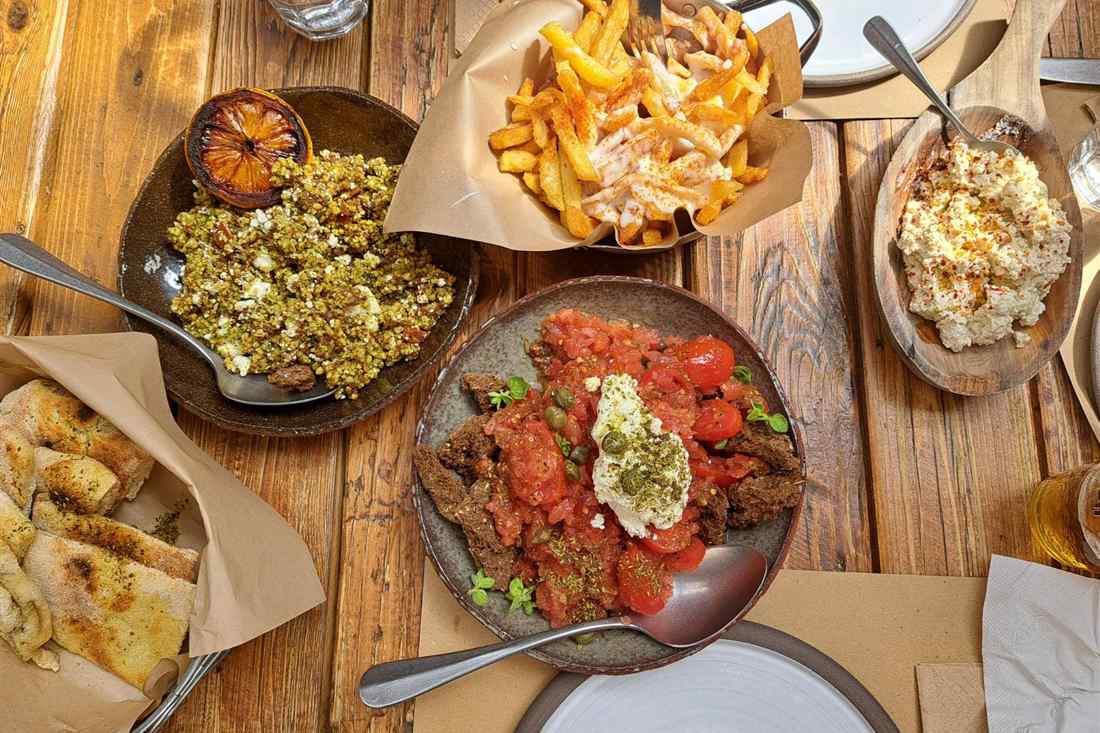
A Heraklion cooking class runs three to six hours at a village house, a farm or a cookery school around the city, where a group of four to twelve cooks four to seven Cretan dishes from scratch and then eats them with local wine. Plan the rest of the trip with Greece Tours.
This page covers the session: what you cook, what it costs, where the classes run, what Cretan food is built on, the market visit, dietary requirements, the length, the season, the farm and plateau versions, the wine, the cruise-day format and how to book.
What is a heraklion cooking class?
A three to six hour session at a village house, a farm or a cookery school around Heraklion where a group of four to twelve cooks four to seven Cretan dishes from scratch, then sits down and eats them with local wine.
The format is consistent across the operators: a market or garden walk, a demonstration, hands-on cooking at a long table, and a meal that runs to two hours. A heraklion cooking class host states this at booking and puts it on the voucher.
Most classes take place outside the city. Arolithos, Kroussonas, the Lasithi plateau and the villages behind Knossos are the usual settings, ten to forty minutes from the port. The heraklion cooking class kitchen is prepared for it year round.
The Cretan diet is the selling point and the reason the classes exist. The Seven Countries Study of the 1950s and 1960s recorded the lowest rates of heart disease in the world on this island, and the cooking has been studied ever since. It decides which heraklion cooking class format fits the party.
Aprons, recipes and transfers are normally included, and the recipe sheet goes home in English rather than Greek.
What do you cook?
Dakos, dolmades, kalitsounia cheese pies, gemista stuffed vegetables, moussaka or lamb with stamnagathi greens, tzatziki and a sweet of loukoumades or yoghurt with thyme honey.
Kalitsounia are the dish that defines a Cretan class. Small pies of fresh mizithra cheese and mint, folded and crimped by hand, baked or fried and finished with honey. Every heraklion cooking class is planned around it before the shopping is done.
Dakos is the first thing made because it needs no cooking: a barley rusk moistened with oil, grated tomato, mizithra and oregano. A heraklion cooking class starts with this settled at the door.
Stamnagathi is the wild chicory of the Cretan hills, blanched and dressed with oil and lemon, and it appears on every table on the island in spring. The heraklion cooking class price reflects it, dish by dish.
The meat dish varies by season and by host, running from lamb with artichokes in spring to slow-cooked pork with quince in autumn.
What does a heraklion cooking class cost?
From 55 to 90 euros a head for a three to four hour class with the meal, 95 to 150 euros for a full-day class with a market or farm visit and transfers, and 250 to 500 euros for a private session for two to four.
The price includes the ingredients, the cooking, the meal and the wine on almost every listing, which is why it reads high against a taverna dinner. A heraklion cooking class is sold on that, and the listing says so plainly.
Transfers from Heraklion, Hersonissos and Malia are included on the higher band and cost 10 to 25 euros a head return on the lower one. The heraklion cooking class timetable is built on it rather than on the clock.
The farm and estate versions cost more because they add the grove, the animals and an olive oil tasting to the same session. A heraklion cooking class fills first on that count in July and August.
Nothing else is charged. Recipes, aprons and the second glass of wine come with the class rather than as extras.
Where do the classes take place?
Arolithos village 12 km west of Heraklion, Kroussonas on the Psiloritis foothills, the Lasithi plateau an hour east, Archanes and Peza south of the city, and a small number of kitchens in Heraklion itself.
Arolithos is a reconstructed traditional village built as a working museum, with a bakery, a loom and a taverna, and the class runs in its kitchens. This is what a heraklion cooking class delivers between the market and the table.
Kroussonas sits at 500 metres under Psiloritis with terraced gardens, and the classes there cook what the garden is producing that week. Hosts brief it at the bench before a heraklion cooking class begins.
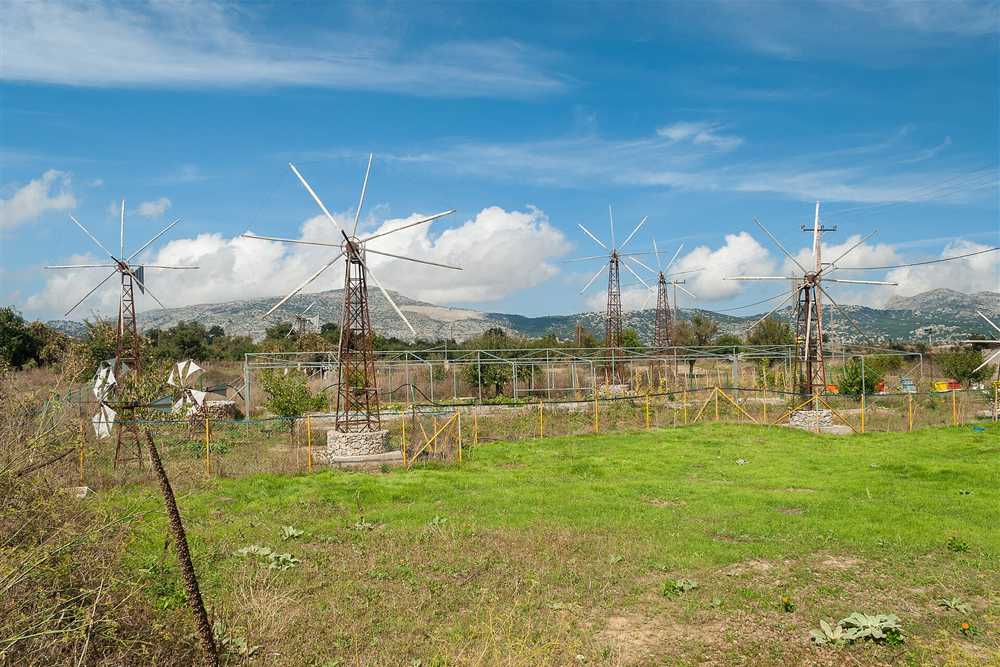
The Lasithi plateau at 850 metres is a full day because of the drive, and the reward is a fertile upland plain ringed by mountains and old windmill frames. The heraklion cooking class menu is set by it more than by the recipe sheet.
The city classes suit cruise passengers and anyone without a car, running three hours from a kitchen within walking distance of the port.
What is Cretan food actually built on?
Olive oil in quantity, wild greens, pulses, barley rusks, fresh cheese, seasonal vegetables, small amounts of meat and fish, and wine at the table. Butter and cream barely appear.
Crete consumes more olive oil per head than anywhere else in the world, at roughly 30 litres a person a year, and it is the cooking fat rather than a finishing drizzle. The heraklion cooking class kitchen is prepared for it year round.
Wild greens are gathered rather than farmed, and the classes name the ones on the plate: stamnagathi, vlita, radikia and askolymbri. It decides which heraklion cooking class format fits the party.
Barley rusk replaces bread in the traditional diet because it keeps for months without refrigeration, which mattered in a mountain village. Cooks on a heraklion cooking class meet it in the first half hour.
Mizithra and anthotyros are the fresh cheeses and graviera the aged one, all made from sheep and goat milk rather than cow.
What happens at the market visit?
An hour in the covered market on 1866 Street or at a village greengrocer, choosing tomatoes, greens, cheese and herbs with the host, who explains the seasonality and the prices before the group carries it all to the kitchen.
The 1866 Street market runs the length of a pedestrian lane in central Heraklion with herbs, cheese, honey, fish and knives, and it is the city’s oldest continuous trading street. A heraklion cooking class starts with this settled at the door.
Buying is part of the lesson. The host shows how to judge a tomato for a dakos against one for a salad, and why the answer is different. The heraklion cooking class price reflects it, dish by dish.
The farm versions replace the market with a garden walk, cutting the vegetables and the herbs directly, which works better with children. That is the heraklion cooking class difference against a taverna dinner.
Not every class includes it, and the listings that do state the time and the meeting point rather than leaving it vague.
Are dietary requirements handled?
Yes with notice. Vegetarian is straightforward because most of the Cretan repertoire already is, vegan needs a day’s warning for the cheese dishes, and gluten-free needs longer because the rusk and the pie pastry both use wheat or barley.
The fasting tradition of the Orthodox calendar means Crete has a full vegan repertoire of its own, and the hosts cook it without improvising. The heraklion cooking class timetable is built on it rather than on the clock.
Nut and shellfish allergies are handled easily because neither is central to the cooking. A heraklion cooking class fills first on that count in July and August.
Children are welcome at almost every class and the hosts give them the folding and crimping jobs rather than the knives. A heraklion cooking class carries the aprons and the recipes for it.
State the requirement at booking rather than on the day, since the shopping is done in advance.
How long does the class run?
Three to four hours for the standard session, five to six for the version with a market or farm visit, and a full day for the Lasithi plateau class where the drive is ninety minutes each way.
The cooking itself takes 90 minutes to two hours and the meal takes the rest, which surprises people who expect to eat and leave. Hosts brief it at the bench before a heraklion cooking class begins.
Morning classes start at 10:00 or 11:00 and finish in mid-afternoon, and the evening ones start at 17:00 and run into the night. The heraklion cooking class menu is set by it more than by the recipe sheet.
The evening session suits summer because the kitchen is cooler, and the table is laid outside under vines on most of the village sites. The heraklion cooking class table turns on this more than on the label.
Nobody plans anything afterwards. The meal is substantial and the wine is poured freely.
When is the best time to book?
April to June and September to November. Spring brings the wild greens and the artichokes, autumn brings the grape harvest, the quinces and the new olive oil, and both avoid the 35-degree kitchen of high summer.
The classes run year round because the kitchens are indoors, and winter versions cook the slow dishes that summer skips. It decides which heraklion cooking class format fits the party.
Spring is the strongest season for the wild greens, and the hosts take the group out to gather them where the site allows. Cooks on a heraklion cooking class meet it in the first half hour.
The olive harvest from late October adds the mill to the itinerary at the farm-based classes. A heraklion cooking class host states this at booking and puts it on the voucher.
July and August fill fastest and run the evening slots, and a heraklion cooking class in those months needs booking a week ahead.
How does it compare with a food tour?
A class teaches four to seven dishes over three to six hours at 55 to 150 euros and ends with one long meal. A food tour walks the city for three hours at 60 to 95 euros and tastes eight to twelve things without cooking any of them.
The class suits anyone who cooks at home, because the recipes travel and the techniques are repeatable in a domestic kitchen. The heraklion cooking class price reflects it, dish by dish.
The tour suits a first day in the city, because it covers the market, the bakeries and the bougatsa counters and orients you. That is the heraklion cooking class difference against a taverna dinner.
Many visitors do both across a week, and the tasting side sits at Crete food tour. Every heraklion cooking class is planned around it before the shopping is done.
The oil that underpins both is covered at Crete olive oil tasting.
What do you take away?
A printed or emailed recipe set in English, the techniques for the pastry and the greens, a sense of the seasonality, and on the farm classes a bottle of oil or a jar of honey from the estate.
The pastry is the skill worth having. Kalitsounia dough is flour, oil, a little raki and water, and it behaves differently from anything in a northern European kitchen. A heraklion cooking class fills first on that count in July and August.
Ingredient substitution is the part to ask about, since stamnagathi and fresh mizithra are hard to find outside Greece and the hosts name the workable replacements. A heraklion cooking class carries the aprons and the recipes for it.
Most operators send the recipes by email the same evening rather than handing out paper that gets lost. A heraklion cooking class is sold on that, and the listing says so plainly.
The estates sell their own oil, honey and wine at the end, at cellar-door prices rather than shop prices.
Who does a heraklion cooking class suit?
Home cooks, families with children over eight, couples wanting an evening that is not a restaurant, cruise passengers with a long call, and anyone on a rainy or windy day when the beach is off.
Cruise passengers take the three-hour city version, since the port is a ten-minute walk from the centre and the timing fits a seven-hour call. The heraklion cooking class menu is set by it more than by the recipe sheet.
Families do best at the village and farm sites where there is space, animals and a garden rather than a professional kitchen. The heraklion cooking class table turns on this more than on the label.
Groups of six to twelve get the best of it, because the table works and the hosts cook for that number comfortably. This is what a heraklion cooking class delivers between the market and the table.
Solo travellers join the shared classes without any awkwardness, since the whole format is built around one long table.
How do you book a heraklion cooking class?
Three to seven days ahead from May to October and two or three days outside it, stating the party size, any dietary requirements and whether transfers are needed. Free cancellation to 24 hours is standard.
Confirm where the class actually happens, because the listings say Heraklion while the kitchen sits twenty to forty minutes outside it. Cooks on a heraklion cooking class meet it in the first half hour.
Ask how many dishes are cooked and whether the meal and the wine are included, since those lines explain most of the price difference. A heraklion cooking class host states this at booking and puts it on the voucher.
Private sessions need a week in July and August because the hosts run one group a day rather than two.
Pickup windows are wide on the shared classes, at twenty to thirty minutes, and the minibus runs a fixed loop through the resort strips.
What is the Arolithos village class?
A session inside a reconstructed Cretan village 12 km west of Heraklion, built in 1988 as a working open-air museum, where the class cooks in a stone kitchen beside a bakery, a loom and a pottery workshop.
The village was built to show rural Crete as it worked before the 1960s, with the trades laid out in separate buildings around a square. That is the heraklion cooking class difference against a taverna dinner.
The bakery runs a wood oven, and the class bakes its kalitsounia and its bread in it rather than in a domestic cooker. Every heraklion cooking class is planned around it before the shopping is done.
Between the cooking and the meal the group walks the workshops, which gives the session a second dimension the city classes do not have.
Transfers from Heraklion take twenty minutes and the site has its own taverna where the meal is served.
It is the version most families book because the children have somewhere to go between the cooking stages.
What is a farm-based class?
A class at a working olive and vegetable farm where the ingredients are cut in the garden, the oil comes from the estate’s own mill, and the session ends with an oil tasting alongside the meal.
The farm versions run four to six hours and cost 95 to 150 euros because the tasting, the grove walk and the produce are built into the price. A heraklion cooking class carries the aprons and the recipes for it.
Picking what you cook changes the lesson. A tomato cut twenty minutes before it is grated for a dakos tastes unlike anything from a supermarket. A heraklion cooking class is sold on that, and the listing says so plainly.
The estates keep chickens, goats and beehives, and children are given those to look at while the dough rests.
Many of these farms sell their own oil, honey and wine at the end at cellar-door prices.
The oil side of the same visit is covered at Crete olive oil tasting.
What does the Lasithi plateau class involve?
A full day with a ninety-minute drive each way to an upland plain at 850 metres ringed by the Dikti mountains, where the class cooks with mountain produce and the meal is served outside at 25 degrees in August.
The plateau is 25 square kilometres of fertile alluvial soil enclosed by mountains, farmed since Minoan times and famous for the white-sailed irrigation windmills of the twentieth century. The heraklion cooking class table turns on this more than on the label.
Altitude changes the ingredients. Potatoes, apples, walnuts and pulses grow here rather than the citrus and tomatoes of the coast. This is what a heraklion cooking class delivers between the market and the table.
The Dikteon cave, where Zeus was said to have been born, sits above the village of Psychro at the edge of the plateau and is visited on the same day.
Ten degrees cooler than Heraklion in August is the practical reason this version sells through the summer.
The drive is the cost. Three hours in a minibus is the trade for the setting and the produce.
What does the wine on the table tell you?
The classes pour local Vilana or Vidiano white and Kotsifali or Liatiko red from the Peza or Archanes appellations 15 km south of the city, and the host explains the pairing as the dishes come out.
Peza is Crete’s largest wine zone and Archanes the smaller one beside it, and both hold Protected Designation of Origin status. A heraklion cooking class host states this at booking and puts it on the voucher.
Vidiano is the white that has driven the island’s wine revival, giving stone fruit and weight where Vilana gives a lighter, simpler wine. The heraklion cooking class kitchen is prepared for it year round.
Kotsifali blended with Mandilaria is the classic Heraklion red, one grape giving alcohol and body and the other colour and tannin.
Raki, called tsikoudia here, appears at the end rather than the start, and it is distilled from the pressed grape residue after the harvest.
The wine side of the region sits at Heraklion wine tasting.
What is a cruise-day class like?
A three-hour session in a kitchen within walking distance of the Heraklion cruise terminal, cooking three or four dishes and eating them, timed against the all-aboard hour with a buffer built in.
The port sits a ten-minute walk from the Venetian harbour and fifteen from the market, which is what makes the short version possible. Every heraklion cooking class is planned around it before the shopping is done.
Ships calling at Heraklion normally stay seven to nine hours, and a three-hour class plus the walk leaves room for the archaeological museum or Knossos afterwards. A heraklion cooking class starts with this settled at the door.
The operators who take cruise bookings print the return buffer on the confirmation rather than leaving the passenger to calculate it.
Group sizes are larger on these because two ships in port fill the same kitchen, and eight to sixteen is the normal range.
It is the format to pick when the alternative is a rushed lunch on the waterfront.
How does the Cretan diet fit into the class?
The hosts explain it as they cook: oil as the main fat, pulses and greens in volume, bread from barley, cheese from sheep and goats, meat at the weekend, wine with the meal, and nothing processed.
The Seven Countries Study followed men in seven nations from 1958 and found the Cretan cohort had the lowest rate of coronary heart disease recorded anywhere in it. A heraklion cooking class is sold on that, and the listing says so plainly.
What the study measured was the diet of the 1950s, before refrigeration and imports changed what the island eats, and the classes cook that version rather than the modern taverna menu. The heraklion cooking class timetable is built on it rather than on the clock.
Portion structure is the part visitors notice. The vegetable dishes are the meal rather than a side, and the meat is a component rather than a centrepiece.
Olive oil goes in at a quantity that startles northern European cooks, and the hosts pour it rather than measure it.
None of this is presented as a diet plan. It is how the food was cooked, and the health argument follows from it rather than shaping it.
What equipment and techniques do you learn?
Hand-rolling and crimping pastry, blanching and dressing wild greens, layering a gemista, folding dolmades, working a wood oven, and the order in which oil, lemon and salt go onto a dish.
The pastry is the transferable skill. Kalitsounia dough is flour, olive oil, a little raki and water, rolled thin by hand rather than by machine. This is what a heraklion cooking class delivers between the market and the table.
Folding vine leaves is the technique that takes the longest to learn and the one every group spends the most time on. Hosts brief it at the bench before a heraklion cooking class begins.
The wood oven is the piece of equipment nobody has at home, and the hosts explain what changes when you use a domestic oven instead.
Dressing greens sounds trivial and is not. The oil goes on warm greens and the lemon goes on last, or the greens turn grey.
Knife work is kept simple deliberately, since the classes are built for home cooks rather than for trained ones.
Frequently Asked Questions
What does a Heraklion cooking class cost?
From 55 to 90 euros a head for three to four hours with the meal, 95 to 150 euros for a full day with a market or farm visit and transfers, and 250 to 500 euros for a private session for two to four.
What dishes do you cook?
Dakos, kalitsounia cheese pies, dolmades, gemista stuffed vegetables, a lamb or pork dish with wild greens, tzatziki, and a sweet of loukoumades or yoghurt with thyme honey.
Are the classes in Heraklion itself?
A few are, within walking distance of the port. Most run at Arolithos, Kroussonas, Archanes or the Lasithi plateau, ten to ninety minutes outside the city, with transfers included or offered.