
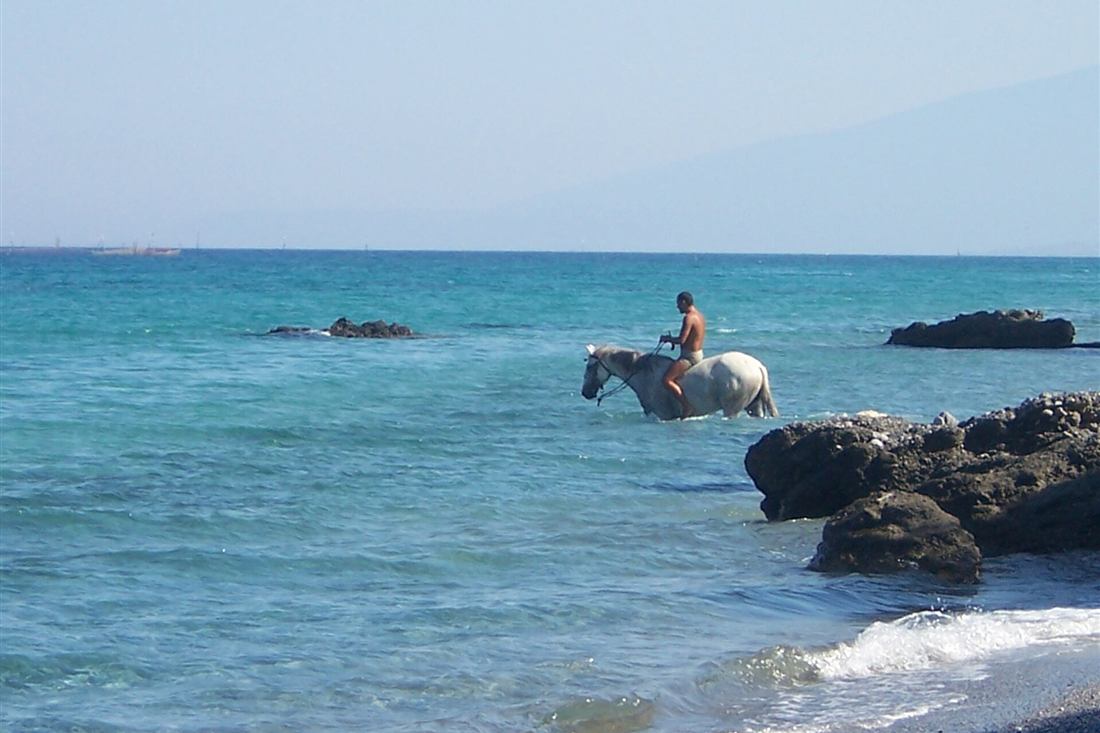
Chania horse riding runs one to three hours from stables across western Crete, through olive groves and river valleys and along the beaches at Falasarna, Georgioupoli and Agioi Apostoloi, with the White Mountains behind. Plan the rest of the trip with Greece Tours.
This page covers the ride: where the stables are and where the routes go, what it costs, whether experience is needed, the weight and age limits, the Falasarna sunset ride, swimming with the horses, the breeds, the seasons, what to wear, welfare, insurance and booking.
What is a chania horse riding tour?
A guided ride of one to three hours from a stable in western Crete, on Arabians, Andalusians, Cretan Messara horses or crossbreeds, through olive groves, along river valleys and on the beaches at Falasarna, Georgioupoli and Agioi Apostoloi.
The Chania prefecture runs from the Gramvousa peninsula in the west to Georgioupoli in the east, and the stables are spread across that whole arc rather than clustered in one place. The chania horse riding stables state this at booking and put it on the voucher.
Every ride opens with a matching session. The stable puts each rider on a horse chosen for weight, height and experience, adjusts the stirrups and walks a short loop before the group leaves the yard. Riders on chania horse riding tracks meet it in the first ten minutes.
Helmets are supplied and worn by everyone, and closed shoes with a small heel are the one piece of kit a rider has to bring. It decides which chania horse riding format fits the party.
The White Mountains stand behind almost every route at up to 2,453 metres, holding snow into May, and they are the backdrop that makes the photographs.
Where do the rides go in Chania?
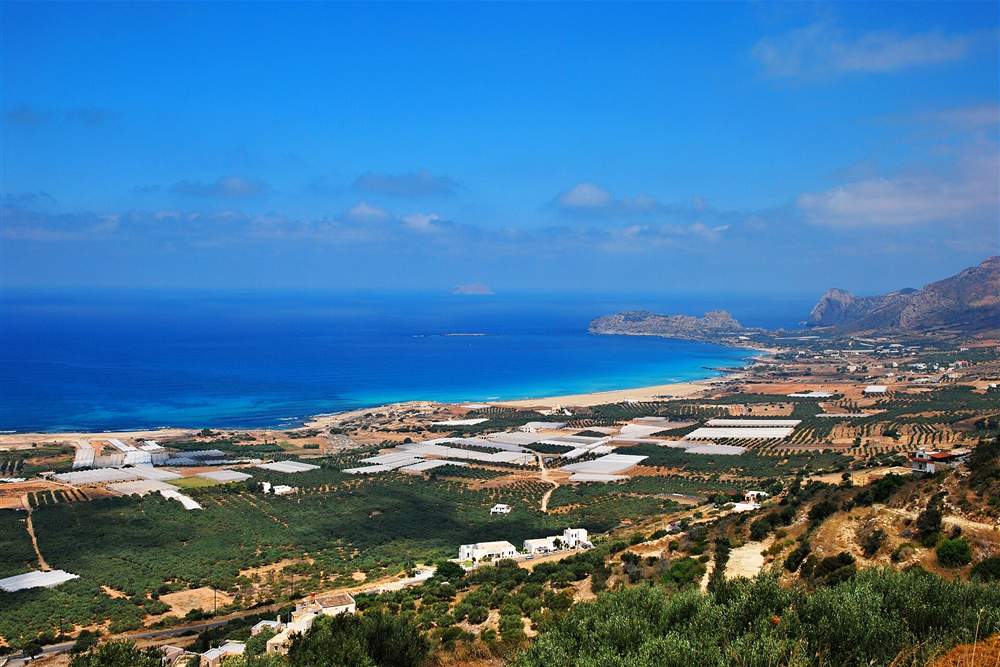
Falasarna and Kissamos in the far west, Agioi Apostoloi and Platanias on the town beaches, Georgioupoli’s nine-kilometre sand in the east, the Apokoronas olive terraces, and the shore of Lake Kournas.
Falasarna is the sunset ride. A west-facing bay with 1.5 km of pale sand and nothing between it and the open Mediterranean, which is why the evening departures fill first. Every chania horse riding departure is planned around it before the group mounts.
Georgioupoli offers the longest continuous beach ride on the island, running east from the river mouth with the chapel of Agios Nikolaos on its causeway behind you. That is the chania horse riding difference against a jeep or a boat day.
Agioi Apostoloi sits ten minutes west of Chania town and is the closest beach ride to the old harbour, on a series of small coves rather than one long strand. The chania horse riding price reflects it, hour by hour.
The Apokoronas routes stay inland through olive terraces and dry-stone walls, shaded most of the way, which makes them the summer option when the beaches are too hot.
Lake Kournas is Crete’s only natural freshwater lake, 1.2 km across under the Dramia hills, and the rides there circle the shore on packed track.
What does chania horse riding cost?
From 35 to 55 euros for a one-hour ride, 60 to 95 euros for two hours, 90 to 150 euros for a sunset beach ride with dinner on the sand, and 45 to 75 euros for a 45-minute lesson in an arena.
The sunset-and-dinner format at Falasarna sits at the top of the range because it runs three to four hours in total and the meal is served on the beach after the ride. A chania horse riding ride is sold on that, and the listing says so plainly.
Children’s pony sessions cost 20 to 35 euros for 30 minutes, led on foot by a groom, and they are the standard product for riders under six. A chania horse riding stable carries the helmets and the water for it.
Transfers from Chania town, Platanias and the Apokoronas resorts are 10 to 25 euros a head return, or free from some stables for groups of four. A chania horse riding slot fills first on that count in July and August.
Private rides for one party cost 30 to 60 percent more and are the sensible choice for a family with mixed abilities.
Do you need riding experience?
No. The trail rides take complete beginners at walk and trot with a guide leading, and the faster routes with canter sections are held for riders who show control in the arena first.
The stables ask two questions at booking: how much you have ridden and what you weigh. Both decide the horse, and a wrong answer produces a mismatched pairing that spoils the ride. This is what chania horse riding delivers between the olive groves and the sea.
Beginners get the older, steadier animals. These horses have walked the same tracks for years and a nervous rider does not unsettle them. The chania horse riding herd is chosen for it rather than for looks.
Experienced riders are offered an assessment loop before the guide opens the pace, and on the Georgioupoli beach that means a genuine canter on firm sand. The chania horse riding route is set by it more than by distance.
Lessons in dressage and general schooling run at 40 to 60 euros an hour at the larger centres, for visitors who ride at home and want to keep their hand in.
What are the age and weight limits?
Riders are six and over for a led pony session, eight and over on a trail ride, and the weight ceiling runs 90 to 100 kilos across the Chania stables, set by the horse assigned rather than a single figure.
The ceiling protects the animal. A horse carries about 20 percent of its own bodyweight comfortably, so a 450-kilo horse takes a 90-kilo rider with tack and no more. The chania horse riding season runs for it from April to November.
Children under eight ride on a lead rein with a groom alongside and a parent walking with them, and no stable puts a small child on a trail ride alone. The chania horse riding stables state this at booking and put it on the voucher.
Teenagers ride as adults from about fourteen subject to the same assessment, and mixed families are split across two guides when the abilities differ widely. Riders on chania horse riding tracks meet it in the first ten minutes.
The stables state the ceiling at booking and weigh nobody at the yard, so honest numbers keep the pairing safe.
What is the Falasarna sunset ride?
A two to three hour evening ride on the west coast beach timed to finish as the sun drops into the sea, followed on the dinner version by a table set on the sand with Cretan food and wine.
Falasarna faces due west at the end of the Gramvousa peninsula, 59 km from Chania town, which is why it is the only beach on the island where the sun sets into open water in front of you. A chania horse riding booking starts with this settled at the yard.
The ancient city of Falasarna sits at the northern end of the bay, a fourth-century BC harbour town lifted four to six metres out of the sea by the earthquake of 365 AD. Every chania horse riding departure is planned around it before the group mounts.
The sand is pale and fine and the water shallow for a long way out, which is what lets the horses walk in to fetlock depth on the shoreline stretch. That is the chania horse riding difference against a jeep or a boat day.
The drive is an hour and fifteen minutes each way from Chania, so the evening runs long and most operators include the transfer in the price.
Can you swim with the horses?
On the summer beach rides, yes. The saddles come off and the horses walk into chest-deep water with the riders bareback, which runs from May to October and adds 20 to 40 euros to the ride.
The swim is done at walking pace in shallow water rather than out of depth, and the guide stays alongside every rider throughout. The chania horse riding timetable is built on it rather than on the clock.
Swimwear goes on under the riding clothes because there is nowhere to change on the beach, and a towel waits at the yard. A chania horse riding ride is sold on that, and the listing says so plainly.
Not every horse swims. The stables use a small number of animals that are calm in water and rotate them rather than taking the whole string in. A chania horse riding stable carries the helmets and the water for it.
The sea off Falasarna and Georgioupoli holds 22 to 26 degrees from June to October, which is what makes the format work on this coast.
Which horses do the Chania stables keep?
Arabians and Arabian crosses for the trail rides, Andalusians and Lusitanos at the schooling centres, Cretan Messara horses at a small number of yards, and ponies for the children’s sessions.
The Messara is Crete’s own breed, a small ambling horse from the Messara plain in the south, and the population is counted in the low thousands. Guides brief it at the paddock before a chania horse riding group leaves.
Its gait is the reason it survives. The Messara ambles rather than trots, which gives a smooth ride on stony ground and made it the working animal of the Cretan countryside. This is what chania horse riding delivers between the olive groves and the sea.
Arabians suit the terrain for the same reason they do everywhere in Greece: light, sure-footed on stone and tolerant of heat. The chania horse riding herd is chosen for it rather than for looks.
Stables that publish their herd with names and ages are the ones worth booking, because that transparency tracks closely with how the animals are kept.
When is the best time of year to ride?
April to early June and September to November. Spring gives green hills, wildflowers and 20 to 26 degrees, autumn gives warm sea for the swim rides, and July and August restrict riding to early morning and evening.
High summer reaches 33 to 38 degrees inland and the stables close the middle of the day for the horses, running 08:00 to 10:30 and again from 18:00. It decides which chania horse riding format fits the party.
Winter riding continues on the coast at 15 to 18 degrees, and the olive-terrace routes stay usable while the mountain tracks turn to mud. The chania horse riding season runs for it from April to November.
Autumn is the quiet season and the best value, with dry tracks, warm water into late October and groups of two or three rather than eight. The chania horse riding stables state this at booking and put it on the voucher.
Rain cancels a ride outright rather than shortening it, because the terrace paths turn to slick clay within an hour.
What do you wear for chania horse riding?
Long trousers, closed shoes with a small heel, the stable’s helmet, sun cream, sunglasses and water. Shorts, sandals and flip-flops are refused at the yard.
Long trousers are the rule that catches people out in August. Bare legs rub raw against the saddle flap within twenty minutes. The chania horse riding price reflects it, hour by hour.
Riding boots are lent in common sizes. Trainers work where the stirrup has a safety cage, and a smooth sole with no heel is the one combination refused outright. A chania horse riding booking starts with this settled at the yard.
Gloves help on a two-hour ride and are worth carrying, because the reins chafe the base of the fingers on anyone who does not ride regularly. Every chania horse riding departure is planned around it before the group mounts.
On the swim rides swimwear goes under the clothes, and nothing is carried on the back, since a shifting rucksack unbalances both rider and horse.
How does riding compare with the other Chania activities?
A ride covers 6 to 12 km of country a jeep or a boat never reaches, takes one to three hours and needs no licence. A 4×4 covers the mountain tracks, a boat covers the coast and the coves.
Riding is the quiet option. The routes pass through olive groves, along river beds and across beaches with no engine noise and no queue. A chania horse riding slot fills first on that count in July and August.
The gorge walks are the other land activity on this side of Crete, and Samaria at 16 km is a full day rather than a morning. The chania horse riding timetable is built on it rather than on the clock.
The boat day competes for the same slot because both take a morning, and the sea version sits at Chania boat trips. A chania horse riding ride is sold on that, and the listing says so plainly.
Parties book the ride for the early evening and the beach or the old harbour for the rest of the day, and the two fit together without hurry.
What happens at the yard before the ride?
A short briefing on mounting, stopping, steering and the rein hold, the helmet fitted, the horse assigned and led out, a walk in the arena or the paddock, and the group set in order behind the guide.
The order matters more than beginners expect. The steadiest horse goes at the front behind the guide and the boldest at the back, and swapping places mid-ride is discouraged. The chania horse riding route is set by it more than by distance.
Girth and stirrup length are checked twice, once at the yard and again after ten minutes when the horse has settled and the saddle has shifted. Guides brief it at the paddock before a chania horse riding group leaves.
The stables ask about back trouble, recent surgery and pregnancy before the deposit rather than at the mounting block. This is what chania horse riding delivers between the olive groves and the sea.
Riders who find they cannot manage are refunded or moved to a led session, and the reputable yards publish that policy rather than leaving it to the day.
How fit do you need to be?
Moderately. A one-hour walk-and-trot ride needs no particular fitness, while a two-hour ride with canter sections uses the thighs and the lower back in a way most people are not used to.
The soreness arrives the next day rather than during, and it lands in the inner thigh and the seat rather than anywhere dramatic. Riders on chania horse riding tracks meet it in the first ten minutes.
Anyone with a knee replacement, a recent back injury or limited hip mobility talks to the stable first, because mounting is the movement that causes the trouble. It decides which chania horse riding format fits the party.
Weight is the other constraint and it is about the horse rather than the rider, which is why the ceiling is stated plainly at booking. The chania horse riding season runs for it from April to November.
A led pony walk is the alternative for anyone who wants the experience without the physical demand, and the stables run them for adults as well as children.
What do the guides cover on the route?
The trees and herbs along the way, the dry-stone terraces and who built them, the shepherds’ huts, the birds on the Georgioupoli river, and on the Kournas rides the geology of the lake.
The olive terraces are the recurring subject because they are everywhere and because the walls are older than most of the buildings on the island. That is the chania horse riding difference against a jeep or a boat day.
Wild herbs line the tracks from March to June, with thyme, sage, oregano and dittany, the last being Crete’s own endemic plant and the one the guides always stop for. The chania horse riding price reflects it, hour by hour.
Lake Kournas holds eels, terrapins and migrating birds, and the water level drops by three metres through the summer, which is visible from the shore path. A chania horse riding booking starts with this settled at the yard.
The guides ride rather than lecture, and the talking happens at the stops rather than in the saddle.
What is the Apokoronas inland route?
A one to two hour ride from a stable near Vamos, Kalyves or Almyrida through olive groves and stone-walled lanes, climbing gently towards the White Mountains foothills with the Souda bay behind.
This is the shaded route and the one that works in July and August, because the canopy covers most of the track. A chania horse riding stable carries the helmets and the water for it.
The villages of Vamos, Gavalochori and Douliana sit on the same terrace and hold restored Venetian and Turkish-era houses, and the rides pass their edges. A chania horse riding slot fills first on that count in July and August.
The ground is packed earth and loose stone rather than sand, which makes it a trotting route rather than a cantering one. The chania horse riding timetable is built on it rather than on the clock.
It suits riders who want the countryside rather than the photograph, and the stables price it below the beach rides.
How does a ride fit a week in Chania?
One evening for the Falasarna sunset ride, one morning for the Samaria or Imbros gorge, one day on the water, one for Chania old town and the market, and the rest on the beaches.
The ride goes early in the week rather than late, because the stables cancel for weather and a booking on the last evening leaves no room to move it. The chania horse riding herd is chosen for it rather than for looks.
Falasarna pairs with Balos and the Gramvousa boat, since both are at the western end and the drive is the same ninety minutes. The chania horse riding route is set by it more than by distance.
The Apokoronas rides pair with Lake Kournas and Georgioupoli, which makes a half day without leaving the eastern side of the prefecture. Guides brief it at the paddock before a chania horse riding group leaves.
Chania old town belongs to the evening, and the Venetian harbour sits at Chania boat rental for anyone wanting the water version.
What about animal welfare?
Look for horses at a healthy weight with clean feet and no girth sores, shade and water in the paddock, a weight limit stated in writing, and rest between rides. A yard that refuses a rider on weight grounds is protecting its animals.
The stables that work well in Crete cut their timetable in July and August rather than running through the heat, and that is the clearest signal a visitor can read. The chania horse riding stables state this at booking and put it on the voucher.
Rest matters as much as load. A horse working two one-hour rides a day with shade between them is in a different position from one working six. Riders on chania horse riding tracks meet it in the first ten minutes.
Tack that fits is visible even to a non-rider: the saddle sits level, the girth is snug rather than tight and the bridle does not pull at the mouth. It decides which chania horse riding format fits the party.
A number of Chania yards run rescue and rehoming programmes for animals retired from farm work, and part of the ride fee pays for their feed and veterinary care.
Can you ride with your own equipment?
Yes. Riders bring their own helmet, boots, gloves and body protector if they prefer, and the stables accept them provided the helmet is a current riding standard rather than a cycle or a ski helmet.
A cycle helmet does not protect the back of the head in a riding fall and no yard will accept one in place of the correct kit. Every chania horse riding departure is planned around it before the group mounts.
Chaps and half-chaps are worth packing for anyone riding more than once, since they solve the rubbing that long trousers alone do not. That is the chania horse riding difference against a jeep or a boat day.
Personal saddles are not used on trail rides because the horses are fitted to the yard’s own tack. The chania horse riding price reflects it, hour by hour.
The stables lend helmets in all sizes and boots in the common ones, so nothing has to be brought to ride once.
Is chania horse riding insured?
The stables carry third-party liability by law and the ride fee includes it. Personal accident cover sits with the rider’s own travel policy, and many policies exclude horse riding unless it is declared.
Reading the exclusions before travelling is the practical step, because riding sits in the same category as scuba and climbing on most policies. A chania horse riding ride is sold on that, and the listing says so plainly.
Every rider signs a declaration at the yard covering health, experience and weight, and it is a condition of the insurance rather than a formality. A chania horse riding stable carries the helmets and the water for it.
Under-18s need a parent or guardian present to sign, and the stables state it at booking. A chania horse riding slot fills first on that count in July and August.
Helmets are compulsory on every insured yard in the prefecture, and refusing one ends the booking on the spot.
Who does a chania horse riding tour suit?
Families with children over six, couples wanting the Falasarna sunset, riders who ride at home and want a beach canter, and anyone looking for an activity that is neither a beach day nor a gorge walk.
Families do best on the short led sessions and the gentle Apokoronas routes, where the pace stays at a walk and the ground is even. This is what chania horse riding delivers between the olive groves and the sea.
Experienced riders come for Georgioupoli, which is the one beach long enough and firm enough for a proper canter. The chania horse riding herd is chosen for it rather than for looks.
The sunset dinner ride at Falasarna is the one couples book, and it fills a week or more ahead in July and August. The chania horse riding route is set by it more than by distance.
It is the wrong choice for anyone who dislikes heights on a moving animal or who is nervous around horses, and the stables prefer to know that at booking.
How do you book chania horse riding?
Two to five days ahead from May to September and a day ahead outside it, stating rider count, ages, weights and experience. Free cancellation to 24 hours is standard and the groups cap at six to eight riders.
Evening slots go first in high season because the afternoon rides are cancelled for heat, and a booking made on the day gets the 18:30 departure or nothing. The chania horse riding season runs for it from April to November.
Transfers are arranged at booking rather than on arrival, since the stables sit 20 to 60 minutes from the main resorts and the minibus runs a fixed loop. The chania horse riding stables state this at booking and put it on the voucher.
Confirm the ride length in saddle time rather than total time, because a two-hour booking at some yards includes the matching, the briefing and the transfer. Riders on chania horse riding tracks meet it in the first ten minutes.
Private rides need three to seven days in July and August, and the Falasarna dinner version needs a week. The wider island sits at Crete food tour.
What is the Georgioupoli beach ride like?
A one to two hour ride on nine kilometres of flat sand running east from the Almyros river mouth, firm enough for a canter at the water’s edge, with the White Mountains behind and the chapel of Agios Nikolaos on its stone causeway at the start.
The chapel sits about 100 metres offshore on a line of rocks and a narrow walkway, and it is the single most photographed object on this coast. A chania horse riding booking starts with this settled at the yard.
The Almyros river runs cold into the sea here from underground springs, which is why the water at the river mouth is noticeably colder than the sea a hundred metres east. Every chania horse riding departure is planned around it before the group mounts.
The sand is coarse and firm at the waterline and soft higher up the beach, so the guides keep the faster work on the wet strip.
The beach is long enough that a group never meets another, even in August, once it clears the organised section in front of the village.
Behind the beach the Kournas hills rise quickly, and the ride can turn inland for the return leg on a track through eucalyptus.
What is the Kissamos and Gramvousa ride?
A ride from a stable near Kissamos across low hills and olive terraces towards the Gramvousa peninsula, with the Falasarna plain below and the Bay of Kissamos on the other side, running one to three hours.
The peninsula is the wildest corner of Chania, a limestone finger running north with no permanent settlement on it and a Venetian fortress on the islet at its tip. The chania horse riding timetable is built on it rather than on the clock.
The Falasarna plain is the island’s early-tomato ground, and the ride passes greenhouses and open fields before climbing to the ridge. A chania horse riding ride is sold on that, and the listing says so plainly.
From the high point the view runs from Balos lagoon in the north to Cape Vouxa and, on a clear day, to Antikythera on the horizon.
This route is exposed with almost no shade, so it runs early or late rather than through the middle of the day.
It is the quietest of the Chania rides and the one where the group has the track to itself.
What does a multi-day riding holiday look like?
Three to seven days of four to six hour rides with overnight stops in village guesthouses, covering 20 to 35 km a day across the Apokoronas, the Kournas hills and the White Mountains foothills, at 600 to 1,400 euros a person with full board.
These need real riding experience, since six hours in the saddle on mountain tracks is a different proposition from an hour on a beach. Guides brief it at the paddock before a chania horse riding group leaves.
The luggage moves by road between the guesthouses and the riders carry nothing but water and a camera. This is what chania horse riding delivers between the olive groves and the sea.
The routes link villages that the road network reaches poorly, which is the whole point of doing it on a horse rather than in a car.
Spring and autumn are the only workable seasons, because the summer heat rules out four consecutive days of riding.
Group sizes run four to eight riders with two guides, and the operators ask for a riding CV rather than a self-assessment.
What wildlife and plants do you pass?
Griffon vultures over the gorges, buzzards and kestrels on the terraces, the endemic Cretan dittany on the cliffs, thyme and sage across the hillsides, and in spring orchids in the damp ground behind the beaches.
Crete holds one of Europe’s largest griffon vulture populations, and the birds ride the thermals over the White Mountains through the middle of the day. It decides which chania horse riding format fits the party.
Dittany, Origanum dictamnus, grows only on Crete and only on rock faces, and it has been collected for medicine since antiquity. The chania horse riding season runs for it from April to November.
The island carries about 1,800 plant species with roughly 180 found nowhere else, which is why botanists come here in April.
Wild orchids appear from February to April in the damp ground around Georgioupoli and Kournas, in dozens of species.
The guides know the plants because the horses eat some and avoid others, and that knowledge is older than tourism on this island.
How do the stables handle the summer heat?
By closing the middle of the day. Rides run 08:00 to 10:30 and from 18:00 to sunset through July and August, the horses stand in shade with water between rides, and the beach routes replace the inland ones.
Ground temperature on an open track reaches 45 degrees in August, which is punishing for a horse carrying a rider. The chania horse riding price reflects it, hour by hour.
The sea is the cooling mechanism, and that is why the swim rides exist rather than as a novelty for the riders. A chania horse riding booking starts with this settled at the yard.
Yards that run all day through August are the ones to avoid, and the timetable on the booking page shows it before you arrive.
Riders feel the same heat. Two litres of water a person is the minimum on a morning ride and the stables carry more.
The Apokoronas olive-terrace routes stay usable at midday because the canopy holds the temperature down by five or six degrees.
What is the difference between the stables?
Size, terrain and format. The large centres run arena lessons and multiple daily departures with twenty or more horses. The small yards keep six to twelve animals, run two rides a day and take one group at a time.
The large centres suit beginners and families because there is always a suitable horse and a groom free. A chania horse riding slot fills first on that count in July and August.
The small yards suit riders who want the same guide for the whole ride and a route chosen for the group rather than the timetable. The chania horse riding timetable is built on it rather than on the clock.
Terrain decides more than either. A beach stable and a mountain stable offer different days even with identical horses.
Price differences across the prefecture are small, at 10 to 20 euros on a one-hour ride, so terrain and timing matter more than cost.
Reviews that name the horse and the guide are the useful ones, because they show the yard is small enough for that to mean something.
What mistakes do first-time riders make?
Booking the midday slot in August, arriving in shorts and sandals, understating their weight, expecting a canter on a first ride, and leaving the camera loose in a hand rather than on a strap.
The clothing error is the most common and the most easily avoided, and the yards turn shorts away rather than bending the rule. The chania horse riding route is set by it more than by distance.
Understating weight is the one that causes real harm, because it puts a horse under a load it was not assigned for. Guides brief it at the paddock before a chania horse riding group leaves.
Expecting speed is the third. A first ride is a walk with some trot, and the canter is earned in the arena rather than requested on the beach.
Phones go in a zipped pocket and cameras on a neck strap, because anything held in a hand ends up in the sand.
The last is treating a horse like a machine. The guides brief how to approach, stop and reassure the animal, and that briefing is the ride’s real safety equipment.
Frequently Asked Questions
What does Chania horse riding cost?
From 35 to 55 euros for one hour, 60 to 95 euros for two hours, and 90 to 150 euros for the Falasarna sunset ride with dinner served on the sand. Helmet, insurance and the guide are included.
Can you swim with the horses in Chania?
Yes on the summer beach rides. The saddles come off and the horses walk into chest-deep water with the riders bareback, from May to October, and it adds 20 to 40 euros to the ride.
Do you need riding experience?
No. The trail rides take complete beginners at walk and trot with a guide leading, and only the routes with canter sections ask for an assessment loop in the arena first.