
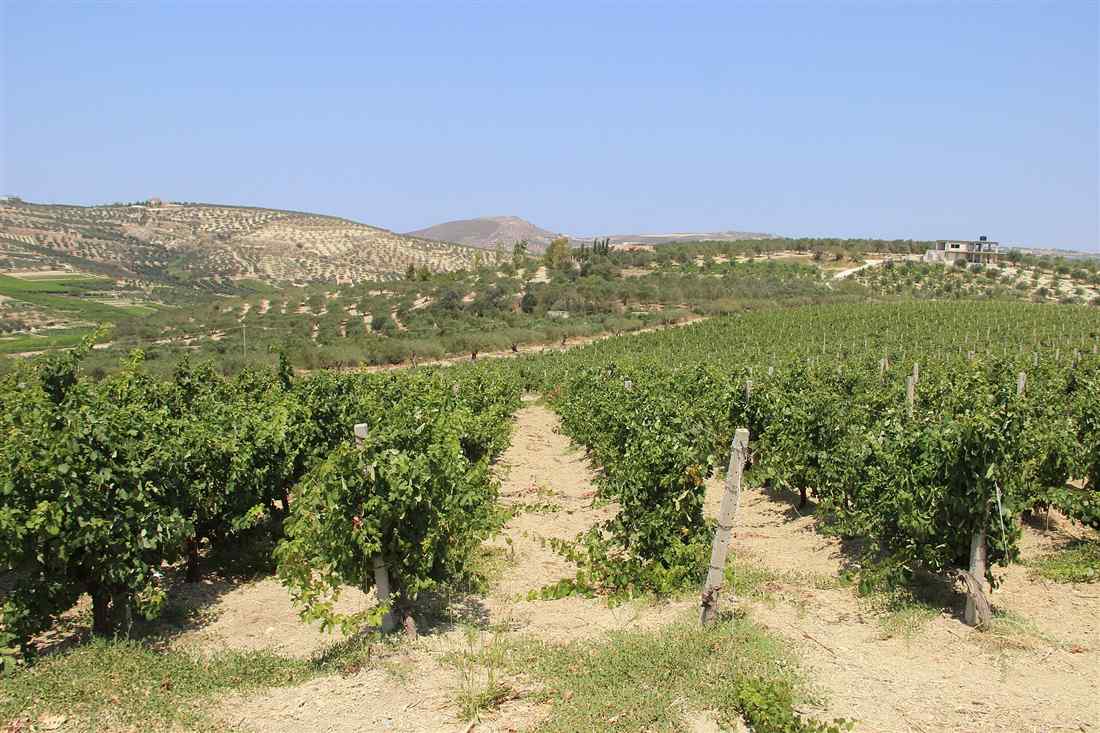
A Heraklion wine tasting is a two to six hour visit to one to three estates in the hills south of the city, walking the vineyard and the cellar before four to eight wines are poured with Cretan cheese, rusks and the estate’s own oil. Plan the rest of the island with Greece Tours.
This page covers the visit: which wineries receive guests, the Cretan grapes and how they taste, the Wine Roads around Dafnes, Peza and Archanes, the price bands, the food on the table, tsikoudia, what pairs with a wine day, the harvest and how to book a Heraklion wine tasting.
What is a Heraklion wine tasting and how does the visit unfold?
A Heraklion wine tasting is a two to six hour visit to one, two or three estates in the hills south of the city, combining a vineyard and cellar walk with four to eight poured wines served alongside Cretan cheese, barley rusks and olive oil.
The structure repeats across the region. A host meets the group at the gate, walks 200 to 400 metres of trained vines, names the blocks by grape and planting year, then moves indoors to the stainless tanks and the French and Austrian oak. The cellar section runs 20 to 30 minutes. Fermentation temperatures, harvest dates and yields per hectare come up in plain numbers rather than slogans. The Heraklion wine tasting hosts state this at booking. The Heraklion wine tasting room is set up for it.
Pouring happens on a shaded terrace or in a stone tasting room. Four wines is the standard flight at 15 to 20 euros; eight wines with reserve bottlings reaches 30 to 35 euros. Whites arrive first, chilled to 10 degrees, then rosé, then Liatiko and Kotsifali reds, then a sweet sun-dried Liatiko in a 50 ml pour. Water and rusks reset the palate between glasses. The Heraklion wine tasting price reflects it.
Transport decides the shape of the day. A hire car from the port reaches Peza in 20 minutes and Dafnes in 25, which suits two estates before 15:00. A minibus tour collects from hotels along the Ammoudara and Amnissos strips between 09:00 and 09:45 and returns by 16:00. Drivers who taste face a 0.05 percent blood alcohol limit and roadside checks on the Peza road. A Heraklion wine tasting is planned around it.
Groups stay small. Cellar-door slots hold 6 to 12 people, private appointments 2 to 4. A full Crete wineries circuit across three producers occupies six hours with lunch. Booking a Heraklion wine tasting through the estate directly costs less than the same visit sold as a packaged excursion. The Heraklion wine tasting season turns on this.
Which wineries receive visitors around Heraklion and what appointment does each require?
Douloufakis at Dafnes, Lyrarakis at Alagni, Boutari at Skalani, Zacharioudakis on the Kastelli hills, Idaia at Venerato and Silva Daskalaki near Siva all open to visitors, with walk-in windows at the larger three and phone or email appointments at the smaller estates.
Douloufakis sits 17 km southwest of the city in Dafnes village, a fourth-generation house working Vidiano, Vilana and Liatiko. The tasting room opens Monday to Saturday from 09:00 to 17:00, and flights of four to seven wines run 15 to 30 euros. Lyrarakis at Alagni, 24 km out, rebuilt Dafni and Plyto from near extinction in the 1990s and shows both grapes in every seated flight. Every Heraklion wine tasting works to that rule. A Heraklion wine tasting starts with this settled.
Boutari at Skalani sits 8 km from the centre beside the Fantaxometocho estate, closest to the city and the easiest half-day for travellers staying in Heraklion. Its audiovisual room, barrel hall and terrace over the Skalani valley handle bus groups from the cruise berths, with tastings from 12 euros for three wines to 35 euros for the reserve set with cheese. A Heraklion wine tasting fills first on that count in August.
Zacharioudakis planted 30 hectares on the Orthi Petra slope above Plouti in the Kastelli hills, 45 minutes from the port on the road toward Pyrgos. The building is glass and concrete, the view runs to the Asterousia ridge, and the estate takes bookings 48 hours ahead. Idaia in the Venerato valley and Silva Daskalaki at Siva both work Malevizi fruit and receive by appointment only, two to eight visitors at a time. This is what a Heraklion wine tasting delivers at the table.
Each house pours its own portfolio. A Heraklion wine tasting that covers Dafnes and Peza in one morning shows two distinct soil profiles: clay-limestone at 350 metres against schist and marl at 480 metres. Guests at a Heraklion wine tasting meet it in the first half hour.
What grapes make Cretan wine around Heraklion and how do they taste?
Vidiano, Vilana, Thrapsathiri and Dafni carry the whites, while Liatiko, Kotsifali and Mandilari carry the reds. Vineyards at 300 to 600 metres and rainfall near 500 mm produce wines with stone fruit, wild herb and dry limestone character rather than tropical weight.
Vidiano is the flagship white, thick-skinned, low in acid, giving apricot, peach skin and a waxy texture that carries oak without breaking. Vilana dominates the Peza plateau, lighter, citrus-driven, finishing at 12 to 12.5 percent alcohol. Thrapsathiri adds bitter-almond grip. Dafni, revived by Lyrarakis from four surviving vines, smells literally of bay laurel, a marker no other Greek grape produces. A Heraklion wine tasting is planned around it. The Heraklion wine tasting timetable is built on it.
Liatiko ripens first, sometimes by 5 August in the Dafnes blocks, and delivers pale colour with red cherry, dried fig and sage. Its low tannin and pale hue mislead people expecting a heavy southern red. Kotsifali brings alcohol and spice at 14 percent, Mandilari brings colour and tannin, and the Peza PDO blend of Kotsifali with Mandilari corrects both faults at once. The Heraklion wine tasting season turns on this.
Altitude drives the style. Vines at Kastelli sit 480 to 600 metres, where August nights fall to 18 degrees while afternoons reach 34, holding acidity that the coastal plain loses. The meltemi wind dries the canopy, so fungicide passes stay low and organic certification is widespread across Dafnes and Archanes. Any Heraklion wine tasting worth the drive pours Vidiano and Liatiko side by side to make the altitude argument in the glass. The Heraklion wine tasting room is set up for it.
Old bush vines survive on their own roots. Phylloxera never reached parts of Crete, and ungrafted Liatiko plots aged 60 to 90 years still produce 3,000 kilos per hectare at Alagni and Kastelli. The Heraklion wine tasting flight is set by it.
Where do the Wine Roads of Crete run around Heraklion?
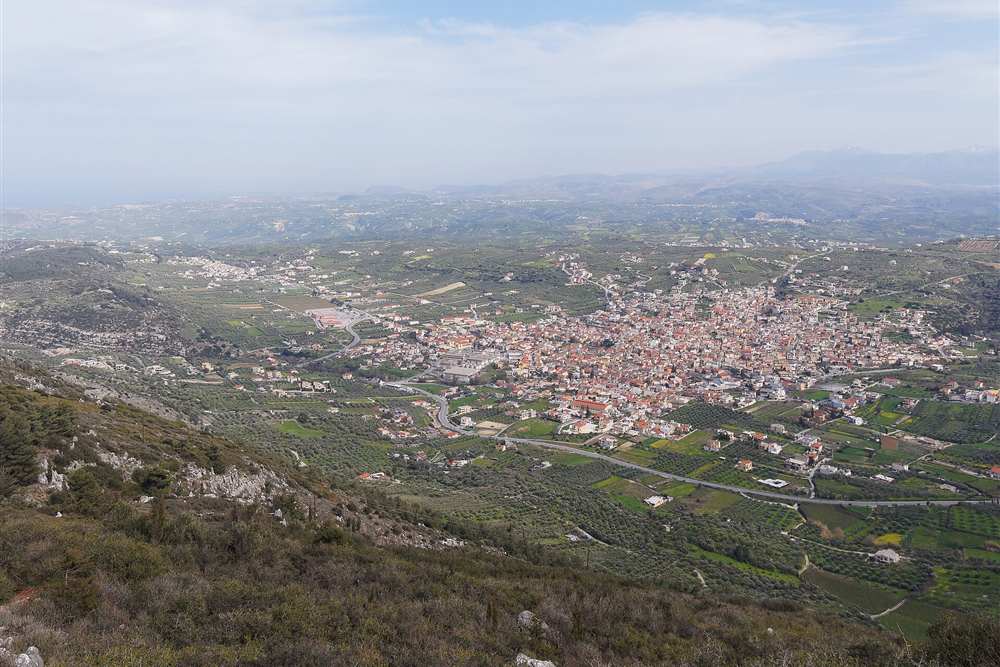
The Wine Roads network covers the Peza, Dafnes and Archanes zones directly south of the city, plus the Malevizi valleys west toward Venerato and the Kastelli route southeast. Driving times from the port run 15 minutes to Skalani and 45 minutes to Plouti.
Peza is the largest zone, 15 km south, a plateau at 350 to 400 metres holding the Peza cooperative, Minos-Miliarakis and Douloufakis fruit contracts. Vilana rules here. Archanes lies 3 km further, at 380 metres under Mount Juktas, with Kotsifali and Mandilari for its PDO red and a village square of tavernas where lunch runs 14 to 22 euros a head. This is what a Heraklion wine tasting delivers at the table. That detail shapes a Heraklion wine tasting from the first pour.
Dafnes climbs west of Peza on the road to Venerato, 17 km from the coast, on red clay over limestone. The Malevizi route continues past Venerato and Siva into valleys at 300 to 450 metres, quieter, with 20 minutes between estates on narrow asphalt. Kastelli sits southeast beyond Thrapsano, reached in 40 to 45 minutes by the Pyrgos road, and rewards the drive with the highest plantings in the prefecture. Guests at a Heraklion wine tasting meet it in the first half hour.
Brown signposts marked with a grape cluster mark every junction from the Peza turn-off onward. The regional wine association publishes a printed map listing 24 member producers with phone numbers and opening hours, stocked at estate reception desks and at the Heraklion tourist office on Xanthoudidou Street. Mobile signal drops in the Venerato gorge, so downloaded offline maps matter. A Heraklion wine tasting starts with this settled.
Road surfaces are sound but narrow, with 3.5 metre lanes and blind bends above Alagni. Sunset arrives at 20:45 in July and 17:15 in December, and a Heraklion wine tasting planned for the Kastelli hills allows daylight for the return leg. A Heraklion wine tasting keeps the glasses for it.
What does a Heraklion wine tasting cost across each format?
Cellar-door tastings with a food plate run 15 to 35 euros per person. Guided half-days with transport and two estates cost 60 to 110 euros, full days with lunch and three estates 120 to 190 euros, and a private car with driver-guide 200 to 350 euros.
At the gate the maths is simple. Three wines with rusks and graviera costs 12 to 18 euros at Boutari and Douloufakis. Six to eight wines with a full plate of cheese, apaki and olives reaches 28 to 35 euros at Lyrarakis and Zacharioudakis. Estates deduct the tasting fee from any purchase above two bottles, which puts a 25 euro flight effectively at zero for a buyer taking six bottles home. The Heraklion wine tasting room is set up for it. It decides which Heraklion wine tasting to take.
Shared minibus programmes carry 8 to 16 passengers, collect from hotels between 09:00 and 09:45, and cover two estates with all pours included. That band sits at 60 to 110 euros depending on whether lunch is added. Full-day versions add a third producer and a seated Cretan table at Archanes or Houdetsi, landing at 120 to 190 euros with a 5 to 6 hour running time. The Heraklion wine tasting flight is set by it.
Private hire changes the arithmetic. A licensed driver with a Mercedes Vito for four people costs 200 to 350 euros for the day, entrance and tastings paid separately at 15 to 35 euros a head. For a party of four that private Heraklion wine tasting reaches 75 to 120 euros per person while keeping the schedule flexible. The Heraklion wine tasting timetable is built on it.
Bottle prices at source run 8 to 14 euros for entry whites, 15 to 25 euros for single-vineyard Vidiano, and 28 to 45 euros for aged Liatiko. Shipping a twelve-bottle case to northern Europe adds 60 to 90 euros. The estate confirms it when a Heraklion wine tasting is booked.
What food arrives with the wine at a Cretan estate?
Estates serve aged graviera and fresh mizithra, dakos rusk topped with grated tomato and oil, table olives, apaki cured pork, thyme honey with walnuts, and on longer programmes a full seated Cretan table of six to ten cooked dishes.
Graviera from the Psiloritis flocks ages 5 to 12 months and cuts through Kotsifali tannin. Mizithra arrives soft and unsalted with honey, or dried and grated over rusks. Dakos is the fixed opener: a barley rusk 8 cm across, softened with water, loaded with grated ripe tomato, mizithra crumbs, oregano and a 15 ml pour of estate olive oil. It pairs against Vilana and Thrapsathiri. A Heraklion wine tasting starts with this settled. The Heraklion wine tasting price reflects it.
Apaki is pork loin marinated in vinegar, smoked over sage, thyme and cypress wood, then sliced 2 mm thin. Its smoke meets Liatiko cleanly. Estates in the Malevizi valleys add xerotigana, staka butter and pickled wild greens. Olive oil comes from the producer’s own trees at Skalani, Achlada or Venerato, unfiltered, poured into a saucer for tasting before the wine flight begins. A Heraklion wine tasting keeps the glasses for it.
The seated lunch on full-day programmes runs 90 minutes and covers gamopilafo cooked in goat stock, snails in rosemary, boiled wild greens with lemon, slow-baked lamb with potatoes, and watermelon with mizithra to finish. Prices inside a package sit at 18 to 28 euros of the total; ordered independently in an Archanes taverna, the same table costs 16 to 24 euros a head. That detail shapes a Heraklion wine tasting from the first pour.
Vegetarians are handled without notice, since dakos, greens, gigantes beans and cheese already cover most of the table. Any Heraklion wine tasting booked for a group of eight or more takes dietary notes at the time of reservation. The Heraklion wine tasting hosts state this at booking.
What is tsikoudia and how do the estates serve it?
Tsikoudia is the Cretan pomace spirit distilled from grape skins and stems after the harvest, bottled at 37 to 45 percent alcohol, poured cold in 30 ml glasses at the close of a meal. Village raki festivals run through October and November.
Distillation starts once the pomace has fermented for two to four weeks in sealed barrels. Licensed copper stills, called kazania, fire up from late October under permits issued to individual growers for a fixed number of days. The first runoff is discarded, the heart cut collected, and the result stays unaged and clear. Nothing is added; flavouring with anise belongs to mainland tsipouro, not to Cretan tsikoudia. The Heraklion wine tasting timetable is built on it. A Heraklion wine tasting fills first on that count in August.
Service is fixed by custom. The glass is small, the bottle is kept in the freezer or on ice, and the pour arrives unasked with fruit, sweets or walnuts once plates are cleared. Refusing the first glass reads as refusing the household. A second and third follow at unhurried intervals. Nobody sips it as a standalone tasting item; it closes a table. The estate confirms it when a Heraklion wine tasting is booked.
Kazanemata, the distillation gatherings, turn into village events at Thrapsano, Ano Asites and Kastelli through late October and November. Meat grills over the still fire, lyra players work through the night, and visitors arriving with an invitation drink for free. Estates schedule these dates loosely, since the still runs when the pomace is ready. It decides which Heraklion wine tasting to take.
Every winery around Dafnes and Peza keeps a bottle behind the counter because the spirit is the by-product of the same harvest that filled the tanks. A Heraklion wine tasting closing with tsikoudia adds no cost to the fee, and the driver of the group is served water, coffee or a spoon sweet instead. Every Heraklion wine tasting works to that rule.
What combines well with a wine day in the Heraklion hills?
Knossos sits 5 km from the city centre on the same road as Skalani and Peza. Archanes village houses, the Ideon cave on Psiloritis, olive-oil mills at Skalani and Achlada, and e-bike vineyard routes all slot into a single wine day.
The Minoan site takes 90 minutes with a guide and opens 08:00 to 20:00 from April to October, with a 15 euro summer ticket. Combining Knossos palace at 08:30 with a Peza estate at 11:00 works because the two lie 9 km apart on the same axis, avoiding the midday crowd on the Grand Staircase. That detail shapes a Heraklion wine tasting from the first pour. The Heraklion wine tasting season turns on this.
Archanes, 15 km south, holds restored neoclassical and vernacular houses, a small archaeological collection with the Anemospilia finds, and the Juktas peak sanctuary reached by a 4 km track. Lunch there sits between two morning estates and an afternoon one. The Ideon Andron cave on Psiloritis, linked to the Zeus birth myth, lies 78 km southwest at 1,500 metres on the Nida plateau, a 100 minute drive better given its own day. The Heraklion wine tasting hosts state this at booking.
Olive-oil mills at Skalani and Achlada run tastings of 20 to 40 minutes for 8 to 12 euros, covering acidity levels, polyphenol counts and harvest timing in November. Achlada sits 20 km west of the city above the Gulf, Skalani 8 km south beside the Boutari estate, which makes an oil-and-wine morning easy. The Heraklion wine tasting price reflects it.
E-bike operators run vineyard loops of 18 to 25 km through Peza and Archanes at 70 to 95 euros including two tasting stops. Gradients hit 8 percent on the Juktas approach, and the motor handles them. That format turns a Heraklion wine tasting into four hours outdoors rather than four hours in a van. A Heraklion wine tasting is planned around it.
When is the harvest and how do you book a Heraklion wine tasting?
Picking runs from early August for Liatiko and Vilana to late September for Mandilari and high-altitude Vidiano. Estates receive visitors March to November, and reservations made two to five days ahead cover July and August demand.
Harvest weeks turn the cellar into a working floor. Trucks arrive from 06:00, sorting tables run until noon, and presses cycle through the afternoon. Douloufakis, Lyrarakis and Zacharioudakis show the crush to booked visitors during those weeks, with grapes moving from the destemmer into tank while the flight is poured. Noise and forklift traffic replace the calm of a June visit, and appointments compress to 45 minutes. It decides which Heraklion wine tasting to take.
Booking channels are direct. Estate websites carry forms, phone lines answer between 09:00 and 17:00, and email replies arrive within 24 hours. Two days of notice suffices from March to June and again in October and November. In July and August, and during cruise-ship calls at the port when 3,000 passengers land in a morning, five days of notice secures a preferred slot. Sunday closures apply at Idaia and Silva Daskalaki. Every Heraklion wine tasting works to that rule.
One person in the car stays sober. Cretan police run breath checks on the Peza and Archanes roads through summer evenings, the limit is 0.05 percent, and estates supply spittoons plus water without comment. A driver-guide removes the problem for 200 to 350 euros per day across four passengers. A Heraklion wine tasting fills first on that count in August.
Terraces are gravel or flagstone and vineyard rows are uneven, so closed shoes beat sandals. Temperatures on the Kastelli slopes reach 35 degrees at 14:00 in July and drop to 12 degrees on November mornings. A hat, water and a light layer cover both. Every Heraklion wine tasting confirmed by email lists the meeting point, the flight size and the cancellation window, normally 24 hours. This is what a Heraklion wine tasting delivers at the table.
Frequently Asked Questions
What does a Heraklion wine tasting cost?
From 15 to 35 euros for a cellar-door tasting with a plate, 60 to 110 euros for a guided half day with transport and two estates, 120 to 190 euros for a full day with lunch and three, and 200 to 350 euros for a private car and guide.
Which wineries can you visit near Heraklion?
Douloufakis at Dafnes, Lyrarakis at Alagni, Boutari at Skalani, Zacharioudakis on the Kastelli hills, and the Idaia and Silva Daskalaki cellars in the Malevizi valleys, all 15 to 45 minutes from the city.
What grapes are grown around Heraklion?
Vidiano, Vilana, Thrapsathiri and Dafni for the whites, Liatiko, Kotsifali and Mandilari for the reds, planted at 300 to 600 metres where low rainfall and hot days give herb and stone-fruit character.