
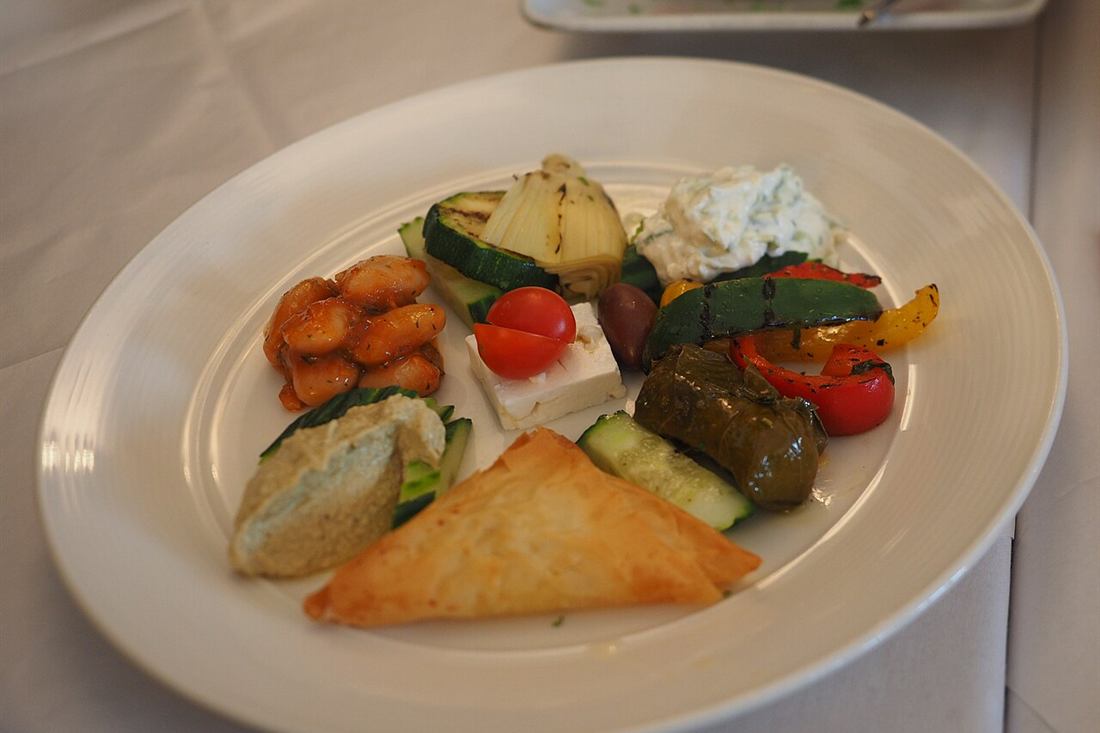
A Kefalonia cooking class puts you in a farm kitchen outside Argostoli for three to five hours: a walk through the garden, four or five island dishes cooked by hand under a local cook, and the meal eaten at a long table with Robola poured alongside it. Plan the rest of the island with Greece Tours.
This guide covers the session: what you cook and why kreatopita defines it, where the kitchens are, what a shared class and a private one cost, how long it runs, the farm and market versions, the wine poured with the meal, dietary requirements, who it suits, and how to book.
What does a Kefalonia cooking class involve?
Three to five hours at a farm or a family kitchen outside Argostoli: a walk through the garden, four or five dishes cooked by hand under a local cook, and the meal eaten at a long table with the island’s wine.
A Kefalonia cooking class runs three to five hours. The classes are small, six to twelve people, and hands-on rather than demonstration. Guests roll pastry, stuff vine leaves, chop for the salad and turn the meat, and the host talks through why a Kefalonian kitchen does it that way rather than reading a recipe out. A Kefalonia cooking class books out four to seven days ahead in August. Hotel pickup covers Argostoli, Lassi and Svoronata. A Kefalonia cooking class works as a wet-weather booking. Greek Lent keeps a full plant-based repertoire alive here. The Argostoli market supplies the fish and the greens. Honey, oil and cheese are tasted on the way round. Dry Mavrodaphne goes with the meat pie at the table. A Kefalonia cooking class costs less without the farm tour. Farms at Svoronata and Domata host the southern classes. The pastry for it is rolled thin by hand.
The garden walk opens the farm-to-table version. Most run on working smallholdings inland from the capital, where the vegetables come from the plot outside the door, the oil is pressed on the island and the honey comes from hives on the same slope. Robola is poured with the vegetables and the fish. The Omala plain holds the classes on the eastern side. Aliada is the island’s garlic paste served with fish. Kreatopita is the island’s meat pie with rice and herbs. Six to twelve guests share the kitchen at a time. Cancellation runs free to twenty-four hours before the shopping. Classes run from April to October on the island. Recipe cards go home with every guest. Children over six take to the pastry and the stuffing. Vegetarian and vegan menus are standard on request.
What do you cook?
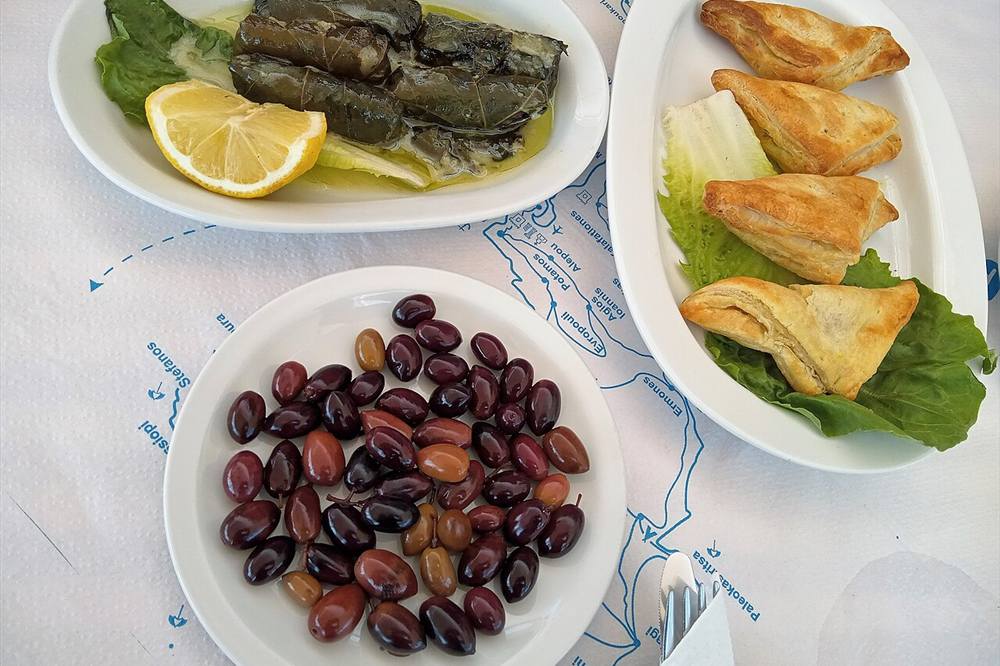
Kreatopita, the island’s meat pie with rice and herbs, plus tzatziki, dolmades, a baked vegetable dish, a fresh salad and a sweet — semolina halva or a spoon sweet from the estate’s own fruit.
Six to twelve guests share the kitchen at a time. Kreatopita is the dish that makes the class Kefalonian rather than generically Greek. Lamb or beef, rice, garlic, mint and pepper are folded into a pastry the cook rolls thin by hand, and it takes most of the session. Cancellation runs free to twenty-four hours before the shopping. Classes run from April to October on the island. Recipe cards go home with every guest. Children over six take to the pastry and the stuffing. Vegetarian and vegan menus are standard on request. The Argostoli market supplies the fish and the greens. The garden walk opens the farm-to-table version. Robola is poured with the vegetables and the fish. The Omala plain holds the classes on the eastern side. Aliada is the island’s garlic paste served with fish.
Honey, oil and cheese are tasted on the way round. The rest fills the table around it. Aliada, the island’s garlic paste, appears alongside fish on part of the programmes, and the meze classes cover eight or nine small dishes instead of one large one. Dry Mavrodaphne goes with the meat pie at the table. A Kefalonia cooking class costs less without the farm tour. Farms at Svoronata and Domata host the southern classes. The pastry for it is rolled thin by hand. Kreatopita is the island’s meat pie with rice and herbs. A Kefalonia cooking class runs three to five hours. A Kefalonia cooking class books out four to seven days ahead in August. Hotel pickup covers Argostoli, Lassi and Svoronata. A Kefalonia cooking class works as a wet-weather booking. Greek Lent keeps a full plant-based repertoire alive here.
Where do the classes take place?
On farms and in village houses within thirty minutes of Argostoli, at Svoronata and Domata to the south, on the Omala plain to the east and around Lakithra and Metaxata in the hills between.
Kreatopita is the island’s meat pie with rice and herbs. The farm settings are the ones worth choosing. They start with a walk through the garden and the olive terraces, and the ingredients are picked rather than fetched from a fridge, which is what the photographs actually show. A Kefalonia cooking class runs three to five hours. A Kefalonia cooking class books out four to seven days ahead in August. Hotel pickup covers Argostoli, Lassi and Svoronata. A Kefalonia cooking class works as a wet-weather booking. Greek Lent keeps a full plant-based repertoire alive here. Vegetarian and vegan menus are standard on request. Honey, oil and cheese are tasted on the way round. Dry Mavrodaphne goes with the meat pie at the table. A Kefalonia cooking class costs less without the farm tour. Farms at Svoronata and Domata host the southern classes.
The Argostoli market supplies the fish and the greens. Argostoli itself hosts a few kitchen-based classes for travellers without transport, and cruise passengers use those because the port is a short walk away. The capital sits at Argostoli. The garden walk opens the farm-to-table version. Robola is poured with the vegetables and the fish. The Omala plain holds the classes on the eastern side. Aliada is the island’s garlic paste served with fish. The pastry for it is rolled thin by hand. Six to twelve guests share the kitchen at a time. Cancellation runs free to twenty-four hours before the shopping. Classes run from April to October on the island. Recipe cards go home with every guest. Children over six take to the pastry and the stuffing.
What does a Kefalonia cooking class cost?
From about 65 to 95 euros per person for a shared class with the meal and wine, 110 to 160 euros for the versions that add a farm tour or a market visit, and 250 to 400 euros for a private class for a family.
The pastry for it is rolled thin by hand. The fare covers the ingredients, the tuition, the meal, wine and water, and a recipe card to take away. Hotel pickup from Argostoli, Lassi and Svoronata is bundled into part of the programmes and charged at ten euros on the rest. Six to twelve guests share the kitchen at a time. Cancellation runs free to twenty-four hours before the shopping. Classes run from April to October on the island. Recipe cards go home with every guest. Children over six take to the pastry and the stuffing. Greek Lent keeps a full plant-based repertoire alive here. The Argostoli market supplies the fish and the greens. The garden walk opens the farm-to-table version. Robola is poured with the vegetables and the fish. The Omala plain holds the classes on the eastern side.
Vegetarian and vegan menus are standard on request. Children pay roughly half and the dedicated kids’ classes run shorter and cost less. Private bookings set their own menu, which is the version for a party with a dietary requirement or a birthday. Honey, oil and cheese are tasted on the way round. Dry Mavrodaphne goes with the meat pie at the table. A Kefalonia cooking class costs less without the farm tour. Farms at Svoronata and Domata host the southern classes. Aliada is the island’s garlic paste served with fish. Kreatopita is the island’s meat pie with rice and herbs. A Kefalonia cooking class runs three to five hours. A Kefalonia cooking class books out four to seven days ahead in August. Hotel pickup covers Argostoli, Lassi and Svoronata. A Kefalonia cooking class works as a wet-weather booking.
How long does it take and when does it run?
Three to five hours, starting between ten and eleven for a lunch class or four and five for a dinner one. The dinner sessions end at the table as the light goes, which is what most guests remember.
Aliada is the island’s garlic paste served with fish. The morning classes suit families and travellers with an afternoon beach plan. The evening ones suit couples and run later into the meal, with the wine poured rather than tasted. Kreatopita is the island’s meat pie with rice and herbs. A Kefalonia cooking class runs three to five hours. A Kefalonia cooking class books out four to seven days ahead in August. Hotel pickup covers Argostoli, Lassi and Svoronata. A Kefalonia cooking class works as a wet-weather booking. Children over six take to the pastry and the stuffing. Vegetarian and vegan menus are standard on request. Honey, oil and cheese are tasted on the way round. Dry Mavrodaphne goes with the meat pie at the table. A Kefalonia cooking class costs less without the farm tour.
Greek Lent keeps a full plant-based repertoire alive here. Sessions run from April to October and by arrangement outside it. High summer books out four to seven days ahead because the kitchens seat twelve at most. The Argostoli market supplies the fish and the greens. The garden walk opens the farm-to-table version. Robola is poured with the vegetables and the fish. The Omala plain holds the classes on the eastern side. Farms at Svoronata and Domata host the southern classes. The pastry for it is rolled thin by hand. Six to twelve guests share the kitchen at a time. Cancellation runs free to twenty-four hours before the shopping. Classes run from April to October on the island. Recipe cards go home with every guest.
Do the classes include the farm and the market?
Part of them do. The farm-to-table versions walk the vegetable plot, the olive terrace and the beehives before cooking, and a few start at the Argostoli market for the fish and the greens.
Farms at Svoronata and Domata host the southern classes. The farm walk adds an hour and is the difference between a cooking lesson and a day out. Honey, oil and cheese are tasted on the way round, which sets up what goes into the pans afterwards. The pastry for it is rolled thin by hand. Six to twelve guests share the kitchen at a time. Cancellation runs free to twenty-four hours before the shopping. Classes run from April to October on the island. Recipe cards go home with every guest. A Kefalonia cooking class works as a wet-weather booking. Greek Lent keeps a full plant-based repertoire alive here. The Argostoli market supplies the fish and the greens. The garden walk opens the farm-to-table version. Robola is poured with the vegetables and the fish.
Children over six take to the pastry and the stuffing. The market version runs on the mornings the Argostoli stalls are busiest. It suits cooks who want the shopping as much as the cooking, and it fills first among the local classes. Vegetarian and vegan menus are standard on request. Honey, oil and cheese are tasted on the way round. Dry Mavrodaphne goes with the meat pie at the table. A Kefalonia cooking class costs less without the farm tour. The Omala plain holds the classes on the eastern side. Aliada is the island’s garlic paste served with fish. Kreatopita is the island’s meat pie with rice and herbs. A Kefalonia cooking class runs three to five hours. A Kefalonia cooking class books out four to seven days ahead in August. Hotel pickup covers Argostoli, Lassi and Svoronata.
What wine is poured with the meal?
Robola from the Omala plain with the vegetables and the fish, and a dry Mavrodaphne or a local red with the meat pie. Most hosts pour their own or a neighbour’s rather than a supermarket label.
The Omala plain holds the classes on the eastern side. Robola holds its own appellation on Kefalonia and is the island’s calling card. A cooking class is where most visitors first taste it properly, poured against food rather than at a counter. Aliada is the island’s garlic paste served with fish. Kreatopita is the island’s meat pie with rice and herbs. A Kefalonia cooking class runs three to five hours. A Kefalonia cooking class books out four to seven days ahead in August. Hotel pickup covers Argostoli, Lassi and Svoronata. Recipe cards go home with every guest. Children over six take to the pastry and the stuffing. Vegetarian and vegan menus are standard on request. Honey, oil and cheese are tasted on the way round. Dry Mavrodaphne goes with the meat pie at the table.
A Kefalonia cooking class works as a wet-weather booking. The estates that make it receive visitors separately, covered at Kefalonia wine tasting, and a cooking morning pairs neatly with a tasting the following afternoon. Greek Lent keeps a full plant-based repertoire alive here. The Argostoli market supplies the fish and the greens. The garden walk opens the farm-to-table version. Robola is poured with the vegetables and the fish. A Kefalonia cooking class costs less without the farm tour. Farms at Svoronata and Domata host the southern classes. The pastry for it is rolled thin by hand. Six to twelve guests share the kitchen at a time. Cancellation runs free to twenty-four hours before the shopping. Classes run from April to October on the island.
Are dietary requirements handled?
Yes, when they are on the booking. Vegetarian and vegan menus are standard, gluten-free is workable with notice because the pastry is the obstacle, and nut and dairy allergies are handled in the kitchen rather than at the table.
A Kefalonia cooking class costs less without the farm tour. Greek Lent means most cooks keep a full vegan repertoire and use it for weeks each year, so a plant-based class here is a normal request rather than an accommodation. Farms at Svoronata and Domata host the southern classes. The pastry for it is rolled thin by hand. Six to twelve guests share the kitchen at a time. Cancellation runs free to twenty-four hours before the shopping. Classes run from April to October on the island. Hotel pickup covers Argostoli, Lassi and Svoronata. A Kefalonia cooking class works as a wet-weather booking. Greek Lent keeps a full plant-based repertoire alive here. The Argostoli market supplies the fish and the greens. The garden walk opens the farm-to-table version.
Recipe cards go home with every guest. The one dish that resists substitution is the meat pie. Vegetarian classes replace it with a cheese and greens version that takes the same technique and the same hour. Children over six take to the pastry and the stuffing. Vegetarian and vegan menus are standard on request. Honey, oil and cheese are tasted on the way round. Dry Mavrodaphne goes with the meat pie at the table. Robola is poured with the vegetables and the fish. The Omala plain holds the classes on the eastern side. Aliada is the island’s garlic paste served with fish. Kreatopita is the island’s meat pie with rice and herbs. A Kefalonia cooking class runs three to five hours. A Kefalonia cooking class books out four to seven days ahead in August.
Who does a cooking class suit?
Couples, families with children over six, small groups and travellers on a rainy day. It works for confident cooks and beginners alike, because the technique is simple and the ingredients carry it.
Robola is poured with the vegetables and the fish. Children take to the pastry and the stuffing and lose interest at the simmering. The kids’ sessions are built around that and finish with a recipe card to take home. The Omala plain holds the classes on the eastern side. Aliada is the island’s garlic paste served with fish. Kreatopita is the island’s meat pie with rice and herbs. A Kefalonia cooking class runs three to five hours. A Kefalonia cooking class books out four to seven days ahead in August. Classes run from April to October on the island. Recipe cards go home with every guest. Children over six take to the pastry and the stuffing. Vegetarian and vegan menus are standard on request. Honey, oil and cheese are tasted on the way round.
Hotel pickup covers Argostoli, Lassi and Svoronata. It is also the reliable wet-weather booking on an island where most things happen outdoors. The wider table sits at Kefalonia restaurants. A Kefalonia cooking class works as a wet-weather booking. Greek Lent keeps a full plant-based repertoire alive here. The Argostoli market supplies the fish and the greens. The garden walk opens the farm-to-table version. Dry Mavrodaphne goes with the meat pie at the table. A Kefalonia cooking class costs less without the farm tour. Farms at Svoronata and Domata host the southern classes. The pastry for it is rolled thin by hand. Six to twelve guests share the kitchen at a time. Cancellation runs free to twenty-four hours before the shopping.
How do you book, and what do you bring?
Book four to seven days in advance in July and August and a day or two outside them. Bring an appetite, a camera and closed shoes for the farm walk; aprons, tools and recipes are provided.
Dry Mavrodaphne goes with the meat pie at the table. Confirmations carry the pickup point and the start time, and the hosts message the evening before. Cancellation runs free to twenty-four hours with most of them, because the shopping is done that morning. A Kefalonia cooking class costs less without the farm tour. Farms at Svoronata and Domata host the southern classes. The pastry for it is rolled thin by hand. Six to twelve guests share the kitchen at a time. Cancellation runs free to twenty-four hours before the shopping. A Kefalonia cooking class books out four to seven days ahead in August. Hotel pickup covers Argostoli, Lassi and Svoronata. A Kefalonia cooking class works as a wet-weather booking. Greek Lent keeps a full plant-based repertoire alive here. The Argostoli market supplies the fish and the greens.
Classes run from April to October on the island. Classes are taught in English and Greek, with German on part of the programmes. The rest of what the island offers sits at things to do in Kefalonia and the island overview at Kefalonia. Recipe cards go home with every guest. Children over six take to the pastry and the stuffing. Vegetarian and vegan menus are standard on request. Honey, oil and cheese are tasted on the way round. The garden walk opens the farm-to-table version. Robola is poured with the vegetables and the fish. The Omala plain holds the classes on the eastern side. Aliada is the island’s garlic paste served with fish. Kreatopita is the island’s meat pie with rice and herbs. A Kefalonia cooking class runs three to five hours.
Frequently Asked Questions
What does a Kefalonia cooking class cost?
From about 65 to 95 euros per person for a shared class with the meal and wine, 110 to 160 euros for the versions that add a farm tour or a market visit, and 250 to 400 euros for a private class.
What do you cook on a Kefalonia cooking class?
Kreatopita, the island’s meat pie with rice and herbs, plus tzatziki, dolmades, a baked vegetable dish, a salad and a sweet. The meze classes cover eight or nine small dishes instead.
How long is a Kefalonia cooking class?
Three to five hours, starting between ten and eleven for a lunch class or four and five for a dinner one. Groups run from six to twelve people and the meal closes the session.