
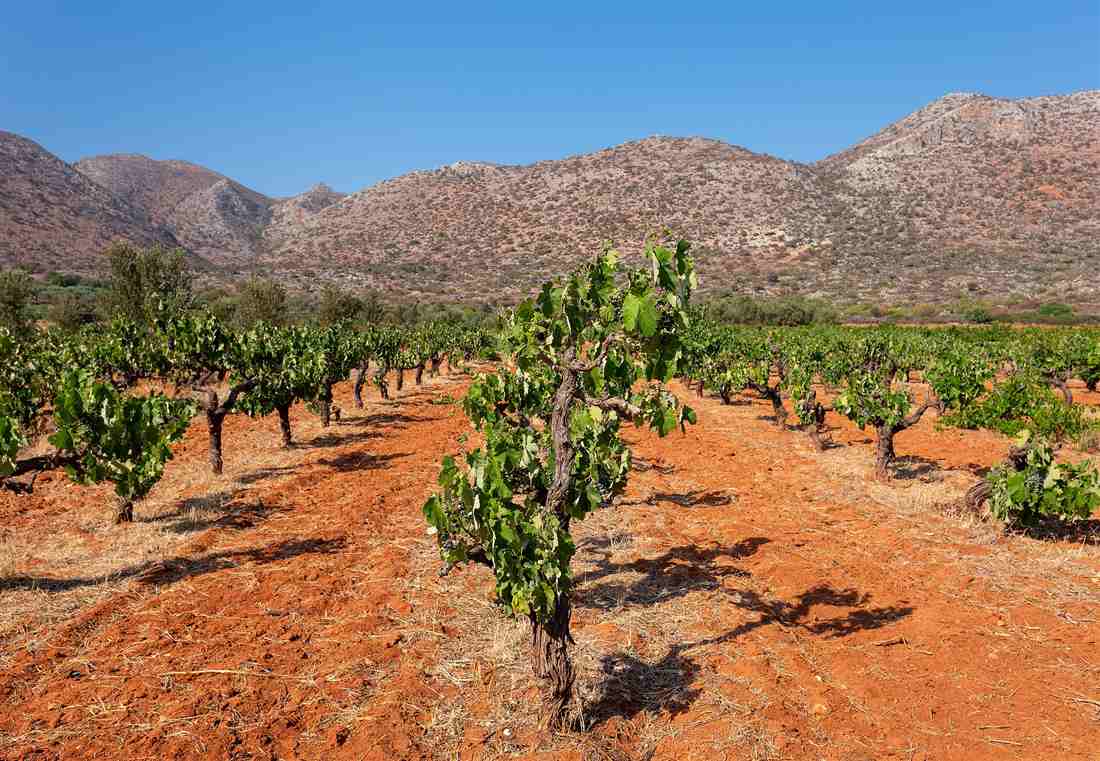
The Chania wineries make wine from native Cretan grapes across the hills of Chania in Crete, around Vatolakkos, the Apokoronas and Kissamos, where estates such as Manousakis, Dourakis and Karavitakis open their vineyards and cellars for tastings and tours. Plan the whole trip with Greece Tours.
This guide covers the Chania wineries in full: the native grapes from Vidiano to Romeiko, the local Marouvas, the main estates to visit, what a vineyard visit and tasting is like, the organised wine tours, the Cretan food that pairs with the wine, where the wine country lies, whether it suits families or couples, the best time, how to visit safely, and whether the Chania wineries are worth it, alongside Cretan food and the villages of Vamos and the Apokoronas.
What are the Chania wineries?
The Chania wineries are the family estates of western Crete that grow native Cretan grapes and bottle them on site. They cluster west of Chania town around Vatolakkos, through the Apokoronas hills and across the Kissamos plain, and they open their cellars for tastings and vineyard tours.
Each estate works the land it sits on, pressing fruit from its own rows and from neighbouring growers who farm the same limestone slopes. The result is a wine map that reads like the landscape itself: valley-floor whites from the Vatolakkos and Alikianos flats, hill reds from the Apokoronas, and the deep-rooted Romeiko vines of the Kissamos coast. The estates of the region anchor the wider Chania destination, and a tour of them slots neatly into a stay planned around the town of Chania.
These are working farms, not showrooms. A visitor walks the vine rows, steps into the stainless-and-oak cellar, meets the winemaker, and tastes a flight poured straight from the estate’s own range. Cretan hospitality frames the whole encounter: bread, olive oil pressed a few fields away, cheese from the mountain flocks, and a table set under the vines. The Chania wineries turn a wine tasting into a meal and a landscape into a glass.
What grapes and wines does Chania produce?
Chania produces wines from native Cretan grapes: crisp whites from Vidiano, Vilana, Thrapsathiri and aromatic Dafni, and structured reds from Kotsifali, Mandilari and Liatiko. The regional signature is Romeiko, a pale-skinned variety that yields a rose-tinted table wine and the amber, oxidised Marouvas.
The white grapes carry the western Cretan table. Vidiano delivers a full-bodied white with stone-fruit and apricot depth, and it stands as the flagship revival grape of Crete. Vilana pours lighter and citrus-fresh, the everyday white of the island. Thrapsathiri adds a herbal, mineral edge, and Dafni scents the glass with bay leaf and Mediterranean scrub. Winemakers ferment these dry, and they blend them across estate ranges to balance weight against acidity.
The reds run from garnet to inky. Kotsifali brings soft red-fruit warmth and a rounded body, and estates pair it with Mandilari, a thick-skinned grape that loads the blend with tannin and colour. Liatiko ripens early and turns velvet-smooth, working both as a dry red and as the base of sweet, sun-dried bottlings. Above all these sits Romeiko, the grape that defines Chania and separates the region from Heraklion and the rest of the island.
What is the Romeiko grape and Marouvas wine of Chania?
Romeiko is the native pale-red grape of western Crete, rooted in the Kissamos and Chania vineyards. Vinified fresh it makes a light, rose-tinted table red; aged in barrel with air contact it oxidises into Marouvas, an amber, sherry-like wine that ranks as the great Chania speciality.
Romeiko grows almost nowhere outside the Chania prefecture, which makes it the region’s true grape of place. The vines run old and low across the Kissamos coast and the villages behind it, and growers pick the fruit at high ripeness. Fermented straight, the juice throws a pale orange-pink colour and a soft, gentle red character that suits the Cretan table and the warm western climate.
Marouvas is where Romeiko turns legendary. Village winemakers age the wine in barrel under deliberate oxidation, letting air work the surface across years. The wine deepens to amber, gathers nutty, dried-fruit and walnut notes, and gains a bracing tang close to a fino sherry. Tavernas across the region pour Marouvas from the cask, and tasting it at an estate connects the glass to centuries of local practice. A meal in town at one of the tables listed among the best places to eat in where to eat in Chania pairs naturally with a carafe of Romeiko.
What are the main wineries to visit near Chania?
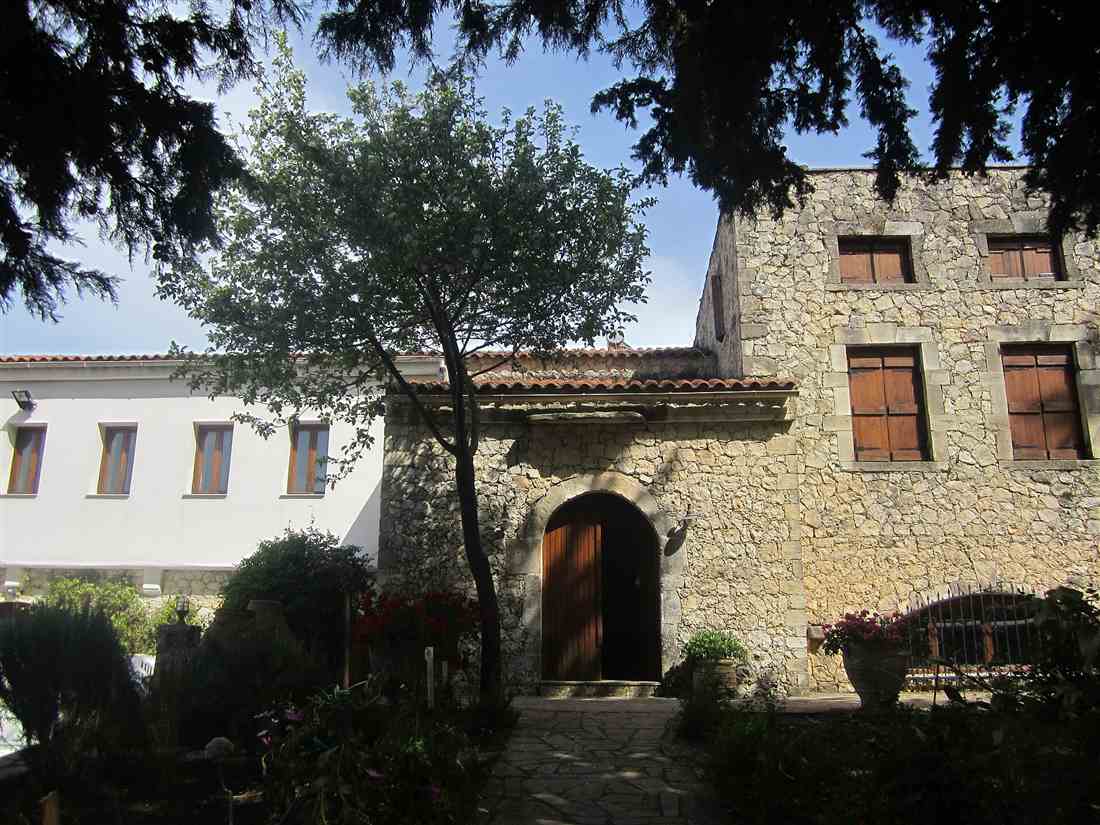
Four estates lead the Chania wine circuit: Manousakis Winery, home of the Nostos label, at Vatolakkos west of town; Dourakis Winery in the Apokoronas hills near Alikampos; Karavitakis Winery at Pontikiana in the Kolymbari direction; and Anoskeli near Kolymbari, which presses both wine and olive oil.
Manousakis Winery sits on the Vatolakkos slopes and built the Nostos range on Rh\u00f4ne grapes married to Cretan varieties, farming organically across its estate rows. Dourakis Winery, run across generations in the Apokoronas, works a hillside cellar above Alikampos and pours a broad flight of Cretan whites and reds. Both estates open to visitors for guided tastings framed by the vineyards themselves.
Karavitakis Winery, near Pontikiana on the road toward the Kissamos side, champions native grapes with a modern cellar and a family-led tasting room. Anoskeli, set in the hills behind Kolymbari, combines a winery and an olive mill on one estate, so a visit pairs the wine flight with estate olive oil straight from the press. Together these four map the whole spread of Chania wine country, from the western valleys to the Apokoronas east of town.
What is a Chania winery visit and tasting like?
A Chania winery visit runs as a walk, a cellar tour and a seated tasting. A guide leads the vine rows, explains the native grapes and the farming, steps into the fermentation and barrel room, then pours a flight of estate wines at a table with bread, olive oil and Cretan meze.
The visit opens outdoors among the vines, where the guide names the varieties in the ground and points out the trellising, the soil and the ripening fruit. The route then moves into the cellar, past the stainless tanks and the oak barrels, and the winemaker walks through fermentation, ageing and bottling. The whole sequence ties the landscape to the glass, grape by grape.
The tasting itself pours a structured flight, white through red, with the estate’s flagship bottlings at the heart of it. Staff pour measured samples, describe each wine’s grape and character, and set out food to match: local cheese, olives, rusks, tomato and estate olive oil. A visit lasts around ninety minutes to two hours, and the seated finale under the vines turns the tasting into a small Cretan feast.
Are there wine tours from Chania?
Yes. Organised wine tours depart Chania as half-day and full-day trips, with a driver-guide and a fixed multi-estate itinerary. A half-day run visits one or two wineries; a full day links three estates across Vatolakkos, the Apokoronas and Kolymbari, with tastings, cellar tours and a farm lunch built in.
The organised tour removes the driving from the day, which matters at a tasting. A driver collects the group from Chania town or a nearby resort, sets the pace between estates, and handles the route through the back roads of the wine country. The guide books the tastings ahead, so each estate expects the group and pours a prepared flight rather than a walk-in sample.
A full-day itinerary threads the whole region together. It pairs a western estate around Vatolakkos with a hill winery in the Apokoronas and finishes at an olive-and-wine estate near Kolymbari, and it folds in lunch at a farm table or village taverna. The multi-estate format shows the range of Chania wine in one outing, from crisp Vilana whites to barrel-aged Romeiko, and it fits a designated-driver arrangement that keeps every taster free to drink.
Group size shapes the format. Small-group tours seat eight to sixteen guests in a minibus and follow a fixed route, while private tours build the itinerary around the party alone, matching the estates to the group’s grape preferences and the pace of the day. Both formats collect from Chania town and the bay resorts, and both hand the driving to the guide, so the wine tour turns the tasting into the whole point of the outing rather than a stop squeezed between drives.
What food pairs with Chania wine at the wineries?
Chania wine pairs with the Cretan meze table: hard graviera and soft mizithra cheeses, olives, dakos rusks with tomato, wild greens, snails, slow-cooked lamb and pork, and estate olive oil. The crisp whites match the cheese and vegetables; the reds carry the grilled and braised meats.
The pairing follows the farm. Vidiano and Vilana whites, dry and citrus-fresh, cut through the salt of graviera and the richness of fried cheese, and they lift plates of horta, artichokes and stuffed vine leaves. Dafni’s herbal scent tracks the wild greens and the mountain herbs that season Cretan cooking, so the white flight tastes of the same hills that grew it.
The reds meet the meat. Kotsifali and Mandilari blends stand up to slow-roasted goat, apaki smoked pork and the charcoal grill, and Liatiko’s smooth body suits stews and tomato-braised dishes. Marouvas, amber and nutty, closes the meal beside walnuts, dried figs and hard cheese. Estate olive oil, poured over bread and rusks, threads through the whole table, and a lunch stop in a nearby village such as Vamos extends the pairing into a full Cretan meal.
Where is the Chania wine country?
The Chania wine country spreads across three zones west and east of the town: the Vatolakkos and Alikianos valleys immediately west, the Apokoronas hills to the east toward the White Mountains, and the Kissamos plain and Kolymbari coast further west, where the old Romeiko vines root.
The Vatolakkos and Alikianos flats, a short drive west of Chania, form the closest and most-visited stretch. Fertile valley floors and gentle slopes carry the estates that press the region’s white grapes, and the drive from town runs under twenty minutes. This zone anchors most half-day tours because of its nearness to the harbour and the resorts along the bay.
East of town, the Apokoronas climbs into hills below the White Mountains, and its cooler, higher vineyards feed estates around Alikampos and the villages behind Georgioupoli. West again, the Kissamos plain and the Kolymbari coast hold the ancestral Romeiko plantings and the estates that pair wine with olive oil. The three zones together stretch the Chania wine country across the full width of the prefecture.
Is a Chania winery visit good for families or couples?
A Chania winery visit suits both families and couples. The vineyard setting, the farm animals, the open grounds and the food table hold children through the day, while the seated tastings, the estate views and the unhurried lunch make an easy outing for couples and small groups.
Families find room at the estates. The vine rows and the olive groves give children space to walk, the farm setting draws their attention, and the food table keeps the group fed with bread, cheese, tomato and juice from the estate’s own fruit. Grape juice and soft drinks stand in for the wine flight, so younger visitors share the table without the tasting.
Couples and small groups get the slower pleasures: the walk through the vines, the seated flight with the winemaker, and a long lunch under the pergola with the White Mountains in the distance. The estates run at an unhurried pace, the settings look out over valley and hill, and the pairing of Cretan food with native wine turns an afternoon into the centrepiece of a day. A designated-driver tour lets every adult in the party drink the full range.
When is the best time for the Chania wineries?
Spring and autumn rank as the prime seasons for the Chania wineries. April to June greens the vines and mildens the weather; September’s harvest fills the cellars with fresh pressings and grape must. Summer runs hot and busy, with full tasting rooms and long open hours across the estates.
Spring dresses the vineyards. The vines leaf out from April, wildflowers edge the rows, and the mild western Cretan weather makes the vine walk and the outdoor tasting a pleasure rather than a heat trial. The estates run quieter than in peak summer, so the winemaker gives each group closer attention and a longer tasting.
Autumn brings the vintage. The harvest lands in late August and September, and a visit then catches the crush, the fermenting must and the buzz of a working cellar at its busiest moment of the year. Summer stays fully open, with the longest hours and the fullest tasting rooms, though midday heat pushes tastings toward morning and late afternoon. Across spring, harvest and summer, the estates pour year-round for booked visits.
How do you visit the Chania wineries?
Two routes reach the Chania wineries: drive a hire car with a designated non-drinking driver and book each estate direct, or join an organised wine tour with a driver-guide and a set itinerary. Booking a tasting ahead secures the visit, because the estates run tours by appointment, not walk-in.
The self-drive route gives freedom of pace. A hire car reaches Vatolakkos in under twenty minutes and the Apokoronas or Kolymbari within forty, and the driver picks the estates and the order. The rule that governs the day is the designated driver: one person stays dry to drive, tasting nothing, so the rest of the party drinks freely. Each estate takes a booking by phone or website ahead of the visit.
The organised tour removes the driving entirely. A booked tour collects the group, links two or three estates, arranges every tasting and the lunch, and returns to Chania at day’s end, leaving all the adults free to taste the full flight. Booking a tour or a direct tasting well before the day matters most in the harvest and summer weeks, when the estates fill their appointment slots early.
What is the history of winemaking in Chania?
Winemaking in Chania runs back through Minoan Crete, where wine presses and storage jars mark the island as one of the oldest wine cultures of the Mediterranean. The Romeiko grape and the Marouvas tradition carry that lineage into the present, and modern estates revive the native varieties with new cellars.
Crete pressed wine before most of Europe planted a vine. Minoan sites across the island preserve stone presses and storage pithoi, and the Venetian centuries that shaped Chania town also traded its wine across the sea. The Romeiko vines of the Kissamos coast root in that unbroken practice, and the oxidised Marouvas of the villages descends from the barrel methods of earlier generations.
The current wine scene rebuilds on that base. Estate winemakers pulled the native grapes back to the centre, replanting Vidiano, matching Cretan varieties to modern fermentation, and bottling under estate labels for a wider market. The Chania wineries stand at the meeting point of the oldest wine tradition in Greece and a working, present-day industry that pours for visitors year-round.
How do the Chania wineries differ from the Heraklion wineries?
The Chania wineries centre on Romeiko and Marouvas, the pale-red grape and amber oxidised wine unique to western Crete, and on estates west and east of Chania town. Heraklion, the island’s largest wine zone, leans on Kotsifali, Mandilari, Vidiano and Vilana across the Peza and Archanes districts.
Geography splits the two. Heraklion holds the bulk of Crete’s vineyards and the appellation districts of Peza, Archanes and Dafnes, with estates concentrated inland from the north coast. Chania sits at the western end of the island, its wine country spread across the Vatolakkos valleys, the Apokoronas hills and the Kissamos plain, a smaller and more intimate circuit of family estates.
Grape identity draws the sharper line. Romeiko roots the Chania scene and grows almost nowhere else, giving western Crete a wine found on no other part of the island. Heraklion’s estates, larger in number and output, build their range on the broader Cretan reds and whites. A visitor touring Chania tastes the grape of place; a visitor touring Heraklion tastes the island’s mainstream at scale.
What does a Chania wine label tell you?
A Chania wine label names the estate, the grape variety and the vintage, and it marks the wine as a Cretan regional wine (PGI Crete) or a village-level bottling. Native grape names on the label \u2014 Vidiano, Vilana, Romeiko, Kotsifali \u2014 signal a wine of place rather than an international blend.
The estate name anchors the label and ties the wine to a single farm: Nostos to Manousakis at Vatolakkos, the family names of Dourakis, Karavitakis and Anoskeli to their cellars. The grape variety follows, and a single-variety label of Vidiano or Romeiko tells the taster exactly what fills the glass, while a blend lists its grapes in order of weight.
Origin markings frame the rest. Most Chania estate wines carry the PGI Crete designation, the regional wine status of the island, and the label pairs it with the vintage year of the harvest. Organic-farming marks appear on the estates that farm without chemicals, Manousakis among them. Reading the label turns the tasting into a lesson in western Cretan grapes, growers and ground.
Are the Chania wineries worth visiting?
Yes. The Chania wineries reward the trip for the native Cretan wine alone: Vidiano and Vilana whites, Kotsifali and Mandilari reds, and the region’s own Romeiko and amber Marouvas, tasted at their source. The vineyard settings, the cellar tours and the Cretan food table complete the case.
The wine makes the first argument. Romeiko and Marouvas grow and age nowhere else at this level, and tasting them at the estate that farms the vines ties the glass to the ground it came from. Vidiano stands among the finest whites of Greece, and the Chania estates pour it beside Vilana, Thrapsathiri and Dafni straight from the tank. This is native Cretan wine at its origin, poured by the people who made it.
The setting and the table seal the visit. The estates sit among vines and olives with the White Mountains behind, the cellar tours open the whole craft to view, and the food pairing lays out Cretan cheese, meat, greens and estate olive oil beside the flight. A half-day escape or a full-day multi-estate tour turns a Chania holiday into a taste of western Crete’s oldest farming tradition, and it earns its place on any itinerary through the region. The wine travels home in the glass and in the memory, and the estate names \u2014 Manousakis, Dourakis, Karavitakis, Anoskeli \u2014 mark the labels a visitor seeks out long after the trip.
Frequently Asked Questions
What are the best wineries near Chania?
The best-known Chania wineries are Manousakis (Nostos) at Vatolakkos, Dourakis in the Apokoronas, Karavitakis near Pontikiana and Anoskeli by Kolymbari. Each grows native Cretan grapes and opens its vineyards and cellar for guided tastings and food pairings.
What wines does Chania produce?
Chania produces whites from the native Vidiano, Vilana, Thrapsathiri and Dafni grapes and reds from Romeiko, Kotsifali and Mandilari. The local Romeiko also makes the traditional oxidised Marouvas, a Chania speciality poured straight from the barrel.
How do you visit the Chania wineries?
Reach the Chania wineries by hire car with a designated driver, or join an organised half-day or full-day wine tour that links two or three estates with tastings and Cretan food. Estates in the Vatolakkos and Apokoronas wine country sit a short drive from the city.