
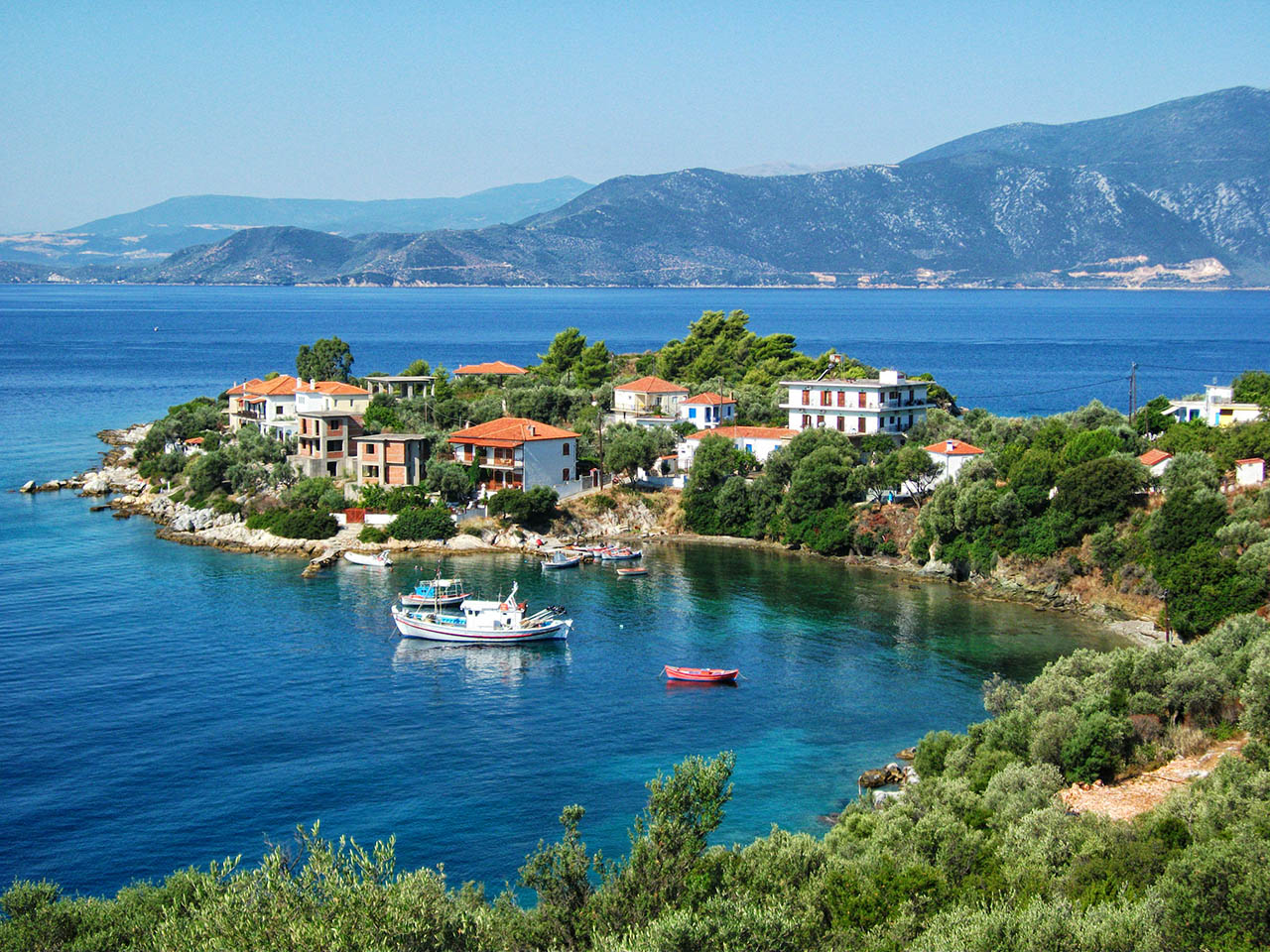
Discover Trikeri Island, Greece: a quiet getaway with authentic Pelion life, clear beaches, and local tavernas. Plan your relaxed island escape today.
No tour runs on Trikeri itself; the tours below sail the Pagasetic Gulf and drive the villages of South Pelion from Volos.
Trikeri Island Travel Guide: Discover Greece’s Hidden Pelion Gem
Trikeri Island sits quietly at the southern tip of the Pelion peninsula in Thessaly, a pocket of Greece that still feels like a discovery rather than a destination. Greece Tours is seeing more travelers trade crowded islands for places where a fishing boat and a tavern are the primary attractions, and Trikeri fits that bill perfectly. This guide pulls together everything we’ve learned from visiting, local tips, and up-to-date logistics so you can plan a relaxed trip: when to go, how to get there, where to stay, what to do, and the practicalities that make or break a short island escape. Read on if you want a slow-paced Greek island experience with authentic Pelion life, quiet bays, and uncomplicated travel.
Trikeri Island: At A Glance: Why Visit This Secluded Island
Trikeri Island is a small, inhabited island tucked into the Pagasetic Gulf where Pelion meets the Aegean. Even though it’s modest size, it packs a distinct character: stone houses, narrow lanes, working harbors, and a handful of family-run tavernas. We visit Trikeri not for big hotels or nightlife, but for atmosphere, the kind that makes time slow down.
Why choose Trikeri? For starters, it’s one of the few islands in the area that retains everyday life: fishermen unloading their boats, elders playing backgammon, and children diving off the quay. The beaches are small and often pebbly, but clear and surprisingly warm, sheltered by the surrounding headlands. The island’s terrain is low and walkable, making it ideal for travelers who want easy exploration without extensive hikes.
Trikeri is also a practical base for short boat trips to nearby coves and quieter Pelion beaches. Compared to Mykonos or Santorini, Trikeri offers value: fewer tourists, lower prices, and a more authentic rhythm. If our goal is to experience Greek island life as locals live it, with an emphasis on food, sea, and simple pleasures, Trikeri is an excellent pick.
A few quick facts:
- Location: Southern tip of the Pelion peninsula in the Pagasetic Gulf
- Population: Small, year-round community (a few hundred, varying seasonally)
- Vibe: Quiet, authentic, family-run hospitality
- Accessibility: Short ferries/boats from nearby Pelion ports, and drive-plus-boat options from Volos and other mainland towns
This guide assumes we’re traveling and includes current ferry notes and accommodation options. We’ll also highlight how to experience local life respectfully, because on an island like Trikeri, being a considerate guest matters more than it does in high-tourism hotspots.
Where is Trikeri, and how do the village, Agia Kyriaki and Palaio Trikeri fit together?
Trikeri is a hilltop village on Fourtouna hill at the end of the Magnesia peninsula, east of the entrance to the Pagasetic Gulf. Its port, Agia Kyriaki, lies directly below, and the island of Palaio Trikeri belongs to the same municipal unit of 992 residents.
The village has been the seat of its own community since 1912 and was declared a preserved settlement in 1967. No road reached it until the 1970s, so all contact ran by sea from the Magnesia coast opposite. Because the sea was easier to cross than the steep hills inland, the village took on the character of an island and turned to shipping.
Agia Kyriaki is a seaside village at the southern end of Magnesia, facing the Trikeri channel. It sits at an average altitude of 10 metres, about 73 kilometres south-southeast of Volos, and serves as the port for the whole area. On the north shore of the gulf, Volos is the main port and largest city, and a walking tour of Volos can open the trip south.
Palaio Trikeri lies at the mouth of the gulf between Cape Trachila and Cape Alogopouro. The island spans 2.476 square kilometres, rises to 109 metres and is green with olive groves. It has no cars or roads. The 2011 census counted 59 residents, and the small islet of Pythou lies to its north.
- Municipality: Since the 2011 reform the unit has belonged to South Pelion, which has its seat in Argalasti and lists the village as its historic seat.
- Land area: The unit covers 26.817 square kilometres and takes in the offshore islands of Palaio Trikeri and Alatas.
- Population split: At the 2001 census the village counted 1,177 residents and Agia Kyriaki 305.
- Alatas: This 0.566-square-kilometre islet south-west of Milina takes its name from the salt pans that once lay on the facing shore.
- Gulf mouth: A channel about 4 kilometres wide joins the Pagasetic Gulf to the Euboic Sea.
What is the history of Trikeri and Palaio Trikeri?
Trikeri was a seafaring village: in 1821 it owned one of the largest merchant fleets, gave ships and sailors to the uprising in Pelion and by late 1823 was the only rebel enclave in Thessaly. In the 20th century Palaio Trikeri held prisoners and political exiles.
In antiquity Palaio Trikeri was Kikynethos, a polis of ancient Magnesia. William Martin Leake placed ancient Aphetae, the bay the Persian fleet occupied before the Battle of Artemisium in 480 BC, at the harbour of Trikeri; modern scholars tentatively locate it near Platania.
Before 1821, the village fleet sailed across the Mediterranean with Pelion goods and brought home new revolutionary ideas. Three years before the uprising, Athanasios Tsakalof and Anthimos Gazis founded the Eforeia of Trikeri as a branch of the Filiki Etaireia, and the village became the main base of the society in Magnesia. Local notables opposed a revolt, but the people rose once three ships of the Greek fleet appeared from Trikeri.
When the army of Mahmud Dramali Pasha came down from Larissa, rebels from Zagora, Makrinitsa and Volos sought refuge in the village. The wounded chieftain Kyriakos Basdekis was carried there after the failed attack on Volos. Anastasios Karatasos later signed a separate peace with Kioutachis, the Greek forces withdrew, and the revolt in Magnesia ended.
- 1827: Nikolaos Kriezotis led an expeditionary force that defeated the Ottoman troops in the area.
- 1913: At the end of the Second Balkan War, Greek authorities made the island a camp for Bulgarian prisoners of war, who numbered 7,000 by Greek figures in 1914.
- 1946: Male political prisoners arrived after a decision by Napoleon Zervas, the Minister for National Security.
- 1947 to 1949: The camp held left-wing women and their children, who lived in the cells of the Evangelistria monastery, about 100 in all; women from the closed Chios camp arrived in March 1949.
- September 1949: Transfers from other camps raised the number held on the island to 4,700.
From 1957 to 1969 the Austrian Alfons Hochhauser leased the monastery and ran a simple guesthouse there with his Greek wife Charikleia. Under the military junta, Trikeri again served as a place of internal exile, alongside Leros and Agios Eustratios.
Which traditions and crafts does Trikeri keep?
Trikeri keeps boatbuilding alive at the Agia Kyriaki boatyard, which builds and repairs boats, mainly fishing boats. It also keeps two church feasts, Agia Kyriaki on 6–7 July and the Evangelistria monastery on 9–10 September, and the memory of an island-type wedding costume.
Shipyards at Trikeri built sailing ships in the 18th and 19th centuries. From the mid-18th to the mid-19th century, silk was the main trade good of Pelion, followed by woollen cloth, while olives and olive oil led its farm produce. Volos was the main export port, and Trikeri grew with Zagora into one of the other maritime centres. Fishing was the main work of the people of Trikeri between the two world wars, and a fishing ban under the Occupation brought a serious food shortage.
The Trikeri costume was the women’s dress for weddings and formal occasions. It is of island type and keeps strong features of Northern Sporades dress. It combined two white shirts of fine cotton, layers of underskirts led by the mallina and the kolovoli, and a short, pleated, sleeveless dress. A wide gold-embroidered belt, a yellow headscarf, a cross on the chest and silver ornaments for the head and braids completed it.
- Tower mansions: The tower houses of the Fourtouna, Koutmanis, Koumpourellos, Vogiatzis and Kritikos families still stand in the village.
- Koutmanis legend: Tradition says the cistern of captain Konstantinos Koutmanis was full of gold napoleons, and residents call his mansion haunted.
- Restoration: The community bought part of the Koutmanis mansion to restore it.
- Kalderimi: A stone-paved path joins Agia Kyriaki and the village above.
- Alatas monastery: The monastery of Agioi Saranta on Alatas housed 5 monks until 2001; the 2011 census counted none.
The monastery of Panagia Evangelistria on Palaio Trikeri was built between 1825 and 1837 and is dedicated to the Annunciation. From outside it looks like a fortress. Its two-aisled church honours St John the Baptist and the Holy Trinity, and at 129 metres the site looks over the Aegean, Evia and the whole of Pelion, the mountain whose villages a Pelion villages tour visits.
Best Time To Visit Trikeri: Seasons, Weather, And Events
Timing a visit to Trikeri depends on the kind of trip we want. The island’s high season is compact: late June through August. During these months, the weather is reliably warm, tavernas open nightly, and small day-boat services run more frequently. Expect daytime temperatures in the high 70s to mid-80s°F (25–30°C), cooled by occasional meltemi breezes.
If we prefer fewer people and softer light for photography or walks, shoulder seasons, late May–early June, and September–early October, are ideal. The sea is still warm enough for swimming into September, accommodation prices are lower, and many locals appreciate the steadier tourism flow. The weather is pleasantly warm, though evenings can be cool, and some services may reduce hours.
Off-season (late October–April) sees a dramatic slowdown. Trikeri becomes very quiet: many guesthouses and tavernas close, but if we travel for solitude and don’t mind limited services, the island’s winter still shows the authentic everyday life of the Pelion coast. Rain is more likely from November to March, and temperatures can drop into the 40s–50s°F (5–15°C).
Events and local rhythms to note:
- Orthodox Easter: A meaningful time on Greek islands, often with local celebrations and special church services. Ferry schedules can shift.
- August local festivals: Some villages on nearby Pelion host panigyria (local festivals) with music and food. These can be fun for visitors, but check dates locally.
Practical weather tip: Pack a light windbreaker even in summer, the sea breezes are pleasant during the day but can make evenings noticeably cooler. For shoulder-season trips, add a warmer layer and confirm ferry schedules in advance.
How To Get To Trikeri: Routes, Ferries, And Practical Logistics
Reaching Trikeri requires a combination of road and sea travel for most visitors, though the exact route depends on whether we’re coming from Volos, Athens, or Thessaloniki. The island is close to the Pelion peninsula’s southern coast, so many travelers pair Trikeri with a stay in Pelion villages like Kala Nera or Milina.
Essential planning points:
- Check timetables in advance: Local ferry and boat services can change seasonally and sometimes at short notice. Always confirm a day before travel.
- Allow flexibility: Boats are small and weather-dependent: plan for an extra day if you have a tight onward connection.
- Luggage: If traveling on small local boats, use soft-sided luggage when possible. Space is limited, and the crew may ask you to consolidate bags.
Below, we break down typical routes and options we use when getting to Trikeri.
Ferry And Boat Options To Trikeri
Direct scheduled ferries to Trikeri are limited: most services are short local runs rather than large vehicle ferries. In summer, small passenger boats (caïque-style) run from nearby Pelion ports and occasionally from Volos. Key departure points include:
- Agios Andreas / Kala Nera area: Short crossings to Trikeri are often available in high season. These are typically daily or on-demand runs operated by local captains.
- Milina: During the summer months, Milina, a charming Pelion harbor village, sometimes offers boats to Trikeri, especially for hotel guests or small groups.
- Volos charter or boat tours: From Volos, we can book a private transfer or join a small tour that includes Trikeri as part of a coastal itinerary.
Private boat transfers: If we want flexibility (for example, arriving late), hiring a private transfer from a nearby port is common and affordable for small groups. That gives us control over pickup times and luggage handling.
Vehicle ferries: Trikeri itself has a small harbor, but no large vehicle ferry is needed; most visitors leave cars on the Pelion side (near the departure port) and explore by foot on the island. If we need a car, we leave it at a recommended parking area on the mainland and confirm overnight security.
Practical advice:
- Bring cash: Many small boat operators prefer cash payments.
- Confirm drop-off point: Some boats land at the main quay; others use smaller coves, so double-check where you’ll disembark.
- Safety: Boats are basic: look for life jackets and follow crew guidance when boarding.
Getting To Trikeri From Volos And By Road
Volos is the nearest city with larger transport links (train, bus, and nearby airport connections). From Volos, we have a few practical options:
- Drive to a Pelion port and take a boat: The most common route is to rent a car or drive from Volos to one of the southern Pelion ports (Milina, Kala Nera, Agios Andreas). Drive times vary but generally range from 40 minutes to 1.5 hours, depending on traffic and the exact village.
- Bus to Pelion + local boat: KTEL buses run from Volos to several Pelion villages. From those villages, local boats or short taxis will get us to the pier for Trikeri-bound boats. Bus timetables are reliable but less frequent on weekends.
- Taxi or private transfer: If we have more luggage or are traveling in a small group, a private transfer from Volos to the departure port simplifies things. Negotiate a fixed price and have the operator confirm the boat schedule.
Driving notes:
- Roads on Pelion are scenic but can be narrow and twisting. Allow extra time and drive cautiously, especially if you’re not used to mountain coastal roads.
- Parking: Small public parking lots exist near the Pelion piers; in busy months, they fill early. If leaving a car overnight, check with local tavernas or guesthouses, which sometimes offer supervised parking.
By planning a route that combines Volos, a short scenic drive, and a local boat, we can arrive in Trikeri within a few hours from the city while enjoying the Pelion coastline en route.
Where To Stay On Or Near Trikeri: Villages, Guesthouses, And Camping
Accommodation on Trikeri is modest but authentic: think family-run guesthouses, a few small rooms-to-let, and seasonal tavernas that sometimes host overnight guests. If we want more variety, boutique stays, additional amenities, or car access, staying on the nearby Pelion mainland and making day trips to Trikeri is a sensible approach.
On-island options:
- Family guesthouses: These are our top choice when available. Rooms are clean, often with sea views, and proprietors are generous with local advice and home-cooked breakfasts.
- Rooms above tavernas: Some tavernas rent rooms upstairs: it’s basic but incredibly convenient for dining and morning strolls.
- Rentals: A few small self-catering apartments are listed seasonally. Expect simple kitchens and traditional décor.
Nearby Pelion villages to consider:
- Milina: A lively harbor village with more accommodation options, beach tavernas, and regular boat connections.
- Kala Nera / Agios Andreas: Closer for short crossings and ideal if we want to combine beach time with Trikeri visits.
- Lafkos and Chania (Pelion): Higher up the slopes, these offer boutique rooms and a different Pelion atmosphere if we want variety.
Cost comparison: Staying on Trikeri is often cheaper per night but offers fewer amenities. Staying on Pelion gives us options for restaurants, car rentals, and more reliable booking platforms.
Booking tips:
- Reserve early for July–August: Small properties sell out early, especially family-run places.
- Read recent reviews: Facilities change quickly on small islands: recent guest feedback helps set expectations.
- Communicate arrival time: If our boat arrives late, let the host know so they can arrange check-in or keep a light on.
Staying On Trikeri Vs. Staying On Pelion/Mainland
Choosing between staying directly on Trikeri and basing ourselves on nearby Pelion comes down to priorities.
If we stay on Trikeri:
- Pros: Maximum immersion, waking to sea views, immediate access to the island’s quay and its few tavernas, and an intimate local feel.
- Cons: Very limited amenities, fewer accommodation choices, and dependence on the reduced schedule of local boats if we need to leave early.
If we stay on Pelion/mainland (Milina, Kala Nera, Agios Andreas):
- Pros: More accommodation types, car access, a wider restaurant scene, and easier logistics for day trips. Pelion also gives us access to mountain villages and hiking if we want variation.
- Cons: Less of that slow-island vibe and a short commute to reach Trikeri each day.
Our practical recommendation: For a single-night, intimate experience, stay on Trikeri. For a longer stay where we want to balance island quiet with varied dining and easier transport, choose Pelion and plan multiple short visits to Trikeri.
Top Sights & Activities On Trikeri: Beaches, Walks, And Local Life
Trikeri doesn’t have grand monuments, but its charm lies in everyday experiences. We’ll outline the island’s best sights and activities so you can craft a relaxed itinerary focused on sea, simple exploration, and meeting locals.
Beaches and coves:
- Main harbor beaches: Small pebbly or mixed-sand spots near the quay are perfect for quick swims. Water clarity is excellent.
- Hidden coves: A short boat excursion or a careful walk along certain headlands reveals quieter coves ideal for snorkeling and picnics.
Village strolls:
- Quay life: Spend an hour watching fishermen mend nets, locals chat, and kids dive from the stone steps. The rhythm is slow and absorbing.
- Stone lanes: The island’s narrow alleys are lined with aged stone houses and simple chapels. They’re short walks but rewarding for photography and leisurely discovery.
Sea activity:
- Boat trips: Local captains offer short trips to neighboring coves or coastal Pelion; these are inexpensive and flexible.
Cultural encounters:
- Taverns: Dining in a family-run taverna is the cultural highlight. Simple seafood, grilled fish, and local salads are prepared from fresh ingredients and often served with island hospitality.
- Local events: If our visit coincides with a panigyri or church feast, attending gives us an authentic glimpse of island customs.
Because Trikeri is small, the best itineraries mix swimming, short walks, and long meals. The island rewards a slow pace, fewer items checked off a list, and more time spent soaking in place.
Must-Do Activities: Swimming, Sea Kayaking, Walking Trails, And Village Strolls
To make the most of Trikeri, we recommend a short, flexible activities list that balances active time with relaxation.
Swimming and snorkeling:
- Start early: Mornings are calmest, and water clarity is at its peak. Bring reef shoes for pebble entry points.
- Snorkel near rocky outcrops: Small rock formations shelter marine life, and we often spot small groupers and the occasional octopus.
Sea kayaking and boat hires:
- Kayaking: Renting a kayak (from nearby Pelion or via a local operator if available) lets us explore hidden inlets and paddle quietly around the island.
- Short boat hires: Even a one-hour private hire can access secluded beaches not reachable by foot.
Walking and short trails:
- Coastal promenades: The main paths linking the quay and village areas are easy and scenic, suitable for all fitness levels.
- Short hikes: For those who want a little more, low-elevation walks around the island’s perimeter give panoramic views and photo opportunities. Keep to marked tracks and avoid private property.
Village life and food experiences:
- Long lunches: Greek island dining is an event. Plan for at least one multi-course meal featuring grilled fish, Greek salad, and local accompaniments.
- Meet locals: A short chat at the harbor or taverna goes a long way. Locals often share tips about secret coves or freshest catch recommendations.
A sample half-day plan we use:
- Morning swim at the Harbor Cove.
- Kayak or hire a short boat to a quiet cove for snorkeling.
- Lunch at a family taverna, trust the server’s recommendation.
- Late afternoon stroll through island lanes and sunset from the quay.
This rhythm keeps things relaxed and maximizes the island’s understated charms.
Practical Travel Tips: Money, Food, Safety, And Local Customs
Before we wrap up, here are practical tips that will make a trip to Trikeri smoother and more enjoyable.
Money and banking:
- Cash-first mindset: Many small tavernas and boat operators prefer cash. ATMs are not guaranteed on the island: withdraw from Volos or Pelion ports before crossing.
- Cards: Some guesthouses accept card payments, but always confirm beforehand.
Food and dining:
- Fresh fish focus: Trikeri’s tavernas often serve the day’s catch. If you’re pescatarian, this is a treat. Ask what’s fresh.
- Portions and sharing: Greek meals are social. Order a few dishes to share and enjoy the leisurely pace.
- Tap water: In many places, we prefer bottled water; check with your host.
Safety and health:
- Swimming safety: The waters are generally calm inside the gulf, but local wind conditions can create choppier patches. Swim where others are bathing and avoid distant solo swims.
- Medical care: For minor issues, Pelion clinics serve the area; for emergencies, Volos hospitals are better equipped. Carry a basic first-aid kit and any personal medications.
Local customs and etiquette:
- Greetings: A friendly “Kalimera” (good morning) or “Yasas” goes a long way. Be warm but respectful.
- Dress: Casual wear is fine; for church visits, shoulders and knees covered are appreciated.
- Noise and privacy: Trikeri’s pace is quiet. Keep noise low late at night: islanders value calm.
Connectivity and electronics:
- Cell reception: Coverage is generally good on the main parts of the island but spotty in sheltered coves. Wi‑Fi may be limited: plan accordingly.
- Power and adapters: Greece uses type C and F plugs (230V). Bring an adapter if needed.
Sustainable travel tips:
- Waste: Small islands can struggle with waste management. Carry reusable items and avoid single-use plastics where possible.
- Respect local rhythms: Avoid arriving too loudly by late boat: coordinate with hosts so your visit blends with island life rather than overwhelms it.
Final practical checklist for departure:
- Confirm boat times the day before.
- Carry cash and small change.
- Pack swim shoes, sun protection, and a light windbreaker.
- Let your accommodation know your arrival/departure times.
Traveling thoughtfully ensures our time in Trikeri supports the community and leaves us with a memorable, relaxed island experience.
Trikeri Island Travel FAQs
What is the best time to visit Trikeri Island for warm weather and open tavernas?
The best time to visit Trikeri Island for warm weather and open tavernas is late June through August, when daytime temperatures range from 75–85°F, and local businesses operate nightly.
How can I get to Trikeri Island from Volos?
From Volos, you can drive or take a bus to nearby Pelion ports like Milina or Kala Nera, then catch a short local boat to Trikeri. Alternatively, private boat transfers from Volos are available for more flexibility.
What types of accommodation are available on Trikeri Island?
Trikeri offers modest, family-run guesthouses, rooms above tavernas, and some small self-catering apartments. For more variety and amenities, staying on nearby Pelion villages with day trips to Trikeri is recommended.
What activities can tourists enjoy on Trikeri Island?
Visitors can enjoy swimming in clear pebbly beaches, snorkeling, sea kayaking, short scenic walks, exploring stone lanes, and dining at family-run tavernas featuring fresh local seafood.
Are there facilities like ATMs or card payment options on Trikeri Island?
ATMs are not guaranteed on Trikeri, and many tavernas and boat operators prefer cash, so withdrawing money from Volos or Pelion ports before arrival is advised. Some guesthouses may accept cards, but confirm ahead.
What local customs should visitors respect when traveling to Trikeri Island?
Visitors should greet locals warmly with phrases like “Kalimera,” dress modestly for church visits, keep noise levels low, especially at night, and coordinate arrivals with hosts to blend respectfully with the island’s quiet rhythm.
Find more experiences in My Greece Tours: