
Where to stay near Ephesus comes down to three bases: Selcuk, the closest town for history and walkability; Kusadasi, the coastal resort and cruise port for beaches; and Sirince, the quiet hillside wine village. Plan the whole trip with Greece Tours.
This guide covers where to stay near Ephesus in full: the three bases and how to choose, staying in Selcuk, Kusadasi or Sirince, the distances and transport to the site, the types of accommodation, the best base for cruise passengers, history travellers, families and couples, and a clear verdict on where to stay and for how long.
Where do you stay to visit Ephesus?
Three bases serve Ephesus: Selçuk town, 3 km from the ruins and walkable to the museum and train station; Kuşadası, a coastal resort and cruise port 20 km away with beaches and hotels; and Şirince, a hillside wine village 8 km east. Selçuk suits history-first travellers, Kuşadası suits beach and nightlife, Şirince suits quiet.
The choice turns on three questions: proximity to the archaeological site, the kind of evening you want, and how you arrive. Selçuk is the historic town that grew up beside the ruins, a 10-minute drive or a short dolmuş hop from the Lower Gate. It carries the Ephesus Archaeological Museum, the Basilica of St John on Ayasuluk Hill, the İsa Bey Mosque, and the last standing column of the Temple of Artemis, all inside a walkable grid. A visitor who books here reaches the entrance turnstiles faster than from anywhere else, and returns to a pension courtyard for dinner within the hour. For travellers building a wider Aegean itinerary alongside Greece Tours, Selçuk anchors the Turkish leg of the trip.
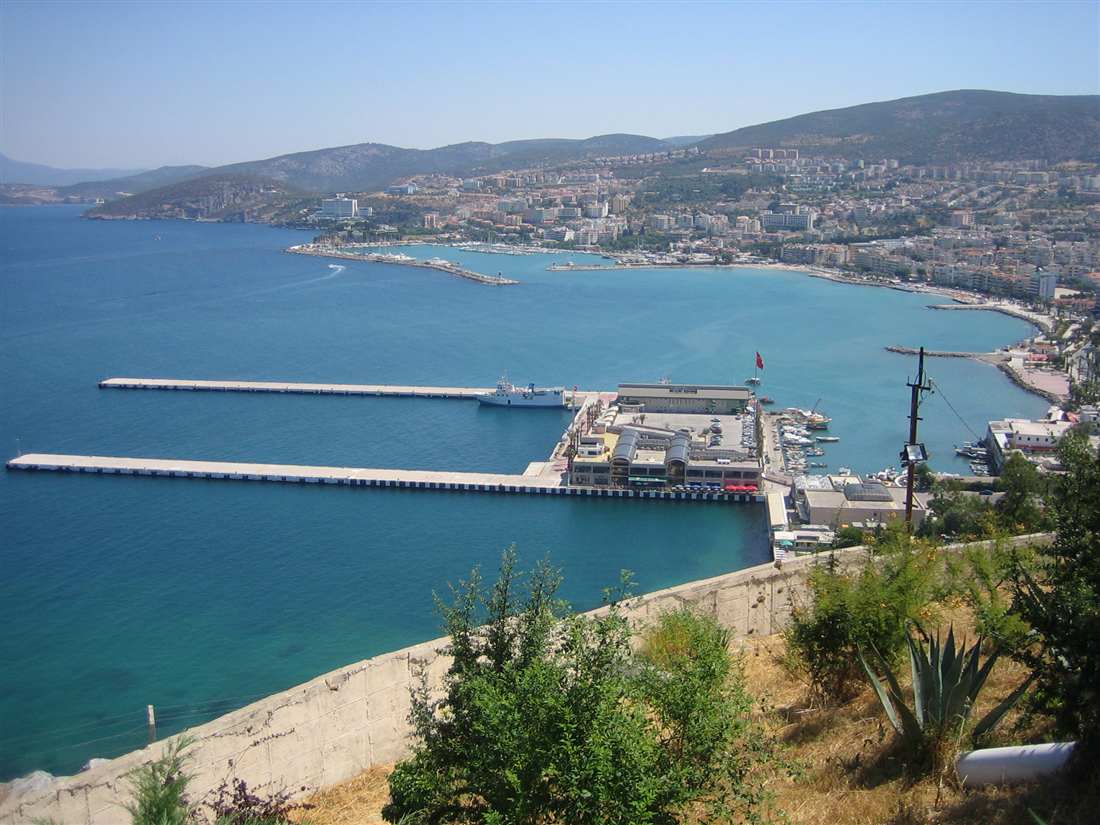
Kuşadası pulls the traveller toward the sea. The resort spreads along a bay 20 km southwest of the ruins, fed by the Ephesus cruise terminal that lands day-trippers by the thousand. Its draw is the beach strip at Ladies Beach, the marina at Setur, the Bar Street nightlife off Barbaros Hayrettin Bulvarı, and a wall of four- and five-star hotels with pools and sea views. A base here trades the 25-minute transfer to the ruins for swimming, dining on the waterfront, and a wider hotel inventory.
Şirince keeps the traveller in the hills. The Greek-built stone village sits 8 km east of Selçuk among vineyards and fruit orchards, its lanes lined with restored 19th-century houses turned into boutique guesthouses. The village trades on silence, terraced views, and its fruit wines pressed from peach, pomegranate, blackberry, and quince. A stay here rewards the visitor who wants Ephesus by day and a candle-lit stone terrace by night, at the cost of the longest transfer of the three bases.
Match the base to the trip with a short checklist:
- History-first, no car: Selçuk — walk to the museum, dolmuş to the gate, train onward to İzmir or Denizli.
- Beach, pool, and nightlife: Kuşadası — waterfront hotels, Ladies Beach, marina dining, Bar Street.
- Quiet, romance, and wine: Şirince — stone guesthouses, vineyard views, fruit-wine tastings.
- Cruise arrival: Kuşadası — the terminal sits inside the resort, 25 minutes from the ruins.
- Rail or budget travel: Selçuk — the station stands 700 m from the main square.
All three bases reach the Ephesus site inside half an hour, so the decision rests on the evening rather than the excavation. Selçuk delivers the tightest logistics and the richest concentration of secondary monuments; Kuşadası delivers sea, sand, and volume; Şirince delivers stillness and the wine terrace. Read the three sections below, then weigh distance against atmosphere.
Should you stay in Selçuk to visit Ephesus?
Selçuk is the sharpest base for Ephesus. The town sits 3 km north of the ruins, a 6-minute drive or short dolmuş ride, and packs the museum, the Basilica of St John, the Temple of Artemis column, and the train station into a walkable core ringed by boutique hotels and family pensions.
Selçuk is the modern successor to ancient Ephesus, and its layout reflects that inheritance. From the central square at Atatürk Caddesi a visitor walks to the Ephesus Archaeological Museum in five minutes, climbs Ayasuluk Hill to the Basilica of St John in fifteen, and reaches the lone standing column of the Temple of Artemis — one of the Seven Wonders of the Ancient World — across a field on the town’s western edge. The İsa Bey Mosque, built in the 14th century, stands on the same hill as the basilica. No transfer, no fare: the secondary sights sit inside the town itself.
Accommodation runs to small, owner-run properties rather than resort blocks. The town holds boutique hotels in restored stone buildings, family pensions with rooftop breakfast terraces, and a cluster of guesthouses near the aqueduct arches where storks nest on the Byzantine pillars along Cengiz Topel Caddesi. Rooms price below Kuşadası’s seafront rates for equivalent comfort, and hosts arrange dolmuş timetables, taxi pick-ups, and onward tickets from the desk. Breakfast leans local — olives, tomato, white cheese, village bread, and menemen — served on shaded terraces.
Transport is the town’s quiet advantage. Selçuk station sits on the İzmir–Denizli line, 700 m from the square, putting Basmane in central İzmir 80 minutes north and Pamukkale’s travertines reachable by rail and connecting bus. The dolmuş stand beside the bus terminal runs minibuses to the Ephesus Lower Gate every 20 to 30 minutes, to Kuşadası in 25 minutes, and to Şirince up the hill in 15 minutes. A hire car is optional here rather than essential, which trims the trip budget.
Selçuk rewards a specific traveller. Book here when the priority is the ruins, the museums, and the wider archaeological landscape, and when an evening of quiet streets and a home-cooked meze plate beats a beach club. What Selçuk lacks is the sea: the nearest swimming is a 25-minute drive to Pamucak Beach or on to Kuşadası. The reasons to base in Selçuk:
- Closest to the ruins: 3 km, 6-minute drive, frequent dolmuş to the Lower Gate.
- Walkable monuments: museum, Basilica of St John, İsa Bey Mosque, Temple of Artemis column on foot.
- Rail hub: direct trains to İzmir and connections to Pamukkale from a station 700 m off the square.
- Authentic lodging: boutique stone hotels and family pensions below coastal prices.
- Onward gateway: dolmuş links to Kuşadası, Şirince, and the Priene–Miletus–Didyma trio.
For an early start that beats the cruise crowds through the gates, Selçuk’s 6-minute run to the entrance is the decisive edge. First light at the Library of Celsus, with the coaches still parked in Kuşadası, is the reward for basing in the town next door.
Should you stay in Kuşadası to visit Ephesus?
Kuşadası suits beach-and-hotel travellers and cruise arrivals. The resort lies 20 km southwest of Ephesus, a 25-minute drive, and delivers Ladies Beach, a busy marina, waterfront dining, Bar Street nightlife, and the widest range of four- and five-star hotels on this coast, plus the cruise terminal that feeds the ruins.
Kuşadası is a purpose-built Aegean resort wrapped around a sheltered bay, and its pull is everything Selçuk lacks: a coastline. Ladies Beach, 3 km south of the centre, draws sunbathers to a curved strip of sand backed by beach clubs and cafés, while Pigeon Island — the fortified islet that gives the town its name, Kuşadası meaning “bird island” — guards the harbour by a causeway from the old town. The marina at Setur berths yachts and gulets, and the seafront promenade fills each evening with strolling families and diners working through grilled sea bass and meze.
The resort holds the deepest hotel inventory near Ephesus. Five-star seafront properties line the bay north and south of the centre with infinity pools, spas, and private beach platforms; mid-range hotels cluster behind the promenade; and self-catering apartments spread up the hillsides for longer stays. Families with children lean here for the pools, the shallow beaches, and the all-inclusive board that removes the nightly restaurant decision. Prices sit above Selçuk for comparable rooms, the premium bought by the sea view and the resort facilities.
Nightlife concentrates on Barbaros Hayrettin Bulvarı, the lane known as Bar Street, where music runs into the early hours through the summer season. The Grand Bazaar and the old-town lanes behind the marina sell leather, carpets, and Turkish delight, while the İçmeler and Davutlar districts to the south open onto quieter beaches and the pine slopes of Dilek Peninsula National Park, a 30-minute drive for hiking trails, wild bays, and boar-and-badger woodland.
The cruise terminal is the resort’s structural link to the ruins. Ships dock at the Ege Port terminal in the town centre, disembarking passengers who transfer to Ephesus by tour coach or taxi in 25 minutes. That flow shapes the ruins’ rhythm: the site fills from mid-morning as the Kuşadası coaches arrive, which is the argument for an early Selçuk start or a late-afternoon Kuşadası visit. Base here when the trip weighs the beach and the hotel as heavily as the archaeology:
- Beaches: Ladies Beach, Long Beach, and the Dilek Peninsula bays within a short drive.
- Hotel range: the widest choice of five-star seafront resorts, spas, and all-inclusive board near Ephesus.
- Marina and dining: Setur Marina, a waterfront promenade, and fish restaurants along the harbour.
- Nightlife: Bar Street on Barbaros Hayrettin Bulvarı and the old-town bazaar.
- Cruise access: the Ege Port terminal in the centre, 25 minutes from the ruins by coach or taxi.
The trade-off is distance and timing. Kuşadası puts the swimming pool and the sea on the doorstep but adds a half-hour round trip to the excavation and drops the traveller into the ruins at peak coach hour. Book here for a beach holiday that treats Ephesus as one splendid day out rather than the centre of the trip.
Should you stay in Şirince to visit Ephesus?
Şirince fits travellers who want quiet and romance. The Greek-built stone village sits 8 km east of Selçuk, a 15-minute drive up the hills, offering restored 19th-century houses turned boutique guesthouses, vineyard-terrace views, and fruit wines pressed from peach, pomegranate, and blackberry, at the price of the longest transfer to the ruins.
Şirince is a hillside settlement of white-and-timber houses stacked on two facing slopes above a narrow valley, built by Greek Orthodox families who worked the vineyards before the population exchange of the early 20th century. The lanes are stepped and car-free at the core, threading past the Church of St John the Baptist and the domed Church of the Virgin Mary to viewpoints over terraced olive groves. The village earned a reputation as one of the prettiest in Aegean Turkey, and its trade now rests on boutique lodging, handloom textiles, olive-oil soap, and the wine.
Accommodation is boutique by nature. Restored stone konaks hold a handful of rooms each, dressed with kilims, four-poster beds, and private terraces that open onto the vineyard slopes; a number are adults-only, and the hillside setting makes Şirince a honeymoon and anniversary choice rather than a family beach base. Breakfast is a village spread of orchard fruit, walnut, honeycomb, gözleme cooked to order, and the local wine offered from mid-morning. Nights are dark and near-silent once the day-trippers drive back down to Selçuk.
The fruit wine defines the village economy. Cellars along the main lane pour tastings of peach, pomegranate, blackberry, mulberry, quince, and melon wine, sweet and low in alcohol, sold in painted bottles alongside grape varietals from the surrounding terraces. The Saturday-style market stalls sell dried figs, sun-dried tomatoes, olive-oil soap, and lace. A stay here pairs the ruins with a slow evening of tasting on a terrace as the valley cools — the same pleasures a traveller finds detailed in the guide to Sirince.
Şirince rewards the traveller who treats Ephesus as a morning and the hills as the reward. The village lies 12 km from the ruins by road, a 20-minute drive down to Selçuk and out to the Lower Gate, so the base costs the longest daily transfer of the three and depends on a hire car or taxi outside the twice-daily dolmuş. Book here for:
- Silence: a car-free stone core that empties of day-trippers by evening.
- Romance: adults-only konaks with private vineyard terraces and four-poster rooms.
- Fruit wine: cellar tastings of peach, pomegranate, blackberry, and quince along the main lane.
- Views: terraced vineyard and olive slopes from the upper lanes and guesthouse balconies.
- Craft: handloom textiles, olive-oil soap, dried fruit, and village markets.
The reservation is worth making with eyes open. Şirince has no beach, a thin dolmuş timetable, and the steepest lanes of the three bases, hard on wheeled luggage and limited mobility. For a couple with a hire car who prize a quiet vineyard evening over swimming or nightlife, the village is the most atmospheric address near Ephesus.
How far is each base from Ephesus, and how do you get to the site?
Selçuk lies 3 km from the ruins (6-minute drive), Şirince 12 km (20 minutes), and Kuşadası 20 km (25 minutes). Reach the site by dolmuş from Selçuk’s terminal, by taxi from all three, or by hire car with free parking at both the Lower and Upper Gates.
Ephesus has two entrances, and the distances above measure to the Lower (north) Gate near Selçuk. The Upper (Magnesia) Gate sits at the top of the ancient main street, letting a visitor walk downhill through the site from the Odeon past the Library of Celsus to the Great Theatre and exit at the Lower Gate. Drivers drop at one gate and collect at the other by taxi, or double back on foot. Parking is signed at both entrances, and the walk-through covers roughly 1.5 km of marble street on a gentle descent.
From Selçuk the dolmuş is the cheapest route. Minibuses marked for Ephesus (Efes) and Pamucak leave the terminal beside the bus station every 20 to 30 minutes through the day, running the 3 km to the Lower Gate turn-off in under ten minutes for a few lira. A taxi from the Selçuk square reaches either gate in six minutes, and the walk from town is doable in 40 minutes along the shaded road past the Artemis column for a traveller who wants the approach on foot. The station’s dolmuş also links Şirince, letting a Selçuk base combine both in one day.
From Kuşadası the transfer runs 20 km. Dolmuş minibuses connect Kuşadası to Selçuk every 20 minutes, from where a second dolmuş or taxi completes the leg to the gate; a direct taxi covers the full run in 25 minutes. Most Kuşadası visitors arrive on organised half-day tours that include the coach, the guide, and the entrance, which removes the two-leg dolmuş relay. Cruise passengers land at the Ege Port terminal and transfer by coach or taxi on the same 25-minute road.
From Şirince the route runs back through Selçuk. The village-to-ruins distance is 12 km by the only road, a 20-minute drive down the hill and out to the Lower Gate; the Şirince dolmuş runs a thinner timetable of a few departures each day to Selçuk, so a hire car or a pre-booked taxi is the reliable option for a couple basing in the hills. The distances and transport at a glance:
- Selçuk: 3 km, 6-minute drive; dolmuş every 20–30 minutes, taxi, or 40-minute walk.
- Şirince: 12 km, 20-minute drive; thin dolmuş via Selçuk, taxi, or hire car.
- Kuşadası: 20 km, 25-minute drive; dolmuş relay via Selçuk, direct taxi, or tour coach.
- Both gates: free parking at the Lower and Upper entrances; walk downhill through the ruins.
Timing beats distance at Ephesus. The gates open at 8 a.m., and an arrival in the first hour from Selçuk clears the Library of Celsus before the Kuşadası coaches roll in from mid-morning. A hire car turns the region into a loop — Ephesus, Şirince, the Priene–Miletus–Didyma sites, and Pamucak Beach — that no single dolmuş timetable strings together.
What types of accommodation are there near Ephesus?
Ephesus offers five accommodation types: boutique hotels and family pensions in Selçuk, beach resorts and luxury hotels in Kuşadası, and restored village houses in Şirince. Each type maps to a traveller — history buffs to Selçuk pensions, families to Kuşadası resorts, couples to Şirince konaks, and comfort-seekers to five-star seafront hotels.
Boutique hotels concentrate in Selçuk and Şirince. In Selçuk these occupy restored stone townhouses of a dozen rooms, with rooftop breakfast terraces facing Ayasuluk Hill, hosts who arrange transport, and a location inside walking distance of the museum. The style suits independent travellers who prize character, personal service, and a short walk to the ruins over resort facilities, and the nightly rate undercuts Kuşadası’s seafront hotels for equivalent comfort.
Family pensions form Selçuk’s budget backbone. These owner-run guesthouses hold simple, clean rooms around a courtyard or garden, serve a home-cooked Turkish breakfast, and price at the bottom of the range, which draws backpackers, rail travellers, and archaeology students. Hosts double as informal guides, pointing to the dolmuş stand, the best meze restaurant, and the timetable for the Şirince minibus. Long-stay guests negotiate weekly rates and use the pension as a base for the wider Ionian sites.
Beach resorts and luxury hotels line Kuşadası. Five-star seafront properties north and south of the bay bring infinity pools, spas, private beach platforms, and all-inclusive board, drawing families and comfort-seekers who want the sea, the pool, and the buffet as much as the ruins. Mid-range beach hotels and self-catering apartments fill the tiers below, and the resort’s scale means availability holds even in peak season when Selçuk’s small properties sell out. The premium buys the coastline and the facilities, not proximity to the excavation.
Restored village houses define Şirince. The Greek-built stone konaks turned adults-only guesthouses hold a handful of kilim-dressed rooms each, with private terraces over the vineyards and a village breakfast of orchard fruit and fruit wine. The type suits couples, honeymooners, and travellers chasing quiet and atmosphere, and it rules out families with young children and guests with heavy luggage on the stepped lanes. Match the lodging type to the traveller:
- Boutique hotel (Selçuk): independent travellers wanting character and a walk to the museum.
- Family pension (Selçuk): backpackers, rail travellers, and budget history buffs.
- Beach resort (Kuşadası): families and swimmers wanting pools, sand, and all-inclusive board.
- Luxury seafront hotel (Kuşadası): comfort-seekers wanting spas, sea views, and fine dining.
- Restored village house (Şirince): couples and honeymooners wanting silence and vineyard terraces.
The five types cover every budget and travel style within 20 km of the ruins. A history-first traveller books a Selçuk boutique or pension for the walkable monuments and the 6-minute run to the gate; a beach family books a Kuşadası resort for the coastline; a couple books a Şirince konak for the vineyard evening. The base decides the trip’s rhythm, and the ruins reward whichever door the traveller closes each night.
Where is the best place to stay for cruise passengers visiting Ephesus?
Cruise passengers stay in Kusadasi, the port town 19 kilometres from Ephesus, where the terminal sits inside the town centre and a hotel bed puts the ruins 25 minutes away by taxi. A pre-cruise or post-cruise night in Kusadasi removes the ship-day time pressure entirely.
Kusadasi’s cruise terminal, Ege Port, docks vessels at a pier that walks straight into the town’s harbour promenade. Ships from Celestyal, MSC, Celebrity and Oceania call here on Aegean itineraries that pair Ephesus with Santorini, Mykonos and Patmos. A guided Ephesus from Kusadasi excursion collects passengers a two-minute walk from the gangway, drives the coastal road to the archaeological site, and returns them with a margin before all-aboard. The transfer covers 19 kilometres in roughly 25 minutes, with the House of the Virgin Mary adding a further eight kilometres uphill.
Booking a hotel night before embarkation converts a rushed shore call into a relaxed day. Passengers who fly into Izmir Adnan Menderes Airport ride the 75-minute road transfer to Kusadasi, sleep at the port, and reach Ephesus at the 08:00 opening before the ship crowds and the midday heat arrive. The reverse pattern works after disembarkation: leave the ship, drop bags at a harbour hotel, and spend an unhurried afternoon at the ruins and the terraced houses.
Harbour-front hotels put dinner, the marina and the transfer pickup within a short walk. Choices near the terminal include:
- Kusadasi harbour hotels a five-minute walk from Ege Port for zero-transfer embarkation mornings.
- Kusadasi Marina district properties beside the yacht basin, with seafood restaurants along the quay.
- Kadinlar Denizi (Ladies Beach) hotels three kilometres south for a beach afternoon after the ruins.
- Town-centre boutique stays near the Kervansaray, the restored Ottoman caravanserai on Barbaros Hayrettin Street.
Timing the visit around the ship schedule rewards early risers. Ephesus opens at 08:00, and the first two hours deliver the Library of Celsus and the Great Theatre in cool light and thin crowds. Passengers who read the best time to visit Ephesus guidance plan the site visit for the morning and reserve the afternoon for Kusadasi’s bazaar and the Grand Bazaar’s leather and carpet stalls. A pre-cruise night makes that 08:00 arrival routine rather than a scramble.
The port town also fixes the museum problem. Ship excursions rarely include the Ephesus Museum in Selcuk, where the site’s most fragile finds — the Artemis statues, the gladiator reliefs, the ivory frieze from the terraced houses — sit under climate control. A Kusadasi hotel base leaves the schedule open for the 20-minute hop to Selcuk to close that gap. Cruise passengers who stay a night ahead of the sailing therefore see the ruins, the museum and the harbour, where a same-day shore visitor sees the ruins alone and races the gangway clock the whole time.
Where is the best base for history travellers without a car?
Selcuk is the base for car-free history travellers, a walkable town three kilometres from Ephesus that sits on the Izmir-Denizli railway and runs frequent dolmus minibuses to the site gate. Every major monument stands within reach on foot or by a five-lira ride.
Selcuk packs an extraordinary density of sites into a town of 37,000 people. The Basilica of St John, built by Justinian over the apostle’s tomb, crowns Ayasuluk Hill above the centre and walks in ten minutes from the train station. The Isa Bey Mosque, a 14th-century Seljuk building with recycled Ephesus columns, sits at the hill’s foot. The single surviving column of the Temple of Artemis — one of the Seven Wonders of the Ancient World — stands in a field a 15-minute stroll from the main square. None of these demand a car.
The railway makes Selcuk reachable without driving at all. Regional trains on the Basmane-Denizli line stop at Selcuk station, linking the town to Izmir in 90 minutes and connecting onward to Pamukkale’s travertines. Passengers arriving at Izmir Adnan Menderes Airport ride the IZBAN suburban line to Tepekoy and change to the regional service, reaching Selcuk without touching a taxi. The station sits in the town centre, a flat walk from the guesthouses clustered around Ataturk and Cengiz Topel streets.
Dolmus minibuses close the last three kilometres to Ephesus. Departures for the Lower Gate leave the Selcuk otogar every 20 to 30 minutes through the day:
- Selcuk to Ephesus Lower Gate — a seven-minute ride, dropping walkers 400 metres from the entrance.
- Selcuk to the House of the Virgin Mary — a dedicated seasonal dolmus climbs Bulbul Mountain to the shrine.
- Selcuk to Sirince — half-hourly minibuses to the hill village for a lunch or a wine tasting.
- Selcuk to Kusadasi — a 25-minute connection for the beaches and the harbour.
Walking to Ephesus from Selcuk is itself a route history travellers relish. The old road tracks past the Temple of Artemis site and the Vedius Gymnasium, following the line of the ancient processional way toward the Magnesian Gate. The three-kilometre walk takes 40 minutes on level ground and arrives at the Upper Gate, letting foot travellers enter high and descend past the terraced houses, the Library of Celsus and the Great Theatre to exit at the Lower Gate near the dolmus stop.
Selcuk’s guesthouses cater directly to this traveller. Family-run pensions on the streets below Ayasuluk Hill serve breakfast on rooftop terraces facing the Byzantine castle, store luggage between the train and the check-in, and arrange the House of the Virgin Mary shrine visit that the dolmus timetable makes fiddly. The town’s evening life — meze restaurants around the Saturday market square, storks nesting on the aqueduct arches — gives car-free visitors a reason to stay two nights and see the Ephesus Museum, which sits four streets from most pensions and holds the finds the site itself lost to the display cases.
The Saturday market seals Selcuk’s case for a two-night stay. Farmers from the Kucuk Menderes valley fill the town centre with stalls of olives, dried figs, mountain herbs, honey and the region’s cotton textiles, and the market runs from dawn to mid-afternoon a short walk from every pension. A car-free visitor times the second morning around it, buys a picnic for the ruins, and rides the dolmus to Ephesus with the market’s produce in the daypack. The town’s flat streets, cheap minibuses and dense monuments make it the one base near Ephesus that a traveller works entirely on foot and public transport, from the train platform to the terraced houses to the Artemis column, without once needing a rented car.
Where is the best base for families and beaches near Ephesus?
Families base in Kusadasi, where a strip of sandy beaches, all-inclusive resorts and two large water parks give children a full holiday while Ephesus waits 25 minutes inland as a half-day trip. The town pairs a Blue Flag coast with the ruins on one bill.
Kusadasi’s coastline runs sand and shingle coves south from the harbour. Kadinlar Denizi, the famous Ladies Beach three kilometres from the centre, backs a promenade of cafes and offers gentle shallows and lifeguards through the season. Long Beach, further south toward Soke, stretches unbroken sand fronted by the resort belt. The beaches earn Blue Flag status for water quality and facilities, and the sheltered Aegean bays hold calm, warm water into October.
The town’s two water parks anchor the family case. Aqua Fantasy, on Long Beach, runs a wave pool, a lazy river and a bank of high slides beside its own hotel. Adaland, on the Kusadasi-Davutlar road, adds a dolphin park and a Sealanya snorkel pool to a full slide complex. A day at either fills the hours the parents reserve after the morning ruins run.
Resort choices scale to family budgets and board bases:
- All-inclusive beach resorts along Long Beach with kids’ clubs, pools and evening entertainment.
- Aqua Fantasy’s on-site hotel for water-park access without a transfer.
- Ladies Beach apartment hotels with kitchenettes for self-catering families.
- Harbour-district hotels close to the bazaar for families who want the town over the resort strip.
Ephesus fits a family day without exhausting young legs. Entering at the Upper Gate and walking downhill spares the climb: the route drops past the Odeon, the Curetes Street fountains, the mosaic pavements and the Library of Celsus to the Great Theatre, ending at the Lower Gate. The whole descent covers 1.5 kilometres of paved marble on a slope, and a morning start beats the heat that tests children by noon. Reading the best time to visit Ephesus guidance steers families to an April, May, September or October visit, when the site sits at 22 to 26 degrees rather than the July furnace.
The half-day structure keeps everyone happy. A family leaves the Kusadasi resort at 07:30, reaches the Upper Gate at the 08:00 opening, spends two and a half hours on the marble streets and the terraced houses, and returns to the beach or the water park by lunch. The Ephesus from Kusadasi transfer options include air-conditioned minibuses that door-collect from the beach hotels, removing the parking and the heat from the equation. Older children who study Roman history walk the ruins engaged; younger ones last the morning and reward the afternoon pool. Kusadasi therefore delivers the rare combination of a genuine world-class monument and a proper beach holiday inside a single base, which no inland town near Ephesus matches.
Where is the best base for couples and a quiet stay near Ephesus?
Couples base in Sirince, a hillside village of stone houses eight kilometres above Selcuk, where boutique guesthouses, terraced vineyards and fruit-wine cellars deliver a slow, romantic stay with Ephesus a 20-minute drive downhill. The calm here reverses the resort noise of the coast.
Sirince climbs a green valley of vines, peach and olive orchards, its whitewashed and timber-framed houses stacked up two facing slopes. Greek Orthodox families built the village before the population exchange, and their 19th-century church of St John the Baptist and the hillside chapel still crown the settlement. The lanes hold no through traffic, only cobbled paths, craft stalls of lavender oil and hand-loomed cloth, and cats asleep on warm stone. The village earns its reputation as the Aegean’s prettiest hill retreat.
The boutique country hotels here trade on quiet. Restored mansion guesthouses fit a handful of rooms into old stone shells, with vine-shaded breakfast terraces facing the valley and pools cut into the hillside. Options that suit couples include:
- Stone-mansion boutique hotels in the upper village with valley-view terraces and adults-focused calm.
- Vineyard guesthouses on the Sirince approach road with private pools among the vines.
- Country hotels between Selcuk and Sirince pairing orchard settings with a short drive to the ruins.
- Small design hotels in Selcuk’s old quarter for couples who want the train and the town at the door.
Sirince’s fruit wines give the village its edge and its evenings. Cellars press wine from peach, pomegranate, mulberry, strawberry, quince and blackberry, and the tasting bars along the main lane pour flights across the range. The reds and whites from the surrounding vineyards fill the dinner tables at the village’s meze restaurants, where gozleme, village bread and slow-cooked lamb come to terraces that look over the valley as the light drops. A couple settles in for the evening rather than racing a resort buffet.
The distance to Ephesus keeps the ruins close without importing their crowds. The 20-minute drive down through the vineyards reaches the Selcuk edge and the site gates, and a couple times the visit for the 08:00 opening to walk the Library of Celsus and the terraced houses in near solitude before returning uphill for a late breakfast. The best time to visit Ephesus logic rewards the couple who stays in Sirince twice over — the shoulder-season quiet at the ruins matches the village’s own soft spring and autumn light, when the orchards flower or the vines turn. Sirince delivers the romantic Aegean stay that the port and the beach strip structurally lack, and it puts one of antiquity’s great cities within a half-hour of the breakfast table. For couples who want the ruins by day and the vineyard by night, no base near Ephesus reads better.
How do you get from your hotel to Ephesus, and which gate is nearer?
From Selcuk a dolmus or a 40-minute walk reaches the Lower Gate; from Kusadasi a 25-minute transfer or taxi reaches either gate. The Lower Gate sits nearer Selcuk and the museum; the Upper Gate lets walkers descend the marble streets instead of climbing them.
Ephesus has two entrances at opposite ends of the ancient main street. The Lower Gate (the Magnesian direction reversed — properly the harbour end) opens near the Great Theatre and the old harbour road, 400 metres from the Selcuk dolmus stop. The Upper Gate (Magnesian Gate) opens at the top of the slope near the Odeon and the state agora. The paved route between them descends 1.5 kilometres, so the entry choice sets whether visitors climb or coast.
Getting there splits by base:
- From Selcuk — a dolmus from the otogar runs to the Lower Gate every 20 to 30 minutes for a few lira, a seven-minute ride.
- From Selcuk on foot — a flat three-kilometre, 40-minute walk past the Temple of Artemis reaches the Upper Gate road.
- From Kusadasi — a 25-minute taxi or a booked transfer covers the 19 kilometres to either gate.
- From Sirince — a 20-minute drive down the vineyard road reaches the Selcuk-side Lower Gate.
The gate strategy rewards planning. Entering at the Upper Gate and exiting at the Lower Gate turns the visit into a downhill walk: the route drops from the Odeon and the Domitian temple down Curetes Street past the Trajan fountain and the terraced houses to the Library of Celsus, then on to the Great Theatre and the harbour street. Reversing it forces an uphill grind on hot marble. Drivers with two cars solve the one-way problem by parking at the exit; solo drivers park at one gate and retrace, or take the dolmus back to the car.
Transfers remove the parking question entirely. Kusadasi and Selcuk hotels arrange door pickups, and cruise passengers book the Ephesus from Kusadasi service that collects at the port and delivers a guide who paces the site for the all-aboard deadline. A booked driver drops at the Upper Gate, drives round to the Lower Gate, and waits — the visitor walks the whole city one way and steps into the car at the bottom.
Gate proximity also decides the museum add-on. The Lower Gate sits three kilometres from the Ephesus Museum in central Selcuk, so a visitor who exits at the Lower Gate and rides the dolmus back arrives four streets from the Artemis statues and the terraced-house frescoes. Ending at the Upper Gate leaves a longer road-loop to the museum. Selcuk-based walkers therefore favour a Lower Gate finish that folds the museum into the same afternoon, while Kusadasi day-trippers on a fixed transfer take whichever gate the driver’s one-way plan sets. The House of the Virgin Mary shrine, eight kilometres above the Upper Gate on Bulbul Mountain, attaches most easily to an Upper Gate start with a car or a booked driver.
What is the verdict — where do you stay near Ephesus, and for how long?
Base in Selcuk for the history and the car-free ease, in Kusadasi for beaches and families, and in Sirince for a couple’s retreat. Two nights beats one: a single night forces a rushed ruins morning, while two open the site, the museum and a second village at an unhurried pace.
The right base follows the traveller. History travellers and independent visitors choose Selcuk, where the ruins, the Basilica of St John, the Temple of Artemis column, the museum and the train station cluster inside a walkable town and the dolmus fixes the last three kilometres. Families and beach seekers choose Kusadasi, trading the 25-minute transfer for a Blue Flag coast, two water parks and all-inclusive resorts. Couples choose Sirince, where vineyard guesthouses and fruit-wine cellars deliver the quiet the coast lacks, with the ruins a 20-minute descent away.
The verdict by traveller type reads cleanly:
- History travellers without a car — Selcuk, two nights, walk and dolmus to every site plus the museum.
- Families and beach holidays — Kusadasi, three or more nights, Ephesus as a half-day and the coast for the rest.
- Couples and quiet stays — Sirince, two nights, vineyard evenings and an early-opening ruins run.
- Cruise passengers — Kusadasi, one pre-cruise night, to convert a shore-day scramble into a relaxed morning.
Duration decides how much of the region a visit reaches. One night covers Ephesus itself and nothing more, and it loads the whole trip onto a single morning at the site. Two nights unlock the fuller picture: the ruins at the 08:00 opening on the first morning, the Ephesus Museum and the Basilica of St John in the afternoon, and Sirince or the House of the Virgin Mary on the second day. Three nights add a beach day at Kusadasi or a rail run to Pamukkale’s travertines, 200 kilometres east on the same line.
Season sharpens the plan more than the base does. The best time to visit Ephesus falls in April, May, September and October, when the marble sits at a walkable 22 to 26 degrees and the crowds thin from the July peak. A shoulder-season stay makes the early-opening strategy comfortable and the vineyard evenings in Sirince mild. Whatever the base, a first-light entry at the Upper Gate and a downhill walk to the Great Theatre is the single move that most improves the visit.
The clearest recommendation for a first trip: two nights in Selcuk. The town puts Ephesus, its greatest satellite monuments and the museum inside a walk or a short minibus ride, needs no car, connects by train, and sits 20 minutes from Sirince for a half-day escape and 25 from Kusadasi for a beach afternoon. It gathers the whole region’s draws around one walkable base, and two nights give each of them the time a single rushed morning steals. Book the Ephesus from Kusadasi transfer only if the coast is the priority; otherwise Selcuk earns the stay.
Frequently Asked Questions
Where is the best place to stay near Ephesus?
Selcuk is the best base for visiting Ephesus, three kilometres from the site and walkable to the museum and the Basilica of St John. Kusadasi suits beach and cruise travellers, and Sirince suits a quiet boutique village stay.
Is it better to stay in Selcuk or Kusadasi for Ephesus?
Selcuk sits closest to Ephesus and needs no car, ideal for history travellers. Kusadasi, about 20 kilometres away, offers beaches, resorts and the cruise port, better for a seaside base with Ephesus as a day trip.
How long do you stay near Ephesus?
One night near Ephesus covers the ancient city and the Selcuk sites at an easy pace. Two nights add the House of the Virgin Mary, the Temple of Artemis, the Ephesus Museum and Sirince village without rushing.