
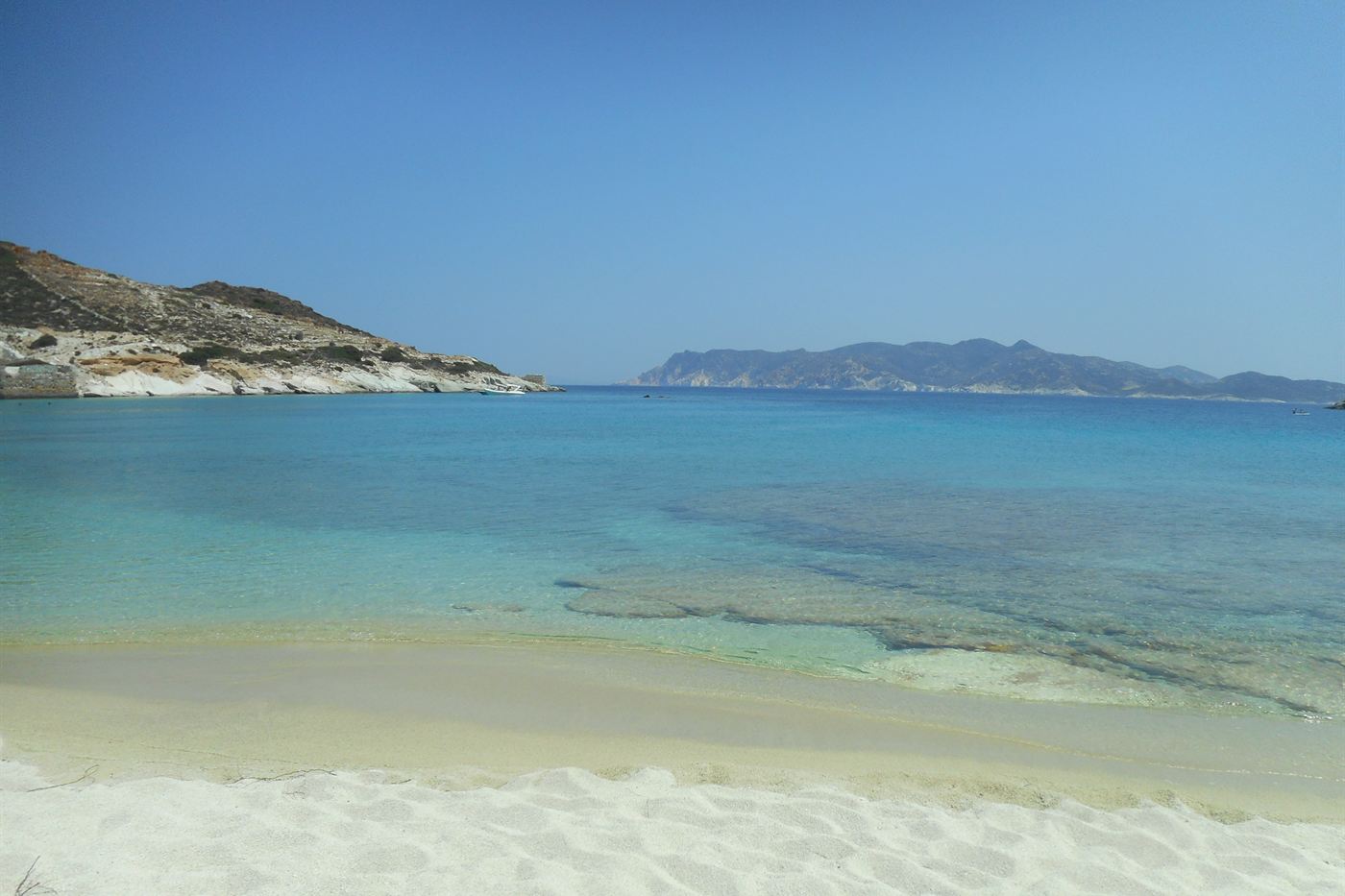
Kimolos travel guide: local tips, ferry info, top beaches, Polyaigos day trips, and 2-5 day itineraries to plan an authentic, slow-paced Greek island escape.
Kimolos Travel Guide: Visit Kimolos Island, Greece
Small, unpretentious, and achingly beautiful, Kimolos feels like a Greek island from a quieter era, the kind of place we go when we want salt on our skin, slow-paced days, and evenings that stretch into candlelit tavernas.
Kimolos sits next to Milos in the western Cyclades, and Greece Tours covers both islands with their own pages, boat trips and day tours.
This Kimolos travel guide brings together everything we’ve learned from local friends and years of island-hopping in the Cyclades: practical tips, best beaches, where to eat, and the most meaningful ways to experience the island. Whether you’re planning a romantic escape, a relaxed beach holiday, or a few days of island-hopping from Milos, this guide covers the things to do in Kimolos, Greece, and how to make the most of your visit.
The tours below sail to Kimolos and Polyaigos from Milos, Sifnos and the port of Kimolos itself.
Quick Snapshot: What Makes Kimolos Special
Kimolos is a tiny Cycladic island northwest of Milos noted for its lunar-like landscapes, pristine beaches, and authentic village life. Unlike its flashier neighbors, Kimolos remains low-key: there are no big resorts, neon beach bars, or crowds of day-trippers. Instead, we find whitewashed houses, narrow lanes in Chora, family-run tavernas, and rugged shores where the wind sculpts dramatic rock formations.
What sets Kimolos apart:
- Intimacy: With a small population and limited accommodation, the island retains a relaxed pace and genuine hospitality. We often run into owners and locals we chatted with earlier in the day.
- Geological character: Volcanic rocks and porous, chalky outcrops give several beaches a unique texture and color palette, think pale cliffs, warm sand, and turquoise water.
- Proximity to Polyaigos: The uninhabited islet of Polyaigos, one of the best-preserved natural areas in the Aegean, is a short boat trip away and a major draw for day trips.
This guide is written from a local-expert perspective (we grew up exploring these islands) and aims to help you plan an authentic, well-paced Kimolos getaway.
Where is Kimolos, and how is the island shaped?
Kimolos lies in the south-west Cyclades, 150 km south-east of Piraeus, across a 1 km strait from Milos. The island covers 36 square kilometres, forms an almost regular pentagon with 38 km of coastline, and rises to 364 metres at Paleokastro.
Kimolos belongs to the Western Cyclades. Sifnos lies 7.5 nautical miles to the north-east, and Milos sits across the water to the south-west. The channel between Kimolos and Milos is called the Ammoni strait. Pollonia, a seaside village in the north-east of Milos, stands on the Milos side of this crossing. A small boat links it with Kimolos on a regular route. The scheduled sea route from Piraeus to Psathi, the port of Kimolos, measures 89 nautical miles.
The municipality of Kimolos covers 53.251 square kilometres, a total that includes three uninhabited neighbouring islands. The main island is hilly. Steep ravines and terraces cut through the interior, and the old stone bridge at Panoklima, by the north exit of Chorio, looks over them. The coast breaks into bays, islets, sandy and rocky beaches and sea caves. Kimolos is a dry Cycladic island, and strong winds blow across its north-west plateau. Klima and Monastiria face the north wind, while Rema, next to Goupa, is a lee shore. Coves open to the north wind, such as Agioklima, Therma and Mersinia, are reached by boat when the weather allows.
Kimolos counted 810 residents in the 2021 census, and no more than 600 stay through the winter. The island has one town, Chorio, on a hill in the south-east. Smaller settlements fill up mainly in summer: Psathi, Rema, Goupa, Karras, Prassa, Aliki and Bonatsa.
- Psathi: the main port of Kimolos, 800 metres from Chorio, with a small beach beside the harbour.
- Goupa and Karras: a fishing shelter and a rocky shore in the south-east, 1 km from Chorio and 1.5 km from Psathi.
- Rema: a natural swimming pool among rocks near Chorio, with a large rock shaped like an elephant at the end of Goupa bay.
- Prassa: a coastal settlement in the east, about 5 km north-east of Chorio, facing the islet of Prasonisi.
- Aliki: a small settlement in the south, about 3 km south-west of Chorio, where the footpath from Chorio by way of Skiadi ends.
- Kalamitsi: a hamlet in the south-west, about 6 km from Chorio, with a small harbour for caiques to Milos.
How did volcanic rock shape Kimolos?
Kimolos sits on the Aegean volcanic arc, so tuffs and acidic volcanic rocks cover large parts of its 36 square kilometres. Hot springs, a geothermal field, the wind-cut rock of Skiadi and deposits of bentonite, perlite and Cimolian earth all come from this volcanic past.
The bulk of the Cyclades belongs to the Attica-Cyclades Massif and consists mainly of metamorphic rock. Kimolos is different. It formed through intense volcanic activity on the outer zone of the Aegean volcanic arc, the same arc that holds Milos. Rhyolite-type rocks dominate, and the older pre-volcanic bedrock rarely reaches the surface.
Tuffs and tuffites blanket a large area of Kimolos. Tuff is a light volcanic stone that is soft to cut. Islanders shaped it into rectangular building blocks called poria and shipped them by boat to ports in Greece and abroad. In December 1883 Theodore Bent described a white, porous building stone on the island that was simple to carve and grew harder with age. Quarry remains still mark the road from Chorio to Klima and the east side of Agios Minas bay. Waste from cutting poria lies beside the small harbour of Agios Nikolaos.
Skiadi, which the municipality calls the trademark of Kimolos, is a large stone mushroom on a barren plateau in the north-west, west of the height of Sklavos. Strong winds carry dust and grains of sand that wear down the soft rock at the base faster than the hard rock on top. The stem narrows while the cap stays almost whole, a process called ablation. Skiadi is listed in the Atlas of Geological Monuments of the Aegean. A signed path reaches it in 30 to 35 minutes from the road between the two churches of Profitis Ilias.
Kimolos also gave its name to Cimolian earth, or cimolite, a group of clays the ancient world used for washing clothes, bleaching and medicine. In The Frogs, around 405 BC, Aristophanes mentions earth from Kimolos mixed with nitre and lye to make soap. Pliny the Elder described a white kind and a coloured kind and listed both as remedies for swellings. Minoan Cretans imported large amounts to whiten wool, and athletes cleaned oil from their skin with it.
- Bentonite: the main industrial mineral of Kimolos, formed as hot-spring water, rain and the sea broke down volcanic rock.
- Perlite: old perlite mines sit above the white beach at Prassa.
- Pozzolana and kaolin: pozzolana goes into white cement and kaolin into porcelain.
- Zeolite: a newer resource used to separate gases, in eco-friendly detergents and to remove heavy metals from water.
- Barite: a crystal form known as the Rose of the Desert shows by the road to Aliki.
- Quartz gems: amethyst, agate, chalcedony, jasper and opal fill rock cavities and turn up as beach pebbles.
Cimolian earth resembles fuller’s earth and kaolin. Fuller’s earth takes its English name from fullers, the textile workers who cleaned and shrank wool. In parts of the world the term also covers calcium bentonite, a clay of altered volcanic ash. Kimolos and Milos together hold millions of tonnes of calcium bentonite, and producers treat it with sodium carbonate to make it swell more. Greek blackboard chalk is still called kimolia after the island, because the two look and feel alike, although they are different materials.
Mining has left visible marks on the east coast. The beach at Prassa, about 200 metres long, takes its white colour from pale kimolia rock and sits between hills of bentonite. Bentonite was dug close to Cape Agios Georgios, and old stairs at Agios Minas once loaded ferromanganese onto ships. Younger islanders work mainly in the quarries of Prassa and of neighbouring Milos. Greece ranks second in world bentonite output after the United States.
Heat from below still reaches the surface. Bathing facilities stand at the entrance to Prassa, and a hot spring flows at the water’s edge at Agioklima. The island group of Milos and Kimolos holds the first high-temperature geothermal field identified in Greece, and it can produce electricity.
Which protected areas and wildlife surround Kimolos?
Polyaigos and almost all of western Milos, on either side of Kimolos, belong to the Natura 2000 network. On Kimolos, monk seals shelter in sea caves at Cape Agios Georgios, and the endangered Milos viper, the Milos wall lizard and over 400 plant species live on land.
Natura 2000 is the European Union’s network of protected areas, made up of Special Areas of Conservation and Special Protection Areas under the Birds Directive. Polyaigos is a Special Protection Area for Eleonora’s falcon, and the monk seal gives birth on the island. About 75% of the world’s Eleonora’s falcons live on Aegean islands. On western Milos, the protected zone holds over 800 taxa, 35 of them found only in Greece.
The Mediterranean monk seal is believed to be the rarest pinniped on Earth. Greece holds 250 to 300 of them. Kimolos, with the Northern Sporades and Karpathos, is home to part of the Aegean population, one of only two judged viable. Sea caves on the cape of Agios Georgios, near Prassa, give the seals shelter. In Greece the breeding season runs from August to December and peaks in September and October. Pups feed only on milk until their fourth month.
The Milos viper, Macrovipera schweizeri, lives only on Milos, Sifnos, Kimolos and one uninhabited neighbour. Adults average 50 to 70 cm, and the longest on record measured 98.5 cm. The IUCN lists it as endangered, with fewer than 4,000 adults in the wild as of 2022, and the Berne Convention gives it strict protection. Adults hunt perching birds, while young vipers eat Milos wall lizards and copper skinks. Bites on Kimolos average one a year, with no recorded deaths. The Milos wall lizard, Podarcis milensis, is an endemic blue lizard.
Hawks, cormorants, partridges, gulls and wild pigeons live on Kimolos all year. Each spring the wetland at Aliki fills with herons, swans and sandpipers of the genus Calidris, which stay until late spring. Under the sea, meadows of Posidonia oceanica seagrass shelter fish, while sea urchins, corals, lobsters and pinna shells live on the seabed. Sea turtles visit the water and the sandy beaches. The islets around Kimolos add more habitat:
- Thermonisia: four rocky islets north-west of Kimolos and Therma beach; the largest, white Thermopetra, looks like a ship from afar and suits advanced divers.
- Klimatonisia: two uninhabited islets in the eastern channel, opposite the cape between Klima and Agios Nikolaos; the larger, Klima, is a dive site.
- Rematonisia: rocky islets south-east of the Karras shore that serve as a local fishing ground.
- Prasonisi: an uninhabited islet off the east coast, opposite Prassa.
- Agios Efstathios: a 10-metre-high islet opposite Psathi with a chapel and a lighthouse from 1893 that guides ships through the Pyrgi strait.
- Agios Andreas: an uninhabited islet 200 metres off the west coast, opposite Dekas, Ellinika and Mavrospilia.
More than 400 Mediterranean plant species have been recorded on Kimolos, including aromatic and medicinal herbs. Lentisk, myrtle, thyme, capers, sea daffodils, wild honeysuckle and reeds are the easiest to spot. With olive, fig and vine they make the island greener than a dry Cycladic island tends to look. The prickly pear, a foreign species, now grows all over Kimolos.
What is the history of Kimolos?
Kimolos has been inhabited without a break since at least the Late Neolithic period. Its ancient city stood at Ellinika, it won a dispute with Melos over Polyaigos after 338 BC, it passed to Marco Sanudo in 1207, and it joined Greece in 1830.
Tradition says the island took its name from its first settler, Kimolos, the husband of Side, a daughter of Tauros. In ancient times Kimolos also carried the name Echinousa. The municipality of Kimolos translates that name as “island of sea urchins” and records a second one, Echidnousa, “island of vipers”. In the Middle Ages Kimolos was called Argentiera, a Venetian name taken from argento, “silver”, after the silver-coloured rocks of the south coast. Argentiera stayed in use until the Greek Revolution of 1821.
The ancient city of Kimolos stood at Ellinika, and today it lies sunken in shallow water. Ancient tombs are visible on the beach, and the remains of two ancient harbours survive in the same area. The sunken city and its necropolis have produced Mycenaean, Geometric, Archaic, Classical and Hellenistic finds. The Kimolians lived there at least until the early Christian years.
In the 5th century BC, Kimolos belonged to the Athenian alliance and paid Athens a tribute of 1,000 drachmas. Its government followed the model of Athenian democracy, with a council (Boule), a citizen body (Demos), three archons and three treasurers. Athena was the patron goddess, and Artemis, Hermes and Poseidon were worshipped too. In the 3rd century BC, Kimolos issued its own coins, made possible by large exports of Kimolian earth and figs. The island also had “mineral coolers” that chilled water until it was “no different from snow”.
A long dispute with Melos began in 416 BC over the ownership of Polyaigos and the nearby islets. A court of Argos settled it soon after 338 BC in favour of Kimolos, and Polyaigos still belongs to the municipality of Kimolos today. A copy of the ruling is on show in the Archaeological Museum in Chorio. Little is recorded about Roman and Byzantine times; the surviving records deal mainly with the trade in Kimolian earth. The two neighbours of today are set side by side in Milos vs Kimolos.
- 1207: Marco Sanudo takes Kimolos from the Byzantines and adds it to his Duchy of Naxos.
- 1383: the Crispo family overthrows the Sanudo heirs and rules as Dukes of Naxos and the Archipelago.
- 1537: Hayreddin Barbarossa seizes Kimolos for a short time, and Angelotto Gozzadini wins it back by paying tribute to the Sultan.
- 1566 to 1579: Sultan Selim II hands Kimolos and other Cyclades to Joseph Nasi, the last Duke of the Archipelago.
- 1678 and 1727: a Dutch vice-consul and then a French representative settle on Kimolos, serve its Catholics and build the church of Madonna di Rosario, now in ruins.
- 1770 to 1774: in the Russo-Turkish War Kimolos comes under Russian control, and Orlov draws up detailed maps of it.
Pirates, feared even by the Turks, were regular visitors. In 1638 they captured and burned Kimolos, the islanders fled to Sifnos, and only 200 people stayed behind. Unable to fight every raid alone, the Kimolians came to terms with the pirates and even worked for them. That contact built deep seafaring skill, valued by the French and by the Sultan.
In 1830 Kimolos joined Greece together with all the Cyclades, when the Kingdom of Greece was recognised as an independent state. From 1936, under the Metaxas dictatorship, Kimolos became a place of exile for political opponents, mainly women. Among them were the intellectuals Chrysa Hatzivasileiou and Foula Hatzidaki.
How was the Kastro of Kimolos built?
The Kastro of Kimolos is a square medieval settlement of the 14th or 16th century. Two blocks of two-storey houses, one enclosing the other, surround a central row and the Church of the Nativity of 1592, and the outer row doubles as the defensive wall.
The Kastro is the oldest core of Chorio, the main village of Kimolos, which lies at the foot of Xaplovouni. Islanders call their capital Chorio, “the village”, and not Chora, a name borrowed from other islands. Kimolos has been a single-town island since antiquity. Franks, Venetians, Turks and pirates of every nation cut its population and drained its economy. The danger they posed left a visible mark: the Kastro, once the only settlement on Kimolos.
The builders used sideropetra, the hard local “iron stone”, and added decorative details in poros stone. The Kastro had 123 two-storey houses. One family lived on the upper floor, the anogarides, and another on the ground floor, the katogarides. A perimeter lane ran between the two rows of houses, so narrow that only small carts fitted through it.
The inner block, the Mesa Kastro, is in ruins today. The outer block, the Exo Kastro, is one continuous row of houses whose outer walls served as the castle wall. Today these houses have doors and windows opened toward the outside. Door lintels of the old houses bear coats of arms and dates.
- Kato Porta: the Lower Gate, on the south side, opens onto the market street and carries the repair date 1650.
- Pano Porta: the Upper Gate, on the east side, carries the date 1646 and stands next to the Folklore and Maritime Museum.
- Mesa Kastro entrances: the inner block has 2 entrances of its own.
- Towers: extra towers went up after pirates burned the Kastro in 1638, the attack that led to both gate repairs.
- Church of the Nativity: built in 1592, it is the oldest church on Kimolos and stands by a small square in the Mesa Kastro.
Churches of the 17th century ring the walls. Chrysostomos, the old metropolis, stands to the north; Panagia tou Konomou and Sotira lie to the west; Taxiarches sits to the southwest; and Agioi Anargyroi faces the Lower Gate. The Ministry of Culture protects all five as monuments. Inside the Mesa Kastro, a small church built in 1962 marks the site of the cell of Osia Methodia.
The main growth of the village came after Greece was freed from Ottoman rule, when houses spread over the flatter ground around the walls. As a rule, the closer a house stands to the Kastro, the older it is. From the port of Psathi, the Kastro lies within walking distance on a Kimolos day trip from Milos.
What is the Afentakeio Foundation of Kimolos, and which traditions does the island keep?
The Afentakeio Foundation of Kimolos is the bequest of benefactor Georgios Oikonomou Afentakis, whose will became its charter and whose asylum for the poor won plan approval in 1934. The island keeps over 80 churches and three major feasts: 21 November, 15 August and 5 October.
Georgios Nikolaou Oikonomou Afentakis came from a family of priests. With his wife, Eleftheria Versi, he gave donations and paid for charitable works. The couple lived on Kifissias Avenue in Athens. He served on the Athens city council for years. He gave his house there to the Athens Nursing Home. In July 1895 he withdrew to write his will, which later became the founding charter of the Afentakeio Foundation of Kimolos.
The will set out that his fortune was to help people in need after his death. That wish was met in 1934, when the plans for an asylum for the poor won approval. The large building of the foundation’s home for the elderly now stands on the road from the port of Psathi up to Chorio.
The family name also lives on in Greek art. Sofia Afentaki, the daughter of his brother Konstantinos, died of tuberculosis on 17 December 1873, aged 17. Afentakis asked the sculptor Yannoulis Chalepas to carve her grave monument. The white marble Sleeping Female Figure still rests on the family tomb in the First Cemetery of Athens, and a plaster cast is kept in the National Glyptotheque.
- Archaeological Museum: set in one of the oldest two-storey houses of Chorio, opposite Panagia Odigitria, it opened on 11 July 2006 and fills 3 rooms of about 65 square metres.
- Museum exhibits: a headless female grave stele of the 8th century BC, one of the oldest in Greece, a headless female statue 1.30 metres tall from the 2nd century BC, and a glass floor above a reconstructed ancient burial.
- Folklore and Maritime Museum: the family home of its founder, the doctor Manolis Christoulakis, inside the Kastro, with a weaving room, two working looms and a corner for the old sea captains.
- Panagia Odigitria: the metropolitan church, built from 1867 to 1874 by the unpaid labour of all the islanders, holds a 15th-century icon of the Virgin and the relics of Osia Methodia.
- Icon painters: the churches of Kimolos hold works by the Cretan priest Emmanouil Skordilis and by Agapios Prokos, the Defterevon of Sifnos, plus two icons by Fotis Kontoglou in Panagia Odigitria.
Three feasts lead the religious year on Kimolos. On 21 November, the Presentation of the Virgin, Kimolians at home and abroad honour the patron of Kimolos and its metropolitan church. For 15 August, the Dormition, evening prayer services run daily at Agios Spyridon in Kampos from 1 August, and the eve and the day follow a local ritual of their own. On 5 October the island honours Osia Methodia.
Methodia was born on Kimolos on 10 November 1861 and baptised Eirini, the third of eight children. Her husband, a sailor from Chios, drowned when his ship sank off Asia Minor. She then became a nun under Archbishop Methodios of Syros and shut herself in a small cell in the Mesa Kastro. During Lent she spoke with women only through the cell’s single small window. She died on 5 October 1908, and the Ecumenical Patriarchate declared her a saint on 17 June 1991.
The majority of the churches are family churches. Their care passes from one generation to the next among the descendants of the builder. Islanders abroad keep in touch through the Association of Kimolians Everywhere, “The Odigitria”, founded in 1919 and based in Piraeus. It represents 850 families and holds traditional dance classes. On Kimolos itself, the volunteer group Kimolistes runs summer film nights, turns old boats into open-air libraries and organises beach clean-ups and walks on the island’s paths.
Best Time To Visit
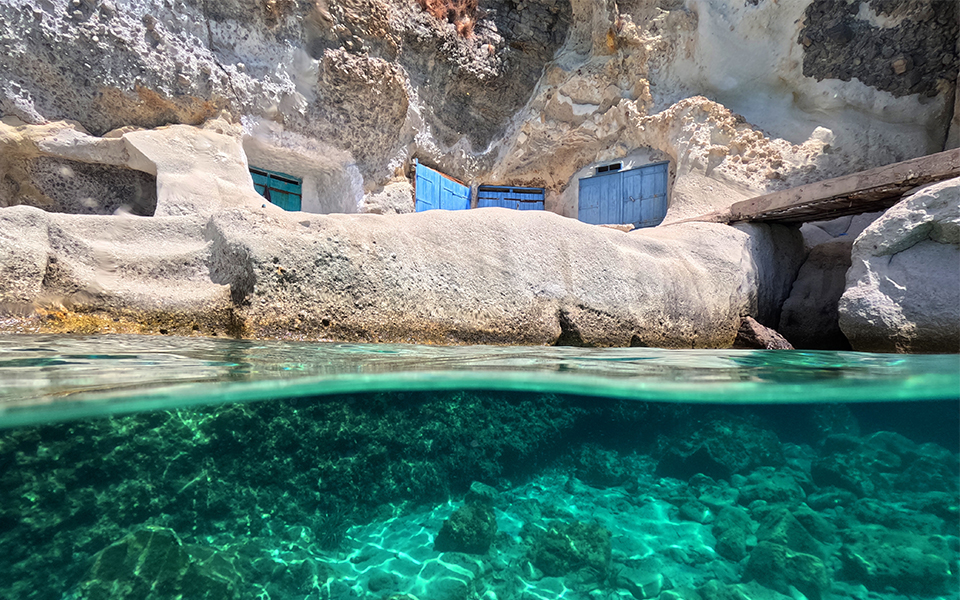
Timing on Kimolos shapes everything: the vibe, the weather, and what’s open. Here’s how we recommend choosing when to go.
- Peak season (late June–August): Warmest sea temperatures, buzzing tavernas, and the fullest service schedules. We enjoy the lively summer nights, but some beaches and village streets can feel busier. If you crave evening energy and maximum options for boat trips and rentals, pick July or August.
- Shoulder season (May–early June, September–October): Our favorite months. Temperatures are pleasant, water is swimmable, and crowds are thin. Many guesthouses and restaurants remain open, and prices are kinder. Wildflowers appear in spring, and autumn evenings are golden and mild.
- Low season (November–April): Very quiet: several places close for the winter. If you want to see true island life without tourists, come in late autumn, but check ferry schedules and accommodation availability carefully.
Practical tip: ferry frequency increases in summer. If your visit depends on timed connections (for example, arriving from Milos then leaving for another island), plan buffer time for delays.
Getting There And Getting Around
Reaching Kimolos requires a bit of island logic, but once you’re here, getting around feels easy.
Ferry Routes And Schedules
Kimolos is connected by regular ferries from Milos and occasional lines from Piraeus (Athens) or other Cycladic islands. The most common entry point is Milos: fast ferries and conventional ferries run between Milos and Kimolos; the crossing is around 15–30 minutes depending on vessel type. From Piraeus, direct ferries are less frequent and take several hours with stops. We advise checking seasonal timetables and booking ahead in July–August.
During summer, day-trip ferries from Milos or Sifnos may stop at Kimolos briefly, handy for island-hoppers. Use official ferry websites and local port notices for updated schedules.
Private Boats, Transfers, And Island Hopping
Chartering a small boat or joining a private transfer from Milos is one of our favorite ways to arrive: it’s quick, scenic, and lets you land at quieter coves. Many private captains run day trips that combine Kimolos with Polyaigos, offering snorkeling stops and picnic lunches. If you’re planning island-hopping, combine Kimolos with Milos (for dramatic cliffs and nightlife) and Sifnos (for gastronomy and hiking).
Local Transport: Buses, Taxis, And Car/Scooter Rentals
The island has limited public buses connecting the port, Chora, and a few beaches during the summer. Taxis are rare: it’s wise to book transfers through your accommodation if you arrive late. For freedom, we recommend renting a car or scooter as roads are mostly gravel outside main settlements, so consider a small 4×4 or cautious riding. Rental supply is limited: reserve in advance in high season.
Walking is often the best way to explore Chora and nearby spots. For remote beaches, a vehicle or boat is essential.
Top Things To Do On Kimolos
Kimolos lends itself to slow discovery. Below are the things to do in Kimolos, Greece, that we return to again and again.
Explore Chora And Traditional Villages
Chora is the island’s heart: whitewashed alleys, blue shutters, and gentle hills. We wander without a map, peeking into courtyard gardens and stopping for a coffee in the main plateia. Don’t miss the medieval Kastro area with its narrow lanes and views across the Aegean.
Villages such as Psathi by the sea and Goupa offer authentic snapshots of island life. Watch daily routines unfold, fishermen mending nets, bakers pulling out fresh bread, and elders arguing about sea breezes. Those small encounters often become travel highlights.
Beach Hopping: Must-Visit Beaches And Hidden Coves
- Prassa (Psathi-Prassa): A favorite with shallow waters and soft sand: there’s a small taverna nearby and some shade under tamarisk trees.
- Aliki: A long, peaceful stretch known for its calm sea and solitude: great for swimming and reading.
- Bonatsa: A picturesque cove with clear water and volcanic rock formations, ideal for snorkeling.
- Goupa Beach: Sheltered and family-friendly with a quiet vibe.
For secluded spots, ask locals about small pebble coves reachable by dirt track or boat. We recommend bringing water and shade; many remote beaches lack facilities.
Boat Tours, Snorkeling, And Diving Excursions
Boat tours are central to the Kimolos experience: they let you reach Polyaigos, hidden bays, and prime snorkeling spots. Half-day and full-day options include swimming stops, sea caves, and simple onboard meals. If you dive, check the seasonal availability of local operators or arrange a dive from Milos: underwater visibility is excellent around volcanic formations.
Day Trip To Polyaigos And Other Nearby Islets
Polyaigos, an uninhabited island, is a standout: dramatic beaches, wild thyme-scented hills, and lambs grazing in summer on its remote terraces. We usually take a private boat or join a small group trip from Kimolos or Milos. On calm days, the turquoise water around Polyaigos is spectacular for snorkeling. Respect the island’s fragile environment; it’s largely protected and undeveloped.
Hiking Trails, Photo Spots, And Sunset Locations
Kimolos is small but crisscrossed with pleasant walks. A hike from Chora to the old quarries offers raw landscapes and panoramic views. For sunsets, head to the western cliffs near Goupa or the Kastro rim in Chora. Photo ops abound: white churches framed by volcanic rocks, fishermen’s boats pulled up on pebble beaches, and moonlike rockscapes at low light.
Cultural Sites, Local Crafts, And Festivals
Kimolos’ cultural life is intimate: churches decorated for feast days, small festivals (panigyria) with dancing and homemade food, and local crafts like hand-knotted rugs or pottery. If we can, we time visits to coincide with a village festival, the energy and food are unforgettable. Pop into local homes or small shops to see traditional crafts and chat with artisans.
Where To Stay: Neighborhoods And Accommodation Types
Kimolos accommodation skews to small-scale, family-run places that emphasize local atmosphere over luxury hotel chains.
Boutique Guesthouses And Family-Run Hotels
We prefer boutique guesthouses in Chora for their character: carved wooden doors, traditional interiors, and hosts who’ll give the best local tips. Family-run hotels near Psathi or Goupa are ideal if you want beach proximity with quiet nights. Expect locally sourced breakfasts and hosts who’ll recommend the day’s best fishing or market finds.
Where To Stay For Beaches Versus Nightlife/Chora Access
- Beaches-focused: Choose accommodation near Psathi, Goupa, or Bonatsa for doorstep access to sand and sea. These areas are calmer at night and better for early beach days.
- Chora access/nightlife: Stay in Chora if you want a short walk to tavernas, cafés, and sunset viewpoints. Nights are low-key, think relaxed music and candlelit squares rather than loud clubs.
Booking Tips And Seasonal Considerations
Book early for July–August and Easter weekend. Many properties close in winter, so check cancellation policies and confirm arrivals (some hosts will meet you at the port). If you want a property with sea views or direct beach access, reserve months ahead. For last-minute travelers, the shoulder season offers more flexibility and sometimes lower rates.
Food, Drink, And Local Experiences
Kimolos’ food scene is rooted in island produce and the sea. Our meals here are simple, delicious, and often cooked by families who have perfected recipes over generations.
Must-Try Dishes And Where To Eat Like A Local
- Fresh fish and grilled octopus: Often caught the same morning and served with lemon and oregano. Seek tavernas by the harbor for the best catch.
- Kalogeros (local cheese pies) and savory pastries from village bakeries: Perfect for an early walk.
- Chickpea stew and slow-cooked goat: Classic island comfort food.
- Local honey and thyme-scented desserts: A sweet finish to any meal.
We recommend asking your guesthouse host for their top three tavernas. Locals tend to favor small family places where dishes change daily based on fresh catch and seasonal produce.
Seafood, Farm-To-Table, And Traditional Bakeries
Seafood dominates menus, but don’t miss farm-to-table plates featuring island-grown vegetables and cheeses. Small bakeries sell warm koulouri and cheese pies in the morning: grabbing one with a coffee is the perfect way to start a beach day.
Romantic Dining, Sunset Spots, And Evening Strolls
For romance, ask for a table at a seaside taverna at sunset. The slow transition from golden light to starry skies over quiet harbors is intimate, and often accompanied by live bouzouki or local singing during festival nights. Finish evenings with a walk through Chora’s lanes, stopping for a nightcap at a low-lit café.
Tours, Activities, And Guided Experiences
Organized activities on Kimolos are designed to highlight the island’s natural and cultural assets without overwhelming them.
Private Boat Tours And Sailing Options
Private boat charters are an excellent way to personalize your day: snorkeling off Polyaigos, visiting desert coves, or timing a picnic at a quiet beach. We often arrange captains through our guesthouses or local operators, and find that small wooden caiques give the most character. Some companies offer sunset sails, a dreamy option for couples.
Guided Snorkeling, Diving, And Fishing Trips
For snorkeling and diving, local operators tailor trips to experience volcanic underwater topography and abundant sea life. Fishing trips with experienced skippers often end with a cook-up of the day’s catch. If diving is your priority, coordinate trips from Milos if Kimolos operators are limited during the shoulder months.
Cultural Walks, Cooking Classes, And Local Guides
Cultural walks led by local guides uncover Chora’s history and geology. Cooking classes, sometimes held in family homes, teach us how to make regional dishes using island ingredients. These intimate experiences are a highlight for visitors seeking a deeper connection to the place.
Suggested Itineraries And How Many Days To Stay
How long to stay depends on your travel style. We recommend at least two nights, but three to five days lets you breathe, explore, and relax without hurry.
48-Hour Weekend Itinerary
Day 1: Morning ferry arrival, settle into Chora, wander Kastro lanes, lunch in a harbor taverna, afternoon at Prassa, sunset from Chora’s rim, dinner in the main square.
Travellers based on Sifnos reach the island on a private boat: the Kimolos day trip from Sifnos page covers the crossing, the tours, Psathi, Chorio and Polyaigos.
Day 2: Morning boat trip to Polyaigos or a private snorkeling tour, picnic on a quiet cove, late afternoon bakeries and coffee, relaxed evening, and stargazing.
This short itinerary gives a taste of beaches, boat trips, and Chora’s charm.
3–5 Day Relaxed Exploration And Beach-Focused Plan
Day 1: Arrive and orient in Chora: light walk and sunset.
Day 2: Full-day boat trip to Polyaigos with snorkeling stops.
Day 3: Beach hop (Prassa, Bonatsa, Aliki) with a casual seaside lunch.
Day 4: Cultural day, walk to old quarries, visit village bakeries, and attend a local panigiri if scheduled.
Day 5: Slow morning, last swim, and ferry to the next island.
This gives time for spontaneous discoveries and a slower pace.
Island-Hopping Combos With Milos, Sifnos, And Polyaigos
Pair Kimolos with Milos for dramatic geology and a wider choice of tours: combine with Sifnos for hiking and gastronomy. Typical itineraries: Milos (2–3 nights) → Kimolos (2–3 nights) → Sifnos (2–3 nights). We recommend leaving extra transit time to accommodate ferry unpredictability and to savor each stop.
Practical Tips And Essential Travel Info
Before we wrap up, here are the nuts-and-bolts details that make travel smoother on Kimolos.
Money, Connectivity, And Services On The Island
Cash remains king: many tavernas and small shops prefer cash, and ATMs are scarce. Bring enough euros, especially for remote beaches or small purchases. Mobile signal is generally usable in Chora and near the port, but expect patchy coverage in more remote areas. Wi‑Fi is common in guesthouses and cafés, but speeds vary.
For medical care, there’s a basic health post on the island: for serious issues, you may need transport to Milos or the mainland. Pharmacies operate limited hours in summer: pack essential medications.
Packing Checklist And Safety Advice
Essentials: sunscreen, reef shoes for rocky coves, a reusable water bottle, lightweight layers for cool evenings, and binoculars for birdwatching. If you plan to rent a scooter, bring a valid driving license and sunglasses/goggles for dust.
Safety: sea currents can be deceptively strong in exposed coves, swim where locals do, and avoid going alone to remote spots. Road surfaces can be rough: drive slowly on dirt tracks and watch for shepherds and goats.
Responsible Travel: Respecting Nature And Local Life
Kimolos thrives because residents protect its character. We recommend:
- Avoid single-use plastics when possible: bring a refillable bottle.
- Don’t remove stones, shells, or archaeological remains.
- Respect private property and grazing areas.
- Support local businesses, eat at family tavernas, and buy crafts locally.
If you’re visiting Polyaigos or other protected islets, follow the Kimolos guide instructions, avoid fires, and leave no trace. A little care goes a long way in keeping Kimolos pristine for future visitors and for locals who call it home.
Conclusion
Kimolos rewards slow travel: the quieter we move, the more the island reveals itself. From the white lanes of Chora to the untouched shores of Polyaigos, our Kimolos travel guide highlights an island best experienced without a tight schedule. Whether you’re after tranquil beaches, family-run tavernas, or a private boat day into crystalline waters, Kimolos offers authentic Cycladic charm with a low-key, welcoming spirit. Pack lightly, plan flexibly, and let the island’s small pleasures, long swims, sunset vistas, and conversations with locals shape your visit.
Frequently Asked Questions
When is the best time to visit Kimolos (Kimolos travel guide recommendations)?
The best months are May–early June and September–October (shoulder season): pleasant temperatures, swimmable seas, fewer crowds, and many businesses open. Peak season (late June–August) offers the warmest water and full services; winter is very quiet with many closures and limited ferries.
How do I get to Kimolos from Milos and other islands?
Frequent ferries connect Milos and Kimolos (15–30 minutes depending on the vessel). Direct ferries from Piraeus are less frequent and take several hours. In summer, check timetables and book ahead; private boats or charters from Milos are a scenic, flexible alternative for day trips or landings at quieter coves.
What are the must-visit beaches and day-trip highlights on Kimolos?
Top beaches include Prassa (Psathi-Prassa), Aliki, Bonatsa, and Goupa, each offering different vibes from shallow sand to volcanic snorkel spots. A private boat to Polyaigos is a standout day trip for pristine beaches and snorkeling—respect the protected environment and bring water and shade for remote coves.
Do I need to rent a car or scooter on Kimolos?
Renting a car or scooter gives freedom to reach remote beaches and dirt-track coves; consider a small 4×4 for gravel roads. Rentals are limited in high season, so reserve early. For Chora and nearby spots, walking suffices; taxis are rare, and some areas are best reached by boat.
How much cash and connectivity should I expect when visiting Kimolos?
Bring plenty of euros—cash is preferred, and ATMs are scarce. Many tavernas and shops take cash only. Mobile signal is generally usable in Chora and the port but patchy elsewhere; Wi‑Fi exists in guesthouses and cafés, but speeds vary, so plan accordingly.
Find more experiences in My Greece Tours: