
Where to Stay in Delphi
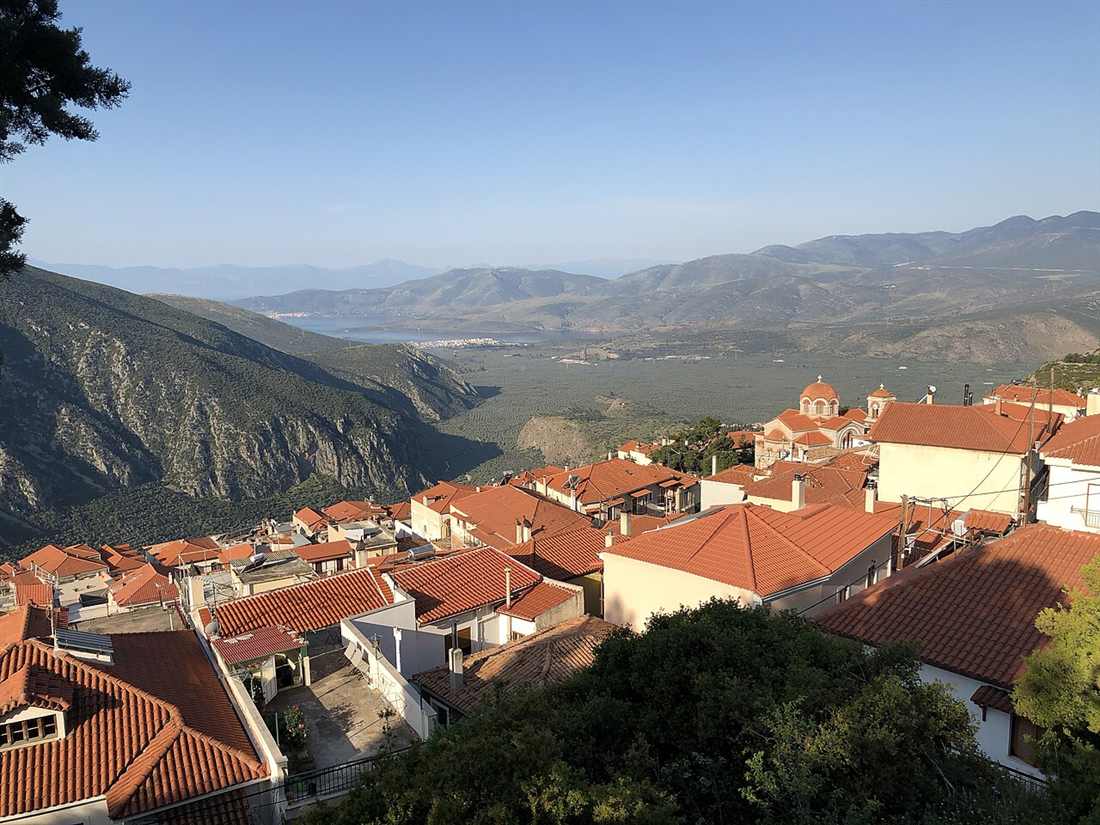
The best place to stay in Delphi is the modern village on the slope of Mount Parnassus, a ten-minute walk from the archaeological site gate, where south-facing balconies hang over the Pleistos gorge above a sea of olive trees running down to the Gulf of Corinth. The stone town of Arachova twenty minutes east and the coast at Itea and Galaxidi make the two alternative bases. Plan the whole trip with Greece Tours.
This guide covers where to stay in Delphi in full: the choice between the village, Arachova and the sea, the best areas and streets inside the village, the accommodation types from budget guesthouse to boutique stone hotel, the party-fit for families, couples and drivers, the case for an overnight over a day trip, where to eat, and how to choose and book the right room.
Where do you stay in Delphi — the village, Arachova, or the coast?
Base yourself in the modern village of Delphi for the shortest walk to the ruins, choose the stone town of Arachova twenty minutes east for tavernas and nightlife, or drop to Itea and Galaxidi on the Gulf of Corinth for a seaside stay with sea breezes and harbour dinners.
The modern village of Delphi sits on the same slope of Mount Parnassus as the sanctuary, a few hundred metres west of the archaeological site gate. Staying here puts you within a ten-minute walk of the Sacred Way, the Temple of Apollo and the stadium, so you enter at opening time before the tour coaches arrive and return to your room in the afternoon heat. The village runs along two terraced streets with balconies over the ravine, and dinner is a short stroll from any room. This is the base for visitors who put the ruins first.
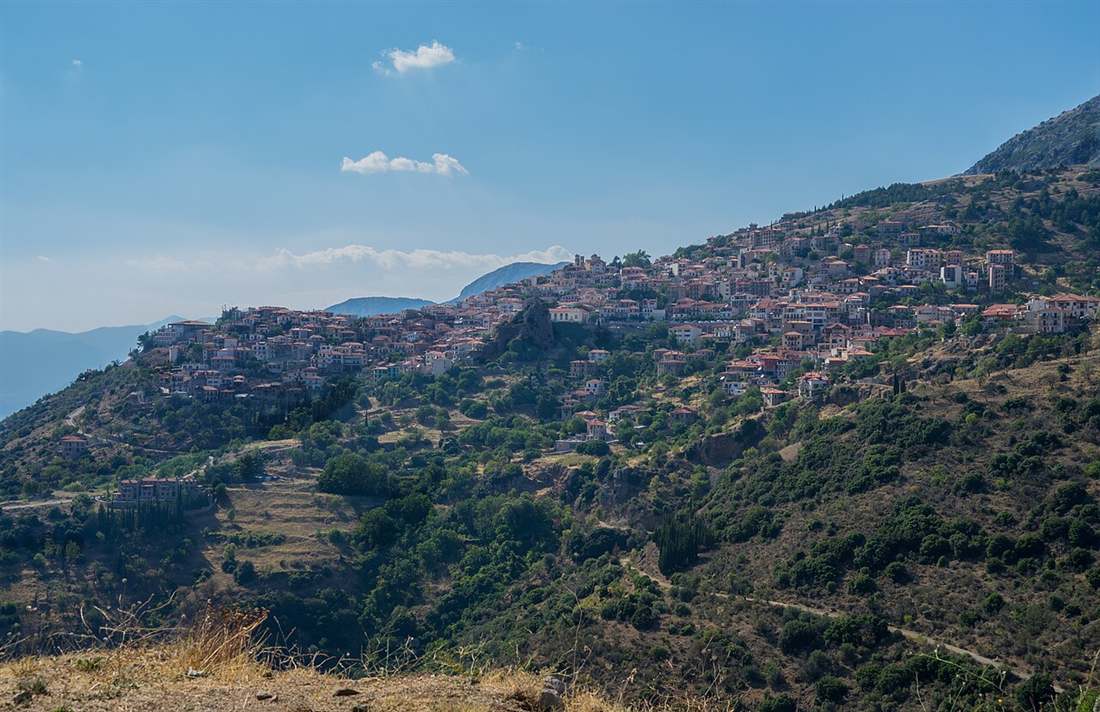
Arachova stands twenty minutes east along the mountain road, a taller stone town wrapped around a ridge at higher altitude. It carries more tavernas, more bars and a longer evening than Delphi village, and it fills with skiers in winter when the Parnassus slopes open above it. From Arachova the drive to the sanctuary takes under half an hour, so a base here trades walking distance to the ruins for a livelier night and a wider choice of restaurants.
The coast lies below, where the road drops through the olive groves of the Amfissa plain to the Gulf of Corinth. Itea is the working port fifteen minutes downhill, and Galaxidi is the captains’ town of stone mansions and a double harbour a little further west. A seaside base swaps the mountain balcony for a waterfront, adds swimming and harbour fish tavernas, and keeps Delphi within a half-hour drive up the hill. The trade-off is clear: the village for the site, Arachova for the evening, the coast for the sea. Read the full picture on the Delphi hub before you book.
What are the best areas and streets to stay in Delphi village?
Two parallel streets carry almost every room in Delphi village: Vasileon Pavlou and Frederikis run the length of the terrace, and the south-facing balconies above the Pleistos ravine hold the long view down the olive valley to the Gulf of Corinth. A valley-view room faces that gorge; a street-side room faces the road.
Vasileon Pavlou kai Frederikis is the through-road that becomes the village high street, lined with tavernas, cafés and shops, and Frederikis runs one terrace below it on the ravine side. Because the village is built on a steep slope, the two streets sit at different heights, and hotels step down the hillside between them. The lower edge of the village hangs directly over the Pleistos gorge, and rooms on that side open onto the drop.
The distinction that shapes a booking is the direction the room faces. A valley-view or ravine-side room looks south across the Pleistos gorge, over a sea of silver olive trees on the Amfissa plain, to the water of the Gulf of Corinth and the mountains of the Peloponnese beyond it. A street-side or mountain-side room faces the road or the rock of Parnassus behind, with less light and no gorge. When a hotel lists a “sea view” or “valley view” room at a higher rate, that is the south-facing balcony you are paying for.
Walking distance inside the village is short. The archaeological site gate sits at the eastern end, past the last houses on the road to Arachova, and the walk from the centre of the village to the entrance runs about ten minutes on the pavement. The Delphi Archaeological Museum stands beside the site on the same road. From the western streets the walk is longer but stays flat along Vasileon Pavlou. A room near the eastern end of the village shortens the morning walk to the ruins. The full breakdown of the village layout sits on the Delphi village guide.
What types of accommodation does Delphi have?
Delphi village runs on small family-run hotels and guesthouses, a few larger mid-range hotels, boutique stone-built rooms, and budget rooms and hostbeds. There are no large resorts and no chain towers on the slope; the stock matches a mountain village on a protected archaeological hillside.
The core of the village is the family-run hotel and the guesthouse. These are buildings of a handful of floors run by their owners, with a breakfast room, a terrace over the ravine and a front desk that arranges the drive to the site or the coast. Rooms here carry the south-facing balcony at the heart of the village stay, and the owner-run scale keeps the character personal rather than institutional. A step up in size, a few larger mid-range hotels hold more rooms, a bar and a wider breakfast, and they take the coach groups that stop overnight on the Athens circuit.
Boutique stone-built rooms occupy the higher tier. Parnassus is a stone-and-timber region, and the restored houses and small design hotels use the grey mountain stone, wood ceilings and open fireplaces of the local building style, some with a small spa or a heated pool for the winter season. These rooms carry the top rate in the village and fill fastest in the ski months when Arachova and Delphi share the Parnassus traffic.
At the budget end sit simple rooms, pensions and hostbeds for walkers and drivers on the classical route. The range across the village breaks down as:
- Family-run hotels and guesthouses — owner-run, breakfast included, ravine balconies, the standard Delphi stay.
- Larger mid-range hotels — more rooms, a bar, group breakfasts, the coach-tour base.
- Boutique stone-built rooms — restored Parnassus stone, fireplaces, the top tier, strong in winter.
- Budget rooms and hostbeds — pensions and simple beds for walkers and drivers.
Across every tier the stock stays low-rise and small in scale, because the village sits on a protected slope beside a monument and the building line is fixed. A stay in Delphi is a mountain village stay: stone streets, a balcony over a gorge, dinner a short walk from the room and the ruins at the edge of town, rather than a resort compound.
What can you expect from budget accommodation in Delphi?
Budget accommodation in Delphi means family-run guesthouses, rooms-to-let and small hotels at the lower price tier. Rooms are simple and clean, most face the Pleistos valley from a private balcony, and rates fall in the cold months when the ski crowd thins.
The lower tier concentrates along the two parallel main streets of the modern village, Vasileon Pavlou kai Friderikis and Apollonos, and on the lanes that step down the hillside between them. A budget room delivers the essentials: a double or twin bed, an en-suite bathroom with a shower, heating for the mountain winters, and a compact balcony angled at the gorge. The village runs the length of a single slope, so even the cheapest rooms on the lower street look out over olive terraces falling toward the Gulf of Corinth.
Breakfast is the marker that separates the tiers here. Guesthouses at this level serve a Greek continental spread of bread, local honey, yoghurt, cheese, olives and coffee in a small breakfast room or on a terrace. Parking is the second thing to confirm: the village has no large car parks, so a property with its own spaces or a reserved kerbside bay removes the daily hunt on the narrow streets. Hosts at this tier live on site and hand over site directions, bus times and dinner recommendations in person.
Rates drop through late autumn and the depth of winter, outside the ski weekends on nearby Mount Parnassus and the spring and autumn touring peaks. To judge a budget room before booking, check three points: that the balcony faces the valley and not the back street, that heating and hot water are confirmed for winter stays, and that breakfast and parking are stated rather than assumed. The archaeological site sits within a ten-minute walk east of the village, so a budget base still puts the ruins and the museum on foot.
What are the mid-range hotels in Delphi like?
Mid-range hotels in Delphi are comfortable family-run properties with valley-facing balconies over the Pleistos gorge, breakfast rooms angled at the view, and a short flat walk to the sanctuary. The standard matches a well-kept Greek mountain hotel: warm, quiet and built in local stone.
A mid-tier room widens what the budget tier delivers. The space is larger, the bathroom is finished in stone or marble, and the furnishings run to a proper writing desk, a wardrobe, a television and reliable heating for the Parnassian winter. The balcony is the fixed feature of the class: it hangs over the terraced slope, and the drop of olive groves toward the sea from Delphi’s altitude of around 570 metres is the reason the view commands the higher rate. Rooms on the valley side carry a premium over the street side within the same hotel.
These hotels are owned and staffed by Delphi families across generations, and the service reflects it. The breakfast room is glazed toward the gorge, and the morning buffet extends to eggs, regional cheeses, cured meats, seasonal fruit, cakes and filter coffee. Common features at this tier include:
- A glazed or terraced breakfast room facing the Pleistos valley
- Reception open through the day with luggage storage and tour-booking help
- On-site or reserved parking near the property
- Heating and, in the warmer months, air-conditioning in every room
- A lounge or bar with a fireplace for winter evenings
Position inside the village is the practical variable to weigh. A mid-range hotel on the eastern edge stands closest to the Delphi archaeological site and the museum, a walk of under ten minutes on the level. One set further west sits nearer the tavernas and the evening life of the two main streets. Both bases keep the sanctuary, the Castalian Spring and the Tholos of Athena Pronaia within reach on foot, and both put the hotel car within a short drive of Arachova, Galaxidi and the coast.
What luxury and boutique stays are near Delphi?
The top tier splits between stone-built boutique hotels in Delphi itself and the design hotels of Arachova, twelve kilometres east. Delphi’s boutique properties trade on the gorge view and quiet; Arachova’s winter resorts add fireplaces, spa suites and heated pools built for the ski season.
Delphi’s high-end stays keep the boutique scale of the village. They occupy stone buildings of ten to twenty rooms, and the upgrade over the mid tier shows in the finishes: larger suites, a fireplace or wood-burning stove in the room, deep balconies furnished for the view, and a restaurant or wine terrace on the premises. The design language holds to the mountain setting, with local stone, carved wood and woven textiles rather than a generic hotel look. The value at this level is exclusivity and silence above the gorge, not resort scale, because the protected village bans the large complexes found on the coast.
Arachova supplies the second luxury option and a different character. The town is Greece’s premier winter resort, stacked on the flank of Parnassus at around 950 metres, and its hotels are built for cold-weather stays. The tier runs to design and spa hotels with indoor heated pools, hammams, saunas, treatment rooms and stone-and-timber lounges centred on open fireplaces. Suites carry private hot tubs and panoramic balconies over the ravine. Rates in Arachova climb on the ski weekends from midwinter and settle through the green season, the inverse of a coastal resort’s calendar.
Choosing between the two turns on the trip. A base in Delphi puts the archaeological site, the museum and the sanctuary on foot and keeps the mornings quiet for the ruins. A base in Arachova adds the ski slopes of Parnassus, a denser run of restaurants and bars, and the spa facilities, at the cost of a short drive to the site each morning. The top tier in both towns delivers on-site dining, concierge tour-booking, and rooms engineered for the mountain winter, and the twelve kilometres between them keeps either within easy reach of the other.
Which Delphi base suits families, couples, and drivers?
Match the base to the party: a family takes a ground-floor two-room guesthouse near the village centre, a couple takes a boutique stone room with a valley balcony, and a driver takes a property with private parking at the village edge for the surrounding loops.
A family gains from a guesthouse on the flat streets around the church square, where two connecting rooms give parents and children separate space and a ground-floor entrance removes stairs for a stroller or tired legs after the archaeological site. The walk from that block to the tavernas runs level in minutes, so dinner needs no car, and the same short flat walk reaches the site entrance in the morning before the tour coaches arrive. Kitchenette units let a family reheat food and store fruit, which cuts the run of restaurant meals across a multi-night stay.
A couple gains from a boutique stone room built into the slope, with a private balcony that faces the olive plain and the Gulf of Corinth. The sun sets over that valley, and a table on the balcony turns the last hour of light into the evening itself, before a quiet dinner at a small taverna one lane back from the main street. Rooms of this type sit above the through-traffic, so the noise of passing coaches drops away and the view stays open across Delphi village to the water.
A driver gains from a property at the eastern or western edge of the settlement that holds its own off-street parking, which removes the daily fight for a kerb space on the narrow main street. That parking is the base for the loops that make a car worthwhile: east to Arachova for the mountain tavernas, south to the harbour town of Galaxidi for a seafood lunch, and up the switchbacks onto Mount Parnassus for the ski centre and the high trailheads. A parked car at the edge also clears the walk into the village of a reversing-and-searching start each morning.
- Family: ground-floor two-room guesthouse near the church square, flat walk to tavernas and the site, kitchenette for self-catering.
- Couple: boutique stone room on the slope with a west-facing valley balcony for the sunset and a quiet lane for dinner.
- Driver: edge-of-village property with private off-street parking for the Arachova, Galaxidi and Parnassus loops.
Book against the party first and the tier second. The families cluster on the flat centre, the couples take the balcony rooms on the slope, and the drivers take the edge with parking, and each party reaches the site and the tavernas on foot from all three positions.
Is it worth staying overnight in Delphi rather than a day trip?
Staying overnight in Delphi puts you at the archaeological site gate for the opening hour, ahead of the Athens coaches that roll in mid-morning. You watch the sunset flood the olive plain toward Itea, spend a quiet evening in the village, and keep a full second day for Arachova and Mount Parnassus.
The day trip from Athens delivers the ruins in a two-hour window that overlaps with every other coach on the same schedule. An overnight base flips that order. You walk the Sacred Way and reach the stadium before the tour groups arrive, then move through the museum while the galleries stay empty. The light on the temple terraces at opening reads clean and low, and the photographs come back without a crowd in the frame. Book your entry in advance through the Delphi tickets guide so the early start runs without a queue.
The afternoon and dusk belong to the resident guest. The sun drops behind the ridge across the Pleistos gorge and sets the sea of olive trees glowing toward the Gulf of Corinth. The Delphi village streets empty as the last buses pull out, and the tavernas fill with the handful of travellers who remain. That shift from tourist traffic to mountain quiet is the reason the overnight earns its place.
A second morning opens the wider region. Arachova sits ten minutes east along the Parnassus road, the Castalian Spring lies a short walk beyond the sanctuary gate, and the Mount Parnassus trailheads and ski centre climb north from the same junction. A day trip surrenders all of it to the return drive; the overnight keeps every one of these within reach before you leave.
Where do you eat and what is there to do in the evening in Delphi?
The tavernas line Vasileon Pavlou and Frederikis, the two parallel streets that carry the village, serving Parnassus mountain cooking: spit-roasted meats, wild greens, local olive oil, and Parnassus honey over yoghurt. After the day groups leave, the village turns quiet, and the balcony tables face the olive plain at dusk.
The kitchens draw on the mountain around them. Menus run to spit-roasted lamb and pork, slow-cooked goat, stuffed vine leaves, and hilopites pasta under grated cheese. Wild greens gathered from the Parnassus slopes arrive dressed in the olive oil pressed down in the Amfissa and Itea groves, and the meal closes on thick honey from the same mountain spooned over strained yoghurt or baked into walnut pastries. The tavernas price for residents rather than the coach trade, and the portions match a walking day.
Position sets the tables apart. Vasileon Pavlou and Frederikis run one above the other along the slope, and the outer edge of each drops straight to the valley. A dinner reservation on that side puts the olive plain, the town of Itea, and the Gulf of Corinth below the railing as the light fades. The dusk service is the one to book, when the ridge shadow crosses the plain and the sea holds the last colour.
The evening itself is the draw. Once the buses depart, the noise leaves with them, and the village settles into a slow rhythm of dinner, a walk between the two streets, and the dark bulk of Parnassus overhead. The pace suits a base for the archaeological site rather than a night out, and it delivers the rest a full day among the ruins demands.
How do you choose and book accommodation in Delphi?
Reserve ahead for the high summer months and the Parnassus ski season, when the village and nearby Arachova fill fast. Choose a valley-view balcony over a street-side room, check the walking distance to the site, confirm parking if you drive, and weigh the quiet village against livelier Arachova.
Timing drives availability. Summer packs the village with sanctuary visitors, and the winter ski weekends pull the Athens crowd up to Parnassus, so both peaks book out early and the room rates climb with demand. Reserving in advance secures the valley-facing rooms, which sell first because the balcony view over the olive plain is the point of staying in Delphi at all. A street-side room saves money and surrenders the sunset.
Match the property to how you travel. Weigh these points before you book:
- Walk to the site — the sanctuary sits at the east edge of the village, a level ten-to-fifteen-minute walk from most guesthouses, so an early gate arrival needs no car.
- Parking for drivers — the main street parks along its length and fills by evening; a property with its own space removes the nightly hunt.
- Bus connections — the KTEL coaches run between Athens and Delphi and stop in the village centre, which reaches the ruins on foot for travellers without a car.
- Balcony aspect — confirm the room faces the valley, not the road, before you commit to the rate.
Compare the two bases directly. Delphi keeps you inside walking distance of the archaeological site and the Castalian Spring, with the quiet evening the village is known for. Arachova, ten minutes east, trades that proximity for a livelier stone town of bars, shops, and the ski crowd, and adds a short morning drive to the ruins. The archaeological start favours Delphi; a mix of ruins and mountain nightlife favours Arachova.
Frequently Asked Questions
Is it better to stay in Delphi or Arachova?
Delphi village suits a visitor who puts the ruins first, with a ten-minute walk to the site gate and a quiet evening. Arachova, twelve kilometres east, suits a visitor who wants tavernas, bars and the ski slopes, at the cost of a short morning drive to the sanctuary.
How far is Delphi village from the archaeological site?
The archaeological site gate sits at the eastern edge of the modern village, a level walk of about ten minutes from the centre on the pavement along the main road. The Delphi Archaeological Museum stands beside the site on the same road, so both reach the visitor on foot.
Do you need a car to stay in Delphi?
A car is not needed to stay in Delphi. The KTEL coaches from Athens stop in the village centre, and the ruins, museum and tavernas all reach the visitor on foot. A car adds the day loops to Arachova, Galaxidi and Mount Parnassus and needs a property with its own parking.