
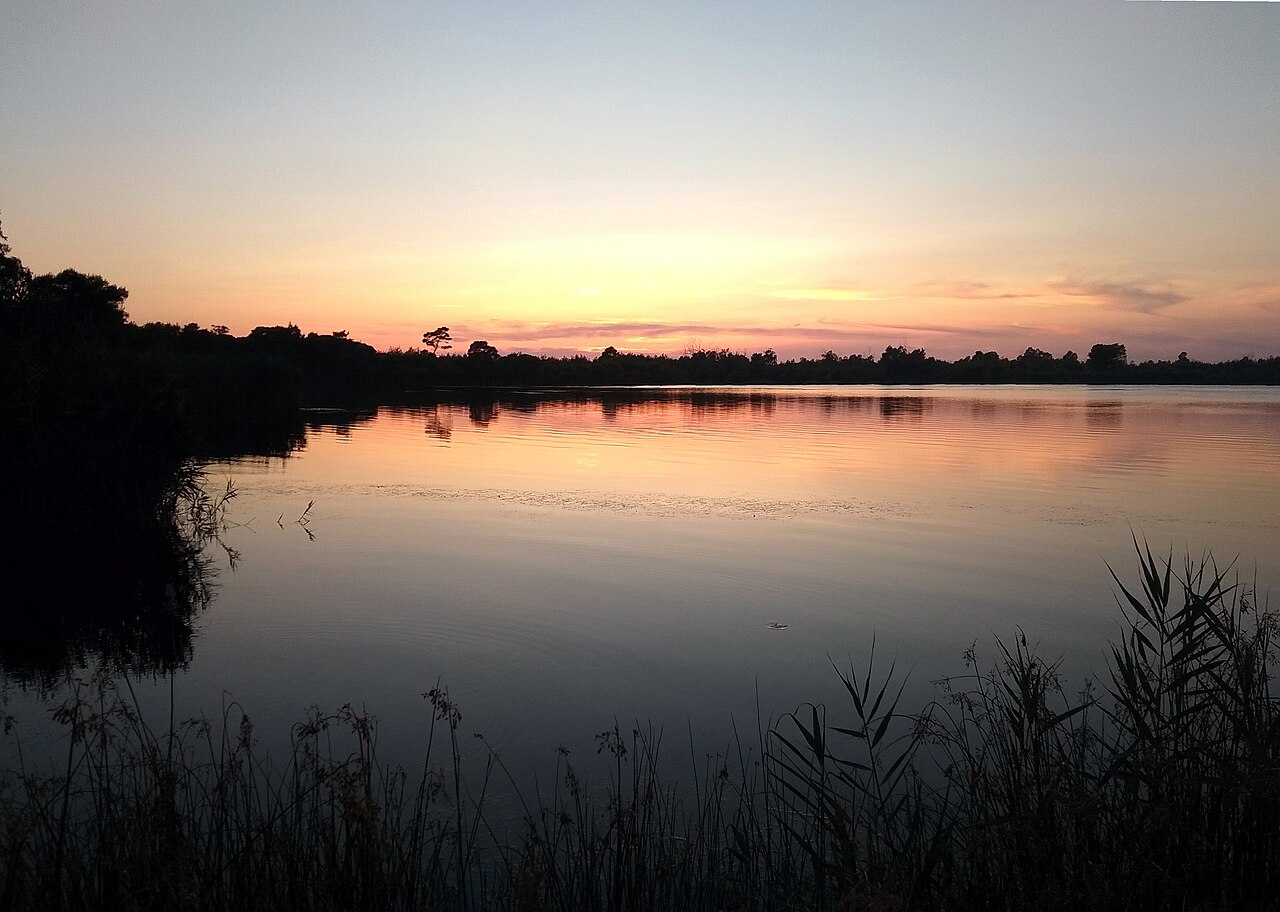
Kaiafas Lake is one of the loveliest and most unusual spots in the western Peloponnese, a tranquil wetland at the foot of Mount Lapithas in southern Ilia, famous for its healing thermal springs, its long pine-backed beach and its ancient mythology. The sulphur springs that rise beside the lake have been prized for their curative powers since antiquity, and Greek myth links the place to the centaur Chiron and the nymphs. Separated from a magnificent sandy beach by a pine forest and dunes, and rich in birdlife, Kaiafas combines nature, healing and legend within easy reach of Ancient Olympia. This guide covers the lake, its springs, its beach and how to visit.
This guide covers Kaiafas Lake in full: the lake and its thermal springs, the healing waters and their mythology, the beach and dunes, the birdlife, and how to visit from Ancient Olympia. Read it beside the full Ancient Olympia guide, an easy day trip away.
What is Kaiafas Lake?
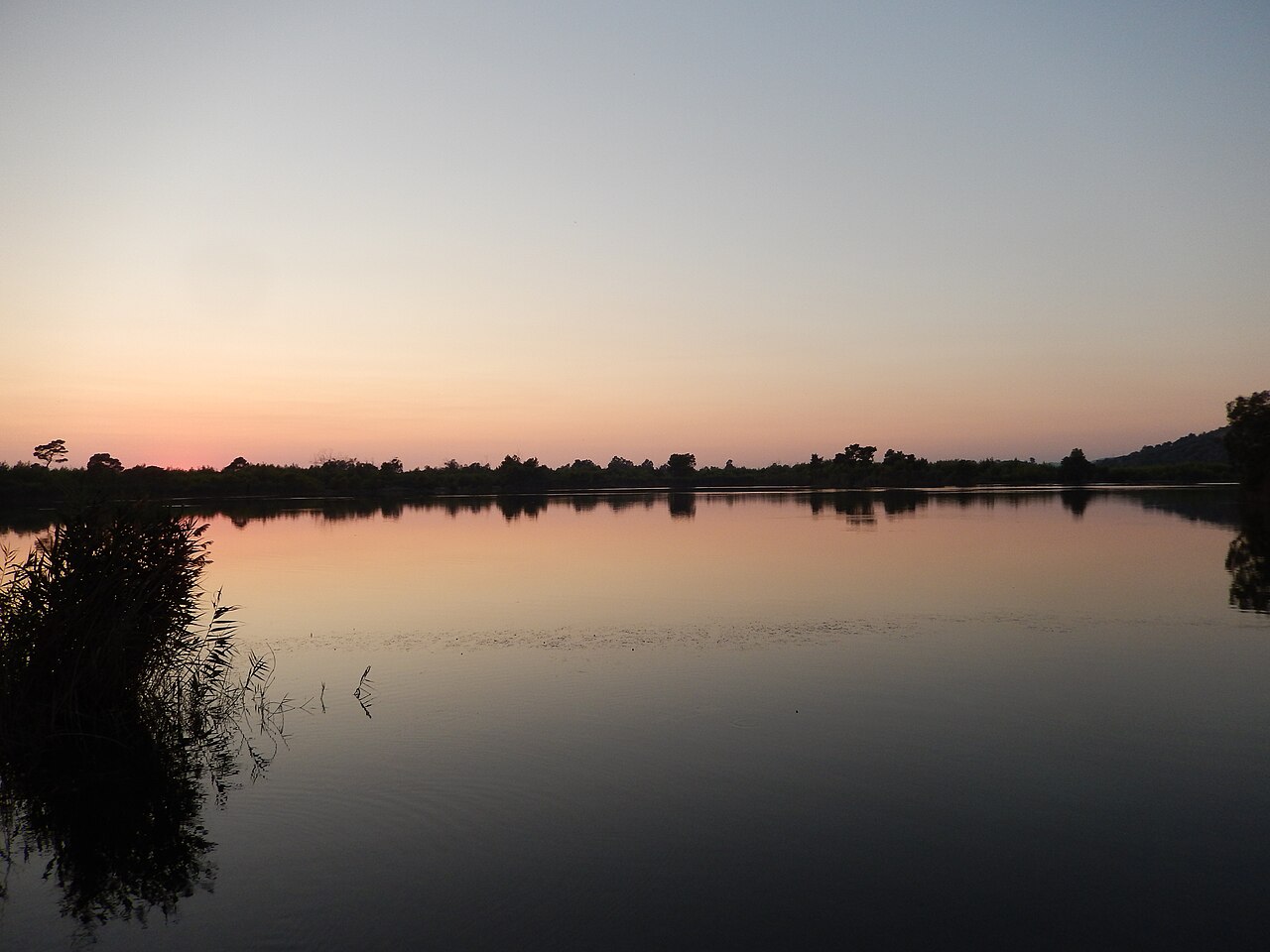
Kaiafas Lake is a shallow coastal lake and wetland in southern Ilia, in the western Peloponnese, set at the foot of Mount Lapithas and separated from the Ionian Sea by a pine forest and sand dunes. Famous for the healing thermal springs that rise beside it, a long sandy beach and its rich birdlife, it is a place of natural beauty, health tourism and ancient myth.
It is a coastal wetland. Kaiafas is a shallow lake and wetland by the sea, so it is a haven of nature and calm.
It has healing springs. Thermal sulphur springs rise beside the lake, so it is a centre of health and spa tourism.
It lies by a great beach. A pine forest and dunes separate the lake from a long sandy beach, so sea and lake meet here.
Where is Kaiafas Lake?
Kaiafas Lake lies on the west coast of the Peloponnese, in southern Ilia, near the town of Zacharo and about forty kilometres south of Ancient Olympia. Set at the foot of Mount Lapithas and backed by pine forest, it is reached by road and by the coastal railway, which has a station at the lake, so it is an easy trip from Olympia and the wider region.
It is in southern Ilia. The lake lies on the west Peloponnese coast near Zacharo, so it is in the same region as Olympia.
It is near Olympia. Kaiafas is about forty kilometres south of Ancient Olympia, so it makes an easy day trip from the site.
It is easy to reach. Road and the coastal railway serve the lake, so visitors reach it by car or train.
What are the thermal springs at Kaiafas Lake?
The thermal springs at Kaiafas Lake are warm sulphur springs that rise from caves in the hillside beside the lake, prized since antiquity for their healing powers. The two main springs are the Anigrides Nymphs Spring and the Geras Spring, also called the Atlantides Nymphs Spring. Their warm, sulphur-rich waters are used to treat skin, joint and respiratory conditions at the spa beside the lake.
They rise from caves. The springs emerge from caves in the hillside by the lake, so they have a dramatic natural source.
There are two main springs. The Anigrides and the Geras springs are the principal sources, so the site has more than one healing spring.
They treat many conditions. The warm sulphur waters are used for skin, joint and respiratory ailments, so the springs draw health visitors.
Why are the waters of Kaiafas known for healing?
The waters of Kaiafas are known for healing because of their warm temperature and their high content of sulphur and minerals, which have long been used to soothe skin, joint and respiratory complaints. Their curative powers were recorded in antiquity, and ancient writers discussed the therapeutic properties of the baths, so the springs have a healing reputation reaching back thousands of years.
They are warm and mineral-rich. The springs are warm and full of sulphur and minerals, so they have therapeutic value.
They soothe many ailments. The waters ease skin, joint and respiratory conditions, so they are used in treatments.
They were prized in antiquity. Ancient writers recorded the springs’ healing powers, so their reputation is very old.
What is the mythology of Kaiafas Lake?
The mythology of Kaiafas Lake links its healing springs to the centaur Chiron and to the nymphs. Greek myth tells that Chiron, wounded by the poisoned arrows of Herakles, came to bathe and heal in these waters, and that the Anigrides nymphs dwelt in the caves from which the springs rise. The place has thus been sacred to healing and to the nymphs since ancient times.
Chiron healed here. Myth says the centaur Chiron bathed his wounds in the springs, so the waters were linked to healing.
The nymphs dwelt here. The Anigrides nymphs were said to live in the spring caves, so the site was sacred to them.
It has been sacred long. The place has been tied to healing and the nymphs since antiquity, so its myth is ancient.
What is the beach at Kaiafas like?
The beach at Kaiafas is one of the finest in the Peloponnese, a long stretch of soft golden sand backed by a pine forest and high dunes, separated from the lake by the trees. Its clean, shallow water and its wild, unspoilt setting make it a beautiful and peaceful place to swim and relax, far quieter than the busy beaches of the islands, with the thermal springs a short walk away.
It is long and sandy. The beach is a long stretch of golden sand, so it offers plenty of space to relax.
It is backed by pines and dunes. A pine forest and dunes frame the beach, so its setting is wild and beautiful.
It is peaceful. The unspoilt beach is quiet and clean, so it is a tranquil place to swim.
What wildlife is there at Kaiafas Lake?
Kaiafas Lake is a protected wetland rich in wildlife, especially birds. Its reeds and shallow waters shelter herons, ducks, waterfowl and many migratory birds, while the surrounding pine forest and dunes support their own plants and animals. A haven of biodiversity, the lake is a fine place for birdwatching and nature walks, and its trails give panoramic views over the water and the sea.
It is a bird haven. The wetland shelters herons, ducks and migratory birds, so it is rich for birdwatching.
The forest adds life. The surrounding pines and dunes support their own wildlife, so the whole area is biodiverse.
Trails reveal it. Paths around the lake give views and nature walks, so visitors explore its wildlife on foot.
How was Kaiafas Lake formed?
Kaiafas Lake was formed, according to tradition, by a great earthquake in antiquity that reshaped the coast and created the shallow lagoon behind the coastal dunes. Fed by the thermal springs and cut off from the sea by the pine-covered sand bar, it became the wetland seen today. Its shallow waters, nowhere more than a couple of metres deep, spread over a wide area at the foot of the mountain.
An earthquake shaped it. Tradition says a great earthquake created the lagoon, so the lake has a dramatic origin.
The dunes enclose it. A pine-covered sand bar cuts the lake off from the sea, so it forms a sheltered wetland.
It is shallow and wide. The lake spreads wide but stays shallow, so it is a broad, gentle expanse of water.
What can you do at Kaiafas Lake?
At Kaiafas Lake you can bathe in the healing thermal springs, swim and relax on the long sandy beach, walk the trails around the lake and through the pine forest, watch the birdlife of the wetland, and enjoy the spa treatments at the resort beside the water. A boat crosses to the spring caves, so a visit combines health, nature and the beach in one beautiful setting.
Bathe in the springs. The thermal springs and spa offer healing baths, so visitors come to soothe and relax.
Swim and walk. The beach and the lakeside trails invite swimming and walking, so the outdoors is close at hand.
Watch the wildlife. The wetland’s birds reward a quiet visit, so nature lovers enjoy the lake.
How do you visit Kaiafas Lake from Olympia?
You visit Kaiafas Lake from Ancient Olympia by car or train, about forty kilometres to the south, a drive of under an hour. The coastal road and the railway both run to the lake, which has its own station. Many visitors combine the ancient sanctuary with a relaxing afternoon at the springs and the beach, so Kaiafas makes an easy and rewarding day trip from Olympia.
It is a short trip. Kaiafas is under an hour south of Olympia, so it is easily reached in a day.
Road and rail serve it. The coastal road and railway both reach the lake, so visitors come by car or train.
It pairs with Olympia. The site and the springs combine well in a day, so Kaiafas rounds out a visit to Olympia.
What is the history of Kaiafas?
Kaiafas has been known since antiquity for its healing springs, which the ancient Greeks associated with the nymphs and with the river Anigros. Ancient writers recorded the therapeutic powers of the sulphur waters, and the site drew those seeking cures. In the modern era the springs were developed as a spa, and today Kaiafas continues its ancient role as a place of healing and rest by the sea.
It was known in antiquity. The ancient Greeks prized the springs for healing, so the site has a long history.
Writers recorded its waters. Ancient authors described the therapeutic powers of the baths, so its fame is documented.
It became a spa. The springs were developed as a modern spa, so Kaiafas keeps its healing role today.
What is the best time to visit Kaiafas Lake?
The best time to visit Kaiafas Lake is late spring, summer and early autumn, when the weather is warm, the sea is swimmable and the spa is in full season. Summer is busiest at the beach and the springs, while spring and autumn are quieter and pleasant for walking and birdwatching. Winter is calm and green but cooler, so the warm months suit a beach and spa visit best.
Warm months are best. Late spring to early autumn brings warm weather and a swimmable sea, so they suit a visit.
Summer is busiest. The beach and springs are liveliest in summer, so that is the peak season.
Spring and autumn are quiet. The shoulder seasons are calm and pleasant, so they suit walking and birdwatching.
How do you reach the spring caves at Kaiafas?
You reach the spring caves at Kaiafas by a short boat crossing over the lake from the spa jetty, or on foot around the shore. The warm sulphur springs rise from caves in the hillside on the far side of the lake, where the healing waters have flowed since antiquity. The crossing over the still water to the caves is a memorable part of a visit to the springs.
A boat crosses the lake. A short boat trip carries visitors from the spa to the caves, so reaching the springs is easy.
The caves hold the springs. The warm sulphur waters rise from caves in the hillside, so the source is dramatic.
The crossing is memorable. Gliding over the still lake to the caves adds to the visit, so it is a highlight of Kaiafas.
Where do you stay near Kaiafas Lake?
You stay near Kaiafas Lake at the spa hotels beside the springs, or in the nearby town of Zacharo, which has hotels, rooms and tavernas. Staying by the lake gives easy access to the springs and the beach, while Zacharo offers a wider choice of accommodation and services. Both make comfortable bases for exploring the springs, the beach and nearby Ancient Olympia.
Spa hotels sit by the lake. Hotels beside the springs give direct access to the baths, so they suit spa visitors.
Zacharo has more choice. The nearby town offers hotels, rooms and tavernas, so it broadens the options.
Both suit exploring. Either base gives access to the springs, beach and Olympia, so both work for a visit.
Is Kaiafas Lake good for families?
Yes, Kaiafas Lake suits families well. The long, shallow, sandy beach gives children safe and gentle water for swimming, the pine forest offers shade and space to play, and the lake and its birdlife make an easy nature outing. Combined with a visit to the ancient stadium at nearby Olympia, Kaiafas gives families a relaxed day of beach, nature and history in a beautiful setting.
The beach suits children. Shallow, sandy and gentle, the beach is safe for young swimmers, so families relax there.
The forest gives shade. The pine woods offer shade and space to play, so children stay comfortable and busy.
Nature engages them. The lake and its birds make an easy nature outing, so families enjoy the wetland.
What else is near Kaiafas Lake?
Near Kaiafas Lake lie the town of Zacharo with its long beach, the sandy shore of Kakovatos, the ancient hilltop fortress of Samikon overlooking the lake, and, a little further, Ancient Olympia and the Temple of Apollo at Bassae. The green countryside of southern Ilia, with its beaches, springs and ancient sites, makes Kaiafas part of a rich and varied corner of the western Peloponnese.
Zacharo and Kakovatos lie near. The nearby towns have long sandy beaches, so more coast is within reach.
Samikon crowns the hill. The ancient fortress of Samikon overlooks the lake, so history rises above the wetland.
Olympia and Bassae are close. The great sanctuary and the mountain temple lie within reach, so Kaiafas joins a wider tour, as the guide to the Temple of Apollo at Bassae describes.
What treatments does the Kaiafas spa offer?
The Kaiafas spa offers treatments based on its warm sulphur springs, including bathing and hydrotherapy for skin conditions, arthritis and rheumatism, and inhalation therapies for respiratory complaints. The mineral-rich waters, drawn from the ancient caves, are used in baths and pools at the resort beside the lake. Combined with the peaceful setting and the nearby beach, the spa makes Kaiafas a centre of health and relaxation.
It uses the sulphur waters. Baths and hydrotherapy draw on the warm springs, so treatments centre on the healing water.
It treats many conditions. Skin, joint and respiratory ailments are addressed, so the spa serves a range of needs.
It offers relaxation too. The peaceful setting and the baths soothe body and mind, so the spa is restful as well as curative.
What is the Samikon fortress near Kaiafas?
The Samikon fortress is an ancient hilltop stronghold overlooking Kaiafas Lake from the north, guarding the coastal route through southern Ilia. Its walls, of fine ancient masonry, crown a hill with sweeping views over the lake, the beach and the sea. A short climb from the lake, the fortress adds a touch of ancient history to a visit centred on the springs and the beach.
It guards the coast. The fortress overlooked the coastal route, so it held a strategic spot above the lake.
Its walls survive. Fine ancient masonry crowns the hill, so the fortress is a real ancient monument.
It gives great views. The hilltop looks over the lake, beach and sea, so the climb rewards with a panorama.
Why do the Kaiafas springs smell of sulphur?
The Kaiafas springs smell of sulphur because their warm waters are rich in dissolved sulphur compounds, which give off the characteristic odour of rotten eggs. Far from a fault, this sulphur content is the source of the waters’ healing reputation, prized for treating skin and other conditions. Ancient myth even explained the smell through the legend of the centaurs washing their wounds in the springs.
Sulphur causes the smell. Dissolved sulphur gives the waters their distinctive odour, so the smell marks their mineral content.
It signals healing. The sulphur that smells is the source of the cure, so the odour is a sign of the waters’ power.
Myth explained it too. Ancient legend linked the smell to the centaurs’ wounds, so the springs gathered their own stories.
Is Kaiafas Lake a protected area?
Yes, Kaiafas Lake is a protected wetland, valued for its biodiversity and its birdlife. The lake, its reeds, the pine forest and the dunes form a fragile ecosystem that shelters many species, so the area is safeguarded. Visitors are asked to respect the environment, keeping to paths and taking care of the dunes and the lake, so its natural beauty endures for the future.
It is a protected wetland. The lake and its surroundings are safeguarded for their nature, so the area is conserved.
It shelters many species. Birds, plants and animals thrive in the fragile ecosystem, so it is rich in wildlife.
Visitors protect it. Keeping to paths and caring for the dunes preserves the site, so its beauty lasts.
Frequently Asked Questions About Kaiafas Lake
Are the Kaiafas thermal springs open to visitors?
Yes, the Kaiafas thermal springs are open to visitors, with a spa and bathing facilities beside the lake where the healing waters are used for treatments and relaxation. A boat crosses the lake to the spring caves, and the resort offers baths and therapies. The springs are busiest in the warmer months, so a visit combines the healing waters with the nearby beach and lake.
Because the springs are run as a spa with bathing facilities, visitors soak in the healing waters and enjoy treatments beside the lake.
Can you swim at Kaiafas?
Yes, you can swim both at the long sandy beach of Kaiafas, on the Ionian Sea beyond the pine forest and dunes, and in the warm thermal waters at the spa. The beach offers clean, shallow sea for a relaxing swim in a beautiful, unspoilt setting, while the springs give a warm, healing soak, so the site suits both sea swimmers and those seeking the thermal baths.
Because Kaiafas has both a fine sandy beach and warm thermal springs, visitors choose between a sea swim and a healing soak, or enjoy both in a day.
Is Kaiafas Lake worth visiting?
Yes, Kaiafas Lake is well worth visiting for its rare combination of healing thermal springs, a beautiful unspoilt beach, a rich wetland and ancient mythology, all in a peaceful natural setting. Close to Ancient Olympia, it makes a relaxing counterpoint to the ruins, so many visitors pair a morning at the sanctuary with an afternoon at the springs and the beach for a varied and rewarding day.
Because it blends healing springs, a lovely beach and a peaceful wetland near Olympia, Kaiafas Lake rewards visitors seeking nature and relaxation alongside the ancient sanctuary.
How do you combine Kaiafas Lake with Ancient Olympia?
You combine Kaiafas Lake with Ancient Olympia by visiting the ancient sanctuary in the cool morning and the lake, springs and beach in the afternoon, as the two lie under an hour apart by road or rail. A morning among the ruins and stadium followed by a swim, a thermal bath or a lakeside walk makes a varied day of history, nature and relaxation in the western Peloponnese.
Because Olympia and Kaiafas are so close, a single day pairs the ruins with the springs and beach, balancing history with rest and nature.
Can you walk around Kaiafas Lake?
Yes, you can walk around Kaiafas Lake on trails that follow the shore and lead through the pine forest and along the dunes to the beach. The paths give fine views over the water, chances to watch the birdlife, and a peaceful route between the springs, the lake and the sea. The walks are gentle and suit visitors of all ages seeking to explore the wetland on foot.
Because gentle trails ring the lake and cross the forest to the beach, walking is an easy and rewarding way to explore the wetland and its wildlife.
Is Kaiafas Lake crowded?
Kaiafas Lake is far less crowded than the famous Greek islands and their beaches. It is busiest in high summer, when the beach and the spa draw visitors, but even then its long shore and wide wetland keep it feeling spacious and calm. Outside summer it is very quiet, so those seeking a peaceful, unspoilt corner of Greece find Kaiafas a tranquil retreat.
Because its long beach and wide wetland absorb visitors, Kaiafas stays calm and spacious even in summer, and is beautifully quiet in the shoulder seasons.
What does the name Kaiafas mean?
The name Kaiafas is the modern name of the lake and its springs, in the region of ancient Elis. In antiquity the healing waters were associated with the river Anigros and the Anigrides nymphs, and ancient writers such as Pausanias and Strabo described the springs and their sulphurous smell. The modern name Kaiafas is used today for the lake, the springs, the beach and the small settlement beside them.
Because the lake carries the modern name Kaiafas while its ancient fame rests on the river Anigros and its nymphs, the site links a modern name to a very old healing tradition.
Is Kaiafas Lake suitable for a relaxing day trip?
Yes, Kaiafas Lake is ideal for a relaxing day trip, especially as a gentle counterpoint to the ancient sites of the region. A day at the lake can combine a warm thermal bath, a swim at the pine-backed beach, a lakeside walk among the birds, and a lazy lunch by the water. Close to Ancient Olympia, it offers rest and nature after the history of the sanctuary.
Because it blends thermal baths, a beautiful beach and a peaceful wetland, Kaiafas Lake makes a wonderfully restful day trip alongside the ancient sites of the western Peloponnese.