
Mastiha is the soul of Chios, an aromatic resin that grows in commercial quantity nowhere else on earth. Bled in pale tears from the bark of the mastic tree in the villages of the island’s south, it has been harvested for more than two thousand five hundred years, shaped the island’s history and wealth, and flavours everything from chewing gum and bread to liqueur, cosmetics and medicine. Protected by European law and listed by UNESCO, the cultivation of mastiha is a living tradition that defines the island and draws visitors to see the tears gathered among the groves. Plan the whole trip with Greece Tours.
This guide covers Chios mastiha in full: what it is and how it is harvested, its protected origin and its long history, its many uses in food, drink, cosmetics and medicine, its studied health benefits, and where to see and buy it on the island. Read it beside the guide to Chios food and the full Chios travel guide.
What is Chios mastiha?
Chios mastiha is the aromatic resin of the mastic tree, Pistacia lentiscus var. chia, harvested as pale crystalline tears in the southern villages of Chios. Grown in commercial quantity only on this island, it has a pine-and-cedar aroma and is used in food, drink, cosmetics and medicine.
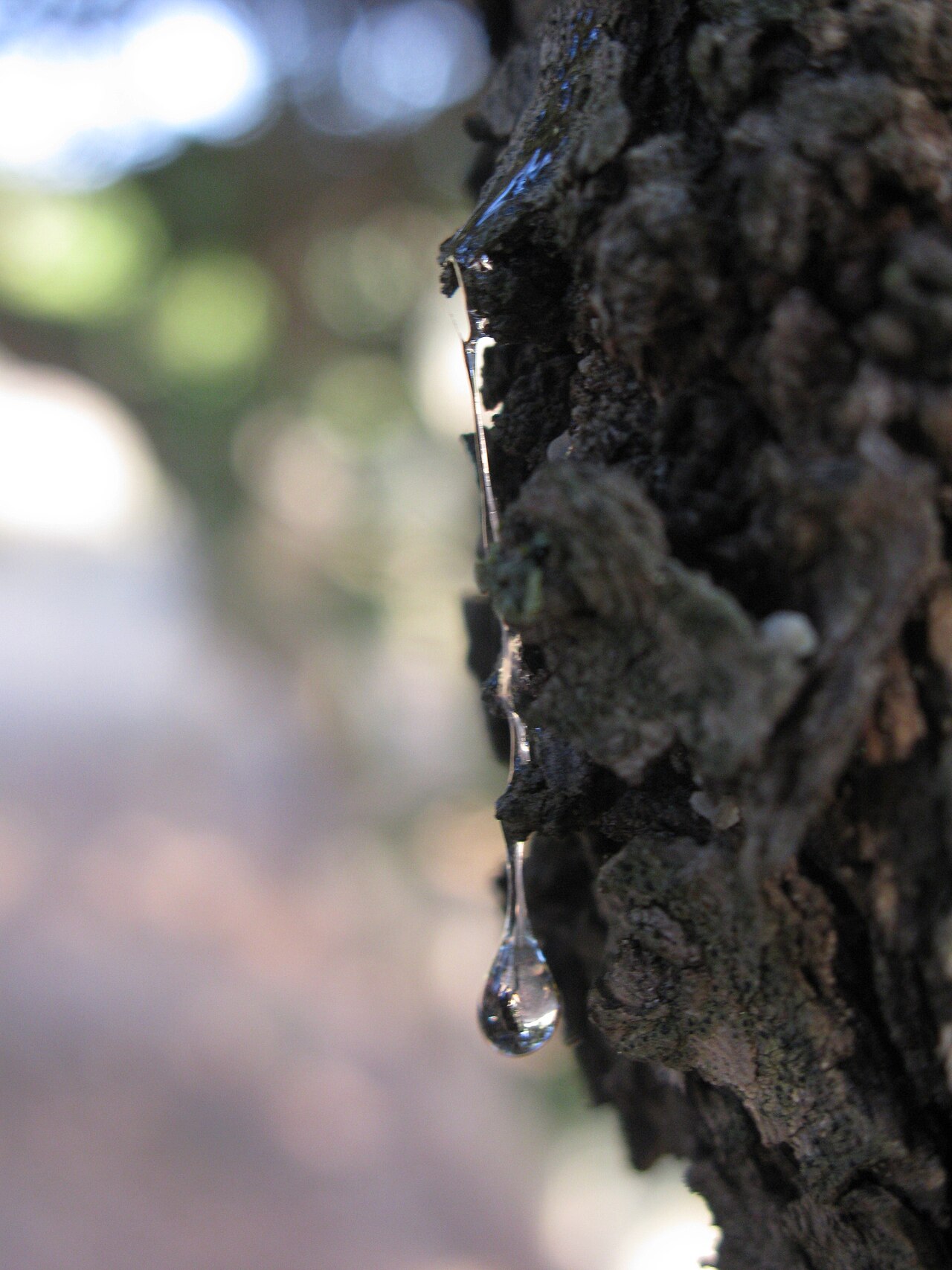
Mastiha is a natural resin. It is produced by the mastic tree, a variety of the evergreen Pistacia lentiscus, and bleeds from cuts in the bark and branches as a sticky sap that hardens in the air into small translucent drops, or tears, initially pale and slightly yellow, which are the mastiha of commerce.
It grows only in southern Chios. Although the mastic shrub grows around the Mediterranean, it produces the resin in usable quantity only in the mastic-growing villages of the southern part of Chios, a peculiarity of soil, climate and cultivation that has made the island the sole source of true mastiha for millennia.
It has a distinctive aroma and taste. The tears carry a fresh, resinous scent of pine and cedar with a faintly bitter edge, and this aroma flavours the sweets, drinks and dishes of the island, as well as giving mastiha its value in perfumery, cosmetics and medicine, as the guide to Chios food describes.
How is mastiha harvested?
Mastiha is harvested from July to October. Growers clean and level the ground beneath the trees, make small cuts in the bark so the resin bleeds out and hardens into tears, then collect, clean and sort the tears by hand. The island produces on the order of 150 tonnes a year.
The harvest is slow and manual. In early summer the growers sweep and flatten the earth under each tree to catch the falling drops, and from July they make careful incisions in the bark, from which the resin oozes and hardens over the following weeks into the tears that are then gathered by hand.
Cleaning and sorting follow the collection. Once gathered, the tears are washed, and each is cleaned and sorted by hand according to size and quality, a painstaking labour that continues into the autumn and winter, so that a single grower’s crop passes through many hours of work before it reaches the market.
The quantity is small. The island’s growers together produce only around 150 tonnes of mastiha a year, a modest crop for a product in demand worldwide, which is part of why it has always been valuable, and the whole cycle is a tradition on UNESCO’s list of intangible cultural heritage.
Why is mastiha protected, and what does PDO mean?
Chios mastiha holds Protected Designation of Origin status in the European Union, meaning only the resin produced in the traditional way in southern Chios may be called Chios mastiha. A growers’ association controls its grading and sale, keeping the price and provenance consistent.
The name is legally protected. Chios mastiha carries PDO status, a European designation reserved for products with a specific geographical origin and traditional method, so that only the resin grown and harvested in the mastic villages of Chios in the established way may bear the name, guarding it against imitation.
A growers’ association runs the trade. The mastic producers of the island are organised into a cooperative association that collects, grades and markets the crop, controlling quality and setting prices, so the whole harvest of thousands of small growers reaches the market through a single, regulated channel.
This keeps the price and quality clear. Because the association grades the tears and sells at fixed prices through its own shops, buying Chios mastiha from the cooperative outlets guarantees both authenticity and a fair price, which is why they are the recommended place to buy, as the guide to the mastic villages notes.
What is the history of Chios mastiha?
Mastiha has been harvested on Chios for more than 2,500 years. Known in antiquity for its therapeutic use, described by Hippocrates and Dioscorides, it became a prized trade good, and under Genoese and Ottoman rule the mastic villages enjoyed special privileges as a court monopoly.
Its use reaches back to antiquity. Mastiha was known in the ancient Greek world for its aroma and its medicinal properties, and the classical physician Hippocrates recommended it for digestive complaints, while later writers such as Dioscorides recorded its uses, so its reputation as a remedy is over two thousand years old.
It shaped the island’s medieval fortunes. Under the Genoese, who ran Chios on the mastic trade from the fourteenth century, and then the Ottomans, mastiha was a hugely valuable commodity, and the mastic villages were fortified and granted special privileges to protect and secure the crop.
It was a court monopoly under the Ottomans. So prized was mastiha, particularly as a chewing gum in the imperial harem and court, that its production was a monopoly of the sultan, and the mastic villages of the south enjoyed tax privileges and protection in exchange for their crop, a status that shaped their history, as the guide to the Chios mastic villages describes.
What is mastiha used for?
Mastiha is used to make natural chewing gum, and to flavour bread, sweets, ice cream, spoon sweets and the liqueur and ouzo that bear its name. It is also used in cosmetics, dentistry, perfumery and varnish, and its powdered form scents both sweet and savoury cooking.
Chewing gum is its most famous use. The original chewing gum, mastiha was chewed for fresh breath and clean teeth for centuries, and it is still sold as natural gum today, the tears chewed directly or made into a modern gum, one of the products most associated with the island.
It flavours the island’s food and drink. Ground into a fine powder, mastiha scents bread and biscuits, ice cream, and the white spoon sweet called submarino, while distillers turn it into the sweet liqueur Mastiha of Chios and a drier mastiha-flavoured ouzo, so it appears across the Chios table, as the guide to Chios food sets out.
Its uses reach well beyond the kitchen. Mastiha and its oil are used in cosmetics and skincare, in toothpaste and dentistry for oral health, in perfumery for its aroma, and historically in high-quality varnish, so the resin of a single Greek island finds its way into a remarkable range of products worldwide, from Athens pharmacies to international cosmetics houses.
What are the health benefits of mastiha?
Mastiha is valued for digestive, oral and anti-inflammatory benefits, attributed to its anti-inflammatory and antioxidant compounds. The European Medicines Agency has recognised it for mild digestive disorders and skin inflammation, and studies have examined its effect on stomach ulcers and gut health.
Digestion is its traditional strength. Used since antiquity for stomach complaints, mastiha has been studied for its effect on dyspepsia and on the bacteria linked to ulcers, and the European Medicines Agency has approved its traditional use for mild digestive disorders, reflecting its long reputation as a digestive aid.
It supports oral and skin health. Its antimicrobial properties make mastiha useful for oral hygiene, which is why it appears in toothpaste and gum, and the European Medicines Agency has also recognised its traditional use for minor skin inflammation, so its benefits extend to the mouth and the skin.
Its effects come from its natural compounds. The favourable properties studied in mastiha are mainly attributed to the anti-inflammatory and antioxidant components of the resin, and while research continues, the weight of tradition and study behind it explains why mastiha is sold not only as a flavouring but as a natural supplement.
Where does mastiha grow, and can you see it harvested?
Mastiha grows in the mastic villages, the mastichochoria, of southern Chios, around Pyrgi, Mesta, Olympi and their neighbours. In the harvest season from summer into autumn you can see the tears gathered in the groves, and the Chios Mastic Museum near Pyrgi explains the whole cycle.
The mastic villages are its home. The two dozen or so mastichochoria of the south, including the famous Pyrgi, Mesta and Olympi, are the villages built around the cultivation of mastiha, their fortified plans a legacy of protecting the precious crop, and the groves that surround them are where the resin is grown.
The harvest can be seen in season. From July into the autumn the growers work among the trees, cutting the bark and gathering the tears, and visitors touring the south in these months can see the process in the groves, sometimes at farms that welcome visitors, a living tradition rather than a museum piece.
The Mastic Museum tells the full story. The Chios Mastic Museum, on a hillside near Pyrgi among the groves, lays out the whole cycle of cultivation, harvest and trade through exhibits and film, so a visit there deepens the understanding of the crop, as the guide to the museums of Chios describes.
Where do you buy mastiha, and what forms does it come in?
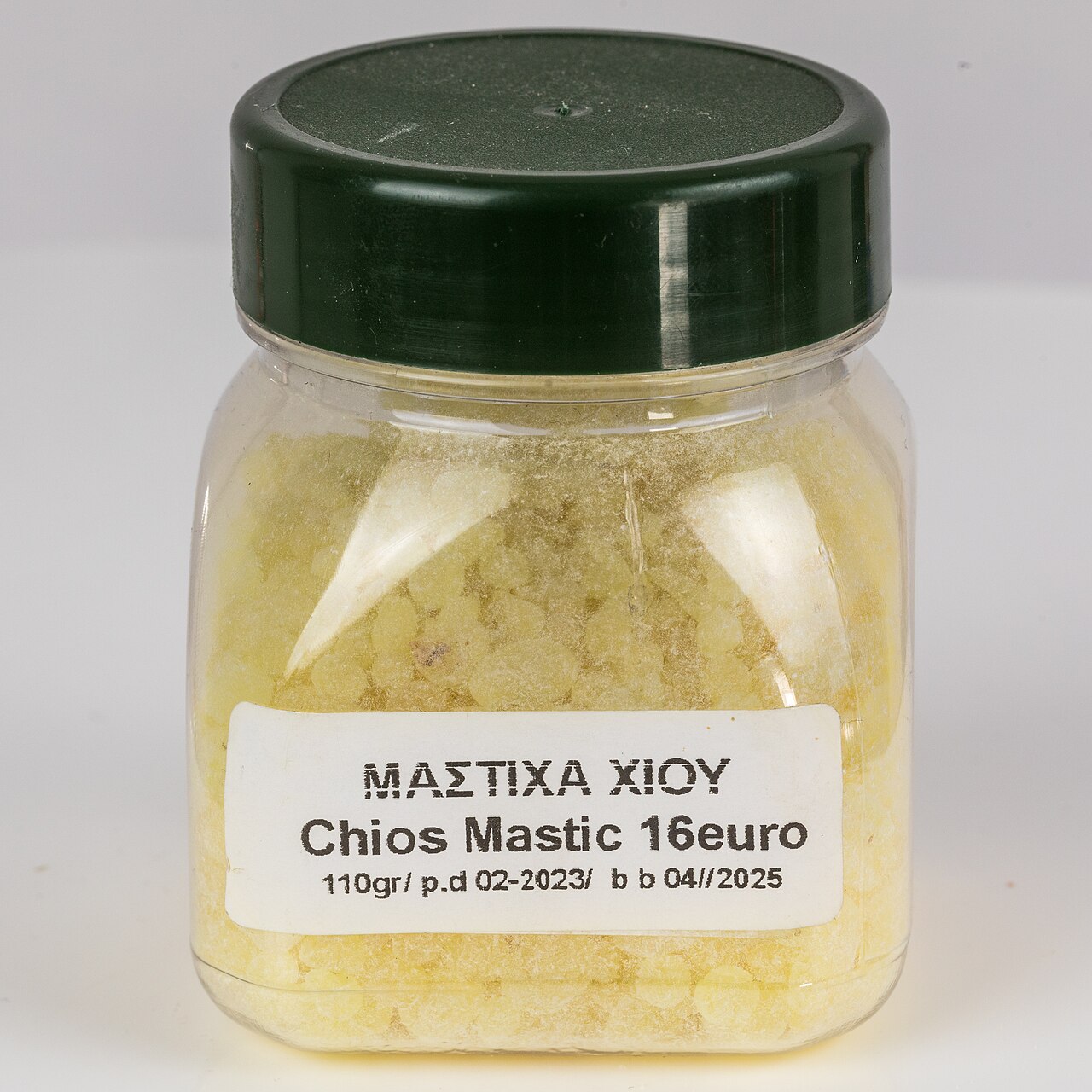
Mastiha is best bought from the growers’ cooperative shops in Chios Town, Pyrgi and Mesta, which sell graded tears at fixed prices. It comes as raw tears, ground powder, chewing gum, the liqueur, cosmetics, toothpaste and confectionery, all of which travel well as gifts.
The cooperative shops are the place to buy. The growers’ association runs outlets in Chios Town and the mastic villages, selling the tears graded by size and quality at fixed prices, so buying there guarantees authentic Chios mastiha and a fair price, rather than an unverified product from a general souvenir shelf.
It comes in many forms. Beyond the raw tears sold in small tins, mastiha is sold as ground powder for cooking, as chewing gum, as the sweet liqueur and mastiha ouzo, and as cosmetics, toothpaste, soaps and confectionery, so there is a form to suit every visitor and every gift.
It travels well as a gift. The tears keep for a long time in a sealed tin and need no refrigeration, and the gum, liqueur and cosmetics are all easy to carry home, so mastiha is the natural souvenir of Chios, a taste of the island’s one irreplaceable product, as the guide to Chios food notes.
What is submarino, the mastiha spoon sweet?
Submarino, or vanilla spoon sweet, is a thick white mastiha paste served on a spoon standing in a glass of iced water. The guest eats the paste as it firms in the cold water, then drinks the water. It is the traditional welcome offered to visitors in Chios homes.
It is the island’s classic sweet. Submarino, sometimes called the spoon of vanilla, is a dense white fondant flavoured with mastiha, served on a spoon set in a glass of iced water, and lowering the spoon into the water firms the paste, which is then eaten before the water is drunk.
It is a gesture of hospitality. Offering a submarino to a guest is a traditional welcome in Chios homes and a fixture of the island’s cafés, a small ritual that expresses the hospitality of the island and gives visitors a direct taste of mastiha in its purest sweet form, often offered alongside a cup of coffee or a glass of cold water.
It shows mastiha at its simplest. Where the resin flavours many dishes and drinks in small amounts, in submarino it is the whole point, sweet and gently resinous, so a spoon of it is the best way to understand the taste that defines the island, as the guide to Chios food describes.
What is the mastic tree, and how does it produce the resin?
The mastic tree is a variety of the evergreen shrub Pistacia lentiscus, native to the Mediterranean but yielding usable resin only on southern Chios. A slow-growing, hardy tree, it produces mastiha when its bark is cut, bleeding sap that hardens into tears, and it can be productive for decades.
The tree is a hardy Mediterranean evergreen. The mastic tree, or schinos, is a bushy evergreen that thrives in the dry, rocky ground and mild climate of southern Chios, growing slowly into a small tree, and it is well suited to the terraced groves where it has been cultivated for centuries.
Only the Chios variety yields the resin. Although the mastic shrub grows widely around the Mediterranean, only the cultivated variety grown in the specific conditions of southern Chios produces the resin in the quantity and quality that makes harvesting worthwhile, which is the mystery at the heart of the island’s monopoly on true mastiha.
It gives its resin for many years. A mastic tree takes several years to begin producing, reaches full yield in its teens, and can go on giving resin for decades, so a grove represents a long-term investment tended across generations, part of why the mastic villages guarded their trees so carefully, as the guide to the mastic villages describes.
Frequently Asked Questions
What is mastiha and where does it come from?
Mastiha, or mastic, is the aromatic resin of the mastic tree, a variety of the evergreen shrub Pistacia lentiscus known as var. chia. It comes from the mastic-growing villages of the southern part of the Greek island of Chios, in the north-eastern Aegean, and although the mastic shrub grows around the Mediterranean, it produces the resin in usable, commercial quantity only here, a peculiarity of the island’s soil, climate and centuries-old cultivation. The resin bleeds from small cuts made in the bark and branches of the tree and hardens in the air into pale, translucent drops known as the tears of Chios, which carry a fresh, resinous aroma of pine and cedar. Harvested by hand from July into the autumn, cleaned and graded, Chios mastiha holds Protected Designation of Origin status in the European Union, and its cultivation is inscribed on UNESCO’s list of intangible cultural heritage. It has been produced on the island for more than 2,500 years, and its distinctive pine-and-cedar aroma has made it valued for flavouring, chewing, cosmetics and medicine across the Mediterranean world since antiquity.
What are the health benefits of Chios mastiha?
Chios mastiha has been valued for its therapeutic properties since antiquity, when the physician Hippocrates recommended it for digestive complaints, and modern research has examined a range of benefits attributed mainly to its anti-inflammatory and antioxidant compounds. It is best known for supporting digestive health: studies have looked at its effect on dyspepsia and on the bacteria associated with stomach ulcers, and the European Medicines Agency has recognised its traditional use for mild digestive disorders. Its antimicrobial properties also make it useful for oral health, which is why it appears in chewing gum and toothpaste, and the European Medicines Agency has additionally recognised its traditional use for minor skin inflammation. Mastiha is sold both as a flavouring and as a natural supplement in the form of tears, powder, oil and capsules. As with any supplement, anyone with a medical condition should seek professional advice before using it therapeutically.
How do you use mastiha in cooking?
Mastiha is used in cooking by grinding the tears into a fine powder, usually with a little sugar to stop them clumping, and adding it in very small amounts, since the aroma is strong and too much turns a dish medicinal. In its sweet uses it flavours bread and tsoureki, biscuits such as the almond masourakia, ice cream, and the white spoon sweet submarino, and it is the flavouring of the liqueur Mastiha of Chios and a drier mastiha ouzo. In savoury cooking it scents bread and appears in the brine of the local mastelo cheese. A pinch is enough to flavour a whole tray of biscuits, and the tears are best frozen before grinding, which makes them brittle and easier to powder. The cooperative shops and dairies of Chios sell mastiha in both tear and powder form for cooking, and the island’s bakeries and sweet shops show what it can do.
Where can you buy authentic Chios mastiha?
Authentic Chios mastiha is best bought from the growers’ cooperative shops, which operate in Chios Town and in the mastic villages of Pyrgi and Mesta. The cooperative, which collects and grades the crop of the island’s thousands of small growers, sells the tears graded by size and quality at fixed prices, so buying there guarantees genuine PDO Chios mastiha and a fair price, rather than an unverified product from a general souvenir shop. It is sold in several forms: raw tears in small tins, ground powder for cooking, natural chewing gum, the sweet liqueur and mastiha ouzo, and cosmetics, toothpaste, soaps and confectionery. The tears keep for a long time in a sealed tin without refrigeration and travel easily, making mastiha the natural souvenir of Chios. The Chios Mastic Museum near Pyrgi also has a shop, and pairing a purchase with a visit to the museum and the mastic villages turns buying the resin into a fuller experience. Buying from the cooperative also supports the thousands of small growers who tend the trees and gather the tears by hand, sustaining a tradition that has defined the island for over two thousand years.