
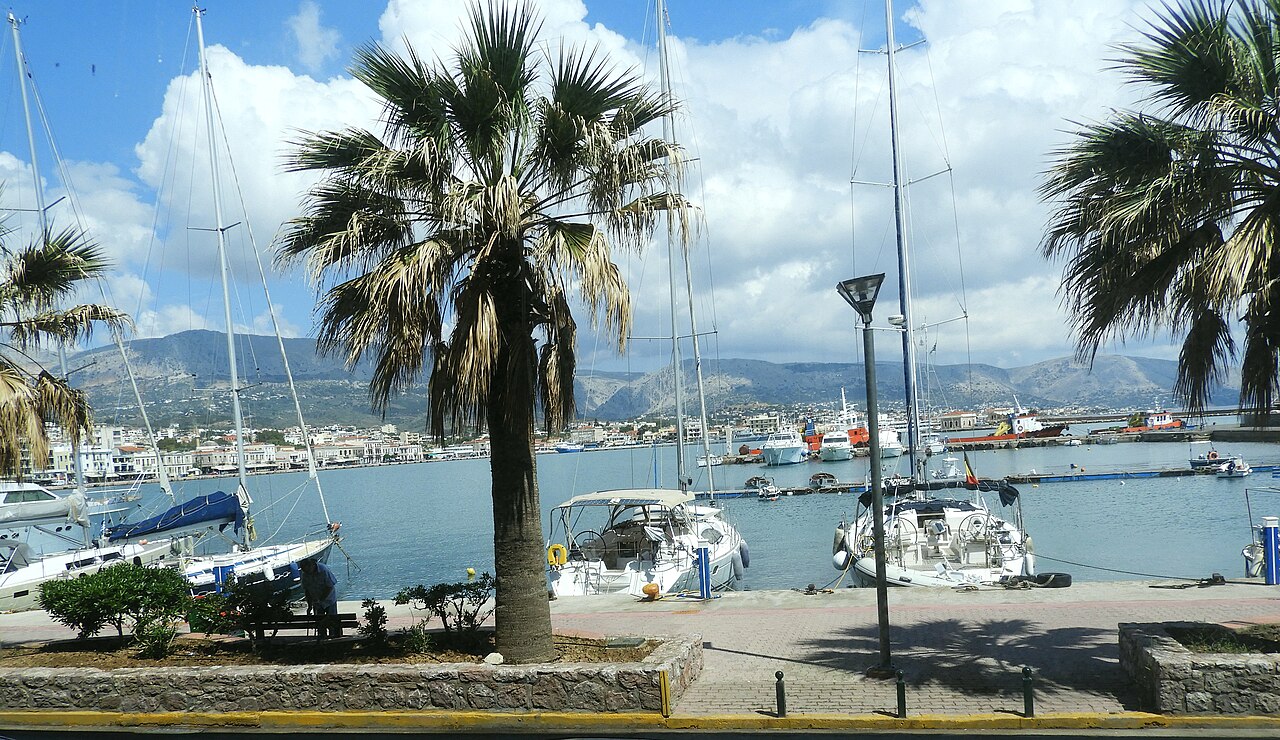
Chios Town is a working Greek city rather than a resort, and that is the point of it. About 29,000 people live in the capital of Chios, which makes it one of the larger island towns in the Aegean, and its harbour handles ferries, fishing boats and freight instead of catamaran day-trippers. Concrete apartment blocks stand along the waterfront, and behind them lies a Genoese fortress with an Ottoman quarter inside it, a covered market, a library holding 135,000 volumes and a garden built around the monument to a revolutionary admiral. Plan the whole trip with Greece Tours.
This guide covers Chios Town in full: the Kastro and its Turkish neighbourhood, the four museums worth entering, the walk that joins them, how long the town needs, where to park, what a day costs, and how the capital compares with Karfas as a base. Read it beside the guide to the best things to do in Chios and the full Chios travel guide.
What is Chios Town like?
Chios Town, known locally as Chora, is the island’s capital, main port and largest settlement, with about 29,000 residents. It is a working commercial town with a Genoese castle quarter, a covered market, four museums and a long café-lined waterfront.
First impressions divide visitors. The harbour front is backed by plain mid-century blocks rather than whitewashed houses, because the earthquake of the nineteenth century and the town’s commercial life left little of the older fabric standing on the shore. Travellers arriving with a Cycladic picture in mind adjust within an hour, once they walk one street inland.
Behind that frontage the town holds its substance. The Kastro rises to the north of the port, a fortress enclosing a lived-in quarter of narrow lanes. South of it the commercial centre runs on Aplotarias street and the covered market, where the island’s cheese, figs, almonds and mastiha are sold to residents rather than to tourists. The Municipal Garden sits at the centre of it all.
The town’s rhythm is Greek rather than seasonal. Shops open early, close through the afternoon and reopen in the evening, and the waterfront fills after eight as families take the promenade. Across the strait the lights of the Turkish coast are clearly visible, a reminder of how far east Chios sits and how much that position shaped its history.
What is the Kastro, the castle of Chios?
The Kastro is the fortified quarter north of the harbour, built in the Byzantine period and rebuilt by the Genoese who ruled Chios from the fourteenth century. Its walls enclose a residential district of lanes, an Ottoman hamam, a cemetery and the Giustiniani Palace.
The castle is not a monument you tour and leave. People live inside it, and its interior is an open-air quarter of narrow, labyrinthine streets, arched passages and stone houses with wrought-iron balconies and shuttered windows. Ottoman drinking fountains carry carved inscriptions, and the district was long known as the Turkish neighbourhood after the community that occupied it.
Three set-piece sights sit within the walls. The Giustiniani Palace, named for the Genoese family that governed the island, houses Byzantine frescoes and wall paintings in a small exhibition. The Ottoman hamam at the rear of the castle was restored and opened to visitors, and it closes on Tuesdays. The Turkish cemetery holds the tomb of Kara Ali, the Ottoman admiral killed when Konstantinos Kanaris blew up his flagship.
Entry to the quarter itself is free and unrestricted at any hour, which makes an early morning or an evening walk through the lanes one of the quieter pleasures of the town. The small museum inside the castle charges a modest fee and displays finds from the Byzantine, Genoese and Ottoman periods together, which is the clearest summary of the island’s layered rule.
Which museums does Chios Town have?
Chios Town holds the Byzantine Museum in the former Metzitie mosque, the Archaeological Museum, the Filippos Argentis Folklore Museum above the Koraes Library, and a maritime collection. Each is small, and the four together fill half a day.
The Byzantine Museum occupies the Metzitie mosque on Vounaki square, the last standing mosque in the town, and its courtyard holds Ottoman and Genoese gravestones and marble carvings. Inside are icons, frescoes and sculpture from the early Christian period onward, and the building itself is as much the exhibit as the contents.
The Archaeological Museum stands south of the centre and covers the island from the Neolithic through the Roman period, with finds from Emporios, the Kampos plain and the sanctuary sites. The Filippos Argentis Museum, housed above the Koraes Library, shows the costumes, textiles and household objects of Chios along with portraits of the island’s merchant families.
The Koraes Library beneath it is the town’s quiet surprise. Founded around the scholar Adamantios Korais and holding roughly 135,000 volumes, it ranks among the oldest and largest libraries in Greece, and its reading rooms and rare collections are open to visitors. The Maritime Museum near the waterfront records the shipping tradition that made the island’s fortune, in the same manner as the collection on nearby Oinousses.
What walking route joins the sights of Chios Town?
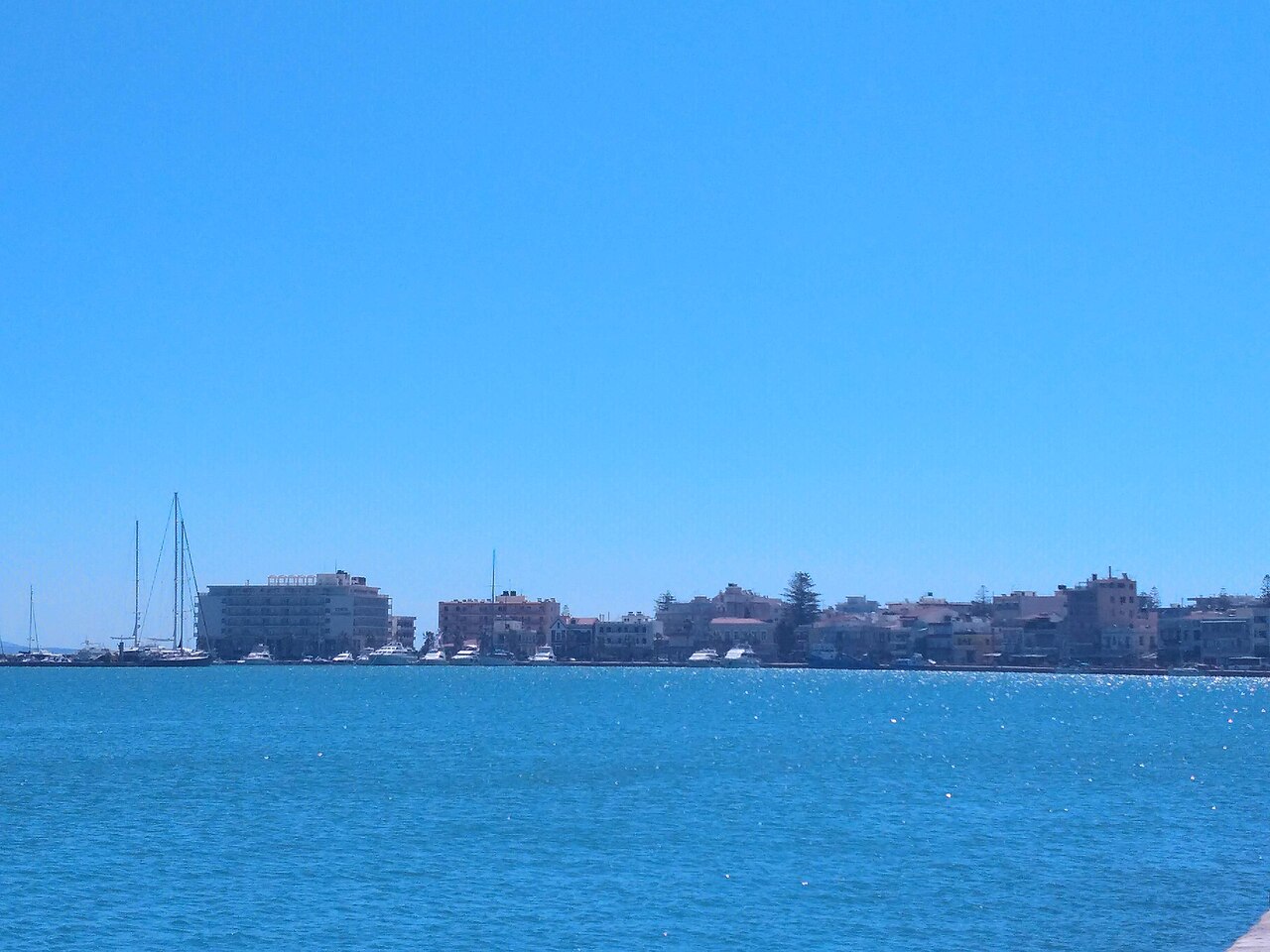
A single circuit of about two hours covers Chios Town: start at the harbour, walk north into the Kastro, return south through Vounaki square to the Byzantine Museum, continue to the covered market and Aplotarias street, then finish at the Municipal Garden.
Begin on the waterfront, where the ferries berth and the cafés start serving from early morning. Walk north along the quay to the castle gate, cross the moat and enter the Kastro. Give the quarter forty minutes: the lanes, the hamam, the Giustiniani Palace and the cemetery sit within a few hundred metres of one another, and the walls give views back over the harbour.
Leaving the castle, head south into Vounaki square, the town’s central open space, where the Metzitie mosque and its Byzantine Museum stand among the plane trees and cafés. From there the shopping streets run inland. Aplotarias is the main commercial artery, and the covered market opens off it, selling mastiha, cheese, figs, almonds, honey and spoon sweets under one roof.
Finish at the Municipal Garden, known as the Kipos, a shaded square built around the monument to Konstantinos Kanaris, the fireship captain from nearby Psara who destroyed the Ottoman flagship in reprisal for the massacre of Chios. The garden is where the town takes its evening pause, and the walk from there back to the waterfront takes five minutes.
How long do you need in Chios Town?
Half a day covers the Kastro, one museum, the market and the waterfront. A full day adds the remaining museums, the Kampos estates and an evening on the promenade. As a base for touring the island, the town works for a stay of three to seven nights.
The compact centre is the reason a half day suffices for the essentials. Everything within the walking circuit sits inside a square kilometre, and the museums are small enough to see properly in thirty to forty-five minutes each. Travellers passing through between ferries fit the castle and the market into a three-hour gap without hurrying.
A full day changes the balance. It allows all four museums, a long lunch, the drive or short bus ride south into the Kampos plain to see the walled citrus estates, and a return for the evening promenade. That is the version most visitors settle on, because the town’s evening is a distinct experience from its daytime.
As a base the calculation is different again. Chios is large, and the capital sits roughly midway along the east coast, which puts the mastic villages of the south, the mountain monastery of Nea Moni and the northern beaches all within about an hour’s drive. The guide on where to stay in Chios weighs that against the alternatives.
What is the history of Chios Town?
Chios Town was fortified in the Byzantine period, rebuilt and ruled by Genoa from 1346, taken by the Ottomans in 1566, devastated in the massacre of 1822 and again by the earthquake of 1881. Each layer is still legible in the streets.
Genoa shaped the town that visitors walk today. The Maona, a chartered company of Genoese merchants, held Chios for over two centuries and ran it as a commercial concession built on one crop, mastic. They strengthened the castle, installed the Giustiniani family as governors, and built the walled estates of the Kampos plain to the south, which is why the architecture of the island reads Italian in places rather than Aegean.
Ottoman rule followed in 1566 and lasted, with interruptions, into the twentieth century. Chios kept privileges under the sultans because mastic was a court monopoly, and the island grew rich and comparatively free. The mosque on Vounaki square, the hamam in the castle, the marble fountains and the Turkish quarter within the walls all date from this long period of prosperity.
The two catastrophes are equally present. In 1822 an Ottoman reprisal for the island’s part in the Greek revolution killed or enslaved the greater part of the population, an event Delacroix painted and Europe never forgot, and which Kanaris avenged by burning the flagship. The earthquake of 1881 then destroyed much of what stood. The plain waterfront blocks of today are the consequence of both, and the survivals are what the castle and Kampos preserve.
What is the Kampos plain and how do you visit it?
Kampos is the walled estate plain immediately south of Chios Town, running towards the airport. Genoese and Greek merchant families built mansions there among orchards of mandarin, orange and lemon, watered by wells and irrigation wheels, and several open as guesthouses or museums.
The plain reads as a landscape of walls. High enclosures of ochre-red stone line the lanes, and behind each stands a mansion with an arched gateway, a courtyard, a cistern and a garden of citrus trees. The system was built for a wealthy landowning class over several centuries, and it survives as one of the more unusual historic landscapes in Greece.
Visiting means choosing between three approaches. Walking or cycling the lanes costs nothing and gives the atmosphere, particularly in spring when the citrus is in flower and the scent carries over the walls. Staying in one of the restored estates turns the plain into a base. The Citrus Museum, set in a working estate, explains the growing, packing and export trade that shipped Kampos mandarins across the Mediterranean.
Kampos sits four to six kilometres from the centre, which makes it a short drive, a bus ride towards Karfas or a flat cycle. The lanes are narrow and walled on both sides with limited passing space, so a small car is easier than a large one. Combining an hour in the plain with an afternoon at Karfas beach is the standard way to use it.
Where do you eat and drink in Chios Town?
Chios Town eats along the harbour front for the view, and one street inland for the value. Ouzeri and tsipouradika behind the market serve small plates with souma and ouzo, and the covered market sells mastiha, cheese, figs and almonds to take away.
The waterfront restaurants trade on their position, and they suit a long dinner watching the ferries come in. The better cooking sits in the lanes behind, where the ouzeri fill from nine in the evening with a local crowd and each round of drinks brings another plate. Fish is landed at the quay and priced by the kilo, so agreeing the weight before it goes on the grill keeps the bill predictable.
The town is also the best place on the island to eat the local specialities. Mastelo, the sheep’s cheese from Kardamyla, arrives grilled and hot. Kritamo, the pickled rock samphire gathered from the coast, opens the meal. Souma, the island’s clear grape spirit, is poured cold alongside, and mastiha ice cream or a spoon of submarino closes it.
For provisions and gifts, the covered market and the shops around Aplotarias hold everything in one street: graded mastiha tears from the growers’ cooperative, vacuum-packed cheese, dried figs, almonds, thyme honey and citrus spoon sweets from the Kampos estates. The full picture of the island’s table sits in the guide to Chios food.
What is worth seeing around Chios Town?
Around Chios Town lie the walled citrus estates of Kampos to the south, the beach resort of Karfas beyond them, and Vrontados to the north with Daskalopetra, the rock where Homer is said to have taught, and the Easter rocket war between two churches.
Kampos begins about four kilometres south of the centre and runs to the airport. It is a plain of high stone walls behind which Genoese and Greek merchant families built mansions among orchards of mandarin, orange and lemon, watered by wells and irrigation wheels. Some estates open as guesthouses and one as a citrus museum, and the lanes between the walls are the quietest cycling on the island.
North of the town, Vrontados holds Daskalopetra, a carved rock platform above the sea long identified by tradition as the place where Homer taught his pupils. The archaeology points to a sanctuary of Cybele rather than a classroom, and the setting above the water still earns the walk. Vrontados is also where the rocket war takes place at Easter, when two parish churches fire thousands of homemade rockets at each other’s bell towers.
South past Kampos lies Karfas, the island’s main sandy beach and its concentration of resort hotels, about seven kilometres from the centre and minutes from the airport. Buses run between the two through the summer day. The wider coast, from the black pebbles of Mavra Volia to the northern coves, appears in the guide to the best beaches in Chios.
How do you reach Chios Town and get around it?
Ferries from Piraeus, Lesbos and Çeşme berth on the town waterfront, and Chios Island National Airport lies four kilometres south. The centre is walkable end to end, and island buses depart from two stations beside the harbour.
Arrival puts you in the middle of everything. The ferry quay sits on the town’s own waterfront, within walking distance of hotels, the castle and the market, and the overnight boat from Piraeus takes roughly seven to eight hours. Flights from Athens and Thessaloniki land at the airport, coded JKH, a ten-minute drive or a short taxi ride from the centre.
Within the town nothing needs wheels. The circuit from the harbour through the castle to the market and the garden is a walk of about two kilometres in total, on flat ground. Taxis wait on the waterfront and at the ferry berth, and fares within the town and out to Karfas or the airport are short and inexpensive.
Two bus stations serve the island from beside the harbour, one for the town and its suburbs and one for the villages, with routes to Pyrgi, Mesta, Kardamyla and Volissos. Services are built around residents, so afternoon and weekend departures thin out. Anyone planning to see the island properly hires a car, as the guides to car rental in Chios and how to get to Chios explain.
Where do you park in Chios Town?
Parking in Chios Town is marked and controlled along the waterfront and in the central streets, and free on the edges of the centre. The Kastro is entered on foot, so drivers leave the car outside the walls and walk in through the gate.
The harbour front fills through the day and the evening, and circling it wastes more time than walking. Leaving the car on the northern or southern approaches to the centre and walking five to ten minutes is the reliable method, and it costs nothing. Blue-marked bays in the centre are time-limited, and yellow kerbs are reserved.
The castle quarter defeats cars by design. Its lanes were laid out for defence and for foot traffic, and the gate is the natural place to stop. Streets in the commercial centre around Aplotarias are narrow, one-way and busy with deliveries in the morning, which is another argument for parking at the edge and walking in.
Rental cars are collected at the airport or on the waterfront and delivered to hotels in the town and at Karfas without charge by most firms. Fuel stations cluster on the road south towards the airport, and they close in the evening, so filling the tank before an inland drive is standard practice on Chios.
How do you use Chios Town as a base for the island?
Chios Town sits roughly midway along the east coast, which puts the mastic villages, Nea Moni, Anavatos and the northern beaches within about an hour’s drive. Three day loops radiate from it: the south, the mountains and the north.
The geography is what makes the capital work as a base. Chios runs about 50 kilometres from the northern mountains to the southern mastic belt, and the town sits near the middle of that line with the island’s only airport and its main port on the doorstep. No corner of the island is beyond an hour and a half, and most are well within an hour.
The southern loop is the first day: Pyrgi with its carved xysta façades, Olympi and its cave, Mesta for lunch inside the medieval walls, and the black volcanic pebbles of Mavra Volia at Emporios on the way back. The mountain day is shorter and steeper, climbing west to Nea Moni and continuing to the abandoned cliff village of Anavatos before dropping to Lithi on the west coast.
The northern day runs up the coast through Langada and Kardamyla to the springs and pebbles at Nagos, or crosses the island’s spine to Volissos and the long west-coast sands at Managros and Limnia. Adding the sea crossings to Oinousses, Psara and Çeşme in Turkey gives a full week without repeating a day, as the guide to day trips from Chios sets out.
What can families do in Chios Town?
Families in Chios Town use the waterfront promenade, the Municipal Garden, the castle lanes and the beach at Karfas seven kilometres south. The museums are small enough to hold children’s attention, and the flat centre suits pushchairs.
The town is easy with children because it is compact and flat. The harbour front is a continuous car-free walk in the evening, the Municipal Garden gives shade and space around the Kanaris monument, and the whole sightseeing circuit is short enough that no day involves a long march. Cafés and bakeries sit at every point on the route.
The castle earns its place with children for the same reason it does with adults: it is a quarter to wander rather than an exhibit behind glass. The lanes, gates, walls and cemetery invite exploration, entry costs nothing, and the small museum inside takes twenty minutes. The Archaeological and Byzantine collections are compact enough to see before attention runs out.
Beach days come from the south. Karfas has the sandy, shallow, gently shelving bay that suits young swimmers, backed by tavernas and reachable by bus in the summer, and Megas Limnionas offers a smaller alternative closer in. Greek tavernas welcome children as a matter of course, and eating late on the waterfront with a family is entirely normal on Chios.
What practical services does Chios Town have?
Chios Town holds the island’s hospital, banks and ATMs, pharmacies, post office, port authority and supermarkets, along with both bus stations and the taxi rank. It is the only place on Chios where all of these sit together.
The capital functions as the island’s administrative centre, so anything that needs an office happens here. Banks and cash machines cluster along the waterfront and Aplotarias, and they are markedly scarcer elsewhere on the island, with only Pyrgi, Mesta, Kardamyla and Volissos carrying reliable machines. Drawing cash before heading into the villages is standard practice.
Medical and official services follow the same pattern. The island’s hospital stands in the town, pharmacies rotate an on-duty roster posted in their windows, and the port authority sits on the quay for ferry questions. The post office, mobile phone shops and the larger supermarkets are all within the central grid.
The town also carries the island’s institutions, which is part of why it feels like a city rather than a resort. A department of the University of the Aegean is based here, giving the centre a student population through the academic year, and the town holds the courts, the schools and the shipping offices that serve a merchant island. That mix keeps the streets busy outside the tourist season.
Two practical habits help. Shops and offices keep traditional hours, closing through the afternoon and reopening in the evening on most days, so errands belong in the morning. Fuel stations concentrate on the road south towards the airport and close in the evening, which matters to anyone driving inland the following day, as the guide to car rental in Chios explains.
What does a day in Chios Town cost?
A day in Chios Town costs modestly. Museum entry runs a few euros each, the castle quarter is free, a taverna main course is about 9 to 16 euros, and a coffee on the waterfront costs 3 to 4 euros.
Chios prices for residents rather than for cruise passengers, and the difference from Santorini or Mykonos shows on every bill. Entry to the Byzantine, Archaeological and Argenti museums is charged separately and each stays in single figures, with reduced rates for students and seniors and free days at points in the year. Walking the Kastro costs nothing at all.
Eating follows the same pattern. Three shared plates, bread, a salad and a carafe of wine feed two people for a modest sum in a back-street ouzeri, while the harbour-front restaurants add a premium for the view. Fresh fish sold by the kilo is the one item that moves the total sharply, and the price per kilo is stated before the fish is weighed.
Practical costs stay low. Buses within the town and out to Karfas cost a couple of euros, taxis to the airport are short, and cash remains useful in the market and the smaller shops even though cards are accepted across the centre. Museums close on set days through the week, so checking opening hours the evening before avoids a wasted morning.
Where do you shop in Chios Town?
Chios Town shops along Aplotarias street and the lanes around it, with the covered market at its heart. The growers’ cooperative shops sell graded mastiha, and dairy shops, bakeries and delicatessens carry cheese, figs, almonds, honey and spoon sweets.
Aplotarias is the commercial spine, running inland from the waterfront through the centre. It carries the everyday shops of a working town, clothing, shoes, jewellers, pharmacies, and the older family businesses that have held their frontages for decades. The side lanes hold the specialists, and the covered market opens off it with produce, cheese, cured fish and spices under one roof.
Mastiha is bought from the growers’ cooperative shops, which sell tears graded by size and quality at fixed prices, along with chewing gum, liqueur, toothpaste, cosmetics and confectionery. Buying there rather than from a general souvenir shelf keeps both the price and the provenance clear, and the same organisation runs outlets in Pyrgi and Mesta.
Two habits help. Shops keep traditional hours, opening early, closing through the afternoon and reopening in the evening on most days, so a mid-afternoon shopping trip finds shutters down. Cash is still useful in the market and the smaller shops even though cards are accepted across the centre. The full list of what is worth carrying home appears in the guide to Chios food.
Which beaches are closest to Chios Town?
The nearest beaches to Chios Town are the small town beach at Bella Vista, Vrontados to the north, and Megas Limnionas and Karfas to the south. Karfas, seven kilometres away, is the main sandy bay and the closest full beach.
The capital itself has little coast to swim from. Bella Vista, on the southern edge of the town, gives a short strip of shingle within walking distance, and it serves residents on a hot afternoon rather than holidaymakers. Anyone basing a beach holiday in the town treats it as a starting point and drives ten minutes.
South is where the swimming is. Megas Limnionas is a small bay with tavernas about five kilometres out, and Agia Fotia and Karfas follow, the latter a long curve of golden sand that shelves gently into shallow water. Karfas holds the island’s main concentration of beach hotels and is reachable by bus from the harbour through the summer day.
North of the town, Vrontados has pebble coves below Daskalopetra, and the coast continues towards Langada and its fishing tavernas. None of these matches the black volcanic pebbles of Mavra Volia in the far south or the empty sands of the west, and the full comparison sits in the guide to the best beaches in Chios.
What is Chios Town like in the evening?
Chios Town in the evening centres on the waterfront promenade and the bars around the harbour and Bounaki square. The pace is Greek rather than resort-driven: families walk the quay from eight, tavernas fill from nine, and bars run late at weekends.
The volta, the evening walk along the sea, is the town’s fixed ritual. Families, couples and groups of teenagers move along the harbour front between eight and ten, the cafés fill, and the tempo of the whole town shifts from commercial to social. Watching it from a waterfront table with a coffee or a beer costs the price of one drink.
Bars cluster on the waterfront and in the lanes behind it, with a younger crowd around the university and the streets off Bounaki square. The scene is modest by the standards of Mykonos or Ios and lively by the standards of the rest of Chios: music bars rather than clubs, open late on Friday and Saturday, quieter mid-week and outside summer.
Two other evening options are worth knowing. Cinema screenings run outdoors in summer in the Greek tradition, and cultural events fill the Municipal Garden and the castle in the warm months. In the villages the evening is entirely different, ending in a taverna on a square rather than a bar, which is one reason visitors base themselves in the town and drive out for the day.
Where do you stay in Chios Town?
Chios Town offers harbour hotels, small boutique properties in the centre, guesthouses in the Kampos estates to the south and studios on its edges. Rates run roughly 40 to 70 euros for simple rooms and 70 to 130 euros for mid-range hotels.
The harbour hotels are the practical choice. They stand within a few minutes of the ferry berth, the bus stations, the castle and the restaurants, which suits arrivals by boat and anyone touring the island by car each day. Rooms at the front carry a view of the port and the Turkish coast, and the noise of the quay with it.
The Kampos alternative changes the trip. Restored merchant estates a few kilometres south rent rooms within their walled citrus gardens, and staying there gives courtyards, cisterns and orchards in place of a harbour view, at the cost of needing a car for everything. It suits couples and anyone drawn to the island’s Genoese history.
Prices sit below the Cycladic norm across all categories, because Chios draws far fewer package visitors. July and August fill quickly as Greek holidaymakers and the island’s diaspora return, and booking ahead matters most in those weeks. The comparison with Karfas and the villages is set out in the guide on where to stay in Chios.
What festivals and events take place in and around Chios Town?
The best-known event near Chios Town is the rocket war at Vrontados on Easter Saturday night, when two parish churches fire thousands of homemade rockets at each other’s bell towers. Carnival, saints’ days and summer cultural festivals fill the rest of the calendar.
The Rouketopolemos is unlike anything else in Greece. In Vrontados, four kilometres north of the capital, the congregations of Agios Markos and Panagia Erithiani spend the year building rockets and spend Easter Saturday night firing them across the valley at each other’s bell tower, while the Resurrection service continues inside. Spectators watch from arranged vantage points, and the churches board up their windows in advance.
Easter more widely is the island’s largest festival, and the town empties into the villages for it. Carnival in the weeks before Lent brings parades and costume events, and saints’ days through the summer produce village panigyria with food, wine and music that outsiders are welcome to join.
Summer brings a cultural programme to the town itself: concerts and theatre in the Municipal Garden and the castle, exhibitions in the museums, and events tied to the mastic harvest in the southern villages in late summer. Anyone timing a visit around one of these books accommodation early, as Easter and August both fill the island.
Who is Chios Town best for?
Chios Town suits travellers who want a working Greek town rather than a resort: those interested in history and museums, drivers touring the island, food travellers, and anyone arriving by ferry. It suits beach-first holidaymakers less well.
History travellers get the most from it. The layers of Byzantine, Genoese and Ottoman rule sit within one walkable quarter, the four museums cover archaeology, Byzantine art, folklore and the sea, and the Koraes Library holds one of the oldest collections in Greece. Adding Nea Moni and Anavatos in the hills turns that into several days of substance.
Drivers and independent travellers gain from the position. With a hire car collected at the airport or the quay, the town puts every region of the island inside an hour, which no village base manages. Food travellers gain from the market, the cooperative shops and the concentration of ouzeri, and evening arrivals gain from having the ferry berth in the middle of town.
The town suits beach holidays least. Its own shoreline is minimal, and anyone whose priority is sand and a sun lounger is better placed at Karfas seven kilometres south, driving in for dinner and sightseeing. Travellers seeking a picture-postcard island of white cubes and blue domes are looking at the wrong island altogether, and the mastic villages are where Chios answers that instinct instead.
What do visitors get wrong about Chios Town?
Visitors misjudge Chios Town by the harbour front, skip the castle quarter, underestimate afternoon closing hours, and treat the island as small. The town’s substance sits one street inland, and the island demands a car.
The first mistake is judging the town from the quay. The waterfront blocks are the product of the 1881 earthquake and a working commercial port, and travellers who take one look and drive to Karfas miss the Kastro, the market, the museums and the garden that lie a few minutes behind them. Walking inland for ten minutes changes the verdict entirely.
The second is timing. Shops, offices and museums keep traditional hours, closing through the afternoon, and several museums shut on set days of the week while the castle hamam closes on Tuesdays. Arriving at three in the afternoon expecting a full programme leads to shuttered doors, and building sightseeing into the morning solves it.
The third is scale. Chios is one of the larger Greek islands, and the mastic villages, the mountain monastery and the northern beaches are genuinely far apart on winding roads. Visitors who plan to see the island on buses in three days see a fraction of it. Hiring a car and allowing separate days for the south, the mountains and the north is what the geography asks for, as the full Chios travel guide sets out.
Frequently Asked Questions
Is Chios Town worth visiting?
Yes, provided you arrive expecting a working Greek town rather than a picture-postcard island capital. The waterfront is backed by plain modern blocks, and the substance sits one street inland: the Genoese Kastro with its lived-in Ottoman quarter, hamam, Giustiniani Palace and Turkish cemetery; the Byzantine Museum inside the former Metzitie mosque; the Archaeological and Argenti museums; the Koraes Library with its 135,000 volumes; and a covered market selling mastiha, cheese and figs to residents. The town also has the island’s widest choice of restaurants and its liveliest evening promenade, and it sits midway along the east coast, which makes it the most practical base for touring Chios.
What is there to do in Chios Town in one day?
A single day covers the town comfortably. Start on the waterfront, walk north into the Kastro and give it forty minutes for the lanes, the Ottoman hamam, the Giustiniani Palace and the cemetery. Come south to Vounaki square for the Byzantine Museum in the old mosque, then continue inland along Aplotarias to the covered market. Add the Archaeological Museum or the Argenti collection above the Koraes Library in the afternoon, and finish in the Municipal Garden by the Kanaris monument. Drive or take the bus four kilometres south to the walled citrus estates of Kampos before returning for dinner and the evening promenade on the harbour front.
Can you walk into the castle of Chios, and does it cost anything?
Yes. The Kastro is a residential quarter rather than a fenced monument, so its gate and lanes are open at any hour and walking through them is free. The small museum inside the castle charges a modest entrance fee and shows finds from the Byzantine, Genoese and Ottoman periods together. The restored Ottoman hamam at the rear of the castle opens to visitors and closes on Tuesdays. Because the lanes are narrow and laid out for foot traffic, drivers park outside the walls and enter on foot, and early morning or evening is the quietest time to walk the quarter.
Is Chios Town or Karfas the better base?
Chios Town suits visitors who want a real town: the widest choice of restaurants, the museums, the market, the shortest transfers from the port, and an evening promenade, at the cost of having only a small town beach. Karfas, seven kilometres south and minutes from the airport, is the better base for a beach holiday, with a long sandy bay that shelves gently and the island’s main concentration of resort hotels, though it is busier and less authentic in high summer. Buses run between the two through the summer day, and many visitors stay at Karfas and drive the ten minutes into the town for dinner.
When is the best time to visit Chios Town?
May, June, September and October give the best conditions for the town itself. Temperatures sit in a range that makes walking the castle quarter, the market and the museums comfortable, the light is good, hotel rates are lower than in high summer, and the restaurants and museums are open on full schedules. July and August bring the heat that makes midday sightseeing hard work, along with the return of Greek holidaymakers and the island’s diaspora, which fills accommodation and lifts prices, though it also brings the town’s evening life to its liveliest. Easter is the other peak, and it is the most rewarding time to be near the capital because of the rocket war at Vrontados on the Saturday night. Winter is quiet but not closed: Chios Town is a working city of 29,000 people, so its restaurants, ouzeri, shops and museums keep going year-round even when the beach villages shut, which makes the capital the one part of the island that rewards an off-season visit.
What is the Kampos plain near Chios Town?
Kampos is the plain of walled estates that begins about four kilometres south of Chios Town and runs towards the airport. Genoese and Greek merchant families built mansions there from the fourteenth century onward, each set behind a high ochre-red wall with an arched gateway, a courtyard, a stone cistern and an orchard of mandarin, orange and lemon trees watered by wells and irrigation wheels. The lanes between the walls are flat and quiet, which makes them the best walking and cycling on this part of the island, and spring brings the scent of citrus blossom over the walls. Several estates now take guests as guesthouses, and one working estate houses the Citrus Museum, which records the growing, packing and export trade that shipped Kampos mandarins across the Mediterranean.
How far is Chios Town from the airport and the mastic villages?
Chios Island National Airport lies about four kilometres south of the town centre, roughly a ten-minute drive or a short taxi ride, which makes the capital the most convenient base for anyone flying in from Athens or Thessaloniki. The medieval mastic villages of the south, Pyrgi, Olympi and Mesta, sit between about 25 and 35 kilometres away, or forty to fifty minutes by car on good road. Nea Moni monastery is a shorter but slower drive of roughly half an hour into the mountains west of the town, and the northern beaches around Nagos are about an hour up the coast.