
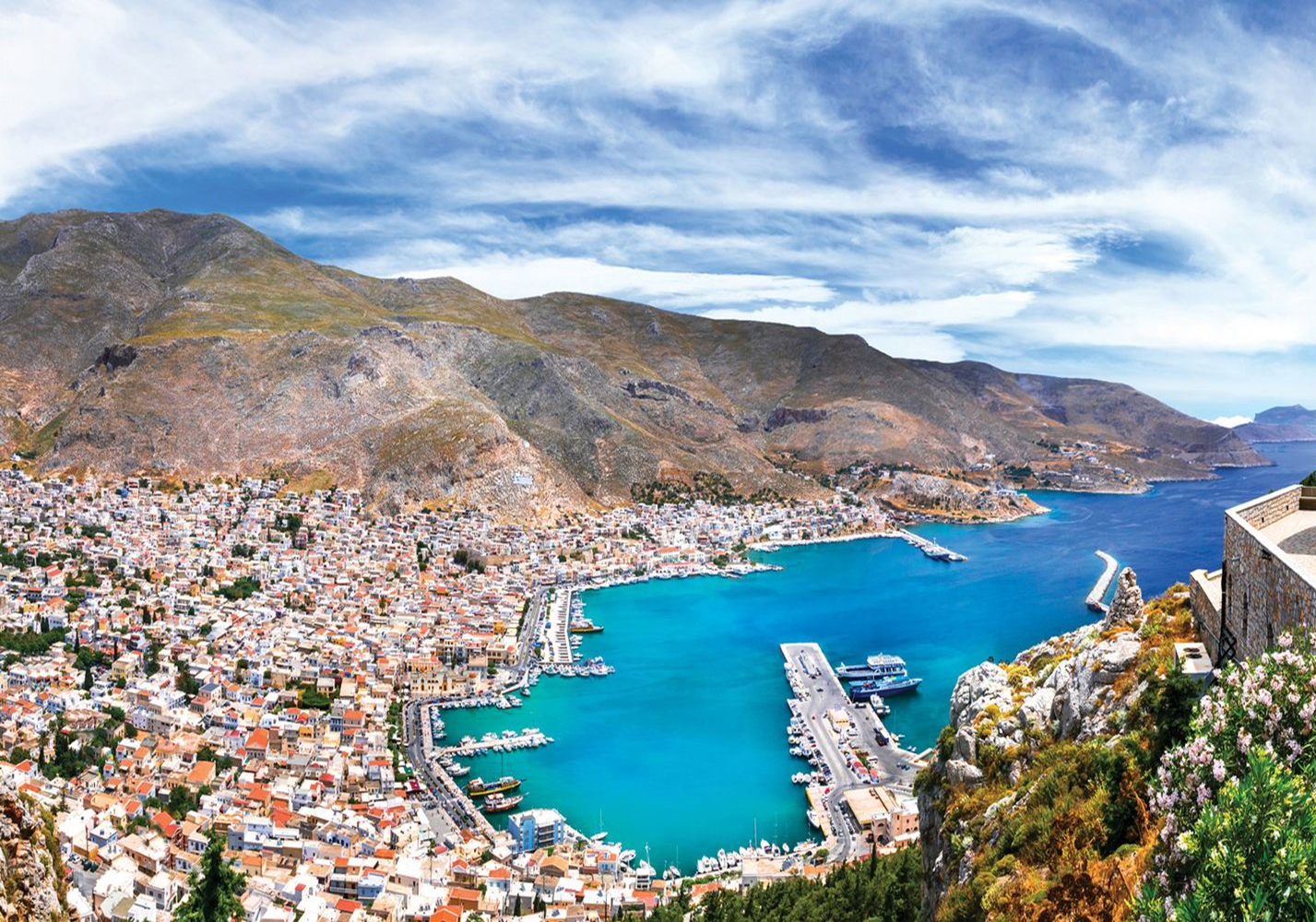
Kalymnos travel guide: expert, insider-tested tips for planning climbs, dives, beaches, ferries, transport, and sample itineraries—when to visit, where to stay, and local must-dos.
Kalymnos Travel Guide: Explore Kalymnos Island, Greece
The tours below cruise to Kalymnos from Kos or explore its coast by private motorboat with a skipper.
Kalymnos is one of those Greek islands that surprises you the longer you stay: raw limestone cliffs, a climbing culture that draws people from around the world, tucked-away coves with impossibly clear water, and villages where sponge-diving stories still shape daily life.
In this Kalymnos travel guide, we’ll walk you through everything you need to know to plan an active, relaxed, or romantic trip, how to get here, where to stay, the best things to do in Kalymnos, Greece, sample itineraries, and practical tips from locals. We live and work with Greek island experts at MyGreeceTours, and we’ve pulled together insider-tested recommendations so you can skip the guesswork and make the most of your time on this slightly off-the-beaten-track Aegean gem.
Quick Snapshot: What Makes Kalymnos Special
Kalymnos sits in the southeastern Aegean, part of the Dodecanese island chain. At first glance, it’s rugged, steep, terraced slopes and a coastline cut by plunging limestone walls, but that ruggedness is exactly its charm. A few things that make Kalymnos stand out:
- Rock-climbing capital: With thousands of bolted routes on high-quality limestone, Kalymnos is a global climbing destination.
- Sponge-diving heritage: Historically known for sponge diving, the island’s maritime history and museums reflect this unique past.
- Authentic Greek island life: Unlike busier hotspots, Kalymnos retains working towns, family-run tavernas, and a slower pace.
- Diverse experiences: From family-friendly pebble beaches to quiet coves, diving sites, scenic hikes, and intimate sunset viewpoints, Kalymnos suits adventurers and relaxation seekers alike.
Quick travel note on keywords: If you’re searching for “Kalymnos travel guide” or “things to do in Kalymnos, Greece,” this guide is focused on practical local insight, what to prioritize, when to visit, and how to experience both popular and hidden sides of the island.
Where is Kalymnos, and how is the island laid out?
Kalymnos lies in the Dodecanese, 12 km north of Kos and less than 2 km south of Leros. The island covers 109 square kilometres, rises to 760 metres at Profitis Ilias, and had 17,752 residents at the 2021 census.
A chain of islets links Kalymnos to Leros in the north. The Turkish coast of Asia Minor lies 14 miles to the east, and Rhodes is two to five hours away by sea. Visitors based on Kos can cross the 12 km strait on a day trip to Kalymnos from Kos. Among the Dodecanese, only Rhodes and Kos have more residents.
The island is 21 km long and 13 km across at its widest point. Three mountain chains run from west-northwest to east-southeast, and a fourth follows a peninsula in the northwest. Kyra Psili reaches 700 metres in the southeast. The soil is mainly limestone, the rock that supports rock climbing on Kalymnos. A bank of volcanic tuff, left by an ancient volcano, sits at Vigles between Myrties and Kantouni. Only 18% of the land can be farmed.
Pothia, the capital, spreads around a bay on the south coast and had 13,529 residents in 2021. The two fertile valleys of Kalymnos are Pothia and Vathys, where olives, oranges and vines grow. At the 2011 census, Panormos counted 2,069 residents.
- Vathys: an east-coast village 11 km from Pothia, set in a green valley of mandarin and orange trees that ends in a deep bay at the small harbour of Rina.
- Telendos: an islet that split from Kalymnos after an earthquake in 554; a channel about 800 metres wide separates them, and 66 people lived there in 2021.
- Pserimos: an inhabited island of 11 square kilometres between Kalymnos and Kos, with 84 residents in 2021 and a daily ferry from Pothia.
- Kalolimnos and Plati: two small inhabited islets inside the Municipality of Kalymnos, whose total land area is 134.5 square kilometres.
Telendos rises to 460 metres on its plateau, called Rachi. The islet is a Natura 2000 special protection area for Eleonora’s falcon and Audouin’s gull.
What is the history of Kalymnos?
People have lived on Kalymnos since the Neolithic era, and Carians and Dorians settled it in antiquity. The Knights of Rhodes took the island in 1310 and the Ottomans in 1522. Italy ruled from 1912, and union with Greece became official on 7 March 1948.
The oldest known inhabitants were the Carians, whose ruins stand at the ancient town of Kastella near Stimenia. Dorian settlers arrived between 1150 and 800 BC. Homer’s Iliad places the island among the Kalydnai islands, which sent 30 ships to Troy together with Nisyros, Karpathos, Kasos and Kos. According to Diodorus, crews from four wrecked ships of Agamemnon settled on a plateau and named their town Argos.
Kalymnos broke free from Persian rule in 477 BC and joined the Athenian alliance, paying tribute to its treasury on Delos. In 357 BC the island fell under Mausolus, king of Halicarnassus. The British archaeologist Charles Newton excavated its Hellenistic Temple of Apollo in the 19th century.
- Byzantine era: Kalymnos belonged to the theme of Samos, and in the 13th century Venice used it as a naval base.
- Knights of Rhodes: the Knights took control in 1310 and rebuilt and enlarged the island’s castle, which stayed the main settlement until the early 18th century.
- Ottoman rule: after attacks in 1457 and 1460, the Ottomans conquered Kalymnos in 1522, and no Turkish settlers moved to the island.
- Pothia: the harbour town took shape around 1850, when pirate raids declined and families moved down to the sea.
Sailors of the Italian Regia Marina occupied Kalymnos in 1912, during the Italo-Turkish War. The Italian authorities also tried to split the Dodecanese church from the Ecumenical Patriarchate. That plan sparked a revolt on Kalymnos in 1935. On 7 April, islanders attacked the Italians with stones, and the Italians shot the young shepherd Manolis Kazonis in the forehead.
German troops took the island on 5 October 1943 and held it until 1945. The British handed the Dodecanese to Greece on 31 March 1947, and Pothia became the seat of the new Municipality of Kalymnos in 1948. Every year on 7 March, the islands mark their union with Greece.
How did sponge diving shape Kalymnos?
Sponge diving was the main source of income on Kalymnos and made the island known across the Mediterranean. Crews worked from Pserimos to North Africa, the scaphandro suit brought heavy losses after 1865, and emigrant divers helped build the Greek community of Tarpon Springs, Florida.
Early divers worked without equipment. A crew searched the seabed through a cylindrical box with a glass bottom. When a sponge showed up, a diver went over the side holding a skandalopetra, a 15 kg stone tied to the boat by a rope. He cut the sponge loose into a net bag. Divers reached about 30 metres and stayed down for up to five minutes.
Greek sponge divers adopted surface-supplied standard suits, called scaphandro, in 1865. Safe decompression methods were still unknown, so decompression sickness killed and injured divers at a high rate. One estimate puts the toll at around 10,000 Mediterranean divers in the first 50 years. In 1868, the Italian doctor Alphonse Gul recorded 30 divers at Kalymnos: two died and two were paralysed that year, with three divers sharing each suit.
- Mihanikos dance: men dance this syrtos in a line, and the dance depicts the crippling effects of decompression sickness.
- Sponge Week: an annual celebration one week after Easter honours the sponge as Kalymnian gold.
- Nautical Museum: founded in 1994, its four rooms display skandalopetra stones, diving suits, air pumps and sponge-processing tools.
- Museum of Sea Finds: a private museum built by the Valsamidis brothers, with the diving tools and suits used from 1872 onwards and about 2,000 photographs of sponge divers.
- St Nicholas Day: on 6 December, the capital carries the icon of St Nicholas, protector of sailors, in a procession, and the whole island takes a holiday.
In 1905, John Cocoris brought Greek divers to Tarpon Springs, Florida. The first came from Aegina and Hydra, but divers from Kalymnos, Symi and Halki soon outnumbered them. Tarpon Springs had the highest share of Greek Americans of any US city.
Families from Kalymnos also settled in Darwin and Melbourne in Australia, and in Gary, Indiana, and Campbell, Ohio. The population of Kalymnos fell from around 24,000 in 1925 to 16,500 in 2012. Kalymnian emigrants and their descendants form a large part of the bridge-painting trade in the USA, and researchers have linked this to the sponge-diving way of life. In the mid-1980s, a disease destroyed sponge beds across the eastern Mediterranean, and boats fishing for tuna and swordfish replaced the sponge fleet of Kalymnos.
Essential Practical Information
Below, we cover the basics that make trip-planning smoother: how to reach the island, weather rhythms, ideal trip length, and local transport options.
Getting To Kalymnos
Kalymnos doesn’t have a commercial airport. Most travelers arrive by ferry: there are regular connections from Kos (the fastest route), and seasonal ferries link Kalymnos with Piraeus (Athens), Rhodes, Leros, and other Dodecanese islands. From Kos Airport, you can catch a short taxi to Mastichari port (about 15–20 minutes) and hop a 20–40 minute ferry; many visitors combine flights to Kos with a ferry transfer to Kalymnos.
If you prefer fewer changes, there are occasional direct ferries from Piraeus during high season: check schedules well ahead and book popular summer crossings early. Private transfers and charter boats are also possible from Kos or nearby islands for faster, more flexible arrivals.
When To Visit And Weather Overview
The best time to visit depends on your priorities:
- May–June and September–October: Ideal for climbing, hiking, and beach days, warm weather, fewer crowds, and calm seas.
- July–August: Hot (mid-80s–90s°F / 30–35°C) and busy, perfect for beachgoers, but can be windy some afternoons.
- November–April: Off-season, quiet, reduced ferry schedules, and many businesses closed: winter storms can make crossings unpredictable.
Sea temperatures are pleasant from late May through October, and the famous Meltemi winds can pick up in midsummer, great for sailors, but a consideration for light-boat passengers.
How Many Days To Stay
- 2 days: Great for a quick feel, Pothia, a short hike, a beach, and a cliffside dinner at sunset.
- 4 days: A balanced stay, time for climbing or diving, a boat trip, a village visit, and a relaxed beach day.
- 7+ days: Ideal for combining climbing, diving, island hopping, and slow-paced village exploration, this gives you space to discover hidden coves and savor local life.
We recommend at least four days to truly appreciate Kalymnos without feeling rushed.
Getting Around The Island
Kalymnos is compact but hilly. Options include:
- Rental car or scooter: Best for flexibility, many scenic roadside viewpoints and remote beaches require wheels.
- Local buses: Affordable and cover main routes (Pothia–Mastichari–Mycali, etc.), but timetables are basic and less frequent outside peak season.
- Taxis: Readily available in main towns: book in advance for early-morning transfers.
- Boats: Water taxis and private charters are convenient for accessing secluded coves otherwise reachable only by sea.
We suggest renting a car or scooter for at least a couple of days, especially if you want to explore villages and climb-side trailheads.
Where To Stay: Best Areas And Accommodation Types
Kalymnos has accommodation to match different trip styles: practical town hotels, beachfront pensions, climbing hostels, and boutique hideaways.
Pothia And Emborios: Main Towns And Convenience
Pothia (also spelled Pothia) is the island’s lively capital and best base for first-time visitors. Here you’ll find the main port, shops, bakeries, museums (including the sponge museum), and a strip of waterfront tavernas. Emborios, a short ride away, offers a quieter seaside atmosphere with easy access to nearby beaches.
Benefits: central location, best transport links, dining options, and nightlife. Ideal if you want convenience and to base yourself for day trips.
Mastichari, Myrties, And Secluded Beachside Options
Mastichari sits near the ferry from Kos and is handy for arrivals and departures. It has a pleasant beach and family-friendly accommodations. Myrties (Mirties) is a quiet fishing village with small hotels and easy sea access, popular with divers and couples.
For seclusion, look for small pensions or villas near secluded coves on the east and south coasts. These give you privacy and immediate beach access but require a car or boat to reach.
Boutique Hotels, Guesthouses, And Climbing Hostels
Kalymnos caters to climbers: you’ll find climbing hostels and camps that offer route maps, wash-and-dry facilities, social spaces, and guide connections. Boutique hotels, often small family-run properties, prioritize local breakfasts and personalized service. Guesthouses are widespread and budget-friendly, ideal if you want to spend most days outside exploring.
Book early during popular climbing months (April–June, September) and in July–August if you prefer central waterfront rooms.
Top Things To Do On Kalymnos
Kalymnos packs a surprising variety of activities for different travel tastes. Below, we break down the island’s top experiences.
Rock Climbing: Routes, Seasons, And Gear Info
Kalymnos is famous for sport climbing: over 3,000 bolted routes, from single-pitch playgrounds to multi-pitch test pieces. Popular sectors include Arhi, Grande Grotta, and Sissy Bay. Routes range from gentle 4s to extreme 8s (French grades), so there’s something for intermediate climbers and experts alike.
Seasons: Spring (April–June) and autumn (September–October) are prime climbing months, with cool mornings and warm afternoons. Summer is hotter but still viable for early sessions; winter can be damp.
Gear: Many climbers bring their own sport shoes, harness, and personal gear. Several local shops and climbing hostels rent equipment and can arrange guides. If you’re new to sport climbing, hire a certified local guide for safety and to find the best routes at your level.
Diving And Snorkeling: Best Spots And Operators
Beneath Kalymnos’s surface are caves, reefs, and dramatic drop-offs. Top dive sites include the shipwreck dives near Telendos and several reef systems along the east coast. Snorkeling is excellent in crystal-clear coves around Myrties and Masouri.
Operators: Local dive centers operate PADI and SSI courses and offer guided dives for certified divers. We advise booking with operators who emphasize safety and small groups: many dive shops will pick you up from popular hotel spots.
Boat Tours, Private Charters, And Hidden Beaches
Boat tours are essential for discovering Kalymnos’s hidden beaches, as many coves have no road access. Options range from scheduled day cruises to private charters where you can customize stops: rock-climbing cliffs, swimming, snorkeling, or visiting tiny islets nearby like Telendos.
Hidden beach highlights: Sykia Bay, Platis Gialos coves, and the small beaches around Vlychadia. Ask captains to time a late-afternoon stop for a quiet swim and better light for photos.
Beaches And Swim Spots: Family-Friendly To Secluded Coves
- Masouri Beach: Pebble shore, tavernas, and easy water entry, popular and practical for families.
- Myrties (Mirties) bay: Calm and scenic, good for snorkeling and relaxed afternoons.
- Sykia and Telendos coves: Quieter, often accessed by boat, pebble beaches, and excellent clarity.
- Platis Yialos: A longer beach with amenities, ideal for combining beach time with water sports.
Bring reef shoes: many beaches are pebbled rather than sandy.
Hiking Trails And Scenic Views (Including Sunset Spots)
Hiking on Kalymnos is rewarding but underappreciated. Trails traverse terraced hills, connecting villages and offering views of neighboring islands. Notable viewpoints:
- Castle of Chora (Pothia area): Overlooks Pothia harbor for sweeping sunset vistas.
- Profitis Ilias: A short, steeper walk that rewards with panoramic Aegean views.
- The path to Vathi and Emporios: Scenic coastal walking with dramatic rock formations.
We love catching sunset from a low cliff above Pothia or from a small boat near Telendos, both of which deliver classic Aegean light.
Traditional Villages, Culture, And Local Food Experiences
Strolling Kalymnos’s villages is a cultural highlight. Emporios (Emborios) and Chora preserve narrow alleys, whitewashed houses, and local bakeries. Visit the Sponge Museum in Pothia to learn about the island’s seafaring past.
Local food to try:
- Fresh grilled octopus and calamari, often sun-dried, then charred.
- Local pies (tyropita, spanakopita) from village bakeries.
- Fresh salads with locally grown tomatoes and capers.
- Kalymnian honey and regional cheeses.
Pair meals with local wine or a cold Mythos: for authentic dining, ask locals for tavernas that fill with families rather than tourists.
Romantic Activities: Sunset Locations And Private Tours
Kalymnos is quietly romantic. For couples, we recommend:
- Private boat charter at sunset to cruise around Telendos and drop anchor for a swim.
- Dinner at a seaside taverna in Pothia with sunset views and fresh seafood.
- A late-afternoon hike followed by drinks at a cliffside viewpoint, propose optional if you’re feeling dramatic.
Book private tours through reputable local operators (we can recommend certified partners at MyGreeceTours) to ensure personalized service and timing for the best light.
Sample Itineraries (2, 4, And 7 Days)
Here are practical, ready-to-use sample plans depending on how much time you have.
2-Day Weekend Plan: Highlights For A Short Visit
Day 1: Arrive via ferry from Kos. Settle in Pothia or Mastichari. Explore Pothia’s waterfront, visit the Sponge Museum, and enjoy a seafood dinner at a waterfront taverna.
Day 2: Morning boat trip to Telendos for swimming and a short walk. Afternoon visit to Masouri for a beach swim and cliffside café. Late afternoon ferry or night in Pothia if extending.
This short plan focuses on quick highlights, perfect for tight schedules or a weekend escape.
4-Day Active Retreat: Climbing, Boat Trip, And Village Strolls
Day 1: Arrive, check into a climbing hostel or boutique hotel. Explore Pothia.
Day 2: Full-day guided climb (Arhi or Grande Grotta), with an easy evening in Myrties for dinner.
Day 3: Private boat trip to hidden coves and snorkel sites: picnic on board. Sunset at Profitis Ilias or Pothia harbor.
Day 4: Morning hike to a traditional village (Emborios), afternoon beach at Masouri, depart that evening or the next morning.
This itinerary blends adventure and relaxation, ideal for active travelers who still want downtime.
7-Day Slow Travel: Island Hopping, Diving, And Relaxation
Days 1–2: Settle in, explore Pothia, and take a half-day snorkeling or diving intro near Myrties.
Days 3–4: Two-day climbing focus or dive package, mix guided climbs/dives with evening village meals.
Day 5: Private boat charter day, swim in secluded coves, visit Telendos, and anchor for a beachside lunch.
Day 6: Day trip to nearby Leros or Kos for island hopping, returning late afternoon.
Day 7: Relax at a beach, souvenir shopping, and a final sunset dinner before departure.
A week gives you the freedom to slow down, pivot if the weather changes, and really soak in the island’s rhythms.
Day Trips, Tours, And Excursions
Kalymnos acts as a jumping-off point for many sea-based excursions and activity-focused tours. Here are our favorite options.
Boat Tours And Sailing Options (Including Private Charters)
Scheduled boat tours typically circle Telendos and stop for swimming and snorkeling. For more privacy and flexibility, book a private charter, these let you craft an itinerary focused on climbing access points, hidden beaches, or a romantic sunset cruise. Many captains will prepare a simple lunch or accommodate special requests.
We recommend confirming safety equipment, exact stops, and pick-up points before booking.
Guided Climbing And Diving Trips
Local climbing guides lead half- or full-day sessions that include route choices tailored to your level, hands-on coaching, and gear rental if needed. Diving centers operate multi-dive packages and certified instructor-led courses.
Book through licensed providers: if you travel with us at MyGreeceTours, we connect you with vetted guides who know the island’s lesser-known sectors.
Island Hopping From Kalymnos: Nearby Islands To Visit
- Telendos: Just offshore, Telendos is the easiest island hop, a quiet, car-free islet with great swimming and dramatic cliffs.
- Kos: Bigger and livelier, Kos offers archaeological sites and a regional airport.
- Leros and Patmos: Accessible by regional ferries, Leros for its sleepy harbors and WWII history, Patmos for its monastic heritage.
Day trips make for a great variety; combine Kalymnos’s rugged charm with another island’s contrasts for a fuller Dodecanese experience.
Practical Tips And Safety Advice
We want you to be prepared. Here are money, packing, health, and booking tips.
Money, Cards, And Local Services
Cash is still widely used on Kalymnos, especially in smaller tavernas and shops. ATMs are available in Pothia but may be limited outside peak season: bring some euros when you arrive. Credit cards are accepted in many hotels and larger restaurants, but always ask ahead.
Pharmacies and basic medical care exist in Pothia: for more complex needs, the nearest major hospital is on Kos.
Packing List: Gear For Climbers, Divers, And Beachgoers
Essentials:
- Lightweight daypack, sun protection, and reusable water bottle.
- Reef shoes (many beaches are pebbly), swimsuit, and quick-dry towel.
- For climbers: climbing shoes, harness, personal quickdraws if you have them; else rent locally.
- For divers: certification card, logbook, and a lightweight rashguard: many centers rent equipment.
- Comfortable walking shoes for village paths and hikes.
We always recommend a basic first-aid kit and motion-sickness remedies if you plan multiple boat trips.
Health, Safety, And Responsible Travel Guidelines
- Hydration and sun safety: bring sunscreen and drink water, Aegean sun is stronger than you think.
- Climbing/diving safety: choose certified guides, double-check equipment, and be honest about your experience level.
- Respect local customs: dress modestly in small village churches and be polite when photographing locals.
If you’re traveling with medical needs, carry necessary documentation and a list of nearby medical facilities.
Logistics: Ferry Routes, Schedules, And Booking Tips
Ferry timetables shift by season and can sell out during July–August and prime climbing months. Book in advance for peak travel periods and check return options; late ferries may be limited. If your schedule is tight, consider day trips from Kos or book a flexible private transfer.
We recommend printing or saving digital copies of schedules and confirmations, and leaving buffer time for connections, as ferries can be delayed by weather.
Responsible And Sustainable Travel On Kalymnos
Kalymnos’s landscapes and communities thrive when visitors travel with care. Here’s how we recommend minimizing impact while maximizing local benefit.
Respecting Local Culture And Natural Sites
- Avoid climbing or walking on fragile terraces or agricultural plots; these are still in use and important to local livelihoods.
- Take care with litter: bring reusable containers and pack out what you bring to remote beaches.
- Follow local guidelines for accessing caves and archaeological sites: some areas are protected or privately managed.
How To Support Local Businesses And Guides
- Eat at family-run tavernas and buy honey, cheese, or crafts from village producers.
- Hire local guides, boat captains, and climbing instructors: this keeps income in the community and gives you better experiences.
- Book accommodations directly when possible; family pensions benefit most from direct bookings.
At Greece Tours, we work with trusted local partners who prioritize sustainable practices. Ask us to connect you with vetted guides and socially responsible experiences.
Conclusion
Kalymnos rewards curiosity. Whether you’re clipping into a route at sunrise, drifting over a clear reef, or watching the sunset with a glass of Greek wine, the island’s combination of raw landscape and gentle hospitality keeps pulling visitors back. Use this Kalymnos travel guide as a roadmap: pick the experiences that match your pace, book key activities in advance during peak months, and leave space in your schedule for unexpected discoveries, an unmarked trail, a tiny taverna, or a crystalline cove only accessible by boat.
If you’d like personalized planning or insider access, local climbing guides, private boat charters, or curated culinary walks, our team at Greece Tours can put together an itinerary tailored to your interests. Kalymnos is best explored slowly and with a sense of wonder: go prepared, stay curious, and you’ll find your own favorite corner of this beautiful Aegean island.
Kalymnos Travel Guide — Frequently Asked Questions
When is the best time to visit Kalymnos for climbing and beach days?
For climbing and pleasant beach weather, visit in May–June or September–October. These months offer warm temperatures, fewer crowds, calm seas, and ideal climbing conditions. July–August is hotter and busier, while November–April is off-season with reduced services and unpredictable ferry schedules.
How do I get to Kalymnos, and what are the ferry options?
Kalymnos has no commercial airport; most travelers take a short ferry from Kos (20–40 minutes from Mastichari) or seasonal ferries from Piraeus, Rhodes, and other Dodecanese islands. Book in advance for high season, and consider private transfers or charters from nearby islands for more flexibility.
What are the top things to do in Kalymnos, Greece, for active travelers?
Top activities include sport climbing on thousands of bolted limestone routes (Arhi, Grande Grotta, Sissy Bay), scuba diving and snorkeling at reefs and wrecks, boat trips to hidden coves and Telendos, scenic hikes to sunset viewpoints, and exploring sponge-diving museums and traditional villages.
How many days should I plan on Kalymnos to see the highlights?
Plan at least four days to balance climbing or diving, a boat trip, village visits, and beach time. Two days suit a quick highlights trip; seven-plus days allow slow travel, island hopping, and deeper exploration of hidden coves and local life.
Can non-climbers enjoy Kalymnos, and what are family-friendly options?
Absolutely. Families and non-climbers can enjoy pebble beaches like Masouri and Platis Yialos, snorkeling in Myrties, boat tours to secluded coves, gentle hikes, village strolls, and cultural visits such as the Sponge Museum. Bring reef shoes and plan boat access for quieter spots.
Find more experiences in My Greece Tours:
- Aegina
- Agkistri Boat Tours: Agistri Island Cruises & Activities – Amazing Tours on Agistri Island
- Alonissos Travel Guide: Explore Alonissos Island, Greece
- Amorgos Travel Guide: Explore Amorgos Island, Amorgos Greece
- Ancient Corinth
- Andros
- Astypalaia-Your Ultimate Guide to Astypalaia Island, Greece: A Greek Paradise