
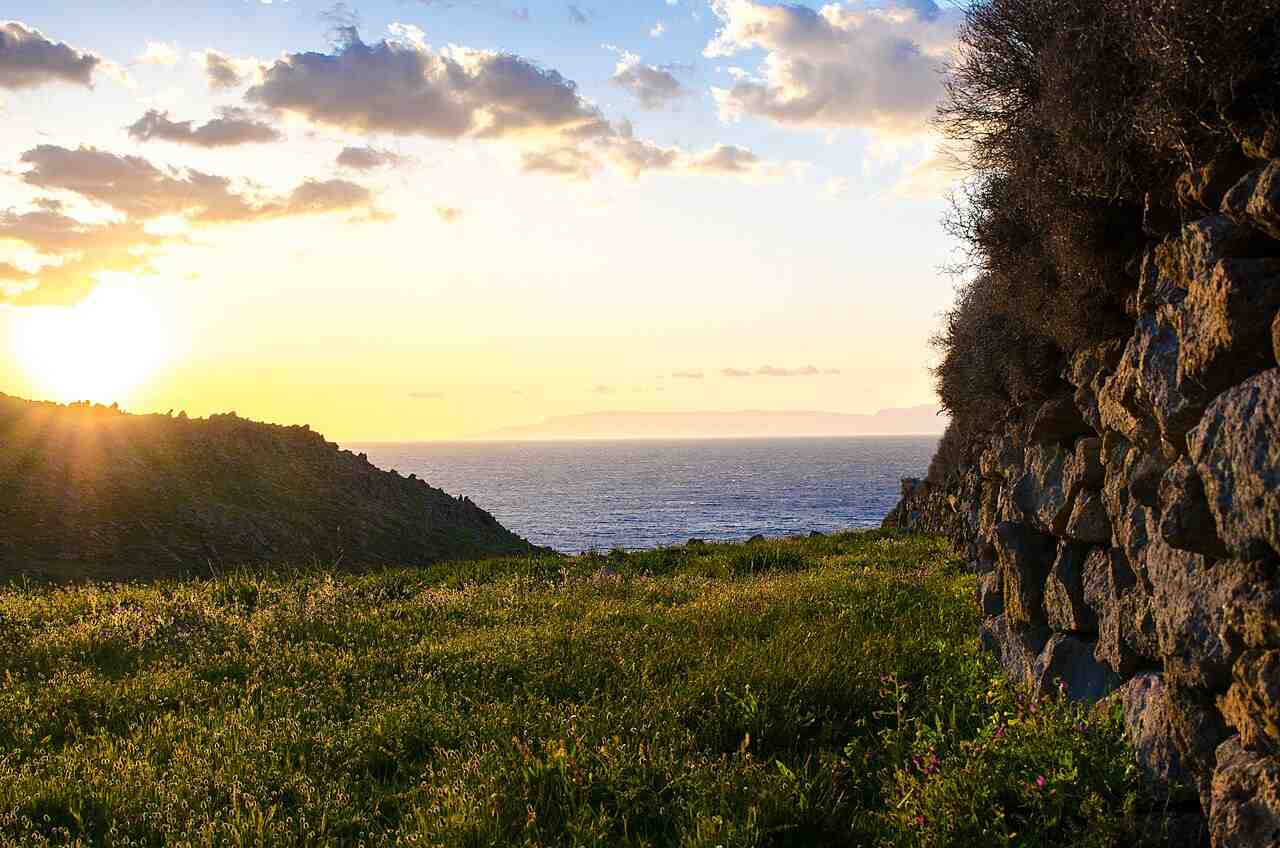
Hiking in Patmos is a rewarding way to see the quieter, wilder side of this small holy island. Following old stone monopatia and marked trails between the towns, monasteries, chapels and remote beaches. A network of eight waymarked routes, most of them gentle, links the pilgrims’ path from Skala to Chora with coastal walks, hilltop viewpoints and the flowery landscapes of the north. Plan the whole trip with Greece Tours.
This guide covers hiking in Patmos in full: the island’s marked trails and old paths, the classic pilgrims’ route. The walks to Grikos and Diakofti, the northern loops, the best viewpoints. When to walk and what to bring. Read it beside the full Patmos travel guide, the guide to things to do in Patmos and the guide to the Monastery of Saint John.
What is hiking in Patmos like?
Hiking in Patmos means following old stone monopatia and a network of eight marked trails between the towns, monasteries, chapels and beaches.
Patmos is a fine island for walking, criss-crossed by old monopatia, the stone footpaths that linked its settlements. Monasteries and fields long before roads. By a network of eight waymarked routes created as part of the Greek Paths of Culture programme. Together these paths let you experience the island’s landscapes, history and quiet corners on foot, away from the roads and the busier sights, at a slow and rewarding pace.
Most of the marked trails are short and of modest difficulty, making them accessible to relaxed walkers as well as keen hikers, though certain routes are longer and more demanding for those wanting a proper day’s walk. The paths reveal the hidden gems of the island, from ancient sites. Monasteries and the venerated Holy Seats to the rich flora of the hillsides and sweeping views over the magnificent coastline.
Walks here are more about beauty, history and tranquillity than distance or challenge. Most can be combined with a swim at a beach or a meal in a village. Whether you want a short pilgrims’ walk or a longer loop through the flowery north, hiking is one of the most rewarding things to do on Patmos, as the guide to things to do in Patmos describes.
What is the pilgrims’ path from Skala to Chora?
The pilgrims’ path from Skala to Chora is the classic Patmos walk, a route of about 1.7 kilometres taking around 40 minutes uphill, passing the Cave of the Apocalypse and the historic Patmian School among pine and cypress trees, tracing.
The best-known and most meaningful walk on Patmos is the old cobbled pilgrims’ path that climbs from the port of Skala up to the hilltop capital of Chora. Tracing on foot the route generations of pilgrims have taken to the island’s holiest sites. Around 1.7 kilometres long and taking roughly forty minutes uphill. It is a short but rewarding walk that links the two main settlements through a landscape of pine and cypress trees.
Along the way the path passes two of the island’s most important sites: the Cave of the Apocalypse, where Saint John is said to have received his visions. The historic Patmian School. The theological school that made the island a centre of learning, so the walk is as much a journey through the island’s history and faith as through its landscape. It is best walked in the cool of the early morning, before the heat of the day.
Reaching Chora on foot by this route, rather than by car or bus, gives a real sense of arriving at the great Monastery of Saint John as pilgrims always have, and it can easily be combined with a visit to the cave and the monastery at the top, as the guide to the Monastery of Saint John and the Cave of the Apocalypse describes. You can return downhill on foot or take the bus or a taxi. Setting out early, before the day warms and the coaches arrive at the monastery. Makes the walk cooler and the arrival at the top more peaceful. Leaves the rest of the day free for the sights or a beach.
What are the walks from Chora to Grikos and Diakofti?
From Chora, a trail leads down to the seaside village of Grikos and on south to remote Diakofti and its beach, while a moderate trail climbs the dramatic cliffsides above Diakofti.
One of the rewarding longer walks starts from the eastern side of Chora and descends to the seaside settlement of Grikos, with its sheltered bay and the landmark Kallikatsou rock, before continuing south along the coast toward the remote area and beach of Diakofti at the island’s narrow southern waist. This route links the hilltop capital with the sea and ends within reach of a swim, making a fine half-day out.
For keener walkers, a trail of moderate difficulty climbs the steep cliffsides around Diakofti. A more challenging hike that rewards the effort with dramatic, elevated views over the coast and the surrounding sea. This is one of the island’s more demanding walks. It shows the wilder, rockier southern end of Patmos at its most spectacular, well away from the towns and the crowds, so it rewards fitter, well-prepared walkers.
These southern walks combine the pleasures of village, coast and cliff-top views. They suit walkers who want more than the short pilgrims’ path. Ideally with a car or scooter to reach the start or return, and always with water, sun protection and sturdy shoes. Ending a walk with a swim at Grikos or a quiet southern cove is one of the joys of hiking on Patmos. Combining a morning on the trail with an afternoon by the sea makes for a perfect island day.
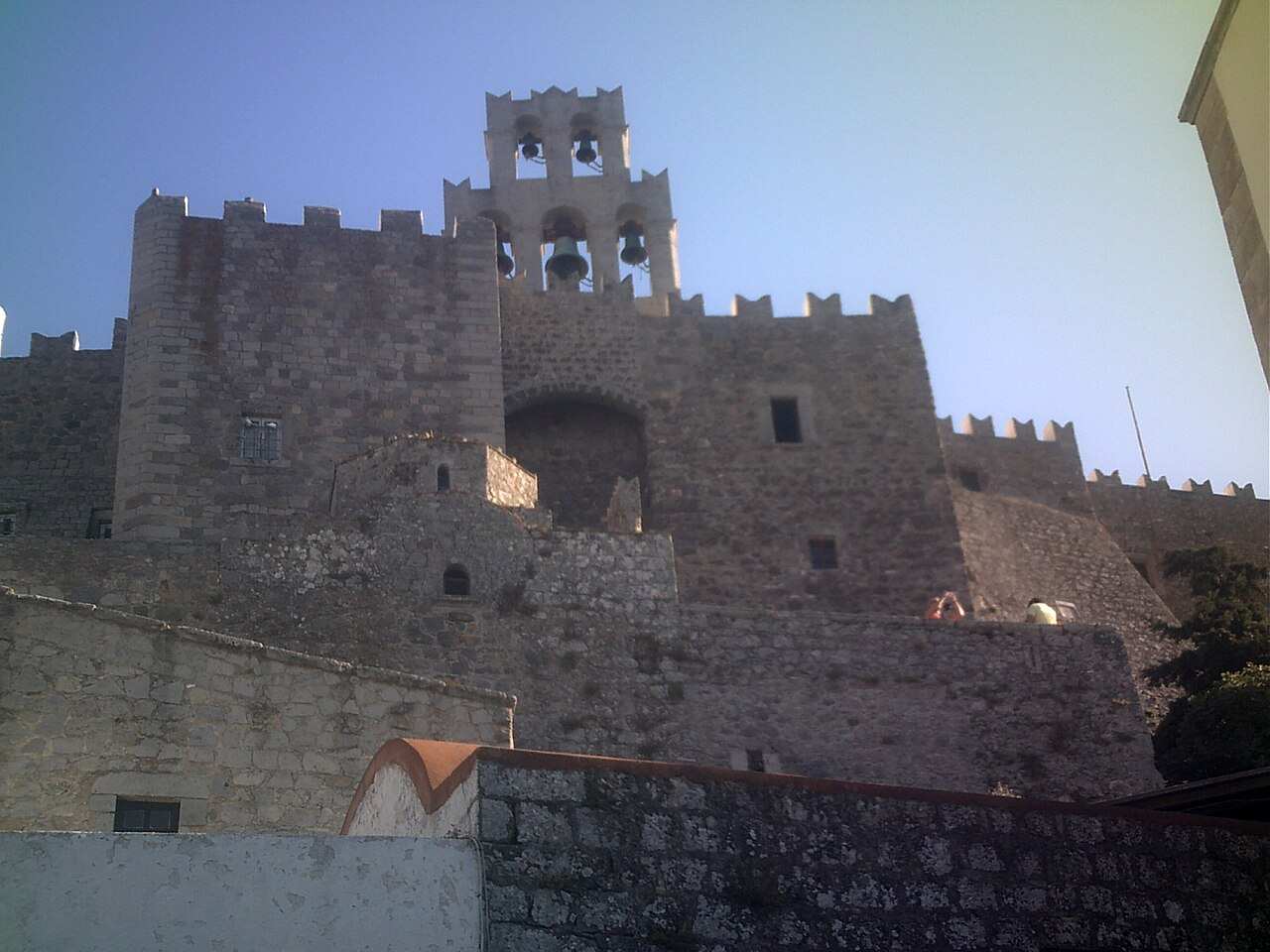
What are the northern trails and the Vagia loop?
The north of Patmos offers scenic loop walks through its flowery hills and quiet coves, including the Vagia to Agios Dimitrios loop of around 10.3 kilometres, passing the Kathisma tou Apollou and chapels.
The northern half of Patmos, beyond Kampos, holds the island’s longer and quieter walking. Threading through terraced hills, past chapels and around remote coves where you meet no one for hours. One of the notable routes is the loop linking Vagia with the spot known as the Kathisma tou Apollou and the chapel of Agios Dimitrios. A walk of around ten kilometres that circles through the flowery hillsides and along the scenic northern coast.
These northern trails reward walkers with the wilder, more natural side of the island: hillsides bright with wildflowers in spring. Sweeping views over the sea and the neighbouring islands, quiet chapels and the venerated Holy Seats. A deep sense of peace far from the sights and the beaches. They are the routes to choose for a proper day’s walk in nature, far from the roads and the crowds of the busier south.
They call for careful preparation, with ample water, food, sun protection, sturdy shoes and a map. They are best walked in the cooler seasons rather than the summer heat. For walkers willing to venture out with a car to reach the trailheads, the quiet north is the finest hiking country on Patmos.
What are the best viewpoints and scenic hikes in Patmos?
The best scenic hikes in Patmos climb to viewpoints such as the ridge above Chora, the windmills, and the higher ground toward Profitis Ilias, one of the island’s summits, all rewarding walkers with sweeping panoramas over the whitewashed town, the.
For the finest views, Patmos rewards walks that climb to its ridges and high points, where the whole island and much of the surrounding Aegean spread out below. The short walk up to the windmills above Chora gives one of the best and most accessible panoramas. Taking in the town, the great monastery and the sea. It is an easy addition to a visit to the capital.
For a more substantial scenic hike, the higher ground toward Profitis Ilias, one of the island’s summits. The ridge walk that leads from Chora out toward the eastern lookouts reward the climb with sweeping. Uninterrupted views over the coast, the bays and the shapes of the neighbouring islands of Lipsi, Leros and Arki. These high walks are especially beautiful in the clear light of spring and autumn.
Even the coastal and village paths offer constant sea views. Scenery is never far away on a Patmos walk. But for the biggest panoramas it is worth making the effort to reach the island’s heights. Timing a hilltop walk for the golden hour before sunset, then descending to Chora for dinner, combines the island’s finest views with one of its finest experiences. Carry a light layer for the cooler evening and a torch if you plan to walk back after dark. Allow enough time to reach shelter before nightfall on the remoter paths.
When is the best time for hiking in Patmos?
The best time for hiking in Patmos is spring and autumn, roughly March to early June and September to November, when the weather is mild, the hillsides are green and flowery in spring, and the light is clear.
Spring and autumn are by far the best seasons for hiking on Patmos, avoiding the fierce heat of high summer while offering mild, comfortable temperatures ideal for walking. Spring, from March to early June, is especially lovely, as the hillsides are green and carpeted with wildflowers after the winter rains. The air is fresh. The trails are at their most beautiful before the landscape dries out.
Autumn, from September to November, is the other prime walking season, cooling gently from summer warmth to mild, clear days with beautiful light. Excellent for the longer trails and the scenic viewpoints, though the landscape is drier and browner than in spring. Both shoulder seasons combine good walking weather with quiet trails and, at their warmer edges, the chance of a swim to finish.
High summer, in July and August, is generally too hot for long or strenuous walks in the middle of the day. Hikers set out in the cool of the early morning or the late afternoon. Carry ample water, and stick to shorter, shadier routes. Winter is cool and green but wet and changeable, so walks must be fitted around the weather, as the guide to the best time to visit Patmos explains.
What you bring and know for hiking in Patmos?
For hiking in Patmos, bring ample water, sturdy walking shoes, a hat and strong sun protection, as shade is scarce, along with food for the longer trails.
Good preparation makes for a safer and more enjoyable walk on Patmos. Carry ample water, especially on the longer routes, along with a hat, sunglasses and strong sun protection. Wear sturdy shoes suitable for the rough. Stony and sometimes steep paths, as the old monopatia and cliff trails can be uneven underfoot.
For the longer trails, such as the northern loops and the Diakofti cliffs, bring food and basic first-aid supplies, as these routes are remote with no tavernas or shops along the way. It is wise to tell someone your plans and to set out early so you are not caught out by the heat or by nightfall. A dedicated walking map, such as the Anavasi map of the island, helps in following the routes.
The eight marked trails are generally well waymarked. Signposting can be patchy on the remoter paths, so a map or a GPS track is reassuring, and a little care over route-finding pays off. With water, sun protection, good shoes and sensible timing, hiking on Patmos is safe and hugely rewarding, opening up the island’s quiet, beautiful interior and coast.
Can you join guided walks and hiking tours in Patmos?
Yes. In Patmos you can join guided walks and hiking tours, often led by local guides who explain the island’s landscapes, flora, history and religious sites along the way.
For walkers who rather not navigate alone, or who want to understand what they are seeing. Guided walks and hiking tours are available on Patmos, led by local guides with a deep knowledge of the island. These walks discover the island’s landscapes on foot while explaining its flora, geology, history. Monasteries and the meaning of sites such as the Holy Seats, turning a hike into a richer, more informed experience.
Guided walks suit those who prefer the company and reassurance of a guide, who want to be sure of finding the way on the remoter trails. Or who are keen to learn about the natural and cultural landscape rather than simply pass through it. Local operators and agencies in Skala can arrange guided hikes, and certain ecotourism and walking specialists offer organised routes across the island.
Whether you walk independently with a map or join a guided group. The island’s trails reward the effort. A guide can be especially valuable for the longer northern loops and for understanding the layers of history and faith woven into the landscape. Arranging a guided walk in advance is wise in the busier months. It is a fine way to see the quieter. Greener side of Patmos that most visitors never reach on foot.
Is Patmos good for hiking?
Yes, Patmos is a rewarding island for hiking, with a network of scenic marked trails and old stone paths linking towns, monasteries, chapels and beaches, mostly gentle and easily walked.
Patmos is a genuinely rewarding island for hiking, punching above its small size thanks to its network of marked trails and ancient monopatia. Its dramatic and varied landscape of hills, cliffs and coves. The layers of history and faith woven through its paths. For walkers who want more than beaches and sights, it offers a quiet, beautiful and deeply atmospheric side of the island reached only on foot.
Its appeal lies in variety and gentleness as much as challenge: most trails are short and easily walked. The island suits relaxed walkers. Families and pilgrims as well as keen hikers seeking the longer northern loops and cliff-top routes. Along the way, wildflowers, pine and cypress woods, quiet chapels, the venerated Holy Seats and constant sea views make every walk a pleasure.
Being small and safe, with short distances and no dangerous wildlife. Patmos is also an easy place to walk. Its trails combine naturally with swims, village meals and visits to the monuments. For history, nature, solitude and views, hiking is one of the finest and most rewarding things to do on the island, as the full Patmos travel guide sets out.
Frequently Asked Questions
Are there marked hiking trails in Patmos?
Yes, Patmos has a network of eight waymarked hiking trails, created as part of the Greek Paths of Culture programme. Alongside the older stone monopatia that have linked the island’s settlements, monasteries and fields for centuries. The marked routes range from the short pilgrims’ path between Skala and Chora to longer loops through the flowery hills of the north. Most are of modest difficulty. Revealing the island’s ancient sites, monasteries, the venerated Holy Seats, its rich flora and fine coastal views. Signposting is generally good but can be patchy on the remoter paths. A dedicated walking map such as the Anavasi map. Or a GPS track, is useful for the longer or more isolated trails.
What is the best hike in Patmos?
The most meaningful hike in Patmos is the old cobbled pilgrims’ path from the port of Skala up to the hilltop capital of Chora. About 1.7 kilometres and forty minutes uphill, passing the Cave of the Apocalypse and the historic Patmian School among pine and cypress trees. It combines the island’s finest history and faith with a rewarding walk. For a longer day, the scenic loops through the flowery hills of the north, such as the Vagia to Agios Dimitrios loop. The walk from Chora down to Grikos and on to remote Diakofti. Are the best choices, while the climb to the windmills or toward Profitis Ilias gives the finest panoramas.
The right hike depends on whether you want history, solitude, coast or views. Walkers often combine two or three routes over a stay, tackling the pilgrims’ path early on. A coastal walk to Grikos on another day. A longer northern loop when the weather is cool, each showing a different and rewarding side of the island.
When is the best time to hike in Patmos?
The best time to hike in Patmos is spring and autumn, roughly March to early June and September to November, when the weather is mild and comfortable for walking. Spring is especially beautiful, with green hillsides carpeted in wildflowers after the winter rains, while autumn offers clear light and warm early-season seas for a swim to finish. High summer, in July and August, is generally too hot for long or strenuous walks in the middle of the day. It is best to set out in the cool of the early morning or late afternoon. Carry ample water and keep to shorter, shadier routes.
Winter is cool and green but wet and changeable, so walks must be fitted around the weather.
How difficult are the hikes in Patmos?
Most hikes in Patmos are of modest difficulty and easily walked, suiting relaxed walkers, families and pilgrims as well as keen hikers. The short pilgrims’ path from Skala to Chora and most of the marked trails are gentle, though uphill in places, while certain routes are longer and more demanding. Such as the northern loops of around ten kilometres and the moderate trail up the steep cliffsides around Diakofti, which rewards the effort with dramatic views. None involve technical climbing, but the paths can be rough, stony and exposed, with little shade, so sturdy shoes. Ample water and sun protection are essential, and the longer, remoter routes are best left to fitter walkers who are well prepared.
It is easy to match a walk to your ability, choosing the gentle pilgrims’ path or a coastal stroll for an easy outing and saving the northern loops and cliff trails for a proper day’s hike.