
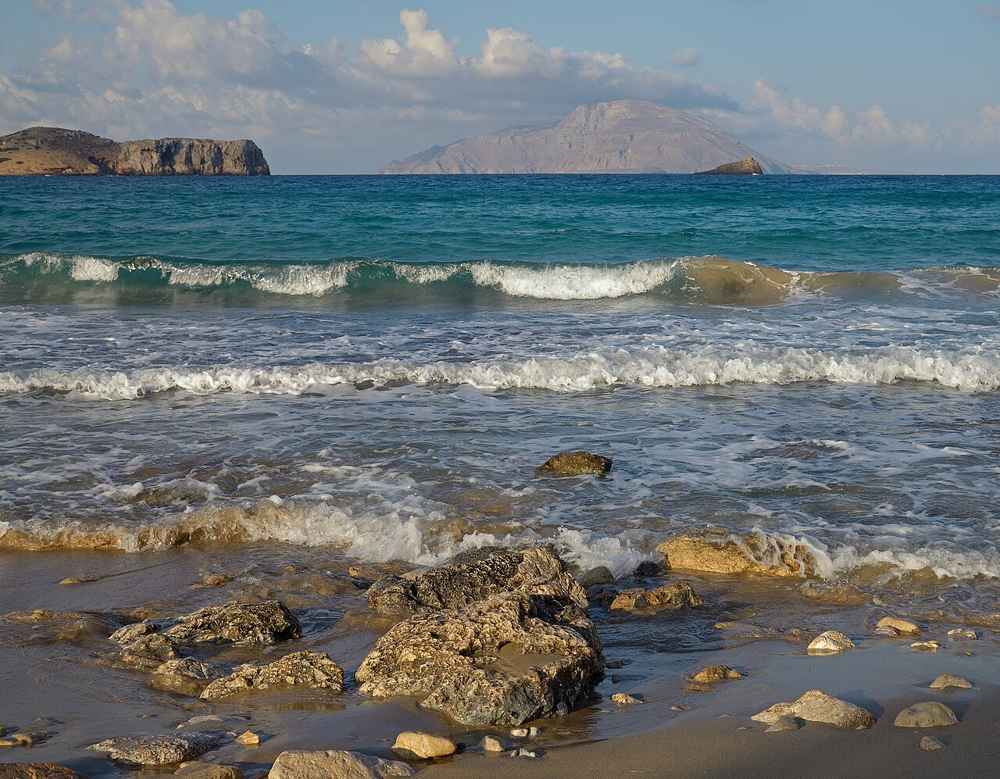
Arkasa is a traditional village on the south-west coast of Karpathos, built on the site of the ancient city of Arkesia and set among churches, colourful gardens and quiet lanes. Below it lies the golden sand of Agios Nikolaos beach. Above it the acropolis of Paleokastro, so a visit combines swimming, sunsets and a real slice of the island’s ancient and Byzantine past. Plan the whole trip with Greece Tours.
This guide covers Arkasa in full: the village, Agios Nikolaos beach, the Paleokastro ruins and the early-Christian mosaics, the windsurfing, and where to stay and eat. Read it beside the guides to the villages of Karpathos and Karpathos beaches to fit a west-coast stay into a trip.
What is Arkasa in Karpathos?
Arkasa is a traditional village on the south-west coast of Karpathos, about 16 kilometres west of Pigadia, built on the site of the ancient city of Arkesia. It keeps narrow lanes, old churches and colourful gardens near the sea.
Arkasa lies on the south-western coast of Karpathos, about 16 kilometres west of the capital, Pigadia, and roughly two kilometres south of the small fishing village of Finiki. It is a traditional village that has kept its character, with narrow streets, old stone houses and gardens bright with flowers. Set on a green slope above the sea in one of the quieter, more scenic corners of the island.
The village is built on the ruins of ancient Arkesia, or Arcesine. One of the most important cities of Karpathos in antiquity. Traces of that long history survive on the headland and in the churches around the village. Today Arkasa is a peaceful base and a rewarding stop, combining a genuine village atmosphere with a beach, ancient ruins and some of the finest sunsets on the island.
What is Agios Nikolaos beach at Arkasa?
Agios Nikolaos is the main beach of Arkasa, a stretch of golden sand with clear water about one kilometre south of the village, below the Paleokastro hill.
The main beach of Arkasa is Agios Nikolaos, a stretch of fine golden sand with clear, blue-green water. Set about one kilometre south of the village directly below the Paleokastro headland. It faces west and south, so it looks out across the sea to the island of Kasos and catches a fine sunset. And it is well organised, with umbrellas and sunbeds for hire, a public shower and changing rooms.
The beach can pick up choppy waves, which makes it lively for swimming and popular with surfers, while the golden sand and the ruins of Paleokastro on the hill above give it a scenic, historic backdrop. It is one of the best-loved beaches of the west coast, combining an easy, organised swim with wide views and a memorable sunset.
What are the Paleokastro ruins at Arkasa?
Paleokastro is the hill above Agios Nikolaos beach that holds the acropolis of ancient Arkesia, with Cyclopean walls, towers and cisterns. A short trail climbs to the site, which commands wide views over the coast and Kasos.
On the low cape of Paleokastro, above Agios Nikolaos beach, stand the remains of the acropolis of ancient Arkesia, one of the most important cities of Karpathos in classical times. The site preserves stretches of massive Cyclopean walls, reinforced by towers of the classical and Hellenistic periods. Along with the foundations of buildings and rock-cut water cisterns, a substantial trace of the ancient city.
A short walking trail climbs the hill to the acropolis. The effort is rewarded with sweeping views over the coast. The beach below and the island of Kasos across the sea. The combination of ancient ruins and a wide vantage point makes Paleokastro an easy and worthwhile excursion from the beach. Pairing a swim with a real sense of the island’s deep history.
What churches and sights are in Arkasa?
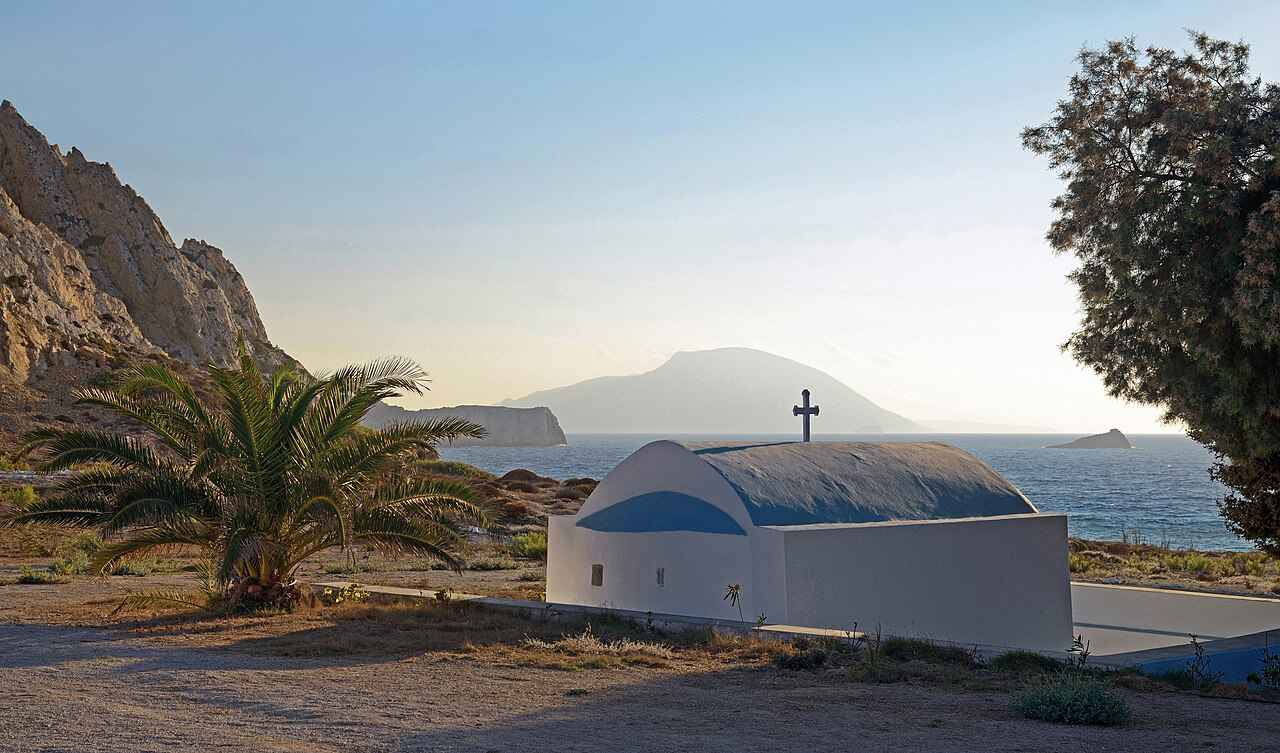
Arkasa preserves the early-Christian basilica of Agia Anastasia, with fine mosaic floors, on the Paleokastro headland, along with Byzantine and later churches in the village and a small archaeological and folklore museum.
The most important sight after the acropolis is the early-Christian basilica of Agia Anastasia, sometimes linked with the chapel of Agia Sofia, near the Paleokastro headland. Dating from the fifth century, it preserves exquisite mosaic floors that survive in the open beside the sea. A remarkable trace of the early Christian community that once occupied this coast. One of the finest such mosaics on the island.
In and around the village stand churches spanning the Byzantine and later periods, including Agia Anastasia, Agios Georgios and the Panagia Marmarini, reflecting the long religious history of Arkasa. A small archaeological and folklore museum in the village gathers finds and everyday objects that tell the story of the ancient city and traditional island life, rounding out a visit.
Can you windsurf at Arkasa?
Yes. The waves at Agios Nikolaos beach make Arkasa one of the better windsurfing spots on Karpathos outside the main bays of Afiartis, and its west-coast exposure gives it lively conditions for the sport.
The exposed, west-facing position of Agios Nikolaos beach gives it sizeable waves in windy conditions. Which makes Arkasa one of the island’s better spots for windsurfing away from the dedicated bays of Afiartis in the south. Surfers are drawn to the wave conditions here, and the beach lends itself to the sport when the wind is up, adding an active dimension to a west-coast beach day.
For riders whose focus is windsurfing, the main centre of the island remains Afiartis, with its three linked bays and rental centres, covered in the guide to Karpathos windsurfing. Arkasa suits those combining a stay on the quieter west coast with the occasional lively session, or simply enjoying the wave-washed beach and its sunset.
Where can you stay and eat in Arkasa?
Arkasa is a quiet base with small hotels, studios and rooms, and tavernas serving Greek and Karpathian dishes. The fishing village of Finiki nearby adds seafront seafood tavernas a short drive away.
Arkasa makes a peaceful west-coast base, with a spread of small hotels, studios and rooms in and around the village, most within easy reach of Agios Nikolaos beach. It suits travellers who want quiet. Scenery and sunsets over nightlife. Its tavernas and cafes serve traditional Greek and Karpathian dishes in a relaxed village setting away from the busier south-east.
Just two kilometres north lies the small fishing village of Finiki, whose seafront tavernas serve fresh seafood landed at its little harbour, an easy and rewarding outing for dinner. Together, Arkasa and Finiki make an appealing quiet corner of the west coast. For a comparison with the island’s other bases, see the guide to where to stay in Karpathos.
When is the best time to visit Arkasa?
The best time is late May, June and September, when the weather is warm and the west coast quiet. Arkasa faces the sunset, so late afternoon and evening are the finest times to enjoy the beach and the ruins.
Arkasa is at its best in the shoulder months of late May, June and September, when the weather is warm. The sea comfortable and the west coast far quieter than the busier south-east, with September pairing warm water and thinning crowds. These months give the most relaxed beach days and the easiest availability of rooms in the village.
The late afternoon and evening are the special times, when the light softens over the sea, the ruins of Paleokastro glow. The sunset draws visitors to the beach and the tavernas. Timing a visit around the sunset makes the most of this scenic corner; see the wider Karpathos travel guide for how the west coast fits into a trip.
Frequently Asked Questions
Where is Arkasa in Karpathos?
Arkasa is a traditional village on the south-west coast of Karpathos, about 16 kilometres west of the capital, Pigadia, and roughly two kilometres south of the fishing village of Finiki. It is built on the site of the ancient city of Arkesia and combines a village atmosphere with a beach, ancient ruins and fine sunsets.
What is the beach at Arkasa like?
The main beach of Arkasa is Agios Nikolaos, a stretch of golden sand with clear water about one kilometre south of the village, below the Paleokastro hill. It faces west toward the island of Kasos, catches a fine sunset, and is organised with umbrellas, sunbeds, a shower and changing rooms. Its waves make it lively for swimming and windsurfing.
What are the Paleokastro ruins at Arkasa?
Paleokastro is the headland above Agios Nikolaos beach that holds the acropolis of ancient Arkesia, one of the most important cities of Karpathos in antiquity. It preserves Cyclopean walls reinforced by classical and Hellenistic towers, building foundations and rock-cut cisterns. A short trail climbs to the site, which gives wide views over the coast and Kasos.
Is Arkasa worth visiting?
Yes. Arkasa combines a traditional village, the golden-sand Agios Nikolaos beach, the acropolis of ancient Arkesia at Paleokastro. The fifth-century mosaics of the Agia Anastasia basilica, all with fine west-coast sunsets. It makes a quiet, scenic and historic stop or base, especially for travellers who want more than beaches on the west coast of the island.