
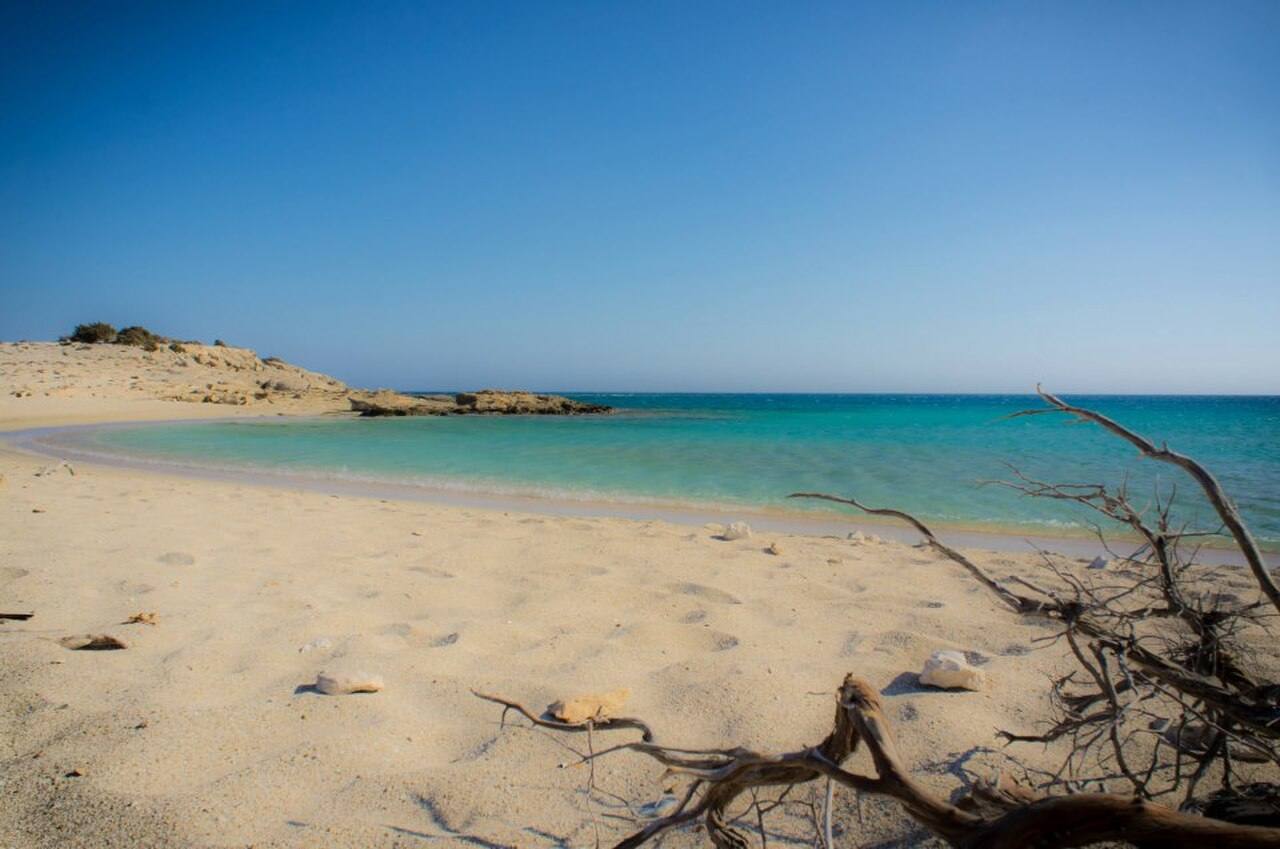
Karpathos is one of the great windsurfing islands of Europe, and the reason lies in a single stretch of coast in its far south. The plain of Afiartis, beside the airport. Funnels the summer meltemi into some of the most reliable strong wind in the Mediterranean. Its bays are shaped so that a beginner and a speed-record chaser can rig on the same beach. Riders return year after year for wind that blows from morning to evening through the height of summer. Plan the whole trip with Greece Tours.
This guide covers everything a windsurfer or kitesurfer plan a trip: the layout of the Afiartis bays, the wind conditions and season. The spots for every level, where to kitesurf, the rental centres and schools. Where to stay and how to reach the coast. Read it beside the wider guide to Karpathos beaches to balance the sport with the island’s calmer coves.
Why is Karpathos one of the best windsurfing spots in Europe?
Karpathos combines exceptionally reliable strong wind, warm water and a sandy bottom at Afiartis, where the meltemi blows almost every summer day. The bay has hosted speed-sailing world championships, and its layout suits every level.
The draw is the wind. Through July and August the meltemi, the prevailing northerly of the Aegean. Pours across the southern plain of Afiartis and holds steady for days on end, often at force five to force seven. Unlike spots where the wind arrives only in the afternoon, the wind at Afiartis blows through much of the day. Giving long hours on the water and a dependability that few European destinations match across a whole season.
Just as important is the shape of the coast. Afiartis is not one beach but a series of linked bays, each offering different water and wind. Beginners. Freestylers, slalom sailors and speed riders all find their conditions within a short stretch. The water is warm from late spring into autumn. The bottom is sand rather than reef. The setting is safe enough that a dropped rig drifts back to a standing depth rather than out to open sea.
That combination has made Karpathos a fixture on the international windsurfing map. The bay has hosted speed-surfing world championships, and centres line the shore with modern rental kit and instruction. For riders it offers a rare mix: challenging, world-class conditions for experts and a genuinely safe. Well-taught environment for those learning, all on the same warm, sandy southern coast of the island.
Where is the windsurfing in Karpathos?
The windsurfing is concentrated at Afiartis, also called Kipi Afiarti, on the flat southern tip of Karpathos beside the airport. The main beaches are Makris Gialos and Agrilaopotamos, about ten kilometres south of Pigadia.
Almost all the island’s windsurfing happens in one place: the plain of Afiartis in the far south, a low. Open stretch of coast next to Karpathos airport and roughly ten kilometres from the capital, Pigadia. The area is sometimes written as Kipi Afiarti, and it takes in a run of sandy beaches along the exposed south-eastern shore where the meltemi hits hardest. Its flatness and its exposure to the north wind are exactly what make it work.
The main beaches here are Makris Gialos, which holds the three principal windsurf bays, and Agrilaopotamos, the centre of the kitesurfing scene. A cluster of surf centres, rental stations and simple accommodation has grown up along the shore to serve the sport. The whole area is geared toward windsurfers and kitesurfers rather than general beach tourism. The airport sits right behind, which makes arrival easy but means strong wind can occasionally affect flights.
Most visitors treat the south as a sport base and head elsewhere on the island for calm swimming. The sheltered east-coast coves and the west coast at Lefkos offer that contrast within a short drive. A windsurfing trip to Karpathos easily combines hard days on the water at Afiartis with quiet swims on the other coasts.
What are the bays at Afiartis in Karpathos?
Afiartis has three main windsurf bays on Makris Gialos beach: Chicken Bay for beginners, Gun Bay for bump-and-jump and slalom, and Devil’s Bay for the strongest wind and speed. Agrilaopotamos nearby is the kitesurf spot.
Chicken Bay, the small, innermost bay, is the beginners’ water: shallow, sheltered and flat, so learners can stand and water-start in safety, and freestylers use its smooth surface for tricks. Next to it, Gun Bay is the largest of the three and develops wind-waves of up to a metre. Giving good bump-and-jump conditions and a broad slalom and free-ride area for intermediate and advancing riders who want more space and a little chop.
Devil’s Bay, the outermost, carries the strongest wind of all, combined with surprisingly flat water, which is why it has become a speed venue and has hosted speed-surfing world championships. It is the domain of experienced riders chasing pace on small sails, and it can be demanding when the meltemi is at full strength. The three bays lie within the same stretch of Makris Gialos, so riders move between them as their skill and the day’s wind dictate.
A short way along the coast, the beach of Agrilaopotamos is the recognised kitesurfing spot, kept separate from the windsurf bays so that kite lines stay clear of sails. Between them, the Afiartis beaches cover every discipline and every level in one compact area. Which is a large part of why the island suits a windsurfing holiday for a group or family of mixed abilities.
What are the wind conditions for windsurfing in Karpathos?
The meltemi blows from the north across Afiartis from May to September, strongest in July and August when it reaches 25 to 40 knots. Unusually, the wind often blows all day rather than only in the afternoon.
The wind that powers Karpathos windsurfing is the meltemi, the strong, dry northerly known in antiquity as the Etesian wind. It sets in around May, builds through the summer, and holds until the end of August or into mid-September. At the height of the season, in July and August, it commonly blows 25 to 40 knots in the bays of Afiartis. Powerful enough that riders reach for small sail sizes and beginners pick their windows carefully.
What sets Afiartis apart from spots is the duration of the wind through the day. In much of the Aegean the thermal wind fills in only during the afternoon. The meltemi at Kipi Afiarti often blows from morning to evening. Giving long sessions and reliable planning. The wind arrives across open sea and flat land with little to break it, which is why it reaches the bays so cleanly and so strong.
Conditions ease at the edges of the season. Late May, June and September bring lighter, more forgiving wind that suits learners and those who prefer bigger sails and calmer water, while high summer is the province of experienced riders. The water stays warm from late spring into autumn. A thin wetsuit or none at all is enough. And the combination of warmth and wind is what fills the centres from May onward.
Is Karpathos good for beginner windsurfers?
Yes. Chicken Bay at Afiartis is shallow, flat and sheltered, an ideal place to learn, and the centres run lessons for all levels. Beginners are best served in late spring and early autumn when the wind is lighter.
Despite its reputation for strong wind, Karpathos is a genuinely good place to learn. Chicken Bay offers shallow, flat, sheltered water where a beginner can stand, water-start and practise without being swept out. The sandy bottom and safe layout make it forgiving of mistakes. The surf schools at Afiartis teach from the first steps upward, with equipment scaled to the learner and instructors who match the lesson to the day’s conditions.
Timing matters for beginners. High summer, when the meltemi is at its fiercest, suits experienced riders more than novices. Those learning are best served in the shoulder weeks of late May. June and September, when the wind is lighter and more manageable. A beginner who comes in July or August can still learn in Chicken Bay on the calmer mornings or lighter days, but the shoulder season gives a gentler introduction.
The presence of everything in one place helps too. Because the centres, the rental kit, the schools and the accommodation all cluster along the Afiartis shore, a learner has support close at hand and can progress from the beginners’ bay toward the livelier water as skill grows. For a mixed group, this means beginners and experts can share a base and a beach while riding conditions suited to each.
Where can you kitesurf in Karpathos?
Agrilaopotamos beach in the south is the main kitesurfing spot in Karpathos, kept separate from the windsurf bays. Kitesurfing is restricted to the windward south, so the sheltered leeward coast is off-limits for kites.
Kitesurfers head for Agrilaopotamos, the beach recognised as the island’s best kite spot, a short way along the coast from the windsurf bays of Makris Gialos. Keeping the two sports on separate beaches is deliberate, since kite lines and windsurf sails do not mix safely in the same water. Agrilaopotamos gives kiters the same reliable meltemi and warm water, with the space that long lines demand, and the centres here rent and teach kite gear.
The same wind that serves windsurfers serves kitesurfers. The season and conditions run in parallel: the meltemi from May to September. Strongest in July and August, blowing across the southern plain. Kitesurfing on the island is concentrated on this windward south coast. It is generally not practised on the sheltered leeward side. Both for safety and because the wind there is broken and unreliable.
For riders who do both, or groups that mix windsurfers and kitesurfers. Afiartis works well because the disciplines sit side by side on the same stretch of coast without getting in each other’s way. Lessons for beginners in kitesurfing are available at the Agrilaopotamos centres, though the strong high-summer wind again makes the shoulder months the easier time for anyone starting out.
What windsurf centres and rentals are at Afiartis?
Several established windsurf and kitesurf centres line the Afiartis shore, renting modern boards and sails and running lessons for all levels. Many offer storage, packages and extras like yoga, biking and climbing alongside the water sport.
The Afiartis shore is lined with surf centres that have served the island’s windsurfing for years, and between them they cover rental, tuition and storage. They stock modern ranges of boards and sails in the sizes the strong wind demands. Riders can travel without their own kit and pick equipment to match the day. From large beginner boards in the calm to small speed sails when the meltemi is howling in Devil’s Bay.
Lessons run for every level, from a first water-start in Chicken Bay to advanced coaching in slalom, freestyle and speed for experienced riders. Instructors are experienced professionals, and courses can be booked by the day, the week or as part of a holiday package with accommodation. For riders bringing their own gear, the centres offer board and rig storage on the beach so the kit stays close to the water through a stay.
Many centres round out the windsurfing with other activities for rest days or non-surfing companions, such as yoga classes, mountain biking and climbing trips into the interior of the island. This makes Afiartis workable for a mixed group where not everyone is on the water all day. It reflects how the whole area has grown up around the sport as a dedicated windsurfing and kitesurfing base.
When is the best time for windsurfing in Karpathos?
July and August bring the strongest, most reliable wind for experienced riders. Late May, June and September offer lighter, more forgiving conditions that suit beginners and those who prefer bigger sails and calmer water.
The season runs from May into October, and which part suits you depends on your level. July and August are the peak, when the meltemi is at its strongest and most dependable, often 25 to 40 knots blowing all day. This is prime time for experienced riders who want power, speed and long sessions on small sails. It is when Afiartis is busiest and its bays most alive with sails.
For beginners and intermediates, the shoulder months are the better bet. Late May, June and September bring lighter, steadier wind that is easier to learn and progress in, warmer, calmer water in the sheltered bays, and fewer crowds on the beach. Riders who prefer bigger sails and less extreme conditions often deliberately avoid the high-summer peak in favour of these gentler weeks.
Outside the core months the wind grows less reliable, and centres wind down, so May to September is the practical window for a windsurfing trip. Because the wind is the whole point, it pays to plan around the season rather than the general tourist calendar. To match the timing of a visit to whether you are chasing the strongest conditions or an easier introduction to the sport.
What else can you do at Afiartis besides windsurfing?
Beyond the water, Afiartis offers the white-sand beach of Diakoftis nearby, spectating on the speed bays, and centre extras like yoga, biking and climbing. The rest of Karpathos is a short drive for calm swimming and sightseeing.
Even for non-surfers the bays are worth seeing, since watching dozens of sails cross the water at once. Especially the speed riders in Devil’s Bay when the meltemi is at full strength, is a spectacle in itself, best taken in from a beach bar with the airport runway behind. For a swim rather than a sail, the white-sand lagoon of Diakoftis lies close by near the airport, its shallow turquoise water calm in the morning before the wind builds.
The surf centres themselves offer more than time on the water. Rest-day activities such as yoga, mountain biking and climbing trips into the island’s interior are common, which suits riders taking a break and companions who do not windsurf. This makes a stay at Afiartis workable for a mixed group, where the beach and the centre provide a base for both the sport and its alternatives.
The wider island is within easy reach for the days the wind drops or the body needs a rest. The sheltered coves of the east coast, the traditional villages of the interior, and the medieval village of Olympos in the north all make rewarding excursions from the south. The guide to things to do in Karpathos covers them. A windsurfing holiday here need not be only about the wind.
How do you get to Afiartis and where can you stay?
Afiartis lies about ten kilometres south of Pigadia, right by Karpathos airport, so arrival is quick. Accommodation clusters along the shore and at nearby Amoopi, with more options in Pigadia a short drive away.
Getting to Afiartis is easy by island standards. Karpathos airport sits right beside the windsurfing plain in the far south. Riders flying in reach the beaches within minutes of landing. And the area is about ten kilometres south of the capital, Pigadia, on a good road. A hire car or scooter is useful for reaching the calmer beaches and villages elsewhere on the island, though a stay focused on the water can manage with the centres alone.
Accommodation has grown up to serve the sport. Simple rooms, studios and small hotels line the Afiartis shore and cluster at nearby Amoopi. A short distance up the coast, whose sheltered sandy bays also give a calm family swimming option close to the wind. Many surf centres offer packages that combine a room, equipment and tuition, which simplifies planning a windsurfing week.
For more choice in tavernas, shops and nightlife, the town of Pigadia is a ten-minute drive north and makes an alternative base. With the airport and the windsurf bays both close. Wherever you stay, the compactness of the south means the wind. The beaches and the services sit within a short radius. A windsurfing trip to Karpathos is straightforward to organise around the bays of Afiartis. See the wider Karpathos travel guide for flights and ferries.
Frequently Asked Questions
Is Karpathos good for windsurfing?
Karpathos is one of the best windsurfing destinations in Europe. The bays of Afiartis in the south catch the reliable summer meltemi. Which blows 25 to 40 knots and often all day in July and August, over warm water and a sandy bottom. The three linked bays suit every level, from beginners in Chicken Bay to speed riders in Devil’s Bay, and the shore is lined with rental centres and schools.
Where is the best windsurfing in Karpathos?
The best windsurfing is at Afiartis, also called Kipi Afiarti, on the flat southern tip of the island beside the airport, about ten kilometres from Pigadia. The main windsurf bays are on Makris Gialos beach, while kitesurfers use Agrilaopotamos nearby. The exposure to the north wind and the shape of the bays make this the island’s dedicated wind-sport centre.
When is the windsurfing season in Karpathos?
The season runs from May into October, driven by the meltemi wind. July and August bring the strongest, most reliable wind, ideal for experienced riders, while late May, June and September offer lighter, more forgiving conditions better suited to beginners. The water stays warm from late spring into autumn, so little or no wetsuit is needed.
Can beginners learn to windsurf in Karpathos?
Yes. Chicken Bay at Afiartis is shallow, flat and sheltered, an ideal place to learn, and the surf schools run lessons for all levels with equipment scaled to beginners. The easiest time to learn is the shoulder season of late May, June and September, when the meltemi is lighter than the fierce wind of high summer.
Can you kitesurf in Karpathos?
Yes. Agrilaopotamos beach in the south is the main kitesurfing spot, kept separate from the windsurf bays so that lines and sails do not conflict. It catches the same reliable meltemi and has centres for rental and lessons. Kitesurfing is concentrated on this windward south coast and is generally not practised on the sheltered leeward side of the island.
How far is Afiartis from Pigadia?
Afiartis lies about ten kilometres south of Pigadia, the capital of Karpathos, a short drive on a good road. It sits right beside Karpathos airport, so riders flying in reach the windsurf bays within minutes of landing. Accommodation clusters along the Afiartis shore and at nearby Amoopi, with more tavernas and shops in Pigadia.