
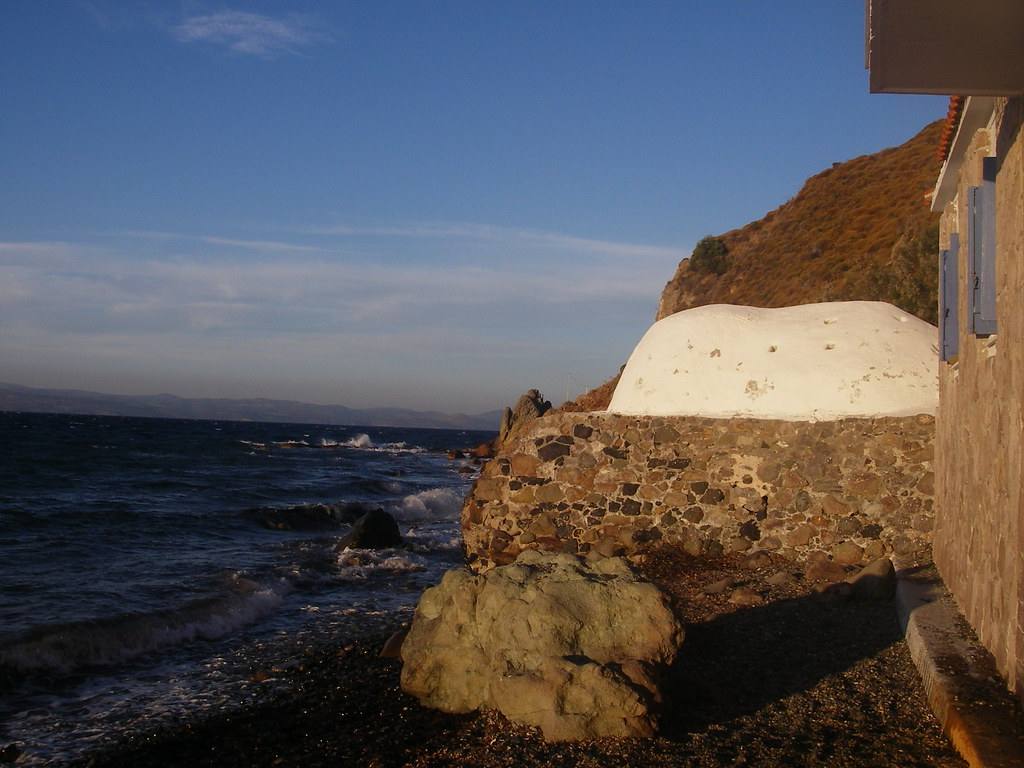
Lesbos is one of the richest hot-spring islands in Greece. A volcanic land whose thermal waters are among the hottest in Europe and have been prized since antiquity for their healing powers. Its best-known baths are at Eftalou on the north coast near Molyvos, where mineral water of around 46 degrees Celsius fills a domed stone bathhouse by the sea. At Polichnitos in the south. Whose springs reach a scalding 62 to 87 degrees, ranking among the hottest on the continent. And at Gera, Thermi and Lisvori, each with its own historic spa.
Rich in minerals and reputed to ease rheumatism, arthritis and other ailments, the hot springs of Lesbos offer both a wellness treat and a link to the island’s ancient past. This guide covers each of the main thermal baths and how to visit them.
Here you will find everything about the hot springs of Lesbos: the thermal baths of Eftalou near Molyvos, the scalding springs of Polichnitos in the south. The spas at Gera, Thermi and Lisvori, the minerals and health benefits of the waters. Practical advice on visiting the island’s thermal baths.
What are the hot springs of Lesbos?
The hot springs of Lesbos are natural thermal baths fed by the island’s volcanic geology, among the hottest in Europe.
A volcanic island, Lesbos is exceptionally rich in natural hot springs, and bathing in their warm, mineral-laden waters is one of the island’s most distinctive experiences. The same volcanic activity that created the famous Petrified Forest heats groundwater deep underground and sends it to the surface as thermal springs at points around the island.
The thermal waters of Lesbos are counted among the hottest in Europe, and their healing properties have been valued since ancient times, when bathing establishments were built to harness them. Today the springs rise in traditional domed bathhouses and modern spa pools, offering visitors both therapy and relaxation.
The principal hot springs are at Eftalou on the north coast near Molyvos. At Polichnitos and nearby Lisvori in the south, at Gera on the eponymous gulf. At Thermi north of the capital. Each has its own character, temperature and mineral content, and together they make Lesbos a leading destination for thermal and wellness tourism in Greece.
What are the Eftalou hot springs near Molyvos?
The Eftalou hot springs lie on the north coast of Lesbos, a short distance from Molyvos.
The most famous and popular hot springs on Lesbos are those at Eftalou, on the northern coast just kilometres east of the beautiful castle town of Molyvos. Set right beside the sea, they are the classic thermal bathing experience of the island and a highlight of a stay in the north.
The thermal water at Eftalou emerges at a temperature of around 46 degrees Celsius and is rich in minerals including chloride. Sodium and radium, reputed to help with chronic rheumatism, arthritis, sciatica and other conditions. The spring feeds a traditional domed stone bathhouse, recently modernised, offering a choice of private tubs and a communal bathing chamber.
Bathing in the hot pool of the old vaulted bathhouse, then cooling off in the sea just outside. Is a memorable ritual. The setting on the wild north coast is beautiful. Eftalou is easily reached from Molyvos by a short drive, taxi or scenic walk, with an entry fee of only euros, making it a fine half-day outing.
How hot are the Polichnitos hot springs?
The Polichnitos hot springs are among the hottest in Europe, rising at 62 to 87 degrees Celsius.
In the south of the island, near the town of Polichnitos on the Gulf of Kalloni. Are the Polichnitos hot springs, which count among the very hottest thermal springs in the whole of Europe. The water surfaces at a scalding 62 to 87 degrees Celsius, so hot that it is cooled and channelled into the bathing pools of the spa.
The transparent, odourless water is exceptionally rich in minerals, containing chloride and sulphate salts of sodium and calcium. Free carbon dioxide, iron, magnesium and traces of iodine and bromine, a composition reputed to help with rheumatism and joint conditions. The springs feed a restored spa complex with covered pools, about a kilometre from the town.
Near Polichnitos, the smaller springs of Lisvori offer a further, more rustic thermal experience, with their own traditional bathhouse. Together the Polichnitos and Lisvori springs make the south of Lesbos, around the Gulf of Kalloni. A notable centre for thermal bathing, complementing the famous baths of Eftalou in the north.
What other thermal baths are on Lesbos?
Besides Eftalou and Polichnitos, Lesbos has historic thermal baths at Gera and at Thermi.
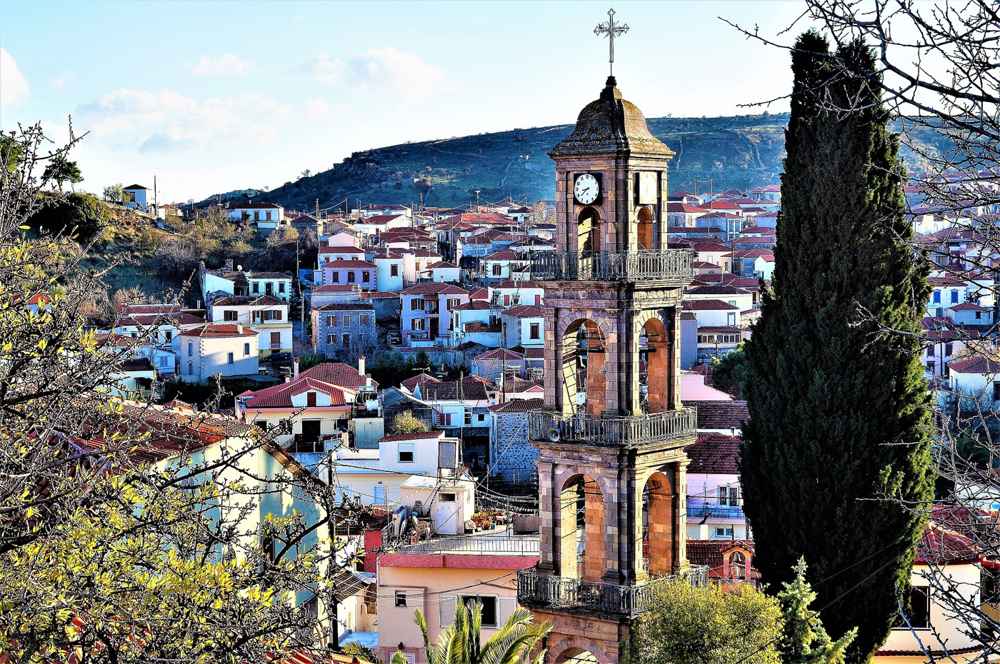
Beyond the celebrated springs of Eftalou and Polichnitos, Lesbos has further historic thermal baths that add to its standing as a spa island. On the shore of the Gulf of Gera, in the south-east, the Gera hot springs rise at around 39 to 44 degrees Celsius into a handsome restored stone bathhouse. Whose mineral waters are used for rheumatism and skin conditions.
North of the capital Mytilene, the springs of Thermi give their name to a village and rank among the oldest established spa resorts in Greece. With a bathing tradition going back to antiquity and a long history as a health retreat. Its warm mineral waters are drawn on for wellness and therapeutic bathing.
These springs, together with Eftalou, Polichnitos and Lisvori, mean that thermal bathing is possible across much of Lesbos, from the north coast to the two great gulfs of the south. Wherever you base yourself on the island, a restorative soak in a historic hot spring is rarely far away.
What are the health benefits of the Lesbos hot springs?
The Lesbos hot springs are rich in minerals such as sodium, chloride, sulphur, iron and calcium salts, and their warm waters are valued for easing rheumatism, arthritis, sciatica and skin and gynaecological conditions.
The thermal waters of Lesbos have been valued for their healing properties since antiquity, which is why bathing establishments were built at the springs in ancient and later times. Their reputation rests on the high mineral content of the water and its natural heat, both drawn from the island’s volcanic geology.
Depending on the spring, the waters are rich in minerals such as sodium, chloride, sulphur, calcium and iron salts, carbon dioxide and traces of iodine and bromine. These are traditionally reputed to help with chronic rheumatism, arthritis, sciatica, and certain skin and gynaecological conditions, and the springs have long drawn visitors seeking relief.
Beyond the specific therapeutic claims, soaking in warm mineral water relaxes the muscles. Eases tension and relieves stress. A visit to the hot springs is as much a wellness treat as a cure. Combined with the beautiful settings, from the seaside bathhouse of Eftalou to the spa pools of Polichnitos, the springs offer both body and mind a genuine tonic.
How do you visit the hot springs of Lesbos?
You visit the hot springs of Lesbos by hire car, as they lie far apart across the island. Eftalou is a short drive from Molyvos, Polichnitos and Lisvori are in the south, and Gera and Thermi near Mytilene.
Visiting the hot springs of Lesbos is easy and inexpensive, but because they are scattered across this large island a hire car is the practical way to reach them. Eftalou lies just east of Molyvos in the north. Polichnitos and Lisvori are in the south near the Gulf of Kalloni. Gera and Thermi sit close to the capital in the south-east.
Entry to the thermal baths costs only euros per person. The springs generally offer both communal pools and private tubs, so it is worth taking a swimsuit, a towel and sandals. The bathhouses operate mainly from spring through autumn, with set opening hours, so checking times locally before setting out is wise.
A soak in the hot springs pairs naturally with the rest of a trip to Lesbos: Eftalou with a stay around Molyvos, Polichnitos with birdwatching on the Gulf of Kalloni, and all of them as one of the most relaxing things to do on the island. For where to base yourself near the springs, see our guide on where to stay in Lesbos.
Which Lesbos hot spring you choose?
Choose Eftalou for the classic seaside bathhouse near Molyvos and a gentle 46-degree soak, Polichnitos for the hottest, most mineral-rich waters in the south, and Gera or Thermi for historic spas near Mytilene.
With thermal baths spread across Lesbos, the spring you choose depends mostly on where you are staying and the kind of experience you want. For visitors based in the north around Molyvos and Petra, the seaside bathhouse at Eftalou is the obvious and most atmospheric choice. Combining a warm mineral soak with a swim in the sea just outside.
Travellers in the south or exploring the Gulf of Kalloni are best placed for the intensely hot, mineral-rich springs of Polichnitos and the rustic baths of Lisvori, while those staying in or near the capital Mytilene will find the historic spas of Gera, on its own gulf. Thermi, one of the oldest in Greece, within a short drive.
For a first thermal experience on Lesbos, Eftalou is the classic recommendation for its beauty, gentle temperature and easy access, while enthusiasts of hot-spring bathing will want to seek out Polichnitos for the sheer heat and mineral strength of its waters. Wherever you are on the island, a restorative soak is close at hand.
Frequently Asked Questions
Are the Lesbos hot springs among the hottest in Europe?
Yes, the hot springs of Lesbos are genuinely among the hottest natural thermal springs in Europe. Which is one of the reasons the island is so notable for thermal bathing and wellness tourism. The most extreme are the springs at Polichnitos, in the south of the island near the Gulf of Kalloni, where the mineral water surfaces at a scalding temperature of roughly 62 to 87 degrees Celsius. Hot enough that it has to be cooled and channelled before it can be used in the bathing pools of the spa. These are frequently cited among the hottest hot springs on the entire continent.
The famous springs at Eftalou on the north coast near Molyvos are cooler but still very warm, emerging at around 46 degrees Celsius. An ideal temperature for a therapeutic soak in the traditional domed bathhouse beside the sea, while the springs at Gera on the Gulf of Gera rise at around 39 to 44 degrees. This exceptional heat comes from the island’s volcanic geology. The same underground activity that long ago created the celebrated Petrified Forest in the west of Lesbos. It is combined with a very high mineral content that gives the waters their reputed healing properties.
Visitors can choose between the gentler warmth of Eftalou and Gera and the intense heat harnessed at Polichnitos. The springs are managed so that the bathing pools are at a safe and comfortable temperature. Taken together, the heat and mineral richness of its thermal waters place Lesbos firmly among the leading hot-spring destinations in Greece and Europe.
Do you pay to use the hot springs on Lesbos?
Yes, there is normally a small entry fee to use the developed hot springs on Lesbos. It is very modest, typically only euros per person. Which makes a visit to the thermal baths one of the most affordable and rewarding experiences on the island. At the popular Eftalou springs near Molyvos, for example, entry to the historic domed bathhouse costs around four euros. Giving access to the communal thermal pool, while private tubs are also available for a small charge for those who prefer to bathe in seclusion. The restored spa at Polichnitos in the south and the bathhouses at Gera and Lisvori operate on a similar basis.
Charging a low entry fee that covers the use of the bathing pools and basic facilities such as changing areas. Because the springs are simple, traditional establishments rather than luxury resorts, the emphasis is on the healing waters themselves rather than on elaborate spa services. The low cost reflects this. Visitors bring their own swimsuit, towel and sandals, as facilities are basic. It is worth checking the current opening hours locally, since the bathhouses generally operate from spring through to autumn and keep set daily hours. Overall, the tiny cost of entry, combined with the reputed therapeutic benefits of the mineral-rich water and the atmospheric settings.
Makes the hot springs of Lesbos excellent value and an experience well worth seeking out on a visit to the island.
When is the best time to visit the Lesbos hot springs?
The best time to visit the hot springs of Lesbos is during the warmer half of the year, from spring through to autumn, roughly April to October, when the bathhouses are reliably open and the mild weather makes bathing and travelling around the island most enjoyable. The developed thermal baths at Eftalou, Polichnitos, Gera and Lisvori generally operate seasonally. Opening from around spring and keeping set daily hours through the summer and into the autumn. A visit in these months guarantees that the springs will be accessible. In the depths of winter some of the bathhouses close or keep reduced hours, so it is always wise to check locally before setting out.
That said, the hot springs are enjoyable in any of the open months. Each season has its appeal: in the cooler days of spring and autumn the contrast between the crisp air and the hot mineral water is especially pleasurable. And the springs make a notable warming activity, while in high summer a soak is best enjoyed in the cooler morning or evening, often followed by a refreshing dip in the sea, as at the seaside bathhouse of Eftalou. Combining a visit to the springs with the island’s other seasonal draws works well too.
Pairing the Polichnitos baths with the celebrated spring birdwatching on the nearby Gulf of Kalloni, or the Eftalou springs with a summer beach holiday around Molyvos. In short, plan your thermal bathing for the spring-to-autumn season for the surest access and the most comfortable experience. Simply check the current opening hours of each bathhouse before you go.