
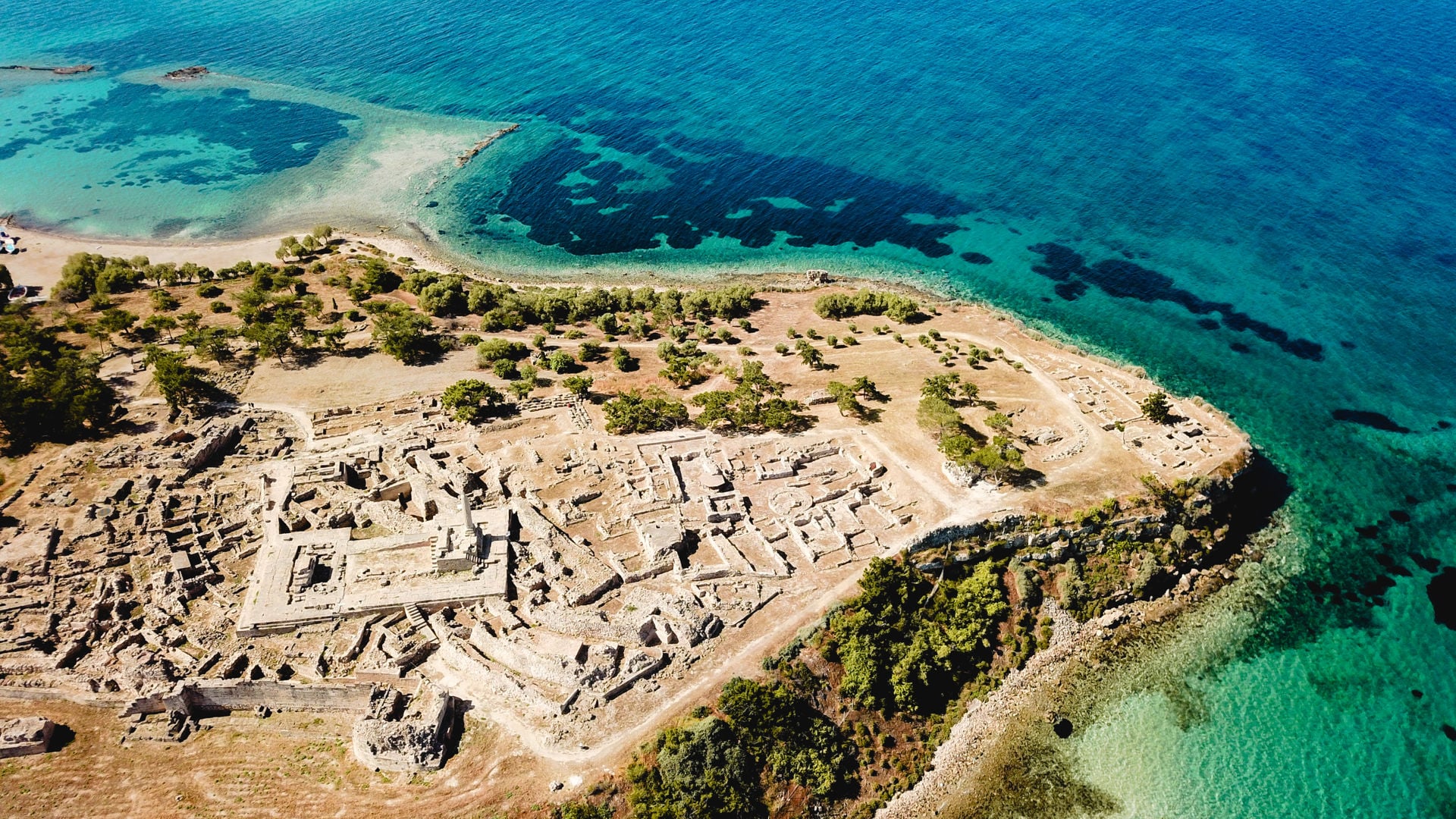
Greek history is a long, winding tapestry, told in stone, on islands, and in the stories people still pass along at seaside kafeneia. Plan the whole trip with Greece Tours. As guides and locals who grew up among these ruins, we’ve seen how threads from Bronze Age palaces to modern independence shape travelers’ experiences.
In this guide, we’ll walk through the key periods you should know before booking Greece tours or planning an island-hopping itinerary. We’ll highlight sites to visit, what to expect on guided tours, and a few practical tips to make history come alive when you’re in Athens, Crete, Santorini, Meteora, Delphi, and beyond.
Early Civilizations: Minoans And Mycenaeans (Bronze Age)
Minoan Crete: Palaces, Trade, And Art
When discussing the earliest complex societies in Greece, we begin on the island of Crete. The Minoans, flourishing roughly 2700–1450 BCE, built elaborate palace complexes at Knossos, Phaistos, and Malia. These weren’t just residences: they were administrative hubs for a maritime trading power. Walking through Knossos, you can still see the multi-level layout, vibrant fresco fragments, and the light-filled courts that hint at a sophisticated civic life.
The Minoan economy hinged on trade across the Mediterranean. Pottery, olive oil, and possibly textiles moved between Crete, the Cyclades, Egypt, and the Levant. Their art, fluid figures, dolphins, and Tlilies, reflects a culture comfortable with the sea and ornament. For modern travelers who book Crete tours or archaeological visits, a visit to a Minoan palace is often the first encounter with how early Aegean societies organized their economies and rituals.
We recommend pairing a visit to Knossos with a local guide who can explain fresco iconography and recent archaeological debates: Was Knossos a centralized palace state or a networked series of elites? A guided tour adds context that placards rarely convey.
Mycenaean Mainland: Fortresses, Linear B, And Collapse
On the mainland, the Mycenaeans (circa 1600–1100 BCE) left a different imprint: massive citadels, beehive tombs (tholos), and a warrior elite immortalized in later epic poetry. Mycenae, Tiryns, and Pylos show cyclopean walls, so named because later Greeks imagined only giants could move such stones. The palace at Pylos provided clay tablets written in Linear B, an early form of Greek used for administrative records. Deciphered in the 1950s, Linear B linked the Mycenaeans linguistically to later Greeks and confirmed a palace bureaucracy that controlled goods and labor.
The end of the Mycenaean world remains a subject of study and debate. Around 1200 BCE, many palaces were destroyed or abandoned, possibly due to a mix of sea peoples, internal unrest, economic collapse, and climatic stress. That collapse led to the Greek Dark Ages, a period of cultural contraction but also the soil from which the later polis (city-state) grew.
For travelers interested in archaeological tours in Greece, Mycenae and Pylos are must-sees. A private guided tour to Mycenae from Nafplio or Athens gives visitors a sense of scale and the human stories behind the ruins, families, craftsmen, scribes, and remnants of a complex Bronze Age world.
The Greek Dark Ages And The Rise Of City-States
Archaic Greece: Colonization, Political Innovation, And Culture
Following the Bronze Age collapse (roughly 1100–800 BCE), Greece entered a quieter archaeological period and a more creative cultural one. The so-called Dark Ages saw population shifts and a decline in writing, but by the Archaic period (circa 800–480 BCE), communities began to rebound. Pottery styles, new sanctuaries, and the return of literacy (with the alphabet adapted from Phoenician script) signal renewal.
Archaic Greece is notable for colonization: Greek city-states founded settlements across the Mediterranean, from southern Italy and Sicily to the Black Sea. These colonies spread the Greek language and trade networks and created wealth that later fed cultural flowering.
Politically, the polis matured. We see the rise of constitutions, tyrannies, oligarchies, and experiments in civic organization that set the stage for Classical democracy and law. Poets like Hesiod and Homer (as oral traditions recorded and later transcribed) gave the Greeks shared myths and genealogies that anchored identity across regions.
For visitors planning cultural tours in Greece, this era explains why so many sites across islands and the mainland look related but distinct. Small-group tours often include archaeological museums that display pottery and sculpture from the Archaic period, which helps on-site ruins make sense.
Classical Greece: Athens, Sparta, And The Persian Wars
Athenian Democracy And Civic Life
The Classical age (circa 480–323 BCE) is what many people picture when they think of “ancient Greece.” After the Persian invasions, Athens became the intellectual and cultural heart of much of the Greek-speaking world. Democracy in Athens was not universal by modern standards; citizenship excluded women, slaves, and metics (resident foreigners), but it was revolutionary: assemblies, juries, and public debate defined civic life.
Visiting the Acropolis and its new Acropolis Museum is the best way to grasp Athenian civic identity. The Parthenon celebrates civic pride, religious devotion to Athena, and the aesthetic ideals that shaped Western art. For travelers booking Athens tours, a private guided tour of the Acropolis with a local guide can unpack the site’s architectural refinements, sculptural program, and how it functioned in everyday Athenian life.
Military Power And Society In Sparta
On the Peloponnese, Sparta developed a very different model: a militarized, oligarchic society centered on a citizen-warrior class. Spartan boys underwent the agoge, state-directed training meant to produce disciplined soldiers. Spartans prized stability and obedience over cosmopolitan culture.
The clash between Athens and Sparta culminated in the Peloponnesian War (431–404 BCE), a conflict that reshaped Greek politics and exposed the limits of Athenian power. For visitors interested in military history, combining a visit to Sparta with nearby sites like Mystras and Olympia gives a perspective on regional diversity.
Culture, Philosophy, And The Arts In The Classical Age
The Classical period gave birth to philosophy, drama, and historiography. Socrates, Plato, and Aristotle set frameworks for ethics, metaphysics, and political thought that still inform debate. Tragedians such as Aeschylus, Sophocles, and Euripides, and comic poets such as Aristophanes, turned theater into a civic institution.
Art and architecture emphasized proportion and humanism. Sculptors like Phidias and Polykleitos pursued idealized but grounded representations of the body. Visit national museums in Athens or undertake a walking cultural tour to see original works and high-quality casts that bring this era into focus.
For first-time visitors booking the best tours in Greece, the Classical period is the narrative backbone most guides emphasize: it’s the era you’ll hear about on Acropolis guided tours, in museum narratives, and on historical walking routes.
The Hellenistic Era: Alexander The Great And Successor Kingdoms
Alexander’s Conquests And The Spread Of Hellenism
When we move beyond the Classical world, Alexander the Great (356–323 BCE) radically expanded Greek influence. In less than a decade, he conquered Persia and Egypt and reached into India, creating a network of interconnected cities and trade routes. Alexander’s campaigns spread Greek language, art, and political models: in return, his armies absorbed local customs, producing a blended Hellenistic culture.
Cities like Alexandria in Egypt epitomize this era: royal patronage of libraries, schools, and diverse populations produced centers of learning and commerce. For travelers interested in broader Mediterranean tours, recognizing Hellenistic traces, city grids, bilingual inscriptions, and syncretic art helps explain why Greek culture left lasting marks far beyond modern Greece.
Hellenistic Science, Cities, And Cultural Fusion
The Hellenistic age fostered scientific advances: Euclid in geometry, Archimedes in mathematics and mechanics, Hipparchus in astronomy. Artistic styles grew more expressive and cosmopolitan; portraiture, emotional realism, and complex group compositions replaced Classical restraint.
Archaeological sites and museums in Thessaloniki, Athens, and abroad show Hellenistic sculpture and coins that illustrate economic connectivity. For those booking Greece guided tours, Hellenistic layers often appear beneath later Roman structures: a knowledgeable guide can point these out and explain how local traditions adapted under new rulers.
Roman And Byzantine Greece: Transformation And Continuity
Roman Rule: Integration Into The Empire
Greece entered the Roman sphere in the 2nd century BCE. Roman rule brought infrastructure, roads, aqueducts, theaters, and new administrative frameworks. Cities like Corinth and Athens remained cultural hubs: Romans admired Greek education and philosophy, often hiring Greek tutors for their children.
Integration didn’t mean the disappearance of Greek identity. Instead, Hellenic culture merged with Roman law and governance. Visiting Roman-era sites, such as the theater at Philippi or Hadrian’s Library in Athens, helps visitors see layered histories of coexistence between Greeks and Romans.
Byzantine Greece: Christianity, Art, And Administration
As the Roman world transformed into the Byzantine Empire (the Eastern Roman Empire), Greece became a core region of Orthodox Christianity. From roughly the 4th century CE onward, churches, monasteries, and iconography reshaped spiritual life. Byzantine art favored mosaics, icons, and domed churches, each reflecting theology in stone and glass.
Monasteries like those at Meteora are outstanding achievements of the Byzantine era. Perched on sandstone pillars, Meteora’s monasteries preserve manuscripts, frescoes, and monastic buildings that reveal a spiritual continuity through turbulent centuries.
For travelers, combining Byzantine site visits with archaeological and cultural tours offers a fuller picture: Greece was never a single civilization but an evolving set of identities that built on earlier foundations.
Ottoman Rule And The Road To Independence
Life Under Ottoman Rule: Society, Economy, And Identity
From the mid-15th century, much of Greece came under Ottoman rule. This period lasted several centuries and varied widely by region. Cities like Thessaloniki became cosmopolitan centers with Muslim, Christian, and Jewish communities. Rural life often continued under local notables and village structures, while the millet system allowed some religious autonomy.
Economic life changed, taxation, land tenure, and trade networks shifted, but so did cultural practices. Folk music, cuisine, and popular religion blended Ottoman, Byzantine, and local influences. When we lead food and culture tours, these layers come up naturally: many dishes and crafts reflect centuries of shared history.
The Greek War Of Independence And The Birth Of The Modern State
The 19th century saw a growing national movement. Intellectuals, diaspora merchants, and secret societies, supported by philhellenic sympathy abroad, pushed for independence. The Greek War of Independence (1821–1830) combined guerrilla warfare, sieges, and diplomatic struggles. Philhellenes like Lord Byron and foreign volunteers joined the cause: naval leaders like Laskarina Bouboulina were heroes of the sea.
Establishing a modern Greek state was messy: borders were negotiated, monarchs were installed, and new administrative systems created. But by the mid-19th century, Greece began consolidating territory and institutions. For travelers, sites tied to independence, museums in Nafplio, monuments in Athens, bring this era into immediate focus. When planning historical tours or custom Greece travel itineraries, we often include independence-era museums to show the continuity from antiquity to modern nationhood.
Modern Greece: Nation Building, Conflict, And Recovery
19th And Early 20th Century: Politics, Expansion, And Population Changes
After independence, Greece experienced waves of territorial expansion, particularly after the Balkan Wars (1912–1913). The population exchanges following World War I and the Greco-Turkish War (1919–1922) reshaped demographics. Refugees from Asia Minor settled in mainland Greece and islands, bringing new skills, cuisine, and urban energy.
We see traces of this in neighborhoods of Thessaloniki and Athens, where architecture and culinary traditions recall their origins in Asia Minor. For culture-focused tours, neighborhoods and food-walking experiences tell stories that archaeological sites alone cannot.
World War II, Civil War, And Late 20th Century Development
World War II and the German occupation left deep scars. Post-war civil conflict (1946–1949) further strained society. Recovery in the latter 20th century included economic modernization, urbanization, and integration into European institutions. Greece joined the European Economic Community in 1981.
Tourism’s modern boom dates from the late 20th century; by now, the tourism industry, including small-group tours and luxury private tours in the Greek islands, is central to the economy. Our team at MyGreeceTours designs itineraries that respect this complex past: we show ancient ruins and also the 20th-century neighborhoods, wartime memorials, and refugee histories that shaped modern Greek life.
Cultural Contributions And Enduring Influence
Language, Literature, Philosophy, And Political Ideas
Greek contributions are foundational to Western thought. The language itself, ancient Greek, gave us terms, genres, and concepts still used in philosophy, science, and literature. Homeric epics shaped narrative identity: classical historians like Herodotus and Thucydides developed historical inquiry; philosophers codified ethical and political frameworks.
We often find visitors surprised by how tangible these intellectual legacies feel: dialogues from Plato, tragedies written for civic festivals, and democratic practices all began as lived institutions. When booking historical tours in Greece, look for guides who can connect texts to places; you’ll leave with a clearer sense of how ideas circulated in city-states and then across empires.
Architecture, Sculpture, And The Olympic Tradition
Greek architecture and sculpture set aesthetic standards: Doric, Ionic, and Corinthian orders, and an emphasis on proportion that influenced Roman and later Western architecture. Public spaces, agoras, theaters, and stoas structured civic life and remain visible in urban plans across Greece.
The Olympic tradition, revived in modern form in 1896, dates back to ancient festivals at Olympia. Visiting Olympia on a Peloponnese tour brings that continuity into relief: athletic competition, religious ritual, and communal identity all converged there. For travelers interested in cultural tours, the Olympic site and museums are evocative complements to classical ruins.
How To Experience Greek History Today (Sites, Tours, And Practical Tips)
Must-See Historical Sites And Regional Highlights
- Athens: The Acropolis, Acropolis Museum, Ancient Agora, and the National Archaeological Museum. These form the core of any historical visit.
- Crete: Knossos and Heraklion Archaeological Museum for Minoan history.
- Peloponnese: Mycenae, Epidaurus (the theater), Olympia, and Nafplio for independence-era history.
- Delphi: The sanctuary and Oracle, great for a Delphi day trip from Athens.
- Meteora: Monasteries clinging to pillars, perfect for day trips from Athens or a region-focused tour.
- Islands: Santorini for Bronze Age Akrotiri and spectacular Hellenistic/Roman finds, Mykonos for classical-era connections and sailing: smaller islands for vernacular architecture and folk traditions.
When we design itineraries, we mix big-ticket sites with regional highlights, Pelion villages, lesser-known Byzantine churches, or a winery near Santorini, so travelers get both iconic moments and authentic local experiences.
Choosing Tours, Local Guides, And Planning Historical Visits
We recommend small group or private guided tours when visiting key sites. A local guide adds storytelling that connects stones to people. For first-time visitors, book an Acropolis guided tour and a full-day Delphi tour from Athens early in your stay; these sites give historical framing that makes later museum visits richer.
For island hopping or multi-day packages, choose operators that offer customizable Greece tour itineraries. If you want archaeology with wine tasting or private historical tours in Athens combined with a sunset cruise in Santorini, ask for tailor-made packages. Our company, MyGreeceTours, emphasizes local guides who grew up nearby: that insider knowledge reveals hidden gems off standard itineraries.
Practical Tips For Visiting Archaeological Sites And Museums
- Time of day: Visit major sites early morning or late afternoon to avoid heat and crowds.
- Tickets and skip-the-line: Pre-book Acropolis and major museum tickets, or join tours that include reservations.
- Dress and respect: Many sites are sacred or fragile: wear sensible shoes, cover shoulders in certain churches, and don’t touch ancient masonry or mosaics.
- Combine experiences: Pair a site visit with a local food tour or museum stop to connect material culture with daily life.
- Accessibility: Some sites (like Meteora) have steep climbs: check accessibility and bring water, sun protection, and flexible plans if traveling with family.
We always advise travelers to balance famous ruins with local neighborhoods; sometimes, a walk through a market or an afternoon at a small regional museum gives more human context than another panoramic photo.
Conclusion
Greek history is not a single story but an accumulation of eras that speak to trade, conquest, cultural invention, and resilience. From Minoan frescoes to Byzantine mosaics, and from Alexander’s cities to the tavernas of today, we see continuity and reinvention. When you book Greece tours, whether private guided tours in Athens, small group cultural tours across the islands, or island-hopping packages, choose experiences that connect ruins to real lives.
As locals and guides who’ve spent summers island-hopping from Milos to Corfu and exploring sites like Knossos, Meteora, and Delphi, we believe the best tours blend scholarship with stories. Let history guide your route, but let local people make it memorable. If you’re planning a 7-day Athens–Santorini itinerary, a 10-day island-hopping plan, or a private archaeological tour, we can help design an experience that respects the past and delights the present, because Greek history is best felt in place, with good company and a curious mind.
Frequently Asked Questions
What key periods of Greek history should I know before booking tours?
Greek history you should know includes the Bronze Age Minoans and Mycenaeans, the Archaic rise of city-states, Classical Athens and Sparta, the Hellenistic spread under Alexander, the Roman and Byzantine continuities, Ottoman rule, and the 19th-century War of Independence—each shaping the sites you’ll visit on Greece tours.
Which must-see historical sites reflect the main eras of Greek history?
Visit Knossos (Minoan Crete), Mycenae and Epidaurus (Bronze Age and Archaic), the Acropolis and Agora (Classical Athens), Delphi and Olympia (religion and games), Meteora (Byzantine monasteries), and Nafplio or independence museums to trace Ottoman rule and modern nation-building.
How can I best experience Greek history on a short 7-day Athens–Santorini itinerary?
Balance two full days in Athens for the Acropolis, Agora, and National Archaeological Museum, then ferry or fly to Santorini for Akrotiri and local museums. Book a private guided Acropolis tour and a visit to Santorini archaeology sites to connect the sites with historical context and save time with prebooked tickets.
What practical tips help make archaeological sites more meaningful and comfortable to visit?
Go early or late to avoid crowds and heat, prebook skip-the-line tickets or guided tours, wear sensible shoes and sun protection, respect fragile sites, and pair site visits with a local museum or food tour to connect artifacts to daily life—local guides (like Yannis) add storytelling that brings ruins to life.
How did Minoan Crete differ from Mycenaean mainland societies?
Minoan Crete (c. 2700–1450 BCE) centered on maritime palaces, trade, and vibrant fresco art, while Mycenaeans (c. 1600–1100 BCE) built fortified citadels, used Linear B bureaucracy, and emphasized warrior elites. Their collapse led to the Dark Ages, after which city-states and new institutions emerged.
Read more about Greece Tours:
- Greece Walking Tours: The Ultimate Guide To Exploring On Foot
- Greece Tours From Athens
- Greece Tour Operators
- Greece Private Tours: The Ultimate Guide To Personalized Travel
- Essential Greek Phrases for Travelers
- Best Time To Visit Greece: When To Go For Weather, Crowds, And Authentic Experiences
- Greece Boat Tours: A Practical Guide For Athens And Attica Visitors