
The best time to visit Aegina is generally from late spring to early autumn, from around April to June and again in September and October, when the weather is warm and pleasant but the fierce heat and crowds of high summer are avoided. Thanks to its mild Mediterranean climate and its closeness to Athens, Aegina is a rewarding destination almost year-round, but each season has its own character. Spring brings wildflowers and comfortable sightseeing weather, summer offers hot days and warm seas ideal for the beach. Autumn combines pleasant temperatures with the island’s famous pistachio harvest and festival. Winter is quiet, cool and green.
Choosing when to go depends on whether your priority is swimming, sightseeing, festivals or simply avoiding the crowds.
This guide looks at the best time to visit Aegina season by season, explaining the island’s weather through the year and what each part of the calendar offers. From spring flowers and summer beaches to the September pistachio festival and the peaceful winter months. You can pick the ideal time for the kind of trip you want.
When is the best time to visit Aegina overall?
The best time to visit Aegina overall is late spring and early autumn, roughly April to June and September to October.
For most travellers, the ideal time to visit Aegina falls in the shoulder seasons on either side of high summer. From April to June in spring. September into October in autumn, the island enjoys warm, comfortable weather that is perfect for exploring its ancient sites and villages, while by late spring and through autumn the sea is warm enough for swimming, giving the best of both worlds.
These months also avoid the two drawbacks of the peak season: the intense heat of midsummer, which can make sightseeing tiring. The biggest crowds, which descend in July and August. In spring and autumn the island is quieter and more relaxed, prices can be gentler. The landscape is at its most beautiful. Green and flower-strewn in spring, golden and mellow in autumn.
That said, the right time really depends on your priorities. If your heart is set on long, hot beach days, high summer delivers, while if you want festivals, autumn brings the famous pistachio harvest. For a balance of good weather, swimming, sightseeing and space to breathe, however, the shoulder months are hard to beat and are the classic recommendation for a visit to Aegina.
What is the weather like on Aegina?
Aegina has a mild Mediterranean climate, with hot, dry summers and mild, wetter winters. Summer temperatures often reach around thirty degrees Celsius, while winters are cool rather than cold, rarely freezing.
Aegina enjoys a typical Mediterranean climate, characterised by long, hot, dry summers and mild, relatively wet winters. In the height of summer, daytime temperatures commonly climb to around thirty degrees Celsius or a little more. With abundant sunshine and very little rain, giving reliably fine beach weather from June through September.
Winters, by contrast, are mild rather than harsh: temperatures rarely approach freezing. While the season brings the year’s rain and some cloudier. Cooler days, there are still plenty of bright, pleasant spells. Spring and autumn sit comfortably between these extremes, with warm, agreeable temperatures and generally settled weather. Which is a large part of why they are considered the best times to visit.
The island shares the sunny, dry summer weather of the wider Saronic Gulf and Athens region. Its position surrounded by sea keeps temperatures a touch more moderate and breezy than the mainland. Rainfall is concentrated in the months from late autumn to early spring, so a summer or shoulder-season trip is very unlikely to be disrupted by wet weather. Sea breezes off the Saronic Gulf often take the edge off the summer heat. Making even the hottest days more bearable near the coast than in the city. The same breezes keep the evenings pleasant and comfortable for dining out by the harbour.
What is spring like on Aegina?
Spring on Aegina, from around March to May, is mild, green and beautiful, with wildflowers in the countryside and comfortable temperatures ideal for sightseeing.
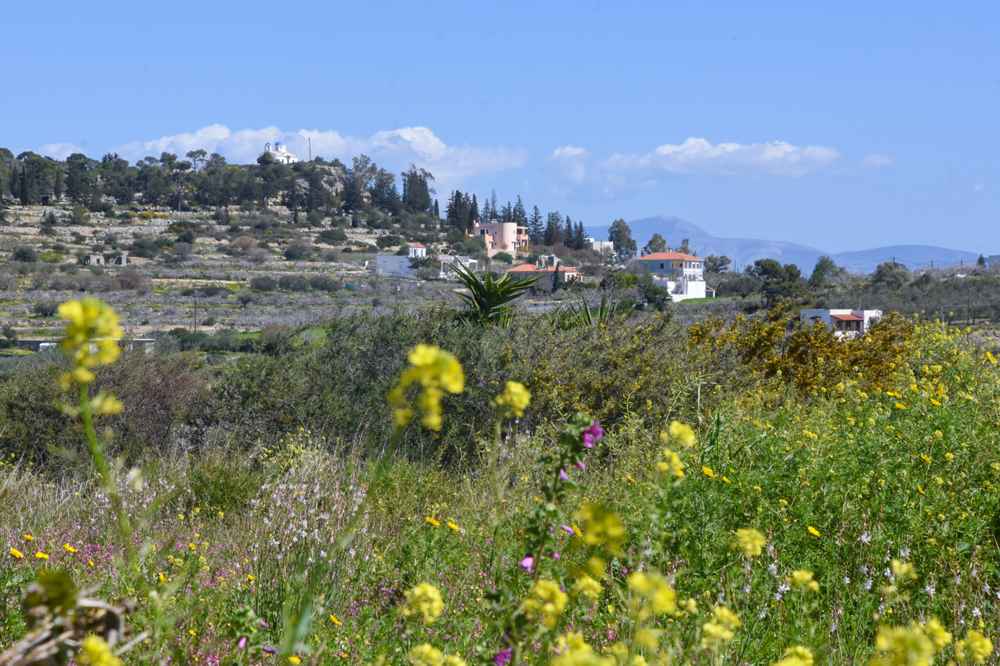
Spring is many people’s favourite time on Aegina. From March into May the weather grows steadily warmer and more settled. The countryside turns green. Wildflowers bloom across the hillsides and among the pistachio orchards, making the island exceptionally pretty. Temperatures are comfortable rather than hot, which is perfect for walking around the ancient sites and villages without the strain of the summer heat.
This is an excellent season for sightseeing: the Temple of Aphaia. The Monastery of Agios Nektarios and the ruins of Paleochora can all be enjoyed in mild, pleasant conditions and without the crowds of summer. The island feels relaxed and authentic, and the clear spring light is lovely for photography and for taking in the wide views over the Saronic Gulf.
By late spring, particularly in May. The sea has usually warmed enough for the first comfortable swims of the year. A spring visit can combine sightseeing with a little beach time. For those who want the beauty of the island at its freshest, with flowers. Greenery and space to explore, spring is one of the very best times to come to Aegina.
What is summer like on Aegina?
Summer on Aegina, from June to August, is hot, sunny and dry, with temperatures often around thirty degrees and warm, inviting seas.
Summer is the peak season on Aegina and the classic time for a Greek island holiday. From June through August the weather is hot, sunny and almost entirely dry. With daytime temperatures typically around thirty degrees Celsius. The sea is at its warmest and most inviting, making this the prime time for swimming and beach days.
This is when the island is at its liveliest, especially at weekends when Athenians pour across on the ferry. The sandy resort beach of Agia Marina and the coves around the coast fill with sunbathers, the tavernas and cafes are buzzing, and the atmosphere is festive. For a straightforward sun-and-sea holiday, summer delivers reliably warm, beautiful beach weather.
The trade-offs are the heat and the crowds. In the middle of a summer’s day the sun can be intense. Making long spells of sightseeing at exposed sites like the Temple of Aphaia tiring. It is best to explore monuments in the cooler morning or late afternoon and save the midday hours for the beach or a shady taverna. July and August also bring the biggest crowds and highest prices of the year.
What is autumn like on Aegina?
Autumn on Aegina, from September to November, brings warm early-autumn weather, a sea still warm from summer, and the island’s famous pistachio harvest, celebrated with the September Fistiki Fest.
Autumn is one of the most rewarding times to visit Aegina. In September and into October the fierce heat of high summer eases into warm, comfortable days, while the sea, having been heated all summer. Stays pleasantly warm for swimming well into the autumn. Beach days remain very much on the menu even as the crowds thin out.
The highlight of the season is the island’s celebrated pistachio harvest. Aegina’s pistachios are gathered in late summer and early autumn, and every September the island throws a lively festival, the Fistiki Fest, along the harbour of Aegina Town, with stalls, tastings, music and crowds celebrating the famous local nut. Timing a visit around the festival adds a real sense of occasion.
The weather gradually cools and the first rains return, and the island grows quieter, though it remains a pleasant time for sightseeing in mild conditions. For a blend of warm weather, swimming, festivity and fewer crowds, early autumn is the finest time of all to experience Aegina.
What is winter like on Aegina?
Winter on Aegina, from December to February, is mild but cool and the wettest, quietest time of year.
Winter is the low season on Aegina, and the island takes on a quiet, local character very different from the summer bustle. The weather is mild by northern European standards, with temperatures rarely near freezing. It is cool and brings the year’s rain, so this is not the time for beach holidays or swimming, and some seasonal tourist businesses close for the season.
What winter offers instead is peace and authenticity. The countryside is green from the rains, the pistachio trees are bare, and the island belongs once again to its residents. The main sights, the Temple of Aphaia, the Monastery of Agios Nektarios, the Kolona ruins and the museums. Remain open and can be enjoyed in tranquillity, often with hardly another visitor around.
Thanks to Aegina’s closeness to Athens, it also makes an easy and rewarding winter day trip from the city for those wanting a dose of sea air. History and fresh island food out of season. For travellers who value quiet and culture over sunbathing, and who do not mind cooler, changeable weather, winter has a calm charm all of its own.
When is the best time to visit Aegina for beaches, sightseeing and avoiding crowds?
For beaches and swimming, visit Aegina from June to September when the sea is warm. For sightseeing in comfortable weather, spring and autumn are ideal.
The best time really depends on what you want from your trip. For a beach holiday with warm seas and hot, sunny days, the summer months from June to September are ideal. With July and August the hottest and liveliest, though also the busiest. Late spring and early autumn still offer swimming in warm water with far fewer people around.
For sightseeing, spring and autumn are the sweet spot, offering mild, comfortable temperatures that make exploring the Temple of Aphaia. Paleochora and the island’s other sites a pleasure rather than a hot, tiring effort. These seasons also bathe the landscape in beautiful light and colour, whether spring’s flowers or autumn’s mellow tones.
To avoid the crowds while still enjoying fine weather, aim for the shoulder months of April to early June or September into October. Sidestepping the July and August peak when Athenians and tourists are most numerous. This way you get warm, pleasant conditions, a good chance of swimming, and a calmer, more authentic island experience, which for is the perfect combination and the ideal time to enjoy the island’s many things to do.
Frequently Asked Questions
What is the best month to visit Aegina?
There is no single perfect month. May, June, September and early October are widely considered the best times to visit Aegina. Offering the finest balance of warm weather, a sea suitable for swimming, and manageable crowds. May brings the beauty of late spring, with wildflowers, green countryside and the first warm swims, all in comfortable temperatures ideal for sightseeing. June is warm and sunny, on the cusp of summer, with the sea warming nicely but before the July and August crowds arrive. September is a particular favourite, combining hot. Summery weather and a sea still warm from the summer with the excitement of the island’s pistachio festival, the Fistiki Fest, and slightly thinner crowds.
Early October continues this pleasant autumn spell with mild days good for both swimming and exploring. July and August are excellent if your priority is guaranteed hot beach weather and a lively atmosphere, but they are also the hottest and most crowded months. For most visitors seeking a rounded experience of Aegina, one of the shoulder-season months is the ideal choice. If you are travelling specifically for the pistachio festival, aim for September and check the exact dates in advance, as they shift slightly from year to year around the harvest.
Favour April and May, whereas if warm, dependable beach weather is the priority, June offers it without the full crush of the high-summer peak.
Is Aegina worth visiting in winter?
Yes, Aegina can be well worth visiting in winter, provided you know what to expect and are not looking for a beach holiday. Winter is the island’s quiet, low season, with mild but cool weather, the year’s rainfall. A sea too cold for swimming, and some seasonal tourist businesses close during these months. However, thanks to its closeness to Athens, Aegina makes a notable winter day trip or short escape for those interested in history, culture and authentic island life. The main attractions, including the Temple of Aphaia, the Monastery of Agios Nektarios, the medieval ruins of Paleochora and the Kolona archaeological site with its museum.
All remain open and can be enjoyed in peace, often with almost no other visitors, which lends them a special atmosphere. The countryside is green from the winter rains, the harbour tavernas serve fresh seafood to a mostly local crowd, and the whole island feels calm and genuine. For travellers who prefer quiet, culture and lower prices to sunbathing. Who do not mind cooler, changeable weather, a winter visit to Aegina has a real charm of its own. It is also among the cheapest times to visit, with lower accommodation prices and a genuine. Unhurried welcome from the islanders.
The short ferry from Athens runs throughout the winter, so a spontaneous day trip on a bright, crisp day is always an easy option.
When can you swim on Aegina?
You can comfortably swim on Aegina from around late May or June through to October, when the sea is warm enough to enjoy. The water warms up through the spring. By late May the first proper swims of the year become pleasant, while the peak of sea temperature comes in the height of summer, from July to September, when the water is at its warmest and most inviting. Thanks to the sea retaining its summer warmth, swimming remains enjoyable well into the autumn, often through October, even as the air begins to cool and the crowds thin. The island’s best-known spot for a swim is the long, sandy, shallow beach of Agia Marina on the east coast.
Which is ideal for families. There are also quieter coves along the west coast and around Perdika, and the clear water off the little islet of Moni. Outside the warm months, from late autumn to early spring. The sea becomes too cold for most people to swim. A trip focused on the beach is best planned for the summer or the warmer edges of the shoulder seasons. As a rough guide, the sea is at its most refreshing in early summer, at its warmest in late summer.
Still very swimmable in the first half of autumn, so anyone whose main aim is swimming has a generous window of five months or so to choose from, peaking in the height of the season.