
Lefkada food is a rich, traditional Ionian cuisine built on fresh seafood, mountain produce, good olive oil and a lasting Venetian influence. Because the island joins the sea to a green, farmed interior, its cooking ranges from fish soups and cuttlefish in ink to lentils grown high on the plateau, cured salami and homemade pies. Simple, seasonal and full of flavour, Lefkada food rewards visitors who look beyond the tourist menus to the dishes the islanders actually cook. From a plate of grilled fish by the harbour to a slice of sweet ladopita, the tastes of the island are one of the great pleasures of a visit. Plan the whole trip with Greece Tours.
The character of Lefkada food comes from its ingredients and its history. Centuries of Venetian rule left their mark on dishes such as savoro, while the land yields the famous Englouvi lentils, aromatic salami, honey, olive oil and wine from indigenous grapes. Home cooks still make savoury and sweet pies by the season, and local sweets such as pasteli and mandolato fill the markets. This guide covers what defines Lefkada food, the seafood and savoro, the Englouvi lentils and salami. The homemade pies, the traditional sweets, the local wine. Where to taste it all on the island.
What defines Lefkada food?
Lefkada food is defined by fresh seafood, mountain produce such as lentils and salami, generous olive oil and a Venetian influence. It blends the flavours of the sea and the green interior into a simple, seasonal Ionian cuisine.
The essence of Lefkada food is the meeting of sea and mountain on one small island. Fishing villages supply fresh fish and seafood, while the green interior and the high plateau yield lentils, vegetables, olives, honey and wine. Good local olive oil ties the two together, dressing everything from a plate of fish to a bowl of pulses. This range, from the harbour to the hills, gives the island’s cooking more variety than its size suggest and makes eating a genuine part of exploring Lefkada.
History adds the final layer. Long centuries of Venetian rule in the Ionian left their mark on the local table, seen most clearly in dishes such as savoro, and the island’s cooking shares the broader Ionian love of herbs, vinegar and slow-cooked seafood. Like much of Greek cuisine, Lefkada food is seasonal and home-rooted, based on what the land and sea give at each time of year. The result is honest, flavourful cooking best enjoyed in the tavernas and homes of the island rather than from a standardised menu.
What seafood and fish dishes are part of Lefkada food?
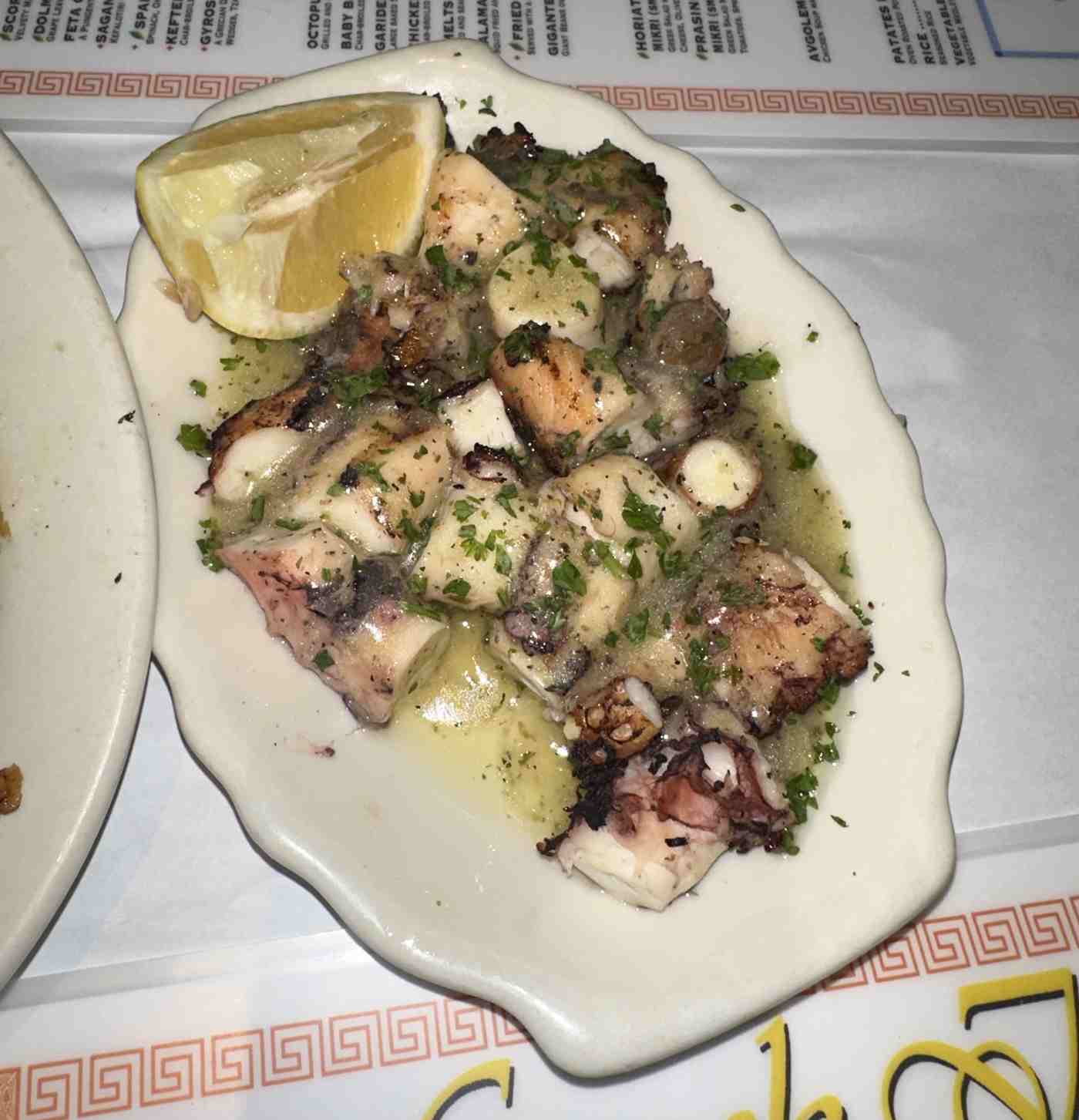
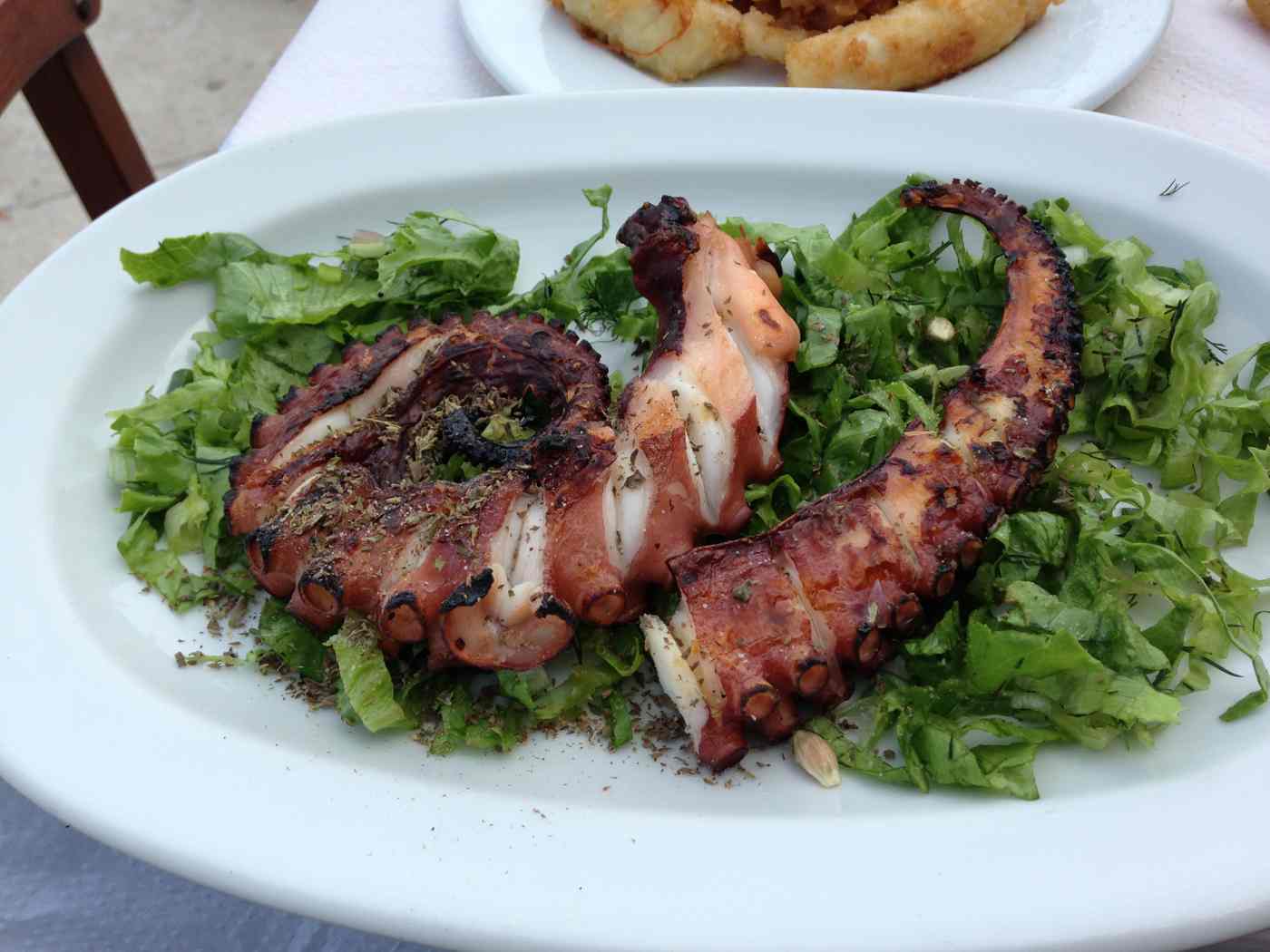
Seafood is central to Lefkada food, including fish soup, salted cod and sardines, cuttlefish cooked in their ink with rice, octopus, squid, mussels and scallops. The signature local dish is savoro, fried fish preserved with rosemary, garlic and vinegar.
Seafood sits at the heart of Lefkada food. The island’s waters and those around it give a rich variety, cooked in ways handed down for generations. There is fish soup, salted cod and sardines, cuttlefish stewed in its own ink with rice, and grilled or fried octopus, squid, mussels and scallops. Fresh fish, simply grilled and dressed with olive oil, lemon and herbs, is a staple of the harbour tavernas. Where the day’s catch comes straight from the local boats to the table, as at the fishing villages along the east coast.
The most distinctive seafood dish is savoro. In this traditional recipe, fried fish is preserved in a sauce of rosemary, garlic and vinegar. A method that both flavours the fish and keeps it. One that clearly shows the Venetian influence on the island’s cooking. Tangy, aromatic and deeply traditional, savoro is one of the tastes that most defines Lefkada food and a dish worth seeking out. Between it and the everyday grilled fish and seafood, the sea provides the backbone of the island’s table.
What are Englouvi lentils and Lefkada salami?
The Englouvi lentils are prized pulses grown high on the mountain plateau around the village of Englouvi, famous across Greece. The Lefkada salami is a cured sausage with a mild aroma of garlic and whole peppercorns.
From the mountains comes one of the island’s proudest products, the lentils of Englouvi. Grown by hand on the high plateau around the village, at one of the highest cultivated altitudes in Greece, these small. Tasty lentils are celebrated across the country and are the centrepiece of a hearty lentil dish that features on many a local table. Cooked simply with olive oil, they are a reminder that Lefkada food is as much about the green interior and its careful farming as about the sea.
The other great local speciality is the Lefkada salami. This cured sausage is known for its mild, fragrant aroma of garlic and its studding of whole peppercorns, which give it a distinctive look and taste. A traditional way of preserving meat, it is sliced as a meze or snack and sold in the island’s shops and markets as one of its trademark products. Together with the Englouvi lentils and the cured fish roe known as avgotaracho, the salami shows the range of prized ingredients that give Lefkada food its identity beyond the seafood.
What pies and savoury dishes do people cook in Lefkada?
Home cooks in Lefkada make savoury pies by the season, filled with wild aromatic greens, rice (rizopita) or pasta (makaronopita). These homemade pies, along with vegetable and pulse dishes, are a mainstay of everyday island cooking.
Pies are a cornerstone of everyday Lefkada food. According to the season, home cooks prepare pies filled with wild aromatic greens gathered from the hillsides. With rice in the version known as rizopita, or with pasta in the makaronopita. Wrapped in homemade pastry and baked, these pies make a satisfying meal or meze and vary from household to household and from month to month, following whatever the land provides. They belong to the deep tradition of Greek pit-making and are among the most authentic tastes of the island.
Alongside the pies, the interior of the island provides plenty of vegetable and pulse dishes. The Englouvi lentils, beans, seasonal vegetables and greens, all dressed with the island’s olive oil, make up the everyday cooking that sustained Lefkada long before tourism. These simple, seasonal dishes, served in homes and traditional tavernas, are the heart of the local table. To eat them is to taste the real, home-rooted side of Lefkada food, the cooking of the villages rather than the seafront menus.
What traditional sweets and desserts come from Lefkada?
Traditional Lefkada sweets include ladopita, a halva-like dessert made with olive oil, flour and sugar; pasteli, a sesame and honey bar; and mandolato nougat with mandoles, caramelised almonds. These sweets are found in the island’s shops and markets.
Lefkada has a fine tradition of sweets, several of them tied to festivals and the seasons. Ladopita is a local, halva-like dessert made with olive oil, flour and sugar, traditionally prepared at New Year, rich and satisfying in the way of oil-based sweets. It reflects the central role of olive oil in the island’s cooking, extending even into the dessert course, and is one of the more distinctive sweet tastes of Lefkada food.
The markets and shops of the island are also full of other traditional treats. Pasteli, the classic bar of sesame seeds bound with honey, is a wholesome, energy-rich sweet found across Greece but proudly made here, while mandolato, a soft nougat. Mandoles, caramelised almonds, are popular local confections often bought as gifts and souvenirs. Sweet homemade pies of pumpkin and other fillings appear by the season too. These sweets round out Lefkada food, offering a gentle, honeyed finish to the island’s savoury flavours.
What wine and drinks does Lefkada produce?
Lefkada has a promising wine industry, producing red and white wines from indigenous grapes, notably the deep-coloured red Vertzami. Local vineyards offer tastings, and the wine, along with olive oil and honey, completes the island’s food culture.
Wine is part of the pleasure of Lefkada food. The island has a growing wine industry that works with indigenous grape varieties, most famously the Vertzami, a dark-skinned red grape that gives deep, robust wines closely associated with Lefkada. Both red and white wines are made here, and some local vineyards welcome visitors for tastings, offering a chance to sample the island’s wines alongside its cooking. A glass of local red with grilled fish or lentils is a fitting match for the honest flavours of the island.
Beyond wine, the island produces other good things to accompany its food. Its olive oil is central to almost every dish, from savoury pies to the sweet ladopita, and local honey sweetens pasteli and other treats. Together, wine, olive oil and honey round out the island’s food culture, all drawn from the same green land that yields the lentils and the greens. Tasting these local products is one of the best ways to appreciate the depth and authenticity of Lefkada food.
Where can you taste Lefkada food on the island?
You can taste Lefkada food in the tavernas of Lefkada Town and the fishing villages, at local vineyards for wine, and in markets and shops for salami, sweets and lentils.
The best of Lefkada food is found in the island’s tavernas and homes rather than on standardised tourist menus. In Lefkada Town and the harbour villages, traditional tavernas serve fresh grilled fish, savoro, lentils and seasonal pies, often with the day’s catch and produce. Seeking out the family-run places away from the busiest strips, and asking what is fresh and local, is the surest way to eat the real cooking of the island. For a fuller guide to eating out, see the page on restaurants in Lefkada.
Beyond the tavernas, the island offers other ways to taste its flavours. Local vineyards hold wine tastings, shops and markets sell the salami, avgotaracho, lentils, pasteli and mandolato to take home, and village festivals often centre on food and wine. Trying these local products and dishes is one of the great pleasures and one of the best things to do in Lefkada. To eat well here is to understand the island itself, its sea, its mountains and its long history, all expressed through Lefkada food.
Frequently Asked Questions
What food is Lefkada known for?
Lefkada is known for a traditional Ionian cuisine of fresh seafood, mountain produce and Venetian-influenced dishes. Its signature foods include savoro, fried fish preserved with rosemary. Garlic and vinegar. The prized Englouvi lentils grown high on the mountain plateau. A cured salami flavoured with garlic and whole peppercorns. And avgotaracho, cured fish roe. Home cooks make savoury pies of wild greens, rice or pasta, and traditional sweets such as ladopita, pasteli and mandolato. The island also produces wine from indigenous grapes, notably the red Vertzami. Together these dishes and products, all bound by good local olive oil, define the distinctive character of Lefkada food.
What is savoro, the traditional Lefkada dish?
Savoro is one of the most traditional and distinctive dishes of Lefkada food. It is made by frying fish and then preserving it in a sauce of rosemary, garlic and vinegar, a method that both flavours the fish and helps it keep. The tangy, aromatic result clearly reflects the Venetian influence on the island’s cooking, dating from the long centuries of Venetian rule in the Ionian. Savoro is served in traditional tavernas and cooked in island homes, and it is one of the tastes visitors most associate with Lefkada. Anyone wanting to try the authentic local cuisine seek it out alongside the island’s fresh grilled fish and seafood.
What are Englouvi lentils?
Englouvi lentils are one of the most famous products of Lefkada food, small. Tasty pulses grown by hand on the high mountain plateau around the village of Englouvi, at one of the highest cultivated altitudes in Greece. They are celebrated across the country and are the centrepiece of a hearty traditional lentil dish, usually cooked simply with the island’s olive oil. The lentils show that Lefkada food is as much about the farmed green interior as about the sea, and they are sold in local shops and markets. Trying a plate of Englouvi lentils in a traditional taverna is one of the essential tastes of the island.