
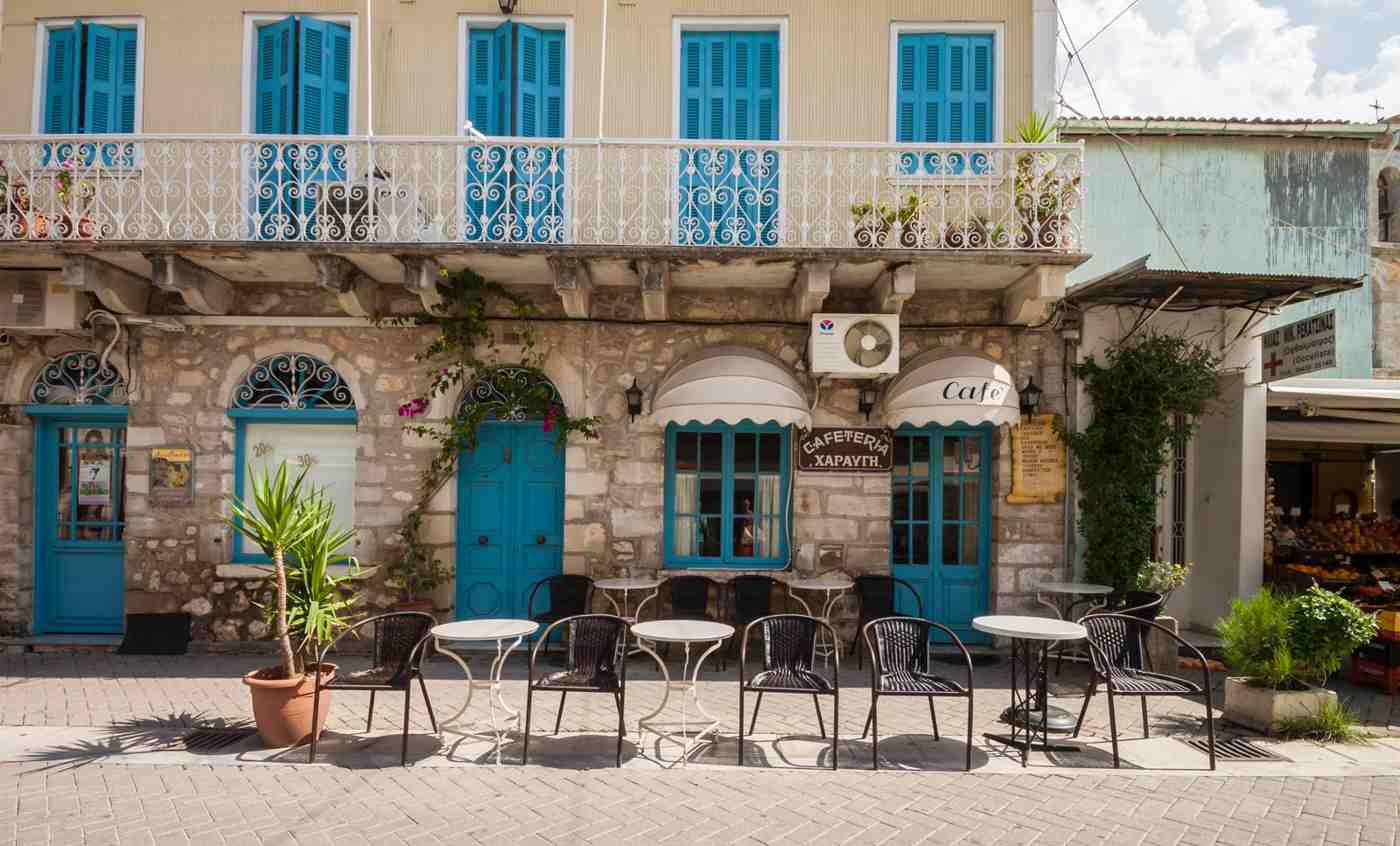
Lefkada rewards visitors with a table as green and varied as its landscape. The island sits in the Ionian Sea, joined to the mainland by a short causeway, and its cooking follows the Ionian line rather than the Aegean one. Mountain villages send down lentils, wild greens and honey, while the harbours land fish, octopus and cuttlefish each morning. Cured salami, oil pies and slow beef braises fill the tavernas inland. This guide sets out what to eat, which products carry the island’s name, and where the best kitchens sit, from the town quay to the high stone villages. Plan the whole trip with Greece Tours.
Food on Lefkada divides neatly by place, and that makes planning simple. Fish tavernas gather on the waterfronts of Lygia, Nikiana, Nydri, Vasiliki, Sivota and Agios Nikitas, where boats tie up beside the tables. The mountain villages of Karya, Sivros and Chortata keep hearty meat kitchens with wide views and cool air. Lefkada Town holds the densest run of tavernas, ouzeri and cafes around its main street and marina. Meals here start late and are meant for sharing, so a booking helps on the busy harbours in high summer. The pages below follow each of these settings in turn.
What makes Lefkada cuisine different from the Aegean islands?
Lefkada cooks in the Ionian tradition, not the Aegean one. Its plates lean on mountain lentils, wild greens, cured meat and olive oil rather than the drier, caper-heavy fare of the Cyclades.
The Ionian islands sat under Venetian rather than Ottoman rule for centuries, and that history still shapes the table. Lefkadian cooking keeps more braises, richer sauces and a deeper use of tomato than the sparse plates of many Aegean islands. Olive oil pours freely, greens come from the hills, and beef and lamb appear more often than on rockier Cycladic ground. The result feels softer and more homely. Diners find oil pies, slow stews and cured pork alongside the expected grilled fish. Menus read as country food from a green island rather than the sun-baked minimalism of the open Aegean.
Aegean island food often celebrates scarcity, with capers, dried fava, sun-dried tomato and barley rusk built for a dry climate. Lefkada works from abundance instead. Rain falls on its western mountains, springs feed the villages, and gardens run green through the season. Cooks reach for fresh greens, garden vegetables and local oil rather than preserved staples alone. Tomato sauce binds dishes, a Venetian-era habit that marks Ionian kitchens. Pork and beef sit comfortably beside fish, and pasta appears more readily than on treeless Cycladic rock. The contrast is clear at the table: Lefkada feels lush where the Aegean feels spare and salt-cured.
Geography drives the difference as much as history. Lefkada joins the mainland by a narrow channel, so mainland Epirus and its pastoral traditions feed straight onto the island. Shepherds keep flocks in the hills, dairies turn out cheese, and lamb reaches the mountain grills. The sea supplies the coast, yet the interior never forgets its farms. Many islands in the open Aegean depend almost wholly on the water and the boat. Lefkada balances both worlds, taking octopus from the quay and lentils from the ridge in the same week. That double larder, sea and mountain together, gives the island a wider everyday menu than most.
Visitors planning their meals alongside the beaches and the many things to do in Lefkada find the food easy to read once the Ionian character is clear. Expect richer sauces, more meat and more greens than a Cycladic trip suggests. Expect oil pies, lentil stews and cured pork beside the grilled fish. Portions come generous and prices stay fair away from the busiest quays. The island keeps its own sweets, its own red grape and its own village lentil, so the plate tastes distinctly Lefkadian rather than generically Greek. Reading the menu through this Ionian lens turns a simple dinner into a small tour of the island itself.
Which local products define Lefkadian food?
Five products carry the island’s name: the small brown lentils of Englouvi, a distinctive air-cured salami, sesame-and-honey pasteli, soft mandolato nougat, and honey from the hills. Each turns up across Lefkada’s tavernas and shops.
The lentils of Englouvi stand first among the island’s named goods. Englouvi is a high mountain village, and its small brown lentils grow on stony terraces in thin soil. The crop is prized for a fine skin and a soft, quick-cooking centre. Cooks turn it into a plain simmered dish dressed with local oil, onion and a little vinegar. The village holds a lentil feast each summer, cooking the pulses in vast pots for visitors. Many tavernas list an Englouvi lentil plate by name, a rare case of an island advertising a single mountain field. The dish tastes clean, earthy and unmistakably of the place.
Lefkada’s air-cured salami ranks as the island’s best-known meat. Producers season pork, pack it, and hang it to dry in the mountain air, building a firm, deeply flavoured sausage. Slices appear on ouzeri boards, in sandwiches and beside a glass of the local red. The cure keeps well, so the salami travels home in suitcases as an edible souvenir. Butchers and village shops sell it whole or by the piece. Its taste runs savoury and slightly spiced, richer than a plain cold cut. Alongside the lentils, this cured meat gives the island a signature that owes nothing to the sea, rooted instead in the herding villages of the interior.
Two sweets carry Lefkada’s reputation for those with a sweet tooth. Pasteli binds toasted sesame with honey into a firm, chewy bar, an old energy food still made by hand. Mandolato is a soft white nougat set with honey, egg white and almonds, pale and yielding rather than hard. Both fill the shop windows of Lefkada Town and the villages, cut into blocks and wrapped for the journey. Local honey underpins them, gathered from thyme and wild flowers across the hills. The two sweets pair naturally with a strong coffee at the end of a meal. Neither is unique to the island alone, yet Lefkada’s versions rank among the most sought in the Ionian.
These products shape the way visitors shop as much as the way they dine. Village stores stack jars of honey, blocks of mandolato and lengths of salami beside sacks of Englouvi lentils. Market stalls in the town add wild greens, herbs and local oil to the mix. Buying direct supports the mountain villages that grow and cure these goods. Cooks build their menus around the same larder, so what fills the shop shelf also fills the plate. The link between field and table stays short here. Anyone wanting a taste of Lefkada to carry home reaches first for the lentils, the salami and the pasteli, the three that travel best.
What traditional dishes visitors try on Lefkada?
Several cooked dishes define the island table: riganada rusk with tomato and oregano, Englouvi lentil stew, ladopita oil pie, sofigado beef braise, and tsigareli of spiced wild greens. All rely on local oil and greens.
Riganada opens meals as a simple, honest starter. A hard barley rusk soaks briefly, then takes a topping of grated ripe tomato, dried oregano, salt and a generous pour of olive oil. The result is cool, fragrant and satisfying, a country cousin of the better-known dakos. Villagers ate it in the fields as a quick lunch, and tavernas keep it as a light first plate. The name comes straight from rigani, the Greek word for oregano, the herb that defines it. Made well, riganada shows the island’s food at its plainest and best, three or four humble ingredients dressed with good oil and left to speak for themselves.
Lentil stew from Englouvi anchors the vegetable side of the menu. The small brown pulses simmer slowly with onion, garlic, bay and olive oil until soft but whole. A splash of vinegar sharpens the bowl at the table, the traditional island finish. The dish is filling, cheap and entirely plant-based, which suits fasting days and vegetarians alike. Many cooks serve it soupy in cooler months and thicker in summer. Bread and olives complete it, no meat required. Because the lentils come from one named village, ordering the stew feels like tasting a specific corner of the mountains. Few island pulses carry such a clear address.
Ladopita and sofigado show the island’s love of oil and slow cooking. Ladopita is a traditional oil pie, a layered savoury bake bound with plenty of olive oil rather than butter, plain and rustic. Sofigado braises beef with vegetables, quinces or other fruit and warm spices until the meat falls apart in a thick sauce. Both dishes take time and reward it, filling the kitchen with the smell of Sunday cooking. Tavernas that make them tend to do so on set days, so asking ahead helps. These are home-style plates rather than quick grills. They show the Ionian habit of the long braise, a style the drier Aegean rarely matches.
Tsigareli brings heat and greens to the traditional table. Cooks gather wild greens from the hills, then stew them with onion, tomato, olive oil and a lift of chilli or hot paprika. The dish carries more spice than most Greek greens plates, a distinctive Ionian and Epirot touch. It works as a side or a light main, scooped up with bread. Seasonal foraging fills the pot, so the greens change through the year. Vegetarians find it a reliable, flavour-packed choice. Together with riganada, the lentils, ladopita and sofigado, tsigareli rounds out a table that leans on the garden and the hillside far more than on the fishing net.
What fish and seafood do Lefkada tavernas serve?
Harbour tavernas serve the day’s catch simply grilled or in sauce: bourdeto in spicy tomato, fish soup, salt cod, cuttlefish cooked in its ink with rice, and grilled octopus and squid. Most of it is eaten beside the water.
Bourdeto ranks among the most typical fish dishes of the Ionian. White fish cooks in a sauce of tomato, onion and a heavy hand of hot pepper, giving a red, spicy stew. The heat marks it apart from the milder tomato fish plates of other regions. Cooks use whatever firm fish the boats bring, so the exact species shifts with the season. Bread mops the sauce, which diners rate as the best part. The dish reflects the Ionian taste for chilli seen also in tsigareli. Served on the harbours of Lefkada, bourdeto turns a plain catch into a warming, robust plate that suits cooler evenings by the water.
Fish soup and salt cod fill the gentler end of the seafood menu. Fish soup, or psarosoupa, simmers small fish with potato, carrot and celery into a clear, lemony broth, the fish and vegetables often served on a separate plate. Salt cod, bakaliaros, arrives fried in a light batter or stewed with tomato, a legacy of the days before refrigeration reached the coast. Both dishes cost less than prime grilled fish, so they suit families and longer stays. Garlic sauce often accompanies the cod, sharp and rich. These are honest, everyday plates rather than showpieces. They show that Lefkada’s kitchens value the humble fish as much as the prized ones.
Cuttlefish cooked in its own ink counts as a quiet island speciality. The cuttlefish braises slowly with rice and its dark ink, turning the dish a deep grey-black with a rich, briny taste. Some kitchens add spinach or wild greens to the pot. The colour surprises first-time diners, yet the flavour wins them over quickly. Grilled octopus and squid share the same menus, charred over coals and dressed simply with oil, lemon and oregano. Octopus often hangs to dry on the quay before grilling, a familiar harbour sight. These cephalopods form the backbone of the seafood table, cheaper than fine fish yet full of flavour and firmly tied to the sea.
Freshness governs where and how the seafood is best eaten. The waterfronts of Lygia, Nikiana, Vasiliki, Sivota and Agios Nikitas put the tables within metres of the boats, so the catch reaches the plate quickly. Grilled fish is usually priced by the kilo and chosen from ice at the counter, a habit worth learning. Asking which fish is local and wild, rather than farmed, brings the best result. The seafood plates pair naturally with the island’s white wines or a cold ouzo. Eating fish on Lefkada rewards patience and a seat by the water, where the setting matches the food and the day’s landing sets the menu.
Where are the best places to eat in Lefkada Town?
Lefkada Town holds the densest choice on the island. Tavernas, ouzeri and cafes line the main pedestrian street and cluster around the marina, covering everything from cured-meat boards to grilled fish and slow braises.
Lefkada Town sits behind the causeway, a lively grid of narrow lanes and shaded squares. Its main pedestrian street forms the spine of the eating scene, lined with tavernas, ouzeri, bakeries and cafes. Tables spill onto the pavement under awnings and trees. The mix ranges from old-style tavernas serving braises and pies to modern spots plating fish and pasta. Prices sit a little higher than the villages, matched by choice and buzz. Wandering the street and reading the day’s specials is the usual way to choose. The town rewards the stroller: a coffee and mandolato at one end, a full dinner at the other, with plenty in between.
The ouzeri tradition thrives in the town more than anywhere else on the island. These small places serve ouzo, tsipouro and wine with a run of little plates, or mezedes, meant for slow grazing. A board of the local air-cured salami, cheese, olives and grilled octopus suits the format perfectly. Diners order in rounds, adding plates as the drinks flow and the evening lengthens. The style favours company and conversation over a single fixed course. Cost stays reasonable because portions are small and shared. For a first night on Lefkada, an ouzeri on the marina gives a quick, tasty survey of the island’s flavours in one relaxed, unhurried sitting.
The marina and the waterfront give the town its evening rhythm. Boats and yachts line the quay, and the cafes behind them fill from late afternoon with coffee, drinks and light plates. As the heat fades, families and visitors settle in for long dinners that stretch past midnight. Bakeries and sweet shops nearby sell pasteli, mandolato and fresh pies through the day. The setting is easy and social rather than formal. Children run in the squares while adults linger over food and wine. This unhurried pace defines dining in Lefkada Town, where the meal is an event to be drawn out, not a task to be finished quickly.
Variety makes the town the safest base for a range of tastes and budgets. Old tavernas cover the traditional dishes, the braises, pies and lentils, for those chasing island cooking. Fish tavernas by the water handle the day’s catch for a special meal. Cafes, bakeries and casual grills feed families, quick lunches and fussy children without fuss. Vegetarians find lentils, greens and vegetable plates on almost every list. The dense choice means a table is easy to find outside the peak hour, though the best-known spots fill fast in high summer. Staying near the main street puts every kind of meal within a short, pleasant walk after dinner.
Which harbour and mountain tavernas are worth the drive in Lefkada?
Two circuits reward a drive. The east and south harbours of Lygia, Nikiana, Nydri, Vasiliki, Sivota and Agios Nikitas serve fish by the water, while Karya, Sivros and Chortata offer mountain meat tavernas with views.
The eastern coast strings its fish tavernas along a series of small harbours. Lygia and Nikiana sit closest to the town, quiet fishing villages where boats unload beside the tables. Nydri, the island’s busiest resort, faces a screen of green islets and offers the widest run of waterfront tavernas, cafes and quick bites. Boat trips to the surrounding islets leave from its quay, so lunch often bookends a day on the water. The setting is scenic and the pace lively in high season. These east-coast harbours suit visitors who want fresh fish, an easy drive and a sea view without climbing into the hills for it.
The south and west coasts add their own celebrated waterfronts. Vasiliki, a wide bay known for wind and watersports, lines its harbour with fish tavernas that fill after a day on the sea. Sivota tucks into a narrow, sheltered inlet where yachts moor right beside the tables, prized for grilled fish and a calm setting. Agios Nikitas, on the west coast, is a small, car-limited village whose tavernas overlook one of the island’s finest beaches. Each harbour has its own character, yet all share the same simple formula of fresh catch and sea view. Reaching them takes a short drive on winding roads, repaid by the setting and the food.
The mountain villages turn the menu from fish to meat and greens. Karya, set on a green plateau in the island’s centre, is the largest, known for its shaded square, embroidery tradition and hearty tavernas. Sivros and Chortata sit higher and quieter, keeping old kitchens with wide views over the hills and sea. These villages grill lamb, cook kleftiko and simmer stifado in the cooler mountain air. Portions run generous and prices stay lower than the busy coast. The drive up climbs through olive groves and stone hamlets, an outing in itself. For meat, greens and a break from the heat, the tavernas of Karya and its neighbours reward the effort.
Lamb kleftiko and stifado headline the mountain kitchens. Kleftiko wraps lamb with garlic, lemon and herbs, then bakes it slowly, often sealed, until the meat pulls easily from the bone. Stifado braises beef or rabbit with a mass of small sweet onions in a rich tomato and vinegar sauce spiced with clove and bay. Both dishes take hours and suit a long, late lunch with a view. Local wine, often the deep red Vertzami, matches the heavy flavours well. These plates show the pastoral, mainland-influenced side of the island’s cooking. Eating them in a stone village, with the sea far below, delivers the fullest picture of Lefkada beyond its beaches and harbours.
How do dining habits and booking work on Lefkada?
Meals run late and are shared across the table, with dinner often starting after nine. Booking helps on the busy harbours of Nydri, Vasiliki and Sivota during high summer, when the best waterfront tables fill fast.
Greek dining hours surprise many first-time visitors to the island. Lunch stretches through the early afternoon, and dinner rarely begins before nine, often running past midnight in high summer. Tavernas stay quiet at seven and fill as the night cools. Following the local clock brings the best atmosphere and the freshest kitchen service. Meals are shared affairs, with plates set in the middle for everyone to reach. Ordering a spread of starters, salads, fish and grills to pass around beats one dish each. This communal style suits families and groups and keeps the table sociable. Eating late and sharing widely is simply how Lefkada dines, and joining in is half the pleasure.
Booking matters most on the busy harbours during the peak weeks. Waterfront tables at Nydri, Vasiliki and Sivota disappear quickly on July and August evenings, so a call ahead secures the best spots. Mountain tavernas and town backstreets rarely need reservations outside festival nights. A quick phone booking, or a word earlier in the day, usually suffices. Larger groups benefit from ringing ahead, as long tables are limited on the smaller quays. Popular fish tavernas often sell out of prime catch, another reason to arrive early or reserve. Planning a little pays off on the coast in high season, while the quieter villages stay easy to walk into most nights.
Wine deserves a place in any plan for eating on the island. The deep-red Vertzami grape leads the local reds, dark, full-bodied and grown across Lefkada’s slopes. House wine, poured from the barrel by the carafe, costs little and matches the food well. Ouzo and tsipouro accompany the mezedes, sipped slowly with water and ice. Coffee closes the meal, often with a square of mandolato or a piece of pasteli alongside. Ordering the local red or the barrel wine ties the meal to the island rather than to an imported label. The drink list, like the plate, rewards those who choose what the land and the season provide.
Families and vegetarians dine easily once the pattern is clear. Children thrive on the shared plates, the grilled fish, the pasta and the sweets, and tavernas welcome them warmly late into the night. Vegetarians rely on the lentils, tsigareli, ladopita, salads, greens and vegetable plates found on nearly every menu. Portions come large, so a few shared dishes feed a table for less than a set course each. Tap water and barrel wine keep the bill modest. Pacing the meal slowly, ordering in rounds and following the late local hours brings out the best of the island’s food. Dining on Lefkada, in the end, is as much about the setting and the company as the plate.




Frequently Asked Questions
What is Lefkada’s most famous local food?
Englouvi lentils and the island’s air-cured salami rank as Lefkada’s most famous local foods. The lentils grow on stony mountain terraces around the village of Englouvi. Prized for their fine skin and soft centre. Appear as a simple simmered stew dressed with local oil and vinegar. The air-cured salami is a firm, deeply flavoured pork sausage dried in the mountain air, sliced onto ouzeri boards or packed home as a souvenir. Alongside these two savoury goods, the island is known for its sweets, the sesame-and-honey pasteli and the soft mandolato nougat, both made with local honey. The deep-red Vertzami wine completes the roll call of island specialities.
Together these products give Lefkada a distinct culinary identity rooted in its mountains as much as its harbours, quite separate from the fish that fills the coastal tavernas.
How does Lefkada food differ from other Greek islands?
Lefkada cooks in the Ionian tradition rather than the Aegean one, a difference rooted in climate and history. The island’s western mountains catch rain, springs feed the villages, and gardens stay green, so cooks work from abundance rather than scarcity. Tomato-based sauces, richer braises and more meat mark the menus, a legacy of Venetian rule and the nearby mainland of Epirus. Where many Aegean islands lean on capers, dried fava and barley rusk suited to a dry climate. Lefkada offers oil pies, lentil stews, spiced wild greens and slow beef dishes such as sofigado. The short causeway to the mainland brings lamb, dairy and pastoral cooking onto the island.
Fish and seafood still fill the harbour tavernas, yet the interior contributes an equal share, giving Lefkada a wider everyday table than the drier islands of the open Aegean.
Is Lefkada good for vegetarians?
Lefkada suits vegetarians well, thanks to a cuisine built heavily on pulses, greens and vegetables. The Englouvi lentil stew is entirely plant-based, simmered with onion, garlic and olive oil and finished with vinegar at the table. Tsigareli, a stew of spiced wild greens, offers a flavour-packed main or side, while ladopita, the traditional oil pie, uses olive oil rather than butter. Salads, garden vegetables, beans and horta, or boiled wild greens, appear on nearly every taverna menu. The Orthodox fasting tradition means kitchens keep vegan-friendly dishes as a matter of course. Riganada, the rusk topped with tomato, oregano and oil, makes a simple meat-free starter.
Vegetarians travelling on Lefkada rarely struggle to eat well, finding plenty of choice in both the harbour tavernas and the hearty mountain kitchens of Karya and the interior villages.
Where I eat fresh fish on Lefkada?
Fresh fish is best eaten on the harbours, where the tavernas sit within metres of the boats. The eastern coast offers Lygia and Nikiana, quiet fishing villages close to the town, and Nydri, the busiest resort, with the widest run of waterfront tavernas. On the south and west coasts, Vasiliki, Sivota and Agios Nikitas each line their harbours with fish tavernas prized for a scenic setting and the day’s catch. Grilled fish is usually priced by the kilo and chosen from ice at the counter, so asking which fish is local and wild brings the best result.
Beyond plain grilling, look for bourdeto, a spicy tomato fish stew, fish soup, salt cod, and cuttlefish cooked in its ink with rice. Booking helps at the popular harbours during July and August, when the best waterfront tables fill quickly.
What wine is Lefkada known for?
Lefkada is known above all for Vertzami, a deep-red grape grown across the island’s slopes that yields dark, full-bodied wines. The variety gives robust reds that match the island’s heavier dishes, the lamb kleftiko, the stifado and the rich braises of the mountain villages. Most tavernas also pour a house wine straight from the barrel, sold by the carafe at a low price and well suited to everyday meals. Beyond wine, ouzo and tsipouro accompany the small mezedes plates of the ouzeri, sipped slowly with water and ice. Choosing the local red or the barrel wine ties a meal to the island rather than to an imported label.
Visitors keen to taste the island through its drink order the Vertzami with a plate of the air-cured salami or a mountain grill, a natural and traditional pairing.
Do I book a restaurant on Lefkada?
Booking helps most on the busy harbours during the peak weeks of July and August, when waterfront tables at Nydri, Vasiliki and Sivota fill quickly on summer evenings. A quick phone call ahead, or a word with the taverna earlier in the day, usually secures a good spot. Larger groups benefit from ringing ahead everywhere, as long tables are limited on the smaller quays. Popular fish tavernas often sell out of prime catch, another reason to reserve or arrive early. Away from the coast, the mountain tavernas of Karya, Sivros and Chortata and the backstreets of Lefkada Town rarely need reservations outside festival nights, staying easy to walk into.
Arriving after nine matches the local rhythm and finds the kitchens at their busiest and freshest during the high summer season.