
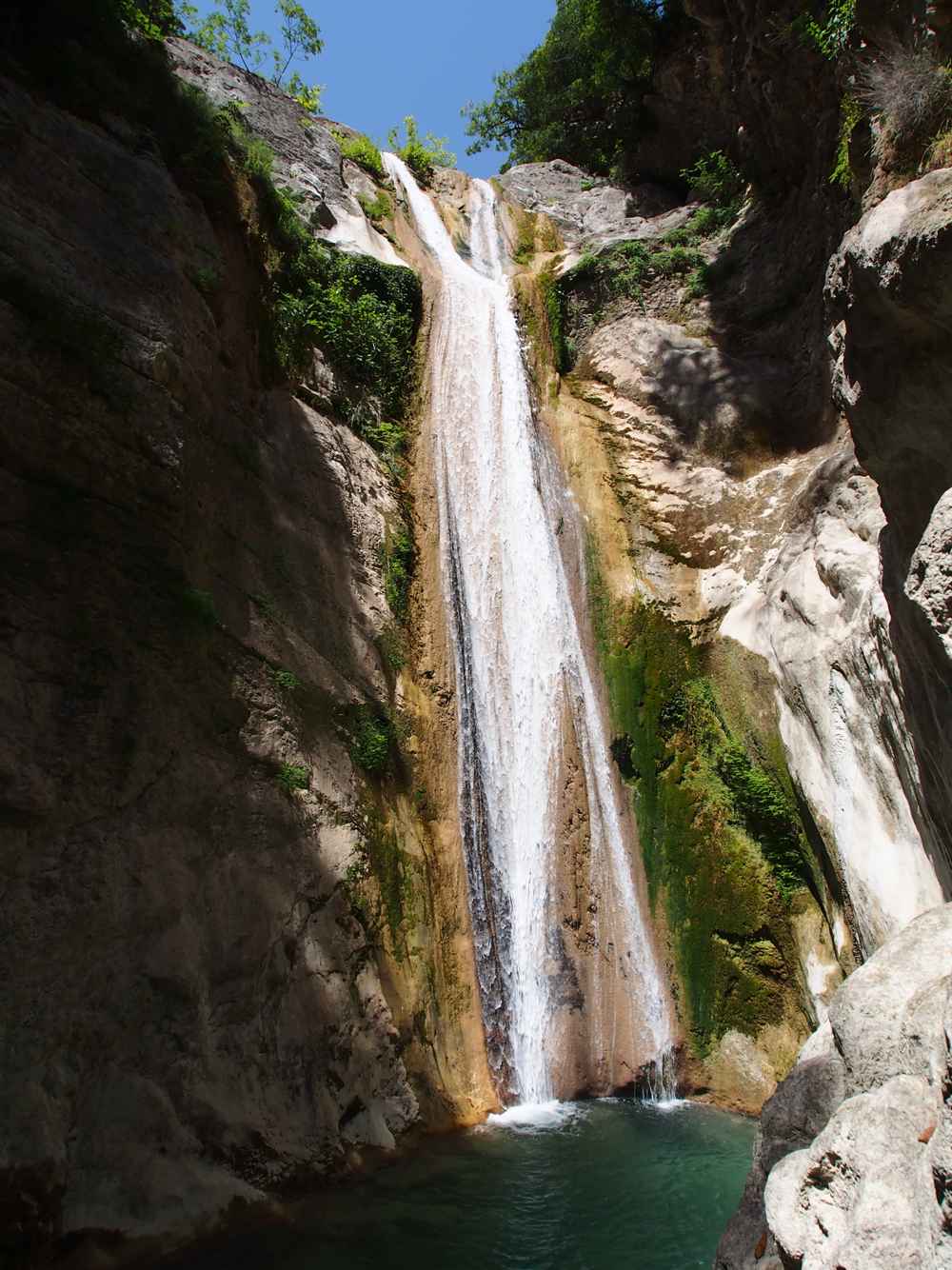
The Dimosari waterfalls sit in the Dimosari gorge on the east side of Lefkada, about 3.5 km inland from the resort of Nydri. Local signs also call them the Nydri waterfalls, and the two names describe the same place. The gorge cuts back from the coast into cooler, shaded ground, so the setting feels different from the open bays a short drive away. A gentle path of roughly 350 metres runs up the gorge under plane trees, taking about twenty minutes to the main fall. The site is free and open all year, which makes it an easy half-morning outing. Plan the whole trip with Greece Tours.
This guide explains what the Dimosari waterfalls are and where they lie, then covers the drive from Nydri, the small car park and the gorge path itself. It describes the main fall, the cold pool beneath it and the smaller falls higher up the gorge on rougher ground. It also sets out when the water runs strongest through the year, how to handle the slippery rocks, what footwear works and who the walk suits. Because the falls sit so close to the coast, the article closes by showing how the visit fits around a stay or a boat trip at Nydri.
What are the Dimosari waterfalls near Nydri in Lefkada?
The Dimosari waterfalls are a set of freshwater falls in a shaded gorge on the east side of Lefkada, about 3.5 km inland from Nydri and free to visit all year.
The Dimosari waterfalls take their name from the Dimosari gorge, a narrow valley that runs back into the hills behind the east coast of Lefkada. Local signs also label them the Nydri waterfalls, after the nearest resort, so both names point to the same site. Water gathers from the higher ground and drops through the gorge in a series of steps. The main fall descends around fifteen metres down a rock face into a small pool at its foot. The gorge stays cool and green because plane trees and thick vegetation shade the water for much of its course.
The setting marks the site out from the rest of the coast. Around Nydri the land opens into wide bays and busy waterfronts, while the gorge stays enclosed, quiet and damp. Rock walls rise on both sides of the path, and the plane trees close overhead for long stretches. Air temperature inside the gorge sits noticeably below the beaches nearby, which is part of the appeal in high summer. The water itself stays cold even when the coast is hot. Visitors come as much for the shade and the sound of running water as for the fall at the end.
The falls form part of the wider stock of things to do in Lefkada that do not involve sand or boats. Many visitors treat the island as a beach destination, yet the interior holds gorges, villages and walking routes as well. Dimosari offers a short, low-effort taste of that inland landscape without a long drive or a hard climb, which broadens its appeal. The gorge sits close enough to the main east-coast road that a family staying at the coast can reach it and return within a couple of hours. Including the walk in and out.
The site is free, with no gate and no ticket, and it stays open through every season. There is no formal opening time, so the practical limits are daylight and the weather. Flow changes across the year, and the fall looks very different in a wet spring from the way it looks in a dry August. The rocks near the water stay slick with spray and moss, which shapes how carefully people move around the pool. None of this makes the walk difficult, but it does reward a little planning around footwear and timing before setting out from the coast.
How do you reach the Dimosari gorge from Nydri?
Follow the main road from Nydri toward Vasiliki, then turn off inland at the signs for the waterfalls. A short lane leads to a small car park, about 3.5 km from the resort.
The approach begins on the main coastal road that leaves Nydri and heads south toward Vasiliki. This is the same road most visitors use to move along the east coast, so it needs no detour to find. A short way out of the resort, signs for the waterfalls point inland, away from the sea. The turn leads onto a narrower lane that climbs gently into the mouth of the gorge. The whole distance from the resort to the parking area is around 3.5 km. Which is a drive of only minutes by car or scooter along a straightforward route.
The lane ends at a small car park set near the start of the gorge path. Space is limited, so the area fills quickly in the busiest part of the day, and arriving earlier makes parking easier. From the car park the walking route is obvious, following the floor of the gorge upstream. There is no long approach on foot before the interesting scenery begins, which suits families and older walkers. The setting changes almost at once, from open roadside to shaded gorge, as the path passes under the first plane trees and the rock walls begin to close in on either side.
Visitors without a vehicle still have options from the coast. Nydri is a well-connected base with taxis and local transport, and the short distance keeps a one-way fare modest. Some walkers combine the trip with a longer route on foot from the resort, though the roadside stretch is less pleasant than the gorge itself. The key point is that the site sits close to Nydri rather than deep in the mountains, so it does not demand a full day or a difficult drive. A rented car, a scooter or a short taxi hop all reach the car park with ease.
Signage does most of the navigation work once the coast road is found. The turn inland is marked, and the lane to the car park runs in a single direction with junctions to confuse. Drivers watch for walkers near the parking area, where the road narrows and people cross between cars and the path. After parking, the route needs no map, since the gorge itself channels the walk. This simplicity is part of why the falls appear on so lists of easy outings from the east coast, alongside the closer beaches and viewpoints.
What is the gorge path to the Dimosari waterfalls like?
The path runs about 350 metres up the gorge floor, taking around twenty minutes. It is gentle and well made under plane trees, though the surface turns slippery near the water.
The walk to the main fall covers roughly 350 metres along the floor of the gorge. It follows the line of the stream upstream, crossing and skirting the water in places as the valley narrows. The route is well made rather than wild, with a clear, mostly level surface that most people manage without trouble. Plane trees arch overhead for much of the way, and the greenery keeps the light soft and the air cool. The distance is short, but the enclosed scenery makes the walk feel longer and more immersive than the raw numbers suggest.
Most visitors reach the main fall in about twenty minutes at a relaxed pace. The gentle gradient means the effort stays low, so there is time to stop, look up at the rock walls and listen to the water. Families with children and older walkers cope well with this section, which is one reason the site draws such a mixed crowd. The pace naturally slows near the water, where the ground grows damp and uneven. Firm, grippy footwear turns these slower stretches from a nuisance into an easy part of the walk rather than a hazard.
The surface changes character as the path nears the pool. Away from the stream it stays dry and stable, but closer in the rocks carry spray, moss and a thin film of water. These wet stones are slick, and this is where most slips happen. Moving slowly and choosing footholds carefully keeps the section safe. The gorge stays shaded here, so wet patches dry slowly and can linger through the day. Walkers who expect the change and step with care find the last stretch to the fall no harder than the rest of the route.
The gorge also shapes the feel of the walk beyond the practical detail. Rock walls rise close on both sides, and the plane trees filter the sun into a shifting, dappled light. The sound of running water carries through the whole route, growing louder toward the fall. In the height of summer this shaded corridor offers a genuine break from the heat of the coast, and the temperature drop is easy to feel within the first minutes. That contrast, more than distance or difficulty, is what many people remember about the walk up the Dimosari gorge.
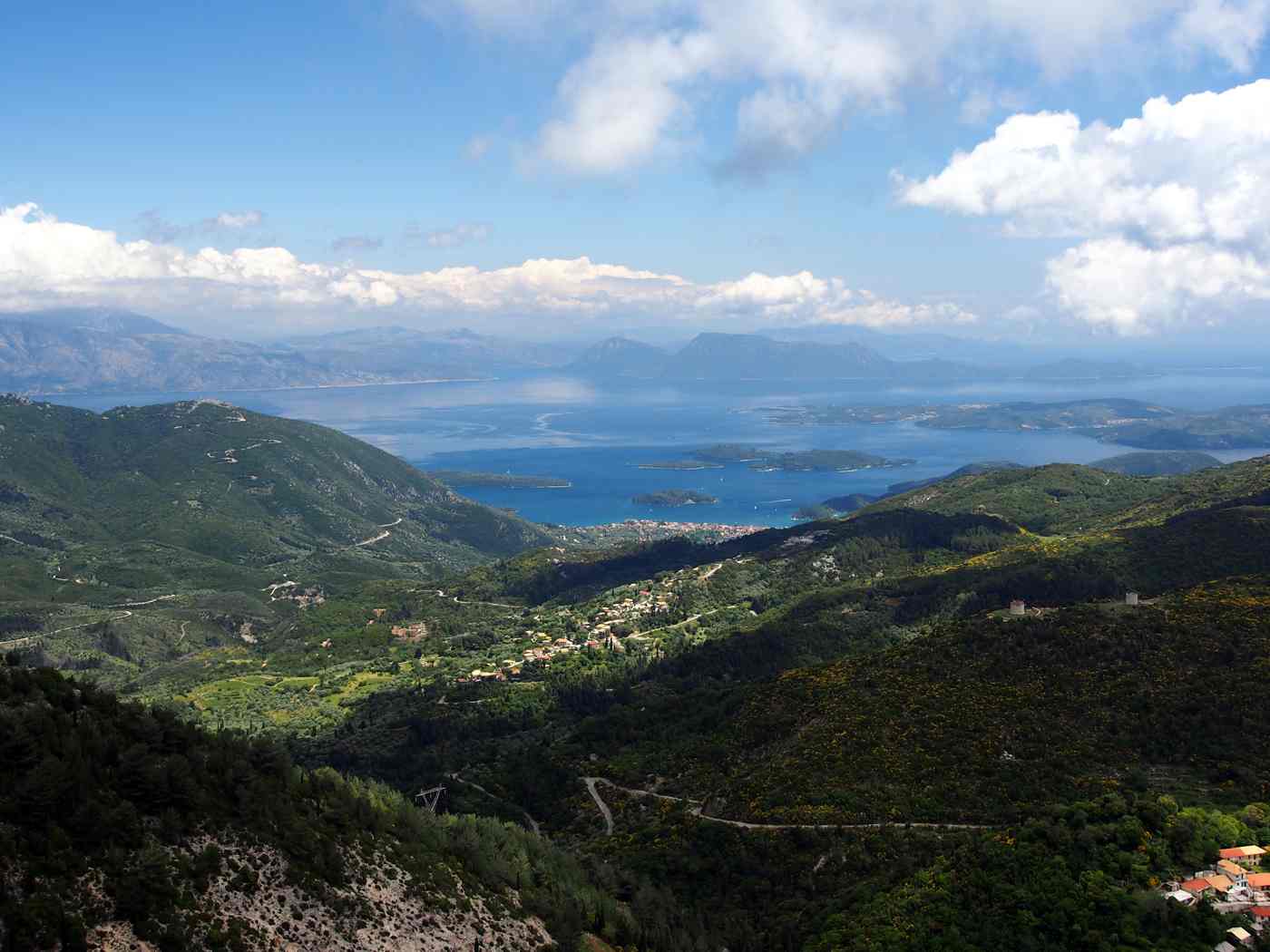
What can you see at the main Dimosari fall and the pool?
The main fall drops about fifteen metres down a rock face into a small, cold natural pool. More falls and pools lie further up the gorge on rougher, less even ground.
The main waterfall is the focus of the short walk and the point where the well-made path ends. Water slides and drops around fifteen metres down a near-vertical rock face into a small pool at its base. The rock behind the fall stays dark and wet, streaked green with moss and clinging plants. The pool below is compact rather than broad, held in a natural basin of dark, water-smoothed stone. Its water stays cold through the year, fed from the higher ground and shaded from direct sun for most of the day inside the gorge.
The scene rewards a pause and a rest once the fall finally comes into view. Spray drifts from the base and cools the air, and the noise of falling water fills the enclosed space. The pool is clear and shallow at its edges, deepening toward the centre beneath the fall. People gather on the rocks around the basin to sit, watch the water and cool off after the walk in. Because the surrounding stones stay wet, this area is where footing matters most, and moving slowly around the pool keeps the visit safe and unhurried.
Beyond the main fall the gorge continues, and more falls and pools lie further upstream. These upper features sit on rougher ground, where the made path gives way to natural rock and looser footing. Reaching them takes more care and a willingness to scramble in places, so visitors stop at the main fall and turn back. Those who press on find smaller cascades and quieter basins with fewer people around them for company. The character shifts from an easy family walk to a mild adventure that suits confident, well-shod walkers rather than casual day trippers.
The fall changes markedly with the seasons, and no two visits look quite the same. After heavy rain the water thunders down the face and churns the pool below, while in a dry spell it thins to a modest curtain over the rock. The pool holds at least some water across the year, but its depth and clarity shift with the flow. This variation is worth bearing in mind before setting out, since the strength of the fall depends heavily on recent weather and the time of year rather than on any fixed timetable or seasonal schedule.
When is the best time to visit the Dimosari waterfalls?
The falls run strongest from autumn to spring and after heavy rain. In high summer the flow drops, so the shaded gorge then matters as much as the water for a cool visit.
Water volume at Dimosari follows the weather across the year. The falls run strongest from autumn through winter into spring, when rain feeds the stream and the higher ground stays wet. A spell of heavy rain in these months can turn the main fall into a powerful drop, and the pool below fills and churns. Spring in particular combines strong flow with fresh green growth along the gorge floor, so the setting looks at its fullest. Anyone hoping to see the fall at real force does best to plan around this wetter half of the year.
High summer tells a different story. Through the driest months the flow drops as the stream shrinks, and the main fall can thin to a slender ribbon over the rock. The pool still holds water, but the drama of the fall itself fades. Even so, the gorge stays worth the walk in summer for its shade and cool air. When the coast bakes, the plane trees and rock walls keep the interior noticeably cooler, and the visit becomes as much about escaping the heat as about the water. Expectations simply match the season.
Timing within the day matters less than the season, but it still helps. The car park is small and fills fastest in the middle of a summer day, so an earlier start makes parking and walking easier. The gorge stays shaded regardless of the hour, so there is no strong light or golden hour window to chase. This flexibility means the falls fit neatly around other plans, whether a morning walk before the beach or a cooler stop later on. Choosing a quieter hour mainly improves the sense of calm and space along the narrow gorge path.
Reading recent weather is the single most useful habit for a good visit. Since flow depends so heavily on rainfall, a wet week ahead of the trip points to a strong fall, while a long dry spell points to a modest one. This makes the site easy to work into wider plans around the best time to visit Lefkada, which for beaches and boat trips leans toward the warm, dry months. The two goals pull in slightly different directions, so a visit after any late-season rain often strikes the best balance between full falls and settled coastal weather.
Can you swim at the Dimosari waterfalls, and is it safe?
Some visitors take a short, bracing dip in the cold pool below the main fall. The rocks around it are slippery, so sturdy shoes with grip matter and flip-flops suit poorly.
The pool beneath the main fall is the natural spot for a swim, and visitors do take the plunge. The water stays cold through the year. Fed from the higher ground and kept in shade for most of the day. Any dip tends to be brief and bracing rather than a long, lazy soak. The basin is small and shallow at the edges, deepening toward the centre. People usually wade in from the rocks, cool off under or near the fall, and climb straight back out, treating the swim as a sharp refresher after the walk.
Safety around the pool turns almost entirely on footing. The rocks by the water carry spray, moss and a constant film of moisture, which makes them genuinely slippery underfoot. Most trouble at the site comes from slips on these wet stones rather than from the water itself. Moving slowly, keeping hands free and choosing firm footholds all reduce the risk. Entering and leaving the pool calls for particular care, since the transition between dry rock and wet basin is where balance is easiest to lose. A steady, unhurried approach keeps this part of the visit straightforward.
Footwear does much of the work of staying safe. Sturdy shoes or trainers with a good grippy sole handle the wet rock far better than smooth or flimsy soles. Flip-flops are a poor choice here, since they offer little grip and slide off easily on damp stone. Walking sandals with proper straps and a firm tread are a reasonable compromise for those who want to swim without carrying spare shoes. The general rule is simple: whatever protects the feet on slick, uneven rock is right, and anything that slides, flaps or grips poorly is not.
A few practical habits round out a safe swim. Water shoes help those who plan to wade, protecting the soles on the rough basin floor and adding grip. Keeping to the shallower edges suits weaker swimmers and children, who are best supervised closely near the deeper centre. Since the water is cold, staying in only briefly avoids the chill setting in. Belongings left on dry rock away from the spray stay drier and easier to retrieve. With these small precautions, the pool offers a memorable cool-down without turning the visit into anything demanding or risky.
How does a Dimosari visit fit with Nydri and the coast?
The falls lie about 3.5 km inland from Nydri and combine easily with a stay or a boat trip there. A short walk pairs the shaded gorge with the beaches of the east coast.
The greatest strength of Dimosari is how neatly it slots into a coastal holiday. The falls sit only about 3.5 km inland from Nydri. A visitor based in or near the resort can reach the car park. Walk up the gorge to the main fall and return within a couple of hours. This short commitment means the trip does not swallow a whole day. It works as a cool morning before the sun peaks, a shaded escape at midday, or a relaxed stop between other plans along the busy east coast of the island.
Nydri itself gives the visit a natural base. The resort is one of the main hubs on this side of the island, well known for its waterfront and its boat trips out to the nearby islets and bays. A common pattern pairs a morning at the falls with an afternoon on the water, or the reverse. A single day covers both the green interior and the blue coast. The short distance between the two keeps this easy, with no long transfer to eat into the time available for either half of the day out.
The contrast between gorge and coast is part of the appeal. Some of the beaches of Lefkada are famous for their bright water and open light, from the busy strands near the resorts to the quieter coves further out. Dimosari offers the opposite mood: shaded, enclosed and cool, with the sound of running water instead of the sea. Setting a gorge walk beside a beach day gives a holiday more variety than sand alone. Many visitors find the two settings complement each other, with the falls providing a break from the heat and glare of the shore.
The site also fits the wider way people explore the island. Lefkada rewards a mix of coast and interior, and a short inland walk like this one opens the door to that without demanding a serious hike. From a base at Nydri, the falls. The surrounding villages and the east-coast beaches all sit within a small radius. Days can be built from several short outings rather than one long expedition. That flexibility, more than any single feature, is what makes the Dimosari waterfalls such a reliable and easy addition to time spent on the island.
Frequently Asked Questions
Is there an entrance fee for the Dimosari waterfalls?
The Dimosari waterfalls are free to visit, with no gate and no ticket, and the site stays open all year. There is no formal opening time, so the practical limits are daylight and the weather rather than any set hours. Because access is open, a visit needs no advance booking and can be added to a day at short notice. The main planning points are footwear for the slippery rocks and the season, since flow changes across the year. Parking is at a small car park near the start of the gorge path. Which fills quickly at busy times. An earlier arrival makes both parking and the walk easier and more relaxed.
How long does the walk to the main waterfall take?
The walk to the main fall covers roughly 350 metres along the floor of the gorge and takes about twenty minutes at a relaxed pace. The path is gentle and well made under plane trees, so most people manage it without difficulty, including families with children and older walkers. The surface stays mostly level and stable away from the stream, but grows damp and uneven near the pool, where the rocks carry spray and moss. That final stretch calls for slower, careful steps. Allowing extra time to pause, look up at the rock walls and enjoy the shade makes the short distance feel like a proper outing rather than a quick errand.
Are the Dimosari and Nydri waterfalls the same place?
The Dimosari waterfalls and the Nydri waterfalls are the same site, described by two names. Dimosari comes from the gorge that holds the falls, on the east side of Lefkada, while Nydri refers to the nearest resort, about 3.5 km away on the coast. Local signs use both labels, which can confuse first-time visitors who assume they are separate attractions. In practice, following signs for either name from the main Nydri to Vasiliki road leads to the same car park and the same gorge path. Knowing that the two names overlap avoids wasted searching and makes it clear that only one set of falls sits in this part of the island.
What you wear to visit the Dimosari waterfalls?
Sturdy shoes or trainers with a good grippy sole are the key item, since the rocks near the pool stay slippery with spray and moss. Flip-flops are a poor choice, as they offer little grip and slide off easily on damp stone. Walking sandals with proper straps and a firm tread work for those who also want to swim, and water shoes help anyone planning to wade in the cold pool. Light, comfortable clothing suits the gentle walk, and the shaded gorge stays cooler than the coast, so a thin extra layer can help after a dip. A towel and a dry bag for belongings round out a simple, practical kit for the visit.
When do the Dimosari waterfalls have the most water?
The falls run strongest from autumn through winter into spring and after heavy rain, when the stream is well fed from the higher ground. A wet spell in these months can turn the main fall into a powerful drop that fills and churns the pool below. Spring often combines strong flow with fresh green growth along the gorge. Through the driest summer months the flow drops, and the fall can thin to a slender ribbon over the rock, though the pool still holds water. Checking recent weather is the best guide, since a rainy week points to a strong fall and a long dry spell points to a modest one at the time of the visit.
Is the Dimosari gorge walk suitable for children and older visitors?
The main walk suits a wide range of people, including families with children and older walkers, because it is short and gently graded. The route runs about 350 metres on a mostly level, well-made path under plane trees, taking around twenty minutes to the main fall. The care points are the wet rocks near the pool, which are slippery, and the small car park, which fills at busy times. Close supervision of children around the cold pool and its deeper centre is sensible. Beyond the main fall the ground turns rough and calls for scrambling. Most families and less confident walkers stop there and turn back. Which still gives a full and rewarding visit.