
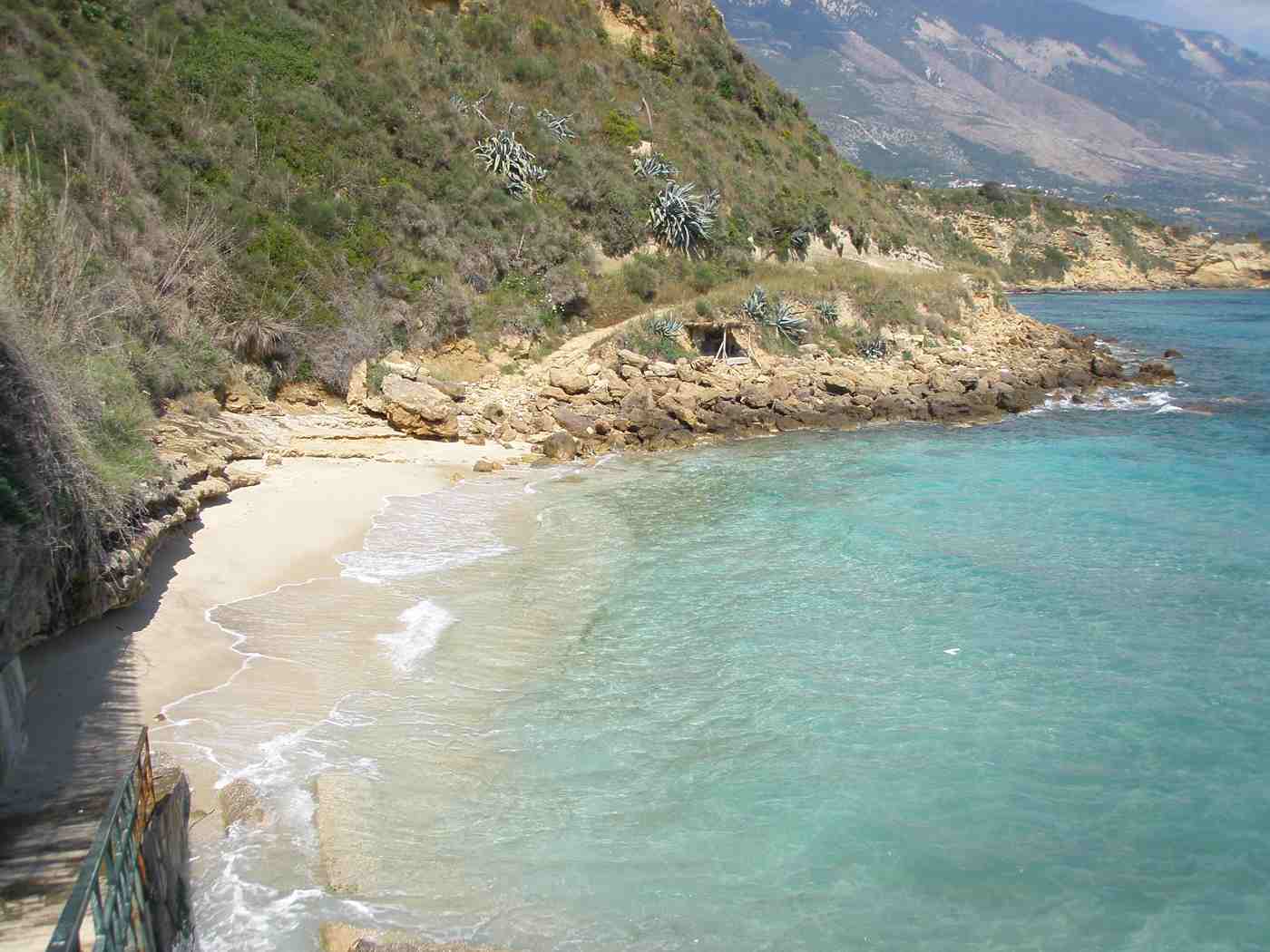
Trapezaki beach in Kefalonia sits on the island’s south coast, below the small village that shares its name. About 13 to 15 km southeast of Argostoli and a short way west of the longer Lourdas beach. It is a strip of soft sand and fine pebble with clear, gently shelving water, backed by green hills that climb toward Mount Ainos. The setting is rural, framed by olive slopes and dark cypress, with long views along the coastline. Because the bay faces south, it stays sheltered from the strongest wind, and the shallow entry makes swimming easy. The beach keeps a calm, unhurried mood through most of the season. Plan the whole trip with Greece Tours.
The central part of Trapezaki is organised, with rows of sunbeds, umbrellas and a beach taverna, while the two ends stay open, empty and quiet. This mix suits both visitors who want a little service and those who prefer a plain patch of sand. The whole southern coast is used by loggerhead turtles for nesting, which shapes how the beaches here are managed. Trapezaki works either as a calm base for a longer stay or as a day beach reached by car from Argostoli, Lassi or the south-coast villages. This guide covers the location, the sand and water, the facilities, the Ainos backdrop, the turtles and how the bay compares with Lourdas.
Where is Trapezaki beach in Kefalonia and how do you reach it?
Trapezaki beach lies on the south coast of Kefalonia, about 13 to 15 km southeast of Argostoli and just west of Lourdas. A road drops from Trapezaki village down to the shore.
Trapezaki occupies a stretch of the south-facing coastline that runs east of Argostoli toward Lourdas and Katelios. The bay opens below the village of Trapezaki, which sits on the slope a little inland and gives the beach its name. From the island capital the drive covers about 13 to 15 km, following the main southern road and then turning down a narrower lane toward the sea. The route passes through farmland and olive groves, so the final approach feels rural rather than built-up. The beach is close enough to Argostoli for an easy morning trip, yet far enough to keep the crowds and traffic of the busier resorts at a distance.
The coast here faces roughly south, which sets Trapezaki apart from the beaches on the exposed west side of Kefalonia. That orientation gives the bay shelter from the prevailing wind and keeps the water calmer on days when other shores are choppy. To the west lies Lourdas, the long and busier beach that shares this section of coast, while smaller coves and the village of Katelios sit further east. The whole run of shoreline sits beneath the green foothills of Mount Ainos, so the backdrop stays hilly and wooded rather than flat. This gives Trapezaki a clear sense of place on the map of the south.
Reaching Trapezaki almost always means driving, since there is no direct town or harbour at the beach itself. From Argostoli the journey takes roughly twenty to thirty minutes, depending on traffic and the exact turning taken off the main road. Visitors staying in Lassi, on the peninsula near Argostoli, add only a short distance to that trip. Those based in the south-coast villages, such as Lourdas or the settlements around Katelios, are closer still and can reach the bay in minutes. The final descent from Trapezaki village to the water is short but steep in places, so a careful drive down the lane is worthwhile.
Public transport to Trapezaki is limited, so a hire car or taxi is the practical way in for most visitors. The road ends near the shore, where a modest parking area serves the beach, and the central part with its sunbeds and taverna sits close to where cars stop. Because the approach is quiet and the beach rarely fills the way the larger resorts do, arriving and finding space is usually straightforward outside the very peak weeks. The combination of an easy drive from Argostoli. A short hop from the south-coast villages and a calm arrival makes Trapezaki a simple beach to fold into a day of exploring the island.
What is the sand and water like at Trapezaki beach?
Trapezaki is a strip of soft sand mixed with fine pebble. The water is clear and gently shelving, so it deepens slowly from the shore and suits easy, unhurried swimming.
The surface of Trapezaki blends soft sand with patches of fine pebble, a common mix along this part of the Kefalonian south coast. Near the water the ground tends to be smoother, while drier stretches higher up hold more small stones. This texture is comfortable underfoot for most visitors, though a pair of beach shoes helps on the pebblier sections and where the shore meets the sea. The sand takes umbrellas and sunbeds well in the organised centre, and the pebble keeps the beach draining cleanly after rain. The overall feel is natural and low-key, without the fine white powder of resorts, but pleasant and easy to settle on for a long day.
The water at Trapezaki is clear and clean, with the pale colouring that comes from a sandy bed and a sheltered aspect. Entry is gentle and the seabed shelves slowly, so the depth increases gradually as swimmers move out from the shore. This gentle gradient means there is a wide band of shallow water close in, which is easy to stand in and simple to swim across. On calm days the surface stays smooth and the visibility is good, letting swimmers see the sandy floor beneath them. The clarity and the mild slope together make the bay well suited to relaxed bathing rather than dramatic diving or deep-water swimming.
It is protected from the strongest northerly and westerly winds that reach other parts of Kefalonia. That shelter keeps the sea flatter and warmer through much of the season and reduces the swell that builds on more exposed coasts. When the wind does turn to the south, the bay can pick up small waves, but for most of the summer the water stays gentle. This calm, warm and shallow character is one of the beach’s defining traits and a large part of why it appeals to families and to swimmers who prefer still water. The conditions rarely feel rough or unpredictable here.
The quality of the water is matched by the surroundings that frame it. Green hills rise close behind the sand, and the clear sea reflects the sky and the wooded slopes, giving the whole bay a fresh, unspoiled look. There are no large developments crowding the shoreline, so the view out to sea and along the coast stays open. Swimmers can float in the shallows and look back at the olive slopes and cypress, or turn seaward toward the long horizon of the Ionian. This balance of clean, shallow water and a natural green setting is what makes bathing at Trapezaki feel both easy and quietly scenic.
What facilities does Trapezaki beach have and where are the quiet ends?
The central part of Trapezaki is organised with sunbeds, umbrellas and a beach taverna. The two ends stay open and calm, with no facilities, for visitors who want space.
Trapezaki is best understood as a beach of two moods set side by side. The middle section is organised, laid out with rows of sunbeds and umbrellas and served by a beach taverna near the sand. This is where most day visitors settle, since it offers shade, somewhere to sit and refreshments within steps of the water. The arrangement is modest rather than sprawling, in keeping with the beach’s quiet character, and it never reaches the scale of the loungers packed onto the largest resort beaches. For a family or a couple who want a base with a little service, the centre of Trapezaki provides it without feeling crowded or commercial.
Away from that central strip, the beach opens out into calmer, unmanaged ends. Here there are no sunbeds or umbrellas, so visitors bring their own shade and set down on the plain sand and pebble. These stretches stay noticeably quieter than the middle, even in the height of summer, and they reward anyone willing to walk a short way along the shore. The contrast is useful, because it lets Trapezaki suit two kinds of visitor on the same day. Those who want the taverna and the loungers stay in the centre, while those who want solitude and open space drift toward the ends and find it.
The beach taverna is the main facility on the sand, offering food, drink and a shaded place to pause during the day. Beyond it, services are limited, which is part of what keeps Trapezaki feeling rural and low-key rather than busy. Visitors who want a full range of shops and cafes are better served in Argostoli or in the larger south-coast resorts. It is sensible to bring water. Sun protection and anything else needed for a long stay. The simplicity is deliberate and welcome for many, since it keeps the bay peaceful and free of the noise and clutter that fills more developed beaches on the island.
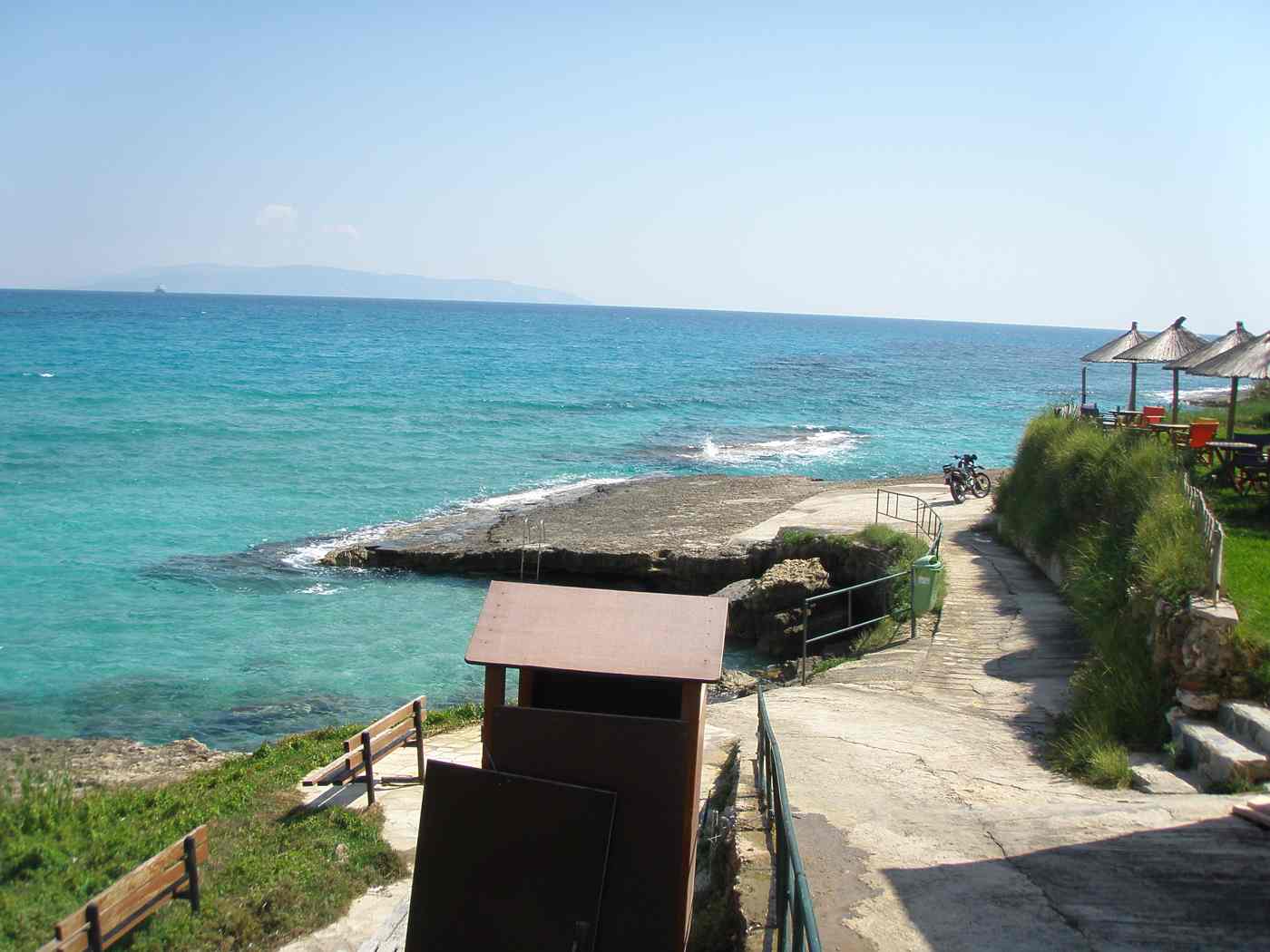
Parking sits near the shore where the access road ends, close to the organised centre, so the walk from the car to the sand is short. Because the beach draws smaller numbers than the big resorts, the parking area usually copes with demand outside the very busiest weeks. The overall footprint at Trapezaki is small and gentle: a taverna, a run of sunbeds, a modest car park and then open beach to either side. This restrained set-up is a good match for the wider setting of olive slopes and green hills. It keeps the emphasis firmly on the sand. The water and the quiet rather than on infrastructure.
How does the green Mount Ainos backdrop shape the setting?
Green hills rise close behind Trapezaki and climb toward Mount Ainos, the island’s highest peak. Olive slopes and cypress frame the bay, giving it a rural, wooded setting.
The land behind Trapezaki does not fall flat toward the coast; instead it rises quickly into green hills that build up toward Mount Ainos, the tallest mountain on Kefalonia. This backdrop gives the beach much of its character, since the view inland is of wooded slopes rather than buildings. Ainos is known for its dark stands of fir, and its foothills carry a mix of olive groves, cypress and low scrub down toward the shore. From the sand the mountain feels present but not looming, a green wall that closes off the bay and frames the whole scene. The setting is one of the quiet strengths of Trapezaki compared with more built-up beaches.
The slopes around the beach are worked farmland as much as wild hillside. Terraces of olive trees climb the lower ground, and cypress rise in dark columns among them, a landscape typical of the rural Ionian. This patchwork of grey-green olive and deep green cypress gives the hills texture and colour that change with the light through the day. The village of Trapezaki sits within this landscape above the beach, a reminder that the area is lived in and farmed rather than given over entirely to tourism. Looking up from the water, visitors see a working countryside pressed close to the sea, which lends the bay a grounded, authentic feel.
The Ainos foothills also open up the possibility of walks and drives beyond the sand itself. Quiet lanes thread between the olive groves and villages of the south, linking Trapezaki with settlements such as Lourdas and the hamlets on the slopes above. Higher up, the mountain is protected as a national park, home to the fir forest and to the semi-wild horses that roam its heights. A day at Trapezaki can therefore be paired with a drive into the hills to reach cooler air, forest paths and long views back down to the coast. The green backdrop is not just scenery but the start of a wider landscape to explore.
The mountain backdrop affects the light and the air at the beach as well as the view. In the morning the slopes catch the sun from the east, while later in the day the hills throw shade across parts of the shore as the sun moves west. The greenery holds moisture and keeps the immediate surroundings fresher than a bare coastline feel. This combination of a sheltered south-facing bay and a cool green hinterland is unusual and pleasant, giving Trapezaki a microclimate that stays comfortable. The presence of Ainos rising behind the sand is, more than anything, what marks this beach out as a calm, natural corner of the south coast.
Who is Trapezaki beach in Kefalonia best suited to?
Trapezaki suits families, couples and swimmers who want calm, shallow water and a quiet setting. The shelving entry and sheltered bay make it easy for children and relaxed bathing.
Families with young children are among those best served by Trapezaki, chiefly because of the water. The gentle shelving entry gives a wide band of shallow sea close to the shore, so small children can paddle and stand safely while adults stay near. The south-facing shelter keeps the surface calm on most days, without the sudden swell of exposed western beaches. The organised centre adds shade from umbrellas and a taverna within easy reach, which makes a long family day manageable. The soft sand of the mid-beach is comfortable for sitting and playing, and the overall calm means parents can relax rather than watch anxiously against rough conditions or steep drops.
Couples and quieter travellers also find Trapezaki a good fit, especially those who prefer a peaceful beach to a lively resort. The two open ends offer space away from the loungers, where a pair can spread out on plain sand with the green hills behind and the sea in front. There are no bars pumping music or crowds of day trippers, so the mood stays restful. The beach taverna is enough for a slow lunch, and the rural surroundings encourage an unhurried pace. For visitors who measure a good beach by its calm rather than its buzz, the balance of a little service and a lot of quiet suits them well.
Swimmers who enjoy long, steady bathing rather than dramatic conditions are well matched to the bay. The clear, warm and gentle water lets people swim comfortably parallel to the shore or float in the shallows for as long as they like. The sheltered aspect keeps the sea flat enough for confident but unhurried swimming, and the clean sandy bed makes for good visibility. Snorkellers can potter along the shallows, though the beach is better known for easy swimming than for rich marine life. Anyone who wants a reliable, calm place to swim day after day, without fighting wind or waves, finds Trapezaki dependable through the season.
The beach is less suited to visitors seeking a busy scene, water sports or nightlife on the sand. There are no rows of jet skis, loud beach clubs or crowds, and that absence is deliberate. Travellers who want facilities, shopping and a wide choice of tavernas within walking distance are better based in Argostoli or one of the larger resorts and can visit Trapezaki for a quiet day. For everyone else, though, the beach delivers a clear, simple appeal: shallow safe water. Soft sand, a green backdrop and enough shade and food to see out a long day in comfort and calm.
Why do loggerhead turtles matter on Kefalonia’s south coast?
Loggerhead turtles use Kefalonia’s south coast for nesting, including this stretch near Trapezaki. Their presence means visitors are asked to keep the beach clean, calm and undisturbed.
The southern coast of Kefalonia is important for loggerhead turtles, which come ashore on quiet sandy beaches to lay their eggs. This part of the island, including the calm stretches around Trapezaki and neighbouring Lourdas, offers the kind of undisturbed sand these animals seek. The turtles nest during the warmer months, burying their eggs above the tide line where the young later hatch and make their way to the sea. Their use of this coast is a sign of how natural and lightly developed these beaches remain. For visitors it adds a layer of interest, turning an ordinary day on the sand into a small share in a fragile natural cycle.
The presence of nesting turtles shapes how the south-coast beaches are used and cared for. Visitors are encouraged to keep the sand clean, take their litter away and avoid disturbing any marked or roped-off areas where nests lie. Simple habits help most: removing umbrellas and gear at the end of the day so hatchlings are not blocked. Avoiding digging in undisturbed sand and keeping bright lights off the beach at night, since light can confuse young turtles heading for the water. These small courtesies cost the visitor little and matter a great deal to the survival of the nests along this quiet coast.
Trapezaki’s own character helps the turtles as much as any rule does. The two open, unmanaged ends of the beach stay quiet and dark, exactly the conditions nesting turtles prefer, while the organised centre keeps most human activity in one place. The rural setting, with buildings and little night-time development, means the beach does not glow with artificial light after dark. This natural calm is part of why the south coast remains suitable for nesting at all. By choosing a beach like Trapezaki, visitors are enjoying a shore that is valuable to wildlife precisely because it has been left simple and undeveloped.
Seeing a turtle is never guaranteed, and the nesting itself usually happens away from busy daytime hours. Even so, awareness of the turtles enriches a visit to Trapezaki and the wider south coast. It explains the quiet management, the encouragement to leave the sand clean and the general respect for the natural state of the beach. Visitors who understand the reason behind these habits tend to enjoy the coast more thoughtfully. The loggerheads are a reminder that these Kefalonian beaches are shared spaces. Valued not only for holidays but as a living part of the Ionian coastline that deserves care from everyone who uses them.
How does Trapezaki compare with Lourdas and where can you stay nearby?
Trapezaki stays quieter and smaller than the long, busier Lourdas beach just to the east. Accommodation clusters in Trapezaki village, Lourdas and other south-coast settlements above the coast.
Trapezaki and Lourdas share the same south-facing coast, but they differ in scale and mood. Lourdas is the longer, better-known and busier beach, with a wider run of sand, more sunbeds and a larger cluster of tavernas and rooms on the slope above. Trapezaki, by contrast, is shorter and quieter, with a single organised centre and open ends rather than a long resort strip. Both offer the same warm, sheltered water and the same green Ainos backdrop, so the choice between them comes down to atmosphere. Visitors who want more services and company lean toward Lourdas, while those who prefer calm and space choose Trapezaki.
The two beaches work well as a pair for anyone staying on the south coast. It is easy to spend one day on the longer sands of Lourdas and another on the quieter shore of Trapezaki, since only a short drive separates them. Other beaches lie within reach along the same coast, including the smaller coves toward Katelios to the east, giving a run of options for a longer stay. This cluster of south-coast beaches, all beneath the Ainos foothills, means a base in the area never limits a visitor to a single stretch of sand. Trapezaki simply provides the calmest end of that choice.
Accommodation near Trapezaki is spread through the village above the beach and the surrounding south-coast settlements rather than packed onto the shore. Trapezaki village itself, on the slope inland, and the nearby area around Lourdas offer rooms and small places to stay among the olive groves and hills. These bases put the beach within a short drive and keep visitors close to the rural landscape rather than a crowded seafront. Staying here suits travellers who want quiet nights, green surroundings and easy morning access to the sand. The lack of large hotels on the beach itself is again part of the area’s low-key, natural appeal.
For those who prefer a busier base with more choice, Argostoli and the Lassi peninsula lie only a short drive away and make Trapezaki an easy day trip. Argostoli offers the widest range of accommodation, restaurants and shops on this side of the island, while Lassi adds a run of beaches and hotels close to the capital. From either base the south-coast beaches are within comfortable reach by car. This flexibility means Trapezaki can serve as a calm home beach for a rural stay or as one quiet stop among many for visitors based in the livelier towns further west along the coast.


Frequently Asked Questions
How far is Trapezaki beach from Argostoli?
Trapezaki beach lies about 13 to 15 km southeast of Argostoli on Kefalonia’s south coast. By car the trip usually takes around twenty to thirty minutes. Following the main southern road out of the capital and then turning down a narrower lane toward the sea below Trapezaki village. The final descent from the village to the shore is short but steep in places, so a careful drive down is worthwhile. Visitors staying on the Lassi peninsula near Argostoli add only a little to that distance, while those based in the south-coast villages such as Lourdas are closer still. Because public transport to the beach is limited, most people arrive by hire car or taxi.
The parking area near the shore usually copes with demand outside the busiest weeks of summer.
Is Trapezaki beach good for families and children?
Trapezaki suits families well, mainly because of its calm, shallow water. The sea shelves gently from the shore, giving a wide band of shallow water where children can paddle and stand safely close to adults. The south-facing bay is sheltered from the strongest wind, so the surface stays flat on most summer days without sudden swell. The organised centre of the beach adds sunbeds, umbrellas and a beach taverna within easy reach. Which makes a long family day manageable, while the soft sand of the mid-beach is comfortable for sitting and playing. The quiet ends offer extra space for those who want it.
Families still bring water, sun protection and beach shoes for the pebblier sections, since facilities beyond the central taverna are limited on this rural stretch of coast.
Does Trapezaki beach have sunbeds and a taverna?
The central part of Trapezaki is organised with rows of sunbeds and umbrellas and is served by a beach taverna near the sand. This is where most day visitors settle, since it offers shade, a place to sit and refreshments steps from the water. The arrangement is modest and never reaches the scale of the largest resort beaches, in keeping with the bay’s quiet character. Away from this centre, the two ends of the beach stay open and unmanaged. With no sunbeds or umbrellas. Visitors there bring their own shade and set down on plain sand and pebble. Beyond the taverna, services are limited, which helps keep Trapezaki rural and low-key.
Anyone wanting a full range of shops and cafes is better served in Argostoli or the larger south-coast resorts.
What is the difference between Trapezaki and Lourdas beach?
Trapezaki and Lourdas share the same sheltered south coast beneath the Mount Ainos foothills, but they differ in scale and atmosphere. Lourdas is the longer, better-known and busier beach, with a wider run of sand, more sunbeds and a larger cluster of tavernas and rooms on the slope above. Trapezaki is shorter and quieter, with a single organised centre and open, calm ends rather than a long resort strip. Both offer the same warm, gently shelving water and the same green backdrop, so the choice mainly comes down to mood. Visitors who want more services and company tend to choose Lourdas, while those who prefer calm and space choose Trapezaki.
The two lie only a short drive apart, so visitors staying on the south coast simply spend time on both beaches across a longer stay.
Are there loggerhead turtles at Trapezaki beach?
Kefalonia’s south coast is used by loggerhead turtles for nesting, and this includes the quiet sandy stretches around Trapezaki and neighbouring Lourdas. The turtles come ashore during the warmer months to bury their eggs above the tide line. The calm, lightly developed beaches of this coast provide the undisturbed sand they seek. Seeing a turtle is never guaranteed, since nesting usually happens away from busy daytime hours, but their presence shapes how the beaches are cared for. Visitors are encouraged to keep the sand clean, take litter away. Avoid digging in undisturbed sand and keep bright lights off the beach at night, since light can confuse hatchlings heading for the sea.
Removing umbrellas and gear at the end of the day also helps keep the nesting areas clear along this coast.
When is the best time of day and season to visit Trapezaki?
The warmer months from late spring through early autumn bring the calmest sea and the most reliable weather at Trapezaki, with the organised centre in full operation. The south-facing bay stays sheltered from the strongest wind, so the water is usually gentle across much of the season. For the quietest experience, the early morning is a good time to arrive, when the beach is cool. The parking is easy and the light catches the green Ainos slopes from the east. Later in the day the hills throw shade across parts of the shore as the sun moves west, which can be welcome in the heat.
Midday in peak summer draws the largest numbers, though even then Trapezaki stays far calmer than the big resorts, and its open ends offer space away from the loungers.