
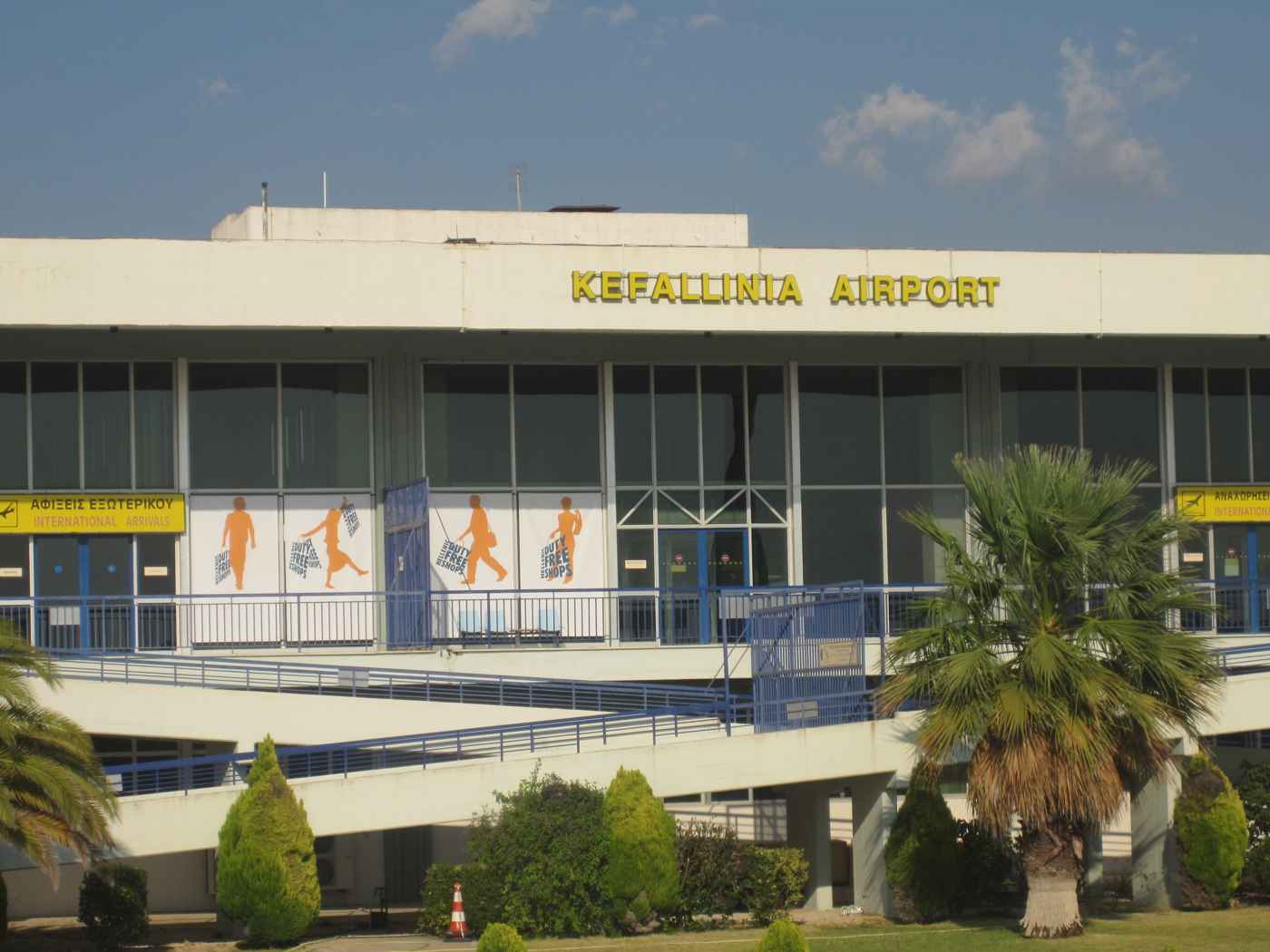
Kefalonia airport is the single gateway that carries almost every visitor onto the largest of the Ionian islands. Its official name is Kefalonia International Airport, and it also honours the Kefalonian rhythmic gymnast Anna Pollatou. Airlines and booking systems identify it by the code EFL. The airport sits about 9 km south of Argostoli, near the village of Svoronata on the flat, fertile Livatho plain. It is a small facility with a single terminal and a single runway, so the layout is easy to read on arrival. Most travellers pass from the aircraft to a hire car or a waiting transfer within a short walk. Plan the whole trip with Greece Tours.
Understanding how EFL works helps a trip start smoothly, because the island has no railway and only very limited public buses from the terminal. Year-round, domestic flights connect Kefalonia with Athens on carriers such as Olympic Air and Sky Express. From spring to autumn the schedule broadens with seasonal charter and scheduled flights from the United Kingdom and across Europe. That summer traffic is how most holidaymakers reach the island. The compact terminal holds car-hire desks, a cafe and taxis outside the door. Driving times reach the main resorts in roughly ten minutes to about an hour and a half, depending on distance.
Where is Kefalonia airport and what is its code?
Kefalonia airport carries the code EFL and lies about 9 km south of Argostoli, near Svoronata on the Livatho plain. Its official name is Kefalonia International Airport, also called Anna Pollatou.
The airport occupies a low, open stretch of the Livatho plain in the south of the island, close to the village of Svoronata. Argostoli, the capital, sits about 9 km to the north, roughly ten to fifteen minutes away by road. The surrounding countryside is flat farmland, which suited the building of a single straight runway. Because the terrain is gentle here rather than mountainous, the final approach is straightforward compared with the winding roads that reach the northern villages. The location places arrivals close to the busiest resort belt around Argostoli and Lassi, while the quieter north lies a longer drive away.
The three-letter identifier EFL appears on boarding passes, baggage tags and flight-search results, and it is the quickest way to confirm the correct airport when booking. The full title is Kefalonia International Airport. The airport also carries the honorary name Anna Pollatou, after the Kefalonian rhythmic gymnast, a detail that appears on signage and official documents. Travellers searching for flights enter EFL rather than a resort name, because the whole island is served by this one field. No other commercial airport operates on Kefalonia, so every scheduled and charter service lands here.
Svoronata, the nearest village, gives its name to the immediate area and sits within the Livatho district, a green farming region dotted with small settlements and family estates. The plain’s flat ground and coastal position on the south of the island keep the site accessible and easy to reach from Argostoli. Because the airport is close to the capital and the south-coast beaches, visitors staying around Lassi need only a brief transfer. The compact footprint means the walk from aircraft to terminal, and from terminal to the car park, taxi rank and car-hire desks, stays short.
For orientation, the airport faces the sheltered gulf that separates the main body of the island from the Paliki peninsula, where Lixouri lies across the water. The single runway runs roughly parallel to the nearby coastline. Understanding this geography helps with planning: south-coast and capital resorts are closest, while destinations on the far peninsula or in the mountainous north demand longer transfers by road. Knowing that EFL is one small field near Argostoli, rather than a sprawling hub. Sets realistic expectations for the arrival experience and for how quickly a hire car or transfer reaches each resort.
Which flights use Kefalonia airport through the year?
Kefalonia airport runs year-round domestic flights to Athens on carriers such as Olympic Air and Sky Express, then adds seasonal charter and scheduled flights from the United Kingdom and across Europe from spring to autumn.
Throughout the year, the backbone of the schedule is the domestic link between Kefalonia and Athens. Carriers such as Olympic Air and Sky Express operate these flights, connecting the island to the mainland hub and, through it, to a wider network of Greek and international routes. In winter, when visitors travel, the Athens service keeps residents and off-season travellers moving. The flight is short, making a same-day connection through Athens practical for those arriving from further afield. Because this route runs all year, it forms a dependable option when seasonal charters are not operating, particularly for anyone visiting outside the main summer window.
From spring to autumn the picture changes as seasonal traffic builds. Charter and scheduled flights arrive from the United Kingdom and from cities across Europe, bringing the summer crowds that fill the island’s resorts. This seasonal surge is how most holidaymakers reach Kefalonia, since it removes the connect through Athens. The busiest months concentrate these arrivals into weekend turnaround days, when flights land within hours. Travellers planning a summer trip usually find a direct option from their home country, while those visiting in the shoulder or winter months lean on the year-round Athens service instead.
The contrast between the two patterns matters for planning. A winter or early-spring visitor expect a smaller schedule built mainly around Athens, with fewer choices of day and time. A midsummer visitor faces a far broader menu of direct international flights but also busier turnaround days at the terminal. Booking early tends to help in peak season, when popular slots fill and the compact terminal handles heavy passenger flows. Checking whether a chosen date falls inside the seasonal window, rather than assuming direct flights run all year, avoids an unexpected connection through the mainland.
Travellers confirm current routes directly with the airlines or through a booking platform rather than relying on fixed assumptions. The general rhythm, however, stays consistent: Athens all year on domestic carriers, and a wide European spread only from spring to autumn. This structure shapes fares and availability, with the summer charters catering to package and independent holidaymakers alike. Anyone travelling at the edges of the season benefits from checking that international services have started or not yet ended, since the calendar tightens quickly once autumn arrives.
What facilities does the terminal at Kefalonia airport have?
The compact single terminal holds car-hire desks, a cafe and taxis waiting outside. It handles both arrivals and departures in one building, with a straightforward layout and no railway connection.
The terminal at Kefalonia airport is small and functional, built around a single passenger building that manages both arrivals and departures. Its compact scale is one of its practical advantages: distances inside are short. The flow from the aircraft to passport control, baggage reclaim and the exit is quick to follow. Car-hire desks line the arrivals area, so travellers who have pre-booked a vehicle collect keys within a short walk of the baggage belt. A cafe serves drinks and snacks for those waiting for a flight or a transfer, and basic seating covers the departure side.
Outside the doors, taxis wait to carry arrivals who have not arranged a car or a private transfer. The rank sits close to the terminal exit, keeping the transition from building to vehicle simple. Because the airport is compact, there is no long internal transit or shuttle to reach the car park; parking and drop-off areas lie a short walk from the entrance. This modest scale suits an island field that peaks in summer and quietens in winter, and it keeps the arrival process brisk once passengers have cleared the standard checks.
The single runway pairs with the single terminal to define the airport’s capacity. During busy summer turnaround days, flights can arrive in a short span, which fills the baggage hall and the car-hire desks at peak times. Patience helps during these windows, since the small building processes a concentrated flow of passengers. Outside those peaks the terminal feels calm and unhurried. Travellers departing in high season are usually advised to arrive in good time, because check-in and security handle bursts of demand rather than a steady all-day stream of passengers.
One defining feature is what the airport does not offer: there is no train, and only very limited public bus service from the terminal. This absence shapes how visitors move on from EFL, pushing most towards a hire car, a pre-booked transfer or a taxi. The lack of frequent public transport is a practical reality rather than an inconvenience for those who plan ahead. Knowing in advance that onward travel depends on private arrangements means arrivals reach the terminal exit already clear about how they will cover the drive to their resort.
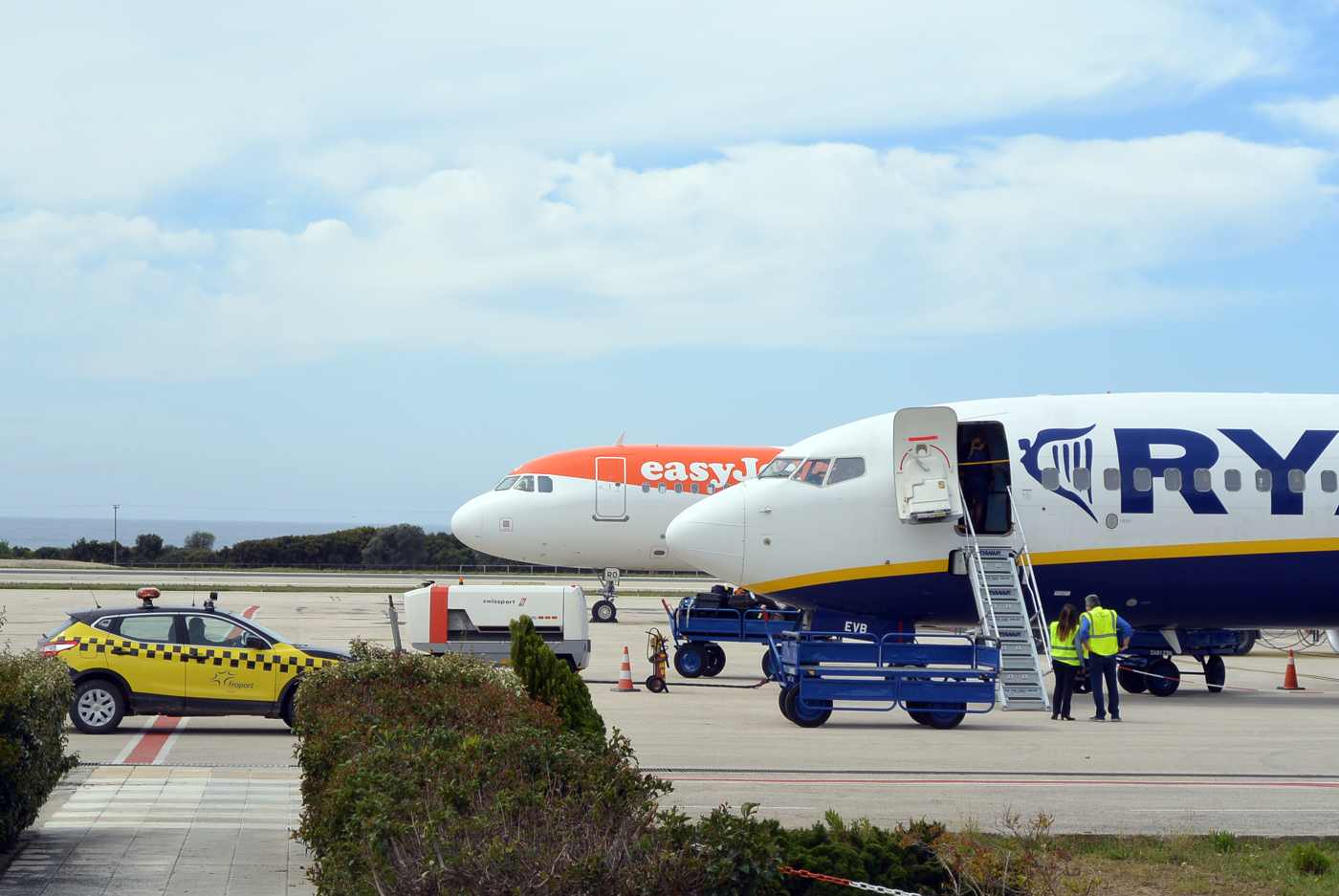
How do visitors get from Kefalonia airport to their resort?
Most visitors hire a car at the terminal or take a pre-booked private transfer. Taxis wait outside, while trains do not exist and public buses from the airport are very limited.
Hiring a car is the most common choice for reaching a resort and exploring afterwards. Car-hire desks in the arrivals area let pre-booked customers collect a vehicle quickly, and a car removes any dependence on the sparse public transport. Because the island’s roads wind through hills and along the coast, a hire car makes the many scattered beaches, villages and viewpoints far easier to reach at a chosen pace. For families and groups it often works out efficiently. It gives the freedom to drive between the south-coast resorts. The capital and the distant northern villages without waiting on fixed schedules.
Pre-booked private transfers are the second popular option, particularly for travellers who prefer not to drive on arrival. A driver meets the flight and carries passengers directly to their accommodation, which suits those reaching resorts far from the airport or arriving late. Because public buses from the terminal are very limited, arranging a transfer in advance removes uncertainty about onward travel. Many summer visitors on package holidays travel this way, moving from the baggage hall to a waiting vehicle and then straight to the resort. Without the navigate unfamiliar roads immediately after a flight.
Taxis provide a flexible alternative for those who have not pre-arranged transport. The rank sits just outside the terminal exit, and drivers cover journeys to Argostoli, Lassi and destinations further afield. For a short hop to the capital or the nearby south-coast beaches, a taxi is quick and convenient. For longer runs to the north the fare rises with the distance and driving time, so travellers weigh a taxi against a booked transfer or a hire car. The rank is busiest during summer turnaround days, when flights land close together and demand for taxis peaks.
The absence of a railway and the very limited bus service mean that spontaneous public transport from the airport is not a realistic plan. Visitors relying solely on buses find departures and awkward connections, especially outside peak season. For this reason the vast majority of arrivals settle their onward travel before they land, whether through a hire-car reservation, a private transfer or a plan to take a taxi. Deciding the method in advance keeps the arrival smooth and matches the reality that, on Kefalonia. Private road transport does most of the work of moving people from EFL to the coast.
How long is the drive from Kefalonia airport to each resort?
Argostoli and Lassi lie about ten to fifteen minutes away. Lixouri takes around thirty minutes by road, Skala, Sami and Agia Efimia about forty, and Assos and Fiskardo roughly an hour and a quarter to an hour and a half.
The closest destinations sit just north of the airport. Argostoli, the capital, and the beach resort of Lassi are each about ten to fifteen minutes away by road, making them the quickest transfers on the island. Their proximity is a major reason many first-time visitors base themselves in this area, since a short drive follows almost every arrival. The route runs across the flat Livatho plain and into the capital, avoiding the tighter mountain roads found elsewhere. For travellers landing tired after a long flight, the brief journey to Argostoli or Lassi is a practical advantage worth weighing when choosing a base.
Lixouri, the island’s second town, lies on the Paliki peninsula across the gulf from the capital. By road it takes around thirty minutes from the airport, following the coast and the head of the bay. A passenger ferry also links Lixouri with Argostoli across the water, which travellers use once settled, though the road transfer is the direct option on arrival. The peninsula has its own beaches and a quieter feel, and the half-hour drive keeps it within easy reach of EFL. Visitors staying here find the transfer manageable while enjoying a base set apart from the busier south-coast strip.
Reaching the east and south-east takes longer. Skala, on the south-eastern coast, is about forty minutes by road, as are Sami and Agia Efimia on the east coast facing Ithaca. These journeys climb and wind more than the short run to Argostoli, crossing greener, hillier country. Sami sits by the ferry port and near the famous caves, while Agia Efimia is a small harbour town a little further north. The roughly forty-minute drive to each puts them within comfortable reach of the airport for travellers happy to base themselves away from the immediate capital area.
The northern villages demand the longest transfers. Assos, with its ruined castle and horseshoe bay. Fiskardo, the harbour village at the island’s tip. Each lie roughly an hour and a quarter to an hour and a half from the airport. The drive north is scenic but slow, following winding coastal and mountain roads that reward careful driving. Travellers heading this far usually accept the longer journey in exchange for the quieter, more picturesque north. Because the transfer is substantial, many who stay in Assos or Fiskardo either book a private transfer or hire a car, planning the drive as part of the arrival day.
How does arriving at Kefalonia airport compare with the ferry?
Flying into Kefalonia airport is the fastest way to reach the island and the choice of most summer visitors. Ferries offer an alternative from the mainland and neighbouring islands, useful for those bringing a vehicle or travelling by road.
Flying into EFL is the quickest route to Kefalonia, which is why most holidaymakers arrive by air. A direct seasonal flight from the United Kingdom or Europe places travellers on the island within a single journey, and the year-round Athens service links it to the mainland hub. The airport’s position near Argostoli means the onward transfer to the main resorts is short. For visitors with limited holiday time, the speed of flying is the decisive factor. Especially in summer when direct charters remove the combine a mainland flight with a sea crossing to reach the coast.
Ferries provide the main alternative and connect Kefalonia with mainland ports and neighbouring Ionian islands. The island has harbours, with Sami on the east coast among the busiest for ferry traffic, along with other ports serving different routes. Arriving by sea suits travellers who bring their own car, since driving on board avoids the cost and limits of a hire vehicle. It also fits those touring the region by road or island-hopping through the Ionian. The crossing takes longer than a flight, but it links Kefalonia into a wider network of ports across western Greece.
The choice often comes down to where a journey begins and what a traveller carries. Someone flying from northern Europe with only luggage almost always chooses the direct summer flight into EFL for speed and simplicity. A traveller already driving through mainland Greece, or hopping between the Ionian islands, find the ferry a natural link that carries their vehicle too. Season also matters: the broad choice of direct flights exists only from spring to autumn. An off-season visitor leans on the Athens air link or on ferry connections. Which run on their own schedules through much of the year.
Combining both is common in practice. Some visitors fly into Athens, then continue by a domestic flight to EFL, while others reach a mainland port and cross by ferry, or use the sea link to move on to Ithaca and other neighbours. Understanding that the airport handles the fast, direct arrivals while the ferries handle vehicles and inter-island travel helps set a sensible plan. For a straightforward beach holiday the flight into Kefalonia airport is usually simplest; for a road trip or a multi-island itinerary the ferry earns its place alongside it.
What practical tips help with arrival and departure at Kefalonia airport?
Pre-book a car or transfer, since public transport from the terminal is very limited. Arrive early for summer departures, when the small terminal handles flights in a short window.
Arranging onward travel before landing is the single most useful step. With no train and only very limited buses from the terminal, arrivals who have not booked a hire car or a transfer rely on the taxi rank outside. Reserving a car in advance means collecting keys quickly at the arrivals desk, while a pre-booked transfer puts a driver at the meeting point ready for the journey. Confirming the resort’s driving time in advance also helps, since destinations range from a ten-minute hop to Argostoli to an hour-and-a-half run north to Fiskardo, which affects planning for late arrivals.
For departures in summer, arriving at the terminal in good time is sensible, because the compact building processes flights within a short span on busy turnaround days. Check-in and security handle concentrated bursts rather than a steady flow, so queues form when flights depart close together. Returning a hire car also takes minutes, and drivers allow for that before check-in. The cafe inside offers a place to wait once bags are checked. Outside the peak season the terminal is far quieter, and the same allowances are less pressing, though early arrival remains a safe habit.
Choosing a base with the driving times in mind smooths the whole trip. Travellers who want the shortest transfer favour Argostoli or Lassi, each about ten to fifteen minutes away, while those drawn to the northern villages accept a longer drive of over an hour to Assos or Fiskardo. Because the roads wind through hills and along the coast, a hire car makes the island far easier to explore beyond the resort, reaching scattered beaches and viewpoints at a chosen pace. Matching the accommodation to comfort with driving distance avoids surprises on the arrival day and on daily outings.
A few final habits ease the experience at EFL. Keeping the airport code and the honorary name Anna Pollatou in mind avoids confusion when searching flights or reading signs, since the whole island uses this one field near Svoronata. Confirming whether a travel date falls inside the spring-to-autumn window for direct international flights, rather than assuming they run all year, prevents a missed connection. Checking current airline timetables directly, rather than relying on fixed assumptions, keeps plans accurate. With transport arranged and timing understood, an arrival at Kefalonia airport becomes a brief, orderly start to the holiday.
Frequently Asked Questions
What is the airport code for Kefalonia airport?
The airport code for Kefalonia airport is EFL, and travellers use it on flight searches, boarding passes and baggage tags. The full name is Kefalonia International Airport, and the field also carries the honorary title Anna Pollatou, after the Kefalonian rhythmic gymnast. Entering EFL rather than a resort name is the reliable way to find flights, because the entire island is served by this single airport near the village of Svoronata, about 9 km south of Argostoli. No other commercial airport operates on Kefalonia, so every scheduled and charter service lands at EFL. Confirming the code before booking avoids confusion with similarly named destinations elsewhere in Greece.
It ensures a hire car or transfer is arranged for the correct location on the island.
Are there flights to Kefalonia airport all year round?
Domestic flights to Athens operate at Kefalonia airport all year round on carriers such as Olympic Air and Sky Express. Keeping the island connected to the mainland hub even in winter. Direct international flights, by contrast, are seasonal: charter and scheduled services from the United Kingdom and across Europe run only from spring to autumn, which is when most holidaymakers arrive. A traveller visiting in the winter or early spring expect a smaller schedule built mainly around the Athens link, sometimes requiring a connection through the mainland. Checking whether a chosen date falls inside the spring-to-autumn window, rather than assuming direct flights run all year, prevents an unexpected extra leg.
Current timetables are best confirmed directly with the airlines, since routes and frequencies shift between seasons and operators.
How far is Kefalonia airport from Argostoli?
Kefalonia airport sits about 9 km south of Argostoli, near the village of Svoronata on the flat Livatho plain. Which makes the capital roughly ten to fifteen minutes away by road. The route crosses gentle, open countryside rather than the winding mountain roads found in the north, so the transfer is quick and straightforward. This proximity is a common reason visitors base themselves in or around Argostoli and the nearby resort of Lassi, since a short drive follows almost every arrival. Taxis outside the terminal cover the run easily, and a hire car reaches the capital in the same brief time.
For travellers landing tired after a long flight, the short journey to Argostoli is a practical advantage when choosing where to stay on the island.
Is there public transport from Kefalonia airport?
Public transport from Kefalonia airport is very limited, and there is no railway anywhere on the island. Only a sparse bus service reaches the terminal. Relying on buses for onward travel is not a realistic plan. Especially outside the peak summer season when departures are few and connections awkward. For this reason most arrivals arrange transport before they land, choosing a hire car collected at the arrivals desk. A pre-booked private transfer with a driver meeting the flight, or a taxi from the rank just outside the terminal. Because the island’s roads wind through hills and along the coast, a hire car also makes exploring far easier once at the resort.
Settling the method of onward travel in advance keeps the arrival smooth and matches the reality of transport on Kefalonia.
How long does it take to drive from the airport to Fiskardo?
Driving from Kefalonia airport to Fiskardo takes roughly an hour and a quarter to an hour and a half, since the harbour village lies at the far northern tip of the island. The route follows winding coastal and mountain roads that climb and turn, so the journey is scenic but slow and rewards careful driving. Assos, with its castle and horseshoe bay, sits a little before Fiskardo and takes a similar length of time to reach. Travellers basing themselves in the quieter north usually accept this longer transfer in exchange for the picturesque setting.
Many who stay in Fiskardo or Assos either book a private transfer or hire a car and treat the journey north as part of their arrival day rather than a quick hop.
Should visitors hire a car at Kefalonia airport?
Hiring a car at Kefalonia airport suits most visitors, because public transport from the terminal is very limited and the island’s attractions are spread across winding coastal and mountain roads. Car-hire desks in the arrivals area let pre-booked customers collect a vehicle within a short walk of the baggage belt, and a car removes any dependence on sparse buses. It makes reaching scattered beaches, villages and viewpoints far easier. It gives the freedom to drive between the south-coast resorts, Argostoli and the distant northern villages at a chosen pace. Travellers who prefer not to drive can instead pre-book a private transfer or use the taxi rank outside, which works well for a short run to Argostoli or Lassi.
The right choice depends on how much independent exploring a visitor plans.