
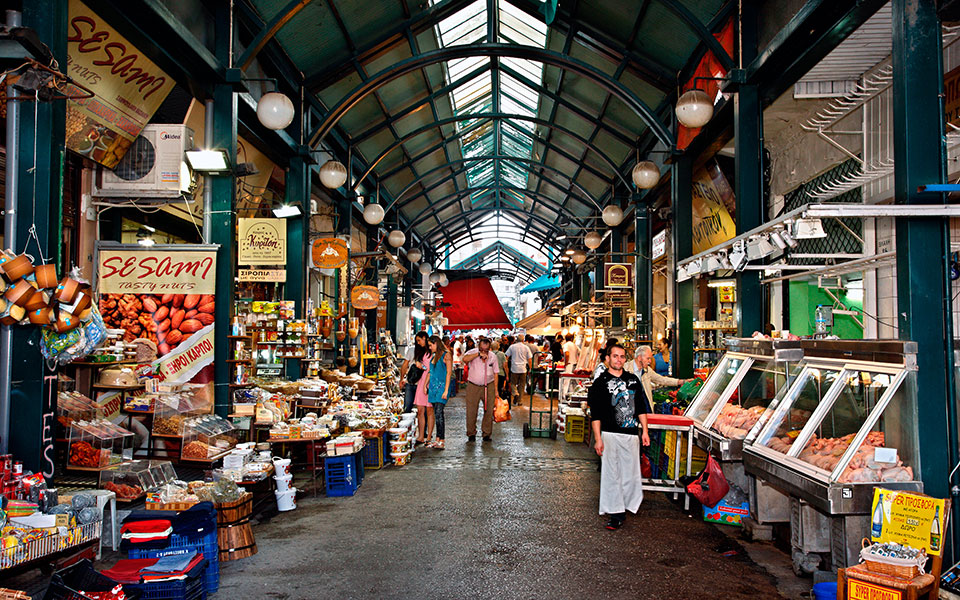
Food markets to visit in Greece: Athens to Crete and the islands. Plan the whole trip with Greece Tours. Get must-see agoras, best hours (8–10 a.m.), what to buy, and local shopping tips.
If we want to understand Greece beyond the postcard views, beyond the caldera sunsets and the “quick souvlaki and go” moments, we need to follow the food. And in Greece, food leads us to the agora: the markets where locals actually shop, argue gently over tomatoes, hunt for the right oregano, and pick fish that were swimming yesterday.
We’ve spent a lot of summers moving between islands and mainland stops, Corfu and Lefkada, Santorini and Milos, Crete and the Peloponnese, often planning our day around one simple question: Where’s the best market this morning?
This guide pulls together the food markets to visit in Greece, city by city, with practical tips so we can shop like locals and eat as we mean it.
Key Takeaways
- Plan your itinerary around the best food markets to visit in Greece by choosing between daily central market halls and weekly neighborhood laiki agoras for the most local shopping experience.
- Arrive early (ideally 8:00–10:00 a.m.) to get the best produce and a calmer browse, since most markets start winding down by 1:00–2:00 p.m.
- Shop like a local by carrying cash and a reusable tote, greeting vendors with “Kalimera,” and using simple phrases like “ena kilo” to order confidently.
- In Athens, hit Varvakios Agora for a full-spectrum market hall (fish, meat, spices) and add a neighborhood laiki to build an easy same-day picnic.
- In Thessaloniki, focus on Kapani and Modiano for meze-friendly buys like spices, olives, pickles, nuts, cheeses, and smoky northern-style cured meats.
- In Crete and the islands, prioritize region-specific staples—Cretan olive oil, rusks for dakos, thyme honey, Santorini capers/fava, and early bakery runs—to turn quick market stops into memorable meals.
What To Know Before You Go: Market Types, Hours, And Local Etiquette
Greek markets are wonderfully straightforward once we know the basic categories. The trick is timing (markets run on “Greek morning logic”) and a few small etiquette habits that make shopping smoother, especially in busy cities like Athens and Thessaloniki.
How Greek Markets Are Organized
Most traditional agoras are organized by product type, which makes it easy to navigate even if we don’t speak much Greek.
- Produce first: mountains of tomatoes, cucumbers, peaches, cherries, figs, whatever the season is shouting about.
- Olives and cheeses: big metal tins of olives, barrels of brined cheese, vacuum-packed blocks for travelers.
- Butcher counters: lamb, pork, chicken, and local sausages (loukaniko), often with a few specialty cuts we don’t see back home.
- Seafood/fish stalls (especially in central markets): whole fish on ice, shrimp, calamari, and the occasional “what is that?” catch.
- Spices, herbs, and pantry goods: oregano, thyme, bay leaves, mountain tea (tsai tou vounou), pulses, nuts, dried fruit.
Two important formats show up again and again:
- Central markets/market halls (often daily): covered halls or permanent streets of shops and stalls. Think: meats, fish, spices, and year-round staples.
- Laiki agora (weekly neighborhood street markets): pop-up produce markets that rotate by neighborhood and day of week. These are gold for seasonal fruit, affordable vegetables, and a slice of real local life.
When To Visit For The Best Selection (And Fewer Crowds)
If we can only remember one rule: go in the morning.
- Best window for quality and choice: roughly 8:00–10:00 a.m.
- Busiest window: late morning into early afternoon, especially in tourist-heavy areas.
- Typical closing rhythm: many markets wind down by 1:00–2:00 p.m. (stalls start packing up earlier than we’d expect).
For laiki street markets, the same rule applies: arrive early if we want the best peaches, the prettiest tomatoes, and the calmest browsing. Weekdays tend to be easier than weekends, but the “best” day really depends on what neighborhood we’re in.
How To Order, Pay, And Pack Your Purchases
Market shopping in Greece doesn’t need perfect language; confidence and politeness carry us far.
- How we order: We can point, smile, and say a quantity. Useful words: ena kilo (one kilo), miso kilo (half kilo), ligo (a little), parakalo (please).
- How we pay: Many stalls are cash-first, especially at laiki. Market halls increasingly accept cards, but we shouldn’t rely on them.
- Bargaining: In most food markets, pricing is fairly set. We might see a tiny bit of flexibility late in the day, but aggressive bargaining isn’t the vibe.
- Packing: Vendors will usually bag produce, wrap cheese, and wrap seafood. Still, we’ll be happier if we carry:
- A small reusable tote
- A few produce bags
- Wet wipes/hand sanitizer (fish market reality)
- A soft cooler bag if we’re traveling with cheese or cured meats
One last local habit we love: say hello. A simple Kalimera (good morning) changes the whole interaction, and sometimes earns us the best recommendation in the stall.
Athens: Must-Visit Markets For First-Timers
Athens is where many trips begin, and it’s the easiest place to see the full spectrum of Greek market culture: the intense, theatrical central market energy, and the neighborhood laiki that feels like the city’s weekly heartbeat.
Varvakios Agora (Athens Central Market)
Varvakios Agora is the Athens market we send first-timers to when they want the “everything at once” experience: fish, meat, spices, and that loud-but-friendly Greek pace.
What we do here:
- Walk the fish section first. Even if we’re not buying, it’s the most dramatic part: silver fish lined up, vendors calling out, ice everywhere.
- Follow our nose to spices. Look for dried oregano, thyme, paprika, cumin, and blends for grilled meats. If we’re building a Greek pantry back home, this is where it starts.
- Scout for lunch nearby. The area around the central market has old-school tavernas and quick bites that feel more “Athens” than the polished neighborhoods. We can shop, then eat something simple, beans, grilled sardines, or a no-nonsense pork chop.
Practical tips:
- Go early for better browsing and less shoulder-to-shoulder traffic.
- Bring small bills. It speeds everything up.
- Don’t be shy about asking: “Poio ine fresco simera?” (“What’s fresh today?”) Even imperfect Greek gets a good response.
Laiki Agora (Neighborhood Street Markets)
If Varvakios is Athens on full volume, the laiki agora is Athens in its everyday voice.
A laiki is a weekly street market that pops up in different neighborhoods. It’s near us, and the next day it’s a few metro stops away. We’ll see locals doing their real shopping: grandmothers inspecting greens, families buying fruit for the week, and vendors selling honey, olives, nuts, and seasonal produce.
What we buy at a laiki:
- Tomatoes and cucumbers for a real Greek salad (the kind that tastes like summer)
- Peaches, apricots, grapes, figs, depending on the month
- Fresh herbs and bundles of greens
- Honey and sometimes eggs or olives, depending on the market
How we shop without overthinking it:
- We do one “lap” first to compare quality.
- We pick one or two stalls and stick with them.
- We accept that our bag will be heavier than planned; this always happens.
If our goal is to eat our way through Athens, the laiki is the easiest place to build a picnic lunch with minimal effort and maximum flavor.
Thessaloniki: Northern Greece’s Best Stops For Meze And Spices
Thessaloniki eats differently from Athens. It’s a city with Ottoman and Balkan echoes in its food, more spice, more cured and pickled flavors, more meze culture. And that character shows up in the markets.
Kapani Market (Agora Modiano Area)
Kapani (often tied in conversation to the broader Modiano area) is the kind of market where we go when we want to assemble a meze table without even trying.
What to look for:
- Spice stalls with paprika, cumin, sumac-like tang, and blends for grilled meats
- Olives and pickles in big tubs, ask for a small mixed portion if we’re sampling
- Nuts and dried fruit for snacking or pairing with cheese
- Cured meats that feel more “north”, deeper, smokier profiles than the islands
How we use it:
- We buy a few small things, olives, a chunk of feta, a peppery sausage, and head to a nearby spot for drinks.
- If we’re cooking, we focus on spices and pantry staples because they travel well and instantly “Greek-ify” our kitchen.
Modiano Market Hall
Modiano Market Hall is Thessaloniki’s iconic covered market experience. Depending on the day and the season, it can feel like a food hall, a traditional market, or a mix of both.
What makes it worth a stop:
- Cured meats and cheeses in a compact, browsable space
- Spices and specialty ingredients for meze: peppers, preserved items, beans, and herbs
- A sense of Thessaloniki’s food identity, less tourist performance, and more local habits
Our best approach is simple: go with a short list (spices, olives, cheese), then leave room for surprises. This is one of those places where we’ll spot something we didn’t plan on, maybe a new herb blend or a sweet we’ve never tried, and that ends up being the thing we talk about later.
Crete: Produce-Driven Markets And Traditional Pantry Staples
Crete is a food-first island. The produce tastes louder, the olive oil is practically a local religion, and even a basic village salad can make us rethink what “tomato” is supposed to taste like.
Heraklion Central Market Street (1866 Street)
In Heraklion, the market experience isn’t just one building; it’s an active shopping street (often referred to as 1866 Street) where we can browse produce, cheeses, olives, herbs, and snacky things while weaving through daily life.
What we shop for in Heraklion:
- Cretan cheeses (ask what’s local and in-season)
- Olives and olive oil, this is a great place to compare varieties
- Rusks (paximadia) and barley-based staples for dakos
- Herbs like oregano and thyme that smell like the hills
If we’re visiting nearby archaeological sites (hello, Knossos), this market street is the perfect “before or after” stop: we can grab edible souvenirs and a few picnic items without losing half the day.
Chania Municipal Market (And What To Seek Nearby)
Chania’s Municipal Market is a classic stop for travelers, and yes, it’s worth it, especially if we treat it as a starting point rather than the entire plan.
Inside, we’ll typically find:
- Cheese and olive vendors with traveler-friendly packaging
- Honey (thyme honey is the one we always pack)
- Herbs, spice blends, and local sweets
What to seek nearby (this matters):
- Small bakeries for bougatsa or sesame breads
- Deli-style shops selling olives, capers, and preserved vegetables
- Coffee stops where locals actually pause (not just tourist cafés)
Crete rewards the curious shopper. If we take ten minutes to step off the main path and into the side streets, we’ll often find the best bites, simple, unfussy, and intensely flavorful.
Islands Beyond Crete: Small Markets With Big Flavor
On smaller islands, “market culture” looks different. We won’t always find one giant central hall. Instead, the food markets to visit in Greece often take the form of compact municipal markets, morning fish sales, excellent bakeries, and tiny grocers that somehow stock everything.
Rhodes New Market And Old Town Food Shops
Rhodes has a strong mix of local shopping and visitor-friendly food stops.
How we do Rhodes like hungry travelers:
- Start at the New Market for a broad view of what’s in season and what locals are buying.
- Then head into the Old Town and shop more selectively: spices, sweets, and small packaged items that make great gifts.
What to look for:
- Seafood if we’re cooking (or just want to see what came in)
- Local sweets and sesame-based snacks
- Herbs and spice blends that travel well
Corfu Town Market And Local Delis
Corfu is one of those places where the local delis can be just as valuable as the market itself, especially if we’re assembling beach food.
At Corfu Town Market and nearby food shops, we focus on:
- Olives and olive spreads
- Cheeses and simple picnic-friendly proteins
- Bakery items for breakfast on the go
A Corfu habit we’ve picked up: ask the deli to suggest something “local and ready.” We’ll often end up with a perfect pairing, like a peppery cheese next to a mellow olive and a loaf of bread that disappears way too fast.
Santorini Small Grocers, Bakeries, And Seasonal Farm Stands
Santorini is famous for its views, but it also has a very particular set of flavors. The island’s produce can be special (especially when it’s in season), and the best “market” moments often come from small, everyday shops.
What we seek out:
- Small grocers with local items like cherry tomatoes, capers, and fava (the Santorini kind)
- Bakeries early in the morning, this is where we win our day
- Seasonal farm stands when they pop up (simple signs, crates of produce, honest prices)
Our Santorini tip: shop early, eat early. By midday, the island feels crowded, and the calm, local rhythm we want is easiest to catch before the heat and the tour buses fully kick in.
Peloponnese And Mainland Gems: Under-The-Radar Places To Shop
If we love Greece but want fewer crowds (and more “this is for locals” energy), the Peloponnese and mainland towns are where market shopping gets especially satisfying. The stalls feel less curated, the prices often feel friendlier, and we can build meals with almost no effort.
Nafplio Market Days And Old Town Food Stores
Nafplio is charming in that “we might stay longer than planned” way. Market days add another reason to linger.
How we approach Nafplio:
- Check which day the weekly market runs (it can vary), then plan a morning around it.
- Use the Old Town food stores to fill the gaps: a bakery for bread, a deli for olives, a small shop for local wine.
What we buy:
- Seasonal fruit for the beach or a walk up to Palamidi
- Cheese and olives for an easy hotel balcony lunch
- Small sweets for later (because Nafplio evenings basically demand dessert)
Kalamata Producers And Olive-Focused Shops
Kalamata is synonymous with olives for a reason. If we care about olive oil, this is a satisfying place to taste, compare, and learn a little.
What to look for:
- Kalamata olives in different cures (not all taste the same)
- Extra virgin olive oil from local producers, ask about harvest timing and storage
- Olive-based products (tapenades, spreads) that work beautifully in sandwiches and picnics
If we’re driving through Messinia or the wider Peloponnese, we can treat Kalamata as our “stock up” stop. A couple of well-chosen olive items can upgrade breakfasts, salads, and quick meals for the rest of the trip.
What To Buy In Greek Markets: A Practical Shopping List
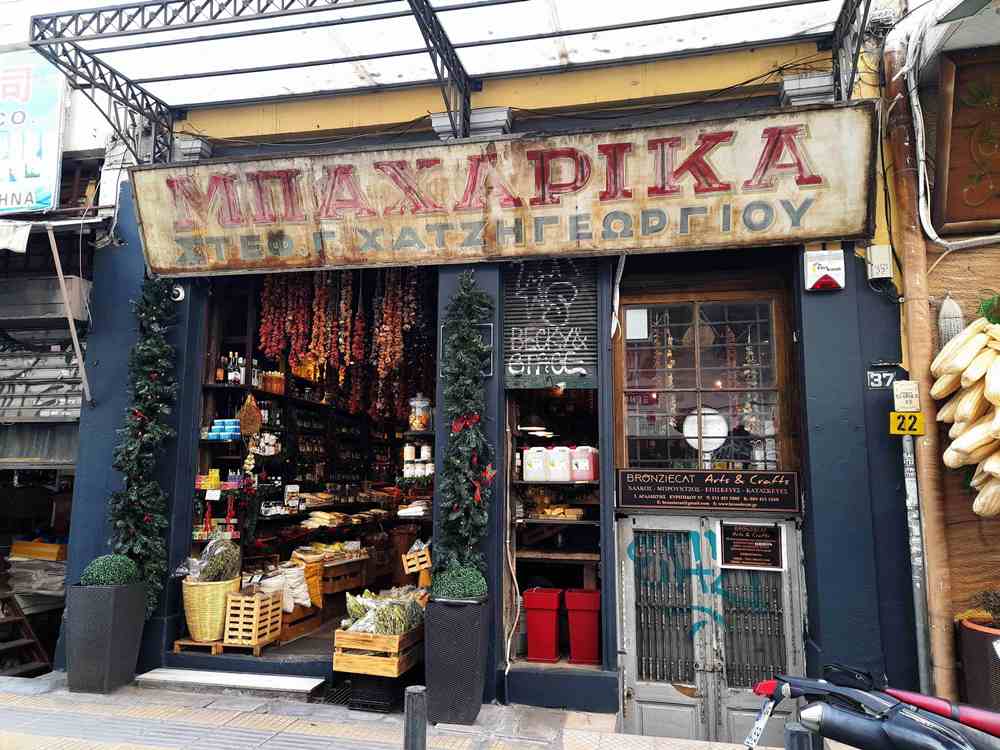
We’ve all done the thing where we buy “interesting” food on vacation… and then it sits in our bag, unused. Here’s the practical list: what we actually buy in Greek markets, how we choose it, and what’s worth carrying home.
Cheeses, Olives, And Cured Meats
These are the core Greek market purchases, high flavor, easy to build meals around.
- Feta: go for brined feta sold by weight if we’re eating it the same day; choose vacuum-packed if we’re traveling.
- Halloumi-style grilling cheeses (often labeled region to region differently): great for quick pan-searing.
- Olives: ask to taste if possible. We like buying two types, one mild, one punchy.
- Loukaniko (Greek sausage): often seasoned with orange zest, herbs, or leeks, depending on region.
A small move that helps: ask the vendor what they’d pair together. Greeks are casually excellent at pairing salty, briny, and fatty flavors.
Seafood And Butcher Counters: What To Look For
We don’t need to be seafood experts: we just need a few reliable signals.
Seafood:
- Clear eyes and a clean smell on the whole fish (fresh fish doesn’t smell “fishy” in a harsh way)
- Firm flesh and bright skin
- If we’re unsure, we buy shrimp or calamari for simple cooking
Butcher counters:
- Lamb is a classic choice for grilling or slow cooking.
- Pork shows up everywhere in everyday Greek cooking.
- For something easy, we grab thin cuts that cook fast in a pan with lemon and oregano.
If we’re staying somewhere with even a basic kitchenette, a market butcher plus a lemon and olive oil is basically a full plan.
Seasonal Produce And Greek Herbs
Greek produce is one of the best reasons to visit markets at all. But it’s also where seasonality matters most.
What we look for by “feel”:
- Tomatoes that smell like tomatoes (we keep saying it because it’s true)
- Peaches and apricots that have fragrance even before they’re cut
- Figs when they’re in season, soft, not leaking, with that honeyed scent
Herbs to buy:
- Oregano (the classic)
- Thyme (especially good with honey and roasted meats)
- Bay leaves for beans and stews
- Mountain tea for evenings back at our place
We usually buy dried herbs in small amounts unless we’re taking them home. Fresh herbs are wonderful, but they can wilt fast in summer heat.
Honey, Sweets, And Pantry Souvenirs That Travel Well
If we want edible souvenirs that won’t break in our luggage (or our hearts), focus on stable pantry items.
Our reliable picks:
- Thyme honey: intensely aromatic and very “Greece in a jar.”
- Sesame sweets like pasteli (easy to pack, great on travel days).
- Mastiha products (especially from specialty shops) are unique, resinous, and very Greek.
- Olive oil in travel-safe bottles (ask about shipping options if we’re buying larger quantities).
One reminder we’ve learned the hard way: if we’re flying, we double-check liquid limits and packing rules. Olive oil is precious… but TSA is not sentimental.
How To Turn Market Stops Into Meals: Easy Itineraries And Pairings
Markets are fun, but the best part is what happens after: we turn a quick shopping stop into a meal that feels like we “cracked the code” of Greek travel. Here are a few easy ways we do it.
Build A Picnic From A Laiki Or Market Hall
A Greek picnic doesn’t need gadgets or planning. We just need a few high-impact basics.
Our go-to market picnic formula:
- Bread (from a bakery if possible)
- Tomatoes + cucumbers
- Feta or a local cheese
- Olives
- Fruit for dessert
- Optional upgrades: roasted peppers, capers, a slice of loukaniko, a small bottle of local wine
How we assemble it:
- Chop tomatoes roughly, add salt, and drizzle olive oil.
- Add feta on top.
- Eat it with bread and olives.
It sounds too simple, but on a hot day, especially on an island, it’s exactly right.
Quick Greek Breakfast And Coffee Pairings Near Markets
Markets start early, so breakfast matters. We like breakfasts that are fast, local, and not overly sweet.
Pairings we look for:
- Greek yogurt + thyme honey (and maybe walnuts)
- Koulouri (sesame bread ring) + coffee, Athens classic
- Bougatsa in northern Greece, when we’re in Thessaloniki
- Spinach or cheese pies (spanakopita, tyropita), anywhere we find a good bakery
Our coffee rule: take it how locals take it in that region. Whether it’s an iced coffee in summer or a strong hot one in cooler months, it’s part of the rhythm.
Cooking-Class And Tasting Ideas That Start At The Market
If we’re the type who likes experiences that translate into real skills, starting with a market visit makes everything better.
Ideas that work almost anywhere in Greece:
- Meze-building tasting: shop for olives, cheeses, cured meats, tomatoes, and herbs, then taste and pair back at the class or apartment.
- Seasonal cooking: buy what looks best that day (zucchini flowers, eggplants, greens) and build a menu around it.
- Olive oil tasting + simple meal: compare oils, then use the winner on salad and bread.
Even if we don’t book a formal class, we can create our own “mini lesson”: ask one vendor how they’d cook an ingredient we’ve never used. In Greece, that question often leads to a real recipe, not just a sales pitch.
Conclusion
If we’re mapping out food markets to visit in Greece, the goal isn’t to check off famous names, it’s to shop in a way that pulls us into local life. Athens gives us scale and energy. Thessaloniki brings spice and meze culture. Crete delivers pantry staples and produce that tastes like sunlight. And the islands and smaller towns reward us with those low-key moments: a bakery run at 8 a.m., a bag of perfect figs, a deli owner insisting we try “just one more” olive.
Our best advice is almost annoyingly simple: go early, carry cash, say kalimera, and buy less than you think, then come back for the thing you can’t stop thinking about. That’s how Greek markets work on us. We don’t just shop. We start building the next meal and the next story.
Frequently Asked Questions About Food Markets to Visit in Greece
What are the best food markets to visit in Greece for first-time visitors?
Start in Athens with Varvakios Agora for the full central-market experience (fish, meat, spices), then try a neighborhood laiki agora for weekly local produce. For more stops, add Thessaloniki’s Kapani/Modiano markets and Crete’s Heraklion 1866 Street or Chania Municipal Market.
What’s the difference between a central market and a laiki agora in Greece?
Central markets (market halls or permanent streets) run most days and focus on year-round staples like meat, fish, spices, and cheeses. A laiki agora is a rotating weekly street market by neighborhood—best for seasonal fruit, vegetables, and everyday local shopping. Both are classic food markets to visit in Greece.
When is the best time to visit food markets to visit in Greece to avoid crowds?
Go early. The best window for freshness and relaxed browsing is roughly 8:00–10:00 a.m. Late morning gets busy, especially in tourist-heavy areas, and many stalls start winding down earlier than expected—often packing up toward 1:00–2:00 p.m., particularly at laiki markets.
What should I buy at Greek agoras—what’s actually worth bringing home?
Focus on high-impact, travel-friendly staples: dried oregano/thyme, thyme honey, sesame sweets (pasteli), and vacuum-packed cheeses or olives. In places like Kalamata, compare olive oils and cures. If flying, double-check liquid limits for olive oil or ask vendors about shipping options.
Do I need cash at Greek markets, and is bargaining expected?
Cash is still the safest plan, especially at laiki agoras where each stall handles its own payments. Some market halls increasingly accept cards, but don’t rely on them. Prices are usually set; light flexibility may happen late in the day, but aggressive bargaining isn’t typical in Greek food markets.
How can I turn a market stop into an easy Greek meal without cooking skills?
Build a simple picnic: bread, tomatoes and cucumbers, feta or local cheese, olives, and fruit—then add olive oil and a pinch of salt. For a quick breakfast near markets, look for yogurt with thyme honey, koulouri in Athens, or bougatsa in Thessaloniki.
See more about Greece Tours:
- About Us
- Aegina
- Agkistri Boat Tours: Agistri Island Cruises & Activities – Amazing Tours on Agistri Island
- Amorgos Travel Guide: Explore Amorgos Island, Amorgos Greece
- Ancient Corinth
- Andros
- Astypalaia-Your Ultimate Guide to Astypalaia Island, Greece: A Greek Paradise
- Athens Travel Guide: Best Things to Do in Athens, Greece – Your Ultimate Athens Guide
- Blog