
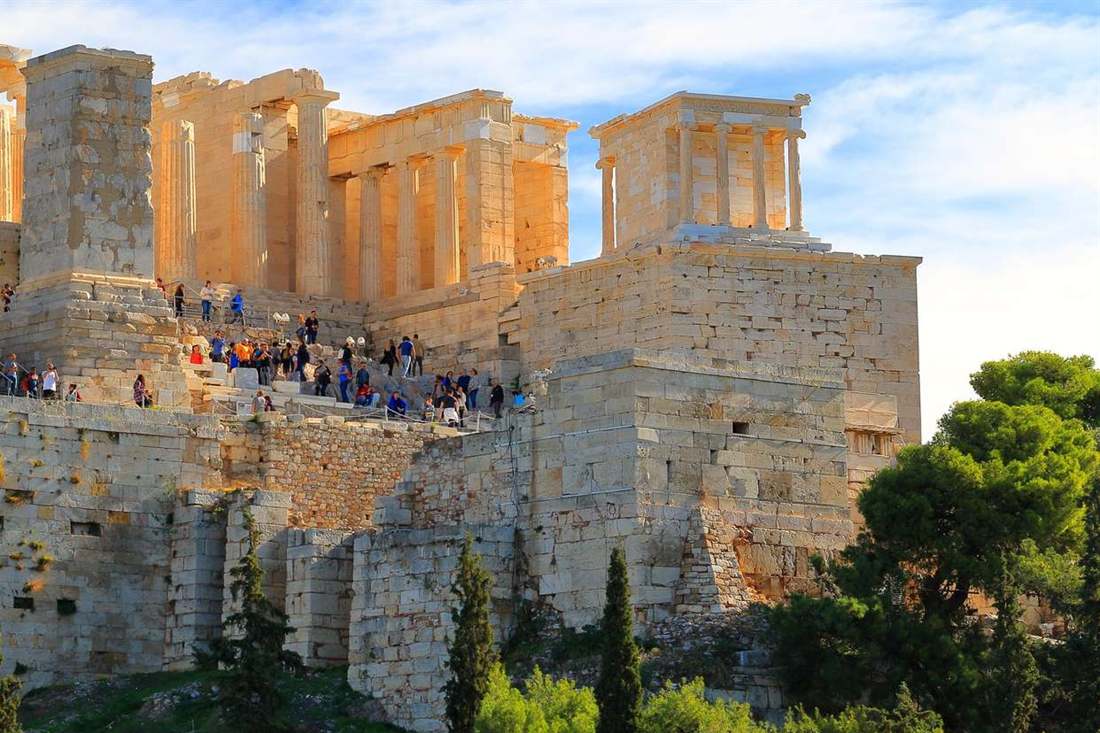
July and August share the highest mean daily maximum in Athens, at 34.3°C. When does Athens get very hot? In those two months, with the second ten days of July holding the largest number of heat episodes.
During a heat alert the Culture Ministry has closed the Acropolis from 12:00 to 17:00, so the first and last hours of the day set a sightseeing plan. Travellers who prefer a cooler region for the hottest weeks can compare every destination on the Greece Tours homepage.
When does Athens get very hot, and which weeks hold the peak?
July is Athens’ hottest month. If you wonder when does Athens get very hot, the middle ten days of July give the reply. The climate table gives a 34.3°C mean daily maximum and a 24.2°C mean daily minimum.
The heat builds through June. Its mean daily maximum is 31.6°C, while its mean daily minimum is 21.6°C. These figures describe the full month, not a hot spell.
July and August share the highest mean daily maximum, at 34.3°C. August has a slightly warmer mean daily minimum, at 24.4°C. So both months matter if you plan around when does Athens get very hot.
The hottest stretch sits in the second ten days of July. That window is the clearest reply when you ask when does Athens get very hot in the calendar. HNMS counted six heat episodes beginning in that part of July. It counted five in the first ten days and five in the final ten days.
The second ten days of August also deserve attention. The monthly table remains hot, with a 34.3°C mean daily maximum. This helps answer when does Athens get very hot after July. The city can stay hot after July, even when the peak pattern starts to ease. That is another clue for when does Athens get very hot.
September is a step down, but it is not cool. Its mean daily maximum is 29.6°C, and its mean daily minimum is 20.4°C. A traveller who wonders when does Athens get very hot still finds summer heat early in September.
June records 44.8°C as its monthly high. July records 42.8°C, August 43.9°C, and September 38.7°C in the downtown table. These records show how far individual days sit above monthly averages.
For planning, compare the monthly average with the possible peak. This comparison helps answer when does Athens get very hot without confusing normal heat with an extreme. The mean daily maximum describes a normal hot day. A record high describes an exceptional reading at a station. This distinction keeps any reading of when does Athens get very hot precise.
See Athens weather by month for the wider month-by-month context. Once average heat and extreme heat stay separate, when does Athens get very hot becomes easy to read.
Night temperatures matter in the climate figures. July nights average 24.2°C, and August nights average 24.4°C. The higher August minimum explains why August can feel harder after a hot day.
June still marks the start of serious heat. September still carries heat from summer. July and August hold the strongest average daytime signal. The second ten days of July form the clearest peak window.
How hot do the hottest days of the year get in Athens?
Athens has recorded 48.0°C in the basin. The downtown table lists a 44.8°C record for June. Asking when does Athens get very hot means looking far beyond the monthly average.
The Athens basin record is 48.0°C at Elefsina and Tatoi. Both readings came from the same July event. This is the national and continental record listed for those locations.
The downtown monthly records show a clear summer range. June reaches 44.8°C. July reaches 42.8°C. August reaches 43.9°C. September reaches 38.7°C.
The same table lists 22.8°C for January, 25.3°C for February and 28.2°C for March. April reaches 32.2°C and the last month of spring 37.6°C. October reaches 36.5°C, November 30.5°C, and December 23.1°C.
These records do not describe normal conditions. July’s mean daily maximum is 34.3°C. August has the same mean daily maximum. A record is a rare station reading, not a daily forecast.
Location also shapes how you read when does Athens get very hot. During heatwaves, an Athens urban station had surface temperatures 7.5°C to 8.2°C above coastal stations.
The urban heat study found a smaller difference before and after heatwaves. That normal-period gap ranged from 3.9°C to 5.7°C. Heat intensified the contrast between built areas and the coast.
The same study found the urban station’s surface temperature rose 3.0°C to 3.5°C during heatwaves. Coastal stations rose 1.0°C to 2.0°C. These are surface readings, not air readings.
Surface heat explains why pavement can feel hotter than the official air temperature. The European Union’s Athens case study measured 60°C on exposed pavement and 30°C under tree shade.
The National Observatory of Athens operates a network that began with Thiseio’s continuous station. Its automatic network now has more than 600 stations. Measurements transmit in real time at ten-minute intervals.
Station placement changes the result. A dense urban site, a coastal site, and an open basin site do not share one temperature. Planning around when does Athens get very hot needs the location beside the reading.
The twelve-day July heatwave reached 41.9°C in central Athens and 43.6°C in Nea Filadelfeia. The nine-day July-August event reached 43.9°C in the city centre.
A July event brought 43.4°C in Filothei and 43.6°C in Aspropyrgos. Nea Filadelfeia reached 45.4°C during the same July event. These readings show the basin’s sharp local differences.
What counts as a heatwave in Athens, and when does Athens get very hot enough to qualify?
HNMS applies a three-day threshold using station-specific summer extremes. Asking when does Athens get very hot enough to qualify means asking about unusual heat. The episode must last at least three days.
HNMS says the WMO guidance defines a heatwave as intense, unusual heat lasting at least two or three consecutive days. Countries can set their own thresholds for warnings.
For its Greek analysis, HNMS used the 98th percentile of each station’s summer daily maximum temperatures. A heat episode needed maximum temperatures above that level for at least three consecutive days.
This method explains why a fixed number cannot describe every Athens heatwave. A station in the basin has its own summer record. That detail matters for one neighbourhood and for when does Athens get very hot there. The threshold reflects local climate conditions.
An ordinary hot day is one high reading without the required run. A heatwave is a sustained episode. For a heatwave, when does Athens get very hot depends on both intensity and length.
HNMS reported that the second ten days of July produced six heat episodes in its long station analysis. The first and final ten-day parts of July each produced five.
The July heatwave lasted twelve days, from July 20 through July 31. Central Athens reached 41.9°C, while Nea Filadelfeia reached 43.6°C during the episode.
The July-August heatwave lasted nine days, from July 28 through August 5. Athens reached 43.9°C in the city centre during that prolonged event.
The July Greek heatwave lasted sixteen days, according to the National Observatory of Athens. Metropolitan Athens recorded minimum temperatures above 30°C for twelve consecutive days.
A kafsonas alert signals an official heatwave concern, not an ordinary warm forecast. Greek Civil Protection publishes heatwave guidance and directs people toward cooler places and reduced exposure.
The alert framework also supports public communication. Athens used heat alerts, a telephone information line, cooling centres, and messages for vulnerable groups in its heat action work.
Heat alerts connect weather data with public response. The forecast identifies a dangerous episode. Local authorities then organise information and support around the expected heat.
When does Athens get very hot is therefore not answered by one temperature alone. The official test combines an unusual threshold, three consecutive days, and the station’s local climate.
Which hours of the day answer when does Athens get very hot?
People wondering when does Athens get very hot see heat build after the cool morning and peak in the afternoon. The World Health Organization names 04:00 to 07:00 as the coolest part of the day. That window suits outdoor activity.
At night, buildings and paved streets release stored heat slowly. The air can still feel warm before sunrise, but the daily minimum arrives near dawn. After sunrise, the ground receives stronger sunlight and temperatures rise through the morning.
Climate data for Athens shows the daily heat pattern across each hour. The afternoon sits in the warmer part of that curve. Visitors who wonder when does Athens get very hot can use the curve as a rule. Early visits suit long walks, exposed viewpoints, and uphill routes.
Sunlight lasts for 14 hours and 48 minutes in Athens on June 21. A table for June 21 gives sunrise at 6:03 and sunset at 8:51. Long daylight leaves more time for outdoor plans, but it also extends sun exposure.
On August 15, sunrise is at 6:40 and sunset is at 8:18. Daylight lasts 13 hours and 38 minutes. The later sunrise does not remove the afternoon heat. So when does Athens get very hot? Still in the middle and later part of the day.
The Saronic coast can receive an afternoon sea breeze. Sea breezes form when land heats faster than nearby water, drawing cooler air inland. The breeze can improve comfort near the coast, yet it does not remove direct sun or the need for water.
Greek summer quiet hours run from 15:00 to 17:30. The Greek Police lists these hours for the period from 1 April to 30 September. Anyone who enquires when does Athens get very hot will find that this timing suits a rest period.
Plan demanding walks for early morning. Use the afternoon rest period for an indoor visit, a shaded break, or a cool room. Check official alerts before leaving, because daily conditions change even when the seasonal pattern stays clear. Asking when does Athens get very hot has a seasonal answer, yet each day needs its own check.
What does the heat change at the Acropolis and the other state sites?
Heat alerts change how state archaeological sites run. This matters to readers curious about when does Athens get very hot. The Culture Ministry has used a noon to 17:00 closure for the Acropolis and comparable sites during peak heat.
The Culture Ministry states that officials assess each site according to temperature and fire risk. They can change opening hours or stop access when conditions threaten visitors or workers. The public receives an announcement when a change applies.
For the Acropolis and sites with comparable temperatures, the Ministry notice identifies the peak period as 12:00 to 17:00. A separate Acropolis notice records a final entry at 12:00 and reopening at 17:00. Visitors asking when does Athens get very hot at the Acropolis can check Acropolis opening hours before setting out.
The Ministry directs site services to create shaded areas and use air-conditioned spaces when available. It also calls for staff supervision when a visitor feels unwell from heat stress. These measures support visitors who need a quick break from exposed stone surfaces.
For visitors asking when does Athens get very hot, the Ministry arranged protective shade structures at the Acropolis entrances. It also arranged free bottled water with the Hellenic Red Cross. Water access helps visitors respond early to thirst and heat discomfort.
The notice also describes site preparation for fire danger. Measures include checking firefighting systems and keeping communication with the local Fire Service. They also include wetting the ground around monuments during high temperatures and preparing visitor evacuation plans.
The Ministry can postpone cultural events, change hours, or close archaeological areas during severe heat or high fire danger. It also directs staff to give relevant guidance at entry points. A closure is a safety decision, not a normal timetable. A reader unsure about when does Athens get very hot on a given day needs a fresh check.
Avoid planning the Acropolis as a fixed afternoon appointment during an alert. Read the latest announcement before travelling. If access changes, choose an indoor museum or another public place that remains open. Then return to the hill after officials restore access.
Other state sites matter too for anyone wondering when does Athens get very hot. Their response depends on local conditions, site layout, staff instructions, and the notice issued by the responsible archaeological authority.
How do you stay safe and cool once Athens gets very hot?
Anyone wondering when does Athens get very hot needs a safety plan. Stay in shade or a cool building, drink water regularly, and stop when dizziness, weakness, nausea, or confusion appears. Heatstroke needs immediate medical help and rapid cooling.
The National Public Health Organization advises people to avoid movement during the hot hours. It also advises keeping access to a cool or air-conditioned place. It highlights extra risk for children, pregnant people, people with chronic illness, and outdoor workers.
Visitors curious about when does Athens get very hot drink water regularly, rather than waiting for strong thirst. The World Health Organization advises one cup each hour and 2 to 3 litres across the day. It also advises limiting alcohol and excessive caffeine during a heatwave.
Use shade whenever you walk outside. The World Health Organization says sunlight can make it 10 to 15 degrees Celsius hotter than the shade temperature. A shaded pavement and a sunny stone surface can therefore feel very different.
The City of Athens has opened seven Friendship Clubs as air-conditioned spaces during a heat alert. The published arrangement lists operation from 09:00 to 21:00 for as long as required. Anyone unsure about when does Athens get very hot can check municipal notices, as locations and details can change.
The Culture Ministry provides water points at the Acropolis during its stated heat measures. Carrying a refillable bottle also helps between public drinking-water points. Drink before a long walk, then pause in shade instead of pushing through rising discomfort.
People who wonder when does Athens get very hot need to know the signs of heat strain. If you feel faint, dizzy, weak, anxious, very thirsty, or headachy, move to a cool place and rest. Painful muscle spasms need rest and oral rehydration with electrolytes. Medical attention is needed when heat cramps last longer than one hour.
Heatstroke signs include fainting, delirium, loss of consciousness, nausea, dizziness, and stopped sweating. Call emergency help immediately. Move the person to shade or air conditioning and loosen extra clothing. Cool the body with cold wet cloths, ice packs, or fans.
Keep watching the person until help arrives. Do not give aspirin or paracetamol to a person with heatstroke. Place an unconscious person on their side. Call 112 or 166, the emergency numbers listed by Greek Civil Protection. Visitors worried about when does Athens get very hot can note both numbers before setting out.
For practical planning, read these Athens travel tips before leaving your accommodation. Your notes on when does Athens get very hot help only when they shape your route and rest breaks. They also shape your water plan and your response to warning signs.
When does Athens get very hot on the coast and the islands, and what does the wind do?
July is the hottest month, so it answers when does Athens get very hot. The coast and islands gain relief from the sea and the meltemi. Saronic sea water reaches 24°C in July, August, and September, so swimming works in the hottest weeks.
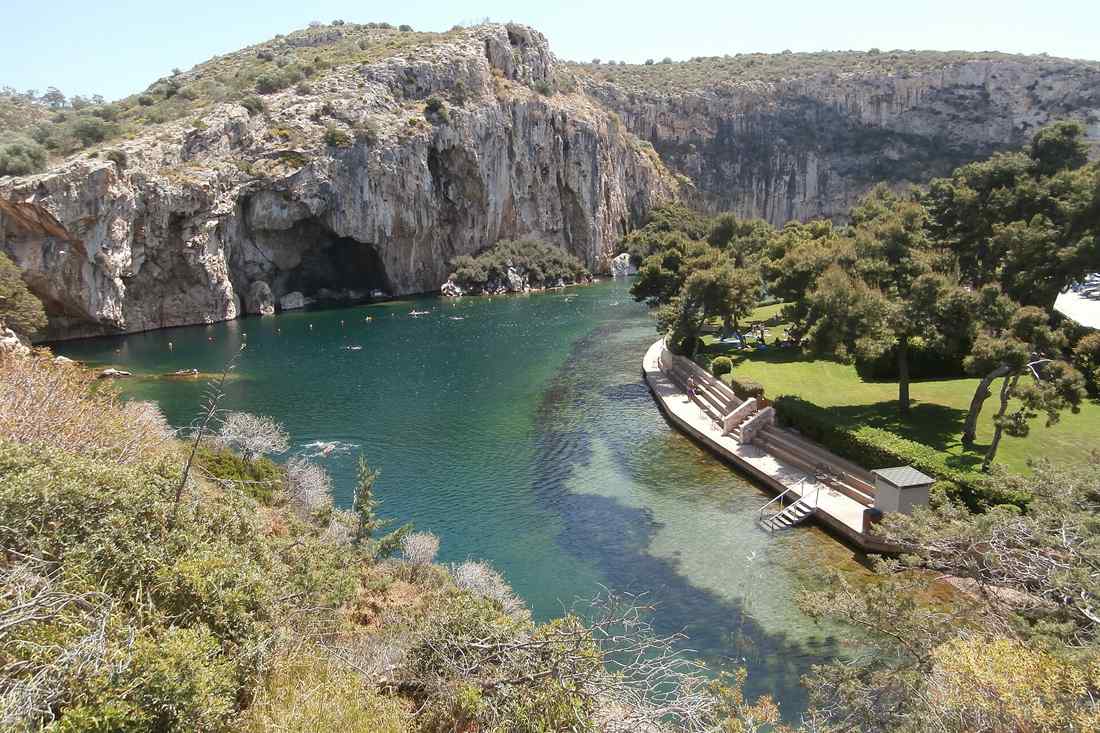
Sea temperature changes more slowly than land temperature. The Saronic Islands table gives 16°C in January, 15°C in February and March, and 16°C in April. It rises to 18°C in late spring and 21°C in June.
A traveller asking when does Athens get very hot also needs the sea figures. The same table records 24°C in July, August, and September. October falls to 21°C, then November reaches 19°C and December reaches 17°C. These figures explain why the sea stays usable after the hottest land days.
The Athens Riviera stretches from Piraeus towards Sounio and Lavrio. It includes Glyfada, Voula, Vouliagmeni, Varkiza, and other southern coastal areas.
Glyfada has a waterfront setting and sandy beaches. Vouliagmeni is a seaside suburb south of central Athens. Swimmers wondering when does Athens get very hot find the coast close. It offers swimming areas without leaving the Athens region.
For more coastline planning, see the Athens Riviera beaches guide. The sea offers a different setting from the dense city centre.
Asking when does Athens get very hot leads to the meltemi, also called the etesian wind. It blows across the Aegean from late spring to mid-September.
It is a strong, dry wind from the north. Local land shapes shift its direction between northeast, north, and northwest. In the central Aegean, the wind is northerly. In the southern Aegean, it is northwesterly.
Its dry air can temper summer heat on exposed coasts and islands. The wind is strongest in the afternoon and weakens at night.
On stronger days, the meltemi blows at Beaufort force 7 or 8. Such conditions affect ferry planning from Piraeus and Rafina. A large number of inter-island ferries cannot sail in those conditions, so travellers need a flexible sea plan.
Any island plan that asks when does Athens get very hot needs two checks. Look at the sea forecast before an island trip. Then check the ferry operator on the travel day, since wind can change the sailing plan.
Island guests asking when does Athens get very hot find Mykonos cooler in July. Athens has an average July high of 91°F, while Mykonos has an average July high of 83°F. Mykonos is also windy through the year, which changes how the heat feels.
Hydra has a July average high of 32.2°C and an August average high of 32.4°C. Its July sea temperature is 24°C, matching the Saronic Islands table. The island is warm, yet the water and wind give it a coastal character.
Which tours fit the answer to when does Athens get very hot?
Your tour choice follows the answer to when does Athens get very hot and the hours you want to avoid. Five listings cover an early start, a day on the water, evening food, a sunset trip, and a night walk.
The first listing is an early-morning guided visit to the Acropolis and Acropolis Museum. It lasts 2 to 4 hours, and starting times depend on availability. The guide speaks English, and no group-size limit is listed.
It covers the Acropolis, Parthenon, Acropolis Museum, and related monuments on foot. The listing includes early access, a professional guide, and an audio device. Entrance tickets depend on the selected option. Free cancellation applies up to 24 hours before the activity for a full refund.
This listing suits any traveller asking when does Athens get very hot and wanting the historic centre first. It buys early-morning hours, then leaves the later part of the day open.
The second listing heads for the coast. It suits coast lovers asking when does Athens get very hot. It runs for 5.5 hours and visits Cape Sounion and the Temple of Poseidon. Starting times depend on availability.
The listing provides an English live guide and an English audio guide, with no group-size limit listed. It covers a coastal drive, free time at Cape Sounion, and free time at the temple. Cancellation is free up to 24 hours before departure, with a full refund.
The activity is built around sunset, so it buys late afternoon and evening hours. The listing describes round-trip transport, an archaeologist guide, an audio-guide app, and onboard Wi-Fi. This is the sunset answer to when does Athens get very hot.
The third listing is a cruise of 12 hours. It calls at Hydra, Poros, and Aegina. Starting times depend on availability, and pickup is available. Host or greeter languages are Spanish, English, and French. Audio guides are available in English, French, German, Italian, Japanese, Spanish, and Portuguese.
No group-size limit is listed. The cruise covers sightseeing, island walking time, a buffet lunch, live entertainment, drinks, and multilingual escorts. The itinerary includes 105 minutes in Hydra, one hour in Poros, and two hours in Aegina.
This is the on-the-water answer to when does Athens get very hot. It buys a full day away from the city streets. Free cancellation applies up to 24 hours before the activity for a full refund.
The fourth listing is a 3-hour evening food walk. It suits food lovers asking when does Athens get very hot. Starting times depend on availability. The guide speaks English, and no group-size limit is listed. The route includes Platia Iroon, Psyri, Evripidou, Monastiraki, and Agia Irini Square.
It covers Greek cold cuts, local cheeses, olives, and Dakos. It adds a traditional pie or souvlaki, dessert, a seated meze dinner, and one glass of wine or beer. The food market does not operate in the evening. Free cancellation applies up to 24 hours before the activity for a full refund.
This listing buys evening hours after the streets have cooled. It is the food-first answer to when does Athens get very hot. It trades a daytime monument visit for a seated dinner.
The fifth listing is a 2-hour night walk. Starting times depend on availability. It is conducted in English for a small group limited to 10 participants. The route passes the Cathedral, Anafiotika, Plaka, Psyri, and Monastiraki.
It covers basic historical information, local restaurant and bar suggestions, and walking through the historic centre. It is not presented as a historical or licensed guided tour. Free cancellation applies up to 24 hours before the activity for a full refund.
This is the after-dark choice for night walkers asking when does Athens get very hot. For another evening option, see the Athens sunset cruise page. Both choices move the main experience away from the hottest daytime period.
What do travellers ask about when does Athens get very hot?
Planners ask when does Athens get very hot because July, August, the coast, and the islands feel different. July leads the Athens climate comparison, while sea temperature, wind, and tour timing change the practical answer.
Which month is the hottest in Athens?
July is the hottest month in Athens. That is the short answer to when does Athens get very hot. Its average high is 91°F, while August records 90°F. The hot season runs from June into September.
Is July hotter than August?
Yes, the Athens comparison gives July a slightly higher average high than August. The difference is small. August has the higher muggy-condition share, so it can feel just as difficult in still air.
Does Athens cool down at night?
Yes, average night temperatures sit below daytime highs. July and August average lows are 73°F. Readers asking when does Athens get very hot also meet warm nights, despite coastal wind and sea air.
Is the Acropolis closed in a heatwave?
There is no single standing answer for every heat event. The official ticket site offers Acropolis tickets and describes morning and evening experiences. Check the official site notice and the date-specific ticket page before visiting.
Is the sea warm enough for swimming in the hot weeks?
Yes. Swimmers asking when does Athens get very hot find 24°C sea water in July, August, and September. The Saronic Islands table marks it as warm enough for swimming. June reaches 21°C and feels cooler.
Is a day trip to Delphi or Cape Sounion cooler than the city?
Cape Sounion gives open coastal air and sea views, but the listing promises no lower temperature. Delphi needs its own forecast. Ask when does Athens get very hot, then choose by route, wind, and timing rather than assumed cooler weather.