
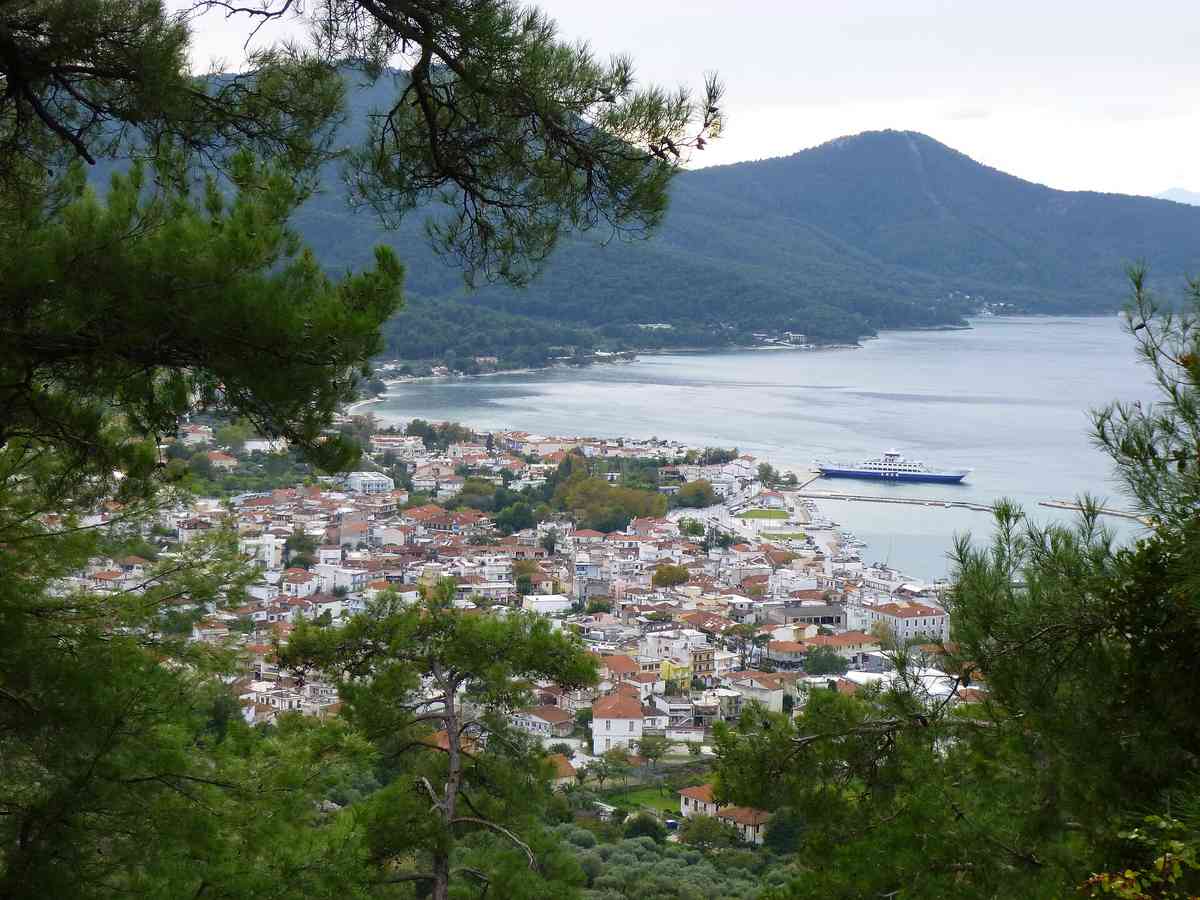
A Thassos itinerary comes together easily because the whole island wraps around one coastal ring road of about 100 kilometres. Every village, beach and ancient site sits on or just off that loop, so days plan themselves by coast. Three days cover the headline sights: the capital Limenas, the famous sands of Golden Beach, and the mountain villages below Mount Ipsarion. A full week opens the southern shore, hidden coves, waterfalls and a relaxed boat trip. Thassos pairs pine-forested hills with turquoise water, ancient marble quarries and honest village cooking. This guide maps the island day by day, from a quick long weekend to a slow seven-day loop, and points to the best beaches, trails and tavernas along the way.
Travellers planning a Thassos holiday weigh how many days to spend, where to base themselves and how to link the beaches, villages and ruins into a smooth route. The compact ring road answers most of that: a hire car circles the island in under three hours, so no day wastes time in transit. The sections below build the trip day by day, taking in Limenas first, then Golden Beach, then the mountain villages and Mount Ipsarion, before extending to a full week around the south. Food, wine and practical planning round out the plan. Organised Thassos tours handle the logistics for travellers who prefer a guided loop over self-driving the coastal road.
Why is a Thassos itinerary so easy to plan?
A coastal ring road circles the whole island in about 100 kilometres, and every village, beach and ancient site sits on or just off it. Days split naturally by coast, so a Thassos itinerary almost writes itself.
The coastal road forms one continuous loop of roughly 100 kilometres around Thassos, hugging the shoreline for most of its length. Drivers circle the island in about two and a half hours without backtracking, which turns route planning into a simple choice of direction. Clockwise runs from the capital down the east coast to the beaches first; anticlockwise heads west toward the quieter harbours. Signposted turnoffs lead inland to mountain villages, marble quarries and forest trails within three or four kilometres of the sea. This compact geometry means no day wastes hours in transit. Travellers pick a stretch of coast, park at will, and swim, eat or explore before rejoining the ring.
Distances stay short across the whole island, which keeps each day flexible and unhurried. Limenas to Golden Beach takes about twenty minutes by car along the east coast. Limenas to Limenaria on the south coast runs closer to forty-five minutes. No two points on the ring lie more than an hour apart, so a wrong turn costs little. This scale lets travellers combine a beach, a village and a viewpoint in a single afternoon. Planners divide the loop into coastal segments and tackle one segment a day, which spreads the highlights evenly and leaves room to linger.
Geography sorts the island into clear zones that map straight onto a day plan. The north holds the capital, its ruins and the busy sandy beaches near Golden Beach. The mountainous centre gathers the stone villages of Panagia and Potamia below the high peak. The south and west string together Aliki, Limenaria and the quiet harbours facing the mainland. Each zone fills roughly one day of a longer trip. Visitors reading the island this way turn a shapeless holiday into an ordered sequence of town, beach, mountain and southern loop.
Direction of travel becomes the first real decision once the zones are clear. A clockwise loop from Limenas reaches Golden Beach and the east-coast sands within half an hour of setting off. An anticlockwise route heads for Prinos, Limenaria and the west-coast sunsets first. Either direction returns to the start without doubling back, since the road forms a closed ring. Splitting the loop across several days avoids long drives and tired evenings. Travellers weighing the two options usually save the west coast for late afternoon, when the sun drops behind the mainland hills across the water.
What does Day 1 in Limenas include?
Limenas, the island capital, fills a relaxed first day: a breakfast of Greek yogurt, honey and nuts, the ruins of the Ancient Agora, the Ancient Theatre a short climb uphill, and wide views from the acropolis above town.
Limenas, also called Thassos Town, works best as the base for the opening day of any tour. Breakfast sets the tone: a bowl of thick Greek yogurt topped with local honey and walnuts, served at a harbourfront cafe. The port town mixes a working marina with cafes, bakeries and the island’s main shops. Morning light on the fishing boats makes an easy start before the sightseeing begins. A short stroll along the old harbour reaches the archaeological zone on foot, so the car stays parked. Visitors exploring Limenas find the ancient ruins, the beaches and the tavernas all within walking distance of one another.
The Ancient Agora spreads across the flat ground behind the modern harbour, once the commercial and civic heart of the ancient city. Marble foundations, column stumps and paved courtyards mark where shops, shrines and public offices stood. Signboards trace the layout, so the ruins read clearly even without a guide. The open site rewards a slow, unhurried wander of about an hour. Fragments of statues and inscriptions hint at the wealth that Thasian marble and wine once brought. Shaded benches under nearby trees give a cool pause before the walk continues uphill toward the theatre.
The Ancient Theatre sits a short walk uphill from the agora, carved into the pine-covered slope above the town. Stone tiers curve around the orchestra, framing the sea beyond the stage in a view that still draws visitors at sunset. Summer performances occasionally revive the space, echoing its classical use. A marked path climbs on toward the acropolis, passing stretches of the ancient walls. Genoese and medieval additions overlay the older Greek fortifications near the summit. Panoramic views open across the rooftops, the harbour and the strait toward the mainland from the top of the climb.
Evenings in the capital reward the day’s walking with dinner at a harbourside taverna. Grilled fish, Thasian olive oil and a glass of island wine round off the first day well. The waterfront promenade fills with a gentle crowd once the heat fades after eight. Ice-cream shops, bars and small boutiques keep the port lively into the night. A single day covers the town’s headline sights without any rush at all. Travellers ready for beaches then turn south for the second day, following the east coast toward the island’s most famous stretch of sand.
What makes Golden Beach the highlight of Day 2?
Golden Beach, on the east coast, ranks among the island’s most famous shores, with soft golden sand and shallow, clear water. Warm shallows and a long, gentle bay make Day 2 an easy beach day for families and swimmers.
Golden Beach stretches for roughly two kilometres along the island’s east coast, the longest sandy bay on Thassos. Fine golden sand slopes gently into water that stays shallow far from shore, which suits children and cautious swimmers. Sunbeds, umbrellas and beach bars line the busier central section, while the ends stay calmer. Watersports operators rent paddleboards, pedalos and jet skis through the summer season. The resort villages of Skala Potamia and Chrysi Ammoudia sit right behind the sand, packed with tavernas and rooms. Anyone visiting Golden Beach finds parking, food and shade within a two-minute walk of the water.
The east coast strings together a run of beaches south of the capital, each reachable off the ring road. Makryammos, a short drive from Limenas, offers a sheltered organised bay backed by pine trees. Skala Rachoni and Skala Sotiros add quieter, family-friendly options closer to town. Golden Beach anchors the middle of this coast, with the calm bays of Kinira further south. Turquoise water and easy access define the whole eastern shoreline. Drivers hop between three or four beaches in a single morning, testing the sand and shade before settling on a favourite for the afternoon.
Beach days on the east coast leave room for more than swimming. Snorkelling over the rocky headlands at each bay’s edge reveals fish, sea urchins and clear underwater light. Boat trips depart from Skala Potamia toward the sea caves and marble beaches of the wider coast. Beachfront tavernas serve fresh seafood, Greek salad and cold drinks a step from the sand. Shaded loungers and gentle water make a lazy day feel effortless. Families with young children rate this coast highest, since the shallow entry removes the worry that steeper beaches bring elsewhere on the island.
Kinira, a small resort toward the south end of the east coast, closes the day with a quieter mood. The islet of Kinira lies just offshore, framing sunset views back across the water. Golden Beach itself glows in the late afternoon light as the crowds thin after five. A short drive returns to Limenas for dinner, or a taverna in Skala Potamia keeps the evening local. One full beach day recharges travellers before the mountain route inland. Panagia and the high trails wait for the third day, trading sand and sea for stone villages and forest paths.
How do Panagia, Potamia and Mount Ipsarion fill Day 3?
Panagia and Potamia, two traditional villages of stone houses and narrow lanes, open the third day inland. The demanding 12.6-kilometre trail from Potamia then climbs Mount Ipsarion, the island high point, for the fittest walkers.
Panagia climbs a green hillside above the east coast, one of the best-preserved traditional villages on Thassos. Stone houses with slate roofs and wooden balconies line steep, narrow lanes too tight for cars. Spring water runs through carved channels down the main street, past bakeries famous for local honey pastries. The village square, shaded by tall plane trees, gathers cafes around a cool fountain. A short climb reaches the church of the Dormition, whose gold-leaf icons draw visitors year round. Travellers wandering Panagia step into an older Thassos of craft workshops, family tavernas and hillside views over the bay.
Potamia sits just below Panagia in the same green valley, a quieter village at the foot of the mountains. Sculptor Polygnotos Vagis, born here, gives the village a small museum of his bronze and stone works. Stone houses, olive groves and orchards frame the road as it climbs toward the peak. The village serves as the trailhead for the ascent of the island’s highest summit. Cafes around the square fuel walkers with coffee and pastries before the long climb. Potamia and its neighbour reward a slow morning of lanes, churches and shade before the trail turns seriously uphill into the forest.
Mount Ipsarion rises to 1,204 metres, the highest point on Thassos and the goal of the island’s toughest walk. The marked trail from Potamia runs about 12.6 kilometres return, climbing steeply through pine and chestnut forest. Streams, springs and shaded clearings break up the demanding ascent along the way. Sturdy boots, water and an early start count as essentials for the four-to-six-hour round trip. Summit views stretch across the whole island to the mainland mountains and neighbouring Aegean isles. Hikers tackling Mount Ipsarion earn the finest panorama on Thassos, well beyond anything the coast road offers below.
Valley roads link Panagia, Potamia and the trailhead in a compact loop easily driven in a morning. Walkers short on time swap the full summit push for a gentler forest stretch lower down. Waterfalls near Potamia offer a cooler, easier alternative to the exposed upper climb. Village tavernas back in Panagia serve hearty food to refuel tired legs after the descent. This third day balances culture, forest and a serious summit for those who want it. Travellers with only three days close the trip here, having covered town, beach and mountain in turn.
How do you extend a Thassos itinerary to a week?
A week unlocks the full coastal loop at a relaxed pace: Aliki with its twin coves and ancient marble quarries, Limenaria, the quiet west-coast harbours, hidden beaches, waterfalls and a boat trip, ending with mainland-facing sunsets.
Aliki forms the highlight of the southern loop, a headland where twin sandy coves meet back to back. Ancient marble quarries scar the rocks by the water, with column drums still lying where workers left them. Ruins of two early Christian basilicas crown the low peninsula above the swimming coves. Clear, calm water on both sides lets swimmers pick whichever cove the wind favours. A footpath rings the whole headland in twenty minutes, linking sea, ruins and quarry. Visitors reaching Aliki combine a swim, an archaeological site and a scenic walk in one compact, memorable stop.
Limenaria ranks as the island’s second-largest town, built around mining wealth on the south coast. The old Palataki, a hilltop mansion of the former mining company, overlooks the harbour and its beaches. Tavernas, shops and a long seafront promenade give the town a lively, workaday feel. West of here the ring road passes Potos, Pefkari and the fishing harbours of the quieter coast. Prinos, a west-coast resort about 15 kilometres from Limenas, has a good beach that fills quickly in summer. Drivers following the south and west shores trade the busy east for calmer water and a more local rhythm.
West-coast evenings deliver the island’s best sunsets, since this shore faces the mainland across the water. Skala Marion and Skala Kallirachis offer harbourfront tavernas where the sun drops behind the hills of Kavala. Waterfalls near Kastro and in the hills above Potamia add cool, green detours away from the coast. Boat trips from the southern harbours reach the marble beach at Saliara and the Giola rock pool. Hidden coves like Salonikios and Rosogremos reward drivers willing to bump down rough tracks. A relaxed week weaves these lesser sights between beach days, so the loop never feels rushed.
Seven days turn the compact ring into a slow, thorough tour rather than a race between highlights. Three days cover the headline sights of town, beach and mountain in a tight sequence. The extra four days open room for the south loop, hidden beaches and a boat trip at ease. Rest mornings by the pool or a favourite cove balance the driving days well. Repeat swims at a chosen beach replace the pressure to see everything once. Travellers with a week leave having circled the whole island, inland villages and quiet coves included, without a single hurried day.
Where do food, wine and village stops fit in?
Thassos is known for its wine, honey and olive oil, so a winery visit or a village-taverna lunch slots into any day. Roadside stalls, mountain tavernas and coastal grills keep food woven through the whole route.
Thasian produce centres on three island staples: wine, honey and olive oil, all sold straight from the source. Hillside vineyards near Theologos and Limenaria run tastings of local reds and whites through the season. Beekeepers across the pine forests bottle the dark, aromatic honey that flavours village pastries. Cold-pressed olive oil from the coastal groves fills tins at roadside stalls and village shops. A short detour to a winery or an oil producer adds flavour to any driving day. Travellers gathering picnic supplies stock up on cheese, olives and bread at the markets in Limenas and Limenaria.
Village tavernas serve the island’s most honest cooking, far from the busy beach strips. Theologos, the old inland capital, is famous for spit-roasted goat cooked slowly over wood. Panagia and Maries plate up hearty stews, grilled meats and garden vegetables under plane trees. Family kitchens still make their own bread, cheese and pies from local ingredients. Lunch in a mountain village breaks up a driving day with shade, quiet and a long table. Diners climbing inland for a meal trade sea views for cooler air and prices below the coastal tourist rate.
Coastal grills and fish tavernas anchor the evening meal along the harbours of the ring road. Fresh sardines, sea bream and calamari come straight off the day boats at Skala Potamia and Limenaria. Harbourfront tables put the water an arm’s reach away as the fishing fleet rocks nearby. Greek salad, fried courgette balls and grilled octopus round out a typical seafood spread. Sunset dinners on the west coast pair the plate with the day’s final light over Kavala. Diners chasing the freshest catch simply follow the small ports where the boats unload each afternoon.
Food stops slot into every version of the route, whether a long weekend or a full week. Breakfast in Limenas, a mountain-village lunch and a harbour dinner map a full day of eating across the island. Winery visits pair naturally with the inland drive to Panagia, Potamia or Theologos. Honey and oil purchases travel home as easy, local souvenirs of the trip. A single food-focused afternoon rewards travellers who care as much about the table as the beach. Planners build one tasting or taverna stop into each day so the island’s flavours anchor the whole tour.
What practical tips shape a Thassos itinerary?
A hire car unlocks the ring road and the inland villages, since bus links stay limited. Limenas, Golden Beach or Limenaria all work as a central base, and late spring to early autumn brings the reliable weather.
Car hire ranks as the single most useful decision for touring Thassos properly. Rental desks cluster in Limenas and at the ferry port, with agencies in the larger resorts too. A small car handles the ring road and the paved village turnoffs with ease. Public buses connect the main towns but run on a thin timetable that limits spontaneous stops. Booking a vehicle ahead in high summer secures a better rate and a wider choice. Drivers gain the freedom to chase beaches, villages and viewpoints on their own schedule, which is the whole point of a road-trip island like this.
Base choice shapes how the driving days feel across a Thassos trip. Limenas, the capital, puts ferries, ruins, shops and the north beaches within easy reach. Golden Beach and Skala Potamia suit families who want sand and tavernas on the doorstep. Limenaria and the south coast favour travellers drawn to the quieter, more local half of the island. A central base cuts the daily loop into shorter, easier drives in either direction. Visitors weighing a single base against two split their stay between the north and south to halve the driving on longer trips.
Timing the visit matters as much as the route itself. June and September pair warm sea with thinner crowds and lower room rates than the July and August peak. Spring greens the forests for hikers, while the sea stays cool for swimming until early summer. Autumn holds warm water into October alongside the village olive harvest. Ferries from Keramoti and Kavala run frequently from late spring to early autumn, easing arrivals. Travellers matching their dates to warm water and open beaches land on the shoulder months either side of high summer.
Ferry crossings link Thassos to the mainland by two short routes worth planning around. The Keramoti to Limenas hop takes about forty minutes and runs most often through the day. A longer Kavala service reaches Limenas and the south coast for travellers arriving from that city. Vehicle space fills fast on peak-summer sailings, so an advance ticket protects the plan. The ring road itself stays well surfaced, with fuel stations in the main towns. Drivers combining an early ferry with a clockwise loop reach the first beaches within an hour of rolling off the ramp.
Frequently Asked Questions
How many days do you need for a Thassos itinerary?
Three days cover the island’s highlights: the capital Limenas with its ancient ruins, a beach day at Golden Beach on the east coast, and the mountain villages of Panagia and Potamia below Mount Ipsarion. A full week opens the southern loop through Aliki and Limenaria, plus hidden coves, waterfalls and a boat trip at a relaxed pace.
Is a car needed to follow a Thassos itinerary?
A hire car ranks as the most practical way to circle the island and reach the inland villages. The ring road runs about 100 kilometres, and buses connect only the main towns on a limited timetable. Drivers gain the freedom to plan each day by coast and stop wherever a beach or village appeals along the loop.
Where is the best base for a Thassos trip?
Limenas, the capital, makes the strongest all-round base, close to the ferry port, ancient ruins, shops and the northern beaches. Golden Beach suits families set on sand, while Limenaria anchors the quieter south coast. A central base keeps the daily driving loop short in either direction across the island.
How does a three-day trip compare with a week on Thassos?
Three days deliver the essential Thassos itinerary of town, beach and mountain in a tight, satisfying sequence. A week adds the full southern loop, quiet west-coast harbours, hidden beaches and a boat trip without any rush. Travellers short on time cover the highlights in three days, while those wanting depth and rest gain from a full seven.
When is the best time to visit Thassos?
June and September rank as the best months, pairing warm sea and sunny days with thinner crowds and lower room rates than the July and August peak. Spring greens the forests for hikers, and autumn holds warm water into October alongside the olive harvest. Winter turns cool and wet, and the beach resorts close.
Can you tour Thassos without a car?
Buses along the ring road connect Limenas, Golden Beach, Limenaria and the larger villages, so a car-free trip works for beach-focused travellers. Boat excursions and taxis fill the gaps for day trips. Reaching remote coves, mountain trails and small inland villages, though, stays far easier with a hire car.