
Thassos sits just off the coast of northern Greece, yet the island carries no airport of its own, so every flight-based journey to Thassos lands on the mainland first. Two gateway airports serve the island: Kavala International Airport, coded KVA and known as Megas Alexandros, sits closest at Chrysoupoli, while Thessaloniki Airport, the larger hub coded SKG, offers wider connections. Travellers fly into one of these, transfer to a ferry port, and cross the short channel by boat. Kavala lies nearer the Keramoti ferry, the quickest link, while Thessaloniki suits those needing more routes. Understanding both airports, their transfers, and their seasons turns a two-stage trip into a smooth arrival on the island.
Flying to the island rewards planning that pairs the right airport with the right ferry crossing to Thassos. The sections below explain why the island has no runway, where Kavala airport stands and how close it lies to Keramoti, which airlines and routes serve both gateways, how the airport-to-ferry transfer works, when Thessaloniki beats Kavala, whether to hire a car or take a taxi on arrival, and how seasonality shapes the timing. A companion guide on how to get to Thassos covers the ferry legs in full detail. Each answer below gives concrete distances, transfer times, and IATA codes so the air route becomes clear before departure.
Does Thassos have its own airport?
Thassos has no airport of its own. The nearest gateway is Kavala International Airport, coded KVA, at Chrysoupoli, roughly forty-five minutes from the Keramoti ferry. Thessaloniki Airport, coded SKG, is the larger year-round alternative farther west.
Thassos occupies a compact, mountainous island barely eight kilometres off the Macedonian coast, and its steep pine-clad interior leaves little flat ground for a runway. Ferries have always handled the crossing because the channel is short and sheltered, making a bridge or airfield unnecessary for such a near-shore island. Passengers therefore reach the island through mainland airports and a boat, a pattern shared by several small Greek islands close to the coast. Kavala International Airport, coded KVA, sits nearest on the eastern mainland near Chrysoupoli. Thessaloniki Airport, coded SKG, lies farther west but handles far more flights. Both feed the same ferry ports, so the island stays well connected despite lacking a runway of its own.
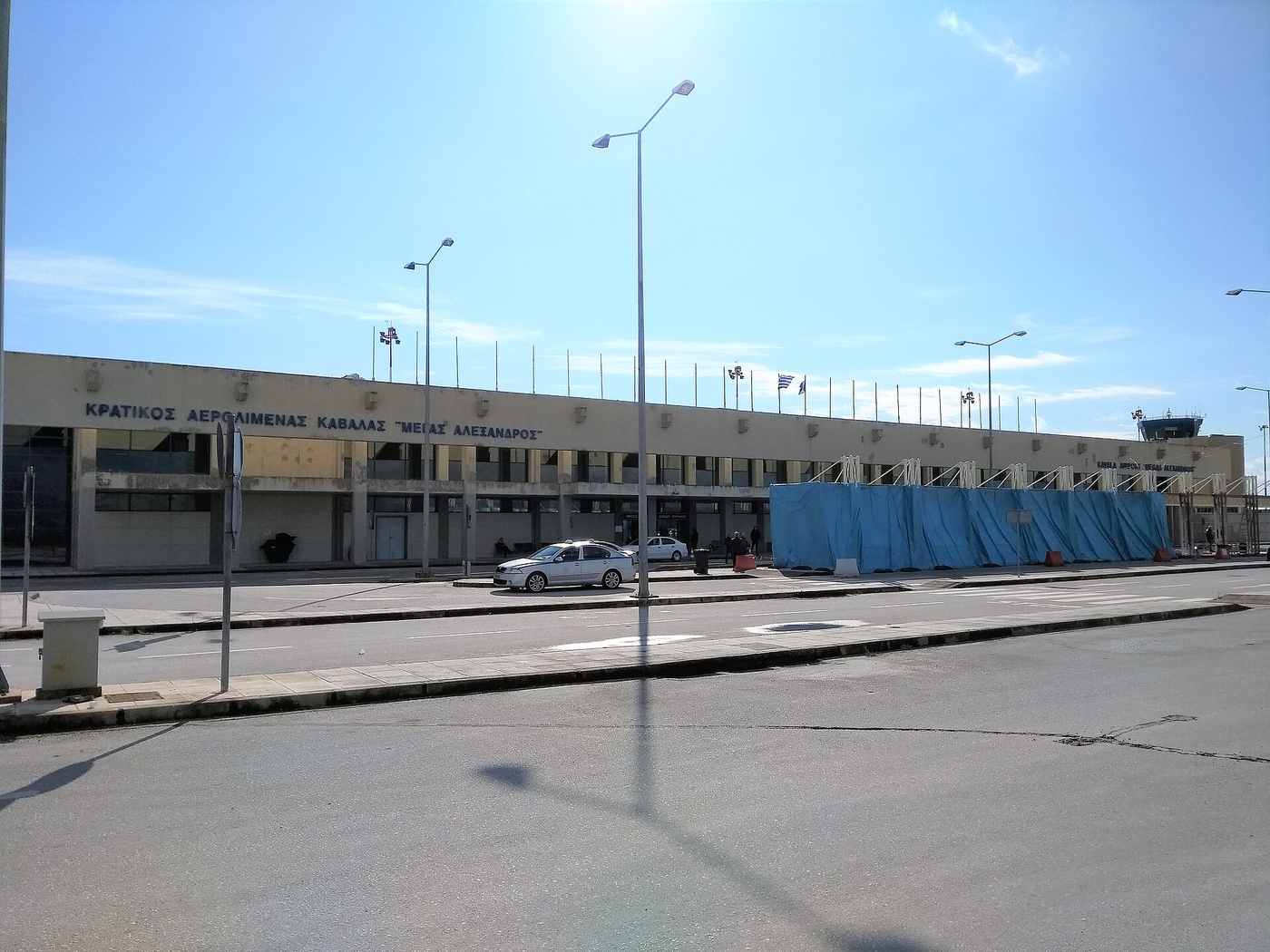
Kavala International Airport carries the formal name Megas Alexandros, honouring Alexander the Great, and serves the wider region of eastern Macedonia and Thrace. The terminal stands near Chrysoupoli, roughly thirty kilometres east of Kavala city and only a short drive from the Keramoti ferry quay. Runway length and facilities handle full-size jets, so seasonal charters from across Europe land here through the summer. Domestic services connect the airport with Athens throughout the year, feeding onward island traffic. Car hire desks, taxis, and a modest café line the arrivals hall for waiting passengers. Proximity to Keramoti makes KVA the natural first choice for a flight-based trip to the island, cutting the mainland transfer to well under an hour.
Thessaloniki Airport, coded SKG and named Makedonia, ranks as the second-busiest airport in Greece after Athens. The hub sits about sixteen kilometres from Thessaloniki city on the coast, roughly a hundred and seventy kilometres west of the Keramoti ferry. Year-round scheduled flights link it with major European capitals, alongside a dense summer charter programme. Travellers choose SKG when their home city lacks a direct Kavala route, accepting a longer road transfer in exchange. A motorway runs east from Thessaloniki toward Kavala and Keramoti, keeping the drive straightforward if lengthy. Frequent connections and competitive fares often make the larger hub cheaper to reach, which offsets the extra ground time for many budget-minded visitors heading to the island.
Choice between the two airports turns on route availability, transfer time, and total fare rather than distance alone. Kavala wins for the short hop to Keramoti, ideal for travellers who value a quick boat crossing after landing. Thessaloniki wins on flight frequency, drawing visitors whose nearest direct link runs only to the larger hub. Season matters too, since Kavala’s charter schedule thins outside the summer months while Thessaloniki keeps flying all year. Guidance on the best time to visit Thassos helps align flight timing with the island’s peak weeks. Weighing these factors early lets each traveller pick the gateway that matches both their departure city and their arrival plans on the island.
Where is Kavala airport and how close is it to Thassos?
Kavala International Airport, coded KVA, stands near Chrysoupoli on the eastern mainland, about thirty kilometres from Kavala city. The Keramoti ferry quay lies only a short drive away, roughly forty-five minutes, making it the closest air gateway to Thassos.
Kavala International Airport occupies a coastal plain beside the town of Chrysoupoli, in the region of eastern Macedonia and Thrace. The site lies about thirty kilometres east of Kavala city and a similar distance from the port town of Keramoti. Flat delta land around the Nestos River gave engineers the space that Thassos itself lacks for a runway. Arrivals step into a single compact terminal that handles both domestic and international traffic under one roof. Signposts point quickly toward the car hire desks, the taxi rank, and the road to the ferry ports. The airport’s position on the Keramoti side of the coast is exactly what makes it the shortest air route to the island’s northern harbour at Limenas.
Keramoti ferry quay sits closest to the airport, reached by a short drive of roughly forty to forty-five minutes across quiet coastal roads. The port faces Thassos directly, and the crossing to Limenas takes only around thirty-five to forty minutes on a modern ferry. Combined, the transfer and the boat move a passenger from the runway to the island in well under two hours. Frequent summer sailings keep waiting times short, so a well-timed landing connects smoothly with a departing ferry. The how to get to Thassos guide sets out the Keramoti timetable and ticket details in full. This tight airport-to-ferry chain is the strongest argument for choosing Kavala over the larger Thessaloniki hub.
Kavala city port offers a second ferry option, sailing to the west-coast port of Skala Prinos rather than to Limenas. The crossing from Kavala runs longer, around an hour and fifteen minutes, and departs less often than the Keramoti service. Travellers landing at KVA who stay on the island’s western side sometimes prefer this route despite the extra time. The city itself, with its castle, aqueduct, and harbour, rewards a short stop for passengers with time to spare. Buses link the airport with Kavala town, where the ferry quay sits beside the old waterfront. Choosing between Keramoti and Kavala ports depends on where a traveller plans to stay once the boat reaches the island.
Transfer choices from Kavala airport suit every budget and party size heading toward the ferry. Taxis wait outside arrivals and reach Keramoti in well under an hour for travellers who value a direct door-to-quay ride. Pre-booked shuttles and private transfers serve groups and families arriving on summer charter flights. Hire cars from the terminal desks let independent visitors drive straight to the port and take the vehicle across on the ferry. Public buses connect the airport with Kavala and Keramoti, though timetables thin outside the peak season. Advice on where to stay in Thassos helps match the arrival port to the chosen resort. Planning the transfer ahead keeps the final leg smooth.
Which airlines and routes fly to Kavala and Thessaloniki?
Kavala mainly receives seasonal summer charters from across Europe plus domestic flights from Athens, coded KVA. Thessaloniki, coded SKG, runs year-round scheduled services to many European capitals alongside a large summer programme, giving it far wider route choice than Kavala.
Kavala airport fills its schedule chiefly with seasonal charter and low-cost flights that arrive through the warm months. Northern and central European cities send holiday traffic directly to KVA when demand for the region peaks in summer. Domestic flights from Athens run through the year, letting travellers connect from long-haul arrivals at the capital. The route map narrows sharply in winter, when charter operators pause and only the core domestic link remains. Passengers from cities without a direct summer service usually route through Athens or Thessaloniki instead. Checking the current season’s charter list early helps travellers judge whether a direct flight to Kavala exists from their home airport before committing to the shorter transfer to the island.
Thessaloniki airport carries a broad, year-round network that dwarfs the schedule at Kavala. Scheduled carriers link SKG with major hubs across Europe, from the west to the east, on flights that operate in every season. A dense summer programme adds holiday routes and extra frequencies on top of the winter timetable. Domestic services connect the airport with Athens and several Greek islands throughout the year. This breadth means most European travellers can find a direct or one-stop route into Thessaloniki with ease. Competitive fares follow from the volume of flights, often making SKG the cheaper entry point despite its distance. The trade-off is the longer road transfer east toward Keramoti, which adds a couple of hours to the journey.
Athens serves as the fallback hub for travellers whose home city reaches neither gateway directly. Frequent domestic flights link the capital with both Kavala and Thessaloniki throughout the year, feeding onward island traffic. A long-haul arrival at Athens can connect to a short domestic hop, reaching either northern airport within the same day. Baggage checked through to the final airport eases the transfer for passengers on a single ticket. This routing suits visitors from outside Europe or from smaller regional cities without seasonal charters. Domestic fares between Athens and the north stay reasonable, especially when booked ahead of the summer rush. Planning the connection with a sensible layover avoids a tight change and keeps the ferry crossing achievable the same evening.
Booking strategy for the island rewards comparing both gateways against the calendar before fixing a flight. Summer travellers gain the widest choice, since Kavala’s charters and Thessaloniki’s full programme both run at full strength. Shoulder-season visitors lean toward Thessaloniki, whose year-round schedule holds firm as the charters fade. Fare differences between the two airports can outweigh the extra transfer time, so a wider search often pays off. Flexibility on dates opens cheaper seats, especially away from the busiest high-summer weeks. Pairing the flight search with the ferry timetable ensures the boat still sails after landing. This joined-up approach, matching route, price, and season, produces the smoothest and most affordable path to the island.
How do you get from Kavala airport to the Thassos ferry?
Kavala airport connects to the Keramoti ferry by a short drive of roughly forty-five minutes, whether by taxi, hire car, pre-booked transfer, or seasonal bus. The Keramoti to Limenas crossing then takes about thirty-five to forty minutes by boat.
Roads from Kavala airport to Keramoti run flat and quiet across the coastal delta, making the drive simple even for first-time visitors. The route heads east and south from Chrysoupoli, following signed local roads toward the port town on the shore. Total driving time sits around forty to forty-five minutes, covering a distance of roughly twenty-five kilometres. Traffic stays light outside the peak arrival hours, so the transfer rarely runs late in normal conditions. Hire cars picked up at the terminal let drivers reach the quay at their own pace and load straight onto the ferry. Clear signage near the port directs vehicles to the ticket booth and the boarding lanes beside the water, keeping the process quick.
Taxis line up outside the Kavala airport arrivals hall and offer the quickest door-to-quay option for foot passengers. A single fare covers the whole party to Keramoti, making the taxi competitive for families or small groups splitting the cost. The ride takes under an hour, dropping travellers directly at the ferry ticket office beside the port. Drivers know the ferry timetable and can adjust the pace to catch an imminent sailing when a flight lands late. Pre-booking a taxi or private transfer secures a car at the door, useful on busy summer charter days. Cash and card both work with most drivers, though confirming the fare before departure avoids any confusion on arrival at the port beside the water.
Public buses provide the cheapest link between the airport, Kavala city, and the Keramoti ferry through the summer season. Services run less often than taxis, so the timetable needs checking against the flight arrival before relying on it. A bus from the airport reaches Kavala town, where connecting services continue to the Keramoti port quay. Budget travellers and solo visitors gain the most from the low fare, accepting a longer and less direct journey. Timetables thin sharply outside the peak months, when a taxi or hire car becomes the more reliable choice. The the Thassos bus then takes over on the island itself, carrying arrivals onward from Limenas around the coast.
Ferry boarding at Keramoti follows a simple pattern once the transfer from the airport is done. Ticket booths beside the quay sell foot-passenger and vehicle fares for the short hop to Limenas. The crossing to the island capital takes around thirty-five to forty minutes across a calm, sheltered channel. Frequent summer sailings keep the wait short, and the timetable broadly aligns with the main arrival flights. Vehicles drive straight onto the deck, while foot passengers climb aboard through the passenger doors. Views of the island’s green slopes grow closer through the crossing, framing the approach to Limenas harbour. Landing at the port puts arrivals within a short walk of the town, its buses, and its car hire desks.
When should you fly to Thessaloniki instead of Kavala?
Thessaloniki suits travellers whose home city lacks a direct Kavala route, those flying outside the summer charter season, and anyone finding cheaper fares into the larger hub. The trade-off is a road transfer of roughly two to two and a half hours.
Route availability is the first reason many travellers choose Thessaloniki over the nearer Kavala airport. Cities without a seasonal charter to KVA often enjoy a direct scheduled flight to SKG instead. A single non-stop into Thessaloniki can beat a two-leg journey through Athens toward Kavala on both time and hassle. The larger hub’s dense network covers most of Europe, so a convenient link usually exists somewhere on the map. Travellers weigh the longer ground transfer against the ease of a direct flight from home. For many, avoiding a connection outweighs the extra two hours on the road toward Keramoti. Wider route choice therefore sends a steady share of island-bound visitors through the bigger northern gateway at Thessaloniki.
Season shapes the decision heavily, since Kavala’s charter programme runs mainly through the warm summer months. Spring and autumn visitors find KVA’s direct routes thin out as the holiday operators wind down. Thessaloniki keeps flying all year, holding a full schedule when the smaller airport quietens. Shoulder-season travellers heading to the island for walking, wildflowers, or a quiet beach often have little choice but the larger hub. Winter arrivals, though rare for a summer island, depend almost entirely on Thessaloniki’s year-round links. Matching the flight window to the airport that actually operates saves a wasted search for a route that no longer runs. Off-peak trips therefore lean naturally toward Thessaloniki and its dependable timetable across the calendar.
Fares often tilt the balance toward Thessaloniki, whose flight volume drives competition and lower prices. A busy hub with many carriers spreads capacity across the week, opening cheaper seats than a thin charter route. Budget travellers frequently find the saving on the airfare outweighs the cost of the longer transfer east. Booking ahead sharpens the advantage, since early seats into the larger airport tend to price keenly. Even after adding a hire car or bus for the ground leg, the total can undercut a pricier Kavala charter. Careful comparison across both gateways, rather than defaulting to the nearer one, protects the budget. Value-minded visitors therefore treat Thessaloniki as a serious contender despite its greater distance from the ferry.
Transfer time is the price paid for Thessaloniki’s wider choice and keener fares. The drive from SKG east to Keramoti covers roughly a hundred and seventy kilometres and takes two to two and a half hours. A motorway carries most of the route, so the journey stays smooth if long, passing Kavala on the way. Hire cars, intercity buses, and private transfers all cover the leg for travellers landing at the larger airport. Breaking the drive with a stop in Kavala city turns the transfer into part of the holiday rather than a chore. Weighing this extra ground time against the flight savings decides the matter for each traveller heading toward the island and its ferry.
Can you hire a car or take a taxi at the airport for Thassos?
Car hire desks operate at both Kavala and Thessaloniki airports, letting drivers take a vehicle onto the Thassos ferry. Taxis and private transfers wait outside arrivals at each airport, offering a direct ride to the Keramoti or Kavala ferry ports.
Car hire desks line the arrivals halls at both Kavala and Thessaloniki airports, giving drivers a vehicle from the moment they land. A hired car drives straight to the ferry port and crosses to the island on the same boat as its passengers. Freedom to explore the island’s ring road, hidden coves, and hill villages makes the car popular with independent travellers. Booking ahead secures a better rate and guarantees a vehicle during the busy summer arrival peak. Details on car rental in Thassos compare picking up on the mainland against hiring once the ferry reaches Limenas. Taking the car across suits travellers who want to drive from the airport without changing vehicles at the port.
Choice between hiring on the mainland or on the island shapes both cost and convenience. Picking up at Kavala or Thessaloniki lets a driver cover the airport transfer and the island in one vehicle without a break. Ferry fares for a car add to the cost, however, which some travellers avoid by hiring only after arriving at Limenas. Island desks at the port and in the main resorts offer vehicles for those who cross as foot passengers. Short stays on the busy northern coast often work well with an island hire collected on arrival. Longer touring trips that begin with a long transfer from Thessaloniki usually favour a mainland car from the start of the journey.
Taxis wait outside arrivals at both airports and offer a direct, fuss-free ride toward the ferry ports. A single fare covers a whole party, making the taxi competitive for families and groups splitting the cost of the transfer. Drivers know the ferry timetables and adjust the pace to catch a sailing when a flight lands close to departure. Pre-booked private transfers add comfort for larger groups or late-night charter arrivals needing a guaranteed car. From Kavala airport the taxi reaches Keramoti in under an hour, while the ride from Thessaloniki runs far longer. Confirming the fare before setting off avoids surprises and keeps the final leg to the boat straightforward and calm.
Onward transport on the island itself waits at Limenas once the ferry completes the crossing. Car hire desks, the main bus station, and taxis all cluster near the harbour where the boat docks. Arrivals stepping off as foot passengers reach Limenas (Thassos Town) within a short walk of these services. A hired mainland car simply drives off the ferry and continues to the chosen resort without a further change. Bus passengers pick up the coastal network from the port station a couple of minutes from the quay. Matching airport transport to island transport in advance turns the whole journey into one smooth chain from runway to resort.
How does seasonality affect flying to Thassos?
Seasonality drives flight options heavily. Kavala’s charters and the fullest ferry timetable run through summer, while Thessaloniki flies year-round. Spring and autumn thin the direct routes and boats, and winter leaves the larger hub as the main reliable gateway to Thassos.
Summer marks the peak for flying to the island, when both airports run their fullest schedules. Kavala fills with charter and low-cost flights from across Europe, offering the widest choice of direct routes. Ferries from Keramoti sail frequently, so a landing connects quickly with a departing boat. Warm, dry weather and long days draw the heaviest visitor numbers to the beaches and resorts. Demand pushes fares higher through the high-summer weeks, rewarding travellers who book well ahead. Transfers run smoothly with buses, taxis, and hire cars all operating at full strength. Peak-season flying offers the easiest arrival of the year, balanced against higher prices and busier ports at every stage of the trip to the island.
Shoulder months of spring and autumn bring quieter flights, thinner ferry timetables, and lower prices. Kavala’s charter routes begin later and end earlier than the core summer season, narrowing the direct choices. Thessaloniki holds its year-round schedule, becoming the more dependable gateway as the smaller airport quietens. Mild weather suits walking, cycling, and sightseeing when the summer crowds have gone. Ferry sailings reduce in frequency, so transfers need closer timing against the flight arrival. Fares for both flights and accommodation ease well below the high-summer peak. Travellers who value calm and value alike often rate the shoulder season the sweet spot for a flying trip to the island and its quiet beaches.
Winter strips the flight map back to its bare essentials, with charters gone and the island largely closed for tourism. Kavala keeps only its core domestic link to Athens, while Thessaloniki carries the reliable year-round routes. Ferries from Keramoti still sail on a reduced timetable, serving residents and the few off-season visitors. Cold, wet weather and shorter days deter all but the most determined travellers to the northern Aegean. Many hotels, tavernas, and hire desks close until spring, thinning services across the island. Reaching the island in winter is possible but demands careful planning around the sparse flights and boats. Off-season trips therefore route almost entirely through the larger hub at Thessaloniki for any dependable connection.
Planning the timing of a flight around the season pays off across price, choice, and ease. Peak travellers gain the most direct routes but face the highest fares and busiest transfers. Shoulder-season visitors trade a little frequency for calmer ports and gentler prices on both flights and rooms. Winter arrivals accept a stripped schedule in return for a near-empty island and its quiet beauty. Matching the departure date to the airport that actually operates avoids chasing a route that has already stopped. Pairing the flight window with the ferry timetable keeps the boat sailing after the plane lands. This season-aware approach, more than any single tip, secures the smoothest possible arrival on the island.
Frequently Asked Questions
What is the nearest airport to Thassos?
Kavala International Airport, coded KVA and named Megas Alexandros, is the nearest airport to Thassos. The terminal stands near Chrysoupoli on the eastern mainland, roughly thirty kilometres from Kavala city and only a short drive from the Keramoti ferry quay. From the runway to the port takes around forty to forty-five minutes by road, after which the boat crossing to Limenas runs about thirty-five to forty minutes. This tight chain moves a traveller from the airport to the island in well under two hours. Kavala mainly receives seasonal summer charters plus year-round domestic flights from Athens, so its direct choice narrows outside the peak months. For a fast transfer and a short ferry crossing, it remains the closest gateway to the island.
How far is Kavala airport from the Keramoti ferry?
Kavala airport sits close to the Keramoti ferry, separated by roughly twenty-five kilometres of flat coastal road. The drive takes around forty to forty-five minutes in normal conditions, whether by taxi, hire car, private transfer, or seasonal bus. Keramoti port faces Thassos directly, and the crossing from there to the island capital of Limenas lasts about thirty-five to forty minutes on a modern ferry. Combined, the airport transfer and the boat move a passenger from the terminal to the island in well under two hours. Frequent summer sailings keep the wait at the quay short, so a well-timed landing connects smoothly with a departing ferry. This short transfer is the main reason travellers choose Kavala over the more distant Thessaloniki airport.
Can you fly directly to Thassos?
Direct flights to Thassos do not exist, because the mountainous island carries no airport of its own. Every flight-based journey lands first on the mainland, either at Kavala International Airport, coded KVA, or at Thessaloniki Airport, coded SKG. From either gateway, travellers transfer by road to a ferry port and cross the short channel by boat. Kavala lies closest, a short drive from the Keramoti ferry that sails to Limenas in about thirty-five to forty minutes. Thessaloniki sits farther west, roughly a hundred and seventy kilometres from the ferry, but offers far more year-round routes across Europe. Planning the flight, the transfer, and the boat together turns the two-stage journey into one smooth chain to the island.
Is Thessaloniki or Kavala better for Thassos?
Choice between Thessaloniki and Kavala depends on your home city, your travel season, and your budget. Kavala, coded KVA, wins on transfer time, sitting only a short drive from the Keramoti ferry and cutting the mainland leg to under an hour. Thessaloniki, coded SKG, wins on route choice, running year-round scheduled flights to many European capitals when Kavala’s summer charters have stopped. Travellers with a direct summer link to Kavala usually prefer it for the quick boat crossing that follows. Those from cities without that route, or flying off-season, often find Thessaloniki the only practical option despite the longer drive of two to two and a half hours. Weighing availability, cost, and ground time together points each traveller toward the right gateway.
How do you get from Kavala airport to the ferry?
Transfer from Kavala airport to the Keramoti ferry takes roughly forty to forty-five minutes by road across quiet coastal country. Taxis wait outside arrivals and reach the port in under an hour, covering a whole party on a single fare that suits families and groups. Hire cars from the terminal desks let drivers reach the quay at their own pace and take the vehicle across on the boat. Pre-booked private transfers add comfort for larger parties or late charter arrivals. Public buses offer the cheapest link through the summer, running via Kavala town to the Keramoti port, though the timetable thins outside peak months. Once at the quay, ticket booths sell fares for the short hop to Limenas, about thirty-five to forty minutes.
Should you hire a car at Kavala airport for Thassos?
Hiring a car at Kavala airport suits travellers who want to drive the island’s ring road, reach hidden coves, and explore hill villages at their own pace. A car collected at the terminal covers the transfer to Keramoti and then crosses to the island on the same ferry as its passengers, avoiding any change of vehicle. Booking ahead secures a better rate and guarantees a car during the busy summer peak. Ferry fares for a vehicle add to the cost, so travellers on short stays sometimes hire only after reaching Limenas as foot passengers instead. Longer touring trips, especially those starting with a long transfer from Thessaloniki, usually favour a mainland car from the start. Island desks also serve those who cross without a vehicle.