
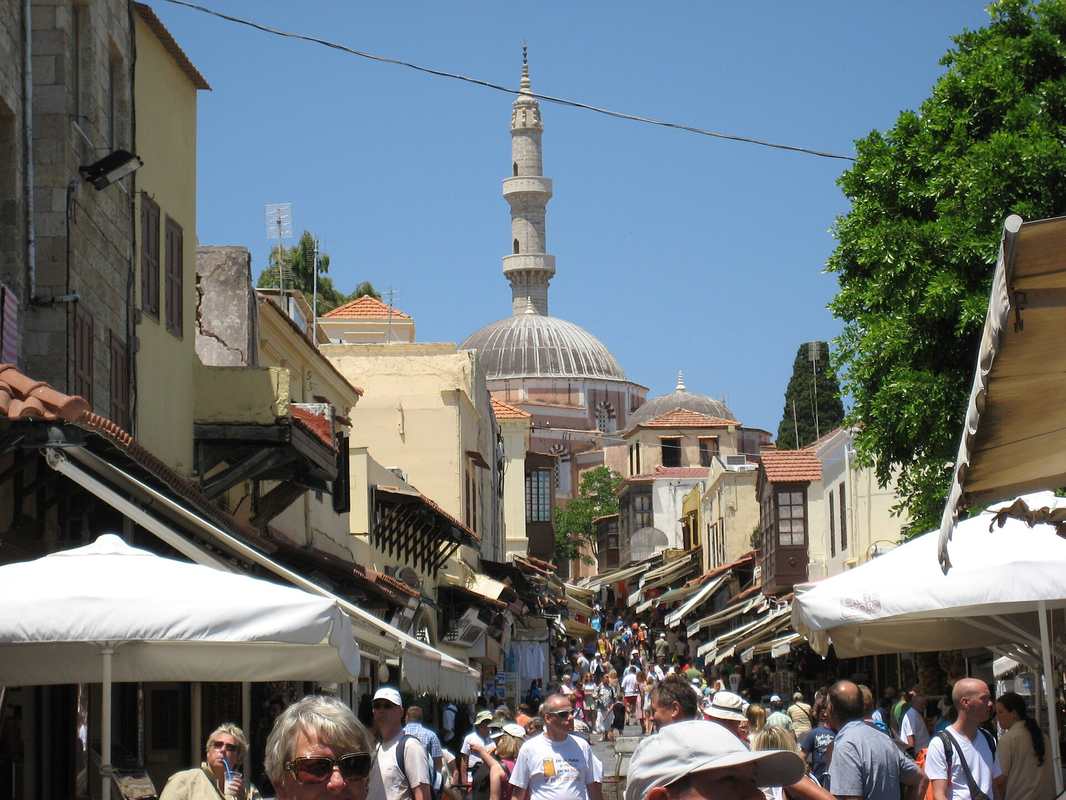
Rhodes shopping spans the full range from quick tourist souvenirs to genuine island crafts and farm products, sold across the medieval Old Town, the modern New Town and the craft villages of the interior. The island rewards browsers who look past the postcard stands toward leather sandals, hand-thrown ceramics, gold and silver jewellery, thyme honey, olive oil, herbs and local wine. Knowing where each category sits, and which towns specialise in what, turns a casual stroll into a focused buying trip. Plan tickets and tours through My Greece Tours.
This guide sits within our wider Rhodes travel guide and focuses purely on where and how to buy. The sections below cover what shopping in Rhodes is like, where to shop in the Old Town and New Town, which traditional crafts and local products are worth buying, where to find village crafts and markets, and the practical tips that help you shop well.
What is shopping in Rhodes like?
Shopping in Rhodes ranges from mass-market souvenirs to authentic island crafts and food products. The medieval Old Town concentrates the souvenir and craft trade, the New Town carries modern fashion, and inland villages supply genuine ceramics, textiles, honey, olive oil and wine direct from their makers.
Rhodes works on two layers, and recognising the difference is the key to good shopping. The surface layer is the tourist trade: printed T-shirts, fridge magnets, mass-produced trinkets and identikit souvenirs that cluster around the busiest lanes and the harbour fronts. Beneath it sits a genuine layer of island production, leather goods and sandals, ceramics and pottery, gold and silver jewellery, woven textiles, and a strong line of local food products such as olive oil, honey, herbs and wine. The same street can hold both, so a discerning eye matters more than a fixed address. Quality, provenance and price vary sharply between a generic gift shop and a workshop that makes what it sells.
Because the offering is so layered, it helps to match each category to the place that does it best rather than buying everything in one spot. Souvenirs and leather are easiest in the Old Town, fashion in the New Town, and farm products and traditional crafts in the villages where they originate. Treating the whole island as a single marketplace, rather than judging it by the first crowded lane, is the mindset that separates a good haul from a bag of throwaway gifts. Our guide to the Rhodes Old Town covers its medieval streets and atmosphere, and the next section covers exactly where to shop in the Old Town and New Town.
Where do you shop in Rhodes Old Town and New Town?
In the Old Town you shop along the cobbled medieval lanes, notably the main Sokratous Street, where shops sell leather, ceramics, jewellery, souvenirs and local food. The New Town offers modern high-street and international fashion, boutiques and the covered municipal market, the Nea Agora, beside Mandraki Harbour.
The Old Town is the heart of traditional shopping in Rhodes. Its cobbled lanes, with Sokratous Street as the main commercial artery climbing through the medieval quarter, are lined with shops selling leather goods and sandals, ceramics and pottery, gold and silver jewellery, general souvenirs and local food products. The atmosphere is part of the appeal: you browse within walls and gateways centuries old, and the density of shops means you can compare several before committing. In smaller, owner-run shops bargaining is sometimes possible, particularly on leather and higher-value items, though prices in the busiest tourist stretches are usually fixed.
The New Town, the modern part of Rhodes town, has a different character built for everyday and contemporary shopping. Here you find modern high-street stores, international fashion chains and independent boutiques, along with the covered municipal market known as the Nea Agora beside Mandraki Harbour, a useful stop for local produce and casual browsing. The two zones complement each other neatly: the Old Town for crafts, souvenirs and atmosphere, the New Town for fashion, brands and practical purchases. Our guide to the things to do in Rhodes covers sights to weave around a shopping day, and the next section covers which traditional crafts and local products you should actually buy.
What traditional crafts and local products should you buy?
Buy genuine local products such as olive oil, honey including thyme honey, herbs, local wine and souma, plus crafts like ceramics, handwoven textiles and carpets, leather goods and traditional leather boots. These represent real island production rather than imported, mass-made souvenirs.
The most rewarding purchases in Rhodes are the things the island genuinely makes and grows. On the food side, look for olive oil, honey, with prized thyme honey reflecting the island’s wild herbs, dried herbs, and local wine and souma, the strong distilled spirit associated with the Embonas wine country in the interior. These travel well, make distinctive gifts and carry a clear sense of place. They are widely sold in the Old Town, in the Nea Agora and, at their best value, directly from producers in the villages where they are made, which also gives you the chance to taste before you buy.
On the craft side, the standout buys are ceramics and pottery, handwoven textiles and carpets, and leather goods, including the traditional leather boots historically made in craft villages. Ceramics in particular have a long Rhodian tradition, with Lindos a noted name in island pottery. Buying directly from a workshop, rather than a generic gift shop, improves both authenticity and price, and lets you ask about how a piece was made. Our guide to Rhodes food covers the island’s produce and culinary traditions, and the next section covers where to find these village crafts and the local markets.
Where can you find village crafts and markets?
Inland and resort villages are the source of authentic crafts and produce. Embonas wine country supplies wine and souma, Archangelos is known for ceramics, handwoven textiles and traditional leather boots, and Lindos for ceramics. Resort towns and villages also hold weekly farmers’ markets, the laiki.
The interior and the resort villages are where Rhodes shopping moves from souvenirs to genuine making. Embonas, set in the island’s wine country on the slopes of the interior, is the place for local wine and souma bought close to the source. Archangelos has a craft reputation spanning ceramics, handwoven textiles and carpets, and the traditional leather boots long associated with the village, while Lindos is well known for its ceramics. Shopping in these villages means buying from people who often make what they sell, so provenance is clearer and you can ask questions about technique, materials and origin that a city gift shop cannot answer.
Beyond the workshops, the rhythm of village commerce runs on weekly markets. Resort towns and villages across Rhodes host their own shops and regular farmers’ markets, the laiki, where you can buy fresh produce, honey, herbs, oil and other local goods at everyday prices alongside locals rather than tourists. These markets are also the most natural place to taste and compare before buying. Our guide to Archangelos covers this craft village and its surroundings, and the next section covers the practical tips that help you shop well across the island.
What tips help you shop well in Rhodes?
Shop well by buying crafts and produce from village workshops and the laiki markets for authenticity and value, trying gentle bargaining in small owner-run shops, tasting food products before buying, and remembering that genuine antiquities cannot legally be exported from Greece.
A few habits make Rhodes shopping more rewarding and avoid common pitfalls. First, prioritise provenance: a piece bought from the workshop that made it, or produce from the village that grew it, beats the same category from a generic souvenir stand on both authenticity and often price. Second, use the markets and tastings, the laiki farmers’ markets and producer shops let you sample honey, oil, wine and souma before committing, so you buy what you actually like. Third, bargaining is sometimes possible in smaller, owner-run shops, especially on leather and higher-value crafts, though it is rarely worthwhile in the busy fixed-price tourist lanes and should always stay polite.
One legal point matters above all the others. Genuine antiquities cannot be exported from Greece, so anything presented as a real ancient artefact is either not what it claims to be or cannot lawfully leave the country; treat such offers with caution and stick to clearly modern crafts and reproductions. Beyond that, give yourself time to compare across the Old Town, New Town and villages rather than buying everything in the first lane, and keep food products well packed for the journey home. Plan your visit and tours through our Rhodes travel guide.
Frequently Asked Questions
Is bargaining acceptable when shopping in Rhodes?
Bargaining is sometimes possible in Rhodes, but only in the right setting and always within reason. In smaller, owner-run shops, particularly those selling leather goods, sandals, jewellery and higher-value crafts in the Old Town, a polite attempt to agree a better price is often accepted, especially if you are buying more than one item. The key is to keep it courteous and realistic rather than aggressive. In the busiest, most touristy stretches and in fixed-price stores, including New Town high-street and international fashion shops, prices are generally set and haggling will not get you far. Farmers’ markets, the laiki, and direct purchases from village producers tend to offer fair everyday prices already, so the gain from bargaining there is smaller. As a rule, save your negotiating for independent shops and craft workshops, ask the price first, and accept a polite no gracefully. Buying directly from makers usually delivers better value than haggling hard in a souvenir lane.
Can I take antiquities or antiques home from Rhodes?
No. Genuine antiquities cannot be exported from Greece, and this is a firm legal restriction rather than a guideline. The country protects its archaeological heritage strictly, so any item that is genuinely an ancient artefact may not lawfully be taken out of the country. In practice this means you should be cautious about anything sold to you as a real ancient piece: it is either not what it is claimed to be, or it cannot legally leave Greece. The safe and entirely legal alternative is to buy clearly modern crafts and reproductions, which Rhodes produces in abundance, ceramics, pottery, handwoven textiles, leather goods and jewellery made by island workshops. These let you take home something genuinely Rhodian without any legal risk. If you are ever offered something presented as a true antiquity, treat the offer with suspicion and decline. Stick to contemporary local crafts and food products such as honey, olive oil, herbs, wine and souma, all of which travel home freely.
What are the best authentic souvenirs to buy in Rhodes?
The best authentic souvenirs from Rhodes are the things the island genuinely makes and grows, rather than mass-produced trinkets. On the craft side, ceramics and pottery are a standout, with a long Rhodian tradition and Lindos noted for its pottery, alongside handwoven textiles and carpets, leather goods and sandals, traditional leather boots associated with craft villages such as Archangelos, and gold and silver jewellery. On the food and drink side, look for olive oil, honey including prized thyme honey, dried herbs, local wine and souma from the Embonas wine country. These products carry a clear sense of place, make distinctive gifts and, in the case of food, travel home easily when well packed. For the most authentic results, buy directly from village workshops and producers or from the laiki farmers’ markets, where provenance is clearer and prices are often fairer than in the busiest tourist lanes. Buying from the maker also lets you ask how a piece was produced, which deepens the value of what you bring home.