
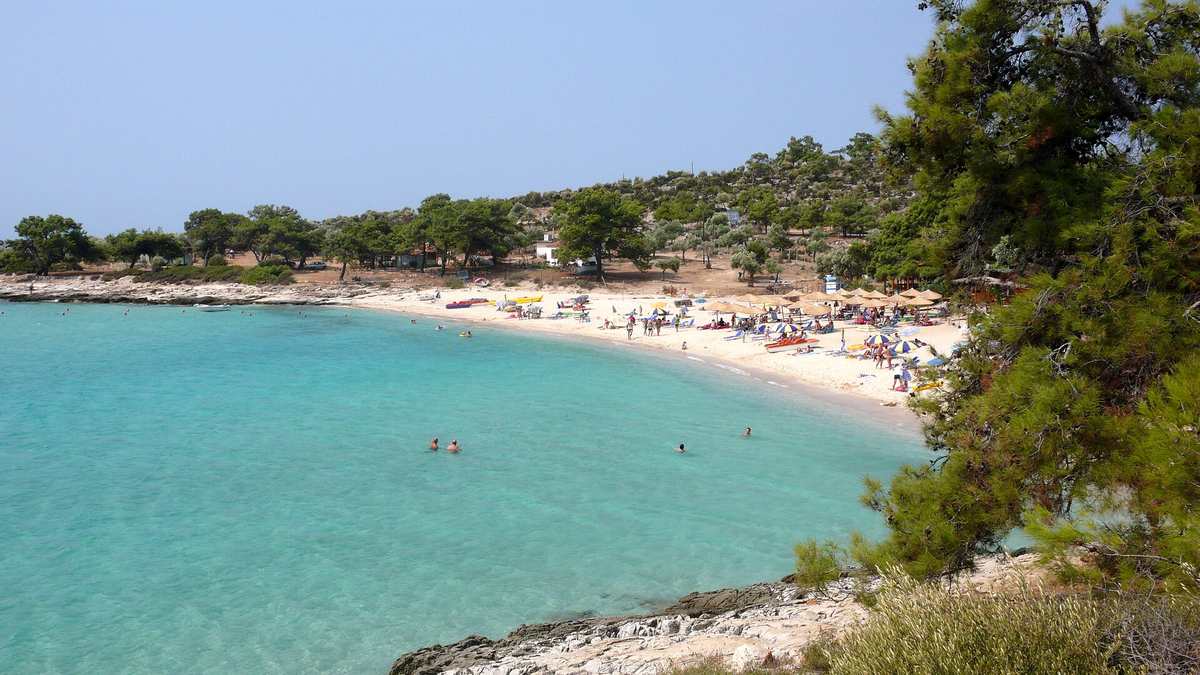
Psili Ammos, whose name means fine sand, is a small organised beach on the east coast of Thassos. Soft pale sand runs down to shallow, warm turquoise water, and a green slope of pine and olive backs the shore. Families settle here by day, drawn by the gentle entry and the rented sunbeds, while a younger crowd arrives with music through the afternoon. A rocky headland screens the cove from its neighbours, and a short road and track lead in from the coastal ring road. Warm mornings, calm water and light shade make the bay an easy stop on any east-coast plan. Compare beaches, book sunbeds and shape a full island itinerary with My Greece Tours.
Visitors weighing the east-coast beaches want clear facts on location, sand, facilities and daily rhythm before they choose. Psili Ammos answers most of those questions with a compact, family-friendly stretch between two better-known resorts. The sections below cover where the beach sits, how the sand and water feel, the sunbeds and beach bars, the suitability for children, the drive in from the ring road, the atmosphere through the day and how the cove measures against nearby sands. Each section pairs plain description with practical tips on parking, shade and timing so your visit runs smoothly. Reading through first makes planning easier, and organised Thassos tours reach this side of the island right across the warm season.
Where is Psili Ammos beach on Thassos?
Psili Ammos sits on the east coast of Thassos, between the resort of Skala Potamia and the small fishing village of Kinira. A short road and track connect the beach to the coastal ring road.
East-coast Thassos strings its beaches along a single ring road, and Psili Ammos lies on the stretch between Skala Potamia and Kinira. Morning sun falls across calm, shallow water as the bay faces the open Aegean. Wooded hills rise directly behind the sand, so the setting reads green rather than built up. The resort of Skala Potamia sits a short drive north, supplying tavernas, shops and a longer promenade for the evenings. Kinira, a quiet fishing settlement, marks the southern end of the run. This position between a lively resort and a sleepy village gives the beach an in-between character. Day visitors reach it easily from either base, then head back north for dinner once the sun drops behind the ridge and the sand cools.
Ring-road access links Psili Ammos to the main east-coast destinations without a long detour. Skala Potamia and its twin, Skala Panagia, sit a few minutes north, and Golden Beach opens up just beyond them. Kinira and the small islet offshore lie to the south, framing the quieter end of the coast. Gentle bay walls of low, rocky ground shelter each side of the sand. Pine and olive trees crowd the slope behind the beach, screening the parking area and softening the view. This tucked-away setting keeps the cove calmer than the long, exposed sweep of its larger neighbours. Travellers touring the east coast often pair a lazy morning here with an afternoon further along the same road, all inside a compact driving loop.
Rocky headland ground closes off the northern side of Psili Ammos, separating it from the neighbouring coves. Low outcrops and scattered boulders mark the boundary, giving the bay a clear, contained shape. Snorkellers work the stonier margins, where fish gather around the rock in clear water. Sandy ground across the centre stays open and gentle, ideal for swimming and paddling. Behind the shore, the wooded slope climbs steadily towards the interior hills. This blend of soft sand and rocky edges packs variety into a small, walkable space. Visitors who enjoy both easy swimming and a little exploring find the layout rewarding, with no long trek between the two. Children stay on the sand while stronger swimmers drift towards the rocks for a closer look at the marine life.
Map orientation helps first-time visitors picture the coast. Limenas, the capital and main port, lies to the north, while Potamia and the mountain trails sit inland behind the twin Skala resorts. Golden Beach, the longest sand on this side, stretches between Skala Panagia and the headland above Psili Ammos. Kinira and the wooded south lead on towards Aliki and the marble quarries. Sitting midway along the eastern shore, the beach makes a natural anchor for a day of coast-hopping. Drivers cover the string of bays on one tank without doubling back. Cyclists manage the flatter coastal sections between resorts, saving the steep interior climbs for cooler hours. This central spot is a large part of why the small cove stays popular through the season.
What makes the sand and sea at Psili Ammos special?
Fine, pale sand gives Psili Ammos its name and its soft, walkable shore. The sea enters shallow and warm, holding a clear turquoise colour close in, which suits long paddles and easy swimming for cautious bathers.
Fine-grained sand defines the character of the beach and explains its Greek name. Pale grains sit soft underfoot, comfortable for bare feet from the back of the beach to the waterline. Gentle shelving lets the sand run out into the sea rather than dropping away sharply. Barefoot walkers cross the whole width without stones or sudden shingle. This soft surface also makes the beach easy for laying towels, building sandcastles and pitching an umbrella. Damp sand near the water firms up for children digging channels and moats. The absence of pebbles at the shoreline sets Psili Ammos apart from the rockier bays further south. Sunbathers who dislike hard ground rate the fine sand as one of the main reasons to choose this cove over its neighbours.
Shallow water reaches well out from the shore, warming quickly under the summer sun. Bathers wade a long way before the sea rises above the waist, which reassures nervous swimmers. Warm, calm shallows hold their heat into the evening, so late dips stay comfortable. Gentle depth also keeps waves small on all but the windiest days. Turquoise tones near the shore give way to deeper blue further out over the sand. Clear water lets swimmers see their feet and the ripples on the seabed below. This combination of warmth and shelter is why families with young children return to the same patch each year. Stronger swimmers still reach open water with a short effort, then float back into the warm shallows to rest.
Colour draws the eye the moment the beach comes into view. Pale sand under clear water throws back a bright turquoise band along the shoreline. Deeper blue takes over beyond the sandy shelf, marking the shift towards open sea. Sunlight through the shallow water lights up the seabed in the early hours. Photographers catch the strongest colour in the calm of morning, before wind ruffles the surface. Green pine and olive on the slope behind frame the blue and complete the picture. This contrast of green hillside, pale sand and turquoise sea gives Psili Ammos a look many travellers associate with the wider island. Still mornings deliver the cleanest reflections, so early risers gain the best of the scene before the crowds settle in.
Seabed conditions stay friendly for swimmers across most of the bay. Firm sand underfoot means no thick mud or weed to wade through near the shore. Occasional patches of rock towards the headland add texture without blocking the main swimming area. Marine life gathers around those stones, rewarding a mask and snorkel on calm days. Gentle currents keep the central water settled, so families stay within an easy reach of the beach. Cooler patches mark spots where a spring or deeper channel feeds the bay. Swimmers soon learn the layout and pick the warmest, calmest stretch for the children. Knowing where the sand gives way to rock helps parents set a safe zone and let stronger swimmers explore the livelier margins with confidence.
What facilities can you expect at the beach?
The beach is organised, renting sunbeds and umbrellas along the sand and running beach bars for drinks and snacks. Watersports operate in summer, and the flat, backed shore gives easy access from the parking area.
Sunbed rows line the organised section of the sand, paired with umbrellas for shade through the hottest hours. Renting a set buys a reserved spot and a break from the midday sun without hunting for natural cover. Loungers sit close enough to the water for an easy dip, yet far enough back to keep bags dry. Free sand remains at the edges for anyone who prefers to lay a towel. Beach bars anchor the organised stretch, serving cold drinks, coffee and light food across the day. Staff bring orders to the sunbeds, so groups settle in without repeated trips to the counter. This level of service turns a short swim into a comfortable full day by the sea for families and couples alike.
Watersports run through the summer along the organised part of the beach. Operators offer rides and paddle craft when demand and weather allow, adding activity to a lazy shore. Calm morning water suits paddleboards and kayaks, letting beginners find their balance before the afternoon breeze. Older children and teenagers gravitate towards the faster rides once the sun climbs. Equipment sits near the beach bars, so booking a session fits easily around a swim and a drink. Gentle conditions in the bay keep the activities approachable rather than daunting. Visitors chasing more time on the water can also join a Thassos boat trip from the larger harbours, reaching marble beaches and sea caves that lie beyond the reach of the shore-based gear here.
Shade matters on a hot Aegean afternoon, and Psili Ammos supplies it in two forms. Rented umbrellas cover the organised rows, giving reliable cover exactly where the sunbeds sit. Pine trees along the back of the sand throw natural shade for anyone spreading a towel away from the loungers. This band of trees also cools the air behind the beach, a welcome retreat at the peak of the day. Parents park pushchairs and pile bags under the branches while the children play at the water. Picnic groups claim the shaded fringe early, before the best spots fill. Combining paid umbrellas with the natural canopy means nobody has to sit in full sun, which keeps long beach days comfortable for babies, older visitors and fair-skinned travellers.
Practical extras round out the day at the beach. Toilets and changing facilities serve the organised area, sparing visitors a drive back to their base. Refreshment counters at the bars cover snacks, ice creams and cold water through the afternoon. Bins and regular clearing keep the sand tidy at the busiest times. Level ground from the parking area to the shore eases the walk with cool boxes, chairs and beach toys. Families with a buggy manage the short, flat approach without a struggle. This balance of sunbeds, bars, shade and basic amenities is what marks the cove as a properly organised beach rather than a wild one. Visitors bringing their own gear still find room, yet the option to rent everything makes a spur-of-the-moment stop simple.
Is the beach suitable for families with young children?
Shallow, gentle entry and soft sand make the beach a strong choice for families. Children paddle safely in the warm shallows, sunbeds and umbrellas provide shade, and the flat approach from the car park keeps arrivals easy.
Gentle shelving is the single feature that makes the bay so popular with families. Children wade out a long way while the water stays below the knee, giving parents a wide margin of comfort. Warm shallows encourage splashing, floating and first swimming lessons in a safe setting. Soft sand underfoot removes the worry of sharp stones near the shore. Small waves on calm days rarely knock a toddler off balance. Parents watch easily from a sunbed only steps from the water, without losing sight of the children. This open, shallow zone acts as a natural paddling pool, which is why the same families come back year after year. Older siblings swim a little further out over the sand while the youngest stay close to the edge in the shallows.
Shade and services matter as much as safe water for a day out with children. Rented umbrellas keep babies and toddlers out of the harsh midday sun. Pine trees at the back offer a cooler base for naps, feeds and snacks between swims. Beach bars supply cold drinks, ice creams and quick meals without a drive back to the resort. Toilets and changing space in the organised area handle the practical side of a family visit. Level ground from the car park lets parents wheel a pushchair almost to the sand. This bundle of shade, food and facilities removes much of the effort from a long beach day. Families settle in for hours rather than dashing off after a single swim, turning the cove into a relaxed base.
Safety habits still apply on any organised beach, however gentle the water. Parents set a clear swimming zone on the sandy centre, away from the rockier headland to the north. Watching from the waterline rather than a distant sunbed keeps young swimmers within reach. Rubber rings and armbands suit the shallows, though they never replace a close eye. Midday sun calls for hats, shirts and regular breaks under the umbrellas or trees. Cool water and shade break up the hottest hours and prevent overheating. Following these simple routines lets the whole family enjoy the beach without stress. Choosing a quieter morning over the busy afternoon also gives the children more space to play and the parents a calmer stretch of sand to supervise.
Age suitability spreads right across the family at Psili Ammos. Toddlers stay happy in ankle-deep water at the edge of the sand. School-age children swim, snorkel and dig for hours in the warm shallows. Teenagers drift towards the watersports and the afternoon music at the bars. Grandparents rest under an umbrella with a coffee, close to the action yet out of the sun. This range of options in one small bay saves families from splitting up or moving on. Multi-generation groups settle for the day and let each member find their own pace. The combination of safe water, shade and food is precisely why guidebooks and returning visitors both flag the cove as one of the friendlier family beaches on the east coast.
How do you reach the beach by road?
Drivers follow the coastal ring road along east Thassos, then turn onto a short side road and track down to the sand. Parking sits beside the beach, and a hire car makes the string of coves easy to reach.
Ring-road driving is the simplest way to reach the beach from anywhere on the island. The main coastal route circles Thassos, passing every east-coast resort. A signed side road leaves the ring road near the cove and drops towards the shore. A short unsurfaced track then covers the final approach through the trees to the sand. Slow, careful driving handles the dusty surface without trouble in a standard car. Parking sits close to the beach, beneath the pines at the back of the bay. This easy, direct access is a big part of the appeal, since visitors avoid the long walks that reach the wilder beaches further south. Signposting from the ring road keeps first-time drivers on the correct turning even at dusk.
Car hire opens up the whole east coast for anyone based on Thassos. Renting a vehicle turns Psili Ammos into one stop on a flexible day of coast-hopping. Drivers link the beach with Skala Potamia, Golden Beach and the villages inland on a single loop. Booking Thassos car rental ahead of the summer peak secures a better choice of vehicle at a fairer rate. Small cars manage the coastal roads and the short beach track with ease. A boot holds cool boxes, umbrellas and beach gear for a full day out. Freedom to move between coves at will suits families who want to try several beaches before settling on a favourite. Early arrivals also claim the shaded parking spots that fill fast once the day warms up.
Public transport and taxis offer a car-free route for visitors who prefer not to drive. Island buses run along the coast in summer, linking the main resorts on a set timetable. A short walk from the nearest stop covers the gap down to the beach. Taxis from Skala Potamia or Limenas reach the cove quickly for anyone without their own transport. Agreeing a return pick-up time avoids a long wait at the end of the day. Cyclists tackle the flatter coastal sections between resorts, then coast down the side road to the sand. These options keep the beach reachable even without a hire car, though a vehicle still gives the most flexibility for exploring the wider coast at your own pace.
Parking and timing shape how smoothly the arrival goes. Spaces beside the beach fill early on hot July and August days, so a morning start pays off. Shaded spots under the pines go first, prized for keeping the car cool through a long visit. Latecomers park a little further back along the track and walk the short remaining distance. Arriving before mid-morning also secures a better pick of sunbeds and a quieter stretch of sand. Leaving before the afternoon rush eases the drive back onto the ring road. Planning the visit around these quieter windows turns a potentially busy trip into a relaxed one. Drivers heading on to dinner in Skala Potamia find the short northward hop simple once the beach day winds down.
What is the atmosphere like through the day?
The beach shifts in mood across the day. Quiet mornings suit families and early swimmers, midday fills with sunbathers, and the afternoon brings a younger crowd, music from the beach bars and a livelier feel until sunset.
Morning calm sets the tone before the crowds arrive. Still water and empty sand reward early risers with the quietest hours of the day. Families with young children favour this window, when the shallows lie flat and the sunbeds stand free. Swimmers enjoy clear, glassy water and the best light for photographs. Beach bar staff open up, laying out loungers and umbrellas as the sun climbs. Cooler air under the pines makes the walk down from the car park pleasant. This peaceful start is why many visitors aim to arrive early, claim a shaded spot and settle in before the day warms up. Early departures from the northern resorts reach the sand while it is still calm, well ahead of the mid-morning arrivals.
Midday activity builds as sunbathers fill the organised rows. Warm sun and warm water draw a steady stream of visitors through late morning. Sunbeds book up, the bars grow busy, and the shallows fill with paddlers and swimmers. Watersports operators run their sessions once the day has warmed properly. Families spread between the loungers and the shaded fringe at the back of the sand. Cold drinks and light meals from the bars keep everyone going through the hottest hours. This middle stretch of the day is the busiest, so early arrivals who secured a good spot enjoy the buzz without the scramble for space that latecomers face when every sunbed is already taken.
Afternoon energy lifts as a younger crowd arrives and the music starts. Beach bars turn up the volume, giving the cove a livelier, more social feel. Groups of friends and couples join the families already settled on the sand. The mood stays relaxed rather than raucous, blending sunbathing with a soundtrack. Swimmers cool off between spells on the loungers as the heat peaks. This shift in tone is part of the beach’s appeal, offering calm mornings and a livelier afternoon in one place. Visitors pick their hours to match the atmosphere they want, whether that is a quiet family swim or a sociable afternoon by the water with a drink in hand and music drifting across the sand.
Evening wind-down returns the beach to a gentler pace. Day visitors pack up and drift back to the resorts for dinner as the sun drops. Warm shallows stay comfortable for a late swim once the crowds thin. Softer light gilds the sand and the wooded slope behind, a favourite hour for photographers. Beach bars ease off, serving the last drinks to those lingering by the water. Cooler air under the pines makes the final hour especially pleasant. This calm close mirrors the quiet morning, bookending the busier middle of the day. Couples in particular value the late, quiet stretch, staying on for a final dip and a drink before the short drive north to Skala Potamia for the evening meal.
How does Psili Ammos compare with nearby Thassos beaches?
Psili Ammos is smaller and calmer than Golden Beach yet more organised than the wild southern coves. Fine sand, shallow water and family facilities set it apart, while its central east-coast spot makes coast-hopping simple.
Golden Beach comparison shows where Psili Ammos fits on the coast. Golden Beach, just to the north, is the longest sand on the east side, backed by resorts and busy through the summer. Psili Ammos trades that scale for a smaller, more sheltered bay with a calmer feel. Both share soft sand and shallow, warm water, so families enjoy either. The compact cove suits visitors who want an organised beach without the length and bustle of its bigger neighbour. Choosing between them often comes down to mood on the day. Travellers pairing the two on one trip get variety within a few minutes’ drive, sampling a long, lively strand and a tucked-away cove on the same stretch of coast without any real detour.
Southern coves offer a different experience again, wilder and quieter than the organised bays. Aliki, the marble beaches and the small caves reward those willing to walk or drive a little further. These spots trade sunbeds and bars for solitude and dramatic rock. Psili Ammos sits between the two styles, pairing easy facilities with a calmer atmosphere than the headline sands. The overview of the beaches of Thassos lays out the full range, from busy resorts to hidden coves. Reading it first helps match each stretch of coast to the kind of day you want. Visitors then plan a run of beaches that balances organised comfort with a taste of the wilder south, all inside one relaxed driving loop around the eastern shore.
Facility balance is where Psili Ammos wins many visitors over. Sunbeds, umbrellas, beach bars and watersports supply the comforts some coves lack entirely. Shade from both umbrellas and pines keeps long days manageable in the heat. Shallow, gentle water outdoes the deeper, rockier entries of the southern bays for families. Easy parking beside the sand beats the walk-in access of the wilder beaches. This blend of comfort and calm puts the cove in a useful middle ground on the coast. Travellers who want the ease of an organised beach, yet dislike the crowds of the largest resorts, land on Psili Ammos as a natural compromise. That balance, more than any single feature, explains its steady following among returning families.
Timing and crowds separate the cove from its neighbours through the season. Psili Ammos fills in July and August yet stays calmer than the long, resort-backed sands nearby. Early mornings and the shoulder months of June and September keep it quiet and comfortable. Golden Beach and the Skala resorts carry heavier crowds at the same times. Choosing the quieter cove, and the quieter hours, rewards visitors with space and a gentler pace. This is why the beach earns a loyal following rather than headline fame. Regulars value exactly what keeps it off the busiest lists, returning each year for fine sand, warm shallows and an unhurried day within easy reach of the resorts, shops and tavernas strung along the eastern coast.
Frequently Asked Questions
Is Psili Ammos beach on Thassos sandy or pebbly?
Psili Ammos is a sandy beach, and its Greek name means fine sand. Soft, pale grains run from the back of the shore down to the waterline, with no band of pebbles at the sea’s edge. The gentle, walkable surface is one of the main reasons families choose this cove over the rockier bays further south along the coast.
Is the water at Psili Ammos safe for children?
The water suits children well, entering shallow and warm for a long way out over soft sand. Little ones paddle and swim within an easy margin of comfort while parents watch from nearby sunbeds. Small waves on calm days rarely unsettle a toddler. Sensible supervision, sun protection and a clear swimming zone away from the rocks keep a family day both safe and relaxed.
Does Psili Ammos beach have sunbeds and beach bars?
The beach is organised, with rows of rented sunbeds and umbrellas along the sand and beach bars serving drinks, coffee and light food across the day. Staff bring orders to the loungers, and free sand remains at the edges for anyone bringing a towel. Watersports run in summer, so the cove works as a comfortable base for a full day by the sea.
How do you get to Psili Ammos beach?
Drivers follow the coastal ring road along east Thassos, then take a signed side road and short track down to the sand, where parking sits beside the beach. Island buses and taxis reach the nearby resorts in summer for those without a car. A hire vehicle gives the most freedom to link the cove with Golden Beach and the other east-coast bays.
When is the best time to visit Psili Ammos?
Early mornings and the shoulder months of June and September give the calmest, most comfortable conditions on the beach. Warm water and open sand meet thinner crowds and easier parking. July and August bring the fullest sunbeds and the liveliest afternoon atmosphere. Arriving before mid-morning secures a shaded spot and a quieter stretch of sand even at the height of summer.
Which beach is better, Psili Ammos or Golden Beach?
Both beaches share soft sand and shallow, warm water, so the choice comes down to mood. Golden Beach is longer, busier and backed by resorts, while Psili Ammos is smaller, calmer and more sheltered. Families wanting a compact, organised cove often prefer Psili Ammos, and the short drive between the two lets visitors sample each on the same day.