
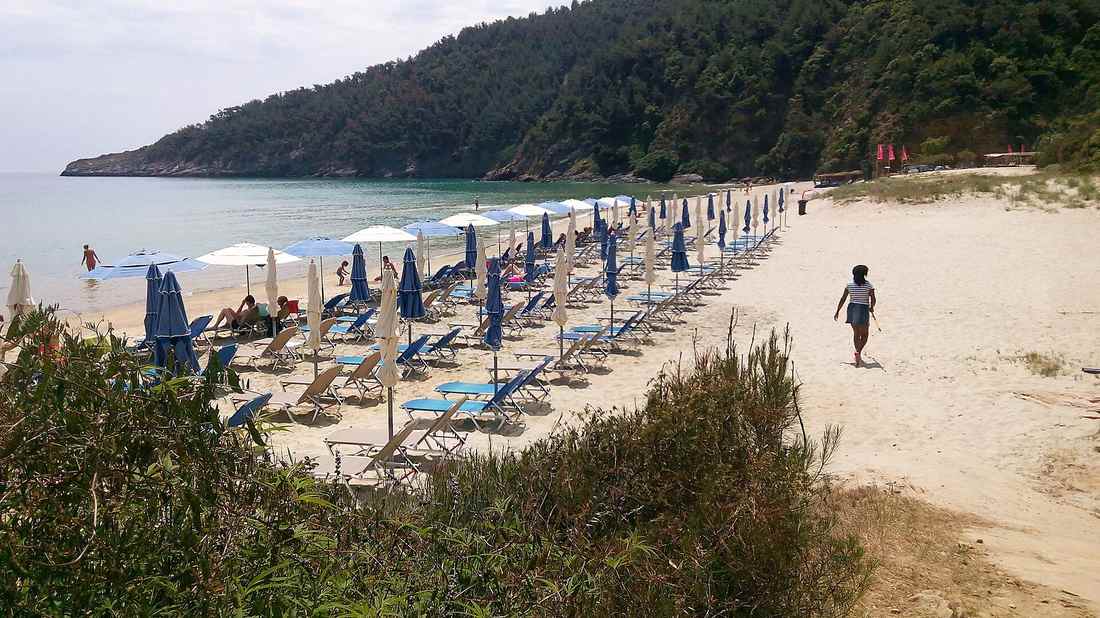
Paradise Beach, known in Greek as Paradisos, sits on the south-east coast of Thassos near the small village of Kinira. Fine golden sand shelves gently into clear, shallow turquoise water, and green pine-covered hills rise directly behind the shore. A small wooded islet named Aspronisi lies just offshore. The beach ranks among the finest sandy shores on the island, with a relaxed setting that draws families and swimmers through the warm months. A beach bar, sunbeds, umbrellas and summer watersports keep the sand well served. This guide explains where the beach lies, how to reach it, what the sea is like, and how to plan a calm day here with My Greece Tours.
Paradise Beach rewards visitors who want soft sand, warm shallows and a green backdrop rather than crowds and concrete. The bay faces the mainland across a calm channel, so the water stays sheltered on most summer days. Kinira village sits a short way north and supplies tavernas, rooms and a quiet harbour. The sections below cover the setting, the drive down from the ring road, the swimming conditions, the on-site facilities, the offshore islet, and the best time to arrive. Each answer leads with the key fact, then adds the practical detail a first visit needs. Travellers who want a guided plan across the island can also browse Thassos tours for boat days and coastal excursions.
What makes Paradise Beach in Thassos special?
Paradise Beach stands out for fine golden sand, clear shallow turquoise water, and green pine-covered hills that rise behind the shore. A small wooded islet offshore and a calm, family-friendly bay complete the setting.
Fine golden sand covers the whole length of Paradise Beach and slopes gently into the sea. The grains stay soft underfoot, and the shallow entry lets swimmers wade out a long way before the water deepens. Clear turquoise shallows sit over a clean sandy bed, so the colour stays bright through the day. The bay faces east across a sheltered channel, which keeps the surface calm on most summer mornings. Sunlight reaches the seabed in the shallows and gives the water its pale, glassy tone. This blend of soft sand and gentle water is the main reason the beach earns its name and holds its reputation among the finest shores on the island.
Green pine-covered hills rise directly behind the sand and frame the whole bay. The trees run close to the shore and throw natural shade across the back of the beach, which helps on hot afternoons. Their scent carries down to the water on a light breeze and adds to the calm mood. A small wooded islet named Aspronisi sits just offshore and gives the view a clear focal point. The mix of pine green, golden sand and turquoise sea is unusual on Thassos and marks the beach apart from the busier resort strips. Walkers can trace the tree line at the rear of the sand for cooler footing when the middle of the beach heats up around midday.
Paradise Beach ranks high among the sandy shores that ring the island, and it repays a short detour from the main coast road. The south-east corner stays quieter than the long resort beaches on the west and north, so the sand feels more open. Visitors who plan to compare different spots can read a wider guide to the beaches of Thassos before they choose a base. Each beach on the island carries its own character, from marble coves to broad golden bays. Paradise sits at the calm, natural end of that range, with few buildings in view and a strong band of pine cover behind the sand. The setting suits a slow day rather than a lively resort scene.
Families form a large share of the crowd on Paradise Beach, drawn by the safe, shallow entry and the soft sand. Children can paddle far from the shore while the water stays at knee or waist height. Couples and swimmers value the same calm, along with the shade at the tree line and the quiet feel out of peak hours. The beach bar and sunbed rows sit toward one end, which leaves wide stretches of open sand for towels and games. The overall mood stays low-key and natural, closer to a wild cove than a developed resort. That balance of easy comfort and unspoiled scenery is what keeps regular visitors returning to this bay each season.
Where is Paradise Beach on Thassos?
Paradise Beach lies on the south-east coast of Thassos, close to the small village of Kinira and about twenty-two kilometres from the island capital, Limenas. The ring road passes just above the bay.
Paradise Beach occupies a sheltered bay on the south-east side of Thassos, where the coast turns from the east shore toward the south. The tiny village of Kinira sits about two kilometres to the north and gives the beach its local bearings. Limenas, the island capital and main port, lies roughly twenty-two kilometres away along the coast road. The position keeps the beach away from the busy northern resorts, so it stays calmer even in high summer. Green hills wrap the bay on three sides and open only to the sea in the east. This corner of the island rewards travellers who want a natural setting within an easy drive of the main town.
The island ring road runs just above the bay and carries most of the traffic around Thassos. A signed turning near Kinira drops toward the shore through olive groves and pine. Drivers heading on around the coast reach Aliki, a twin-cove headland with ancient marble quarries, a short way further south. The road stays close to the sea along this stretch and offers wide views over the channel toward the mainland. Regular lay-bys let visitors pause for photographs above the water. The steady, scenic route makes it simple to link the south-coast beaches into one relaxed day out rather than settling for a single stop.
Kinira village supplies the nearest food, rooms and parking for a day at the beach. The settlement stays small and quiet, with a handful of tavernas, a mini-market and a modest harbour used by local boats. Rooms and studios in the village give visitors a base within walking or driving distance of the sand. The pace here is slow, and the village keeps the plain, working feel of a fishing hamlet rather than a resort. Its position between the ring road and the shore makes it a natural pause on any tour of the south-east coast. Travellers who prefer calm evenings often choose Kinira over the larger and louder resort towns further round the island.
The wider south-east coast holds a run of sheltered bays backed by forest, and Paradise sits among the best known of them. The mountains of the interior rise inland, feeding streams that keep the lower slopes green through summer. Views from the shore reach across a calm strait toward the coast of mainland Greece. This side of Thassos catches the morning sun full on, which lights the shallows early and warms the sand by mid-morning. The combination of easy road access and an unspoiled shoreline defines the area. Careful planning around the ring road lets visitors reach the bay in good time and claim a spot before the middle of the day.
How do you get to Paradise Beach?
Paradise Beach sits below the ring road near Kinira. A short unpaved track leads down to the sand, and parking waits close to the shore. A car or hired vehicle gives the easiest access.
A short unpaved track leads down to Paradise Beach from the ring road near Kinira. The lane runs for a couple of hundred metres through trees before it reaches the sand. The surface stays rough in places, so drivers should take it slowly, though ordinary cars manage it with care in dry weather. Parking spreads out on the flat ground just behind the beach, a few steps from the water. Spaces fill quickly on hot afternoons in high season, which rewards an early start. The final approach on foot passes under pines and delivers the first open view of the bay and its offshore islet. The short effort of the track keeps casual crowds down and adds to the sense of arrival.
A private vehicle gives by far the simplest way to reach Paradise Beach and the other quiet bays on this coast. The turning off the ring road is easy to follow once Kinira comes into view. Visitors without their own transport can arrange Thassos car rental in Limenas or at the port and drive the coast road south at their own pace. A car also opens up the marble coves and mountain villages that lie beyond the beach. Fuel stations cluster around the larger towns, so a full tank before the trip removes any worry on the quieter stretches. Freedom to arrive early and leave late is the main gain, and it matters most in the busy weeks of summer.
Public buses circle the island along the ring road and pass within reach of the Kinira turning. The service runs less often on the south-east side than on the busy west coast, so timetables need checking before setting out. A stop near the village still leaves a downhill walk of some minutes to the sand along the access track. Taxis from Limenas or the nearest resort offer a direct door-to-beach option for groups who skip the bus. Cyclists and confident walkers reach the bay too, though the summer heat makes shade and water essential on the final approach. Careful planning around the limited timetable keeps a car-free visit smooth rather than rushed.
An early arrival brings the calmest water and the easiest parking at Paradise Beach. The bay faces east, so the sun clears the hills soon after dawn and lights the shallows while the sand stays cool. Morning visitors often have long stretches of shore to themselves before the day-trippers arrive. The track and car park grow busiest from late morning through early afternoon in the peak weeks of summer. A late-afternoon visit works well too, once the crowd thins and the light softens over the channel. Planning the trip around these quieter windows turns a good beach day into a relaxed one and avoids the midday scramble for space near the water.
What is the sea like for swimming and families?
The sea at Paradise Beach stays clear, shallow and calm, shelving so gently that the shallows reach well out from the shore. The sheltered bay and soft sandy bed suit families, children and unhurried swimmers.
Clear, shallow water is the defining feature of the sea at Paradise Beach. The bed slopes so gently that swimmers can wade a long way out while the water stays at chest height or lower. Fine sand covers the bottom near the shore, with no sharp rocks or sudden drops in the main swimming zone. The surface stays calm on most mornings because the hills and the mainland channel shelter the bay from open-sea swell. Good clarity lets bathers see their feet on the sand in the shallows. These conditions make entry and exit easy for weaker swimmers and for anyone who prefers a gradual walk into the sea rather than a plunge from deep water.
Families with young children treat Paradise Beach as one of the safest choices on the coast. The broad shallows give toddlers space to paddle while parents stay within easy reach on the sand. Soft ground underfoot lowers the risk of slips, and the gentle slope removes the shock of a sudden deep edge. Warm, still water in the shallows suits long play sessions without a chill. Shade at the pine-backed rear of the beach gives children a cool retreat between swims. The calm layout, with open sand for games and a bar for supplies, means a family can settle in for a full day without the stress that a steep or rough beach can bring.
Swimmers who want more than a paddle still find good conditions in the bay. The clear water rewards a mask and snorkel near the rocks at either end, where small fish gather over the seabed. Longer swims out toward the offshore islet suit stronger bathers on calm days, though care and awareness of boats remain sensible. The sheltered water rarely builds a strong current, which keeps steady lane-style swimming comfortable along the shore. Visibility stays high in the shallows and drops only gradually as the bed deepens. The mix of safe shallows and open water for stronger strokes lets a wide range of swimmers share the same calm bay in comfort.
A light onshore breeze often rises in the afternoon and ruffles the surface of the bay. The wind stays gentle compared with the exposed west coast, so it cools bathers without churning up waves. Water temperature climbs through summer and stays warm into early autumn, which extends the swimming season on this sheltered side. Shade, water and sun cream matter most in the middle of the day, when the sun sits high over the open bay. Lifeguard cover cannot be assumed, so parents should keep children in view at all times. Simple care around these points keeps the calm sea at Paradise Beach an easy and rewarding place to swim through the warm months.
What facilities and watersports does the beach offer?
Paradise Beach offers a beach bar, sunbeds and umbrellas for hire, and summer watersports along the shore. Boat trips pause offshore, and the pine tree line gives free natural shade behind the sand.
A beach bar anchors the facilities at Paradise Beach and serves cold drinks, coffee and light snacks through the day. Rows of sunbeds and umbrellas spread across part of the sand for visitors who prefer a shaded, raised base over a towel. Hire covers a pair of loungers with a shared umbrella, and staff clear and reset them between guests. The bar keeps longer hours in high summer, when demand for shade and refreshment peaks in the afternoon. Open sand beyond the sunbed rows stays free for anyone who brings their own kit. This light touch of service, set against a natural backdrop, gives the beach comfort without the dense loungers and loud music of the larger resort strips.
Watersports run from the beach through the summer season and add an active option to a relaxed day. Operators set up along the sand and offer gear for a spin over the calm water of the bay. The sheltered conditions suit beginners, since the surface stays flatter here than on the exposed coasts. Rides range from towed inflatables to paddle craft that let visitors reach the quieter corners of the shore under their own power. Equipment and instruction come from seasonal stands rather than a fixed centre, so availability follows the weather and the crowd. The calm water and gentle slope make the bay a forgiving place to try a watersport for the first time without a long boat ride offshore.
Boat trips around the island often pause off Paradise Beach so passengers can swim in the clear bay. The vessels anchor a little way out, beyond the swimming zone, and ferry guests to the shallows or let them dive straight from the deck. A day afloat pairs the beach with sea caves, hidden coves and the marble shores further round the coast. Visitors keen on the water can book a Thassos boat trip from the main resorts and take in the bay from the seaward side. The view of the pine-backed sand and the offshore islet looks its best from a boat on calm water. Swimmers on the beach should watch for anchored craft when they head out toward deeper water.
Natural shade forms the beach’s best free amenity, thanks to the pines that crowd the rear of the sand. Their branches reach over the top of the beach and cool the ground where the trees meet the shore. Visitors who arrive early can claim a shaded patch under the canopy before the sunbed area fills. Basic services stay close at hand, with the bar for drinks and the village of Kinira for wider supplies a short drive away. No large hotel complex crowds the shore, so the outlook stays green and open. The blend of a single relaxed bar, seasonal watersports and generous tree shade fits the calm, natural character that defines Paradise Beach.
What is the Aspronisi islet offshore?
Aspronisi is a small wooded islet that sits just off Paradise Beach. It gives the bay a clear focal point, shelters the shallows, and draws stronger swimmers and passing boats toward its rocky, tree-topped shore.
Aspronisi rises a short way offshore from Paradise Beach as a low, green-topped rock. A cap of hardy trees and scrub covers its crown, which echoes the pine cover on the mainland behind the sand. The islet stays uninhabited, with no buildings or landing stage on its steep little shore. Its name points to the pale rock that shows above the waterline around the base. The channel between the islet and the beach holds calm, clear water that bathers cross on still days. Small and quiet as it is, the rock gives the whole bay a centre and turns a plain stretch of sea into a framed, memorable view from the sand.
The islet works as the natural focal point of every view across the bay. Photographs from the beach frame the green rock against the blue channel and the far mainland coast. Seabirds use the quiet shore and low trees as a roost, so the rock carries a steady trickle of birdlife through the day. The mass of the islet also breaks the line of the open sea and gives the horizon a sense of scale and depth. Light shifts across its face from morning to evening, which keeps the outlook changing through a long beach day. This single offshore feature does a great deal to lift Paradise Beach above the plainer sandy bays elsewhere on the coast.
Strong swimmers sometimes strike out from the sand toward Aspronisi on calm, settled days. The crossing rewards effort with clear water and a close view of the rocky shore, though the islet offers no easy landing. Swimmers should judge their own range, watch for boats in the channel and turn back well before tiring. Kayaks and paddleboards from the beach reach the rock more safely and let visitors circle it at leisure. Tour boats also drift near the islet as part of a coastal cruise, pausing so guests can photograph it from the water. Respect for the fragile birdlife and the steep shore keeps any approach to the rock low-impact and safe for everyone involved.
The islet shelters part of the bay and helps keep the water on the beach side calm. Its bulk softens any swell that rolls in from the open channel, which steadies the shallows near the shore. Bathers feel the benefit on breezier afternoons, when the water close to the sand stays flatter than the sea beyond the rock. The gap between the islet and the beach also channels a gentle flow that keeps the shallows fresh and clear. Photographers return again and again to catch the rock at sunrise, when soft light rims its trees. Aspronisi, small though it is, shapes both the scenery and the swimming comfort that make this bay stand out.
When is the best time to visit the beach?
The beach shows its calmest, quietest side early in the day and in the shoulder months of late spring and early autumn. July and August bring the warmest sea but the largest crowds, especially at midday.
July and August draw the heaviest crowds to Paradise Beach, when Greek and foreign holidaymakers fill the island. The sand and the sunbed rows grow busy from late morning, and the small car park fills soon after. Warm, settled weather and a sea at its peak temperature reward visitors who accept the crowds. Early risers still find calm, open sand before the day-trippers arrive down the track. The bay never packs as tightly as the big west-coast resorts, yet high-summer weekends test its limited space. A dawn or late-afternoon visit in these months sidesteps the worst of the pressure and keeps the beach close to its quiet, natural best.
Late spring and early autumn offer the finest balance of warmth and space at the beach. Air and sea stay comfortably warm through these shoulder weeks, while the crowds thin to a fraction of the peak. Sunbeds, parking and the bar all come easier, and the water keeps its clarity without the churn of a packed bay. Green hills behind the sand look their freshest after the spring rains and before the deep heat of summer. Prices and demand for rooms in nearby Kinira ease in these quieter months as well. Travellers who can pick their dates often rate this season as the ideal window for a calm, unhurried day on the south-east coast.
Each day at the beach follows a clear rhythm worth planning around. Morning brings the calmest water, the coolest sand and the easiest parking, since the east-facing bay catches the sun early. Crowds build through the middle of the day, peaking in the hot hours after lunch when shade grows scarce. Late afternoon then eases as families pack up, leaving the softening light and quieter sand to those who stay. The pines at the rear give shade at both ends of the day, which helps in the fierce midday sun. Timing a visit for the early or late window turns a crowded high-season day into a relaxed one with room to spread out.
Careful timing lets almost any visit to Paradise Beach land on the quiet side. Weekdays beat weekends in high summer, and shoulder-season dates beat the peak on every count of space and calm. Visitors who want a longer, livelier strand with more services can pair the trip with Golden Beach on the east coast for contrast. A short drive links the two, so a single day can sample both the wild calm here and the busier resort sand there. Planning around the crowds, the heat and the light rewards the effort with the beach at its best. That care is what separates a rushed midday stop from a full, restful day beside this sheltered bay.
Frequently Asked Questions
Is Paradise Beach in Thassos good for families?
Paradise Beach suits families well. The sea shelves gently and stays shallow far from shore, so young children can paddle safely while parents watch from the soft sand. Pine trees shade the rear of the beach, and a beach bar supplies drinks and snacks. The calm, sheltered bay makes it one of the easier family beaches on the island.
How do you reach Paradise Beach?
Paradise Beach lies below the ring road near Kinira, about twenty-two kilometres south of Limenas. A short unpaved track drops from the road down to the sand, with parking a few steps from the water. A car or hired vehicle gives the easiest access, though buses along the ring road and taxis from the resorts also serve the area.
Are there sunbeds and a beach bar at Paradise Beach?
Sunbeds and umbrellas are available to hire across part of the sand, and a beach bar serves cold drinks, coffee and light snacks through the day. Open sand beyond the sunbed rows stays free for visitors with their own gear. The pine tree line behind the beach adds natural shade at no cost for anyone who arrives early.
What is the islet off Paradise Beach?
The islet off Paradise Beach is Aspronisi, a small, uninhabited rock topped with hardy trees and scrub. It sits a short way offshore and gives the bay its clear focal point. Seabirds roost on its quiet shore, and its bulk shelters the shallows near the sand. Stronger swimmers and small craft reach it on calm days, though it has no easy landing.
When is Paradise Beach least crowded?
Paradise Beach is quietest early in the morning and in the shoulder months of late spring and early autumn. July and August bring the warmest sea and the largest crowds, with the car park and sunbeds filling by late morning. A dawn or late-afternoon visit, or a shoulder-season trip, secures the calmest sand and the easiest parking.
Can you swim to the islet at Paradise Beach?
Strong swimmers can cross to Aspronisi from Paradise Beach on calm, settled days, and the clear water makes the trip appealing. The islet offers no easy landing on its steep shore, so bathers should judge their range and turn back in good time. Kayaks and paddleboards reach the rock more safely, and swimmers must watch for boats in the channel.