
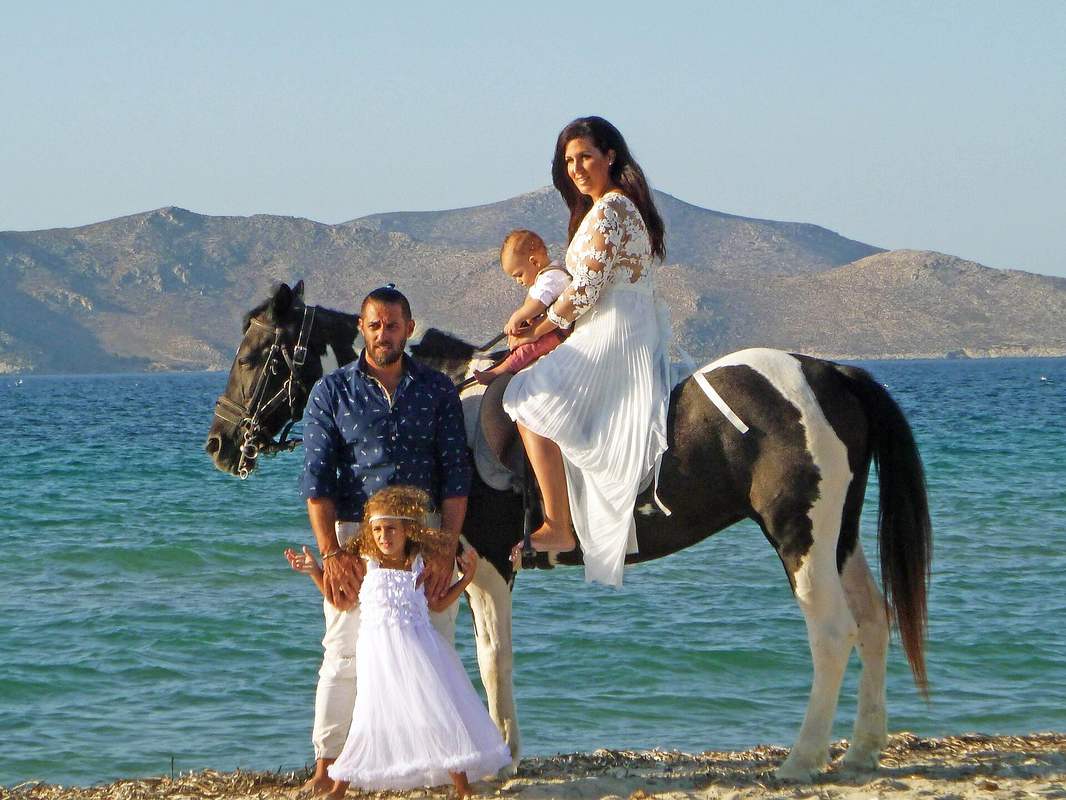
Naxos rewards couples who want a wedding rooted in a real place, not a generic resort backdrop. The largest Cycladic island pairs a marble gateway above the sea with whitewashed lanes, mountain villages, and long sandy shores, giving every ceremony a distinct sense of location. Foreign couples marry here through a clear legal route, and symbolic celebrations run without paperwork at all. The island supports weddings of ten guests or two hundred, from a quiet elopement at dusk to a full multi-day gathering. This guide walks through ceremony types, documents, venues, vendors, timing, and guest logistics, so you can build a realistic plan and travel prepared with My Greece Tours.
Read this alongside our Naxos travel guide, which covers ferries, transfers, and where the island’s best experiences sit on the map. A wedding here is also a trip, and your guests will want beaches, tavernas, and day excursions built around the ceremony date. The sections below cover ceremony types and their legal weight, the exact paperwork foreign nationals submit, the venues that photograph best, the vendors who deliver, and the season and travel details that keep guests comfortable and on time.
Civil, religious, or symbolic: which ceremony works on Naxos?
Civil ceremonies are legally binding and popular with foreign couples. Orthodox religious weddings require baptism and church approval. Symbolic ceremonies carry no legal weight but need no paperwork, so couples often marry legally at home first.
Civil ceremonies take place at the Naxos Town hall or at an approved outdoor location once the municipality signs off, and they produce a marriage certificate recognized across the European Union and beyond. A registrar or an authorized officiant conducts the service in Greek, with an interpreter present so both partners understand each vow and declaration. The paperwork drives the timeline more than the ceremony itself, and couples typically lodge documents through a local planner weeks ahead. Orthodox weddings suit couples where at least one partner is a baptized Orthodox Christian, and the local diocese must approve the file.
Roman Catholic ceremonies run through the island’s Catholic community in the Kastro, a rarer but historically grounded option for Catholic couples.
Symbolic ceremonies free you from the legal file entirely. Couples complete a short civil marriage in their home country, then celebrate the real event on Naxos with a self-written script, a celebrant, and full creative control over setting and words. This route lets you marry barefoot on the sand, on a village terrace, or beneath the Portara at sunset without registrar constraints. Photographers and guests treat a symbolic ceremony exactly like a legal one, since the emotional weight is identical. Explore the wider setting through our Naxos Town pages before you choose, because ceremony type shapes venue access, timing, and the number of vendors you coordinate across the wedding day.
What paperwork do foreign couples need to marry legally on Naxos?
Foreign couples submit passports, birth certificates, and certificates of no impediment, all translated into Greek and apostilled. Divorced or widowed partners add prior marriage and death or divorce records. A local planner files everything with the municipality.
The core file starts with valid passports and full birth certificates for both partners. Each partner also provides a certificate of no impediment to marriage, issued by their home authority, confirming they are free to marry. These documents must be translated into Greek by a certified translator and carry an apostille stamp under the Hague Convention, which authenticates them for Greek authorities. Timing matters, since a certificate of no impediment often expires within three or six months of issue, so couples request it close to the wedding date rather than early. The municipality of Naxos reviews the complete file and issues a marriage licence before the ceremony, a step that takes days once documents arrive.
Previously married partners supply extra records. A divorced person submits the final divorce decree, and a widowed person submits the deceased spouse’s death certificate, both apostilled and translated. Names must match exactly across every document, so a passport, a birth certificate, and a divorce decree that spell a name differently will trigger delays. A local wedding planner handles submission, tracks the licence, and books the registrar, which removes almost every risk of a rejected file. Couples who marry symbolically skip this list completely and instead complete the legal step at home.
Read our Naxos honeymoon pages to line up the trip that follows, since the same documents rarely affect travel once the licence is granted and the certificate is issued.
Where are the best wedding venues and backdrops on Naxos?
The Portara gateway, the medieval Kastro, sandy west-coast beaches, and mountain villages like Halki and Apeiranthos deliver the island’s signature backdrops. Each suits a different ceremony scale, light, and guest access.
The Portara, the marble doorway of an unfinished temple on the islet off Naxos Town, is the island’s defining wedding backdrop, framing sea and sky at sunset for ceremonies and portraits alike. Read our Portara pages for access details, because the site is public and busy, so couples book golden-hour slots and keep the ceremony compact. The the Kastro, the Venetian castle quarter crowning the old town, offers stone archways, a Catholic cathedral, and candlelit lanes for an intimate, historic feel. Both sit within walking distance of Naxos Town hotels, which simplifies guest movement and transfers on the wedding day and keeps the timeline relaxed rather than rushed between locations.
The west coast delivers the classic beach wedding. Agios Prokopios, Plaka, and Agia Anna offer wide sand, calm shallow water, and beach bars that host receptions into the night, all reviewed in our beaches of Naxos guide. Mountain villages give a cooler, greener alternative: Halki with its neoclassical mansions and kitron distillery, and Apeiranthos with marble streets, both set among vineyards and olive groves. Private villas and agrotourism estates across the interior host larger seated dinners with panoramic views.
Match the venue to your guest count and light: sunset ceremonies photograph best on the west coast, while villages hold shade and comfortable temperatures through a summer afternoon, keeping older guests and children comfortable during the ceremony and the meal that follows.
Which vendors and planners should you book for a Naxos wedding?
Book a local wedding planner first, then a photographer, florist, caterer, and celebrant or registrar. Local planners hold municipal contacts, venue access, and vendor networks that off-island suppliers cannot match on timing.
A Naxos-based wedding planner is the single most valuable booking. Local planners file your paperwork, secure municipal ceremony permits, negotiate venue access, and coordinate every supplier on the day, which matters on an island where availability tightens fast in peak months. They also translate at the civil ceremony and manage the registrar’s schedule. Photographers who shoot Cycladic light regularly know exactly where the Portara sun sits at each date and how the Kastro stone reads on camera, so their location knowledge lifts the final gallery well beyond a generic package. Book photography and planning first, since the strongest names fill summer weekends far in advance and rarely take last-minute dates during the high season.
Florists, caterers, hair and makeup artists, and music round out the team. Island florists work with what grows locally and ships from Athens, so discuss seasonal availability early rather than assuming any bloom is possible. Caterers range from beach-bar buffets to estate fine dining, and tasting sessions during a planning visit help lock the menu. A celebrant matters for symbolic ceremonies, since the script and delivery carry the whole event. Confirm each vendor understands your ceremony type and guest count, and keep contracts and deposits documented through your planner. Compare lodging near your chosen venue using our where to stay in Naxos guide so vendors and guests cluster sensibly around one base.
When should you marry on Naxos, and how do guests get there?
May, June, and September offer warm weather and lighter crowds, ideal for weddings. Guests reach Naxos by ferry from Athens or a short domestic flight, then use pre-booked transfers around the island.
Late spring and early autumn give the best wedding conditions. May, June, and September bring reliable warmth, calmer seas, and softer light than the July and August peak, when heat and crowds intensify and vendors book out. These shoulder months also lower accommodation prices and make ferries and flights easier to secure for a group. The famous Cycladic meltemi wind blows hardest in midsummer, so a September ceremony often escapes the gusts that can unsettle a beachfront setup. Set the date well ahead and send save-the-dates early, since guests booking island travel need lead time to lock ferries, flights, and rooms together rather than scrambling as availability shrinks near summer weekends.
Guests reach Naxos by high-speed ferry from Athens’s Piraeus port in three to five hours, or by a short domestic flight into the island’s small airport, usually connecting through Athens. Advise guests to book ferries early, since summer sailings sell out and schedules shift with weather. On arrival, pre-arranged minibus transfers move groups from port to hotels and between ceremony and reception, which beats relying on scarce island taxis. Cluster guest accommodation near the venue to simplify movement and let everyone share transport. Build a day or two of buffer around the wedding so late ferries never threaten the ceremony, and pad the schedule for guests flying in.
Plan your visit and tours through our Naxos travel guide.
Frequently Asked Questions
How far in advance should we start planning a Naxos wedding?
Start twelve to eighteen months ahead for a peak-season wedding, and at least nine months for a shoulder-month date. The earliest bookings are the venue, the planner, and the photographer, since the strongest suppliers fill summer weekends far in advance and rarely release last-minute dates. Paperwork moves later in the timeline: request your certificate of no impediment close to the ceremony, since it expires within a few months of issue, and gather passports, birth certificates, and any divorce or death records early so translation and apostille steps never rush you. Save-the-dates go out as soon as the date locks, giving guests time to book ferries, flights, and rooms together.
A local planner sequences every step, files documents with the municipality, and holds the vendor network, so booking that planner first turns a long list of tasks into a managed timeline rather than a scramble near the wedding.
Is a symbolic ceremony on Naxos legally recognized back home?
A symbolic ceremony carries no legal weight anywhere, including your home country, since no registrar or civil authority records it. Couples who choose this route complete a legally binding civil marriage in their home country before or after the trip, then celebrate the meaningful event on Naxos with a celebrant, a self-written script, and full control over setting and words. This separation is common and practical, since it removes the Greek paperwork file entirely and lets you marry barefoot on a beach or beneath the Portara without registrar constraints or licence timing. Guests and photographers experience a symbolic ceremony exactly like a legal one, so nothing about the day feels lesser.
The alternative is a civil ceremony on Naxos, which is legally binding and recognized across the European Union and beyond once the municipality issues the licence and the registrar conducts the service with an interpreter present.
How many guests can a Naxos wedding realistically hold?
Naxos hosts weddings from a two-person elopement to gatherings of two hundred, and the venue sets the ceiling more than the island does. Beaches and private estates across the interior seat large groups for dinner, while the Portara and the Kastro suit compact ceremonies of a few dozen because the sites are public, busy, and tight on space. Guest count drives almost every other decision: catering scale, transfer logistics, accommodation blocks, and the number of vendors your planner coordinates. Larger weddings need earlier accommodation bookings, since the island’s room stock tightens fast in peak months, and they benefit from clustered lodging near one base to simplify transport. Smaller elopements gain flexibility on dates, venues, and last-minute changes.
Set a realistic number early, share it with your planner, and let it guide venue choice, since a backdrop that dazzles for twenty guests can strain badly at a hundred and twenty.