
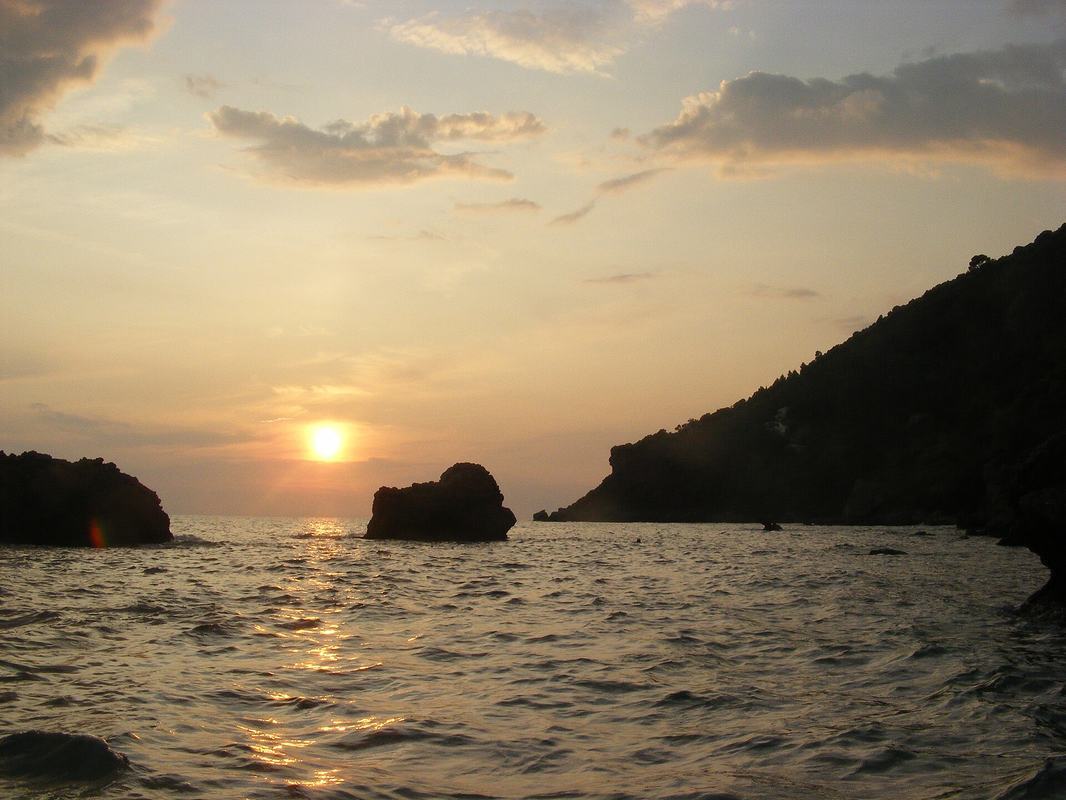
Myrtiotissa beach Corfu is a secluded, sandy west-coast cove backed by dramatic cliffs and greenery, the island’s most famous unofficial naturist beach, tucked beside Glyfada near Pelekas. This guide covers what the beach is like, the naturist scene, how to reach it down the steep track and the tips you need. Plan the whole trip with Greece Tours.
Myrtiotissa is one of Corfu’s hidden gems, a wild corner of the wider Corfu beaches guide. It lies on the west coast about 17 kilometres from Corfu Town. The sections below cover the beach.
What is Myrtiotissa beach like?
Myrtiotissa is a small, secluded sandy beach on Corfu’s west coast, hemmed in by dramatic cliffs and greenery, with clear water. Once called one of the world’s loveliest beaches, it stays wild and unspoilt, served only by a small seasonal beach bar.
Myrtiotissa is a beach of rare, wild beauty. A short strip of soft golden sand sits at the foot of steep, green cliffs, washed by clear, deep blue water and cut off from the road above, which gives it a secret, sheltered feel. Writer Lawrence Durrell, who knew Corfu well, famously praised it as one of the loveliest beaches in the world. There is little development, just a small beach bar in peak season and the occasional vendor, so the setting stays natural and unspoilt. The combination of seclusion, cliffs and clear water is its great appeal, set within the wider things to do in Corfu. It is best known as a naturist beach.
Is Myrtiotissa a naturist beach?
Myrtiotissa is the island’s best-known, long-standing unofficial naturist beach, where nudity is common and accepted but not compulsory. In practice you will see a relaxed mix of naturist and clothed beachgoers, with the naturist tradition strongest toward the quieter, secluded ends.
The beach’s naturist reputation goes back decades. Sheltered and hard to reach, Myrtiotissa became Corfu’s best-known unofficial nudist beach in the nineteen-eighties, and that tradition continues today. Nudity is common and entirely accepted here, yet it is not compulsory, so visitors find a relaxed, easy-going mix of naturists and clothed sunbathers sharing the sand, with the naturist scene most evident toward the quieter, more secluded ends away from the access path. The atmosphere is tolerant and unbothered, and the seclusion that made it a naturist favourite is exactly what gives it its peaceful charm, set out alongside the guide to Glyfada beach next door. Reaching it takes real effort.
How do you get to Myrtiotissa?
Reach Myrtiotissa by car in about 30 minutes from Corfu Town, 17 kilometres west between Pelekas and Vatos, then on foot down a steep, unpaved track. The final road is rough with limited parking, so park before the descent and walk down in sturdy shoes.
Getting to Myrtiotissa is part of what keeps it quiet. By car it is around a 30-minute drive west from Corfu Town to the area between Pelekas and Vatos, near Glyfada. As you approach, the road becomes steep, narrow and unpaved, with very limited parking, so it is best to park before the worst of the descent to avoid difficult manoeuvres and damage to the car. From there a steep, unpaved dirt track leads down to the sand, manageable for most people with reasonable fitness but demanding sturdy shoes rather than flip-flops, and a careful pace. The B16 bus stops nearby, but it leaves a long, steep walk, set out alongside the guides to Pelekas and Corfu car rental. A little preparation helps.
What do you bring and know before visiting Myrtiotissa Beach?
Bring water, snacks and sun protection, since facilities amount to one small seasonal beach bar. Wear sturdy shoes for the steep track, arrive early for parking and shade, and respect the relaxed naturist atmosphere. West-facing, the beach also delivers fine sunsets.
Self-sufficiency and respect make for the best visit. Because facilities amount to little more than a small seasonal beach bar, it is wise to carry water, snacks and high-factor sun cream, and to take any rubbish away. Sturdy shoes are essential for the steep, unpaved descent, and arriving early in the day eases the parking and secures a spot before it fills. As a long-standing naturist beach, Myrtiotissa rewards a relaxed, respectful and non-judgemental attitude, whether or not you choose to join in. Facing west, it also catches lovely late-afternoon light and sunsets over the Ionian, set out alongside the guide to the best time to visit Corfu. The questions below cover the points travellers ask most.
Why visit Myrtiotissa?
You visit Myrtiotissa for its rare seclusion, dramatic cliff setting and clear water, a wild, unspoilt sandy cove far from the organised resorts. Whether for its famous naturist tradition or simply for peace and natural beauty, it is one of Corfu’s most special beaches.
Myrtiotissa rewards the effort to reach it more richly than the island’s roadside resorts. Its hidden, cliff-backed setting, soft sand and clear blue water offer a sense of escape and natural beauty that the busy resorts cannot match, and the relaxed, tolerant atmosphere suits anyone seeking quiet. Famous as a naturist beach but welcoming to all, it appeals to those who value seclusion and scenery over facilities and crowds. Pairing it with neighbouring Glyfada and the village of Pelekas makes a fine west-coast day, set out alongside a Corfu itinerary. The answers above and below cover the essentials.
Where is Myrtiotissa Beach on the map of Corfu?
Myrtiotissa Beach sits on Corfu’s central-west coast, 17 kilometres and a 30-minute drive from Corfu Town. It lies between Pelekas and Vatos, immediately north of Glyfada beach and below the wooded slope of the Myrtiotissa monastery.
Location explains almost everything about the beach. Myrtiotissa faces the open Ionian on Corfu’s central-west coast, hidden inside a cliff-lined bay that the coast road never touches. The nearest landmarks are Glyfada immediately to the south and the hilltop village of Pelekas inland, with Vatos and Ermones a short drive north. From Corfu Town the route runs west across the island’s green interior toward Pelekas, then drops down a signed side road toward the sea. Because the descent is hidden and unpaved, drivers reach a small clearing above the sand rather than a formal seafront car park. Pinning the beach on a map beforehand and saving an offline route helps, since mobile signal thins out along the final wooded track.
Setting Myrtiotissa in its wider geography clarifies a day here. The beach anchors a compact west-coast cluster of Glyfada, Pelekas and Ermones, three contrasting stops within ten to fifteen minutes of one another. Glyfada delivers organised sunbeds and tavernas, Pelekas offers a hilltop village with the famous Kaiser’s Throne viewpoint, and Ermones adds a resort bay with its own steep valley. Placed among them, Myrtiotissa reads as the wild, undeveloped counterpoint, the reward for travellers willing to leave the sunbed rows behind and walk down to a natural cove.
What is happening to the sand at Myrtiotissa Beach?
Myrtiotissa’s sandy strip has narrowed as winter storms and coastal erosion strip sand from the cove faster than it returns. In stormy seasons the beach shrinks to a thin ribbon of exposed pebbles, then rebuilds as calmer summer seas redeposit sand.
Sand is the beach’s defining feature, and its supply is not fixed. Myrtiotissa is a pocket cove hemmed by cliffs, so it depends on the balance between sand carried in by currents and sand dragged out by heavy winter swells. Powerful storms driving straight onto this west-facing shore have scoured the cove, and in recent winters the sandy strip has thinned dramatically, at times leaving little more than a pebble base where deep golden sand once lay. Locals have watched the change with concern, since the soft sand is central to the beach’s fame. The pattern is seasonal as well as long-term: the cove often looks stripped after winter and gradually recovers through spring and early summer as gentler seas return sediment to the shore.
Understanding the erosion changes what visitors expect on arrival. The width and texture of the beach vary from season to season and even from month to month, so the sandy expanse pictured in older photographs is not guaranteed on any given day. Hopes that the sand of Myrtiotissa recovers fully rest on calmer weather and the natural resupply of sediment rather than any engineered fix, since the cove’s protected, undeveloped character rules out sea walls or imported sand. Checking recent visitor photos before the trip gives a realistic sense of current conditions, and lowered expectations after a rough winter avoid disappointment at a still-beautiful but narrower shore.
What is the monastery of Myrtiotissa above the beach?
Panagia Myrtiotissa is a small, whitewashed Orthodox monastery set in the greenery on the slope above the beach, which takes its name from it. Dedicated to the Virgin Mary “of the myrtles,” it is a quiet, working religious site.
The name Myrtiotissa comes straight from this hillside monastery. Panagia Myrtiotissa, meaning the Virgin Mary of the myrtles, stands among cypress and myrtle trees on the wooded slope overlooking the cove, and the beach below simply borrowed its name. The monastery is a modest, whitewashed complex rather than a grand landmark, with a small church, a courtyard and views over the Ionian, and it remains a working Orthodox site cared for by the local community. Its tranquil setting and the surrounding greenery reinforce the sense that this stretch of coast has stayed apart from the resort development elsewhere on Corfu.
Pairing the monastery with the beach makes a fuller half-day. Travellers who pause at Panagia Myrtiotissa on the way down or back up gain a quiet cultural counterpoint to the swimming below, along with elevated views across the cove and the open sea. As an active religious site, the monastery calls for modest dress and quiet behaviour, a contrast worth remembering given the relaxed naturist scene on the sand a short distance downhill. The walk between the two threads the whole valley together, from shaded chapel to open shore, and underlines why this pocket of the west coast feels distinct.
What is swimming and sunbathing like at Myrtiotissa Beach?
Swimming at Myrtiotissa is excellent in calm weather, with clear, deep water that shelves quickly from a soft sandy shore. The west-facing cove has no lifeguard, so open-sea exposure brings waves and currents when the wind rises.
Water quality and clarity rank among the beach’s strongest draws. The sea off Myrtiotissa runs clean and strikingly clear, deepening quickly a short way out, which suits confident swimmers and snorkellers who enjoy the rocky fringes at each end of the cove. On a calm summer day the shelving sand and transparent water make for easy, pleasant bathing, and the cliff backdrop shelters the sand from wind through most of the day. Sunbathers spread out along the strip, with the naturist tradition concentrated toward the quieter ends and clothed families closer to the access path and the seasonal bar.
Open-sea exposure demands respect alongside the enjoyment. The beach faces straight onto the Ionian without a sheltering headland, so a stiff westerly can raise a swell and pull currents through the cove, and there is no lifeguard on duty. Strong swimmers manage these conditions comfortably, while less confident bathers and families with children benefit from checking the sea state on arrival and staying within their depth. Reading the wind before swimming out, and choosing calmer mornings over blustery afternoons, keeps the experience safe. Handled sensibly, the water at Myrtiotissa ranks among the finest swimming on Corfu’s wild west coast.
When is the best time to visit Myrtiotissa Beach?
Late spring and early autumn suit Myrtiotissa best, when warm seas, thinner crowds and a rebuilt sandy shore combine. Mid-summer brings the warmest water and the widest naturist scene, but also peak heat and tighter competition for parking.
Timing shapes both comfort and the state of the beach. Through late spring into June the sea has warmed, the sandy strip has usually recovered from winter storms, and the crowds stay light, which makes for relaxed swimming and easy parking. High summer delivers the warmest water and the liveliest atmosphere, with the seasonal beach bar open and the naturist tradition at its fullest, though the heat is intense and the small clearing above the sand fills early in the day. September and early October extend the warm-sea window while the summer rush eases, a favourite pairing for travellers who prize quiet.
Time of day carries the same weight as season on this cove. Because the descent is steep and the parking limited, arriving in the morning secures a place and keeps the walk cooler, while late afternoon rewards visitors who linger with west-facing light and sunset over the Ionian. Out of season the beach bar closes and the track can turn slippery after rain, so a summer or shoulder-season visit in dry conditions is the safest choice. Building the trip around a calm, dry day, ideally after a run of settled weather, gives the fullest sand and the clearest water.
What other west-coast beaches pair with Myrtiotissa Beach?
Glyfada, Pelekas and Ermones pair naturally with Myrtiotissa on a west-coast day. Glyfada adds organised sunbeds and tavernas next door, Pelekas offers a hilltop village and Kaiser’s Throne viewpoint, and Ermones provides a resort bay nearby.
Neighbouring stops turn a single swim into a full west-coast outing. Glyfada lies immediately south of Myrtiotissa and offers the facilities the wild cove lacks, from sunbeds and watersports to beachfront tavernas, making it an easy lunch or afternoon partner. Pelekas village sits on the hill above, known for its sweeping sunset viewpoint at Kaiser’s Throne and its cluster of traditional cafes, and it doubles as a natural base for exploring this coast. Ermones, a short drive north, adds a steeper resort bay with its own hotels and access options for travellers who want a contrasting stretch of shore.
Linking these places builds a satisfying loop around the central-west coast. A typical day runs from a morning swim at quiet Myrtiotissa, up to Pelekas for lunch and the viewpoint, then along to Glyfada or Ermones for the afternoon, all threaded together with the wider Corfu beaches and things to do in Corfu guides. A hire car makes the loop effortless, since bus links between these coves are sparse and involve long uphill walks. Combining Myrtiotissa’s seclusion with its livelier neighbours delivers both the wild cove and the comforts of an organised beach in one relaxed itinerary.
What else do visitors ask about Myrtiotissa Beach?
Is Myrtiotissa a nudist beach?
Myrtiotissa is Corfu’s most famous unofficial naturist beach, where nudity is common and accepted but not compulsory. In practice there is a relaxed mix of naturist and clothed beachgoers, with the naturist tradition strongest toward the quieter, secluded ends.
How do you get to Myrtiotissa beach?
You reach Myrtiotissa by car in about 30 minutes from Corfu Town, then on foot down a steep, narrow, unpaved track. The final road is rough with very limited parking, so park before the descent and walk down in sturdy shoes rather than flip-flops.
Are there facilities at Myrtiotissa?
Facilities at Myrtiotissa are limited, with only a small seasonal beach bar offering refreshments and the occasional vendor. Bring water, snacks and sun protection, wear sturdy shoes for the steep track, and take all rubbish away, since the beach is wild and undeveloped.
Is Myrtiotissa Beach good for swimming and families?
Myrtiotissa offers clear, deep water and a soft sandy shore that suit confident swimmers well. The cove faces the open Ionian without a lifeguard, so families with children benefit from calm days, staying within their depth, and checking the sea state before swimming, as westerly winds can raise waves.
Why is Myrtiotissa called Myrtiotissa?
Myrtiotissa takes its name from the monastery of Panagia Myrtiotissa on the wooded slope above the cove, dedicated to the Virgin Mary “of the myrtles.” The beach borrowed the monastery’s name, and the small whitewashed complex remains a quiet, working Orthodox site overlooking the sea.
What is the best time of year to visit Myrtiotissa Beach?
Late spring, early summer and September into early October suit Myrtiotissa best, balancing warm seas, thinner crowds and a sandy shore recovered from winter storms. Arrive in the morning for parking and shade, and choose calm, dry days, since the steep track turns slippery after rain and the sand narrows after rough weather.