
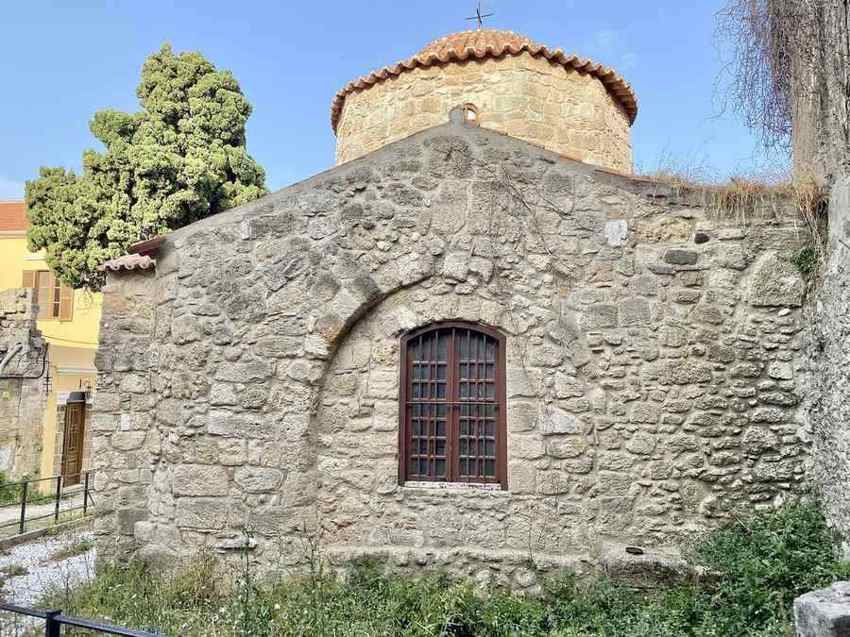
Mesanagros is a remote, tiny mountain village in the far south of Rhodes, tucked into the hills above the road that runs down towards Prasonisi and the very tip of the island. It is one of the oldest villages on Rhodes, and it feels it: a handful of stone houses, a shaded square with a single kafeneio-taverna, and wide views over the empty southern landscape. Most travellers who reach it are driving a far-south loop and turn off on impulse, drawn by the promise of the small Byzantine church of Panagia and an authentic, unhurried atmosphere. It rewards the detour with quiet, cool air and a rare sense of an island that has not been rebuilt for visitors. Start planning with My Greece Tours.
This guide explains what Mesanagros is, why it matters, and how to fit it into a southern driving day, with practical notes drawn from our wider Rhodes travel guide. The sections below cover the village and its setting, the remarkable church of Panagia and its early Christian basilica, the drive and the far-south loop, what there is to do and eat, and the honest practicalities of visiting somewhere this small and this far from the resorts.
Where is Mesanagros and what kind of village is it?
Mesanagros sits high in the hills of far-southern Rhodes, inland from the road towards Prasonisi and the island’s tip. It is a remote, very small traditional mountain village, one of the oldest on Rhodes, with a handful of stone houses, a shaded square and sweeping views.
The village occupies a fold of the southern uplands, well above the coastal plain and reached only by winding mountain roads that climb away from the main southern route. There is no resort sprawl here and no through traffic to speak of; Mesanagros is a place you choose to visit rather than pass through. A cluster of old stone houses gathers around a small central square shaded by trees, where a single kafeneio-taverna serves as the social heart of the settlement. From the edges of the village the land falls away in long, dry ridges towards the sea, giving unusually wide views over the far south. The population is tiny, the pace is slow, and the overwhelming impression is of an authentic, lived-in Greek mountain village that has quietly outlasted the changes on the coast.
Part of the appeal is simply how old and undisturbed the place feels. Mesanagros is counted among the most ancient villages on the island, and its long history is written into its little church and the ruins beneath it rather than into any museum. There are few concessions to tourism: no ranks of souvenir shops, no crowds, just the square, the church, the views and the sense of having reached somewhere genuinely off the beaten track. That end-of-the-island atmosphere is exactly what draws travellers who want to see a different side of Rhodes, away from the medieval Old Town and the busy east-coast beaches. Our guide to Kattavia covers the nearest larger village and gateway to the far south, and the next section covers the church of Panagia and its ancient basilica.
Why is the church of Panagia in Mesanagros so special?
The village’s great treasure is the small Byzantine church of Panagia, Our Lady, built within the ruins of a much larger early Christian basilica. It preserves a rare double, cruciform baptismal font, along with surviving ancient columns and fragments of mosaic floor from the older structure.
Standing on the site, you can read two churches at once. The compact Byzantine chapel of Panagia was raised inside the footprint of a far grander early Christian basilica, and the older building’s bones are still visible around and beneath it. Sections of mosaic floor survive in patches, worn but legible, and a number of ancient columns remain standing or re-set, marking out the scale of the original three-aisled church that once stood here. The effect is quietly moving: a modest place of worship that has been in continuous use while the ruins of its ambitious predecessor frame it on every side. It is this layering of periods on one small plot that makes the church far more significant than its size suggests.
The rarest feature is the baptistery. Set to one side lies a double, cruciform baptismal font cut for full-immersion baptism, an unusual survival from the early Christian centuries when adults were baptised in exactly this way. Twin cross-shaped basins of this kind are seldom preserved anywhere, and finding one in such a remote hill village is part of what gives Mesanagros its outsized reputation among people who care about Byzantine and early Christian Rhodes. The church is usually quiet and often open, and it asks only for the respect due to a working place of worship: modest dress and a gentle presence. Our guide to Plimmiri covers a nearby coastal village with its own historic church, and the next section covers the drive and the far-south loop.
How do you drive to Mesanagros and what is the far-south loop?
A hire car is essential; Mesanagros lies off the southern road on winding mountain lanes with few facilities. Most visitors fold it into a far-south driving loop that also takes in Prasonisi, Kattavia and Plimmiri, turning the whole southern tip into a rewarding day out.
The far south of Rhodes is thinly served by public transport, so a hire car is not a luxury but a practical necessity for reaching Mesanagros. The approach is on narrow, twisting roads that climb into the hills, and while they are manageable in an ordinary car, they reward unhurried, careful driving. Fuel up before you head south, carry water, and do not count on finding shops, cash machines or petrol stations once you leave the larger villages behind. Signposting can be sparse, so a downloaded offline map is worth having. None of this is difficult, but it does mean treating the far south as a proper expedition rather than a quick hop, and giving yourself the whole day to enjoy it at the right pace.
Mesanagros works best as one stop on a larger southern circuit. A natural loop links the wind-and-kite beach at Prasonisi at the island’s very tip, the gateway village of Kattavia, and the historic coastal settlement of Plimmiri, with a climb up to Mesanagros for the church and the views. Strung together, these make a satisfying full-day drive through the emptiest and most authentic corner of the island. Our guide to Prasonisi covers the double-sided beach at the southern tip, and the next section covers what to do and eat in the village.
What is there to do and eat in Mesanagros?
Mesanagros is about atmosphere rather than a checklist of sights. You visit the church of Panagia, wander the few stone lanes, take in the views, and settle at the kafeneio-taverna on the shaded square for a coffee or a simple traditional meal cooked with local ingredients.
The pleasures here are deliberately small-scale. Beyond the church, the village invites slow wandering: a short circuit of its stone houses and quiet lanes, a pause at a viewpoint where the ridges roll away towards the coast, and time simply spent sitting in the shade. Photographers will find the combination of old masonry, the layered ruins of the basilica and the sweeping southern panorama especially rewarding, particularly in the softer light of late afternoon. There is no ticketed attraction and no fixed route; the point is to slow down to the rhythm of a place where very little happens, and that is precisely the appeal. An hour or two is usually enough to feel you have properly arrived, though many people find they want to linger longer than they planned.
At the centre of it all is the kafeneio-taverna on the square, the natural place to break your journey. Expect the honest cooking of a Greek mountain village: a Greek coffee in the shade, or a simple plate of whatever is being served that day, built around local produce and the flavours of the south. It is the kind of unpretentious spot where the welcome matters more than the menu, and where lunch stretches happily into the afternoon. Our guide to Rhodes food covers the island’s traditional dishes and where to try them, and the next section covers the practicalities of planning your visit.
When should you visit Mesanagros and what should you know first?
Visit in spring or autumn for green hills and mild driving weather, or in summer as a cool escape from the coast. Come prepared: a hire car, fuel, water, sun protection and modest dress for the church, with few facilities once you leave the larger villages behind.
Timing shapes the experience. Spring brings wildflowers and green hillsides to the far south and comfortable temperatures for both driving and wandering, while autumn offers warm, settled days and the year’s quietest roads. High summer is hot, but the village’s elevation and the shade of its square make it a genuine refuge from the heat of the beaches, and clear summer light gives the widest views. Whenever you come, the far south stays uncrowded, so you will rarely be sharing Mesanagros with more than a handful of other travellers. Aim to arrive with time in hand rather than rushing through, so the village can work its quiet magic at its own unhurried pace.
A little preparation makes the day effortless. Fill the tank before heading into the hills, pack water, sunhat and sturdy shoes, and dress modestly if you plan to step inside the church of Panagia. Do not expect shops, cash machines or reliable mobile signal in the village itself, so carry what you need and an offline map to be safe. Above all, treat Mesanagros as a place to slow down: it is the reward at the end of a beautiful southern drive, not a box to tick. Our guide to things to do in Rhodes covers how to build the wider southern day around it. Plan your visit and tours through our Rhodes travel guide.
Frequently Asked Questions
Is Mesanagros worth visiting?
For the right kind of traveller, Mesanagros is very much worth the detour. It will not suit anyone chasing beaches, nightlife or a long list of attractions, because it offers none of those. What it does offer is rare: one of the oldest villages on Rhodes, almost untouched by tourism, with a genuinely remarkable little church at its heart. The Byzantine chapel of Panagia, built inside the ruins of a far larger early Christian basilica and preserving a rare double baptismal font, ancient columns and mosaic fragments, is the sort of layered historic site you could easily miss on a standard Rhodes holiday. Add the shaded square, the single kafeneio-taverna, the sweeping views and the deep quiet, and you have a place with real character. Folded into a far-south driving loop, it turns an ordinary day out into a memorable one, and it leaves most visitors glad they made the climb into the hills.
How do you get to Mesanagros without a car?
Realistically, you need your own transport. Mesanagros sits high in the hills of the far south, off the main southern road and reached by winding mountain lanes, and public transport to this corner of Rhodes is very limited. There is no convenient bus that drops you at the village square, so a hire car is by far the most practical way to reach it, and it also lets you link Mesanagros with the other highlights of the south on a single loop. If you do not drive, the alternative is a private tour or a taxi hired for the day, which can build the far-south circuit around your interests but costs considerably more than self-driving. Whichever you choose, plan the day as a proper excursion rather than a quick side trip: the distances and the mountain roads mean the journey itself is part of the experience, and you should allow plenty of time to enjoy it without rushing.
What else can you combine with Mesanagros on a day trip?
Mesanagros is best enjoyed as one stop on a wider tour of southern Rhodes rather than a destination on its own. The classic pairing is with Prasonisi, the striking double-sided beach at the island’s very tip where two seas meet and windsurfers and kitesurfers gather, a short drive further south. On the way you pass through Kattavia, the largest village in the far south and a useful place to refuel and pick up supplies, and near the coast lies Plimmiri, a quiet settlement with a harbour, a beach and its own historic church. Linking these together makes a satisfying full-day loop through the emptiest and most authentic part of the island, mixing beaches, villages and history at an unhurried pace. Build the route to suit your interests, leave time for a long lunch at the Mesanagros square, and you will have seen a side of Rhodes that most visitors, tied to the busier north and east, never reach.