
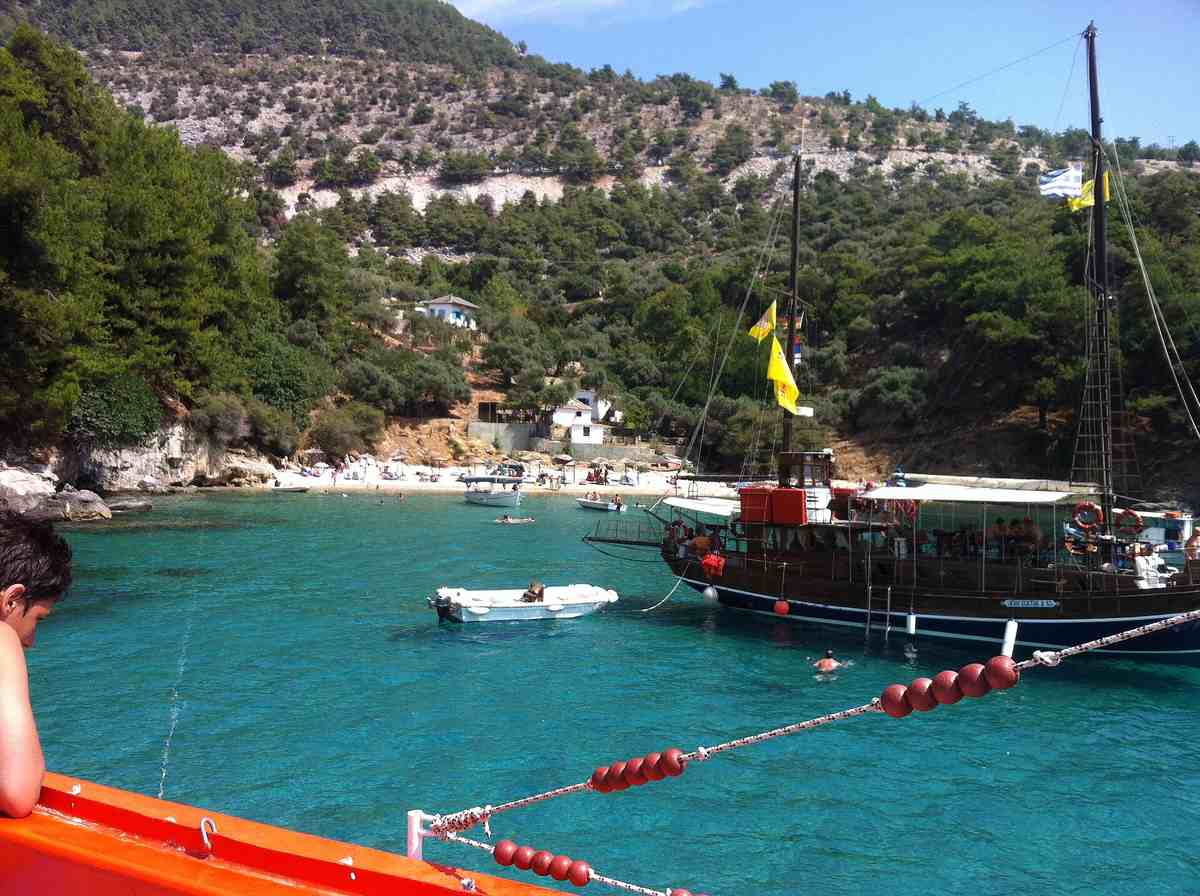
Livadi Beach ranks among the wildest and most secluded shores on the south-east coast of Thassos, hidden in a bay in front of the Monastery of Saint Archangel Michael. Fine sand meets water of a clear, recognisable turquoise, while olive groves and greenery wrap the cove on every side. A rough dirt road, about two kilometres before Aliki from the Potos direction, keeps casual crowds away and preserves the deep quiet. No bar, shops or sunbeds break the natural setting, so the beach stays raw and unspoiled. Caves, rocks and a swim across to neighbouring Arsanas add adventure to a calm day by the sea. This guide from My Greece Tours covers where the cove lies, how to reach it, and how to plan a self-sufficient visit.
Livadi Beach rewards visitors who want turquoise water and total calm rather than facilities and crowds. The cove lies between Aliki and Astris, close enough to link all three on a single south-east coast day. Careful planning matters here, since no shops or beach bar serve the sand and everything must be carried in. The sections below cover the location and access, the sand and sea, the wild character, the green setting, the caves and the swim to Arsanas, what to pack, and how the beach fits a wider day out. Each answer leads with the key fact, then adds the detail a first visit needs. Travellers who prefer a guided plan can browse Thassos tours for boat days and coastal trips across the island.
Where is Livadi Beach and how do you reach it?
Livadi Beach lies in a quiet bay on the south-east coast of Thassos, in front of the Monastery of Saint Archangel Michael. A dirt road leads down, roughly two kilometres before Aliki from the Potos direction.
Livadi Beach occupies a sheltered bay on the south-east side of Thassos, tucked in front of the Monastery of Saint Archangel Michael. The shore sits roughly two kilometres before Aliki for drivers coming from the Potos direction, and it falls between Aliki and Astris on this quiet stretch of coast. Green hills and olive groves screen the bay from the main road above, so the beach stays hidden until the final descent. The monastery stands on the slope over the water and gives the cove its name and its bearings. Few signs mark the turning, which keeps casual traffic low and rewards visitors who plan the route in advance before they set out.
A rough dirt road provides the only vehicle access to Livadi Beach, dropping from the coastal route through olive terraces toward the shore. The surface stays uneven and a little harder to drive than the paved beaches nearby, so drivers should take it slowly and steadily. Ordinary cars manage the track in dry weather with care, though a higher vehicle handles the ruts more comfortably. Parking spreads under the olive trees at the foot of the lane, where the branches throw welcome shade over the vehicles. Shade for the car matters on hot afternoons, since the beach itself offers no built cover. The short, bumpy approach keeps crowds thin and adds to the sense of arriving somewhere genuinely remote.
Drivers coming from Potos follow the coast south and watch for the descent about two kilometres before Aliki. The lane branches off toward the sea and winds down through greenery to the parking under the olives. Visitors arriving from the Aliki side simply reverse the route, passing the headland quarries before the turning appears. Public buses on the island ring road pass along the top of this coast but stop well short of the sand. Passengers therefore face a walk down the track from the nearest stop, which suits only confident walkers in the heat. Careful navigation on the approach saves time, because the unmarked turning is easy to miss on a first visit.
The Monastery of Saint Archangel Michael watches over the bay from the hillside and serves as the clearest landmark for Livadi Beach. Pilgrims and sightseers reach the monastery by its own approach, and many pair a visit there with a swim in the cove below. Travellers keen on the site can read more about the Monastery of the Archangel and its commanding position before the trip. Olive groves fill the ground between the monastery and the shore, softening the descent to the sand. Greenery blankets the slope on either side, so the outlook from the beach stays natural in every direction. This pairing of a working monastery above and a wild beach below gives Livadi a character unmatched elsewhere on the south-east coast.
What is the sand and water like at Livadi Beach?
Fine sand covers the shore at Livadi Beach, while the first few metres of the water are rocky. Sandy paths thread through the rocks to a shallow, sandy bottom, and the sea shows an unmistakable turquoise colour.
Fine sand runs the length of Livadi Beach and stays soft underfoot along the dry shore. The grains sit loose and pale, giving the cove the look of a classic Thassian sandy bay despite its wild setting. Bathers spread towels straight on the sand, since no sunbed rows or platforms break up the natural surface. The beach shelves toward the water in a gentle slope that suits long, lazy afternoons in the sun. Olive-clad hills frame the sand on both sides and hold in the warmth through the day. The clean, unbroken stretch of sand forms the first thing visitors notice as they step off the track and onto the open shore.
Rocky ground fringes the first few metres of the water and calls for a little care on the way in. Smooth sandy paths cut between the rocks, however, and guide bathers through to clear ground beyond the stony edge. The seabed turns to soft sand once past this narrow band, then holds a shallow, even depth well out from shore. Swimmers who follow the sandy lanes avoid the rocks entirely and reach comfortable water within a few steps. Beach shoes help on the first stretch for anyone with tender feet or young children in tow. The short rocky entry is the only mild drawback of an otherwise easy and rewarding swim in the bay.
Turquoise water gives Livadi Beach its most striking feature and marks it out even among the clear coves of Thassos. The sea holds a bright, recognisable turquoise tone over the pale sandy bed in the shallows. Exceptional cleanliness keeps the water clear to the bottom, so swimmers can watch their feet on the sand as they wade. The sheltered bay and the sandy seabed together produce the vivid colour, which deepens to blue as the water gains depth. Sunlight on calm mornings lifts the turquoise to its brightest, ideal for photographs from the shore. Clean, colourful water of this quality is the main reason regular visitors rate the cove among the island’s finest hidden swims.
The shallow, sandy bottom beyond the rocky fringe makes the bay easy and safe for a relaxed swim. Depth builds slowly from the shore, so bathers can stand comfortably a good way out over firm sand. Calm conditions prevail on most summer mornings, since the hills and the shape of the cove shelter the water. Swimmers seeking a wider choice of shores can compare Livadi with the beaches of Thassos before settling on a base for the day. The combination of soft sand, clear turquoise water and a gentle depth defines the swimming here. Few organised beaches on the island can match the natural quality of the water in this quiet, unspoiled bay.
Why is Livadi Beach so wild and unorganised?
Livadi Beach stays wild, secluded and completely unorganised, with no facilities of any kind. Olive groves and greenery surround the cove, and the lack of a bar, shops or sunbeds preserves the deep quiet that defines it.
Wild character sets Livadi Beach apart from the developed resorts on the busier coasts of Thassos. No bar, kiosk or shop stands anywhere near the sand, and no rows of sunbeds break the natural line of the shore. Visitors find the cove much as nature left it, ringed by olive groves and open to the clear sea. Silence carries across the bay, broken only by the water and the wind in the trees on the slope. The absence of music and engines lets the quiet settle deep over the whole cove. This raw, undeveloped feel is exactly what draws travellers who tire of crowded, commercial beaches elsewhere on the island.
Seclusion defines the mood at Livadi, thanks to the awkward access and the screen of hills around the bay. The dirt track and the distance from the main resorts keep day-trippers and tour groups away for much of the season. Small numbers of visitors share the sand even in high summer, so towels spread wide with room to spare. Quiet mornings often bring only a handful of swimmers to the whole cove. The sense of having a natural beach almost to oneself is rare on a popular island and highly prized. Peace of this depth rewards the effort of the bumpy drive down through the olive groves to the shore.
No facilities of any kind serve Livadi Beach, which shapes every visit from the moment of arrival. Sunbathers rely on their own towels, umbrellas and supplies, since nothing is available to hire or buy on the sand. The lack of a beach bar means no cold drinks or snacks unless visitors carry their own. Toilets and showers are absent too, so a plan for the day must account for the bare setting. Careful packing turns this limitation into part of the charm, freeing the cove from queues and clutter. The complete absence of services is the price and the reward of a beach kept wild and unspoiled.
Peace away from the crowds is the central promise of a day at Livadi Beach. Travellers who value calm over convenience rank the cove among the most restful spots on the whole island. The wild setting suits reading, swimming and long stretches of doing very little beside clear water. Couples and solitary visitors in particular favour the quiet, unhurried atmosphere of the bay. Families comfortable with carrying their own supplies enjoy the same calm without the noise of a resort. The trade of comfort for tranquillity defines Livadi and explains why a loyal few return to it season after season.
What is the setting around Livadi Beach like?
Olive groves and thick greenery surround Livadi Beach on every side, running from the shore up the slope. The Monastery of Saint Archangel Michael stands above the cove, giving the wild bay a striking natural and spiritual backdrop.
Olive groves press close to the sand at Livadi Beach and give the cove much of its character. The silver-green trees climb the slope behind the shore and throw pools of shade over the parking and the fringe of the beach. Their gnarled trunks and low canopy mark the ground as long-worked farmland rather than wild scrub. Cicadas fill the groves with sound through the hot hours, adding to the rural, timeless mood. The trees also supply the only natural shade near the sand, prized on a beach with no umbrellas for hire. Dense olive cover of this kind frames the whole bay and separates it sharply from the built resorts elsewhere.
Greenery blankets the hills around the cove and keeps the outlook natural in every direction. Pine and scrub mix with the olives on the higher ground and run down almost to the waterline in places. The green backdrop meets the turquoise sea and the pale sand in a striking band of colour. Streams from the interior keep the lower slopes fresh well into the dry summer months. Birds and insects thrive in the cover, giving the bay a lively natural soundtrack away from any traffic. The unbroken greenery is a large part of why the cove feels so remote despite lying a short drive from the road.
The Monastery of Saint Archangel Michael commands the slope directly above Livadi Beach and dominates the view inland. The site draws pilgrims and visitors from across the island and beyond, and it lends the wild cove a quiet dignity. Guests who tour the monastery can look straight down on the turquoise bay from its terrace over the sea. A short account of the Monastery of the Archangel helps travellers weave the two stops into one trip. The building crowns the headland and fixes the bay’s identity for anyone approaching by road or by boat. This union of sacred site and untamed shore gives the setting a depth few other beaches on Thassos can claim.
The whole amphitheatre of hills, groves and monastery encloses Livadi Beach in a natural bowl open only to the sea. The shape shelters the sand from wind on most days and holds the warmth of the sun through the afternoon. Views from the shore sweep across the clear bay toward the open water beyond the rocky points. Evening light warms the olive slopes and the monastery walls, a fine sight for late-staying swimmers. The enclosed, green setting keeps the cove cool underfoot near the trees even at the height of summer. This blend of farmland, forest and faith above a turquoise bay defines the singular setting of Livadi Beach.
Can you explore caves and swim to Arsanas from Livadi?
Caves and rocks flank Livadi Beach and reward exploration along the shoreline. Strong swimmers can cross from the cove to the neighbouring Arsanas Beach on calm days, while boat trips take in the same rugged, indented coast.
Caves and rocks give the shoreline at Livadi Beach a rugged edge beyond the open sand. Weathered rock formations frame both ends of the cove and drop straight into the clear water. Small caves and hollows in the stone invite curious swimmers to explore along the base of the cliffs. Snorkellers find the rocky ground richer in life than the plain sandy bed, with small fish gathering in the shade. Care matters near the rocks, since the surface can be sharp and the swell picks up on breezier days. The mix of soft sand and dramatic rock within one small bay adds real interest to a swim or a slow shoreline walk.
Arsanas Beach lies next along the coast, close enough for strong swimmers to reach from Livadi on calm water. The crossing follows the rocky shoreline and rewards the effort with a second quiet cove few reach by land. Swimmers should judge their own range carefully, keep clear of any boats and turn back well before tiring. Calm, settled conditions are essential, since the open water between the coves can build a chop in wind. Confident bathers treat the swim as a highlight, linking two wild beaches in a single outing. The short passage to Arsanas turns Livadi into a base for exploring a whole run of hidden shore.
Rock formations and sea caves along this coast look their best from the water on a boat trip. Vessels from the southern resorts cruise past the indented shore, pausing at coves that the road never reaches. Passengers keen on the rugged scenery can book a Thassos boat trip to view Livadi and its neighbours from the sea. The seaward angle reveals the caves, the monastery above and the turquoise bays in a way no beach visit can match. Calm mornings suit these cruises, when the water stays flat enough to nose in close to the rock. A day afloat pairs the wild south-east coves with swimming stops in water as clear as any on the island.
Exploration on foot and by fin is one of the chief pleasures of a day at Livadi Beach. Walkers can pick along the rocky margins at either end of the sand to reach quiet nooks and viewpoints. Divers and snorkellers work the caves and boulders for the marine life that shelters in the shade. Kayaks and paddleboards, carried in by keen visitors, open the route to Arsanas and the caves in greater safety. The varied shoreline turns a simple beach day into a small adventure for the active and the curious. This scope for exploring, all within a compact bay, sets Livadi apart from the flat, open strands elsewhere.
What should you bring to Livadi Beach?
Water, food, shade and every essential must come with visitors to Livadi Beach, because no shops or beach bar serve the cove. Sturdy footwear, sun protection and a rubbish bag complete the kit for a self-sufficient day.
Water tops the packing list for Livadi Beach, since no shop or bar sells drinks anywhere near the sand. Visitors should carry more than they expect to need, especially on hot days and for children. Food and snacks matter just as much, because the nearest supplies wait back toward Aliki or Potos. A cool box keeps drinks and lunch fresh through a long day under the summer sun. Ample water and food remove the main risk of an unorganised beach, which is running short far from any store. Careful stocking before the drive down the track turns the bare cove into a comfortable base for the whole day.
Shade must be carried in, as the beach offers no umbrellas to hire and only patchy natural cover. A beach umbrella or a light sun shelter gives essential protection through the fierce midday hours. The olive trees at the back of the sand throw some shade, best claimed early before others arrive. Sun cream, hats and light cover-ups round out the defence against a strong sun on an open shore. Portable shade matters most for families with young children, who cannot spend hours in direct heat. Planning for cover ahead of time keeps a day at Livadi safe and comfortable rather than a scramble for shelter.
Sturdy footwear helps on the rough track and over the rocky first metres of the water at Livadi. Beach shoes or sandals protect the feet on the stony entry and on the sharp rock at the ends of the cove. A rubbish bag is essential too, since no bins wait on this wild beach to take away litter. Responsible visitors carry out everything they bring in and leave the sand exactly as they found it. Basic first-aid items, a charged phone and a beach mat add useful comfort and security to the kit. Thoughtful packing of these small extras smooths the day and protects the unspoiled character of the cove.
Self-sufficiency is the guiding rule for any visit to an unorganised beach like Livadi. Visitors plan the day as they would a short hike, bringing all they need and expecting nothing on site. The reward for that effort is a wild, quiet cove free of the crowds and clutter of the resorts. A checklist of water, food, shade, footwear and a rubbish bag covers the essentials for a smooth day. Nearby villages toward Aliki and Potos supply anything forgotten, a short drive back up the coast. Good preparation is the single key that unlocks the calm and beauty of Livadi Beach without any stress.
How does Livadi fit with Aliki and Astris on a south-east coast day?
Livadi Beach sits between Aliki and Astris on the south-east coast, roughly two kilometres from each. A single day can link the marble headland of Aliki, the wild cove of Livadi, and the sandy bays around Astris.
Aliki lies about two kilometres south of Livadi Beach and makes a natural pairing on a coastal day. The double-cove headland carries ancient marble quarries and the ruins of an early sanctuary above two sheltered bays. Visitors can read more about Aliki and its quarries before combining it with a swim at the wilder Livadi. The contrast between organised Aliki and untamed Livadi shows two very different faces of the same short coast. A short drive on the dirt road and the ring road links the pair with ease. Starting at Aliki and finishing at the quiet cove of Livadi makes a satisfying half-day along the south-east shore.
Astris sits a little further along the coast and rounds out a tour of the south-east beaches from Livadi. The village and its bays offer calm, sandy swimming and a scatter of tavernas for a meal after the wild cove. Travellers can look into Astris and its beaches to plan the next stop on the route. The stretch between Livadi and Astris runs through olive country close to the sea, an easy and scenic drive. Pairing the two lets visitors follow a swim at unorganised Livadi with lunch and comfort at Astris. This chain of coves gives a full day of varied swimming without long distances between the stops.
A south-east coast day built around Livadi Beach balances wild coves with more organised stops nearby. Morning suits the quiet swim at Livadi, before the small cove gathers what few visitors it sees. Midday works well at Aliki or Astris, where tavernas and facilities cover lunch and a shaded rest. Afternoon then leaves time for the monastery above the bay or a longer swim toward the caves. The three points sit close enough to link without rushing, all within a few kilometres on the coast. A loose plan across these stops fills a rewarding day and shows the varied character of this shore.
The south-east corner of Thassos rewards travellers who string its beaches, quarries and monastery into one unhurried route. Livadi provides the wild, unorganised heart of the day, framed by the gentler stops at Aliki and Astris. Guided options and boat days across the island appear among the wider Thassos tours for those who prefer a planned trip. A car gives the freedom to move between the coves at will and to reach the dirt track down to Livadi. The compact geography of this coast means little time is lost in transit between the highlights. Careful sequencing of these stops turns a simple beach outing into a full day of coast, culture and clear water.
Frequently Asked Questions
Where is Livadi Beach on Thassos?
Livadi Beach lies on the south-east coast of Thassos, in a bay in front of the Monastery of Saint Archangel Michael. The cove sits about two kilometres before Aliki for drivers coming from the Potos direction, between Aliki and Astris. A dirt road leads down to the sand, so it is a little harder to reach than the paved resort beaches.
How do you get to Livadi Beach by car?
A rough dirt road provides the only road access to Livadi Beach, branching off the coastal route toward the sea. The track stays uneven, so drivers should take it slowly, though ordinary cars manage in dry weather with care. Parking waits in the shade of the olive trees near the beach. Higher vehicles handle the ruts more comfortably than low cars.
Are there any facilities at Livadi Beach?
No facilities of any kind serve Livadi Beach. No beach bar, shops, sunbeds, umbrellas, toilets or showers stand near the sand, since the cove is completely wild and unorganised. Visitors must bring water, food, shade and everything else they need for the day. Olive trees at the back of the beach offer the only natural shade on the shore.
Is the water at Livadi Beach good for swimming?
The water at Livadi Beach is extremely clean and shows a bright, recognisable turquoise colour. The first few metres of the sea are rocky, but sandy paths lead through the rocks to a shallow, sandy bottom. Swimmers who follow these lanes reach comfortable water within a few steps. Beach shoes help on the stony entry, especially for children and tender feet.
Can you swim from Livadi Beach to Arsanas Beach?
Strong swimmers can cross from Livadi Beach to the neighbouring Arsanas Beach on calm, settled days. The route follows the rocky shoreline between the two coves and rewards the effort with a second quiet swim. Bathers should judge their range, watch for boats and turn back before tiring. Kayaks and paddleboards make the passage more safely for less confident swimmers.
What should you bring to Livadi Beach?
Water, food and shade top the list of essentials for Livadi Beach, since no shop or bar serves the cove. Sturdy beach shoes protect the feet on the rocky entry, and sun cream and a hat guard against the open sun. A rubbish bag lets visitors carry out all their litter and leave the wild beach clean. A cool box keeps drinks and lunch fresh through the day.