
Kalamitsi is one of the oldest villages on Lefkada, set high on the steep west coast about 20 km west of Lefkada Town among hills and olive groves. Whitewashed churches stand along the lanes and old windmills sit on the ridges, with wide views over the Ionian. The village stays a quiet, rural place with little tourism. Below it, a narrow winding road drops about 4 km to three wild west-coast beaches: Kavalikefta, Megali Petra and Avali, the shore most travellers mean by Kalamitsi beach Lefkada visitors. Plan the whole trip with Greece Tours.
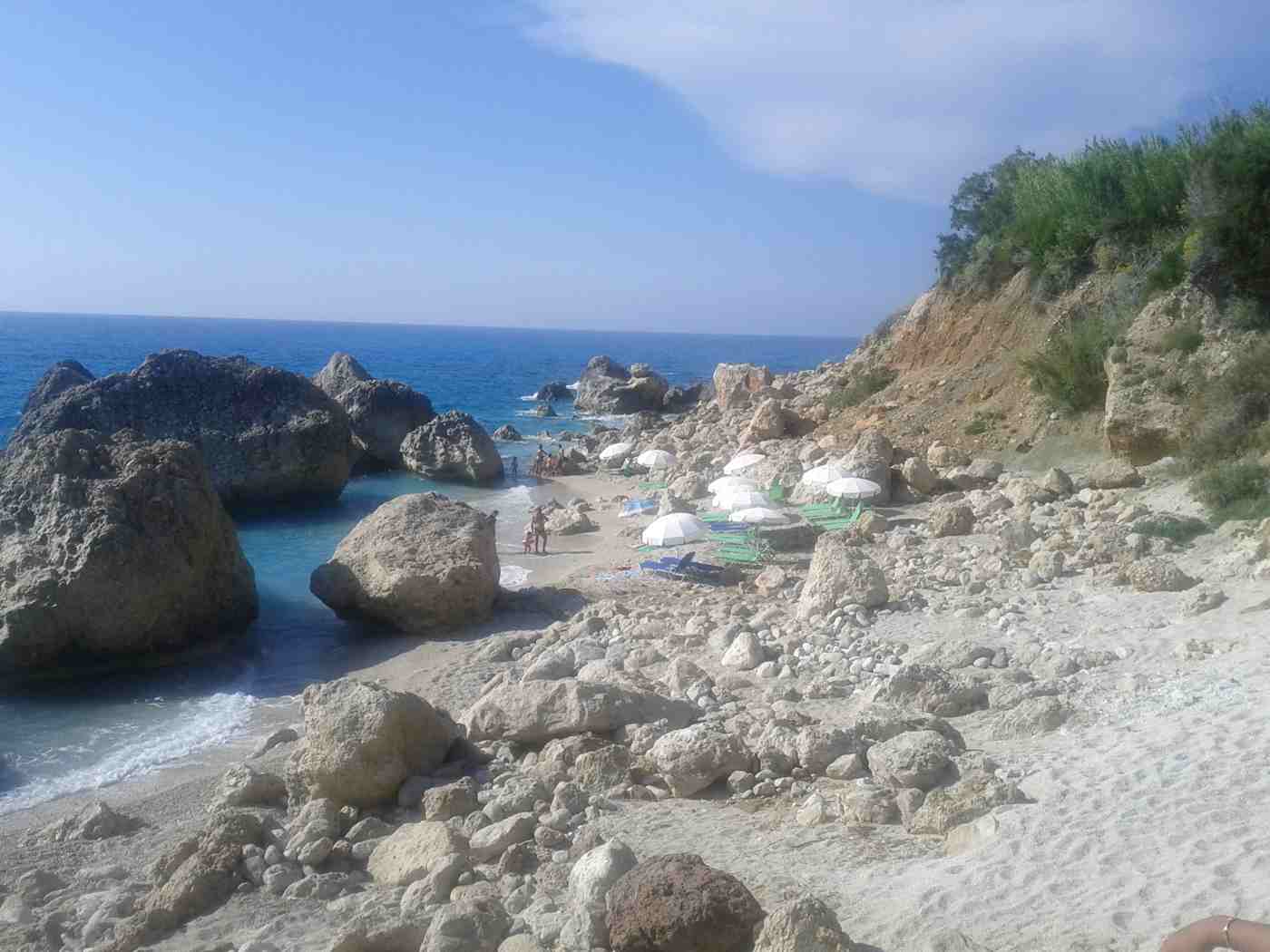
Kavalikefta is the beach most often meant by the name Kalamitsi beach. The cove mixes sand and pebble and is framed by large rock formations that stand in and out of the clear turquoise water, with rocks that swimmers jump from. A slope above holds sunbeds and a taverna, yet the shore stays largely unorganised, with little shade. Megali Petra and Avali sit alongside it. These west-facing beaches take the afternoon wind and swell and have deep, clear water, so they suit confident swimmers and careful drivers.
What is Kalamitsi in Lefkada?
Kalamitsi is one of the oldest villages on Lefkada, set high on the steep west coast about 20 km west of Lefkada Town among hills and olive groves.
Kalamitsi ranks among the oldest settlements on the island and sits high on the steep west coast. The village lies about 20 km west of Lefkada Town, reached by roads that climb through hills and olive groves. Whitewashed churches line the narrow lanes and old windmills stand on the ridges above the houses, catching the wind that crosses the island. From these heights the ground falls away towards the Ionian, giving wide views across the water. The setting is agricultural rather than coastal, and the pace stays slow through the seasons.
The village keeps its rural character and draws little tourism, so the streets stay quiet even in summer. Olive groves surround the houses, and the churches and windmills mark the ridgeline rather than any resort development. Kalamitsi sits above its own coastline, not on it, so the beaches belong to a separate trip down the hill. This division shapes the day: the village offers shade, stone lanes and views, while the shore below offers open water and rock formations reached only by the winding descent from the ridge.
What does the village of Kalamitsi look like?
Kalamitsi is a hillside village of whitewashed churches, old windmills and stone lanes, ringed by olive groves and set among the hills of the west coast.
The village presents whitewashed churches spread through the lanes, their walls bright against the surrounding greenery. Old windmills stand on the ridges above the houses, remnants of the grain trade that once used the steady west wind. Olive groves cover the slopes on every side, and stone paths thread between the buildings. Because Kalamitsi sits high on the steep west coast, the streets open onto views over the hills and out to the Ionian. The layout follows the contours of the ground rather than any grid, so lanes rise and fall between the churches.
Little tourism reaches Kalamitsi, so the village functions as a working rural community rather than a resort. Cafes and services stay modest, and the churches and windmills remain the landmarks that orient a visitor. The elevation keeps the air moving and gives the ridges their long sightlines across the island. Travellers who climb to the village find quiet lanes, olive trees and the whitewashed chapels rather than beach bars. The contrast with the shore below is sharp: Kalamitsi is a place of stone, shade and height, set apart from the open coast at the foot of the hill.
How do you reach the beaches from Kalamitsi?
A narrow winding road drops about 4 km from the village to the shore, ending at Kavalikefta, Megali Petra and Avali on the wild west coast.
The three beaches sit at the foot of the hill below Kalamitsi, reached by a single narrow road. This lane winds about 4 km from the village down to the shore, dropping steeply across the west-facing slope. The descent needs care: the road is narrow, the bends are tight, and the gradient stays severe most of the way down. Drivers meet the same conditions on the climb back up, so the return trip demands equal attention. The road ends near the wild beaches, where the olive-grove hillside gives way to rock and open water.
Winding lane rather than a coastal road, the beaches stay quiet and hard to reach. A car handles the descent, but the driver must manage the narrow bends and the sharp drop with patience. The 4 km down and back up form the main effort of a beach day at Kalamitsi. This difficulty is part of why the shore stays largely unorganised and free of crowds. Visitors treat the road as the first stage of the visit and allow time for a slow, careful drive in both directions.
What is Kavalikefta beach at Kalamitsi like?
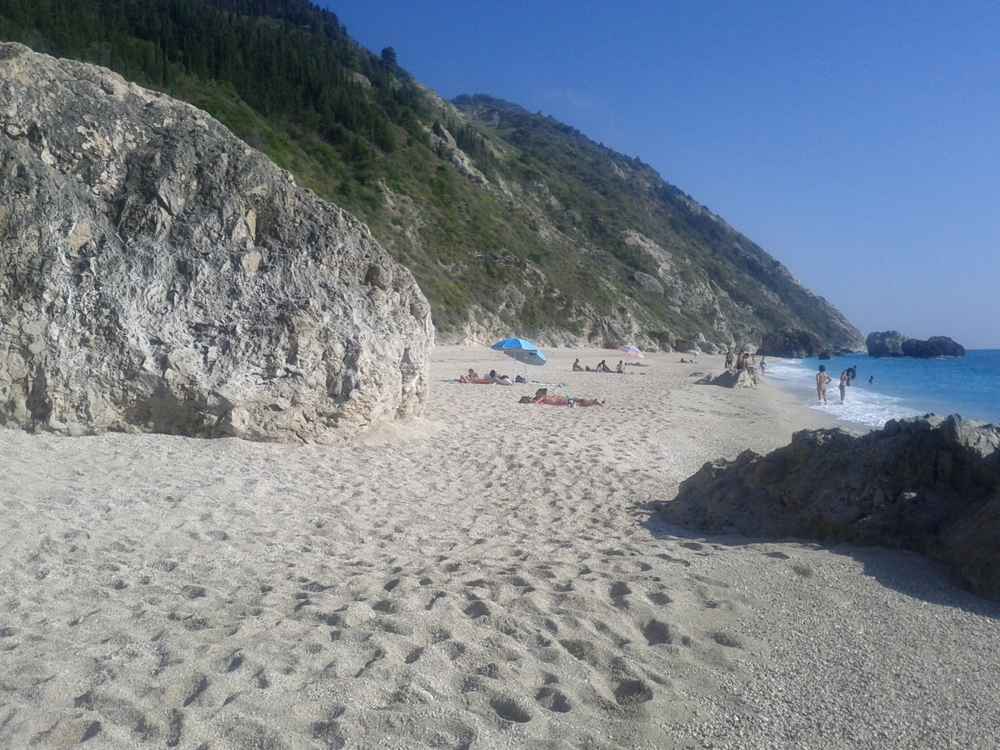
Kavalikefta is a cove of sand and pebble framed by large rock formations in and out of the turquoise water, with sunbeds and a taverna above but little shade.
Kavalikefta is the beach most travellers mean by the name Kalamitsi beach. The cove combines sand and pebble along the shore and is framed by large rock formations that rise in and out of the clear turquoise water. Swimmers climb these rocks and jump from them into the deep sea below. A slope above the beach holds sunbeds and a taverna, but the shore itself stays largely unorganised. Shade is scarce, so the rock formations and the open cove define the scene rather than rows of umbrellas or built facilities.
The water at Kavalikefta runs deep and clear close to shore, which gives the cove its turquoise colour and suits swimming from the pebble. The large rocks standing in the shallows and the sea create natural features for jumping and exploring. With sunbeds and only the single taverna on the slope, visitors bring their own water, food and shade. The beach faces west, so the afternoon light falls straight onto the cove. Kavalikefta rewards those who accept its wild, unorganised character and come prepared for a shore with little cover.
What are Megali Petra and Avali beaches?
Megali Petra and Avali are two wild west-coast beaches next to Kavalikefta below Kalamitsi, sharing the same rocky shore, deep clear water and unorganised character.
Megali Petra and Avali lie alongside Kavalikefta at the foot of the hill below Kalamitsi. The three beaches share the same stretch of wild west coast, reached by the narrow road that drops from the village. Like their neighbour, Megali Petra and Avali present rocky, exposed shorelines with deep, clear water rather than long organised strands. They belong to the same string of west-facing coves that give this side of Lefkada its rugged reputation. Travellers who reach Kavalikefta can move between these beaches along the coast at the base of the ridge.
Both Megali Petra and Avali keep the unorganised character of the Kalamitsi shore, with little in the way of built facilities. The west-facing position exposes them to the same afternoon wind and swell that reaches Kavalikefta, and the water stays deep and clear off the rocks. Visitors treat all three as wild beaches that reward preparation: water, shade and firm footing on the pebble and rock. Together with Kavalikefta, Megali Petra and Avali form the coastal trio below the village, each a variation on the same steep, open and rock-framed west coast.
Is swimming at Kalamitsi beach in Lefkada safe?
Kalamitsi’s beaches face west and take the afternoon wind, swell and deep clear water, so they suit confident swimmers rather than young children or weak swimmers.
The beaches below Kalamitsi all face west, which exposes them to the afternoon wind and the swell it drives onto the shore. Kavalikefta, Megali Petra and Avali have deep, clear water close to the pebble, and the sea can grow choppy as the day goes on. These conditions suit confident swimmers who can handle depth, movement and the pull of the water around the rock formations. The rocks that swimmers jump from at Kavalikefta add their own hazard, since the depth and currents shift near the stone. Caution matters most in the afternoon.
Mornings tend to be calmer than afternoons on this exposed coast, so the sea is often easier earlier in the day before the wind builds. Weak swimmers and families with young children judge the conditions carefully, because the deep water and swell give little margin near the rocks. The lack of organisation means no fixed facilities line the shore, so swimmers rely on their own judgement. Anyone jumping from the rock formations check the depth first. The west-facing beaches reward strong swimmers who respect the wind, the swell and the open water off Kalamitsi.
How do you get to Kalamitsi from Lefkada Town?
Kalamitsi lies about 20 km west of Lefkada Town by car, then a further 4 km down the narrow winding road to reach Kavalikefta and the other beaches.
Kalamitsi sits about 20 km west of Lefkada Town, reached by the roads that cross the island towards the steep west coast. A car is the practical way to arrive, climbing through hills and olive groves to the hillside village. Once at Kalamitsi, the beaches lie a further 4 km down the narrow winding lane that drops to the shore. The full trip therefore combines the drive west from town with the steep descent to Kavalikefta, Megali Petra and Avali. Drivers plan for both stages and the careful return climb.
The distance and the winding descent keep the Kalamitsi coast quieter than beaches closer to the resorts. Travellers weighing where to stay in Lefkada can compare this remote west-coast setting with the busier centres and other coves such as Agios Nikitas and its Pefkoulia beach further north. The beaches of Lefkada range from organised sandy bays to wild rock-framed coves like these, and Kalamitsi sits firmly at the wild end. Reaching it from Lefkada Town rewards those who accept the drive, the steep lane and the exposed, unorganised shore below the village.
Frequently Asked Questions
Which beach is meant by Kalamitsi beach in Lefkada?
Kavalikefta is the beach most travellers mean by the name Kalamitsi beach. It lies below the hillside village of Kalamitsi, at the foot of the narrow road that drops about 4 km to the shore. The cove mixes sand and pebble and is framed by large rock formations that stand in and out of the clear turquoise water, with rocks that swimmers jump from. A slope above holds sunbeds and a taverna, but the shore stays largely unorganised, with little shade. Two neighbouring beaches, Megali Petra and Avali, sit alongside Kavalikefta on the same wild west coast. The Kalamitsi shore is really a trio of exposed. Rock-framed coves rather than one single beach.
Do the beaches at Kalamitsi have sunbeds and tavernas?
Kavalikefta has sunbeds and one taverna on the slope above the beach, but the shore itself stays largely unorganised, with little shade. The neighbouring Megali Petra and Avali keep the same wild character and offer even fewer built facilities. Because these west-coast beaches sit at the foot of a steep 4 km lane below Kalamitsi, they never developed into organised resorts. Visitors treat them as wild beaches and come prepared. Bringing water, food and a means of shade such as an umbrella makes the visit comfortable, since the coves face west and the sun falls straight onto them through the afternoon.
Firm footwear helps on the pebble and rock, and swimmers judge the deep, clear water for themselves.
When is the best time to swim at Kalamitsi’s west-coast beaches?
Mornings suit swimming best at Kalamitsi, because these west-facing beaches take the afternoon wind and swell as the day goes on. Kavalikefta, Megali Petra and Avali all have deep, clear water and exposed positions, so the sea is usually calmer earlier before the wind builds. Confident swimmers who reach the coast in the morning find easier conditions for swimming from the pebble and jumping from the rock formations at Kavalikefta. Weak swimmers and families with young children watch the wind and swell carefully at any hour, since the depth near the rocks leaves little margin.
The steep, winding 4 km road down from the village and back up also favours an earlier start, allowing a slow, careful drive in both directions before the afternoon.