
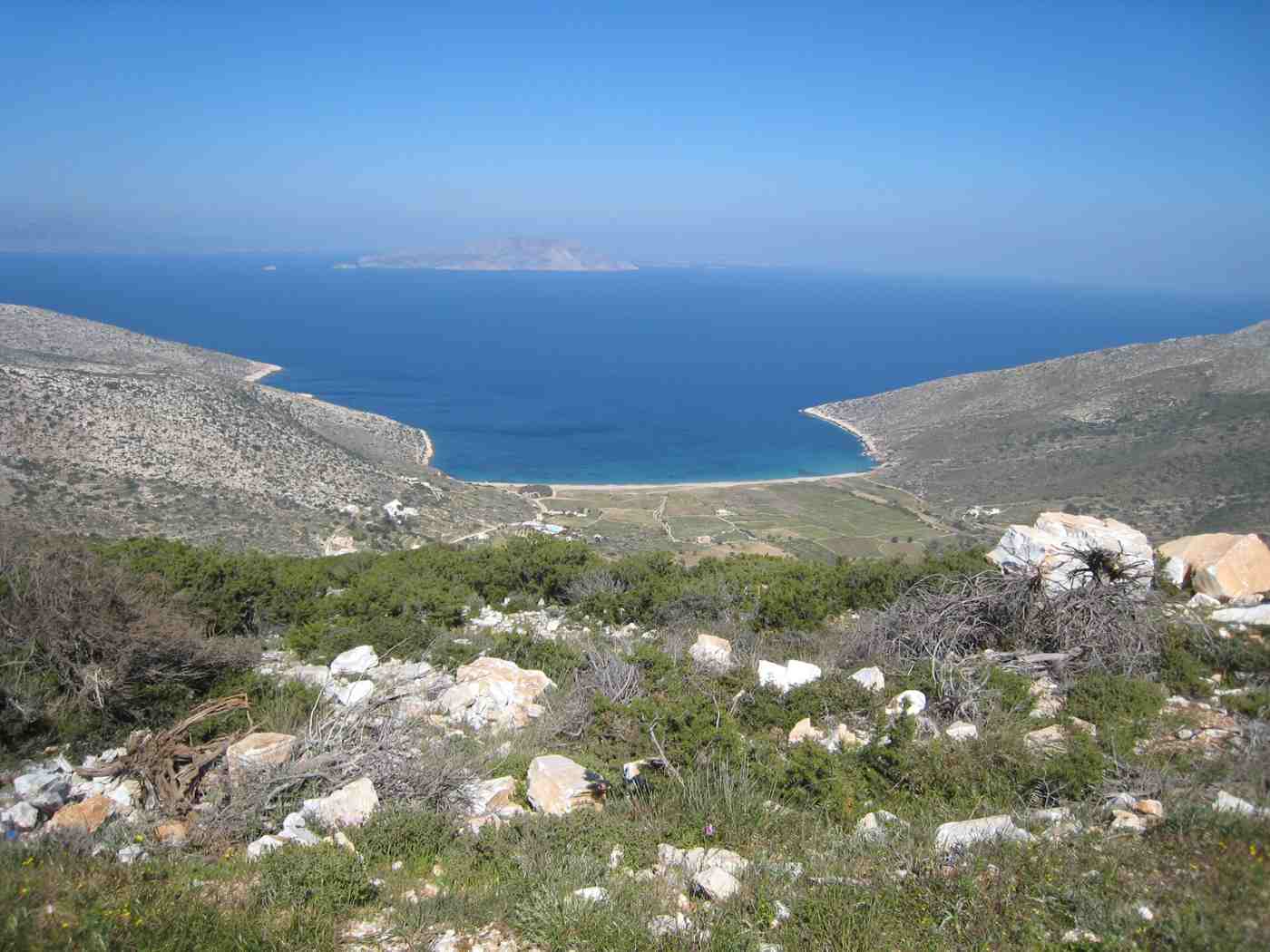
Ios stretches 18 kilometres from north to south. While the frequent bus connects the port of Gialos. The hilltop town of Chora and the main beach at Mylopotas every 15 to 30 minutes, the island’s quieter coves and historic sites lie beyond the reach of public transport. Hiring a car, scooter, motorbike or quad bike opens access to the southern beaches of Manganari, about 23 kilometres from Chora. The eastern shores of Agia Theodoti, Kalamos and Psathi. The northern site of Homer’s tomb at Plakotos. Rental agencies cluster in Chora and around the harbour at Gialos, offering vehicles for half-day, full-day or week-long periods. Plan the whole trip with Greece Tours.
The island’s compact size means no journey takes more than about 40 minutes. Roads vary from smooth asphalt on the main routes to rough gravel tracks leading to remote beaches. A hire vehicle is not essential for visitors staying close to the Chora-Mylopotas corridor. It transforms a stay by revealing hidden bays. Mountain villages and archaeological sites that the bus does not serve. Booking ahead in July and August secures the widest choice. Understanding licence requirements. Parking rules and road conditions ensures a smooth experience on this small Cycladic island between Naxos and Santorini.
Why is hiring a vehicle useful in Ios?
Hiring a vehicle in Ios grants freedom to explore beaches and sites beyond the bus network.
The frequent bus runs every 15 to 30 minutes in summer between the port of Gialos. The hilltop capital of Chora and the main beach at Mylopotas, covering the busiest two-kilometre corridor. Visitors who stay within this triangle and spend their days at Mylopotas beach or their evenings in the nightlife hubs of Chora find the bus adequate and inexpensive. The service operates from early morning until late at night during peak season, and the short journey times mean waiting is rarely inconvenient. For those focused on the central attractions, a hire vehicle adds little practical value and avoids the cost and responsibility of driving unfamiliar roads.
Beyond the main corridor, Ios beaches scatter across the coastline, and the bus does not serve them. Manganari lies about 23 kilometres south of Chora, a string of sandy coves sheltered by headlands and famous as a filming location for The Big Blue. The drive takes around 40 minutes on a winding road that climbs over the island’s spine before descending to the coast. On the east, Agia Theodoti, Kalamos and Psathi remain quiet even in high summer, each reached by narrow roads that branch from the main north-south artery. A hire car or scooter turns these remote spots into easy half-day trips, allowing visitors to swim in solitude and return to Chora for dinner.
Cultural and historical sites also lie off the bus route. Homer’s tomb at Plakotos in the north occupies a rocky hillside overlooking the sea, a site linked to the ancient tradition that the poet died and was buried on Ios. The Bronze Age settlement of Skarkos near Chora requires a short walk from the road but rewards visitors with well-preserved stone walls and panoramic views. Mountain farms in the interior produce skotyri cheese, honey and wine, and a vehicle allows spontaneous stops at roadside stalls and small tavernas that serve local dishes. Hiring transport transforms Ios from a beach-and-nightlife destination into a full island experience, revealing landscapes and traditions invisible from the bus window.
What types of vehicles are available for hire in Ios?
Rental agencies in Ios offer cars, scooters, motorbikes and quad bikes, each suited to different needs.
Cars are the most versatile option, accommodating up to five passengers with air conditioning, boot space for beach gear and stability on steep or winding roads. Compact models dominate the rental fleets, designed for narrow village streets and tight parking spaces. A small hatchback or sedan handles the journey to Manganari comfortably, and the enclosed cabin shields occupants from sun and wind. Families with young children, visitors carrying camera equipment or those planning full-day excursions with picnic supplies find cars the most practical choice. Automatic transmissions are less common than manual gearboxes, so drivers who prefer automatic request one when booking and expect slightly higher rates.
Scooters and motorbikes are the most popular rentals on Ios, favoured for their low cost, ease of parking and nimble handling on the island’s twisting roads. Engine sizes range from 50cc scooters, which suit short trips around Chora and to Mylopotas, to 125cc and larger motorbikes capable of reaching Manganari or the northern coast without strain. Two-wheelers weave through traffic, park almost anywhere outside the pedestrianised heart of Chora and consume minimal fuel. Riders must wear helmets, which rental agencies provide, and secure loose items in under-seat storage or a backpack.
Wind can gust on exposed coastal stretches, and gravel patches on side roads demand careful throttle control, but experienced riders find scooters ideal for exploring the island’s 108 square kilometres.
Quad bikes, also called ATVs, combine the open-air freedom of a scooter with the stability of four wheels, making them popular for rough tracks leading to secluded beaches. They handle loose gravel, steep inclines and rutted paths better than scooters, and their wide stance inspires confidence in novice riders. Quad bikes seat one or two people, with minimal storage, and their engines are less fuel-efficient than scooters of similar power. They are louder and heavier, and visitors find them less comfortable on long paved stretches. Rental agencies in Chora and at the port of Gialos stock all three types, and staff advise on the best match for planned routes and experience levels.
Where can visitors rent vehicles in Ios?
Vehicle rental agencies operate in Chora and at the port of Gialos, often within a short walk of ferry arrivals or accommodation.
Chora, the whitewashed hilltop capital, is the main hub for car and scooter hire. Agencies line the road that winds up from the port, and several occupy small offices near the bus terminus at the edge of the pedestrianised old town. Visitors staying in Chora walk to rental desks in under ten minutes, collect keys and paperwork, and ride or drive away within a quarter of an hour. Staff speak English, accept credit cards and explain insurance options, fuel policies and return procedures. Because Chora is the island’s social and commercial centre, rental outlets open early and close late in summer.
Many offer free delivery to hotels or apartments within the town, saving the walk back uphill with luggage.
Gialos, the port about two kilometres below Chora, hosts a smaller number of rental agencies positioned near the ferry quay. Passengers arriving on the morning fast ferry from Piraeus or the midday crossing from Santorini find desks open and vehicles ready, allowing them to begin exploring things to do in Ios without delay. Renting at the port suits travellers with tight schedules or those planning to leave luggage at a hotel and head straight to a beach. The same agencies often have a second branch in Chora. Visitors can collect a vehicle at the port and return it in the town. Or vice versa, for a small surcharge or no extra fee depending on the company.
This flexibility is valuable for those catching an early ferry and wishing to avoid a dawn drive back to Gialos.
Booking ahead through an agency’s website or a comparison platform secures a vehicle during the peak weeks of July and August, when demand outstrips supply and walk-in customers face limited choice or higher rates. Advance reservations also clarify insurance coverage, excess waivers and fuel policies, reducing misunderstandings at pickup. Some agencies require a deposit or full prepayment, while others accept payment on collection. Visitors who arrive without a booking in June or September usually find vehicles available. Those travelling in the busiest fortnight around mid-August benefit from reserving at least a week ahead.
Rental periods start from half a day, useful for a quick trip to Manganari, and extend to weekly rates that offer better value for longer stays.
What are the driving conditions and roads like in Ios?
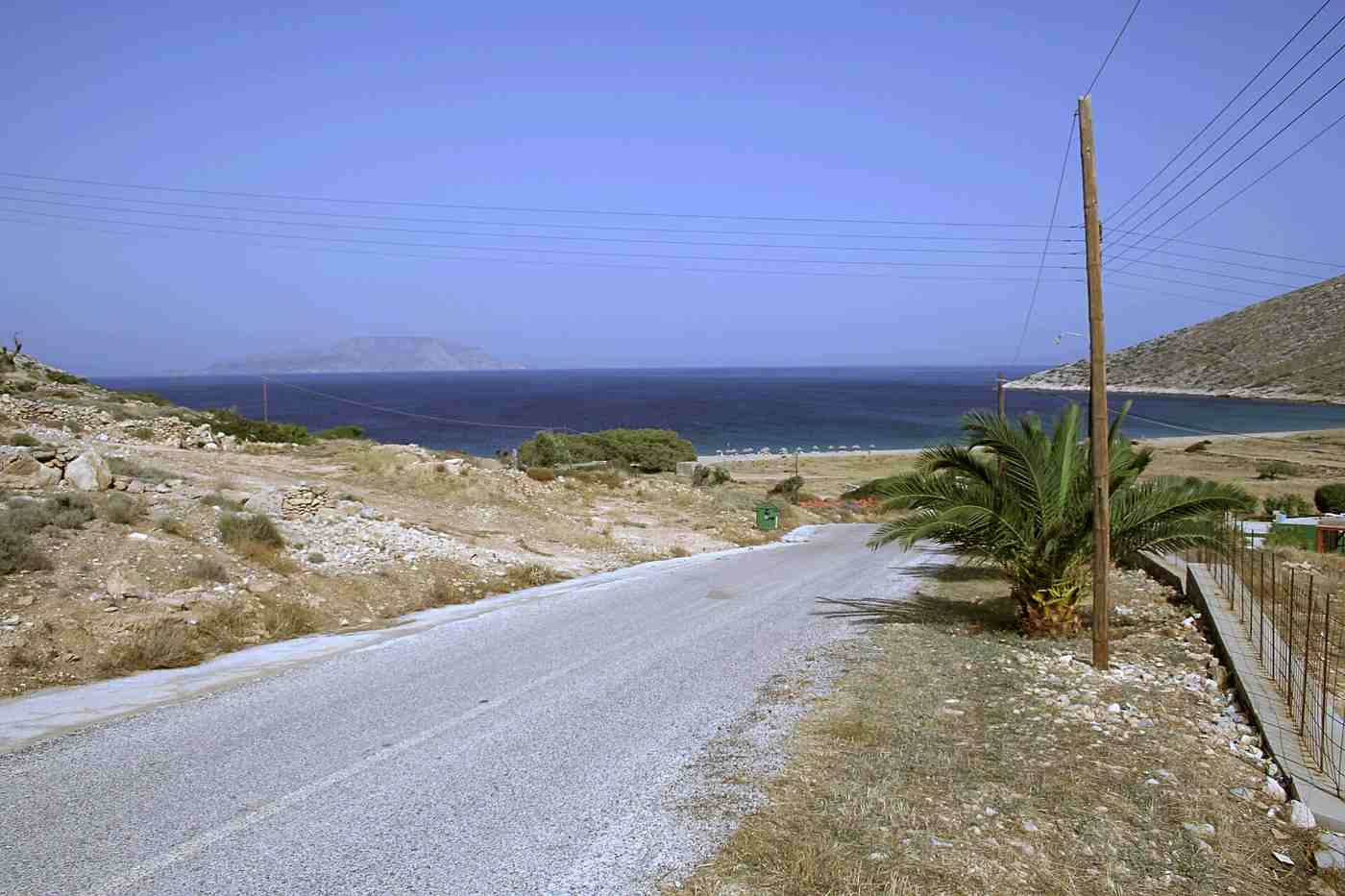
The main roads in Ios are paved and well-maintained, linking Chora, Gialos and Mylopotas with smooth asphalt, but secondary routes to remote beaches and northern sites are narrower, steeper and sometimes unpaved.
The primary route runs from the port of Gialos up the hillside to Chora, a winding two-kilometre climb with hairpin bends and gradients that test brakes and gears. The road surface is asphalt, wide enough for two vehicles to pass, and marked with painted centre lines. Traffic increases in the evening as visitors head to Chora for dinner and nightlife, and the descent back to Gialos requires steady braking to avoid overheating. From Chora, a separate paved road descends southwest to Mylopotas beach, about two kilometres away, with gentler curves and a broader carriageway. This triangle of Gialos, Chora and Mylopotas carries the bulk of island traffic.
Drivers familiar with mountain roads find it straightforward, though first-timers take the bends slowly and watch for scooters overtaking on the inside.
The road south to Manganari leaves Chora and climbs over the island’s central ridge, offering views of the Aegean and neighbouring islands before dropping to the coast. The journey covers about 23 kilometres and takes around 40 minutes, with the surface transitioning from smooth asphalt near Chora to rougher patches and gravel sections closer to the beach. The final descent to Manganari is steep and narrow, with loose stones that can unsettle scooters, and drivers reduce speed and avoid sudden braking. On the east coast, roads to Agia Theodoti, Kalamos and Psathi branch from the main north-south artery, each a single-lane track with passing places and minimal signage.
These routes are passable in a standard car but require attention to oncoming traffic and the occasional goat or donkey crossing.
Northern routes to Homer’s tomb at Plakotos and the interior mountain villages are the least developed, with dirt tracks that become dusty in summer and muddy after rain. A quad bike or a car with good ground clearance handles these paths better than a low-slung sedan or a 50cc scooter. Signage is sparse, and a paper map or offline GPS helps navigate junctions where tracks diverge. Parking at beaches is informal, with vehicles left on the verge or in cleared areas near the sand. In Chora, the old town is pedestrianised. Drivers park along the approach road or in designated spaces at the edge of the village. Then walk the marble-paved alleys to restaurants and bars.
Fuel stations operate in Chora and near the port, and filling up before a long trip to Manganari or the north avoids running low on remote stretches.
What licence and age requirements apply to vehicle hire in Ios?
Renters need a valid driving licence, and international visitors from outside the European Union typically require an International Driving Permit alongside their national licence.
European Union citizens present their national driving licence, which Greek law recognises across member states. Visitors from the United Kingdom, the United States, Canada, Australia and other non-EU countries need an International Driving Permit in addition to their home licence. Obtained before travel from an automobile association or licensing authority. The IDP translates the licence details into Greek and other languages, and rental agencies inspect both documents at pickup. Some agencies accept a national licence alone for short rentals, but police checks on the road require the IDP, and driving without one risks a fine. Licences must be valid for the entire rental period, and agencies photocopy or scan them for their records.
Age limits vary by vehicle type and agency. Car hire generally requires the driver to be at least 21 years old, with companies setting the threshold at 23 for larger or more powerful models. Drivers under 25 often pay a young-driver surcharge, and those under 21 are usually excluded from car rental altogether. Scooters and motorbikes up to 50cc are available to riders aged 18 and over, while bikes above 125cc demand a minimum age of 21 and a full motorcycle licence with the appropriate category. Quad bikes fall into a grey area, with agencies renting to 18-year-olds and others requiring 21, depending on engine size and insurance terms.
Visitors planning to hire a specific vehicle type confirm age and licence requirements when booking.
Insurance is mandatory, and rental agreements include third-party liability cover as a legal minimum. Agencies offer optional collision damage waiver and theft protection, which reduce or eliminate the renter’s financial responsibility in case of accident or loss. Excess amounts vary, and paying extra for a zero-excess policy gives peace of mind on narrow roads and tight parking situations. Renters sign a contract detailing fuel policy, mileage limits if any, and the condition of the vehicle, noting existing scratches or dents to avoid disputes at return. Credit cards are the standard payment method, and agencies place a hold for the excess amount, released after the vehicle is returned undamaged.
Understanding how to get to Ios by ferry and coordinating vehicle pickup with arrival times ensures a smooth start to exploring the island.
Where can drivers park in Ios, especially in Chora?
Chora’s old town is pedestrianised, so drivers park along the approach road or in designated areas at the village edge, then walk the marble alleys.
Chora, perched on a hilltop and built around a maze of narrow lanes. Bans vehicles from its historic core to preserve the marble paving and intimate scale of the whitewashed streets. The pedestrian zone begins at the bus stop and extends through the alleys lined with bars, tavernas and shops, up to the church of Panagia Gremiotissa at the summit. Drivers leave cars, scooters and quad bikes in marked bays along the road that climbs from Gialos. Or in an open area at the entrance to the old town where space is marked with painted lines.
Parking is free, and the walk from the edge to the centre takes under ten minutes, though the climb involves steps and slopes. Evening arrivals during the nightlife peak in July and August find every space occupied. Latecomers park further down the hill. Adding a longer walk or a wait for a departing vehicle.
Mylopotas beach, about two kilometres from Chora, has informal parking along the road that runs parallel to the sand. Visitors pull onto the verge or into cleared areas shaded by tamarisk trees, locking valuables out of sight and leaving windows cracked for ventilation. The beach is long, and parking near the southern end close to the Far Out beach club fills first, while the northern stretch near the access road retains more space. No official car park exists, and no fees apply, but drivers avoid blocking access tracks or private driveways. Scooters and quad bikes park closer to the sand, and their compact size makes finding a spot easier even on crowded afternoons.
Manganari, the southern cove about 23 kilometres from Chora, offers roadside parking at the end of the access track, where the asphalt gives way to sand. The beach is less developed than Mylopotas, and the parking area is simply a widened section of road with room for a dozen vehicles. Visitors arrive in waves, and midday sees the most competition for space, while early morning and late afternoon leave the area nearly empty. At Gialos, the port area has marked bays near the ferry quay and along the waterfront, used by locals, rental cars and visitors dining at harbour tavernas.
Ferry arrival times bring a surge of vehicles, and finding a spot within a short walk of the quay requires patience or timing a visit between sailings. Across the island, parking is informal, free and based on common sense, with drivers leaving space for others to pass and avoiding areas marked with no-stopping signs.
When is booking a hire vehicle in advance necessary in Ios?
Booking ahead is essential in July and August, when demand peaks and walk-in customers face limited choice or no availability.
The party season on Ios runs from mid-June to mid-August. With the busiest fortnight centred on the first half of August when European holidays coincide and ferry arrivals swell the island’s population. Rental fleets are finite, and agencies prioritise advance bookings, leaving only a handful of vehicles for walk-ins during peak weeks. Visitors who arrive on a morning ferry in mid-August without a reservation often find every car. Scooter and quad bike already allocated, forcing them to rely on the bus or negotiate inflated rates for the few remaining options. Booking online a week ahead guarantees a vehicle. Reserving two weeks or a month in advance opens the full range of models.
From compact cars to powerful motorbikes, at standard published rates.
Advance booking also clarifies the rental terms, allowing travellers to compare insurance packages, fuel policies and excess waivers across agencies. Online platforms aggregate local companies, displaying prices, customer reviews and vehicle specifications side by side. Confirming a reservation by email or through a booking system provides a reference number and a clear pickup time, reducing confusion at the rental desk and speeding the handover process. Agencies that accept prepayment lock in the rate. Protecting against price increases if demand spikes. Some offer free cancellation up to 24 or 48 hours before pickup, giving flexibility if travel plans change.
Visitors who book ahead also communicate special requests, such as an automatic transmission, a child seat or a larger fuel tank for long trips to Manganari and back.
Outside the peak weeks, walk-in rentals are feasible and sometimes cheaper, as agencies compete for business and offer discounts to fill their fleets. June and September see moderate visitor numbers, and rental desks in Chora and Gialos usually have vehicles available on the same day. Late May and early October are quieter still, with agencies reducing rates to attract the smaller number of travellers. Even in peak season, renting for a half-day or a single day is easier than securing a week-long booking, because short-term slots open up between longer reservations.
Visitors planning a quick trip to a remote beach or a sunset drive to Homer’s tomb can often arrange a scooter or quad bike on the morning of their excursion, though confirming by phone the evening before adds certainty.
Frequently Asked Questions
Is a hire car necessary to explore Ios, or is the bus sufficient?
The bus is sufficient for visitors who stay within the Gialos, Chora and Mylopotas triangle. Where the frequent service runs every 15 to 30 minutes in summer and covers the main accommodation, dining and beach areas. A hire car, scooter or quad bike becomes valuable for reaching beaches beyond Mylopotas. Such as Manganari in the south and Agia Theodoti, Kalamos and Psathi on the east coast, none of which the bus serves. The island measures 18 kilometres long, and a vehicle allows spontaneous stops at mountain villages, roadside tavernas and archaeological sites like Homer’s tomb at Plakotos.
Visitors who prioritise nightlife in Chora and days at Mylopotas find the bus adequate and avoid the cost and responsibility of driving. Those who want to explore the full island, swim in secluded coves and visit interior farms producing skotyri cheese and honey benefit from hiring transport. The choice depends on itinerary and personal preference, with the bus offering simplicity and a vehicle offering freedom.
What documents and insurance are required to hire a vehicle in Ios?
Renters need a valid driving licence, and non-European Union visitors typically require an International Driving Permit alongside their national licence. European Union citizens present their national licence, which Greek law recognises. The IDP translates licence details into Greek and is checked by rental agencies and police during roadside inspections. Minimum age for car hire is usually 21 or 23 years, with a young-driver surcharge often applied to those under 25. Scooters up to 50cc are available to riders aged 18 and over, while larger motorbikes and some quad bikes require a minimum age of 21 and a motorcycle endorsement. Insurance is mandatory, with third-party liability included in every rental.
Agencies offer optional collision damage waiver and theft protection, which reduce or eliminate the renter’s financial responsibility in case of accident or loss. Excess amounts vary, and a zero-excess policy costs extra but provides peace of mind. Renters sign a contract detailing fuel policy, mileage limits and vehicle condition, and agencies place a credit card hold for the excess, released after undamaged return.
Can visitors drive to all beaches in Ios, or are some inaccessible by vehicle?
Visitors can drive to the main beaches, including Mylopotas, Manganari, Gialos, Koumbara, Agia Theodoti, Kalamos and Psathi, though road quality varies from smooth asphalt to rough gravel tracks. Mylopotas is reached by a paved two-kilometre road from Chora, and Manganari lies about 23 kilometres south on a route that transitions to gravel near the coast. Eastern beaches such as Agia Theodoti and Kalamos are accessible via narrow single-lane tracks branching from the main north-south road, passable in a standard car but requiring careful driving. Some remote coves and northern bays are reached only by dirt paths better suited to quad bikes or on foot. A few secluded spots remain accessible solely by boat or hiking.
Parking at beaches is informal, with vehicles left on the roadside or in cleared areas near the sand. Drivers check road conditions with rental agencies, especially for routes to the north and interior, and carry a map or offline GPS because signage is sparse. The majority of popular and documented beaches are accessible by car or scooter, making a hire vehicle a practical tool for exploring the island’s 108 square kilometres.
What are the alternatives to hiring a vehicle for getting around Ios?
The local bus is the primary alternative, running every 15 to 30 minutes in summer between Gialos. Chora and Mylopotas, covering the busiest corridor from early morning until late at night. The service is inexpensive, reliable and sufficient for visitors focused on the main beach and nightlife hubs. Taxis operate on the island, available by phone or at ranks in Chora and Gialos. They offer fixed or metered fares to beaches and sites, though availability decreases late at night and during ferry arrivals when demand peaks. Walking is feasible for short distances, such as the two-kilometre path from Chora to Mylopotas, which takes around 30 minutes and offers sea views, though the return climb is steep.
Some visitors arrange boat trips to Manganari and other southern coves, departing from Gialos harbour and combining swimming with sightseeing. Bicycle hire is less common but available from outlets in Chora, suited to fit travellers comfortable with hilly terrain. Hitchhiking is practised on Ios, with locals and fellow travellers offering lifts, though it is unreliable and not recommended as a primary transport method. For comprehensive exploration beyond the bus route, a hire vehicle remains the most practical option, but the bus, taxis and walking cover the essential destinations for a beach-and-nightlife stay.