
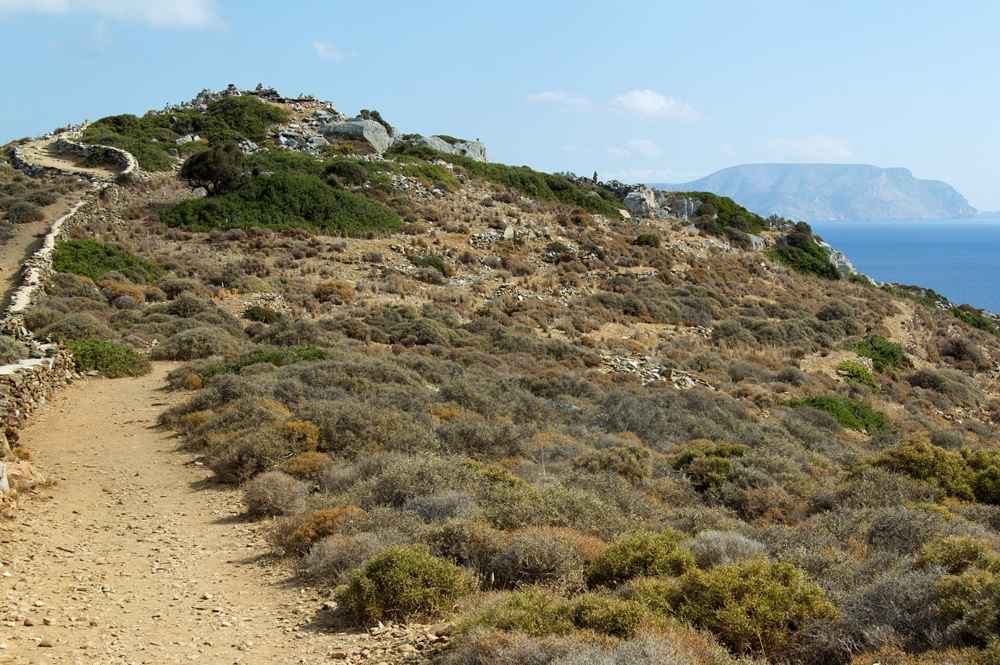
Homer’s tomb is one of the most evocative sights on Ios, the reputed burial place of the greatest poet of ancient Greece. It lies at Plakotos, on a windswept hillside in the north of the island, about thirteen kilometres from Chora, above the bay of Plakotos with sweeping views over the sea. Here a small square structure of stone and marble marks the spot, with a plaque proclaiming it the grave of the divine poet Homer. Tradition, backed by ancient writers such as Pausanias and the Byzantine Suda, holds that Homer died on Ios, because his mother came from the island. Plan the whole trip with Greece Tours.
The pilgrimage to this remote and atmospheric site is a moving experience. This guide covers Homer’s tomb on Ios: the legend, the ancient sources, what you see at the site, and how to visit.
Here you will find everything about Homer’s tomb on Ios: the reputed grave of the ancient poet at Plakotos in the north of the island, the legend of his death on Ios. The ancient sources behind the claim, what remains at the site today, the question of its authenticity. How to visit this remote and evocative spot.
What is Homer’s tomb on Ios?
Homer’s tomb on Ios is the reputed burial place of the ancient poet Homer, at Plakotos in the north of the island.
One of the most famous sights of Ios is the reputed tomb of Homer, the great poet of ancient Greece to whom the Iliad and the Odyssey are attributed. The island proudly claims to be his final resting place, and the site draws visitors interested in history, literature and legend.
The tomb lies at Plakotos, on the hill of Psathopyrgos in the north of the island, above a bay of the same name. What survives is modest: a small square structure built of stone and marble, about a metre high. Marking the spot, along with the ruins of ancient walls and an ancient settlement on the windswept hillside.
A marble plaque at the site bears an inscription in Greek proclaiming it the grave of Homer, the divine poet. Set in a remote, elemental landscape with sweeping views over the sea. The tomb is a moving and atmospheric place. A pilgrimage to it is one of the most distinctive things to do on Ios.
Where is Homer’s tomb and how do you get there?
Homer’s tomb is at Plakotos in the north of Ios, on the hill of Psathopyrgos above Plakotos bay, about thirteen kilometres from Chora, roughly a 40-minute drive.
Homer’s tomb lies in the far north of Ios, at Plakotos, on the hill of Psathopyrgos above the bay of Plakotos, about thirteen kilometres from the capital, Chora. Its remote location, away from the main hubs of the island and the town of Chora, is part of what gives the site its atmosphere and sense of pilgrimage.
The most practical way to reach the tomb is by hire car, scooter or quad bike, following the island roads north from Chora. A drive of roughly forty minutes, with the final approach along a rougher track. The journey through the arid northern landscape is scenic and part of the experience.
A visit to Homer’s tomb is best treated as a half-day excursion. It combines well with the quiet beaches of the north, such as Agia Theodoti in the east, or a wider exploration of the island. Good footwear, water and sun protection are advisable for the exposed site.
What is the legend of Homer’s death on Ios?
The legend holds that Homer died on Ios, because his mother, Clymene, came from the island, and so he chose to spend his last days there.
The claim that Homer is buried on Ios rests on ancient tradition and legend rather than certainty. According to one strand of the story, Homer’s mother, named Clymene, was herself from Ios. Which is why the poet is said to have chosen to spend his final days on the island and to have been buried there.
The manner of his death is wrapped in legend. Some accounts say simply that he died of illness on the island during a voyage. A more colourful and famous tale holds that Homer died of frustration, or grief, after failing to solve a riddle put to him by local fishermen, a story that has clung to the island for centuries.
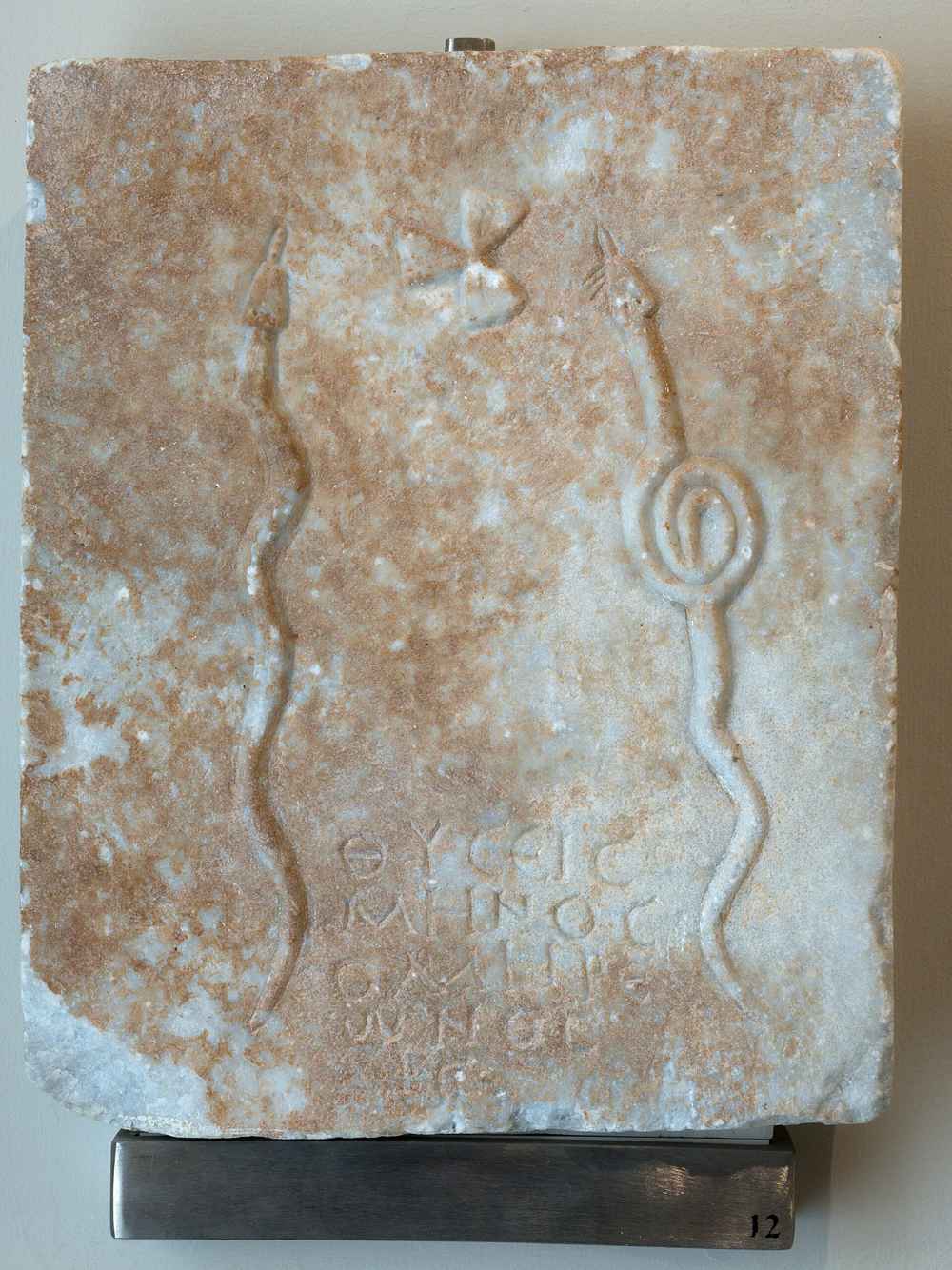
Whatever the truth, these legends have long linked Homer to Ios, and the island embraced the connection in antiquity, even depicting the poet on its ancient coins. The tomb at Plakotos became the focus of this tradition, and the stories add a rich layer of myth to a visit to the site.
What ancient sources link Homer to Ios?
Several ancient and later sources link Homer to Ios, including the second-century Greek geographer Pausanias and the tenth-century Byzantine encyclopedia the Suda, which name Ios as his burial place.
The tradition connecting Homer to Ios is an ancient one, recorded by respected writers of antiquity and beyond. The Greek geographer Pausanias, writing in the second century, mentioned Ios as the burial place of Homer. Lending the claim the weight of an ancient authority who travelled and documented the sites of Greece.
The connection is echoed in later sources too, notably the Suda, a great Byzantine encyclopedia compiled in the tenth century. Which also records Ios as the place where Homer died and was buried. These references show that the island’s claim was accepted and repeated across centuries.
Further evidence of the island’s identification with the poet comes from its ancient coinage. Which depicted the head of Homer, a proud assertion of the connection by the people of ancient Ios. Together, these literary and material sources form the basis of the island’s enduring claim to be the resting place of Homer.
Who discovered Homer’s tomb on Ios?
Homer’s tomb on Ios is said to have been identified in the eighteenth century by Pasch van Krienen, a count and naval officer serving with the Russian fleet, who claimed to have found the grave and an inscription at Plakotos.
The modern identification of the site is attributed to the eighteenth century. Pasch van Krienen, a count and officer serving as a representative with the Russian naval forces in the Aegean at the time. Is said to have located the tomb at Plakotos.
According to the account, van Krienen claimed to have discovered the grave along with an inscription confirming it as Homer’s. An assertion that revived European interest in the island’s ancient link to the poet. His claim, like the tradition itself, has been treated with a mixture of fascination and scepticism.
This eighteenth-century rediscovery brought renewed attention to the remote site and cemented Plakotos in the popular imagination as the tomb of Homer. Whether or not the identification is sound, it is part of the long and colourful history of the island’s association with the greatest of ancient poets.
Is it really the tomb of Homer?
There is no definitive archaeological proof that the site on Ios is genuinely the tomb of Homer, and the very existence of Homer as a single historical figure is debated.
It is important to approach Homer’s tomb with an understanding that its authenticity cannot be confirmed. There is no definitive archaeological proof that the structure at Plakotos is genuinely the grave of Homer. Indeed scholars have long debated whether Homer was a single historical person at all. Or a name attached to a tradition of oral poetry.
The identification rests on ancient literary tradition, the island’s old claim and the eighteenth-century account, rather than on hard evidence. The ruins at the site are those of an ancient settlement and tombs, and the specific attribution to Homer is a matter of legend and belief more than established fact.
Yet this uncertainty does little to reduce the appeal of the site. Visitors come not for archaeological certainty but for the powerful sense of connection to the ancient world, the legend, and the beauty of the remote setting. The very mystery surrounding the tomb is part of what makes it so evocative.
Is Homer’s tomb worth visiting?
Yes, Homer’s tomb is worth visiting for travellers interested in history, literature and legend, and for the beauty of its remote setting.
For the right traveller, Homer’s tomb is well worth the journey, offering something quite different from the beaches and nightlife for which Ios is famous. Those drawn to ancient history, literature and myth will find the pilgrimage to the reputed grave of the greatest ancient poet deeply evocative, whatever the truth of the claim.
Visitors come with realistic expectations, as the site itself is modest: a small stone structure, a plaque, and the ruins of an ancient settlement on a bare hilltop. The reward lies in the atmosphere, the legend and the spectacular setting, with sweeping views over the sea from the windswept northern hills.
Reached on a scenic drive through the north of the island, and easily combined with the quiet beaches nearby, a visit to Homer’s tomb is one of the most distinctive of the things to do in Ios, adding a touch of ancient magic and history to a stay on the island.
Frequently Asked Questions
Why is Homer buried on Ios?
Homer is said to be buried on Ios because of an ancient tradition, backed by several old sources. That the great poet died on the island and was laid to rest there, a claim the island has proudly held for well over two thousand years. According to legend, the reason for his connection to Ios is that his mother, named Clymene. Came from the island. So Homer is said to have chosen to spend his final days on Ios, the homeland of his mother, and to have been buried there when he died.
The circumstances of his death are themselves the stuff of legend: accounts say he died of illness on the island during a voyage through the Aegean, while a more famous and colourful story holds that he died of frustration or grief after being unable to solve a riddle posed to him by local fishermen, who told him a riddle about the lice they had caught that the great poet not answer. This tradition is not merely a local folk tale. Was recorded by respected ancient and later writers, including the second-century Greek geographer Pausanias and the tenth-century Byzantine encyclopedia known as the Suda.
Both of which name Ios as the burial place of Homer, and the island even depicted the poet on its ancient coins, proudly asserting the connection. While there is no definitive archaeological proof that Homer, if he was indeed a single historical person, is genuinely buried at the site at Plakotos in the north of Ios, the strength and antiquity of the tradition are why the island is so closely associated with the poet. Why his reputed tomb remains one of its most evocative and celebrated sights.
What can you see at Homer’s tomb?
At Homer’s tomb on Ios you can see a modest but atmospheric site consisting of a small square structure of stone and marble, about a metre high. That marks the reputed grave of the poet, along with a marble plaque bearing an inscription in Greek that proclaims it the resting place of the divine poet Homer. Around this central monument lie the ruins of an ancient settlement and tombs on the windswept hilltop of Psathopyrgos. At Plakotos in the north of the island, giving a sense of the antiquity of the place, though the remains are fragmentary rather than monumental. Visitors come understanding that the site is not a grand archaeological monument but a simple.
Evocative spot whose power lies as much in its legend and its setting as in what physically survives. The great reward of a visit, beyond the connection to the ancient poet, is the location itself: the tomb sits in a remote. Elemental landscape of bare northern hills, high above the bay of Plakotos, with sweeping and beautiful views over the surrounding sea. The sense of standing at the reputed grave of the greatest poet of antiquity. In such a wild and beautiful setting far from the crowds, is what makes the visit so memorable.
It is worth wearing good footwear and taking water and sun protection. Allowing time to absorb the atmosphere of this legendary and haunting corner of Ios.
How do you get to Homer’s tomb from Chora?
To get to Homer’s tomb from Chora you travel north across the island for about thirteen kilometres to Plakotos. A journey of roughly forty minutes that is best made by your own hired transport, since the site lies in a remote part of Ios away from the main bus routes and hubs. The most practical way is to hire a car, scooter or quad bike in Chora or at the port, which gives you the freedom to make the scenic drive north through the arid. Rugged landscape of the island at your own pace and to combine the trip with other sights in the north.
The route follows the island roads towards the northern tip, with the final approach to the tomb along a rougher. Unpaved track. A little care is needed, especially on a scooter, and it is wise to check the route locally before setting out. Because of its distance and the terrain, a visit to Homer’s tomb is best treated as a half-day excursion rather than a quick stop. It pairs naturally with a day exploring the quieter northern and eastern parts of the island, including beaches such as Agia Theodoti. The exposed, windswept setting of the tomb means you take water, sun protection and good footwear for walking the last stretch and around the site.
Reaching this legendary and beautifully situated spot, with its sweeping views over the sea, is a rewarding part of the experience and one of the more adventurous things to do on Ios.