
Greek holiday customs and traditions explained: Christmas to Easter, name days & panigyria. Learn key rituals, foods, greetings, and etiquette to join in.
If you’ve ever landed in Greece thinking “We’ll just catch the sights,” and then found yourself pulled into a candlelit procession, a loud family table, or a village square dancing until way too late, welcome. Greek holiday customs and traditions aren’t just dates on a calendar. Their living habits: shaped by Orthodox Christianity, local patron saints, family networks, and that unmistakable Greek instinct to turn any gathering into a shared event.
We’ve spent our summers island-hopping and road-tripping through places like Lefkada, Corfu, Knossos and Crete, Laconia and Mystras, Messinia, Skiathos, and more, watching how celebrations change from neighborhood to neighborhood.
And as locals, we can say this with confidence: once we understand the “why” behind the rituals, the whole year in Greece starts to make sense. Let’s walk through the seasons, what happens, what it means, and how to join in respectfully (without feeling like we’re performing for a photo).
Read more about Greece Tours.
Key Takeaways
- Greek holiday customs and traditions follow the Orthodox liturgical calendar, so celebrations often unfold as seasons—Christmas through Epiphany, Apokries before Lent, and Easter as a full Holy Week experience.
- Philoxenia (hospitality) powers Greek holiday customs and traditions, with open-door visits, shared sweets, and hosts who insist you eat, stay, and join the table.
- Christmas customs center on kalanda (carols), christopsomo (Christ’s bread), and New Year rituals like vasilopita with a hidden coin and pomegranate smashing for good luck.
- Apokries brings costumes, satire, and Tsiknopempti grilling, then shifts to Clean Monday kite-flying and Lenten picnic foods like lagana and taramosalata.
- Greek Easter is the emotional core of the year, marked by Good Friday epitaphios processions, midnight candlelit Resurrection greetings (“Christos Anesti”), and all-day Easter Sunday feasting and visiting.
- To participate respectfully, dress modestly for church, keep photography discreet, bring a small gift when invited, and follow local cues around toasts and fasting days.
What Shapes Greek Holiday Traditions
Greek holiday customs and traditions can look wildly different depending on where we are, an island harbor, a mountain village, or a downtown Athens parish. But underneath the variety, a few big forces keep showing up.
Religion, Local Patron Saints, And The Liturgical Calendar
In Greece, the Orthodox Church calendar isn’t separate from “regular life”; it sets the rhythm of the year. Fasting periods, feast days, saints’ commemorations, and Holy Week services shape when we gather, what we cook, and even how late we stay out.
A helpful way to think about it: many Greek holidays aren’t one-day events. They are separated into seasons.
- Christmas runs as a stretch from early December into Epiphany (January 6).
- Carnival (Apokries) builds for weeks before Lent.
- Easter is the center of the Orthodox year, with Holy Week services that fill streets and churches night after night.
Then we add something very Greek: local patron saints. Every place has them. A saint might be tied to sailors, shepherds, healing, protection from storms, you name it. In coastal towns, St. Nicholas (December 6), patron of sailors, can be a major moment, sometimes with boat blessings and harbor-side celebrations.
Philoxenia, Family Networks, And Community Life
If we had to pick one cultural “engine” behind Greek holidays, it would be philoxenia, hospitality, literally “friend to the stranger.” But it’s not hospitality like a hotel. It’s hospitality as a social duty, a kind of pride.
During holidays, we don’t just invite people, we insist. Family homes become open-door spaces where:
- Someone’s cousin drops in “for five minutes” and stays two hours,
- neighbors exchange plates of sweets,
- and visitors are fed as if they haven’t eaten in a week.
Also, holidays are one of the few times the wider family network synchronizes. People return to villages, grandparents become the center again, and the social map resets around who visits whom (and in what order).
Regional Identity: Islands, Mountains, And City Neighborhoods
Greece is small on the map but dense in identity. Traditions shift based on geography and history:
- Islands often highlight maritime customs (boats, harbor blessings, sailor saints) and a more outward-facing culture from centuries of trade.
- Mountain regions can feel more tight-knit and traditional, with stronger village continuity and older forms of music and dance.
- City neighborhoods, especially Athens and Thessaloniki, create their own micro-traditions: parish-based processions, school parades, and community associations.
Even holiday food changes. One island might bake a bread with walnuts and a cross: another might use different spices, shape, or decoration. That’s why Greek holiday customs and traditions are best understood as a shared framework, with endless local dialects.
Christmas In Greece: From Advent To Epiphany
In Greece, Christmas isn’t only on December 25. It’s a long arc of anticipation, fasting, home rituals, and public celebration, ending with Epiphany and the blessing of the waters.
Carols, Kalikantzaroi Folklore, And Festive Home Rituals
If we’re in a Greek town on December 24, we’ll hear the sound before we see it: children going door to door singing kalanda (carols). Many carry a triangle (the classic metallic one) or small drums. They’ll sing again on December 31 and January 5 in many regions, because the holiday cycle keeps turning.
Families reward them with coins, sweets, or small treats, often melomakarona (honey cookies) and kourabiedes (powdered sugar almond cookies). It’s cheerful, slightly chaotic, and very normal to open the door even if we’re mid-coffee.
Then there’s the wonderfully weird folklore: kalikantzaroi, mischievous goblin-like creatures said to appear during the “12 days” between Christmas and Epiphany. In older storytelling, they cause little household trouble, so people stayed vigilant with light, incense, and protective rituals. Do most Greeks literally believe it today? Not really. But the stories survive because they’re fun, and because winter holidays everywhere need a bit of myth.
Home rituals vary, but you’ll often see:
- extra cleaning and decorating ahead of Christmas,
- baking days that turn the kitchen into a family workshop,
- and (especially in coastal areas) Christmas decorations that may include a boat alongside or instead of a tree.
Christmas Table Traditions: Sweets, Breads, And Shared Meals
Greek Christmas is also a food story, especially because Christmas Day traditionally ends a 40-day fast for many Orthodox families.
A centerpiece in many homes is christopsomo (Christ’s bread): a decorated loaf often stamped or braided with a cross and symbols that can reflect the family, fields, animals, vines, or good-luck motifs. In some places, the bread is ornate like folk art: in others, it’s simpler but still treated with respect.
The meal itself depends on region and household, but the vibe is consistent: bigger table, more time, more people than expected.
A few regional notes we love pointing out to travelers:
- In Crete, versions of christopsomo may be richer with nuts and specific decorative patterns.
- On Zakynthos, there are local dishes (even vegetable-based ones like broccoli preparations) that stand out from what visitors assume is “standard Greek Christmas.”
And yes, dessert trays are basically a food group in December.
New Year’s And St. Basil’s Day: Vasilopita And Good-Luck Customs
In Greece, gifts are traditionally associated with St. Basil (Agios Vasilis) on January 1, not Santa on December 25, though modern families often blend the two.
The most famous New Year’s custom is vasilopita, the New Year’s cake (or sweet bread) with a hidden coin inside. At midnight or during the New Year’s visit, the family cuts it in a specific order, often for Christ, the home, and then each member by age. Whoever finds the coin gets good luck for the year.
Another widely loved ritual: pomegranate smashing. We bring a pomegranate to the doorstep and crack it so the seeds scatter, symbolizing abundance, prosperity, and a “full” year. It’s messy in the best way, and it’s one of those customs that feels ancient even if the way we do it today is slightly modern.
If we’re visiting friends around New Year’s, we’ll hear greetings like:
- “Kali Chronia” (Happy New Year)
- “Chronia Polla” (Many years, wishing long life and well-being)
Epiphany And The Blessing Of The Waters
The Christmas season closes with Epiphany (Theophany) on January 6, and it’s one of the most striking public rituals in Greece.
In coastal towns and anywhere with accessible water (sea, river, lake), a priest blesses the waters and throws a cross in. Divers, often young men, sometimes brave kids, sometimes full-grown adults who should probably have warmed up first, jump in to retrieve it. The one who brings it back is believed to receive a special blessing for the year.
It’s equal parts sacred and community-spectacle: families gather, cameras come out, and the whole place feels like it’s officially stepping from the dark of winter toward the light.
Carnival Season (Apokries): Masks, Meatfare, And Satire
If Christmas in Greece feels warm and home-centered, Apokries (Carnival) is its loud, cheeky cousin. It’s a season of costumes, satire, and social release before Lent begins.
Tsiknopempti And The Social Ritual Of Grilling
One of the most delicious markers of Apokries is Tsiknopempti, often translated as “Smoke Thursday.” The word tsikna refers to the smell of grilled meat, and that’s basically the point.
On Tsiknopempti, we grill. A lot. Tavernas set up extra grills, apartment balconies turn into smoke machines, and whole streets smell like souvlaki, sausages, and chops.
But it’s not just about eating meat. It’s social permission to be out, to visit, to tease, to laugh. Carnival has an old role in many cultures: a temporary inversion of seriousness. In Greece, it comes with a very Greek flavor, banter, music, and a “come on, sit” attitude.
Costumes, Parades, And Local Carnival Styles
Apokries costumes range from sweet to chaotic. Kids dress up for school events, adults for parties, and some towns go all-in with parades.
The important thing to know is that Carnival is local. A few places are nationally famous for their celebrations (Patras is the big name), but even smaller towns have their own styles:
- Some focus on elaborate floats
- Others lean into traditional masks
- And many include satire, mocking politics, social trends, or whatever annoyed us this year.
If we’re visitors, we don’t need the “perfect” costume. A simple mask, a bit of effort, and a willingness to laugh at ourselves go a long way.
Clean Monday (Kathara Deftera): Kites And Lenten Foods
Carnival ends with Clean Monday (Kathara Deftera), which opens Great Lent.
This day feels different: outdoorsy, bright, and a bit reflective. We typically:
- fly kites (a beloved ritual, families head to hills, beaches, open fields)
- eat Lenten foods, often picnic-style
Classic Clean Monday table items include:
- lagana (a flat, sesame-topped bread baked for the day)
- taramosalata (fish roe spread)
- olives, beans, dolmades without meat
- seafood like octopus, squid, shrimp (because fasting rules are specific, seafood without “blood” is often considered acceptable)
Clean Monday is also a good moment to see how Greek holiday customs and traditions aren’t only church-centered, they’re tied to the landscape. We go outside, we look up, we let the kite pull against the wind, and somehow that becomes a shared reset.
Easter In Greece: Holy Week To Resurrection Night
If we could choose just one season to understand Greece, it would be Easter. Greek Easter isn’t a single meal or a Sunday service; it’s an entire week of public emotion, neighborhood rhythm, and family memory.
Holy Week Services And Neighborhood Processions
Holy Week (Megali Evdomada) is intense in the best way. Churches hold services almost every evening, and even people who aren’t regular churchgoers often attend at least a few.
What visitors notice right away is how local it feels. In many neighborhoods, the church isn’t an abstract institution; it’s the community’s living room.
- On Palm Sunday, the mood shifts into Holy Week.
- Midweek services build toward the solemnity of Thursday and Friday.
You’ll see people walking to church with a calm seriousness, often dressed neatly but not extravagantly. And you’ll hear chanting that can be haunting even if we don’t understand every word.
Red Eggs, Epitaphios, And Midnight Resurrection Traditions
Two iconic Easter symbols show up everywhere:
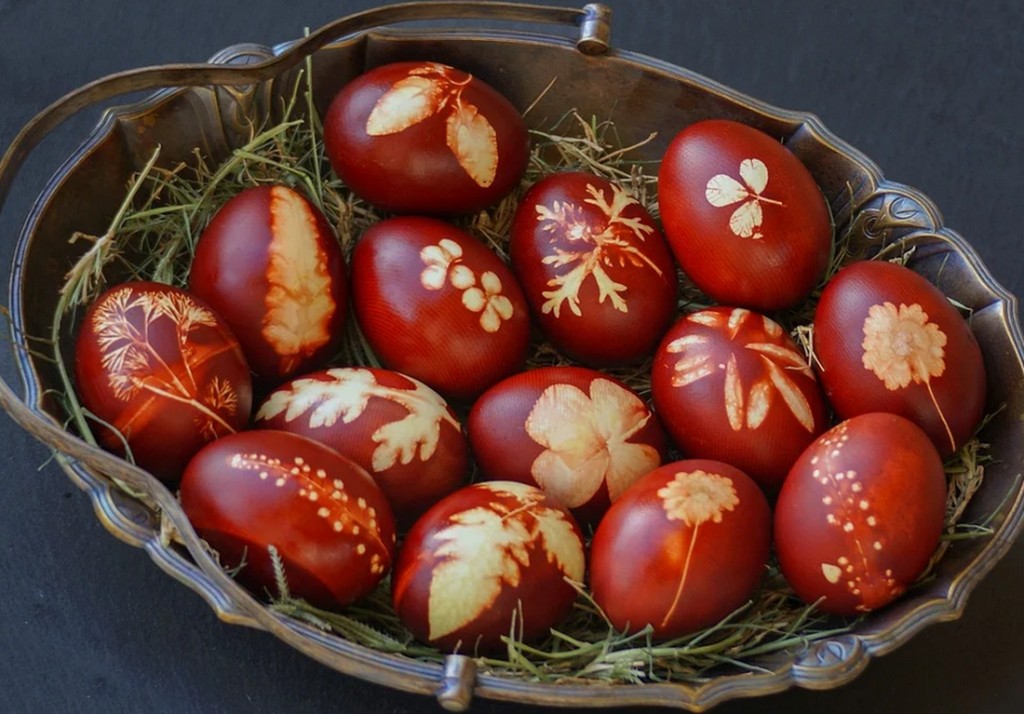
Red eggs are dyed (traditionally on Holy Thursday). The red color symbolizes both Christ’s blood and the joy of resurrection, sorrow, and celebration held together.
Then comes the Epitaphios on Good Friday: a beautifully decorated bier representing Christ’s tomb, covered in flowers. In many places, the epitaphios is carried through the streets in a procession. People follow with candles: some pass under it as a gesture of blessing.
Resurrection night (Holy Saturday) is the moment many travelers remember for life.
Near midnight, churches fill. We hold unlit candles, waiting. Then the flame spreads, one candle lighting another, and suddenly the crowd glows.
At the moment of Resurrection, we hear:
- “Christos Anesti.” (Christ is Risen.)
- and the response: “Alithos Anesti.” (Truly, He is Risen.)
Fireworks often crack the sky, especially in towns where the celebration is exuberant. And after church, we go to eat, because fasting has ended.
The traditional first meal is often magiritsa, a soup that can be challenging for the uninitiated (it’s typically made with lamb offal and greens). Some families now do alternatives, but the idea remains: this is the “break-fast” meal, eaten late at night with the feeling that time doesn’t matter.
And of course, we crack red eggs, tsougrisma, tapping egg against egg. The one who ends up with the uncracked egg is “lucky.” Or at least gets bragging rights until dessert.
Easter Sunday: Spit-Roasting, Music, And All-Day Visiting
Easter Sunday is the big daytime celebration. In many homes and villages, the star is spit-roasted lamb (or goat), turning slowly for hours. The smell carries down streets, and you can usually locate the party without needing Google Maps.
But Easter Sunday isn’t only about the lamb. It’s about movement and visiting:
- relatives dropping by unannounced,
- plates constantly refilled,
- toasts that start early and somehow remain coherent,
- music, sometimes recorded, sometimes live.
In villages, we may see dancing in the yard or the square. In cities, families often travel to the countryside for the day. Either way, it’s communal. If we’re invited, we should accept if we can, and come hungry.
Among all Greek holiday customs and traditions, Easter is the one that most clearly shows how Greece blends faith with daily life. It’s theology, yes. But it’s also neighborhood, food, scent, sound, and that very Greek promise: no one celebrates alone.
Name Days, Patron Saint Feasts, And Village Panigyria
Visitors often plan around birthdays. Greeks often plan around name days and patron saint feasts, and once we tune into that, a whole social calendar appears.
What A Name Day Celebration Looks Like
A name day is the feast day of the saint we’re named after. So if our name is Giorgos (George), Maria, Dimitris, Eleni, etc., we may celebrate on that saint’s day.
In many families, name days can be bigger than birthdays, especially for older generations.
A classic name day setup looks like this:
- The celebrant keeps the house open for visits
- Friends and relatives stop by without needing a formal invitation
- We offer sweets, coffee, and maybe a small drink
- And we say “Chronia Polla” until it starts to sound like a song.
If we’re guests, we might bring a small gift, flowers, a box of sweets, or a bottle of wine. Nothing dramatic. The point is the visit.
Panigyri Traditions: Liturgy, Food Stalls, Dancing, And Donations
A panigyri is a festival tied to a saint’s day, often in villages, islands, and pilgrimage sites. And it’s one of the most authentic ways to experience Greek holiday customs and traditions because it doesn’t exist “for tourists,” even when tourists attend.
A panigyri commonly includes:
- Divine Liturgy (often the center of the day)
- a procession with icons or relics (depending on the place)
- food stalls or community cooking (souvlaki, local dishes, sweets)
- music and dancing that can go late
- donations to the church or the organizing association (sometimes very visible, sometimes discreet)
Some panigyria feel like a neighborhood fair: others feel like a cultural deep-dive where local musicians play styles you won’t hear on a typical playlist.
How Traditions Differ By Region And Island
Panigyria vary dramatically by region:
- On some Aegean islands, we’ll see strong maritime connections and pilgrim traffic in summer.
- In mountain villages, we may find older dance forms and community-led organizations where everyone knows who cooked what.
- In city parishes, patron saint days are often more contained, with a church service, a procession around the block, maybe treats afterward.
What stays the same is purpose: the saint’s day becomes a socially acceptable reason to gather, feed people, and reaffirm “we’re here, together.” In Greece, that’s never a small thing.
Summer Holidays: Sea, Saints, And Community Homecomings
Summer in Greece isn’t only beach season, it’s reunion season. Villages repopulate, islands fill with returning families, and the calendar is packed with saints’ days, weddings, and food festivals.
Assumption Of Mary (August 15) And Pilgrimage Culture
August 15 (the Assumption/Dormition of the Virgin Mary) is one of the biggest religious holidays in Greece, sometimes called the “Easter of summer.”
Many places hold major celebrations, but it’s especially powerful in pilgrimage destinations. People travel to monasteries and churches dedicated to Panagia (the Virgin Mary), often walking part of the way as an act of devotion.
On islands, August 15 can feel like the whole community is involved:
- church services and icon processions
- fireworks or concerts
- tables set up outdoors
- visitors welcomed as if they belong (because, for the day, they sort of do)
If we’re traveling, then we should expect crowds, and also expect some of the most moving, heartfelt celebrations we’ll see all year.
Wedding Season Customs: Koumbaros, Crowns, And Favours
Greek summer is also wedding season, and even if we’re not attending one, we’ll hear about them constantly.
Some classic customs include:
- the koumbaros/koumbara (best man/woman, but with a deeper spiritual role, often also the godparent of future children).
- The stefana (wedding crowns) are placed on the couple’s heads and exchanged during the ceremony, symbolizing unity and honor.
- Favours (small gifts for guests), which can range from sugared almonds (koufeta) to modern personalized keepsakes.
Weddings often blend tradition and modern taste. We might see a very old Orthodox ceremony followed by a reception that looks contemporary, but still runs on Greek time (late) and Greek portions (large).
Harvest And Food Traditions: Grapes, Wine, And Local Festivals
Late summer and early fall bring harvest rhythms, especially grapes and wine in many regions.
Local festivals might celebrate:
- grape harvests
- wine production
- specific regional products (figs, honey, olives, chestnuts, depending on where we are)
These events often include tastings, music, and community fundraising. And they remind us that Greek holiday customs and traditions don’t only come from church calendars, they come from the land. A good year of grapes is not just agricultural news: it’s social optimism.
National Commemorations And Modern Public Rituals
Not all Greek public holidays are religious. National commemorations have their own rituals, parades, speeches, and flag displays, and they often overlap with faith in a way that feels uniquely Greek.
Ohi Day (October 28) And Community Parades
Ohi Day (October 28) commemorates Greece’s refusal (“Ohi” means “No”) to an ultimatum in 1940, marking Greece’s entry into World War II.
Across the country, we’ll see:
- school parades with students marching
- local officials and community groups participating
- flags on balconies and public buildings
In many towns, it’s not a flashy military spectacle; it’s a community memory ritual. Families line streets, grandparents explain the meaning to kids, and the day becomes a lesson in identity.
Independence Day (March 25) And Faith-Patriotism Overlap
March 25 is Greek Independence Day, tied to the 1821 revolution against Ottoman rule. It also coincides with the Annunciation in the Orthodox Church.
That dual meaning creates a strong overlap between faith and national story:
- church services
- official ceremonies
- parades (often larger than Ohi Day)
We can feel how historical narrative and religious calendar reinforce each other here, one holiday, two forms of belonging.
How Schools, Cities, And Diaspora Communities Observe Them
Schools play a major role in these national holidays; performances, recitations, and classroom preparations are part of the ritual. In cities, we might see bigger official events: in smaller places, the whole day feels more intimate.
And Greek diaspora communities often keep these commemorations alive abroad with:
- church-based gatherings
- cultural associations
- school programs and dance performances
In other words, these aren’t “only in Greece” holidays. They travel with a Greek identity, and they adapt, just like everything else.
Holiday Etiquette For Visitors: Do’s, Don’ts, And Thoughtful Participation
Joining Greek holiday customs and traditions as visitors is absolutely possible; most Greeks will be delighted that we’re curious. But a little etiquette goes a long way, especially around church, invitations, and fasting periods.
Greetings, Gift-Giving, And Hosting Norms
A few easy wins:
- For New Year’s: “Kali Chronia” (Happy New Year)
- For general celebrations: “Chronia Polla” (Many years)
- For Easter: “Christos Anesti” / “Alithos Anesti”
If we’re invited to a home during a holiday, we should bring something modest:
- a box of sweets from a bakery
- wine or spirits
- flowers (unless we know the host prefers something else)
And when offered food or drink, refusing repeatedly can come off as cold. If we truly can’t, we can soften it: “Efcharisto, maybe later,” with a smile.
Dress, Church Courtesy, And Photography Considerations
Church etiquette matters most during Holy Week, name day liturgies, and major feasts.
What to do:
- dress neatly and modestly (especially shoulders and very short skirts/shorts in more traditional areas)
- follow the crowd, stand where others stand, move when they move
- keep voices low: silence is part of the experience
Photography: In many churches, photos are tolerated; in others, they’re not allowed, especially with flash during solemn moments.
Our rule: if the moment feels sacred, we treat it that way. We can take one or two respectful photos and then put the phone away. We’ll remember more that way anyway.
Food And Drink Etiquette: Toasts, Fasting Days, And Sharing
Holiday food in Greece isn’t just “served.” It’s shared.
- Wait for the host to guide us, especially with toasts.
- If someone says “Stin ygeia mas” (To our health), we clink glasses lightly and make eye contact.
During fasting seasons (like Great Lent), some families follow strict rules and others don’t. If we’re guests, we don’t debate it. We simply eat what’s offered, and if we’re hosting or bringing food, it’s thoughtful to ask whether they’re fasting.
One more subtle point: Greeks often express generosity through abundance. Complimenting the food is good: taking a little more when encouraged is also part of the dance. And yes, we may hear: “Eat, eat.” even when we physically can’t. That’s tradition too.
Conclusion
Greek holiday customs and traditions are less about perfect knowledge and more about participation, showing up, accepting the offered sweet, standing quietly when the candlelight spreads, and understanding that the calendar is really a map of relationships.
When we travel through Greece season by season, we see the same themes repeating in different accents: Orthodox ritual, local patron saints, philoxenia, and strong community memory. Christmas brings the home close: Carnival turns the volume up: Easter opens the streets: summer reunites villages: national days stitch history into public life.
If we want the richest experience, we don’t need to chase every “must-see” event. We just need to say yes to the invitation in front of us, whether that’s a child singing kalanda at our door, a Clean Monday picnic, or a village panigyri that starts with liturgy and ends with dancing. In Greece, that’s not tourism. That’s the real calendar.
Frequently Asked Questions about Greek Holiday Customs and Traditions
What are Greek holiday customs and traditions shaped by?
Greek holiday customs and traditions are shaped mainly by Orthodox Christianity and the church (liturgical) calendar, plus local patron saints, family networks, and philoxenia (hospitality). Regional identity matters too—an island harbor, a mountain village, and an Athens parish can celebrate differently while sharing the same core rhythm.
How is Christmas celebrated in Greece, and how long does the season last?
In Greece, Christmas is a season, not just December 25. It stretches from early December through Epiphany (January 6). Expect kalanda carols (Dec 24, often also Dec 31 and Jan 5), family baking, christopsomo (decorated bread), St. Basil gift-giving on Jan 1, and Epiphany water blessings.
What is vasilopita, and what does the hidden coin mean?
Vasilopita is the Greek New Year’s cake (or sweet bread) cut on January 1 for St. Basil’s Day. A coin is baked inside, and slices are often cut in a set order (for Christ, the home, then family members). Whoever finds the coin is believed to have extra luck all year.
What happens on Epiphany (Theophany) in Greece?
Epiphany on January 6 closes the Christmas cycle with the Blessing of the Waters. In coastal towns (and anywhere with a river or lake), a priest throws a cross into the water, and divers jump in to retrieve it. The person who brings it back is said to receive a special blessing.
What is Apokries in Greece, and what do people do on Clean Monday?
Apokries is the Greek Carnival season—a build-up of costumes, parades, satire, and social nights out before Lent. It culminates in Clean Monday (Kathara Deftera), when families fly kites and eat Lenten picnic foods like lagana bread, taramosalata, olives, beans, and seafood such as octopus or squid.
How can visitors join Greek holiday customs and traditions respectfully?
Say yes to invitations, but follow local etiquette: dress neatly (especially in church), keep voices low during services, and be cautious with photos—avoid flash in solemn moments. Bring a modest host gift (sweets, wine, flowers) and don’t repeatedly refuse food; a polite “Efcharisto, maybe later” works well.
See more in Greece Tours:
- Greek Festivals To Experience: A Seasonal Guide To Culture, Food, Music, And Traditions
- Greek Ferry Booking Tips: How To Find The Best Routes, Seats, And Prices
- Greek Art And Museums Guide: What To See, Where To Go, And How To Plan
- Food Markets To Visit In Greece: A City-By-City Guide For Hungry Travelers
- Famous Greek Architecture Explained: Styles, Structures, And Lasting Influence
- What Is The Best Greek Island For Over 50s? A Practical, Evidence-Based Review
- Exploring Greece By Public Transport: A Practical Guide For Independent Travelers
- Eco Friendly Accommodations In Greece: Where To Stay Sustainably On The Mainland And Islands
- Cycling Routes In Greece: The Best Rides By Region, Season, And Skill Level
- Cultural Etiquette For Greece Visitors: A Practical Guide To Polite Travel