
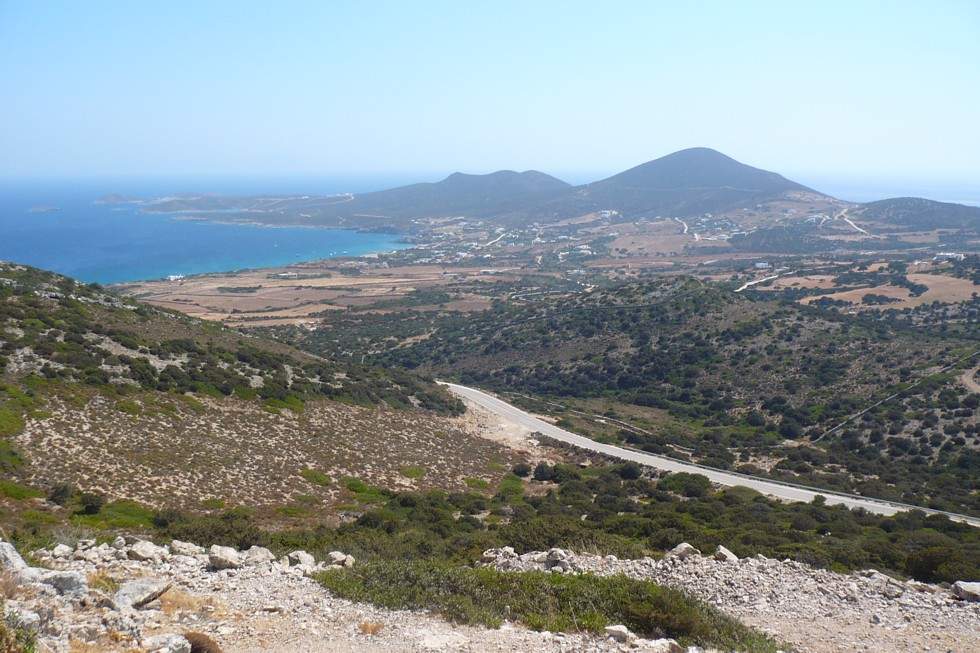
Glyfa beach sits on the southern coast of Antiparos, a long stretch of coarse golden sand facing east across the channel toward the neighbouring island of Paros. It lies about three and a half kilometres from the main town, in a rural setting reached by a paved, easy road. The sea here is shallow, calm and very clear, and the mood is laid-back rather than busy. There are no beach bars or shops on the sand, only trees behind the beach that give shade in the hottest hours. Plan a slow, family-friendly day by this quiet bay with My Greece Tours.
Glyfa rewards travellers who want a calm swim, a clear view over the water to Paros, and space to spread out away from the crowds. It suits families with children, who can play on the sand and paddle in the gentle shallows. The sections below cover where the beach is and how to reach it, and what the sand and sea are like. They also explain the facilities you will and will not find, why it works so well for families, and how it fits into a wider island trip. Set your day in context with our Antiparos travel guide.
Where is Glyfa beach on Antiparos and how do you reach it?
Glyfa lies on the southern part of Antiparos, about three and a half kilometres from the town, facing east toward Paros. A paved, easy road leads to it, so you can arrive by car, scooter or bike.
Glyfa occupies a stretch of the southern coast of Antiparos, set in a rural landscape away from the built-up centre of the island. It faces east, looking across the narrow channel toward the neighbouring island of Paros, so the water in front of you is the calm strait rather than open sea. The distance from the main town is about three and a half kilometres, close enough for an easy outing yet far enough to keep the beach quiet. The setting is open and natural, with low ground behind the sand and a clear line of sight over the water.
This position, tucked on the sheltered side of the island, is a large part of why the bay stays so calm.
Reaching Glyfa is straightforward because a paved, easy road runs all the way to the beach. You can drive there by car, ride a scooter, or cycle if you prefer to travel under your own power, and the smooth surface makes the trip comfortable in each case. The short distance from the centre means the journey takes only a few minutes once you are on the road south. Parking is informal, on the open ground behind the sand, in keeping with the rural, undeveloped character of the spot.
Travellers weighing up how to get around the island for the day can turn to our guide on Antiparos car rental, which explains the options for exploring the southern coast at your own pace.
The beach sits a little way out of town, so it helps to bring what you need for the day rather than expecting to buy it on arrival. Water, snacks, sun cover and a beach mat are all worth packing before you set off down the coast road. The road itself is the easy part; the reward is a bay that feels removed from the bustle yet remains a short hop from the centre of the island. Travellers who base themselves near the town can slip down to Glyfa in the morning and be back for lunch or an evening stroll without a long or tiring drive.
For a sense of the hub you would be leaving and returning to, see our full overview of Antiparos town and its harbour.
https://www.youtube.com/watch?v=AXlrRWXULrQ
What are the sand and sea like at Glyfa beach Antiparos?
Glyfa is a long stretch of coarse golden sand with a calm, laid-back feel. The sea is shallow, calm and very clear, and the view reaches across the water to Paros.
The shore at Glyfa is a long band of coarse golden sand, wide enough for visitors to spread out without crowding one another. The grains are on the coarser side rather than fine and powdery, which gives the beach a firm, walkable surface at the waterline. Behind the sand the ground is natural and open, and the overall impression is of an unspoilt bay left much as nature shaped it. The colour of the sand against the clear water and the outline of Paros beyond makes for a calm, uncluttered scene.
This is a beach for lying back and taking in the view, not for finding rows of loungers or organised sections, and its simplicity is exactly what draws people who want a quiet swim.
The sea is the highlight at Glyfa, and it defines the whole experience of the bay. The water is shallow, calm and very clear, so you can wade out a fair way while the seabed stays close beneath your feet. The bay looks onto the sheltered channel between Antiparos and Paros rather than the open Aegean, so the surface tends to stay gentle, with little of the chop you find on more exposed coasts of the island. The clarity of the water lets you see the sandy bottom clearly as you swim, which adds to the overall sense of safety and calm.
This combination of shallow, still and transparent water is unusual and prized, and it is the main reason the bay reads as relaxing rather than dramatic to most visitors.
Across the channel, the view over the water to Paros gives Glyfa a distinctive backdrop that plainer, quieter beaches on the island simply lack. You swim or sit with the neighbouring island framed on the horizon, its coastline catching the light and changing tone through the course of the day. The scene shifts gently as the sun moves across the strait, so the same bay looks different in the early morning and in the late afternoon. This open outlook, paired with the calm shallows and the coarse golden sand underfoot, gives the whole beach a settled, restful character.
To map out which shores to visit around the island, our roundup of Antiparos beaches places Glyfa alongside the other bays worth a morning of your time.
What facilities does Glyfa beach have?
Glyfa is not heavily developed and has no beach bars or shops on the sand. It offers a natural, quiet setting, with trees behind the beach that give shade in the hottest hours.
Glyfa is deliberately undeveloped, and that character shapes what you should expect from a visit before you arrive. There are no beach bars, tavernas or shops directly on the sand, so you will not find drinks, food or rented loungers waiting for you anywhere at the shore. What the beach offers instead is a natural, quiet setting, kept close to how nature made it and free of clutter. For travellers this means a little planning ahead: bring your own water, snacks and shade if you want them, and treat the day as a self-contained outing. The absence of commercial services is not a shortcoming here but the very point of the place.
It keeps the bay peaceful and preserves the open, unspoilt feel that sets Glyfa apart from the busier, built-up beaches of the island.
The one natural amenity the beach does provide is welcome shade during the day. Trees stand behind the sand and cast useful shadow through the hottest hours, giving families and swimmers somewhere to cool off between dips without any need for a beach club or umbrella hire. This pocket of shade is genuinely valuable on a warm afternoon and is part of what makes Glyfa comfortable for a longer, unhurried stay. Setting up near the tree line lets you keep bags, children and belongings out of the strongest midday sun.
With facilities kept to a minimum, this natural cover becomes the anchor of your spot on the beach, and it rewards arriving early enough in the morning to claim a good shady patch of your own.
Glyfa has no services of its own, so the practical answer is to stock up before you go and to base yourself somewhere with easy access to supplies and comforts. A short drive back to the centre of the island covers food, drink and anything you happened to forget to pack. Choosing a base with this in mind makes the undeveloped southern beaches far easier to enjoy, and our guide to where to stay in Antiparos weighs up the areas that put quiet bays like Glyfa within a comfortable reach. With a well-chosen base and a packed cool bag, the lack of on-sand facilities quickly becomes a feature of the day rather than a hurdle to work around.
A little forethought turns the empty shore into a real luxury of space and quiet.
Is Glyfa beach on Antiparos good for families and children?
Glyfa is ideal for families and children. The shallow, calm, clear water is easy for young swimmers, the coarse sand is good for play, and natural shade behind the beach helps during the hottest hours.
Glyfa is well suited to families, and the reasons come down first to the water. The sea is shallow and calm, so young children can paddle and swim close to shore while parents keep an easy, relaxed watch over them. The bay faces the sheltered channel toward Paros, so the surface stays gentle, without the waves and sudden depth that turn beaches into nervous outings with small children. The clear water also lets you see the seabed plainly as they play, which adds to the overall sense of safety at the shore.
This gentle, transparent, shallow sea is the single strongest argument for bringing children to Glyfa, and it turns a swim into a relaxed family activity rather than a constant worry about the conditions.
Beyond the swimming itself, the beach gives children plenty to do on the sand. The long stretch of coarse golden sand is good for building, digging and running about, and the open, natural setting gives families the room to spread out and settle in for a full day. The trees behind the beach provide shade through the hottest hours, so children can retreat from the sun between swims while parents keep bags and picnics cool. Together the calm shallows, the roomy sand and the natural shade make Glyfa a genuinely practical choice for a family day out.
It has both the space and the gentle conditions that make a long stay with young children comfortable and unhurried rather than a rush from one thing to the next.
Families who prefer quiet beaches to busy ones will find that Glyfa fits neatly with the other calm bays on this side of the island. It stays quieter and less crowded than the busier beaches, which suits a slower family rhythm of swim, play, shade and repeat through the day. Pairing it with a second gentle bay makes for an easy day of beach-hopping without long drives, and nearby Soros beach is a natural companion for families who want another sandy, sheltered spot within the same outing. Planning a couple of these quiet bays into one day gives children some variety while keeping the whole trip calm, gentle and easy to manage.
The short distances between the southern beaches mean the switch from one to the next never eats into the day’s swimming time.
How does Glyfa compare with the busier beaches of the island?
Glyfa stays quieter and less crowded than the busier beaches. It trades bars, shops and lively crowds for a natural, peaceful setting with shallow, clear water and a calm view across to Paros.
The clearest way to place Glyfa is against the island’s livelier beaches. Where the popular bays draw crowds, cluster with beach bars and buzz with activity, Glyfa keeps to a quiet, natural character and stays less crowded through the day. The sand is not lined with loungers or ringed by shops; the scene is open and undeveloped, and the loudest sound is usually the water. This makes the beach a retreat for anyone who finds the busier shores too much. The trade-off is real and worth understanding before you go: you give up the ready food, drinks and services of a developed beach in exchange for space, calm and an unspoilt outlook toward Paros.
For travellers who come chiefly to swim and unwind, that exchange is an easy one to make.
For many visitors that trade-off lands firmly in Glyfa’s favour without much hesitation. The reward for bringing your own supplies is a beach where you can hear yourself think, spread out on coarse golden sand, and swim in shallow, clear water without ever dodging crowds. The calm view across the channel to Paros gives the bay a restful quality that the busier, built-up beaches on the island cannot match. This suits slow mornings, unhurried family days and travellers who value quiet and peace over easy convenience. It is the kind of beach where the appeal quietly grows the longer you stay.
Nothing is competing for your attention, and the setting stays gentle and unspoilt from the moment you arrive to the very last swim of the day.
Fitting Glyfa into a trip is easy once you understand its rhythm and pace. The quiet southern bays are at their most rewarding when the wider island is at its calmest, so it helps to think carefully about timing alongside the choice of beach itself. Cooler, quieter stretches of the season leave these undeveloped shores feeling even more private, while the settled sea keeps the shallows gentle and comfortable for swimming. Our guide to the best time to visit Antiparos sets out when the island is at its calmest and warmest. That helps you line up a Glyfa day with the exact conditions that show this peaceful bay at its very best.
A calm, warm and settled spell is when the sheltered shallows and the clear view across to Paros feel most rewarding.
Frequently Asked Questions
Is Glyfa beach on Antiparos sandy or pebbly?
Glyfa is a sandy beach through and through. It is a long stretch of coarse golden sand rather than pebbles, which gives it a firm, walkable surface at the waterline and generous room for families to spread out along the shore. The grains sit on the coarser side rather than fine and powdery, but the beach still reads clearly and unmistakably as a sandy bay. Behind the sand the ground is open and natural, with trees that cast useful shade during the hottest hours of the day. The combination of coarse golden sand and shallow, clear water is exactly what gives Glyfa its calm, laid-back character.
The beach is undeveloped, so the sand is left much as nature shaped it, without organised sections, rented umbrellas or long rows of loungers. This suits travellers who want a simple, quiet swim and children who want plenty of space to build and play on the open sand.
Are there any tavernas or beach bars at Glyfa beach?
No, there are none. Glyfa is not heavily developed, and there are no beach bars, tavernas or shops directly on the sand at any point along the shore. The beach offers a natural, quiet setting rather than commercial services, which is a large part of its appeal for people who want peace away from the busier, built-up shores of the island. The practical result is that you should bring your own water, snacks and anything else you need for the day, and treat the visit as a self-contained outing from start to finish. The one natural comfort the beach provides is shade from the trees standing behind the sand, which helps a great deal during the hottest hours.
For food, drinks or supplies you will need to return toward the centre, only about three and a half kilometres away by the paved road. Basing yourself with easy access to the town makes enjoying this undeveloped bay far simpler, so a little planning ahead goes a long way here.
How far is Glyfa beach from Antiparos town?
Glyfa lies about three and a half kilometres from the main town, on the southern part of the island. A paved, easy road connects the two, so the trip is short and comfortable whether you go by car, scooter or bike. The modest distance keeps the beach close enough for an easy morning outing yet far enough to preserve its quiet, rural feel away from the bustle of the centre. The road is smooth and direct, so you can slip down to the bay, enjoy a swim, and be back near the harbour for lunch or an evening stroll without a long drive.
The short hop also makes it easy to stock up in town before you set off, which matters at an undeveloped beach with no shops of its own. This balance of closeness and calm is part of what makes Glyfa such an easy addition to an island day.
Which island can you see from Glyfa beach?
From Glyfa you look east across a narrow channel to Paros, the larger island that sits just opposite this southern coast of Antiparos. The beach faces the sheltered strait between the two islands rather than the open sea, so the water you swim in is calm and the whole view is framed by the coast of Paros on the horizon. This outlook gives Glyfa a distinctive backdrop that plainer bays on the island simply lack, and the scene shifts gently through the day as the sun moves across the channel and the light changes.
The sheltered position is also the reason the sea stays shallow, calm and very clear, with little of the chop found on the more exposed coasts nearby. Watching the neighbouring island catch the light while you float in the still shallows is one of the quiet pleasures of this bay, and it pairs naturally with the beach’s peaceful, unspoilt and undeveloped setting.