
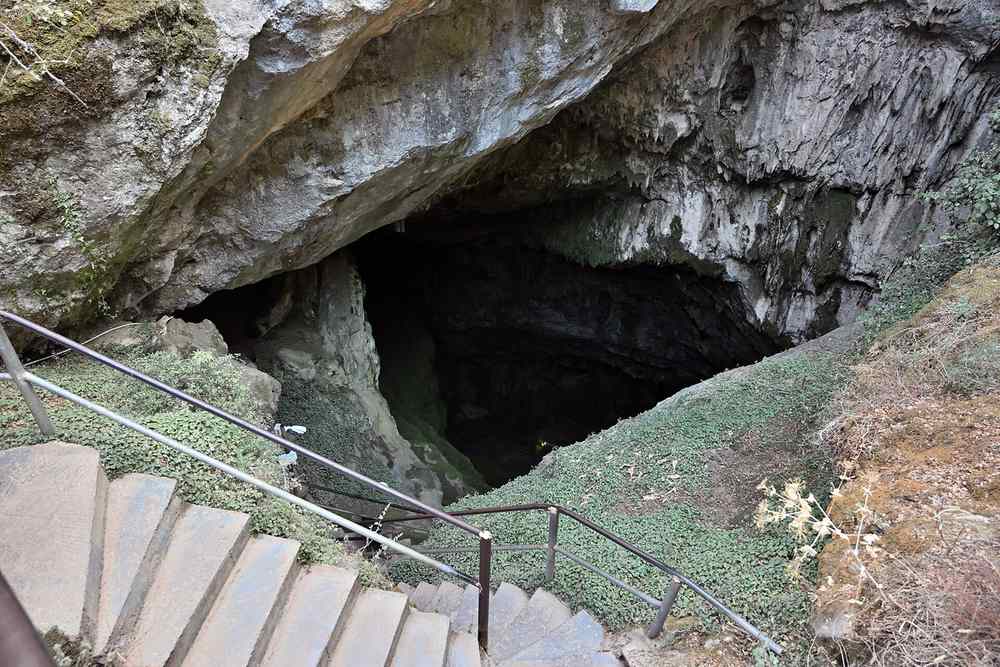
The Dikteon Cave is a sacred cave on the Lasithi Plateau in eastern-central Crete, above the village of Psychro, traditionally linked with Mount Dikti and celebrated in Greek myth as a birthplace of Zeus. It draws visitors who want to stand inside one of the island’s most storied Minoan cult places. Plan tickets and tours through My Greece Tours.
The cave sits within the wider Minoan world centred on the Palace of Knossos. The sections below cover what the Dikteon Cave is, why it is sacred, what has been found inside it, where it lies and how to visit, and what a Minoan cave sanctuary actually was.
What is the Dikteon Cave?
The Dikteon Cave is a sacred cave on the Lasithi Plateau in eastern-central Crete, set above the village of Psychro and linked with Mount Dikti. It is commonly identified with the Psychro Cave and served as a Minoan cult cave.
The Dikteon Cave is best understood as a natural limestone cavern that Minoan worshippers turned into a place of devotion. It opens on the slopes above the Lasithi Plateau, a high upland basin ringed by mountains in eastern-central Crete. The cave is commonly identified with the cavern at Psychro, and the two names are often used together in guidebooks and scholarship. Its fame rests on a blend of dramatic geology and deep religious memory, with stalactites and stalagmites framing chambers where people left offerings to their gods across generations of Minoan and later Greek practice on the island.
Inside, the cave divides into an upper chamber near the entrance and a lower chamber that descends to a small pool fed by dripping water. The descent is steep, and the play of light against the rock formations gives the lower hall a solemn character. This combination of upper and lower spaces, water and natural columns made the cavern feel set apart from ordinary life, which is exactly why it was chosen for cult. Our guide to the Minoan religion covers how such places fit Minoan belief, and the next section covers why the cave was held sacred.
Why is the Dikteon Cave sacred?
The Dikteon Cave is sacred chiefly because Greek myth celebrates it as a birthplace of Zeus, where the goddess Rhea hid the infant from his father Cronus. That story, joined to long Minoan cult use, made the cavern a revered destination for pilgrims.
The cave’s sanctity flows above all from the myth of Zeus. Cronus, fearing he would be overthrown by his own children, devoured them at birth, so the goddess Rhea concealed the infant Zeus to save him. Cretan caves claim the honour of his birth or upbringing, and the Dikteon Cave stands among the most celebrated of them. Linking the cavern to the king of the gods gave it a prestige that reached far beyond the Lasithi Plateau, drawing dedications and reverence over a very long span of antiquity and embedding it firmly in the religious imagination of Crete.
Sanctity here was not only mythological but practical and habitual. Generations of worshippers climbed to the cave to leave offerings, pressing small dedications into the crevices among the stalactites and stalagmites. That steady, repeated act of devotion is itself evidence of how holy the site felt to the people who used it. The cave became a fixed point in the sacred landscape, a place where the divine seemed near and where contact with the gods could be sought. Our guide to Minoan peak sanctuary sites covers the open-air counterpart to cave worship, and the next section covers what has been found inside the cave.
Who were Amalthea and the Kouretes in the Zeus myth?
Amalthea was the goat, in one tradition a nymph, who nursed the infant Zeus in the cave, while the nymph Melissa fed him honey. The Kouretes were armed guardians who clashed their shields and spears to drown out his cries and hide him from Cronus.
The nursing of the hidden child gave the myth its cast of protectors. Amalthea, named in the tradition as a goat or as a nymph who kept a goat, suckled the infant Zeus in the darkness of the cavern, and one of her horns became the cornucopia, the horn that overflowed with fruit. Alongside her, the nymph Melissa is said to have fed the child honey drawn from the mountain bees, so that milk and honey together sustained the future king of the gods. These figures fixed the cave in memory as a nursery of the divine, a place where the greatest of the Olympian gods drew his first strength far from his devouring father.
Guarding the entrance stood the Kouretes, the armed young men, sometimes called the Curetes, whose task was to keep the child’s presence secret. Whenever the infant Zeus cried, the Kouretes leapt into a war dance, striking their bronze shields with their spears so that the clatter masked the sound and Cronus, listening from afar, heard only the din of arms. This noisy dance became a ritual echo in later Cretan worship, where armed dancers reenacted the guardianship at cult sites. The pairing of gentle nurses and clashing warriors gives the Dikteon Cave legend its distinctive shape, binding tenderness and violence into a single story of concealment.
These attendant figures matter because they turned a birthplace into a living cult drama that worshippers could reenact. The goat, the honey and the shield-clashing dance each supplied a concrete image that ritual could imitate, so devotion at the cave was never abstract. Pilgrims arriving on the Lasithi Plateau carried the whole cast in mind, and the offerings they pressed into the rock answered the same protective instinct that Amalthea, Melissa and the Kouretes embodied. The myth thus explains not only why the cave was holy but how its holiness was performed by the people who climbed to it over centuries of Cretan religious life.
What has been found in the Dikteon Cave?
Excavations in the Dikteon Cave recovered votive offerings left by worshippers, including bronze figurines, miniature double axes known as labrys, blades and other dedications. Worshippers pushed them into crevices among the stalactites, marking the cavern as a long-used Minoan cult place.
The finds from the cave form one of the richest pictures of cave worship in Crete. Archaeologists recovered votive offerings, the deliberate gifts that worshippers brought and left behind. Among them were bronze figurines, miniature double axes called labrys, blades and a range of smaller dedications. Each object stands for an act of devotion, a request, thanks or homage offered to the powers the worshippers believed dwelt in the cavern. Taken together, the assemblage shows that the site was visited repeatedly over a long period and that people invested real material value in their offerings there.
Where the objects were placed matters as deeply as what they were. Worshippers pushed dedications into the natural crevices among the stalactites and stalagmites, as though the rock itself were the recipient of the gift. This habit of inserting offerings into the living rock is characteristic of Minoan cave cult and helps confirm the cavern’s religious role. The double axe in particular is a recurring Minoan sacred symbol, and its appearance here ties the Dikteon Cave to the wider ritual world of the island. Our guide to the Heraklion Archaeological Museum covers where Cretan finds are displayed, and the next section covers how the cavern was explored.
How was the Dikteon Cave excavated and explored?
Early archaeologists explored the cavern late in the nineteenth century, clearing its chambers and recovering the votive offerings pressed into the rock. Their work established the cave as a Minoan cult site and moved its bronze figurines into study collections.
The modern story of the cave begins with the pioneers of Cretan archaeology who turned to Psychro once local finds began to surface. Villagers had long recovered bronze objects from the crevices, and reports of these dedications drew scholars up onto the Lasithi Plateau to examine the cavern methodically. The excavators cleared the upper and lower chambers, documented where offerings lay and lifted a wealth of bronze figurines, blades and miniature double axes from the fissures in the rock. Their careful recovery transformed the cave from a place of rumour and local memory into a documented sanctuary whose finds could be studied and compared with other Cretan sites.
Interpreting the site proved as important as digging it. The concentration of dedications in the lower chamber, especially around the pool and the great column formations, showed the excavators that worshippers had targeted the deepest and most dramatic parts of the cavern for their gifts. This distribution helped confirm that the descent into the earth was itself part of the ritual, a movement from daylight toward a sacred underground water. The recovered objects entered study collections and museum displays, where researchers could date the assemblage across the Bronze Age and into later antiquity and trace how long the cave held its sanctity.
The excavation also fixed the cave’s place in the wider argument over where Zeus was born. By producing a rich, datable body of cult material, the work at Psychro gave the Dikteon claim a solid archaeological footing that pure legend could not supply. The finds proved sustained worship over centuries, which is exactly what a genuine cult centre should show. That evidence lets modern visitors and scholars treat the cavern not merely as a mythic backdrop but as a real sanctuary whose stones and offerings record the devotion of the people who climbed the slope above Psychro across generations.
What are the chambers and the Mantle of Zeus formation?
The Dikteon Cave descends roughly one hundred metres through five chambers to a lower lake. Above that water hangs the great stalactite-and-stalagmite formation known as the Mantle of Zeus, the cavern’s most striking natural feature and a focus of its atmosphere.
The interior unfolds as a sequence of five chambers reached by a descent of roughly one hundred metres from the entrance to the lowest point. The upper part near the mouth is broad and lit from the opening, while the route then drops through narrowing halls toward the depths. Each chamber has its own character of columns, curtains of dripstone and pooled shadow, so the walk becomes a gradual movement from the ordinary world above into the enclosed dark below. This descent is not merely scenic; it mirrors the ritual journey that ancient worshippers made when they carried their offerings down toward the sacred water at the bottom of the cave.
At the deepest level sits the lower lake, a still pool fed by water dripping steadily from the rock overhead. Rising and hanging around it are the formations that give the cavern its fame, above all the great column called the Mantle of Zeus, a fused mass of stalactite and stalagmite that seems to drape over the lower hall like a cloak. The name ties the natural feature directly to the god of the birth legend, so geology and myth meet at the cave’s heart. Lit against the dark water, the formation supplies the solemn image that most visitors remember from the descent.
These natural features explain why the cavern was singled out for cult in the first place. The Minoans read meaning into extreme places, and a cave that plunged one hundred metres past looming stone columns to hidden water offered exactly the sense of the uncanny that drew worship. The five chambers gave the ritual a structured path, the lower lake supplied sacred water, and the Mantle of Zeus crowned the whole descent with a formation grand enough to feel divine. Understanding the shape of the cave therefore clarifies both its beauty for the modern visitor and its pull on the ancient devotees who filled its crevices with gifts.
Where is the Dikteon Cave and how do you visit?
The Dikteon Cave lies above the village of Psychro on the Lasithi Plateau in eastern-central Crete, tied to Mount Dikti. Visitors reach the village, then follow a stepped path down into the upper and lower chambers, where a pool sits at the lowest point.
Reaching the cave begins with the Lasithi Plateau itself, a striking high basin in eastern-central Crete dotted with villages and farmland. The Dikteon Cave sits above the village of Psychro, which serves as the gateway for visitors. From the village a walking path leads up the slope towards the cave mouth; the climb is the first stage of the visit and rewards walkers with views back over the plateau. The setting, ringed by mountains and traditionally tied to Mount Dikti, makes the approach a memorable part of the experience rather than a mere formality before the cave proper.
At the entrance, the route turns downward as steps and a path descend into the cavern. Visitors pass through the upper chamber and continue into the lower chamber, where a pool gathers the water that drips from the rock above. The descent can be steep and the surfaces damp, so sturdy footwear helps. Inside, the formations of stalactites and stalagmites give the chambers their atmosphere and recall the crevices where worshippers once left their gifts. Our guide to Knossos day trips covers how to pair the cave with other Cretan sites, and the next section covers what a Minoan cave sanctuary was.
Practical planning smooths the visit. The uphill approach from Psychro is steep enough that a mule or donkey can be hired for the climb to the cave mouth, a traditional option for those who prefer to save their legs for the descent inside. The Lasithi Plateau sits at real altitude, so mornings and shoulder seasons can be cool and the light in the cavern is dim; a layer for warmth and closed shoes with grip are the sensible choices. Allowing time for both the climb up and the stepped descent, rather than rushing, lets the setting and the chambers register as the ancient worshippers would have felt them.
What is a Minoan cave sanctuary?
A Minoan cave sanctuary is a natural cave used for religious worship and offerings during the Minoan period of Crete. These caves stood alongside peak sanctuaries as principal cult places, receiving votive dedications from worshippers who treated the cavern as sacred.
A Minoan cave sanctuary was a natural cavern adopted for worship rather than a built temple. The Minoans of Crete repeatedly chose dramatic places in the landscape for cult, and deep caves with their darkness, dripping water and strange formations were ideal. Worshippers entered these spaces to leave votive offerings and to seek contact with the powers they believed inhabited them. The Dikteon Cave is a leading example of the type, though it was one of the caverns across the island. The cave sanctuary shows how closely Minoan religion was bound to the natural world rather than confined within architecture.
Cave sanctuaries did not stand alone in Minoan religious life. They worked alongside peak sanctuaries, the open-air cult sites set on prominent hilltops, so that high places and deep places both served devotion. Together these forms reveal a religion that read meaning into the extremes of the Cretan landscape. The pottery and craft of the period, including fine wares such as Kamares ware, belong to the same Minoan culture that filled these caves with offerings. Plan your visit and tours through our Palace of Knossos guide.
How does the Dikteon Cave differ from the Idaean Cave?
The Idaean Cave on Mount Ida rivals the Dikteon Cave as a claimed birthplace of Zeus. Ancient tradition split the story, honouring Dikti as the birth site and Ida as where the child was reared, though the two claims overlap and blur across the sources.
Crete carries more than one candidate for the birth of Zeus, and the chief rival to the Dikteon Cave is the Idaean Cave high on Mount Ida in the centre of the island. Ancient writers did not agree neatly, and the tradition often divided the roles between the two caverns, treating Dikti as the place of birth and Ida as the place where the growing god was nursed and hidden. Other sources reversed or merged the claims, so the two caves have long been entangled in the same body of myth rather than cleanly separated. This rivalry is itself part of the Dikteon Cave’s story and reputation.
The two sanctuaries also differ in setting and character. The Idaean Cave lies at greater altitude on the massif of Mount Ida, reached by a long mountain approach, while the Dikteon Cave opens above Psychro on the enclosed farmland basin of the Lasithi Plateau. Both produced rich votive assemblages that confirm sustained cult, so archaeology treats each as a genuine sanctuary rather than favouring one over the other. The parallel underlines a wider truth about Cretan religion: the island held more than one holy cave, and the birth of Zeus attached itself to the grandest of them wherever dramatic geology invited worship.
For the visitor, the distinction is worth keeping straight. A trip to the Dikteon Cave above Psychro is not the same as a visit to the Idaean Cave on Mount Ida, even though both trade on the same legend. Knowing that the tradition split the birth and the rearing between the two helps make sense of the overlapping claims found in guidebooks and ancient texts alike. The Dikteon Cave holds its place as one of the foremost claimants, and its combination of accessible plateau setting, dramatic chambers and documented offerings keeps it among the most visited of Crete’s sacred caves.
Frequently Asked Questions
Is the Dikteon Cave the same as the Psychro Cave?
The Dikteon Cave is commonly identified with the Psychro Cave, and in everyday usage the two names refer to the same cavern above the village of Psychro on the Lasithi Plateau. The identification is traditional rather than certain and has sometimes been debated by scholars. The ancient sources speak of a Dictaean cave linked with Mount Dikti, and over time that cave came to be associated with the cult cavern at Psychro.
Guidebooks, signs and tours therefore treat them as one and the same, and visitors looking for the Dikteon Cave will be directed to Psychro. When you read about the site, expect both names, and understand that the link is the accepted convention. It remains a point that specialists continue to discuss rather than an established fact beyond all doubt.
Why is the Dikteon Cave linked with the birth of Zeus?
The link comes from Greek myth, which tells how the goddess Rhea saved her son Zeus from his father Cronus. Cronus, warned that one of his children would overthrow him, swallowed each at birth, so Rhea hid the infant Zeus away to keep him safe. Crete features strongly in these stories as the place where the future king of the gods was concealed and reared, and the Cretan caves each claim a share in the tale.
The Dikteon Cave, tied by name to Mount Dikti, is among the most celebrated candidates for the birthplace, which is why it carries such mythological weight. This association lifted the cavern far above an ordinary cult site, giving it a prestige rooted in the highest level of Greek divine story. The myth, paired with the cave’s long record of worship and offerings, explains its enduring reputation as one of Crete’s most sacred places.
What can visitors expect to see inside the Dikteon Cave?
Visitors descend into a cavern divided into an upper chamber near the entrance and a lower chamber that drops to a pool fed by water dripping from the rock. The interior is shaped by stalactites and stalagmites, the natural stone formations that give the cave its dramatic and solemn atmosphere, crowned by the great column known as the Mantle of Zeus above the lower lake. The path and steps lead steadily downward, and the surfaces can be damp, so careful footing and sturdy shoes are sensible.
Beyond the geology, the cave carries the memory of its ancient use, for this is where worshippers once pressed votive offerings such as bronze figurines and miniature double axes into the crevices among the formations. The objects themselves have largely been removed by excavation and are studied and displayed elsewhere. Standing inside the chambers still gives a powerful sense of why the Minoans regarded the place as holy.
How long does a visit to the Dikteon Cave take?
A visit usually runs from about an hour to a little over ninety minutes once you reach the village of Psychro. The exact time depends on your pace on the slope and inside the chambers. The uphill approach from the village to the cave mouth is the first stage, and walkers who prefer to save their energy can hire a mule or donkey for the climb.
The stepped descent through the cave and the return back up take the rest of the time, and lingering at the lower lake beneath the Mantle of Zeus is well worth the extra minutes. The surfaces are damp and the light is dim, so moving carefully rather than quickly is the sensible approach. It is best to allow a relaxed half-day if you are pairing the cave with a wider tour of the Lasithi Plateau.
What should visitors bring or wear for the Dikteon Cave?
Closed shoes with a firm grip are the single most useful item. The stepped path descends steeply over stone that stays wet from the constant dripping inside the cave. The Lasithi Plateau sits at altitude, so a warm layer helps even in the warmer months, and the interior stays cool and dim whatever the weather outside.
Water and a little sun protection are worth carrying for the exposed climb up from Psychro, and those who would rather not walk the slope can arrange a mule or donkey at the village. A phone or camera captures the Mantle of Zeus and the lower lake, though the low light rewards a steady hand. With sturdy footwear, a layer for warmth and an unhurried pace, the descent into one of Crete’s most storied caves is comfortable for most visitors.