
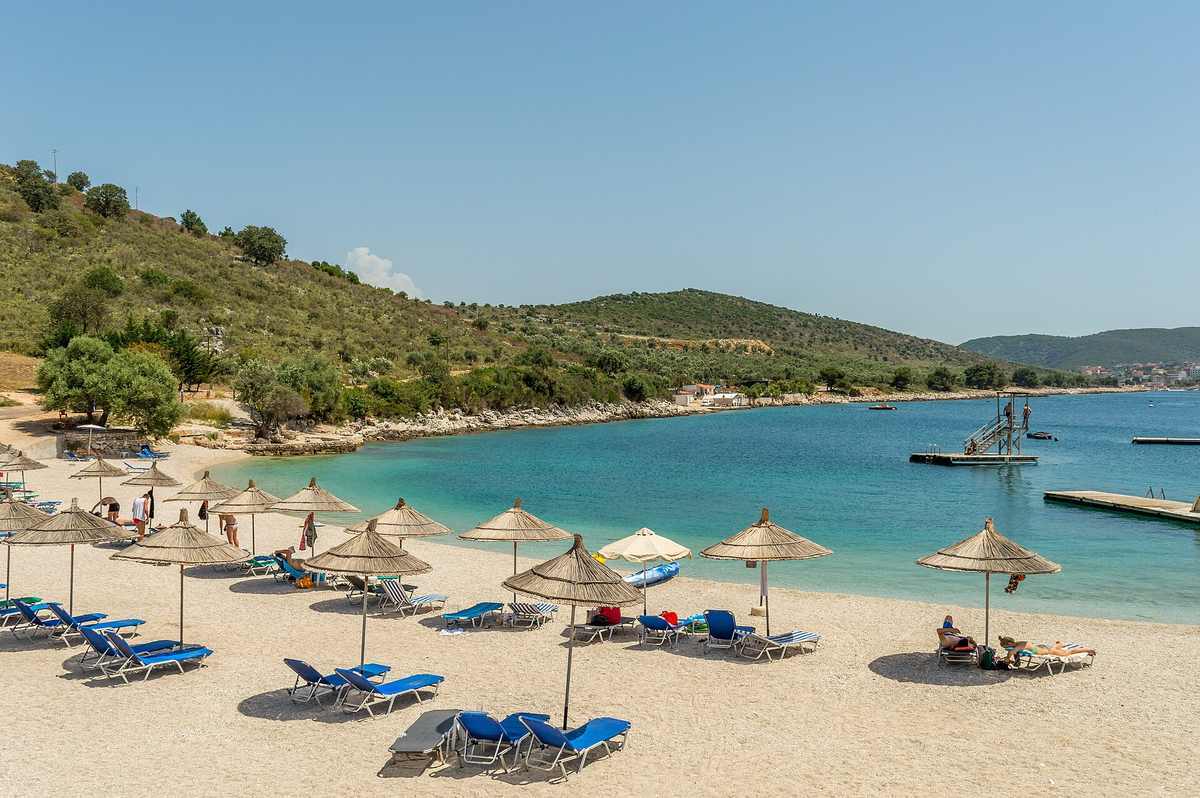
A Corfu to Albania day trip crosses the strait by fast ferry to the seaside city of Saranda and the UNESCO-listed ancient ruins of Butrint, just over an hour away. It pairs Roman and Venetian history with a different country in a single day. This guide covers the itinerary, what to see, the passport rules and how to book. Plan the whole trip with Greece Tours.
Albania is Corfu’s most rewarding cross-border excursion, a standout in the wider Corfu tours and travel guide. Saranda lies directly across the channel. The sections below cover the trip.
Is the Albania day trip worth it?
The Albania day trip is worth it for the UNESCO ruins of Butrint and the lively city of Saranda in one day. It adds a whole country to a Corfu holiday, with a short crossing and remarkable ancient history.
Few day trips offer such contrast for so little effort. From Corfu, a fast ferry reaches Saranda in just over an hour, opening up one of the Mediterranean’s finest archaeological sites at Butrint, where Greek, Roman, Byzantine and Venetian remains lie layered in a green national park. Saranda itself is a buzzing seaside city with a long promenade, cafés and a relaxed energy quite distinct from Corfu’s. Travellers gain a passport stamp, a sense of a fast-changing country and a day of genuine discovery, set within the wider Corfu boat tours. The crossing is quick and easy.
How do you get there?
You cross from Corfu port to Saranda by fast hydrofoil in about 1 hour 15 minutes, or by car ferry in roughly double that. Organised tours bundle the ferry, a coach to Butrint, a guide and lunch.
The journey is short and scenic. Fast passenger ferries and hydrofoils run from Corfu’s new port across the narrow strait to Saranda in around 1 hour 15 minutes, gliding along the Albanian coast, while the conventional car ferry takes about twice as long. In strong winds the hydrofoil may be replaced by the slower boat, so allow flexibility. Most visitors join an organised day tour, which bundles the return ferry, a coach transfer to Butrint, a licensed guide and often lunch in Saranda; independent travellers can simply book ferry tickets and explore at their own pace. Booking a tour at least two days ahead is wise, set out alongside the guide to how to get to Corfu. Butrint is the highlight.
What is there to see at Butrint?
Butrint is a UNESCO World Heritage Site in a green national park, with layered Greek, Roman, Byzantine and Venetian ruins. Highlights include the ancient theatre, the temple of Asklepios, the Roman baths, a mosaic-floored baptistery and a Venetian tower.
Butrint is the reason most people make the trip. Occupying a wooded peninsula above a lagoon, the ancient city reveals layer upon layer of history along a shaded trail that takes roughly 90 minutes to two hours to walk. The route passes the well-preserved Greek and Roman theatre, the sanctuary and temple of Asklepios, the Roman baths, and the early Christian baptistery famous for its intricate mosaic floor, before climbing to a Venetian tower and the museum with sweeping views over the wetlands. The setting, alive with birdsong and water, is as memorable as the stones. A guide brings the layers to life, set out alongside the guide to the Old Fortress and Corfu’s own Venetian past. Saranda fills the rest of the day.
What is there to do in Saranda?
Saranda is a lively Albanian seaside city with a long waterfront promenade, beaches, cafés and shops. Day trips usually include lunch and free time here, used to stroll the seafront, swim, browse the stores or relax over a coffee before the ferry back to Corfu.
Saranda gives the trip its relaxed, urban contrast. Curving around a wide bay, the city has been transformed in recent years into a busy resort, with a palm-lined promenade, a town beach, and streets of cafés, bakeries and shops where prices are noticeably lower than on Corfu. Most organised tours serve lunch here after Butrint and leave a couple of hours of free time, enough to walk the seafront, take a dip, pick up souvenirs or simply sit with a frappé and watch the comings and goings. Those with more time can visit the nearby Blue Eye spring, set out alongside the guide to things to do in Corfu. A few rules matter before you go.
What do you need to know before going?
You need a valid passport, since Albania is outside the EU and you cross an international border, so carry it and leave ID cards behind. Albania uses the lek, though euros are widely accepted, and the time zone matches Greece. Book tours two days ahead.
A little preparation avoids problems at the border. Because Albania is not in the European Union, every traveller must carry a valid passport, not a national ID card, for the crossing, and the ferry company collects passports to clear immigration during the voyage. The currency is the Albanian lek, but euros are accepted in most tourist places, and the Butrint entry fee, if travelling independently, is paid in cash. Albania keeps the same time zone as Greece, so there is no clock change. Pack water, sun protection and comfortable shoes for the ruins, and book organised tours at least two days in advance as places depend on availability, set out alongside the guide to the best time to visit Corfu. The questions below cover the points travellers ask most.
Where does the ferry to Albania leave from?
The ferry to Albania leaves from Corfu New Port, on the north side of Corfu Town below the Old Fortress. Boats cross the narrow strait to the harbour at Saranda on the Albanian Riviera, a distance of about 16 nautical miles.
Corfu New Port sits a 10-minute taxi ride from the centre of Corfu Town and doubles as the main gateway for both international sailings and this cross-border run. Ferry counters open early, and organised tours meet passengers at the terminal before boarding. The same quay handles the cruise ships that dock here, so arrivals cluster in the morning around the Corfu cruise port.
Saranda, the Albanian end of the route, wraps around a broad bay directly opposite Corfu. The crossing hugs the coast of Kerkyra before striking across open water, and on a clear morning the mountains of the Albanian Riviera rise straight ahead. Passengers gather at the terminal 45 minutes before departure, since border checks and passport collection start on the quay rather than on board.
What else can you see near Saranda?
Near Saranda you can visit the Blue Eye spring, Lekuresi Castle above the city, and the beaches and islets of Ksamil. Longer tours add one or two of these stops to the core Butrint and Saranda itinerary when the ferry schedule allows.
The Blue Eye, or Syri i Kaltër, is a deep karst spring 22 kilometres inland, where cold water wells up through a vivid blue pool ringed by oak forest. The depth has never been fully measured. Lekuresi Castle, an Ottoman fort on the ridge above Saranda, gives the widest view over the bay and across to Corfu, and works as a sunset stop for travellers who stay a night rather than returning on the last ferry.
Ksamil lies 17 kilometres south of Saranda, a fishing village turned resort famed for white-sand coves and four small islets a short swim offshore. The water reads turquoise over pale limestone, and beach bars line the shore. A combined Butrint and Ksamil route pairs the ruins with an afternoon swim, a contrast that echoes the coastline of the Paxos day trip from Corfu.
How does the Albania day trip compare to other Corfu excursions?
The Albania day trip adds an international border crossing and a UNESCO site that Corfu’s Greek-mainland excursions lack. Parga and Paxos stay within Greece and need no passport, while Saranda and Butrint deliver a second country, lower prices and layered ancient ruins.
Corfu launches boat excursions in three directions, and the Albania run stands apart on scale and paperwork. The Parga day trip from Corfu reaches a Greek harbour town with a Venetian castle and no border formalities, ideal for travellers who want the sea and a shorter day. Butrint, by contrast, delivers a full archaeological park under UNESCO protection.
The trade-off is the passport control and the 1 hour 15 minute hydrofoil each way, which trims the time on the ground compared with a hop to a Greek island. In return the day buys a second country, prices below Corfu’s, and a monument that ranks among the finest in the Mediterranean. Travellers weighing the wider slate of Corfu boat tours often keep the Albania run for a clear-weather day, when the crossing is calm and the ruins photograph best.
What is a typical Corfu to Albania day trip itinerary?
A typical itinerary starts with an early hydrofoil from Corfu New Port to Saranda, border control on arrival, a coach transfer to Butrint for a guided walk of the ruins, lunch and free time in Saranda, and the return ferry in late afternoon.
The day runs to a tight rhythm. Departure falls in the morning, and the crossing lands in Saranda around an hour and a quarter later, after passports clear on the quay. A coach then carries the group 18 kilometres south to Butrint, where a licensed guide leads a walk of 90 minutes to two hours through the theatre, baths, baptistery and Venetian tower before the museum viewpoint.
Lunch follows back in Saranda, often at a waterfront taverna where the group regroups after Butrint. Free time of two hours rounds out the schedule, enough to walk the promenade, swim off the town beach or shop the lower-priced streets. The last hydrofoil back to Corfu departs in the late afternoon, returning travellers to the New Port before dusk. Building the day around one of the region’s Corfu boat tours keeps the timings reliable.
When is the best time for the Albania day trip?
The best time for the Albania day trip runs from May to October, when the hydrofoil sails daily and the sea stays calm. Spring and early autumn bring mild weather for walking Butrint, while high summer suits swimming at Ksamil and Saranda.
Sailing frequency drives the choice. From May to October the fast ferry runs every day, giving the widest pick of departure slots and the shortest crossing. Outside that window the schedule thins and winter storms can cancel the hydrofoil, so the trip works best inside the warm half of the year. The wider planning notes in the guide to the best time to visit Corfu apply here too.
Season shapes the day on the ground. May, June and September pair warm days with thinner crowds at Butrint, ideal for a shaded walk through the ruins without midday heat. July and August turn hot, which pushes the balance toward the beaches at Ksamil and a dip off Saranda. An early start beats both the heat and the queues at Butrint whichever month you pick, and a morning departure leaves the fullest afternoon in Albania.
What should you pack for the day trip?
Pack a valid passport, cash in euros or lek, water, sun protection and comfortable walking shoes. The trail through Butrint runs over uneven stone with little shade, and Saranda’s promenade invites a swim, so a swimsuit and towel round out the bag.
The passport tops the list, since Albania sits outside the EU and border control checks it on both legs of the crossing. Cash matters next: the Butrint fee for independent visitors and small purchases in Saranda run more smoothly with euros or lek than by card. A hat, sunscreen and a refillable water bottle handle the exposed ruins, where the walk lasts up to two hours.
Footwear makes the difference at Butrint, where worn marble and root-crossed paths reward sturdy shoes over sandals. A swimsuit and towel open up the town beach or the coves at Ksamil during free time, and a light layer takes the edge off the breeze on the return hydrofoil. Travellers planning the wider trip find the packing notes in the guide to things to do in Corfu carry across to the Albania run.
Frequently Asked Questions
Do you need a passport for the Corfu to Albania day trip?
You need a valid passport for the Corfu to Albania day trip, as Albania is outside the EU and you cross an international border. National ID cards are not accepted, and the ferry company collects passports during the crossing to clear immigration.
How long does the ferry from Corfu to Saranda take?
The fast hydrofoil from Corfu port to Saranda takes about 1 hour 15 minutes, while the slower car ferry takes roughly double that. In strong winds the hydrofoil may be replaced by the conventional ferry, so allow some flexibility in timing.
What is Butrint in Albania?
Butrint is a UNESCO World Heritage archaeological site near Saranda, set in a green national park, with layered Greek, Roman, Byzantine and Venetian ruins. Highlights include the ancient theatre, Roman baths, a mosaic-floored baptistery and a Venetian tower.
What currency is used in Albania?
Albania uses the lek. Euros are accepted in most tourist places around Saranda, Butrint and Ksamil, though change often comes back in lek. Independent visitors pay the Butrint entry fee in cash, so carry small notes for the day.
Can you visit Ksamil on the Corfu to Albania day trip?
You can visit Ksamil on longer Corfu to Albania day trips that pair it with Butrint. Ksamil sits 17 kilometres south of Saranda, with white-sand coves and small islets offshore. Shorter tours keep to Butrint and Saranda and skip the beach village.
Is the Corfu to Albania day trip worth it?
The Corfu to Albania day trip is worth it for the UNESCO ruins of Butrint and the seaside city of Saranda in one day. A short hydrofoil crossing adds a whole country, layered ancient history and prices below Corfu’s own.