
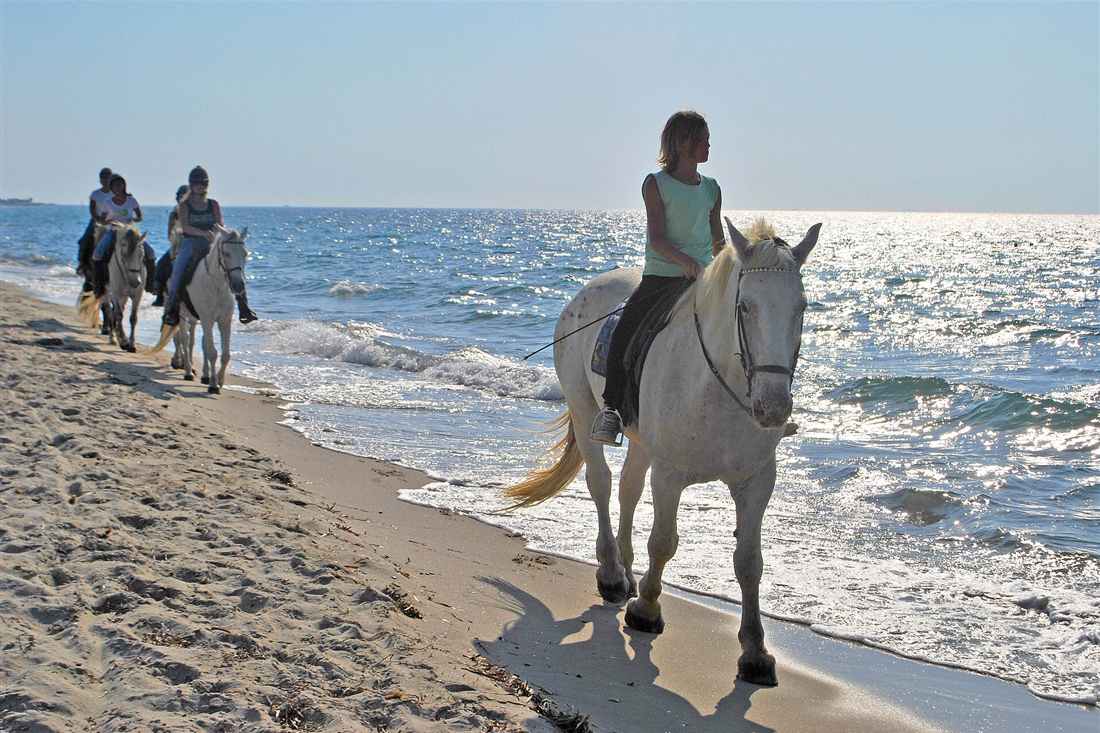
Corfu horse riding runs one to three hours from stables in the north and the centre of the island, through Venetian olive groves and hill tracks, and on a number of routes straight into the sea for a bareback swim. Plan the rest of the trip with Greece Tours.
This page covers the ride: where the stables sit and where the routes go, what it costs, whether experience is needed, the weight and age limits, the seasons, what to wear, which horses the island keeps, how it compares with a quad or a boat day, and how to book.
What is a corfu horse riding tour?
A guided ride of one to three hours from a stable on the island, on Arabian, Andalusian or Greek mountain horses, through olive groves, hill tracks and in some cases into the sea, in groups of two to eight riders.
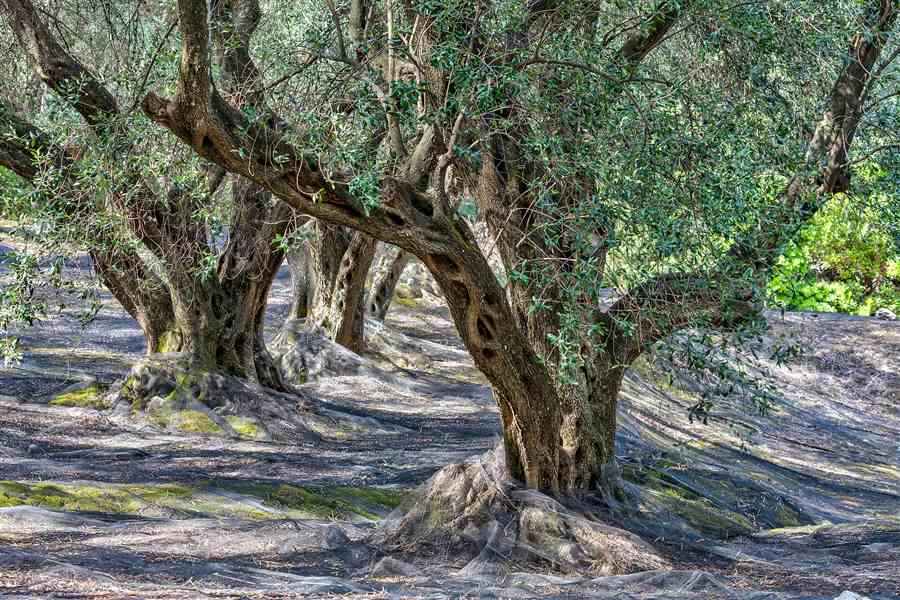
Corfu carries about four million olive trees planted under Venetian rule, and the riding tracks run between them on centuries-old field paths. That shaded canopy is what makes riding here work in July. The corfu horse riding stables state this at booking and put it on the voucher.
The stables sit mostly in the north and the centre: around Acharavi and Roda on the north coast, at Avlaki and Kassiopi in the north-east, in the Ropa valley in the middle of the island, and at Agios Georgios in the north-west. A corfu horse riding slot fills first on that count in July and August.
Every ride opens with a matching session. The stable puts the rider on a horse chosen for weight, height and experience, adjusts the stirrups, and walks a short loop before the group leaves the yard. The corfu horse riding season runs for it from April to early November.
Helmets are supplied and worn by everyone. Boots with a small heel are lent where a rider arrives in trainers, and long trousers are required on every stable on the island. A corfu horse riding stable carries the helmets and the water for it.
Where do the rides go on Corfu?
The Ropa valley for flat grassland gallops, the hills above Acharavi and Agios Spyridon for sea views, the olive terraces behind Paleokastritsa, and the beaches at Agios Georgios and Almyros where the horses enter the water.
The Ropa valley is the island’s only large flat plain, an alluvial basin in the centre used for hay and grazing. It is the one place on Corfu where a canter runs for more than a few hundred metres. Every corfu horse riding departure is planned around it before the group mounts.
The northern hill rides climb from sea level to 200 or 300 metres on forest track, with the Albanian coast and the Diapontia islets in view from the ridges. The corfu horse riding route is set by it more than by distance.
The beach rides use the long sand strips on the north and west coasts, where the shelf is shallow and the horses walk in to chest depth. This is the ride most visitors book and the one that fills first. A corfu horse riding booking starts with this settled at the yard.
The olive-grove routes behind Paleokastritsa and Liapades run on old mule paths between dry-stone terraces, shaded almost the whole way and passable in the middle of a summer afternoon. The corfu horse riding herd is chosen for it rather than for looks.
What does corfu horse riding cost?
From 35 to 55 euros for a one-hour ride, 60 to 90 euros for two hours, 90 to 140 euros for a half day with a beach swim, and 45 to 70 euros for a 45-minute lesson in an arena. Helmet and insurance are included.
The beach-and-swim rides sit at the top of the range because they take longer, need a quieter horse and involve tack that tolerates salt water. They run two to three hours in total. A corfu horse riding ride is sold on that, and the listing says so plainly.
Children’s pony sessions cost 20 to 35 euros for 30 minutes, led on foot by a groom, and they are the standard product for riders under six. Riders on corfu horse riding tracks meet it in the first ten minutes.
Transfers from the resorts are 10 to 20 euros a head return, or free on some stables for groups of four or more. The stables sit inland and few are walkable from a hotel. The corfu horse riding timetable is built on it rather than on the clock.
Nothing else is bundled. Photographs, drinks at the yard and tips are separate, and the smaller stables take cash rather than cards.
Do you need experience to ride on Corfu?
No. The trail rides take complete beginners at walk and trot with a guide leading, and the faster rides with canter sections are reserved for riders who can demonstrate control in the arena first.
The stables ask two questions at booking: how much you have ridden and what you weigh. Both decide the horse, and a wrong answer produces a mismatched pairing that spoils the ride. This is what corfu horse riding delivers between the olive groves and the sea.
Beginners get the older, steadier horses with the calmest temperament. These animals have walked the same tracks for years and a nervous rider does not unsettle them. That is the corfu horse riding difference against a quad or a boat day.
Experienced riders are offered an assessment loop in the arena or the paddock, and the guide opens up the pace only after it. On the Ropa valley rides that means a genuine canter across the flat. Guides brief it at the paddock before a corfu horse riding group leaves.
Lessons are available at the larger centres in dressage and general schooling, at 40 to 60 euros an hour with a qualified instructor, for visitors who ride at home.
What are the weight and age limits?
Riders are six and over for a led pony session, eight and over on a trail ride, and the weight ceiling runs 90 to 100 kilos on most Corfu stables, set by the horse assigned rather than by a single rule.
The ceiling protects the animal. A horse carries about 20 percent of its own bodyweight comfortably, so a 450-kilo horse takes a 90-kilo rider with tack and no more. The corfu horse riding season runs for it from April to early November.
Children under eight ride on a lead rein with a groom walking alongside, and a parent walks with them. No stable puts a small child on a trail ride unaccompanied. A corfu horse riding stable carries the helmets and the water for it.
Teenagers ride as adults from about fourteen, subject to the same assessment, and family groups are split across two guides when the abilities differ widely. It decides which corfu horse riding format fits the party.
The stables state the ceiling at booking and weigh nobody at the yard. Honest numbers keep the pairing safe and the ride pleasant.
When is the best time of year for riding on Corfu?
April to early June and September to early November. Spring gives green hills, wildflowers and 20 to 25 degrees, autumn gives warm sea for the beach rides, and July and August restrict riding to early morning and evening.
High summer reaches 33 to 36 degrees inland and the stables shut the middle of the day for the horses’ sake. The departures run 08:00 to 10:00 and again from 17:30. A corfu horse riding booking starts with this settled at the yard.
The Ropa valley floods in winter and the flat rides move to the hill tracks from December to February. The stables that stay open year round say which routes are running. The corfu horse riding herd is chosen for it rather than for looks.
Autumn is the quiet season and the best value. The tracks are dry, the sea holds 24 degrees into October, and the groups run two or three riders rather than eight. The corfu horse riding price reflects it, hour by hour.
Rain cancels a ride outright rather than shortening it, because the olive-terrace paths turn to slick clay. Stables reschedule or refund and publish the policy.
What do you wear for corfu horse riding?
Long trousers, closed shoes with a small heel, a helmet from the stable, sun cream and water. Shorts, sandals and flip-flops are refused, and swimwear under the clothes is needed only on the beach-and-swim rides.
Long trousers are the rule nobody expects in August. Bare legs rub raw against the saddle flap within twenty minutes, and the stables turn shorts away at the gate. The corfu horse riding timetable is built on it rather than on the clock.
Riding boots are lent in common sizes. Trainers work on the trail rides where the stirrup has a cage, and a smooth sole with no heel is the one combination refused. The corfu horse riding stables state this at booking and put it on the voucher.
Gloves help on a two-hour ride and are worth carrying. The reins chafe the base of the fingers on anyone who does not ride regularly. A corfu horse riding slot fills first on that count in July and August.
On the swim rides the saddle comes off and riders sit bareback in the water, so swimwear goes on under the clothes and a towel waits at the yard.
Which horses do the Corfu stables keep?
Arabians and Arabian crosses for the trail rides, Andalusians and Lusitanos at the schooling centres, Greek Skyros and Pindos ponies for children, and a mix of rescued island horses working the gentler routes.
Arabians suit the terrain. They are light, sure-footed on stone and heat-tolerant, which matters on a stony track at 30 degrees more than size or speed. Guides brief it at the paddock before a corfu horse riding group leaves.
A number of Corfu stables run rescue and rehoming programmes for working animals retired from farms, and part of the ride fee funds their feed and veterinary care. Every corfu horse riding departure is planned around it before the group mounts.
The Skyros pony is a rare Greek breed standing under 1.1 metres, kept at a small number of centres, and it is the animal the youngest children meet. The corfu horse riding route is set by it more than by distance.
Stables that publish their herd, their names and their ages are the ones worth booking. That transparency tracks closely with how the horses are kept.
How does riding compare with the other Corfu activities?
A ride covers 6 to 12 km of inland country a boat or a quad never reaches, takes one to three hours, and needs no licence. A quad covers more ground on road, and a boat covers the coast and the caves.
Riding is the quiet option. The tracks pass through olive groves, past shepherd huts and along terrace walls, with no engine noise and no queue at a beach. It decides which corfu horse riding format fits the party.
The quad and buggy routes take the mountain roads to Pantokrator and the west-coast viewpoints, which is a different island entirely. That version sits at Corfu ATV quad tour. A corfu horse riding ride is sold on that, and the listing says so plainly.
The boat day is the one that competes for the same slot in an itinerary, because both take a morning. The sea trips are at Corfu boat tours. Riders on corfu horse riding tracks meet it in the first ten minutes.
Parties book the ride for the morning and a beach or a sunset sail for the evening, and the two fit in one day without hurry. The evening option is at Corfu sunset cruise.
How do you book corfu horse riding?
Two to five days ahead from May to September and a day ahead outside it, stating rider count, ages, weights and experience. Free cancellation to 24 hours is standard and the group caps at six to eight riders.
Morning slots go first in high season because the afternoon rides are cancelled for heat. A booking made on the day gets the 18:00 departure or nothing. The corfu horse riding price reflects it, hour by hour.
Transfers are arranged at booking rather than on arrival, since the stables sit 20 to 40 minutes from the main resorts and the minibus runs a fixed loop. This is what corfu horse riding delivers between the olive groves and the sea.
Private rides for one party cost 30 to 60 percent more and are worth it for a family with mixed abilities, because the guide sets the pace to the slowest rider without holding strangers up. That is the corfu horse riding difference against a quad or a boat day.
Confirm the ride length in saddle time rather than total time. A two-hour booking at some stables includes the matching, the briefing and the return transfer inside the two hours.
Frequently Asked Questions
What does Corfu horse riding cost?
From 35 to 55 euros for one hour, 60 to 90 euros for two hours, and 90 to 140 euros for a half day that includes a swim with the horses. Helmet, insurance and the guide are included in every rate.
Do you need riding experience?
No. The trail rides take complete beginners at walk and trot with a guide leading the group, and only the faster routes with canter sections ask for an assessment loop in the arena first.
Can you ride into the sea on Corfu?
Yes. The beach-and-swim rides at Agios Georgios and Almyros take the saddles off and walk the horses into chest-deep water, and they run from May to October at 90 to 140 euros a rider.